
Last Updated on September 10, 2026 by Daniel Globe
Picking the right hiking shoes starts with a simple question: where and how will you hike? A lightweight hiking shoe can feel ideal on a maintained day trail, while rough rock, mud, heavy loads, or cold wet weather may call for more structure and protection. Fit matters just as much as features, so the best hiking footwear is the pair that matches both your route and your feet.
Quick Answer
Choose hiking shoes by matching the footwear to your terrain, trip length, weather, pack weight, and foot shape. Prioritize a secure heel, roomy toe box, suitable traction, and enough underfoot protection. Use waterproof footwear for genuinely wet conditions; for hot, dry hikes, a lighter and more breathable shoe may be more comfortable.
Key Takeaways
- Match your footwear to the trail: smooth paths favor lighter shoes, while rocky or loose terrain may benefit from stiffer soles and more protection.
- Fit comes before brand. Your heel should feel secure, your toes should have room to move, and there should be no painful pressure points.
- Leather generally favors durability and abrasion resistance; synthetic uppers tend to be lighter, faster-drying, and more breathable.
- Traction depends on the rubber compound and the depth, shape, direction, and spacing of the lugs—not simply how aggressive the tread looks.
- Waterproof membranes are useful in sustained wet conditions but usually reduce ventilation compared with airy non-waterproof footwear.
- Do not buy more boot than you need. Extra stiffness, height, and weight can be helpful on demanding trips but unnecessary on easy day hikes.
Disclosure: As an Amazon Associate I earn from qualifying purchases. Some links on this page are affiliate links, at no extra cost to you.
Start With the Terrain, Distance, Weather, and Pack Weight
The terrain you will traverse should be one of the first factors in your decision. Rocky trails call for dependable traction and enough underfoot protection to keep sharp edges from becoming painful. Mud often favors more widely spaced lugs that can shed debris. Smooth, maintained trails usually allow you to use lighter and more flexible footwear.
According to the U.S. National Park Service hiking-safety guidance, hikers should wear footwear suited to the route rather than everyday shoes that provide little trail traction or protection.
Distance matters, too. A short hike on a groomed path places different demands on footwear than an all-day route over roots, talus, and steep descents. As trips become longer and rougher, cushioning, underfoot protection, durability, and stability usually become more valuable.
Also consider what you will carry. A small daypack may pair well with light hiking shoes or trail runners. A heavier backpack can make a more structured midsole and supportive boot feel more stable, particularly on uneven ground.
Weather changes the equation again. In wet climates, a waterproof shoe or boot may help keep external moisture out. In hot, dry conditions, an airy non-waterproof upper can improve ventilation and often dries faster if it does become wet.
At a Glance: Match Footwear to the Hike
| Maintained, mostly dry trail | Light hiking shoe or trail-running shoe with dependable trail traction. |
| Rocky, root-filled terrain | Hiking shoe or boot with a protective toe, stable midsole, secure heel, and rock protection. |
| Mud and loose dirt | Aggressive, well-spaced lugs that can bite into soft ground and shed mud. |
| Sustained wet conditions | Waterproof hiking footwear with an outsole suited to the surface. |
| Hot, dry conditions | Breathable, quick-drying hiking shoes unless your terrain requires heavier protection. |
| Heavy backpack or rugged multi-day trip | A more structured hiking or backpacking boot may provide useful underfoot stiffness, protection, and support. |
Hiking Shoes vs. Trail Runners vs. Hiking Boots
No single footwear category is best for every hiker. The right choice depends on how much protection, flexibility, weather resistance, and structure you need.
Trail-Running Shoes
Trail runners are usually the lightest and most flexible option. They work well for fast travel, maintained trails, light packs, and hikers who prefer an athletic feel. Their tradeoffs can include less toe and underfoot protection, less structure, and faster wear than heavier-duty hiking footwear.
Low-Cut Hiking Shoes
Low hiking shoes sit around or below the ankle but are normally built with trail-specific outsoles and more protection than everyday sneakers. They are a strong general-purpose choice for day hikes because they balance grip, durability, flexibility, and weight.
Mid- and High-Cut Hiking Boots
Boots usually add a taller collar, more coverage, and a more structured build. These features can be useful on rough terrain, in bad weather, and when carrying heavier loads. Current Salomon footwear guidance similarly recommends selecting shoe height according to terrain, load, trip duration, and the amount of structure the hiker prefers.
Note: A taller boot can provide more mechanical resistance around the ankle, but shoe height alone cannot guarantee that you will avoid an ankle sprain. Fit, terrain, fatigue, previous injuries, strength, balance, and hiking technique also matter.
Considerations for Hiking Shoe Materials
The materials in hiking footwear affect weight, durability, drying time, breathability, stiffness, and weather resistance. Hiking shoes and boots often combine leather or synthetic uppers with foam midsoles and rubber outsoles.
Leather Uppers
Full-grain leather is known for excellent abrasion resistance and durability. It is common in sturdy backpacking footwear built for rough use. Compared with lightweight mesh and synthetic constructions, it is generally heavier and less ventilated and may need a longer break-in period.
Nubuck and split-grain leather offer different balances of flexibility, durability, and weight. Do not assume that every shoe labeled “leather” performs the same way.
Synthetic Uppers
Nylon, polyester, engineered mesh, and synthetic overlays are common in modern hiking footwear. These materials can reduce weight, improve ventilation, shorten break-in time, and dry more quickly. Durability varies widely according to fabric density, reinforcements, stitching, and the rest of the shoe’s construction.
EVA and TPU Midsoles
The midsole provides cushioning and much of a shoe’s underfoot stiffness. EVA, or ethylene-vinyl acetate, is widely used because it can be light and cushioned. TPU, or thermoplastic polyurethane, is typically firmer and durable and is often used when greater structure is desired.
Neither material automatically makes a shoe better. What matters is how the complete midsole feels under your foot and whether its stiffness matches your intended trail.
Finding the Right Fit for Your Feet
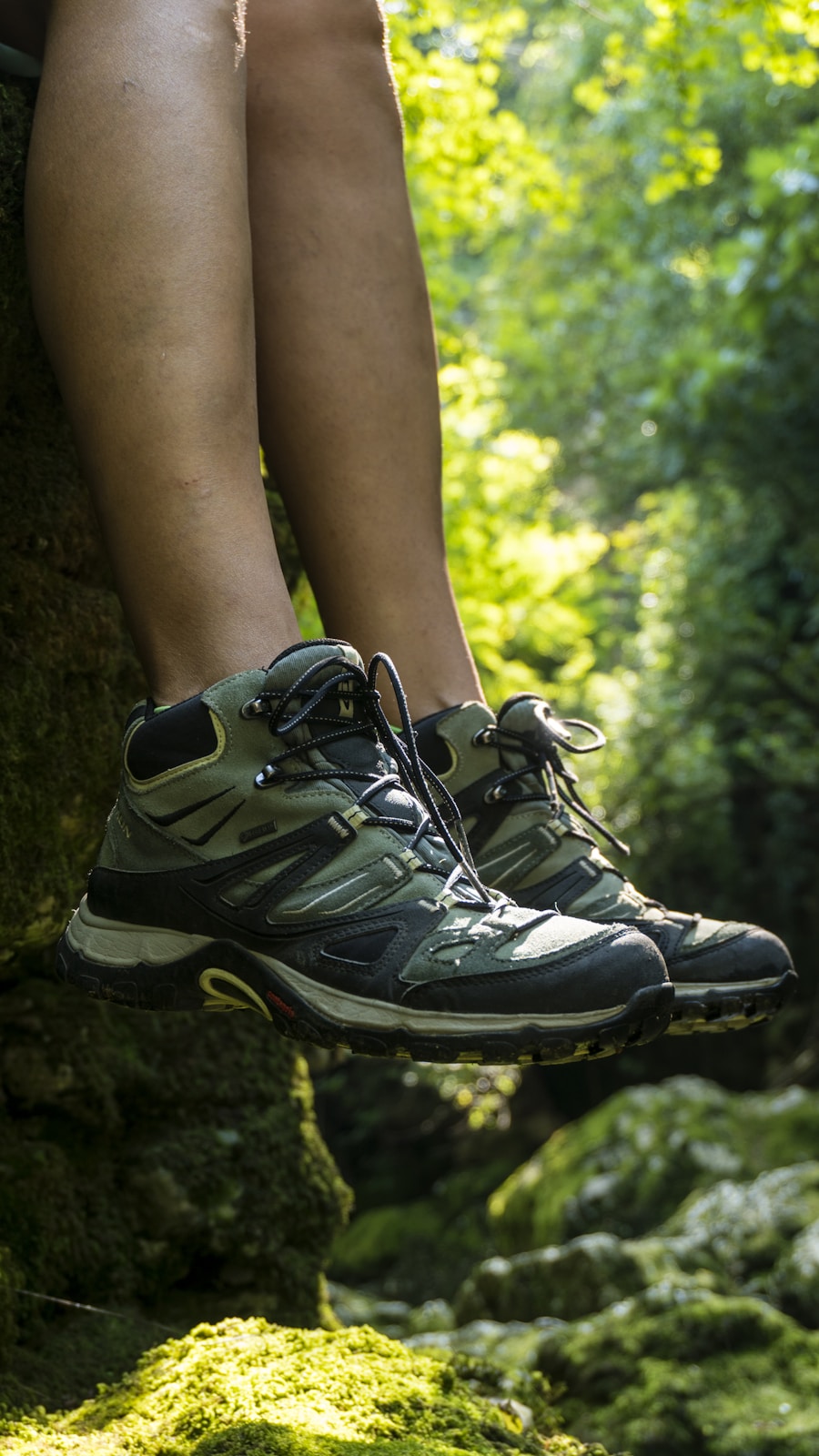
Fit should take priority over brand name, appearance, and feature lists. A technically impressive shoe that rubs your heel or squeezes your toes is still the wrong shoe.
Your feet can become larger during a day of walking, so trying hiking footwear later in the day can give you a more realistic sense of fit. Wear the same type of hiking socks you expect to use on the trail.
Use This Hiking-Shoe Fit Test
- Measure both feet. One foot is often slightly larger. Fit the larger foot rather than forcing it into a smaller size.
- Ignore your usual street-shoe number if necessary. Sizing and internal shape vary between manufacturers and even between models from the same brand.
- Check the toe box. Your toes should be able to wiggle without being squeezed together. Roughly a thumb’s width ahead of the longest toe is a useful starting point for many hiking shoes.
- Check the heel. The heel should feel securely held without painful pressure. Excessive lifting can create friction and blisters.
- Check width and volume. Do not simply buy a longer shoe to solve a width problem. Look for a different width or a model built on a shape that better matches your foot.
- Walk uphill and downhill. On a decline, your toes should not repeatedly strike the front. On an incline, look for excessive heel movement.
- Watch for hot spots. Persistent rubbing, pinching, numbness, or pressure in the store is a warning sign rather than something you should expect the shoe to “fix” later.
Manufacturer fitting guidance from KEEN likewise recommends later-day fitting, using your hiking socks, checking downhill toe clearance, securing the heel, and trying multiple models instead of assuming one labeled size will fit every shoe.
Pro Tip: Test both shoes. Many people have one foot that is longer, wider, or higher-volume than the other. A pair needs to work for both feet, not just the one you happened to lace first.
Support and Stability Features
Support is more than the height of the shoe. The heel, midsole, internal plates, outsole, and lacing system all affect how stable footwear feels on uneven terrain.
| Feature | What It Does |
| Heel counter | Helps hold the rear of the foot securely and limits unwanted movement inside the shoe. |
| Structured midsole | Provides cushioning while controlling how easily the shoe bends or twists over uneven ground. |
| Shank | Adds load-bearing stiffness between the midsole and outsole in some hiking and backpacking footwear. |
| Rock plate | Adds protection from sharp rocks and may increase torsional rigidity without requiring a very heavy sole. |
| Protective toe cap | Protects the front of the shoe and toes from trail debris and accidental contact with rocks and roots. |
| Mid/high collar | Adds coverage and lateral resistance around the ankle and can feel more supportive under load. |
A very stiff shoe is not automatically more stable for every person. Too much structure can feel awkward on easy terrain, while too little protection can leave your feet tired on a rocky trail. Match the shoe to the surface and the load you expect to carry.
Traction and Outsole Design
The outsole is the rubber layer that contacts the trail. Good traction depends on both the rubber compound and the tread pattern.
Lugs are the raised shapes underneath the shoe. Deep, widely spaced lugs can dig into mud and loose soil while giving debris more room to clear. Multidirectional lugs can help when climbing, descending, and changing direction. On smooth wet rock, rubber compound and surface contact can be as important as lug depth.
Some outsoles also use a defined heel brake to improve control during steep descents.
Vibram is one well-known outsole manufacturer, but the brand name alone does not tell you exactly how an outsole will perform. For example, Vibram Megagrip is a specific compound designed for grip on wet and dry terrain. Other Vibram compounds and other manufacturers’ rubber formulas can have different priorities.
Warning: Trail shoes do not make ice automatically safe. Snow, hard ice, steep frozen terrain, and mountaineering routes may require winter-specific footwear and compatible traction equipment rather than ordinary hiking shoes.
Waterproofing and Breathability
Waterproof hiking footwear is designed to prevent external water from passing through the shoe under its intended conditions. It can be valuable in prolonged rain, wet vegetation, snow, mud, and shallow water crossings.
Footwear carrying a GORE-TEX footwear designation uses a waterproof and breathable membrane intended to keep liquid water out while allowing water vapor to move through the system.
“Breathable,” however, does not mean that waterproof shoes ventilate as freely as open mesh. A waterproof membrane and its surrounding construction can make footwear feel warmer than a highly ventilated non-waterproof shoe, especially during hot-weather hikes.
Non-waterproof footwear has its own advantage: many lightweight models ventilate and dry more quickly. That can be appealing on hot routes or hikes involving repeated water crossings where completely avoiding wet feet is unrealistic.
A practical rule is to buy waterproof footwear because your conditions require waterproofing, not simply because the feature sounds better.
Socks, Insoles, and Lacing Matter Too
A hiking shoe does not work in isolation. Socks change the effective volume inside the shoe, which is why you should wear your intended hiking socks during the fitting process.
Moisture-managing wool or synthetic hiking socks are common choices. Very thick socks are not a reliable way to repair a shoe that is simply too large, and adding thick socks to a tight shoe can create extra pressure.
The stock insole also affects fit. Some hikers prefer an aftermarket footbed for a different arch shape or heel fit, but an insole takes up space. Test the complete shoe-and-insole combination rather than assuming an insert can rescue a poorly fitting shoe.
Lacing can fine-tune fit as well. A heel-lock style of lacing may reduce heel movement, while adjusting tension across the forefoot can relieve pressure. Lacing should improve an already compatible fit, not compensate for the wrong length or width.
Durability and Longevity
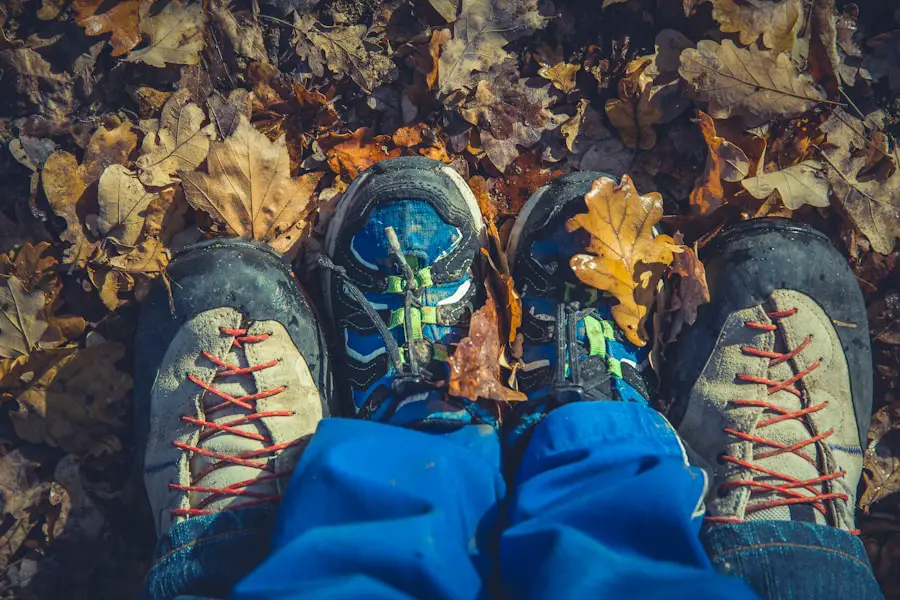
Durability matters because hiking footwear is repeatedly exposed to abrasion, flexing, moisture, dirt, rocks, and sharp trail debris. The lifespan of a shoe depends on its materials, construction, terrain, mileage, user, care, and even walking mechanics.
Full-grain leather can offer excellent abrasion resistance, while lightweight synthetic footwear often trades some ruggedness for lower weight, quicker drying, and greater flexibility. Neither category has one fixed lifespan.
Inspect more than the upper. Worn tread, damaged seams, delaminating soles, compressed cushioning, cracks, and a loss of support can all signal that a shoe is nearing the end of its useful life.
How to Make Hiking Shoes Last Longer
- Brush or rinse off heavy mud rather than leaving it packed into seams and tread.
- Dry footwear naturally instead of placing it against intense direct heat unless the manufacturer specifically permits it.
- Follow the manufacturer’s care instructions for leather treatments and waterproof finishes.
- Remove insoles after very wet hikes so the interior can dry more thoroughly.
- Check soles and stitching before major trips rather than discovering damage on the trail.
Break In and Test New Footwear Before a Long Hike
Flexible hiking shoes and trail runners may feel comfortable almost immediately, but stiffer leather or backpacking boots can require more time to flex naturally with your feet.
Begin by wearing new footwear indoors while it is still returnable under the seller’s policy. Then use it on short walks and easier local hikes before relying on it for a remote or multi-day trip.
Breaking in footwear can soften materials and reveal lacing adjustments, but it cannot change a fundamentally wrong shape. A painfully narrow toe box or major heel mismatch is a fit problem, not a break-in problem.
Pro Tip: Do one test walk that includes an uphill and downhill section. Descents often expose insufficient toe clearance, while climbs make heel slip easier to notice.
Weight and Comfort
Footwear weight affects how a shoe feels over thousands of steps. Lighter shoes generally feel more agile and can be comfortable for fast travel, while heavier hiking footwear often adds protection, stiffness, weather resistance, or durability.
That does not mean the lightest possible shoe is always the best choice. A rocky trail can make an under-protected shoe tiring, just as an unnecessarily heavy boot can feel cumbersome on a smooth path.
Comfort is individual. Cushioning that feels perfect to one person may feel unstable or too soft to another. Try multiple models and pay attention to heel security, arch comfort, toe room, flex point, and how confidently the outsole contacts the ground.
When Should You Replace Hiking Shoes?
There is no universal mileage at which every hiking shoe must be replaced. Terrain, body weight, construction, gait, moisture, and the material used in the outsole and midsole all affect wear.
Instead of relying only on mileage, inspect the footwear itself. Replacement may be appropriate when:
- The tread is worn smooth enough that traction is noticeably reduced.
- The outsole is separating from the upper.
- The midsole feels permanently compressed or the shoe no longer provides its previous cushioning and stability.
- The upper has tears or seam failures that compromise protection.
- The shoe has become distorted and no longer holds your heel or foot securely.
- You repeatedly develop discomfort in footwear that previously fit well and obvious wear is present.
Budget and Value
Price matters, but the most expensive hiking shoe is not automatically the best value. Paying for features you do not need can be just as wasteful as buying footwear too flimsy for your terrain.
First decide what the shoe must do. Then compare fit, outsole design, upper material, waterproofing, underfoot protection, construction quality, and return policy within your budget.
A simpler non-waterproof hiking shoe can be excellent value for dry day hikes. A more expensive, durable boot may make sense for rough multi-day use if its construction and fit genuinely meet those demands.
Seasonal discounts can also make previous-year models attractive. A model does not suddenly become unsuitable because a new color or minor update was released. Just confirm that the discounted footwear fits correctly and has the features you actually need.
Common Hiking-Shoe Buying Mistakes
- Buying by brand alone: different models use different lasts and can fit very differently.
- Assuming your street-shoe size is mandatory: use the actual fit rather than the number printed on the box.
- Trying shoes with the wrong socks: sock thickness changes available space.
- Ignoring downhill toe clearance: toes that repeatedly strike the front can make descents miserable.
- Buying longer shoes to solve a width problem: look for the proper width or a different last instead.
- Choosing waterproofing automatically: it adds value in wet conditions but can be unnecessary in hot, dry environments.
- Assuming a taller boot guarantees ankle safety: extra structure can help support the ankle, but no footwear eliminates injury risk.
- Choosing tread by appearance alone: compound, spacing, shape, and terrain compatibility matter.
The best hiking shoe is not the one with the longest feature list. It is the one that fits your feet and gives you the right balance of traction, protection, weather resistance, and weight for the trail ahead.
Footwear is only one part of a comfortable hiking setup. If you are also trying to keep the rest of your travel gear light, this guide to minimalist travel backpacks for spring adventures covers compact pack options and packing considerations.
Love travel? Join Our Facebook Community For More Tips.
Frequently Asked Questions
What are the most important factors to consider when picking hiking shoes?
Start with fit, terrain, trip length, weather, and pack weight. Then consider traction, underfoot protection, support, waterproofing, breathability, durability, and shoe weight. Fit should come before brand because even a highly rated hiking shoe will perform poorly for you if its shape does not match your foot.
How should hiking shoes fit?
They should feel secure through the heel and midfoot without pinching. Your toes need room to move, with roughly a thumb’s width ahead of the longest toe serving as a useful starting point for many hikers. Test the shoes on an incline and decline, wearing your normal hiking socks, and reject pairs that create persistent rubbing or pressure.
What type of support should hiking shoes provide?
The amount of support should match the hike. A secure heel, stable midsole, appropriate stiffness, and good lacing are useful on uneven terrain. Shanks and rock plates can add structure and underfoot protection. Mid- or high-cut boots add ankle coverage and lateral resistance, but they should not be treated as a guarantee against ankle injuries.
What kind of traction is best for hiking shoes?
It depends on the surface. Deep, widely spaced lugs can work well in mud and loose dirt, while multidirectional tread helps on varied terrain. Wet smooth rock also puts a premium on the rubber compound and surface contact. Look at the complete outsole design instead of assuming the deepest tread or a particular brand name is automatically best.
Are waterproof hiking shoes necessary?
No. Waterproof footwear is useful for sustained rain, wet vegetation, mud, snow, and other conditions where keeping outside moisture out matters. In hot and dry weather, a non-waterproof shoe may feel cooler and dry faster. Choose waterproofing according to your normal conditions rather than treating it as an automatic upgrade.
Are hiking shoes or hiking boots better?
Neither is universally better. Low hiking shoes are lighter and flexible, making them well suited to many day hikes. Boots add coverage, structure, and often more weather protection, which can be useful on rugged terrain or under heavier loads. Choose according to the route and your preferences rather than assuming every hike requires boots.
Should you size up in hiking shoes?
Do not automatically buy a particular amount larger than your street-shoe size. Hiking footwear should provide adequate toe clearance and room for normal foot swelling while still holding the heel securely. Because sizing and shoe shapes vary by model, judge the actual fit instead of relying on a fixed size-up rule.
Do hiking shoes need to be broken in?
Light, flexible hiking shoes may require little break-in, while stiff leather and backpacking boots often benefit from gradual use before a long trip. Break-in can soften materials, but it cannot correct a shoe that is fundamentally too short, narrow, wide, or poorly shaped for your foot.
Sources
- U.S. National Park Service — Hike Smart — appropriate hiking footwear and general trail-safety guidance.
- Salomon — High, Mid, or Low-Cut Hiking Shoes: How to Choose — matching shoe height and structure to terrain, load, and hiking conditions.
- KEEN — How to Find a Perfect-Fitting Pair of Hiking Boots — end-of-day fitting, toe clearance, heel fit, and incline/decline testing.
- GORE-TEX — Footwear Technology — waterproof and breathable membrane performance.
- Vibram — Megagrip Technology — wet- and dry-terrain outsole compound characteristics.
- PubMed — High-Top Shoes Reduce Ankle Inversion Injury Risk — 2026 biomechanical research on shoe-collar height and ankle inversion.

