
Last Updated on July 27, 2026 by Daniel Globe
Good hiking shoes should do more than feel comfortable in a store. They need to match your foot shape, the terrain you hike, the weather, the distance you plan to cover, and the load you carry. The best choice may be a light trail-running shoe for an easy day hike, a protective hiking shoe for rocky trails, or a sturdier boot for rough terrain and heavier backpacking loads.
Quick Answer
Look for hiking shoes that fit securely without pinching, leave room for your toes, grip the terrain you hike most often, and provide enough cushioning and underfoot protection for your distance and pack weight. Choose waterproof footwear for persistently wet conditions and more breathable footwear for hot, dry trails.
Key Takeaways
- Match the footwear to your terrain, trip length, pace, weather, and pack weight rather than choosing by appearance alone.
- Fit comes first: your heel should stay secure while your toes have room to spread and avoid hitting the front on descents.
- Outsole design matters. Deep, widely spaced lugs help in mud and loose ground, while other tread patterns can work better on hard or wet surfaces.
- Waterproof membranes are useful in sustained wet conditions, but non-waterproof mesh footwear normally feels cooler and dries faster.
- A higher collar can add structure and protection, but it does not guarantee that you will avoid an ankle sprain.
At a Glance
| Time Required | Allow enough time to measure both feet, compare several models, and walk on flat and inclined surfaces before deciding. |
| Difficulty | Easy, but getting the fit right may require trying several brands, widths, or footwear types. |
| Tools Needed | The hiking socks you normally wear, any orthotics or replacement insoles you use, and ideally a ramp or incline for fit testing. |
| Cost | Varies widely. Prioritize correct fit and the features your trails require before paying for extra technology you may not need. |
Disclosure: As an Amazon Associate I earn from qualifying purchases. Some links on this page are affiliate links, at no extra cost to you.
Start With Your Hiking Needs
The first step is deciding where and how you hike. A leisurely day hike on a maintained trail places very different demands on your footwear than a steep, rocky backpacking route.
On smooth, dry trails, you may value low weight, flexibility, and ventilation. Rough terrain, sharp rock, mud, long descents, or a heavier backpack may make a firmer midsole, tougher upper, stronger toe protection, and more structured footwear worth the added weight.
Climate matters too. Hot desert hiking usually favors ventilation and quick drying. Repeated rain, wet vegetation, shallow mud, or cold conditions may make waterproof footwear more useful.
The REI hiking-footwear guide similarly recommends choosing footwear around terrain, distance, load, construction, and fit rather than assuming one type is best for every hiker.
Hiking Shoes vs. Trail Runners vs. Hiking Boots
There is no rule that every hike requires a traditional boot. Modern hiking footwear ranges from flexible trail-running shoes to rigid mountaineering boots.
| Footwear Type | Best Use | Main Advantages | Trade-Offs |
| Trail-running shoes | Fast hiking, maintained trails, lighter loads | Light, flexible, breathable, quick-drying | Usually less protection and structure under heavy loads |
| Hiking shoes | Day hikes and moderate trails | Good balance of grip, protection, flexibility, and weight | Less ankle coverage than mid- or high-cut boots |
| Day-hiking boots | Rocky trails, changing weather, light backpacking | More coverage, structure, and debris protection | Heavier and often warmer |
| Backpacking boots | Multiday trips, rugged terrain, heavier packs | Firm support, durable construction, strong underfoot protection | More weight, stiffness, warmth, and break-in time |
The best hiking shoe is not the toughest or most expensive one. It is the one that fits your foot and matches the terrain, weather, distance, and load you actually hike with.
Durability and Quality of Materials
Hiking footwear takes repeated abuse from rock, roots, grit, mud, and flexing. Material choice affects durability, weight, breathability, water resistance, and how much break-in the shoe may need.
Leather
Full-grain leather is highly abrasion-resistant and is common in rugged backpacking footwear. It can provide excellent durability and good water resistance when maintained properly. The trade-offs are higher weight, lower ventilation, and usually a longer break-in period.
Nubuck and split-grain leather can offer a middle ground. Nubuck is durable and relatively flexible, while split-grain leather is often combined with nylon or mesh to reduce weight and improve ventilation.
Synthetic Materials
Nylon, polyester, synthetic leather, and engineered mesh are common in modern hiking footwear. They are generally lighter than full-grain leather, dry faster, and often require less break-in time. Their durability depends heavily on construction, reinforcement, and how much exposed stitching or mesh is used.
Protection Features
On rough trails, look beyond the upper material itself. A reinforced toe cap can protect the front of the shoe from rock strikes. A protective rand around the lower upper can reduce abrasion. Strong stitching and secure bonding around the sole are also worth inspecting.
Comfort and Fit
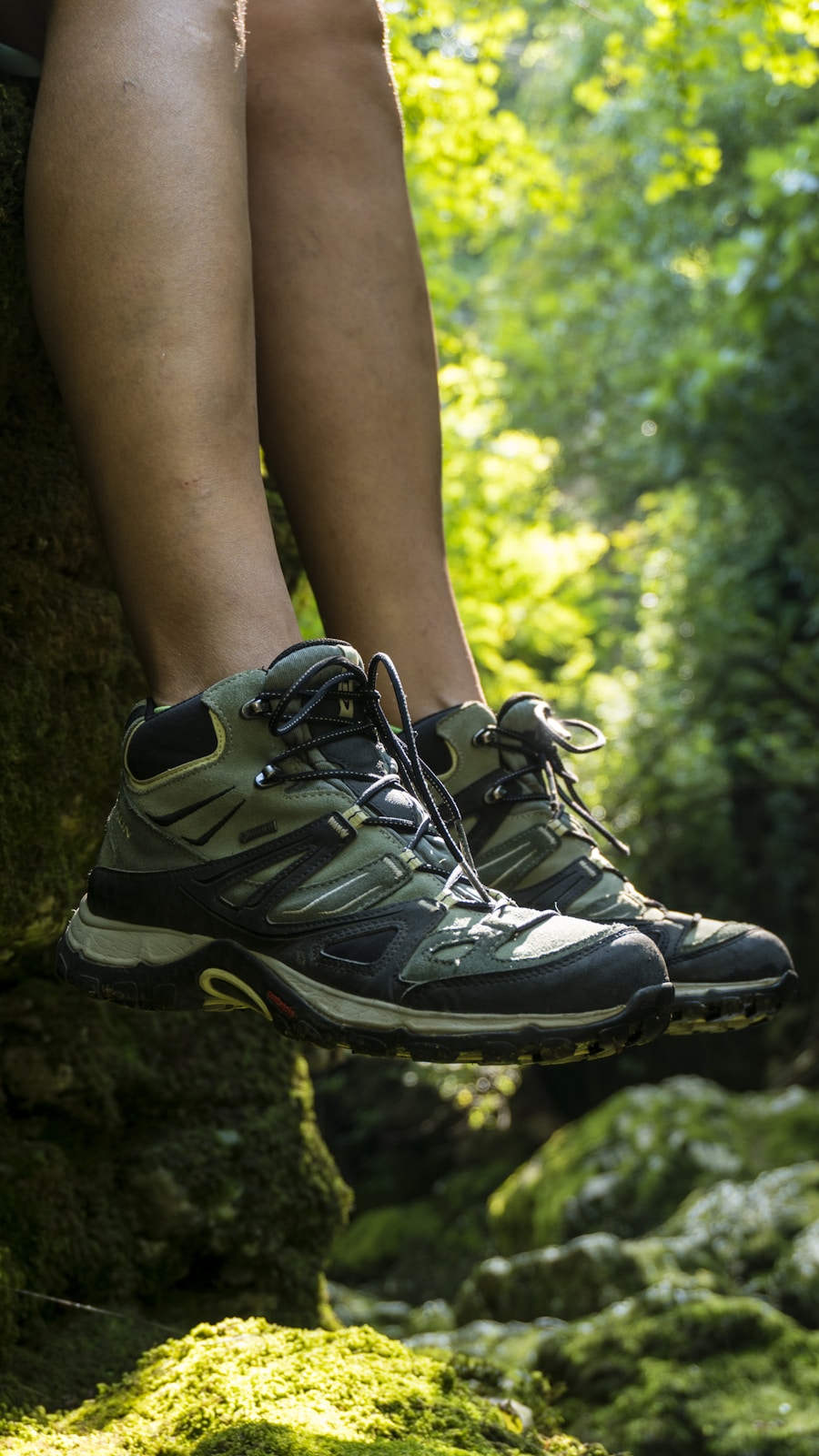
Fit is the most important feature because even excellent materials and traction cannot compensate for a shoe that rubs, pinches, or allows your foot to slide.
Foot-and-ankle orthopaedic guidance recommends fitting shoes later in the day, when feet are normally at their largest. Both feet should be measured because one may be larger than the other. The shoe should match the shape and width of your foot rather than forcing your foot into a narrow last.
FootCareMD recommends roughly 3/8 to 1/2 inch of space between the longest toe and the end of a properly fitted shoe. REI uses a similar practical check of about a thumb’s width at the front of a hiking shoe or boot.
How a Hiking Shoe Should Feel
- Your toes should be able to wiggle and spread without touching the front.
- The widest part of your foot should sit naturally in the widest part of the shoe.
- Your heel should stay securely seated rather than lifting significantly with every step.
- The upper should feel snug enough to control the foot but not create numbness or pressure.
- Your toes should not slam into the front when walking downhill.
- You should not feel a seam, ridge, or hotspot that you hope will somehow disappear later.
Pro Tip: Try hiking shoes with the same socks and orthotics or replacement insoles you plan to use on the trail. Walk up and down an incline if possible. Uphill walking reveals heel lift, while downhill walking shows whether your toes slide into the front.
Cushioning, Midsoles, Shanks, and Rock Plates
The midsole sits between your foot and the outsole. It affects cushioning, stiffness, stability, and how much you feel sharp rocks underfoot.
EVA vs. TPU
EVA foam is common because it can provide soft, lightweight cushioning. Different densities allow manufacturers to tune firmness in different parts of the shoe.
Thermoplastic polyurethane, or TPU, is generally firmer and more durable. It is often used in backpacking and mountaineering footwear where long-term support and stiffness matter more than minimum weight.
Rock Plates and Shanks
Some hiking shoes and trail runners include a rock plate between the midsole and outsole. This helps spread pressure from sharp stones and reduces the feeling of rocks pushing into the bottom of your foot.
More supportive boots may use a shank or other stiffening structure. A stiffer platform can feel less nimble on smooth trails, but it can improve underfoot protection and resist twisting on rough ground.
Choose the amount of cushioning and stiffness that feels comfortable for your terrain. Very soft cushioning is not automatically better, just as a very stiff boot is not automatically safer.
Traction and Grip
| Terrain | Outsole Features to Look For | Why They Help |
| Dry, packed trail | Moderate lugs with good rubber contact | Provides grip without unnecessary aggressiveness |
| Mud or loose soil | Deeper, widely spaced lugs | Bites into soft ground and sheds mud more easily |
| Rocky, uneven terrain | Multidirectional lugs and stable platform | Improves grip when the foot lands at different angles |
| Wet, smooth rock | Grippy rubber with enough surface contact | Very deep lugs are not automatically best on a smooth slick surface |
| Hard-packed snow or ice | Appropriate external traction devices when conditions require them | Ordinary rubber lugs may not provide enough grip on ice |
The outsole is the part of the shoe that contacts the trail. Rubber compound, lug depth, lug shape, spacing, and orientation all influence performance.
Deeper lugs are useful on mud, gravel, and loose ground, while widely spaced lugs can shed dirt instead of packing it into the outsole. On wet, smooth rock, however, greater rubber contact can matter, so the deepest tread is not automatically the best option.
Some manufacturers use specialized outsole compounds and lug shapes. For example, Vibram’s Traction Lug technology focuses on the shape and surface area of individual lugs. Treat brand names as one piece of the puzzle rather than proof that every outsole from that brand performs identically.
Warning: Hiking-shoe lugs are not a substitute for dedicated traction equipment on hard-packed snow or ice. The U.S. National Park Service recommends carrying and using appropriate traction devices when trails are icy or covered with hard-packed snow.
Waterproofing and Breathability
Waterproof footwear is valuable when you expect repeated rain, wet vegetation, shallow mud, or cold conditions where staying dry matters. Waterproof/breathable membranes such as GORE-TEX are designed to stop liquid water from entering while allowing water vapor to escape.
That does not mean waterproof footwear is the coolest option. A membrane generally reduces ventilation compared with an open mesh upper. On hot, dry trails, a breathable non-waterproof shoe may feel cooler and may dry faster after a brief stream crossing.
GORE-TEX describes its footwear technology as durably waterproof and breathable, while current hiking-footwear guidance also recognizes the ventilation trade-off compared with non-waterproof mesh footwear.
Note: Waterproof does not mean water can never enter a shoe. Water can still come over the collar during deep crossings or heavy rain, and once water is inside a waterproof shoe it may take longer to dry than a highly ventilated model.
Ankle Support
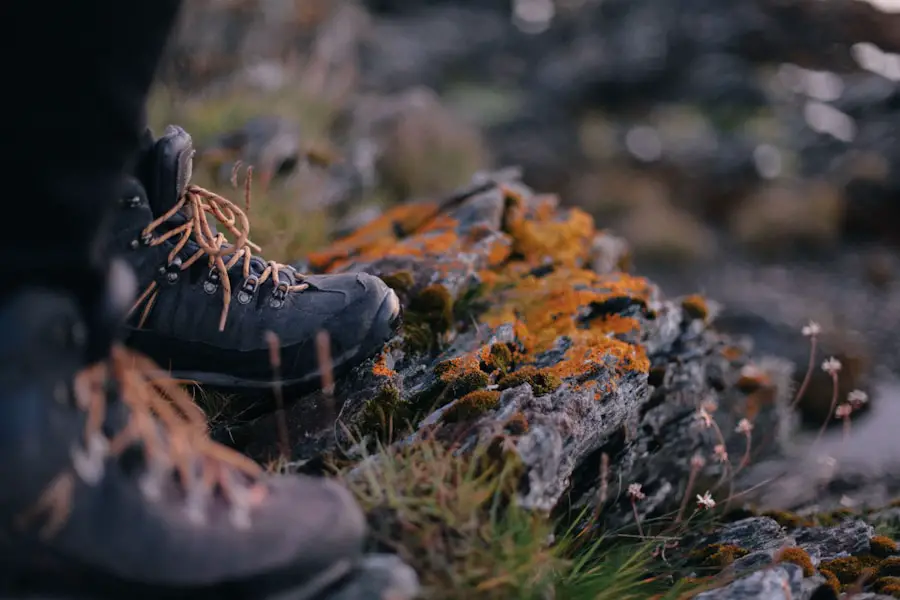
Mid- and high-cut hiking boots wrap farther up the ankle than low-cut hiking shoes. This can provide more coverage from rocks, brush, mud, and trail debris, and a structured collar may make some hikers feel more secure when carrying a load.
However, collar height should not be treated as guaranteed protection against ankle sprains. Research on hiking boots shows that shaft height and stiffness can reduce ankle range of motion and change how loads are distributed through the ankle and knee. A 2021 Journal of Biomechanics hiking-footwear study found measurable changes in ankle and knee mechanics between low-cut and shafted hiking shoes.
For that reason, choose collar height as part of the whole footwear system rather than as a single safety feature. Outsole stability, midsole stiffness, heel hold, fit, terrain, pack weight, conditioning, and any history of ankle problems can all affect what feels appropriate.
If you have a previous ankle injury, persistent instability, or pain, footwear selection may need to be individualized with guidance from a qualified health professional.
Weight and Flexibility
Heavier boots usually contain more material, protection, and structure. That can be useful on rugged ground, but extra bulk may feel tiring or clumsy on long, smooth trails.
Lighter shoes and trail runners usually flex more easily and make quick foot placement easier. The trade-off is that some models provide less protection from sharp rock, less torsional stiffness, and less durability under heavy use.
Check where the shoe bends. Hiking footwear should allow a natural forefoot motion while still giving the amount of midfoot and torsional support you need for the terrain.
A very stiff boot can also change walking mechanics. Hiking biomechanics research has found that greater shaft stiffness can reduce ankle movement and shift some work toward the knee. More stiffness is therefore not automatically better.
Socks, Lacing, and Break-In
Wear the Right Socks During Fitting
Try shoes with the same thickness of socks you expect to hike in. Wool and synthetic hiking socks are common because they manage moisture better than slow-drying cotton. The National Park Service recommends wool or synthetic moisture-wicking socks for longer hikes.
Use Lacing to Fine-Tune, Not Rescue, the Fit
Lacing can help lock the heel in place or relieve a mild pressure point, but it cannot fix a shoe that is fundamentally too short, too narrow, too wide, or the wrong shape for your foot.
If your heel rises significantly even when the shoe is laced securely, try another size, width, or model rather than tightening the laces until they hurt.
Understand Break-In
A new shoe should fit correctly from the beginning. Do not buy footwear that pinches your toes or crushes the sides of your feet because you expect it to stretch.
Flexible hiking shoes and trail runners may require little break-in. Stiff leather hiking or backpacking boots often benefit from shorter walks before a long trip so the materials can flex and you can find any rubbing points.
Pro Tip: Never make a demanding hike the first long outing in a new pair. Wear the footwear on shorter walks first, including hills if possible, and confirm that there are no hotspots, heel slip, or downhill toe contact.
How to Test Hiking Shoes Before Buying
- Measure both feet. Fit to the larger foot rather than relying only on your usual shoe size.
- Shop later in the day. Feet normally expand somewhat after hours of standing and walking.
- Wear your hiking socks. Bring any orthotics or replacement insoles you normally use.
- Check toe space. Your toes should move freely, with roughly 3/8 to 1/2 inch of room beyond the longest toe.
- Check width and volume. The forefoot should not be squeezed, and the upper should not have excessive empty space.
- Walk normally. Look for rubbing, pressure, numbness, seams, or unusual bending.
- Test an incline. Your heel should remain controlled uphill and your toes should not hit the front downhill.
- Compare several models. Shoe shapes differ between brands and product lines, even when the printed size is the same.
Price and Value
Price can reflect more expensive materials, complex construction, specialized outsoles, waterproof membranes, or other features, but a higher price does not guarantee a better shoe for your foot.
A moderately priced hiking shoe that fits well and matches your trail conditions can provide better value than an expensive backpacking boot that is too stiff, hot, narrow, or heavy for the hiking you actually do.
Prioritize the features that solve a real need: fit, traction, underfoot protection, climate suitability, durability, and the right amount of structure. Then compare price, warranty terms, repairability, and return policies among models that already pass the fit test.
Care and Replacement
Proper care can help hiking footwear last longer. After muddy or gritty hikes, remove loose dirt so abrasive particles do not remain in the fabric, leather, or outsole.
For GORE-TEX footwear, the manufacturer recommends removing laces and loose debris, cleaning with a brush or cloth and lukewarm water, and drying at moderate temperatures rather than placing footwear against direct heat. Always follow the specific shoe manufacturer’s instructions, especially for leather treatments.
GORE-TEX footwear care guidance also recommends restoring the durable water-repellent treatment when water stops beading on the outer material.
There is no single replacement mileage that works for every hiking shoe. Inspect the actual condition instead. Replacement or repair may be needed when the outsole is worn smooth, the tread has lost useful depth, the midsole feels permanently compressed or unstable, the upper separates from the sole, waterproof construction is physically damaged, or the fit has become loose because the structure has broken down.
For multi-day hiking trips, footwear is only one part of the packing list. If you are also minimizing personal-care gear, this guide to the best travel toothbrushes covers one compact hygiene item. Keep that choice separate from the footwear decision: fit and trail performance should come first when choosing hiking shoes.
Frequently Asked Questions
What are the key features of good hiking shoes?
Good hiking shoes should fit securely, leave enough toe room, provide dependable traction for your terrain, offer suitable cushioning and underfoot protection, and use durable materials. Waterproofing, collar height, stiffness, and weight should be chosen according to the weather, trail, distance, and load you expect to carry.
What materials are commonly used in good hiking shoes?
Common upper materials include full-grain leather, nubuck, split-grain leather, nylon, polyester, engineered mesh, and synthetic leather. Rubber is commonly used for outsoles. EVA and TPU are common midsole materials. Each combination balances weight, durability, cushioning, breathability, stiffness, and water resistance differently.
What type of traction is important in hiking shoes?
Match the outsole to the terrain. Deep, widely spaced lugs work well in mud and loose soil. Multidirectional lugs can help on uneven ground. Wet, smooth rock may benefit from grippy rubber with more surface contact. Hard-packed snow and ice can require dedicated external traction devices rather than ordinary hiking lugs alone.
How should hiking shoes fit?
They should feel snug enough to hold the heel and midfoot securely but should not pinch anywhere. Your toes need room to wiggle and spread. A useful fitting target is roughly 3/8 to 1/2 inch of room beyond the longest toe. Your toes should also stay clear of the front when you walk downhill.
Are hiking shoes or hiking boots better?
Neither is automatically better. Hiking shoes are lighter and usually more flexible, making them a strong choice for many day hikes and moderate trails. Boots provide more coverage and often more structure, which can be useful on rugged terrain, in bad weather, or with heavier loads. Fit and intended use should decide.
Do hiking shoes need to be waterproof?
Not always. Waterproof footwear is useful for sustained rain, wet vegetation, mud, and colder conditions. Non-waterproof mesh footwear can be cooler and quicker to dry in hot or dry climates. Choose based on the conditions you encounter most often.
Do high-top hiking boots prevent ankle sprains?
A higher or stiffer boot can restrict some ankle motion and provide added coverage, but it should not be treated as guaranteed sprain prevention. Hiking studies show that shaft height and stiffness change ankle and knee mechanics. Proper fit, stable footing, outsole grip, conditioning, terrain, and previous injury history also matter.
Should hiking shoes hurt while they are breaking in?
No. New footwear should fit correctly when you buy it. Stiff boots can soften and flex more naturally after shorter walks, but break-in cannot correct a shoe that is too short, too narrow, or the wrong shape. Persistent rubbing, numbness, pinching, or toe impact means the fit should be reassessed.
Sources
- U.S. National Park Service — Hike Smart — appropriate hiking footwear, tread, and moisture-wicking sock guidance.
- REI — How to Choose Hiking Boots and Shoes — footwear types, uppers, midsoles, rock plates, outsole design, terrain, and fitting guidance.
- FootCareMD — 10 Points of Proper Shoe Fit — foot measurement, end-of-day fitting, toe space, width, and construction guidance from foot and ankle orthopaedic surgeons.
- GORE-TEX — Footwear Technology — waterproof and breathable membrane performance.
- Vibram — Traction Lug Technology — lug geometry and traction design.
- Journal of Biomechanics — The Influence of Shaft Stiffness on Joint Kinematics and Kinetics During Hiking — effects of hiking-shoe shaft height and stiffness on ankle and knee mechanics.

