
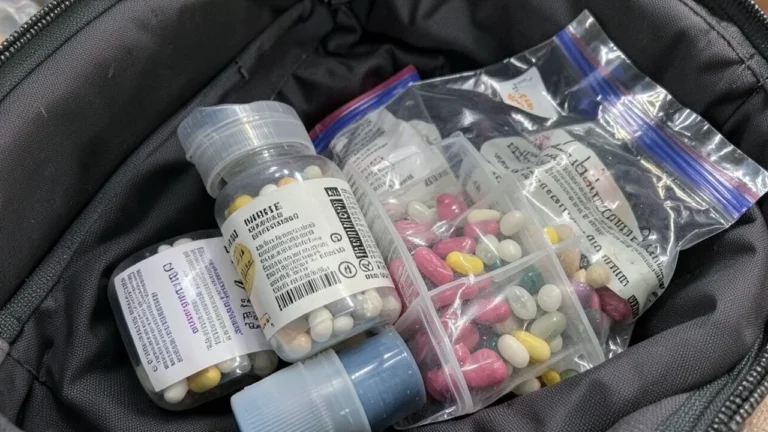
Traveling with medication is routine for millions of people, and TSA has clear guidance for it. If you are asking can you bring pills on a plane, the answer is yes. Prescription and over-the-counter pills, tablets and capsules are allowed in carry-on and checked bags, with no limit on quantity.
The tips that matter are how to label and pack them, how liquid medicines are handled and what to bring when you cross a border.
Quick Answer
Yes. Pills, tablets and capsules are allowed in carry-on and checked bags with no limit, and TSA does not require them to be in original bottles. Keep them in your carry-on in labeled containers. Liquid medicine is exempt from the 3.4 oz rule if you declare it. Customs rules abroad can be strict.
Key Takeaways
- Pills are allowed in any quantity in carry-on or checked luggage.
- Keep medicine in your carry-on so it is with you if checked luggage is delayed.
- Original labeled bottles help with questions at security and customs.
- Liquid medications can exceed 3.4 oz if declared at the checkpoint.
- Some countries ban or restrict common medicines, so check before you fly.
What TSA Says About Medication
TSA allows medically necessary items in reasonable quantities, and it does not require pills to be in a particular container. You can use a weekly pill organizer. If an officer asks, you can tell them what they are. Officers may ask to inspect pills separately, and X-ray screening does not damage medication. If you prefer not to put them through the X-ray, you can request a visual inspection.
Medication Types and the Rules
| Item | Carry-on | Checked bag |
|---|---|---|
| Prescription pills | Allowed, any amount | Allowed, carry-on advised |
| Over-the-counter pills | Allowed | Allowed |
| Liquid medicine | Allowed above 3.4 oz if declared | Allowed |
| Injectables and pens | Allowed with prescription label | Allowed, keep cool |
| Inhalers and nebulizers | Allowed | Allowed |
| Controlled substances | Allowed with prescription | Check destination law |
Declare medically necessary liquids to the officer at the start of screening, and keep them separate from your other liquids.
Packing Tips for Medication
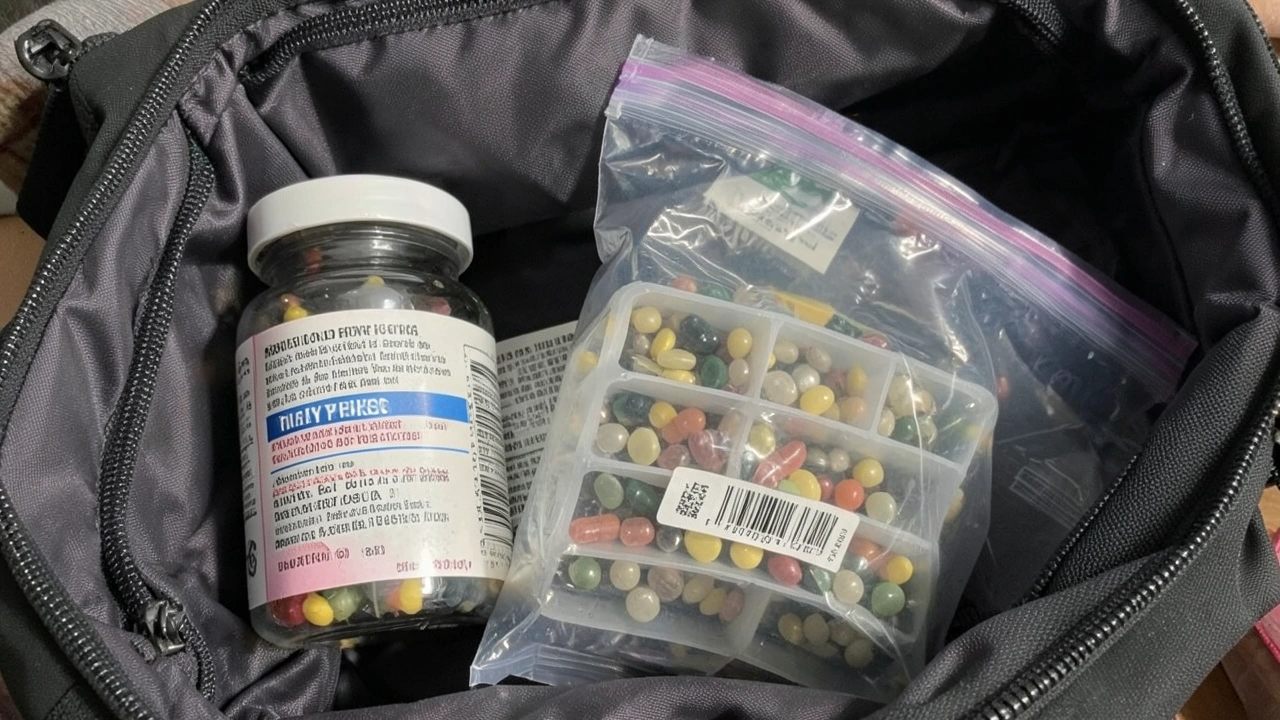
- Carry enough medicine for the whole trip plus a few extra days in case of delays.
- Keep the pharmacy label on each bottle, or bring a printout of your prescription.
- Split your supply between two bags in case one is lost.
- Bring a doctor’s letter for controlled medicines, injectables or large quantities.
- Use a daily pill case only if you also bring the original labels or photos of them.
Medication Abroad
Rules differ widely by country. A medicine that is sold over the counter in the United States can be a controlled substance elsewhere, with penalties that include fines or arrest. Check the embassy or health ministry site of your destination, and carry a doctor’s letter that lists your medicines by generic name. Our guide on vitamins on a plane covers supplements, and CBD oil covers a product that is tightly restricted in many places.
Frequently Asked Questions
Can you bring prescription pills in your carry-on?
Yes. Keep them in your carry-on in labeled containers.
Do pills need to be in the original bottle?
TSA does not require it, but labeled bottles help at customs and with security questions.
How many pills can you bring on a plane?
TSA sets no limit. Bring what you need plus a few spare days, and check destination rules.
Can you bring liquid medicine over 3.4 oz?
Yes, if it is medically necessary and you declare it at the checkpoint.
Can pills go through the X-ray?
Yes. X-rays do not damage pills, but you may ask for a visual inspection.
Conclusion
So, can you bring pills on a plane? Yes. Keep them in your carry-on, labeled, declare liquid medicine at the checkpoint and check the rules at your destination before you travel.
Keep Reading
- Can You Bring Vitamins on a Plane? TSA and Customs Rules: Supplements
- Can You Bring CBD Oil on a Plane? TSA Rules Explained: CBD
- How Many Oz Can You Bring on a Plane? Liquid Limits: Liquid limits
- TSA Rules for Backpacks: Quick Guide & Helpful Tips: Carry-on basics
