

Last Updated on September 10, 2026 by Daniel Globe
Yes, you can fly with hiking poles, but the rules depend on the pole tips, the airport where you pass through security, and your airline’s baggage limits. Trekking poles are useful for balance and can reduce lower-extremity loading in some downhill conditions, but getting them to the trail requires a little planning. The biggest mistake is assuming that every hiking pole follows the same carry-on rule.
Quick Answer
Yes, you can fly with hiking poles. At U.S. TSA checkpoints, blunt-tipped hiking poles may be carried on or checked, while sharp-tipped poles must be checked. Your airline must also accept the collapsed size, and foreign airports may use stricter rules, so check every departure and connecting airport before you travel.
Key Takeaways
- The TSA currently allows blunt-tipped hiking poles in U.S. carry-on and checked baggage.
- Sharp-tipped trekking poles are not allowed in TSA carry-on baggage and should be packed securely in checked luggage.
- Passing airport security does not override an airline’s carry-on size, weight, or stowage rules.
- International rules vary. For example, UK airport-security guidance does not allow walking or hiking poles in hand luggage.
- For the lowest-risk trip, pack pointed metal or carbide-tipped poles inside a protective checked bag or case.
At a Glance
| Time Required | About 5–10 minutes to verify rules and pack the poles |
| Difficulty | Easy, but international and airline rules vary |
| Tools Needed | Tape measure, tip guards or sheath, straps, and a padded bag or protective case |
| Cost | Potentially $0 for a compliant carry-on; checked-bag, rental, shipping, or replacement costs vary |
Disclosure: As an Amazon Associate I earn from qualifying purchases. Some links on this page are affiliate links, at no extra cost to you.
TSA Regulations on Hiking Poles
The Transportation Security Administration now gives specific guidance for hiking poles. According to the TSA hiking-poles guidance, blunt-tipped hiking poles are allowed in carry-on or checked baggage and are screened like other property. Sharp-tipped hiking poles are not allowed in carry-on baggage.
TSA also states that the final decision rests with the officer at the security checkpoint. That means an item that is generally permitted may still receive additional screening or be rejected if an officer believes it presents a security concern.
For U.S. departures, use a two-part test: the pole tip must satisfy TSA security rules, and the collapsed pole must satisfy the airline’s cabin-baggage rules.
What Counts as a Blunt-Tipped Hiking Pole?
TSA’s published hiking-pole guidance does not give a precise measurement or shape that defines a “blunt” tip. Because of that, do not assume that every rubber-covered trekking pole will automatically qualify for carry-on baggage.
If your pole has an exposed pointed carbide or metal tip, the safest interpretation is to treat it as sharp and place it in checked baggage. A removable rubber cap may protect the point, but TSA does not publish a rule stating that a rubber cover automatically changes an otherwise sharp-tipped pole into an approved blunt-tipped carry-on item.
Warning: Do not arrive at the checkpoint with an expensive sharp-tipped pole unless you have a backup plan. If an officer does not allow it through security, you may have to return to the ticket counter and check it, give it to someone outside security, ship it, or surrender it.
Airline Rules for Hiking Poles
TSA controls what may pass through a U.S. security checkpoint, but the airline controls what may be carried and stored on its aircraft. A pole can therefore satisfy TSA security rules and still be too long for your airline’s overhead-bin or under-seat limits.
Folding and telescoping poles are easier to travel with because their collapsed length is shorter, but collapsibility alone does not make a sharp-tipped pole TSA-compliant.
| Airline | Carry-On Baseline | Checked-Bag Baseline | What to Do With Hiking Poles |
|---|---|---|---|
| Delta | Standard carry-on dimensions are up to 22 × 14 × 9 inches. | A standard Delta Main/Comfort checked bag is generally limited to 62 linear inches and 50 lb. Fees depend on itinerary, cabin, status, card benefits, and ticket date. | Confirm the pole’s collapsed dimensions and current baggage charge on Delta’s baggage page. |
| American Airlines | The standard large carry-on limit is 22 × 14 × 9 inches. | The standard checked-bag baseline is 62 linear inches and 50 lb. Fees vary by fare, destination, status, and payment method. | Review the current American checked-baggage policy and sports-equipment rules. |
| United Airlines | Cabin acceptance depends on current carry-on dimensions, aircraft storage, fare, and operating carrier. | Checked-bag charges and allowances vary by itinerary, cabin, MileagePlus status, and eligible card benefits. | Check your exact trip using United’s current baggage information rather than relying on a fixed fee quoted elsewhere. |
Note: Baggage fees can change and may differ on partner-operated or codeshare flights. Check the operating airline shown on your itinerary, not only the airline that sold the ticket.
Packing Hiking Poles for Air Travel
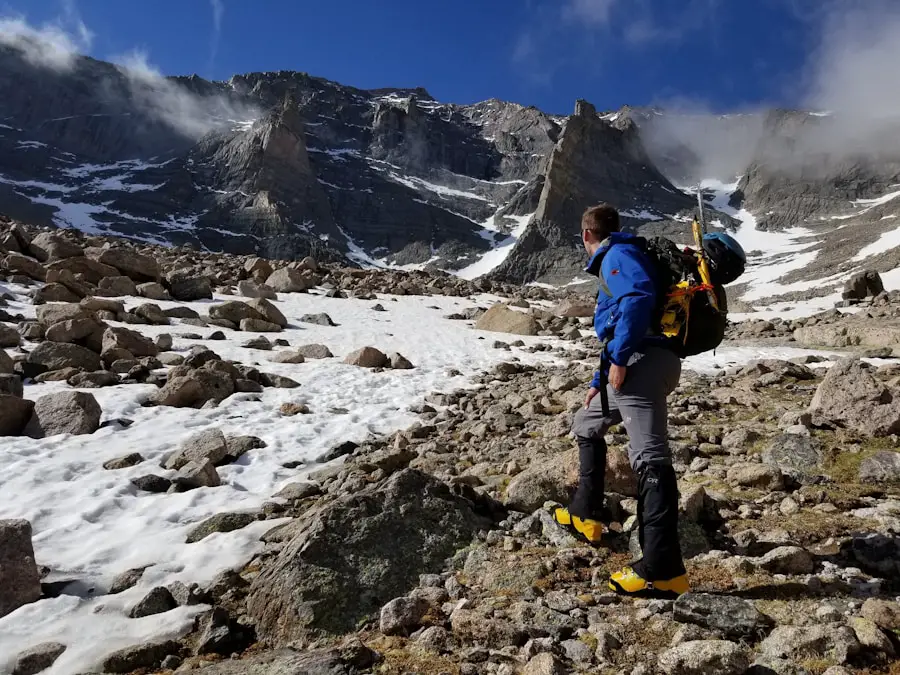
Modern trekking poles may be telescoping, folding, or fixed length. Folding and telescoping models are usually easier to fit into luggage, but your packing method should protect both the poles and the people who handle your bag.
How to Pack Hiking Poles Safely
- Collapse or fold each pole completely. Measure the packed length before deciding whether it can fit inside your cabin bag.
- Clean off dirt and mud. This keeps your luggage clean and can prevent problems when crossing borders with soil-contaminated outdoor equipment.
- Protect pointed tips. Use the manufacturer’s tip guards, a sturdy sheath, or another secure protective covering.
- Remove large baskets if practical. Store them beside the poles so they cannot snap during baggage handling.
- Strap pole sections together. This prevents individual pieces from moving through the bag or becoming separated.
- Add padding. Wrap the poles in clothing, a padded sleeve, or protective material.
- Pack them inside the luggage. Place the poles near the center or rigid side of the bag rather than leaving them exposed on the outside.
- Label a separate case. Include your name and contact information if the poles travel in their own protective bag or case.
Pro Tip: Measure your poles after they are fully collapsed, including handles and tip covers. A model marketed as “travel-friendly” can still be too long for a particular airline’s cabin-bag dimensions.
Checking Hiking Poles as Baggage
Checking your hiking poles is the lowest-risk option when they have pointed carbide or metal tips, when they are too long for cabin baggage, or when your itinerary passes through a country with stricter hand-luggage rules.
If the poles fit inside your normal checked suitcase or backpack, pack them internally and protect the tips. Avoid strapping expensive poles loosely to the outside of checked luggage. Externally attached equipment can snag on conveyor systems, straps, or other bags and is more exposed to bending and impact.
If the poles require their own case, use a durable container that prevents the ends from puncturing the case. Airline rules differ on whether separately packed sports equipment receives standard baggage treatment, oversize treatment, or another special-item allowance.
Checked baggage can also be delayed, damaged, or lost. Keep photographs of higher-value equipment and retain purchase records where practical. For U.S. consumer information about mishandled baggage, see the U.S. Department of Transportation baggage guidance. Travel-insurance protection varies by policy, so read the actual coverage and exclusions instead of assuming trekking poles are covered.
Bringing Hiking Poles as Carry-On Items
At a U.S. TSA checkpoint, a blunt-tipped hiking pole may be eligible for carry-on screening. That does not mean every trekking pole should be taken to the checkpoint.
Before packing poles in your cabin bag, confirm all of the following:
- The poles are blunt-tipped under the security authority’s rules.
- The fully collapsed poles fit completely inside your permitted baggage.
- The airline allows that baggage size and can stow it safely.
- No foreign departure or connecting airport on the trip has a stricter rule.
- You have a backup plan in case the checkpoint officer makes a different security determination.
Do not leave poles protruding from a carry-on backpack. Even a security-compliant pole may be rejected by an airline if it cannot fit safely under a seat or in an approved overhead compartment.
International Rules for Hiking Poles on Planes
TSA rules apply to checkpoints operated by the TSA in the United States. They do not create a worldwide carry-on allowance. Airport-security rules can change when you depart from another country or pass through a connecting airport where passengers and cabin baggage are screened again.
| Security Authority | Carry-On Rule | Checked / Hold Baggage |
|---|---|---|
| United States — TSA | Blunt-tipped hiking poles are allowed; sharp-tipped poles are not. Final checkpoint decision rests with the officer. | Hiking poles are allowed, subject to airline rules. |
| United Kingdom | Government airport-security guidance lists walking/hiking poles as not allowed in hand luggage. | Allowed in hold luggage. |
| Canada — CATSA | Hiking sticks and poles, including collapsible models, are permitted through security, but pointed or sharp ends longer than 6 cm are not permitted in carry-on baggage. | Allowed. |
| New Zealand — Aviation Security | Lightweight aluminium or carbon-fibre hiking poles may be allowed if they fit in the overhead locker. | Heavier hiking poles should travel in checked luggage. |
Before an international trip, check the security authority for every airport where you will originate or be rescreened. Also check the operating airline because airport security approval does not guarantee that the pole meets cabin-baggage dimensions.
Warning: A pole that is legal in a U.S. carry-on may still be prohibited from hand luggage on your return flight from another country. Always check both directions of an international itinerary.
Alternatives to Bringing Hiking Poles on a Flight

If carrying your own poles creates too much baggage risk, renting hiking poles at your destination can be an easy alternative. Outdoor stores, trekking agencies, mountain huts, and tour operators in popular hiking destinations may offer pole rentals, although availability should be confirmed before arrival.
Another option is to buy an inexpensive pair after you land. This can make sense when checked-baggage fees would approach the cost of replacement poles. Instead of discarding usable equipment afterward, consider donating the poles, giving them to another traveler, or taking them home if your return baggage arrangements allow it.
Shipping poles ahead can also work for longer or higher-value models. Compare the shipping cost, delivery time, insurance terms, and the likelihood that somebody will be available to receive the package at your hotel or other destination.
Some guided hiking tours include trekking poles with the trip. Confirm what equipment is supplied before paying to transport a separate pair.
Tips for Traveling With Hiking Poles
Before You Leave Home
- Identify whether your poles have blunt, rubber, metal, or carbide tips.
- Measure their fully collapsed length.
- Check the airport-security rules for the outbound and return journeys.
- Check every operating airline’s baggage limits.
- Protect sharp tips before placing poles in checked luggage.
- Take a photo of valuable poles before checking the bag.
- Keep essentials such as medication, travel documents, electronics, and one change of clothing out of a checked pole case.
At the Airport
If you plan to carry blunt-tipped poles through a U.S. checkpoint, leave enough time to deal with additional screening. Keep the poles accessible rather than burying them under tightly packed items.
If an officer rejects the poles, remain polite and ask what options are available. Depending on the airport and how much time remains before departure, you may be able to leave security and check the item with your airline. Do not count on being able to mail, store, or retrieve a surrendered item after the fact.
Pro Tip: Save the official security and airline policy pages on your phone before travel. They are useful references when packing and can help you confirm that you are looking at the latest rule rather than an old travel blog or forum post.
Conclusion and Final Considerations
You can fly with hiking poles, but there is no single worldwide carry-on rule. At U.S. TSA checkpoints, blunt-tipped hiking poles are currently allowed in carry-on and checked baggage, while sharp-tipped poles must be checked. Your airline can still impose size, baggage, and stowage restrictions.
For pointed carbide or metal trekking poles, checking them in a padded bag or protective case remains the most predictable option. For blunt-tipped folding poles, carry-on travel may be practical when the collapsed length fits your airline’s baggage limits.
International travelers should check every security authority involved in the trip. UK, Canadian, New Zealand, U.S., and other airport rules can differ significantly, especially on a return or connecting flight.
If transporting your own poles is inconvenient, renting, buying, borrowing, or shipping poles can remove much of the uncertainty. A few minutes spent checking current rules before departure is far easier than deciding what to do with rejected hiking poles at the security checkpoint.
If your outdoor trip also includes fishing, the same advance planning helps with long or awkward equipment; see this guide to choosing a travel fishing rod.
Frequently Asked Questions
Can you fly with hiking poles?
Yes. Hiking poles can travel by air, but whether they may go in cabin baggage depends on the security authority, pole-tip design, and airline rules. At U.S. TSA checkpoints, blunt-tipped hiking poles may be carried on or checked, while sharp-tipped poles must be checked.
Are hiking poles allowed in TSA carry-on luggage?
Blunt-tipped hiking poles are currently allowed through TSA checkpoints in carry-on baggage. Sharp-tipped hiking poles are not allowed in carry-on luggage. TSA officers make the final security decision at the checkpoint.
Do rubber tips make trekking poles TSA compliant?
TSA does not publish a detailed definition stating that a removable rubber cap automatically converts an otherwise sharp carbide or metal-tipped pole into an approved blunt-tipped item. For the lowest risk, check poles that have an underlying pointed metal or carbide tip.
How should hiking poles be packed for a flight?
Collapse or fold the poles, clean them, protect the tips, remove large baskets when practical, strap loose sections together, and add padding. Checked poles are safest inside the luggage or a durable protective case rather than strapped loosely to the outside of a backpack.
Are hiking-pole rules different on international flights?
Yes. Airport-security rules vary by country. For example, UK government guidance does not allow walking or hiking poles in hand luggage, while Canada’s CATSA permits many hiking poles through security subject to restrictions on sufficiently long pointed or sharp ends. Check every airport where you will pass through security.
Can collapsible hiking poles always go in carry-on luggage?
No. Collapsibility helps a pole fit inside cabin baggage, but it does not override security rules. The pole still needs an acceptable tip, and its collapsed dimensions must meet the airline’s baggage and stowage requirements.
Can I strap hiking poles to the outside of my backpack when flying?
It is better to pack poles inside your luggage or a protective case. Poles attached outside a checked backpack can snag or be damaged during handling, while poles protruding from a carry-on may exceed airline dimensions or create a stowage problem.
Sources
- Transportation Security Administration — Hiking Poles — U.S. carry-on and checked-baggage rules for blunt- and sharp-tipped hiking poles.
- Delta Air Lines — Baggage Policy and Fees — current standard checked-baggage and carry-on information.
- American Airlines — Special Items and Sports Equipment — current sports-equipment packing and baggage rules.
- GOV.UK — Hand Luggage Restrictions: Sports Equipment — UK rules for walking and hiking poles in hand and hold luggage.
- Canadian Air Transport Security Authority — Hiking Stick/Poles — Canadian security rules for hiking poles.
- PubMed — Review of Trekking Pole Benefits and Tradeoffs — evidence on lower-extremity loading, balance, stability, and physiological effects of trekking poles.

