

Last Updated on September 10, 2026 by Daniel Globe
Hiking poles, also called trekking poles, can improve stability on rough trails and may reduce lower-extremity loading in some hiking conditions. Flying with them is less straightforward because airport security rules depend on the design of the pole, while airlines separately control the size and type of items allowed in the cabin.
Quick Answer
In the United States, TSA currently allows blunt-tipped hiking poles in carry-on or checked baggage, subject to screening and the officer’s final decision. Sharp-tipped hiking poles are not allowed in carry-on bags and should be checked. Your airline’s size and stowage rules also apply.
Key Takeaways
- TSA distinguishes between blunt-tipped and sharp-tipped hiking poles rather than simply allowing or banning every trekking pole.
- Blunt-tipped poles may pass a U.S. security checkpoint, but the final decision rests with the TSA officer.
- Sharp-tipped poles should be packed securely in checked baggage.
- Collapsible poles are easier to fit in luggage, but collapsing a sharp-tipped pole does not make it automatically acceptable as a carry-on item.
- Airline rules and international security rules can be stricter than TSA guidance, so check every airline and departure country before flying.
Disclosure: As an Amazon Associate I earn from qualifying purchases. Some links on this page are affiliate links, at no extra cost to you.
TSA Guidelines for Hiking Poles in Carry-On Luggage
The most important rule is the type of tip on the pole. According to the Transportation Security Administration’s current What Can I Bring guidance, blunt-tipped hiking poles are allowed in both carry-on and checked bags. Sharp-tipped hiking poles are not permitted as carry-on items.
| Pole type | U.S. carry-on | Checked baggage |
| Blunt-tipped hiking pole | Generally permitted by TSA, subject to screening and officer discretion | Permitted |
| Sharp-tipped hiking pole | Not permitted by TSA | Permitted when packed safely |
Warning: Do not assume that a folding or telescoping pole is automatically allowed in the cabin. A collapsible pole can still have a sharp metal tip, and TSA’s published rule specifically prohibits sharp-tipped hiking poles as carry-on items.
TSA also states that even an item normally permitted may receive additional screening or be rejected if an officer identifies a security concern. The final checkpoint decision belongs to the TSA officer.
A rubber protector can make a trekking pole safer to handle, but travelers should not depend on a removable cover as a guaranteed way to turn an underlying pointed metal tip into an approved carry-on item. When in doubt, packing pointed poles in checked baggage is the lower-risk option.
Tips for Packing Hiking Poles for Air Travel
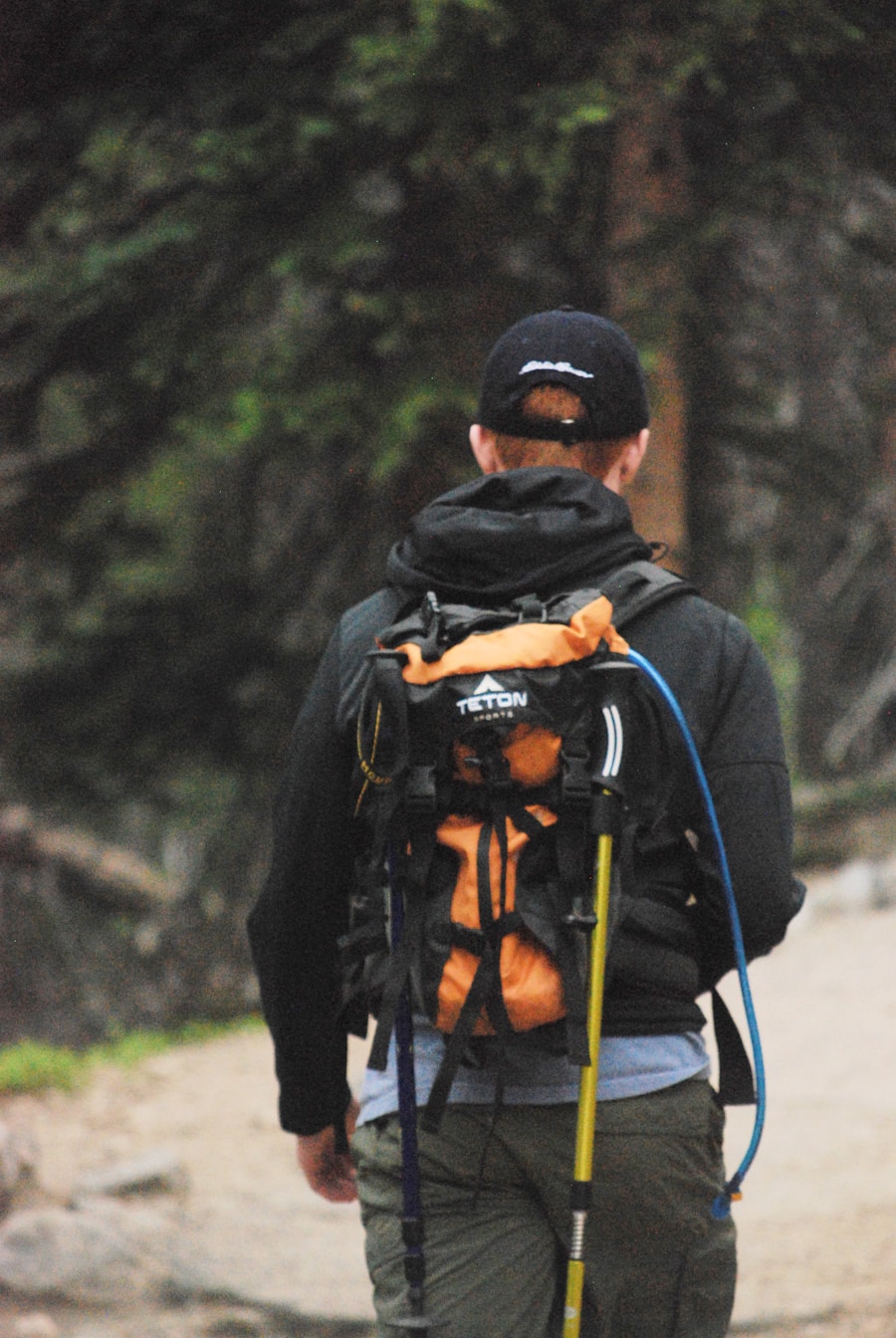
How you pack trekking poles depends first on whether they qualify for carry-on screening or need to travel in checked baggage.
For Blunt-Tipped Poles in Carry-On Luggage
Collapse or disassemble the poles as much as the manufacturer allows. This reduces their packed length and makes it easier to keep them completely inside your carry-on bag.
Use a protective sleeve or padded case so the pole sections do not scratch electronics, clothing, or the inside of your luggage. Secure loose baskets, straps, and removable sections so nothing falls out during screening.
Keep in mind that TSA approval does not override the airline’s baggage dimensions. The Federal Aviation Administration advises passengers to check their carrier’s limits before packing because airlines can impose rules that are stricter than general federal guidance.
Pro Tip: Measure the pole after it is fully collapsed, then compare that length with your airline’s carry-on dimensions. A TSA-permitted pole can still be refused at the gate if it cannot be stowed safely.
For Sharp-Tipped Poles in Checked Baggage
Collapse the poles to their shortest length and place protective covers over exposed tips. If the manufacturer allows removable tip components, secure those parts so they cannot move around inside the bag.
Place the poles inside a durable sleeve or wrap them in clothing before positioning them along the side of a suitcase or other checked bag. The goal is to keep the pointed ends from puncturing the luggage or damaging nearby equipment.
If the poles are too long for ordinary luggage, check your airline’s rules for oversized or sporting equipment before arriving at the airport. Extra fees or special handling requirements can apply.
Alternatives to Packing Hiking Poles in Carry-On
| Alternative | Pros | Cons |
|---|---|---|
| Check your own hiking poles | You keep the familiar poles, grips, length settings, and accessories you already use | May involve checked-bag fees and requires protective packing |
| Rent poles at the destination | No airport-security or luggage-size problem during the outbound trip | Availability, fit, grip style, and quality may differ from your own equipment |
| Buy inexpensive poles after arrival | Useful for a long trip when checked-bag costs are high | Adds cost and leaves you with equipment to transport, donate, or dispose of later |
Switching from trekking poles to a trekking staff, walking stick, or adjustable recreational cane does not automatically solve the carry-on problem. Security authorities can regulate those items based on their design and intended use, and some countries group walking and hiking poles together.
A genuine mobility cane is different. TSA separately lists canes as permitted through U.S. checkpoints subject to its special screening procedures. Travelers who rely on a cane or other mobility aid should follow the applicable accessibility and airline procedures rather than treating a recreational trekking pole as a substitute.
Potential Issues and Solutions for Bringing Hiking Poles in Carry-On
The Security Officer Does Not Allow the Pole Through
Even when your pole appears to meet published TSA guidance, the officer at the checkpoint has the final decision. A saved copy of the TSA guidance can help you understand and discuss the rule, but it does not override that decision.
If the pole cannot pass the checkpoint, your practical options may include returning it to a vehicle or non-secure area, placing it in checked baggage if the airline permits, or voluntarily abandoning it. Arriving early gives you more time to deal with one of these options without putting the flight at risk.
The Pole Passes TSA but Does Not Meet Airline Size Rules
TSA controls security screening, while the airline controls what can be brought into its aircraft cabin and how it must be stowed. A collapsible blunt-tipped pole can therefore pass security and still be too long for your carrier’s baggage allowance.
The safest approach is to check both sets of rules before leaving home: first determine whether the pole can pass the security checkpoint, then confirm that the collapsed pole and its bag meet the airline’s dimensions.
Your Carry-On Gets Gate-Checked
Even correctly sized cabin bags can sometimes be gate-checked when overhead space is limited. Pack your poles so they are protected if this occurs and keep valuables, medication, spare lithium batteries, and other items that must remain in the cabin separate and easy to remove.
Benefits of Traveling With Your Own Hiking Poles
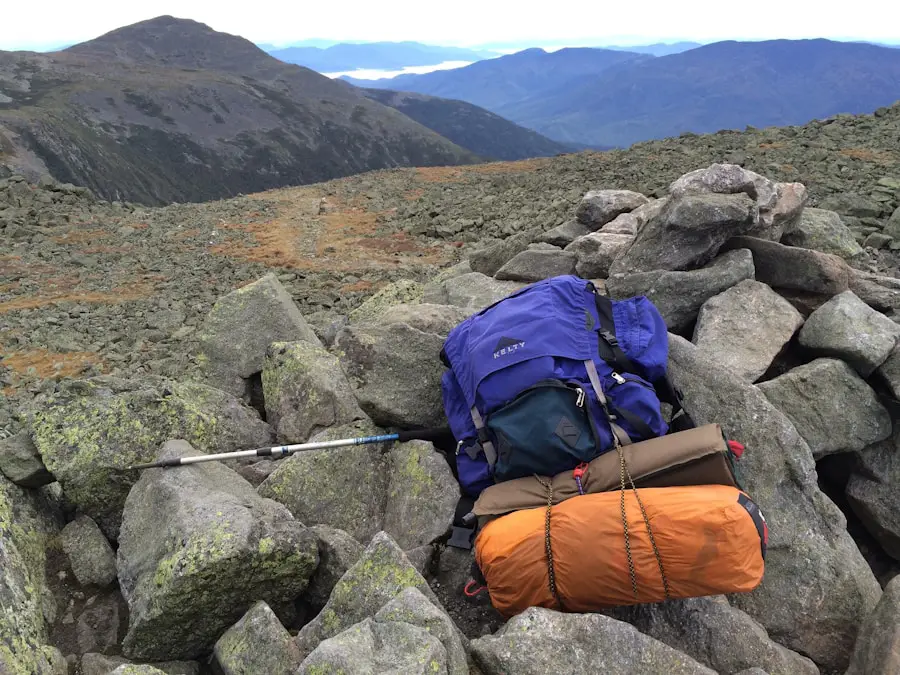
Bringing your own hiking poles means you arrive with equipment whose length, grips, straps, weight, and locking system are already familiar. That can be especially convenient when your itinerary takes you directly from the airport to a trail area where rental equipment may be limited.
Research also supports real biomechanical benefits in certain conditions. A review of trekking-pole research found that poles can reduce lower-extremity loading and may improve balance and stability, particularly when hikers are carrying substantial loads. Downhill research has also found reductions in several lower-extremity forces and joint-loading measures when poles are used correctly.
Those benefits should not be overstated. Pole use does not reduce every joint force in every walking condition, and research has found different results during level walking. Technique, terrain, pack weight, and the individual hiker all matter.
Airline Policies on Hiking Poles and Carry-On Size
Passing airport security is only the first part of the process. Your airline still decides whether an item can be safely carried and stowed on its aircraft.
American Airlines
American Airlines’ current carry-on policy allows one standard carry-on in addition to a personal item and states that the carry-on must fit in the overhead bin or under the seat, fit the airport sizer, and not exceed 22 × 14 × 9 inches including handles and wheels.
American also directs travelers to TSA requirements for security-restricted items. Therefore, its published bag dimensions should not be interpreted as a separate guarantee that every trekking pole will be accepted in the cabin.
Delta Air Lines
Delta’s current carry-on policy permits one carry-on bag and one personal item. It lists a maximum of 22 × 14 × 9 inches and 45 linear inches for standard cabin baggage.
Delta also notes that some aircraft have limited cabin storage and that items may have to be gate-checked when they cannot be accommodated. A pole that TSA allows through security therefore still needs to fit Delta’s applicable cabin requirements.
Note: Airline baggage policies, fees, aircraft restrictions, and security rules can change. Recheck both TSA and your operating airline shortly before departure rather than relying only on an old screenshot or travel article.
International Flights: Do Not Assume TSA Rules Apply
TSA rules govern U.S. airport security screening. Other countries can classify walking and trekking poles differently, so a pole accepted at a U.S. checkpoint may still be prohibited from hand luggage on the return journey.
For example, current UK government hand-luggage guidance lists walking and hiking poles as prohibited in hand luggage but permitted in hold luggage.
For an international itinerary, check the security rules for every airport from which you will depart, including the return airport and any connection where you must pass through security again. Then check the operating airline’s baggage rules separately.
Pre-Flight Hiking-Pole Checklist
- Inspect the tip: Determine whether the pole is blunt-tipped or has a pointed/sharp end.
- Check TSA guidance: For U.S. departures, confirm the current hiking-pole listing before travel.
- Measure the collapsed pole: Make sure it fits completely within the airline’s permitted cabin bag if you intend to carry it on.
- Check the airline: Review its carry-on, sporting-equipment, and checked-baggage rules.
- Protect the equipment: Secure pole sections, tips, baskets, and straps so they cannot damage the bag or other belongings.
- Check international rules: Review the security authority for each country from which you will depart.
- Have a backup: Know whether you can check, rent, or buy poles if your original transport plan fails.
Conclusion: The Safest Way to Fly With Hiking Poles
Traveling with hiking poles becomes much easier once the security rule and the airline rule are treated as two separate checks. For U.S. departures, TSA currently allows blunt-tipped hiking poles in carry-on baggage but prohibits sharp-tipped poles from the cabin. After that, the pole must still comply with the airline’s size and stowage requirements.
If your poles have pointed metal tips, checking them in a protective case is the most straightforward approach. If they are genuinely blunt-tipped and collapse small enough for your airline, carry-on transport may be possible, although the final security decision remains with the TSA officer.
International travelers should be even more cautious because another country’s rules may be stricter than TSA’s. Checking the official security authority and airline shortly before departure is the best way to avoid an unpleasant surprise at the airport.
For broader travel planning, you can also read this seasonal guide to Cape Town and our explanation of how much commission travel agents make on cruises.
Frequently Asked Questions
What are hiking poles?
Hiking poles, also known as trekking poles, are handheld poles used for stability, balance, and support while walking or hiking. Most modern models telescope or fold for storage and may have rubber, metal, or carbide-style tips depending on their intended terrain.
Can you bring hiking poles in carry-on luggage?
In the United States, TSA currently allows blunt-tipped hiking poles in carry-on baggage, subject to screening and the officer’s final decision. Sharp-tipped hiking poles are not allowed as carry-on items. The airline must also accept the pole within its size and stowage rules.
Can sharp-tipped hiking poles go in checked baggage?
Yes. TSA lists hiking poles as permitted in checked baggage. Collapse the poles, protect pointed ends, secure loose components, and place them in a durable bag or protective sleeve to reduce the risk of damage.
Are collapsible trekking poles automatically allowed in carry-on bags?
No. Collapsibility can help a pole fit within airline baggage dimensions, but TSA’s hiking-pole guidance still distinguishes between blunt and sharp tips. A folding pole with a sharp tip should not be treated as automatically carry-on compliant.
Does putting a rubber cap on a trekking pole guarantee TSA approval?
No. A rubber protector can make the tip safer to handle, but TSA officers make the final security decision. Do not rely on a removable cap as a guaranteed way to make an underlying pointed pole acceptable for carry-on baggage.
Can hiking poles be carried on international flights?
It depends on the country and airport. TSA guidance applies to U.S. security checkpoints, while other authorities may have stricter rules. For example, current UK government guidance prohibits walking and hiking poles in hand luggage and permits them in hold baggage. Check every departure country’s security rules before flying.
Are mobility canes treated the same as recreational hiking poles?
Not necessarily. TSA separately lists canes as permitted subject to special screening procedures. Travelers who require a cane or other mobility aid should follow TSA and airline accessibility procedures rather than assuming the rules for recreational trekking poles are identical.
Sources
- Transportation Security Administration — What Can I Bring? — current U.S. screening guidance for blunt-tipped and sharp-tipped hiking poles and TSA officer discretion.
- Federal Aviation Administration — Carry-On Baggage Tips — airline size, stowage, and carry-on guidance.
- American Airlines — Carry-on Bags — current American Airlines cabin-baggage dimensions and security requirements.
- Delta Air Lines — Carry-On Baggage — current Delta carry-on dimensions and cabin-storage requirements.
- UK Government — Hand Luggage Restrictions for Sports Equipment — UK rules for walking and hiking poles in hand and hold baggage.
- Wilderness & Environmental Medicine — Review of Trekking Pole Research — evidence on lower-extremity loading, balance, stability, and physiological tradeoffs.

