

Musicians worry about their instruments more than anything else in their luggage. If you are asking can you bring a guitar on a plane, the answer is yes. A guitar can travel in the cabin if it fits in the overhead bin or under a seat, and it can also be checked in a hard case.
U.S. federal law gives musicians some rights to bring instruments on board, but space is the practical limit. This guide covers the rules and how to protect your guitar.
Quick Answer
Yes. In the United States, airlines must allow a small instrument such as a guitar as carry-on if it fits in the overhead bin or under a seat, subject to space and other rules. If it does not fit, you can gate-check it or buy a seat for it, or check it in a hard case. Loosen the strings slightly and pad the case.
Key Takeaways
- A guitar can go in the cabin if it fits in the overhead bin or under the seat.
- Boarding early improves your chance of getting overhead space.
- A hard case is best for checked guitars, with soft padding inside.
- Loosen the strings slightly to protect the neck from pressure and temperature changes.
- Spare strings, tuners and small tools are fine, but keep blades out of a carry-on.
Carry-On Rights
U.S. law requires airlines to let passengers carry a small musical instrument in the cabin, if there is room in the overhead bin or under the seat, and if the instrument meets safety rules. The instrument counts as your carry-on or personal item, and the airline cannot charge an extra fee beyond the normal carry-on rules. Airlines may have specific policies for larger instruments such as cellos, which can be given their own seat for a fare. Policies differ outside the U.S., so check before you fly.
Guitar Travel Options Compared
| Option | Best for | Risk |
|---|---|---|
| Carry-on in a gig bag | Acoustic or electric guitars that fit | No room if the flight is full |
| Gate-check | When overhead space runs out | Handled by baggage staff |
| Check in a hard case | Large or valuable guitars | Highest damage risk |
| Buy an extra seat | Large instruments | Cost |
| Ship ahead | Expensive instruments | Insurance and tracking needed |
If the crew says the guitar is too large, politely ask about gate-checking it with a tag, which is safer than checking it at the counter.
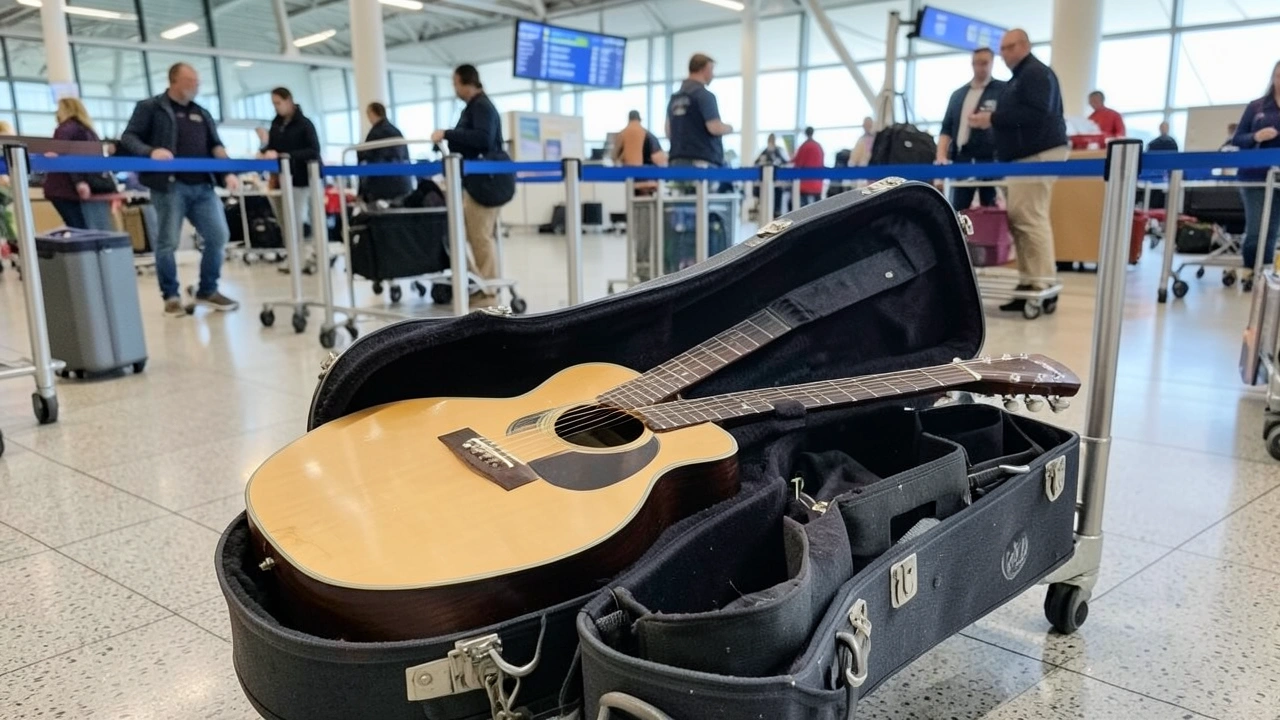
Packing a Guitar Safely
- Use a hard case, or a thick gig bag if you carry it on.
- Loosen the strings by a half step or so, but do not detune them completely.
- Pad the headstock and the body with soft clothing, so that nothing can move in the case.
- Attach a luggage tag with your name and phone number to the case.
- Buy insurance, and take photos of the guitar before you travel.
- Remove battery packs from pedals and active pickups, and carry spare batteries in the cabin.
Humidity, Batteries and Tools
Changes in humidity can crack a guitar, so use a small humidifier in the case on long trips. Lithium batteries for pedals and amps must follow the rules in our battery guide, and tools should follow the 7 inch limit in our screwdriver guide. For other gear, see speakers.
Frequently Asked Questions
Can you bring a guitar in your carry-on?
Yes, if it fits in the overhead bin or under the seat.
Can you check a guitar?
Yes, in a hard case. Gate-checking is usually safer.
Do you have to pay for a guitar?
In most cases, a guitar that fits as carry-on counts as your carry-on, with no extra fee.
Should you loosen the strings?
Slightly. Do not fully detune them.
Can you bring a guitar amp?
Yes in checked luggage, or in the cabin if small. Check batteries.
Conclusion
So, can you bring a guitar on a plane? Yes. Board early, carry it on if it fits, gate-check it if it does not and use a hard case with soft padding for the safest trip.
