
Last Updated on July 25, 2026 by Daniel Globe
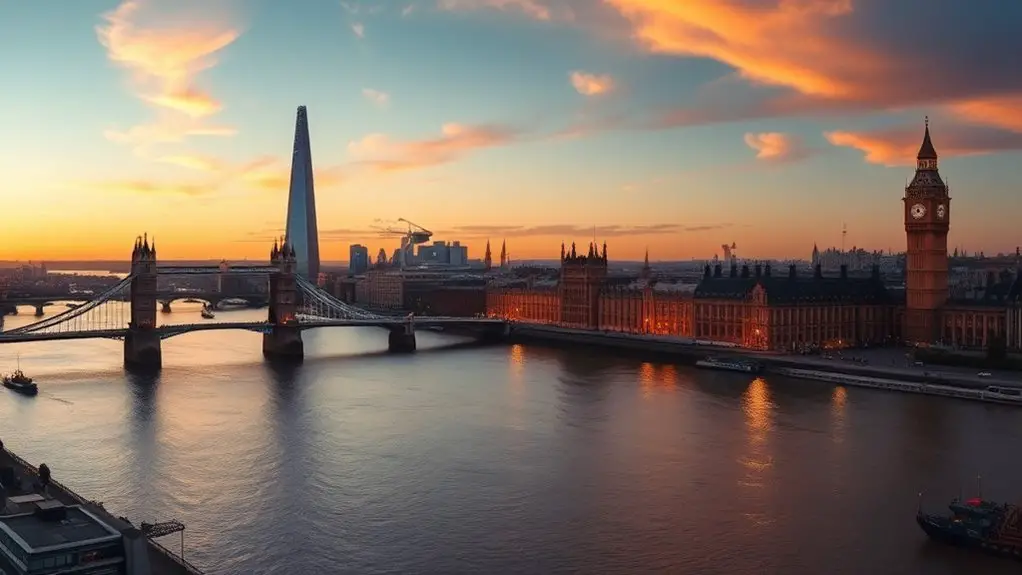
London has skyline views for almost every budget, from free hilltops and rooftop gardens to observation decks hundreds of metres above the streets. The best choice depends on what you want to see: The View from The Shard delivers dramatic height, Horizon 22 is an outstanding free indoor option, Sky Garden mixes views with greenery, and Primrose Hill or Parliament Hill offer relaxed outdoor panoramas.
Quick Answer
For maximum height, choose The View from The Shard. For a free high-rise view, book Horizon 22 or Sky Garden. Primrose Hill and Parliament Hill are best for relaxed outdoor skyline views, while the London Eye gives first-time visitors a moving panorama over Westminster and the Thames.
Key Takeaways
- The View from The Shard is the standout choice for sheer height, with viewing levels high above central London and an open-air Skydeck.
- Horizon 22 and Sky Garden are two of the strongest free high-rise options, although advance reservations are recommended.
- Primrose Hill, Greenwich Park, Parliament Hill and Alexandra Palace Park provide free outdoor views with more room to slow down.
- Tower Bridge and The Monument combine skyline views with major London history.
- Check weather, booking rules and accessibility before leaving, because the experience varies greatly between modern observation decks and historic viewpoints.
Disclosure: As an Amazon Associate I earn from qualifying purchases. Some links on this page are affiliate links, at no extra cost to you.
Best London Viewpoints at a Glance
| Viewpoint | Cost | Best For | Planning Note |
|---|---|---|---|
| The View from The Shard | Paid | Maximum height and special occasions | Book a timed ticket |
| Horizon 22 | Free | Highest free indoor viewpoint | Advance booking recommended |
| Sky Garden | Free public access | Views, plants and dining | Book ahead when possible |
| The Garden at 120 | Free | Open-air City views | Lower than the major observation decks |
| London Eye | Paid | Westminster and first-time visits | One rotation is about 30 minutes |
| Primrose Hill | Free | Sunset and picnics | Check seasonal night closures |
| Tower Bridge | Paid | History and glass floors | Ticket includes Engine Rooms |
| Greenwich Park | Free | Historic landscape and Canary Wharf | Main viewpoint is by General Wolfe statue |
| The Monument | Paid | Historic City views | 311-step climb |
| Alexandra Palace | Park free; Summit paid | North London panorama | Summit adds a guided rooftop climb |
| Parliament Hill | Free | Classic natural skyline view | Part of Hampstead Heath |
Pro Tip: Do not choose a viewpoint by height alone. Horizon 22 and The Shard are excellent for scale, the London Eye is stronger for Westminster, Tower Bridge puts you directly over the Thames, and the northern hills give the skyline more breathing room.
The View from The Shard
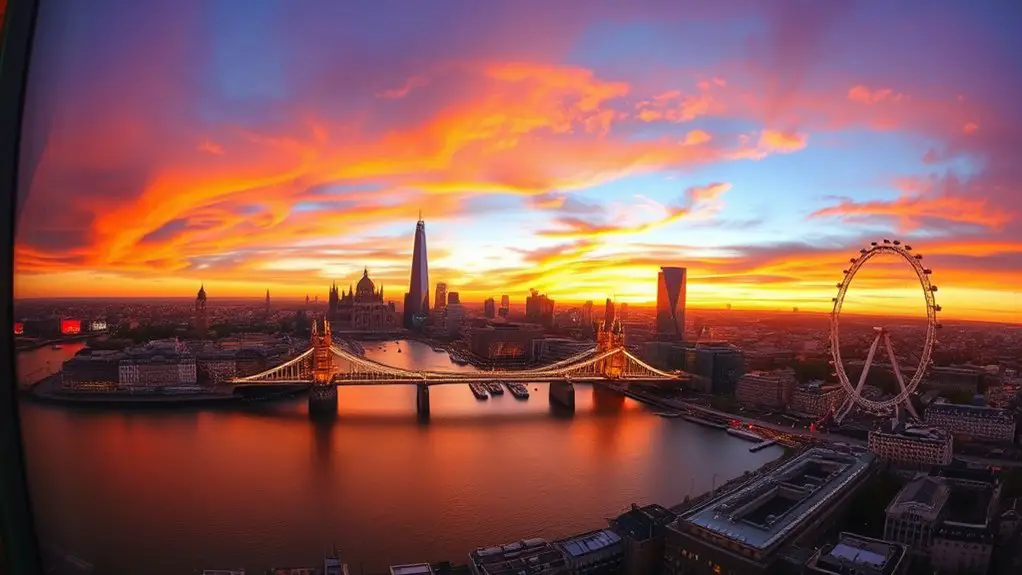
If your priority is height, The View from The Shard is one of London’s strongest choices. The attraction occupies viewing levels high inside the Shard, with the open-air Skydeck on Level 72 adding wind, weather and city noise to the experience.
Official visitor information says the view can extend for up to 40 miles in good conditions. From the upper levels, London Bridge, Tower Bridge, St Paul’s Cathedral, Canary Wharf and the Thames are easier to place in the wider geography of the city.
The biggest advantage over London’s outdoor hills is perspective: you are looking down on much of central London rather than toward it from a distance.
On a clear day, The View from The Shard offers 360-degree views stretching for up to 40 miles across London and beyond.
The attraction is paid, and poor weather can dramatically reduce visibility. Its official plan-your-visit information should be checked before booking because opening times and ticket options can change.
The View from The Shard is also designed with step-free visitor access to its viewing experience under normal operations. Hand-held personal photography is welcome, but tripods and monopods are not permitted.
Horizon 22
Horizon 22 is the biggest omission from the original list and one of the easiest recommendations for budget-conscious visitors. Located on Level 58 of 22 Bishopsgate, it describes itself as London’s highest free viewing platform.
The indoor gallery provides approximately 300-degree views over London. It is particularly good for seeing the City’s cluster of skyscrapers at close range while still looking south toward The Shard, Tower Bridge and the Thames.
Entry is free, although popular time slots can disappear quickly. Check the official Horizon 22 website for current tickets, opening times and assistance information.
Note: Horizon 22 is mainly an indoor viewing experience. That makes it a useful choice when you want a high-altitude view without standing on an exposed rooftop.
Sky Garden at 20 Fenchurch Street
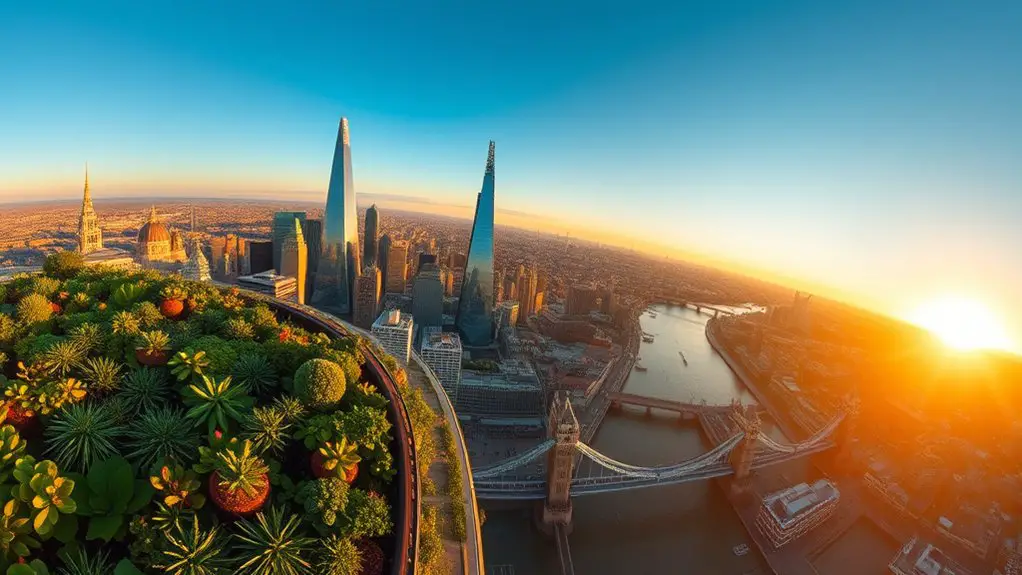
The Sky Garden at 20 Fenchurch Street combines a high-level London view with landscaped indoor planting, bars and restaurants. That makes the experience feel very different from a simple observation deck.
The viewing areas look across the City and toward major landmarks around the Thames. An outdoor terrace adds another perspective when weather and operating conditions allow it to open.
Public access is free during designated visiting periods. Advance booking is strongly recommended, especially at busy times, although Sky Garden says walk-ins may sometimes be accepted when capacity is available.
Current booking information is available on the official Sky Garden booking page.
Sky Garden has step-free access through its visitor route. Photographers should note that selfie sticks, tripod stands and umbrellas are not allowed on the open terrace.
The Garden at 120
For a lower but more open-air view of the City, consider The Garden at 120 at 120 Fenchurch Street. The public rooftop garden sits above the surrounding streets and provides close views of towers including the Walkie Talkie and the Gherkin, with wider London landmarks beyond them.
The City of London created the space as a free public roof garden. Unlike a sealed observation gallery, it feels more like a landscaped terrace where the skyline forms the backdrop.
It is not as high as Horizon 22 or The Shard, but that lower position can actually make nearby architecture more interesting because you are looking across and between the towers instead of far down on them.
Official background on the public garden is available from the City of London Corporation.
London Eye
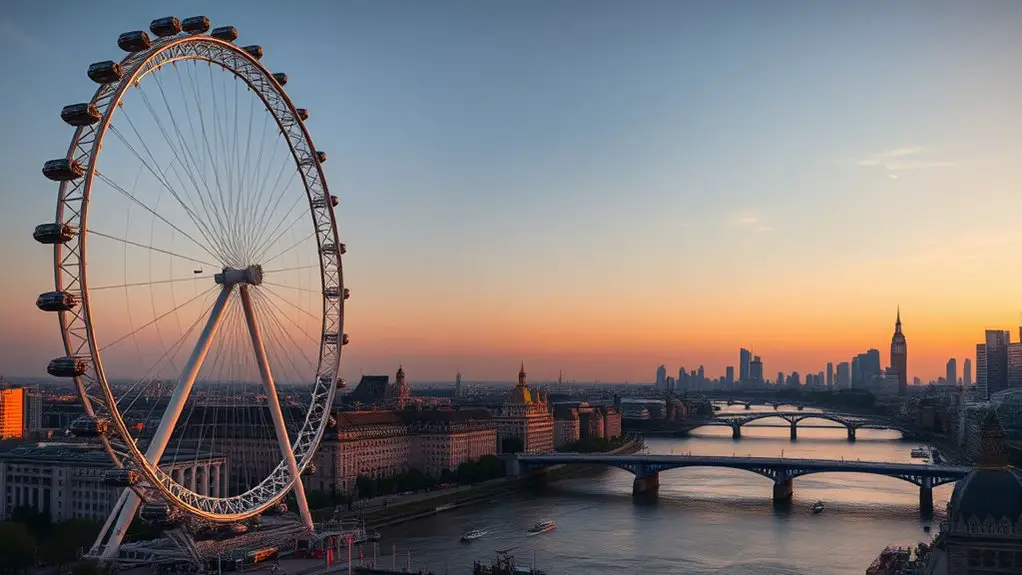
At 135 metres high, the London Eye gives you a moving view rather than a fixed observation deck. Its location beside the Thames makes it particularly strong for Westminster.
Official London Eye guidance says visibility can reach up to 40 kilometres (25 miles) on a clear day.
During the roughly 30-minute rotation, major sights can include:
- Big Ben and the Houses of Parliament
- Buckingham Palace
- St Paul’s Cathedral
- The Shard
- Tower Bridge
- The River Thames and surrounding central London
The slow movement gives you time to watch the perspective change as your capsule rises, reaches its highest point and descends again. That makes it a good first-day attraction for visitors who want a visual introduction to London’s layout.
The attraction is wheelchair accessible, although wheelchair capacity is controlled and advance reservation of an appropriate slot is strongly recommended. Cameras are permitted, but tripods are not.
See the official London Eye viewing guide for current landmark and visitor information.
Primrose Hill
Primrose Hill offers the opposite experience from a skyscraper observation deck. Instead of elevators and glass walls, you walk up a grassy hill and look south across a broad sweep of London.
The summit is one of the capital’s protected viewpoints and is known for its long skyline view. The towers of central London form a relatively narrow band on the horizon, which gives photographs a classic “city beyond the park” composition.
The grassy slopes also make Primrose Hill a good place to sit rather than simply take a photograph and leave. Sunset is popular because the falling light changes the skyline while the foreground remains open and green.
Stroll through the surrounding parkland and nearby streets before or after visiting the summit rather than treating the hill as a five-minute photo stop.
The viewpoint itself is free. Check the Royal Parks Primrose Hill page before a late visit. In 2026, overnight weekend closures apply during part of the year, including Friday, Saturday and Sunday night closures from 10 p.m. to 6 a.m. during the published summer period.
Tower Bridge Walkways
Tower Bridge is one of the best choices when you want the viewpoint itself to be part of the attraction. Your ticket takes you into the Towers and high-level Walkways before continuing through the wider visitor experience, which includes the historic Engine Rooms.
The Walkways sit about 42 metres above the Thames and combine large windows with glass-floor sections looking directly down toward the bridge roadway and river.
Glass Floor Experience
The glass floors are positioned above the bridge’s bascules. Looking down, you can watch road traffic, pedestrians and boats from an angle that is impossible from the riverbank.
- Look straight down toward the road and Thames.
- Watch traffic cross the bridge beneath you.
- Time your visit with a scheduled bridge lift for an especially unusual view.
- Use the normal solid walkway beside the glass if you prefer not to step onto it.
The glass section adds a mild thrill without turning the visit into an extreme-height attraction.
Views from the Walkways
The views differ depending on which direction you face. Official Tower Bridge material highlights landmarks such as HMS Belfast, the Tower of London, St Paul’s Cathedral and London Bridge from the western side, while views toward the east extend toward the Docklands and Canary Wharf.
The Shard is also hard to miss from this part of London. For photographers, the real strength is the mixture of river, historic masonry, modern towers and working bridge machinery rather than maximum altitude.
Historical Bridge Insights
Tower Bridge opened in the Victorian period as both an important Thames crossing and a movable bridge that allowed river traffic to continue passing through central London.
During the visitor route you can examine the Gothic-inspired architecture and learn how the bascules were powered. The separate Victorian Engine Rooms preserve machinery and interpretation connected with the bridge’s historic lifting system.
Current tickets, opening information and accessibility guidance are available on the official Tower Bridge website.
Greenwich Park
Greenwich Park gives you one of London’s most recognizable park-to-city compositions. The main viewpoint near the General Wolfe statue looks down across the Queen’s House and Old Royal Naval College toward the Thames, with Canary Wharf rising beyond.
The viewing area has been improved as part of the Greenwich Park Revealed project, creating a larger and more accessible public space with additional seating.
| Feature | Description | Why It Matters |
|---|---|---|
| Royal Observatory area | Historic hilltop setting beside the famous viewpoint | Combines skyline views with Greenwich’s scientific history |
| Canary Wharf | Modern towers beyond the river | Creates the viewpoint’s distinctive old-versus-new contrast |
| Park activities | Walking, picnicking, gardens and wildlife | Makes the trip worthwhile beyond the viewpoint itself |
Greenwich Park’s deer also returned in 2025 following improvements to their paddock and habitat, so wildlife can again be part of a wider park visit.
See the Royal Parks Greenwich Park guide for current visitor information.
The Monument to the Great Fire of London
The Monument combines a compact City panorama with one of London’s best-known historical memorials. Designed by Christopher Wren and Robert Hooke, the column commemorates the Great Fire of 1666.
Reaching the viewing platform requires climbing 311 spiral steps. The reward is a 360-degree view from the heart of the City rather than the very high bird’s-eye perspective offered by a modern skyscraper.
From the top, the surrounding City towers feel unusually close, while the Thames, the Shard and other landmarks appear beyond the dense rooftops.
The Monument stands 202 feet tall, and the public viewing platform is lower than the top of the column. Its relatively modest height is part of its appeal: you can still read the streets and buildings below rather than seeing London only as a distant pattern.
Warning: The viewing platform is reached by 311 steps and has no lift to the top. The Monument states that it is not suitable for wheelchair users or visitors with mobility difficulties who cannot manage the staircase.
Check current hours, ticket information and bag restrictions on The Monument’s official website.
Alexandra Palace
Alexandra Palace gives you two different ways to experience the London skyline: a free panorama from its hilltop park and a newer ticketed rooftop adventure.
Panoramic Views from Alexandra Palace Park
Alexandra Palace Park sits high in North London, allowing the central skyline to appear across a broad foreground of neighborhoods and trees. The distance creates a very different view from the close-up City skyscraper observation decks.
The park is a strong choice for visitors who want space to walk, sit or combine the skyline with another activity at Alexandra Palace.
Summit Rooftop Adventure
A major 2026 addition is Summit, Alexandra Palace’s guided rooftop experience. It opened in February 2026 and takes participants across a purpose-built route on the Palace roof toward the Angel of Plenty statue.
The official attraction describes the climb as reaching 130 metres above sea level, with 360-degree views extending up to 25 miles in suitable conditions.
Summit is a ticketed activity rather than part of the free park experience. Daytime, sunset and after-dark climb options may be available depending on the schedule.
Visit the official Summit page for current restrictions and booking details.
Historical and Cultural Significance
Alexandra Palace first opened in 1873 as a public entertainment venue. It later became one of the most important sites in broadcasting history: the BBC launched the world’s first regular high-definition television service from Alexandra Palace in 1936.
That heritage gives the viewpoint extra depth. You are not simply looking toward modern London; you are standing at a site that has watched the city change for more than 150 years.
Parliament Hill
Set within Hampstead Heath, Parliament Hill rises to about 98 metres and provides one of North London’s best-known natural panoramas.
The City of London identifies landmarks visible from the viewpoint including:
- St Paul’s Cathedral
- The Shard
- The Gherkin
- The Palace of Westminster
The viewpoint works well because the skyline sits beyond the open landscape of Hampstead Heath. It feels calmer and less commercial than an observation deck, and there is no admission charge.
The view also has historical importance and is legally protected. Parliament Hill’s association with its current name dates to the 17th century and the English Civil War.
Hampstead Heath has surfaced paths, accessible facilities and mobility support in parts of the park, although terrain varies. Check the City of London Parliament Hill guide before visiting if step-free routing matters to you.
Which London Viewpoint Should You Choose?
There is no single viewpoint that wins every category.
- Best for maximum height: The View from The Shard.
- Best free high-rise option: Horizon 22.
- Best free viewpoint with atmosphere: Sky Garden.
- Best for Westminster: London Eye.
- Best for history: Tower Bridge or The Monument.
- Best relaxed sunset setting: Primrose Hill.
- Best historic park panorama: Greenwich Park.
- Best North London panorama: Parliament Hill or Alexandra Palace.
- Best new adventure viewpoint: Alexandra Palace Summit.
Best Time for London Skyline Views
Clear weather matters more than the exact hour. Low cloud, haze and heavy rain can hide distant landmarks even from the tallest viewing platforms.
Daylight is usually best when you want to identify buildings. Golden hour gives warmer photographs, while night visits emphasize illuminated roads, bridges and towers.
For outdoor hills, sunrise and late afternoon can provide softer light and fewer people. For ticketed attractions, compare the sunset time with the attraction’s entry schedule before choosing a slot.
Pro Tip: Check the forecast on the morning of your visit. A slightly less convenient time with clear visibility will usually produce a better skyline experience than the perfect sunset slot hidden behind low cloud.
Frequently Asked Questions
Are These Viewpoints Wheelchair Accessible?
Accessibility varies. The View from The Shard, London Eye, Sky Garden and Tower Bridge provide substantial step-free or wheelchair access, although advance arrangements can be useful. Greenwich Park and Hampstead Heath have accessible routes in parts of their grounds. The major exception on this list is The Monument: its viewing platform requires a 311-step climb and is not wheelchair accessible.
What Are the Best Times to Avoid Crowds?
Weekday mornings are usually a sensible starting point for free outdoor viewpoints. For timed attractions, the first available sessions can feel calmer than peak afternoon and sunset periods. Primrose Hill, Greenwich Park and Parliament Hill can become busy on warm evenings and weekends.
Is There an Admission Fee for Each Viewpoint?
No. Horizon 22, Sky Garden, The Garden at 120, Primrose Hill, Greenwich Park, Alexandra Palace Park and Parliament Hill can be visited without a standard viewpoint admission charge. The View from The Shard, London Eye, Tower Bridge, The Monument and Alexandra Palace Summit are paid experiences. Free high-rise attractions may still require a timed reservation.
Can I Bring a Tripod for Photography?
Do not assume so. The View from The Shard prohibits tripods and monopods, the London Eye does not allow tripods onboard, and Sky Garden prohibits tripod stands on its open terrace. Hand-held cameras and phones are the simplest option. Check the current rules of any attraction before bringing larger photography equipment.
Are There Nearby Parking Facilities Available?
Parking varies greatly and should not be assumed. Central viewpoints such as the London Eye, Sky Garden, Horizon 22 and The Shard are generally easier to reach by public transport than by car. The London Eye, for example, does not operate its own visitor car park. Hampstead Heath has designated car parks, including accessible bays, but charges and closing times apply. Check the official attraction or park page before driving.
Sources
- Visit London — Best viewpoints in London — overview of major London skyline viewpoints.
- The View from The Shard — viewing levels, visitor information and current operating guidance.
- Horizon 22 — free-ticket information, viewing platform details and accessibility.
- Sky Garden — current free public-access and booking guidance.
- London Eye — height, visibility and landmarks visible from the attraction.
- Tower Bridge — official Walkways, Glass Floors, Engine Rooms and visitor guidance.
Conclusion
London’s best viewpoints are not simply the tallest ones. The View from The Shard delivers the dramatic high-altitude experience, while Horizon 22 and Sky Garden prove that excellent skyscraper views can also be free. For a slower outdoor experience, Primrose Hill, Greenwich Park, Parliament Hill and Alexandra Palace place the skyline beyond some of London’s best green spaces.
Tower Bridge and The Monument add history to the view, while the London Eye is especially useful for seeing Westminster and the Thames unfold beneath you. Pick the viewpoint that matches your budget and preferred part of the skyline, check the weather before leaving, and verify current booking and access rules before your visit.
