
Last Updated on July 24, 2026 by Daniel Globe
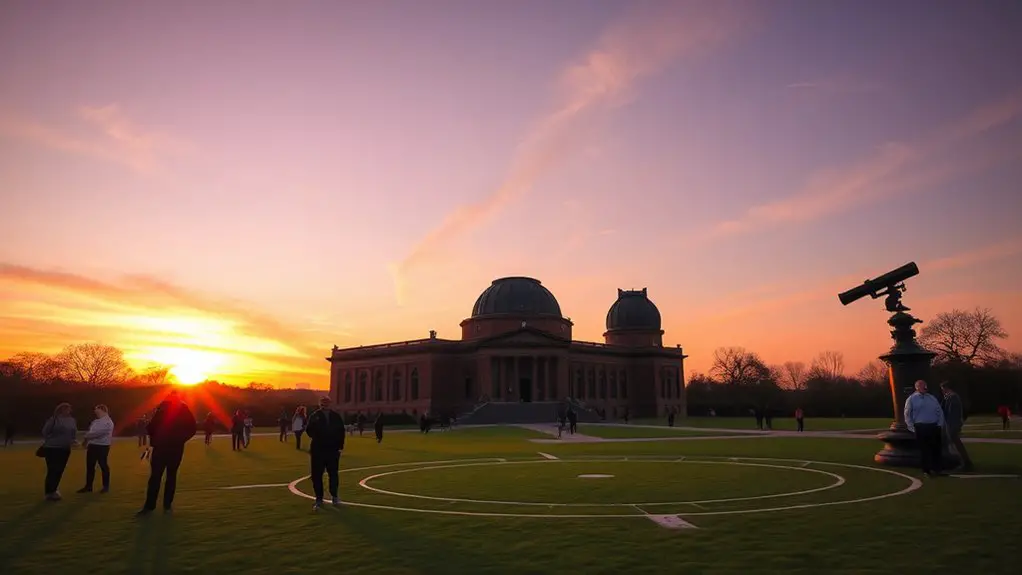
Planning a trip to the Royal Observatory Greenwich requires balancing London’s unpredictable weather, seasonal crowd surges, and celestial event schedules. Sitting atop Greenwich Park with sweeping views across the River Thames and London skyline, this historic site—home to Greenwich Mean Time (GMT) and the world-famous Prime Meridian Line (Longitude 0°)—offers a vastly different experience depending on when you walk through its gates.
Quick Answer
The best time to visit the Royal Observatory Greenwich is between May and September on a weekday morning at 10:00 AM. This period offers warm weather, clear skies for stargazing, and extended daylight hours. Arriving right at opening lets you stand on the Prime Meridian Line with minimal wait time before afternoon tour groups arrive.
Key Takeaways
- Prime Visiting Window: Late spring to early autumn (May–September) brings dry weather, mild temperatures (15°C to 23°C), and optimal visibility across London.
- Daily Timing Strategy: Book the first entry slot of the day (10:00 AM) on Tuesday, Wednesday, or Thursday to avoid long lines at the Meridian Line.
- Off-Peak Perks: Visiting in late autumn or winter offers lower online ticket rates, quiet gallery spaces, and early sunsets ideal for planetarium shows.
- Special Evening Access: Ticketed nighttime stargazing sessions using the 28-inch Great Equatorial Telescope run primarily from October through March.
Disclosure: As an Amazon Associate I earn from qualifying purchases. Some links on this page are affiliate links, at no extra cost to you.
Best Months for Pleasant Weather and Clear Views
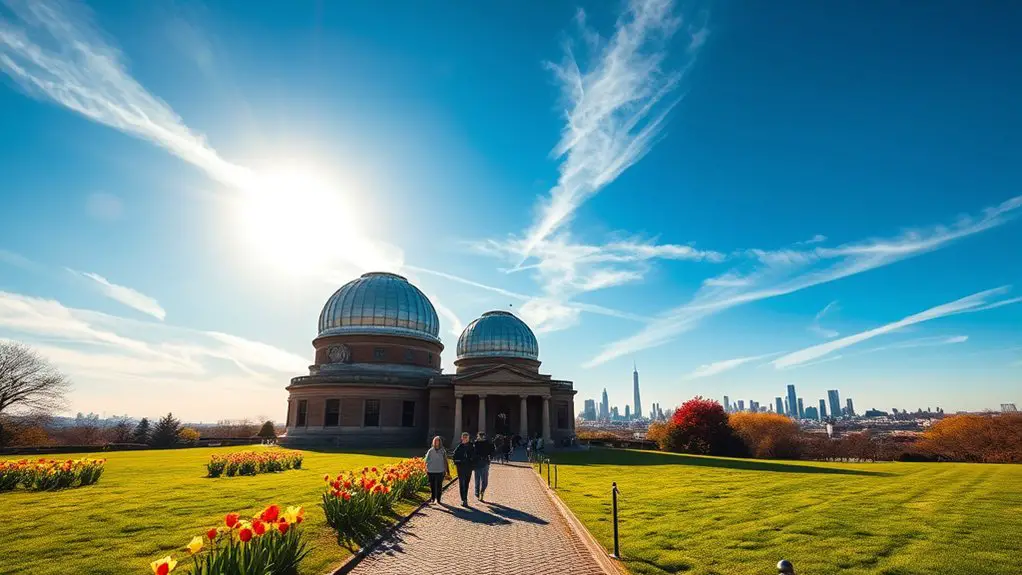
The ideal months to visit the Royal Observatory Greenwich for pleasant weather and clear views across London are from May through September. During this window, daily temperatures in London average between 15°C and 23°C (59°F to 73°F), making the steep uphill walk through Greenwich Park comfortable and enjoyable.
Clearer skies during these late spring and summer months significantly improve your visibility from the Observatory’s courtyard. You can enjoy crisp, unobstructed views of Canary Wharf, the Queen’s House, the National Maritime Museum, and the iconic skyline stretching toward Central London. Daylight hours extend up to 16 hours in mid-June, allowing you to combine an observatory visit with outdoor exploration of the surrounding historic maritime borough.
Pro Tip: Photographers should visit during late afternoon in May or September. The “golden hour” light illuminates Flamsteed House and casts dramatic light across the Greenwich Meridian courtyard without the intense overhead glare of midsummer noon.
Peak Visiting Seasons and How to Avoid Crowds
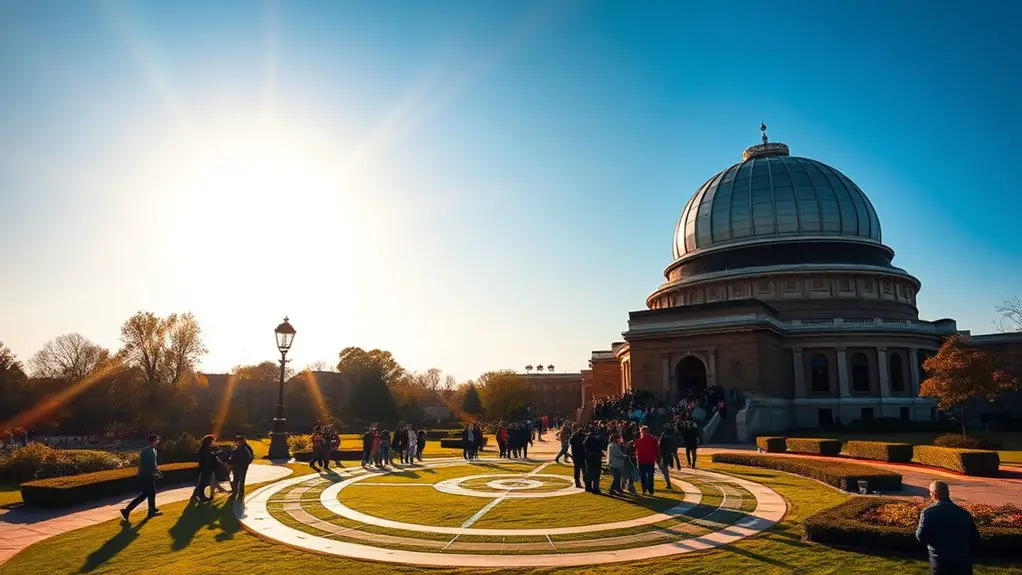
Peak visitor traffic at the Royal Observatory occurs during the summer months of June through August, as well as during UK school holiday periods (Easter week, late May half-term, and Christmas week). During these times, international tourists and local school groups converge on the courtyard, leading to significant congestion around key highlights.
To avoid long wait times during peak periods, keep these practical crowd management strategies in mind:
- Target the 10:00 AM Entry Slot: The Observatory opens at 10:00 AM daily. Booking the very first timed-entry ticket allows you to head straight to the Prime Meridian Line before queue times build to 30–45 minutes by midday.
- Choose Mid-Week Days: Tuesdays, Wednesdays, and Thursdays experience substantially lower tourist volume than weekends or Mondays.
- Visit During Term Time: Early May, September, and October offer mild weather with a fraction of the summer tourist traffic.
- Reverse Your Tour Route: If you arrive mid-day, photograph the Meridian Line last (near closing time at 4:30 PM) and explore Flamsteed House and the Harrison Chronometers first when inner galleries are less crowded.
Special Events and When They Take Place
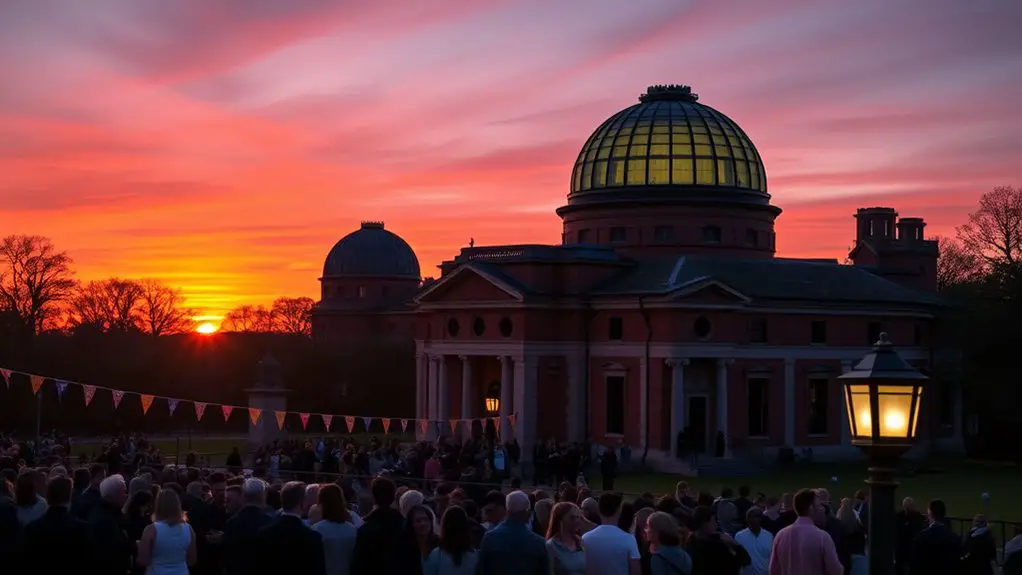
Throughout the year, the Royal Observatory hosts dedicated scientific, historical, and astronomical events that offer access beyond general opening hours. Aligning your visit with these scheduled events provides a deeper, expert-guided perspective on space science.
Key annual and recurring events include:
- An Evening with the Stars (Autumn to Spring): Special night-time sessions held between October and March. Visitors can look through the Victorian 28-inch Great Equatorial Telescope—the largest refracting telescope in the UK—guided by real astronomers.
- Peter Harrison Planetarium Special Shows: Year-round immersive shows narrated live by astronomers, ranging from family-focused shows (“Ted’s Space Adventure”) to deep-space exploration lectures.
- Equinox and Solstice Demonstrations (March, June, September, December): Historical talks focusing on how early Astronomers Royal calculated time, seasonal shifts, and the movement of the sun along Longitude 0°.
- Astronomy Photographer of the Year Exhibition: Held annually in the exhibition galleries, displaying world-class astrophotography from international competitors.
Ideal Times for Family Visits and Educational Tours
Visiting with children or taking an educational self-guided tour is most rewarding during term-time spring (April–May) and early autumn (September–October). During these months, calmer gallery spaces allow young visitors to interact comfortably with hands-on timekeeping and astronomical exhibits.
Family-friendly highlights to schedule into your trip include:
- Flamsteed House & Octagon Room: Designed by Sir Christopher Wren in 1675, where kids can see how the first Astronomer Royal lived and worked.
- John Harrison’s Marine Chronometers: The famous H1, H2, H3, and H4 sea clocks that solved the historic “longitude problem” in the 18th century.
- The Time Ball Drop: Watch the bright red Time Ball atop Flamsteed House drop precisely at 1:00 PM (13:00) daily—a navigational signal used by ships on the Thames since 1833.
Note: Prams and large buggies must be left in designated cloakroom areas before entering the historic Flamsteed House due to narrow 17th-century doorways and steep spiral staircases.
Visiting During Off-Peak Seasons for a More Relaxed Experience
Choosing to visit during the off-peak season (November through March, excluding Christmas holidays) dramatically alters the atmosphere of Greenwich Park and the Observatory galleries.
Fewer Crowds, Greater Ease
Off-peak months allow for an unhurried, contemplative visit. You can spend uninterrupted time examining Harrison’s intricate clocks, speak at length with gallery facilitators, and step onto the Prime Meridian Line without standing in long outdoor queues in the wind. The surrounding Greenwich Park offers peaceful, wintery vistas across London.
Lower Admission Rates & Booking Advantages
While base entry prices set by Royal Museums Greenwich are standard, booking online in advance guarantees lower rates compared to walk-up gate pricing. Off-peak months also feature broader availability for Planetarium tickets and combined museum passes (which include entry to the nearby historic tea clipper Cutty Sark).
Opportunities for Nighttime Visits and Evening Events
While the Observatory closes its general admission gates at 5:00 PM, evening ticket holders can access the grounds after dark. Because optical astronomy requires dark skies, evening telescope viewings and planetarium lectures take place primarily during late autumn and winter when London sunsets occur early (between 4:00 PM and 6:00 PM).
“Peering through the 28-inch Great Equatorial Telescope on a crisp winter night provides a direct connection to centuries of astronomical history.”
During these sessions, astronomers calibrate high-powered instruments toward visible targets such as the Moon’s craters, Jupiter’s Galilean moons, Saturn’s rings, or the Orion Nebula, offering clear commentary regardless of urban light pollution.
Weather Considerations for Planning Your Trip
London’s seasonal weather directly impacts visibility from Greenwich Hill and comfort during outdoor portions of the site (such as standing on the Meridian Line). Review seasonal patterns below to prepare your trip itinerary:
At a Glance: Seasonal Conditions at Greenwich
| Spring (Mar–May) | 10°C to 17°C (50°F–63°F). Moderate crowds; crisp daylight; blooming park flora. Excellent balance overall. |
| Summer (Jun–Aug) | 18°C to 24°C (64°F–75°F). Peak tourist crowds; long daylight; hot hill walks. Advance booking mandatory. |
| Autumn (Sep–Nov) | 9°C to 18°C (48°F–64°F). Decreasing crowd sizes; beautiful foliage in Greenwich Park; frequent clear skies in early autumn. |
| Winter (Dec–Feb) | 2°C to 9°C (36°F–48°F). Lowest crowds; short daylight (sunsets ~4:00 PM); best season for evening telescope events. |
Tips for Maximizing Your Visit Throughout the Year
To ensure a smooth trip regardless of season, follow these practical logistics recommendations:
- Arrive via River Boat: Take the Uber Boat by Thames Clippers to Greenwich Pier for a scenic arrival, then walk past the Cutty Sark and up through Greenwich Park.
- Dress in Layers with Comfortable Shoes: The walk from Greenwich station or Cutty Sark DLR up Greenwich Hill is relatively steep. Wear sturdy footwear and bring wind-resistant clothing, as the hill summit can be breezy.
- Combine Tickets: Purchase a Royal Museums Greenwich day pass if you plan to visit both the Observatory and the National Maritime Museum or Cutty Sark. Note that entry to Greenwich Park itself is completely free.
- Pre-book Planetarium Shows: Planetarium seating is limited. Secure show tickets online alongside your main general admission ticket to guarantee entry.
Warning: Last admission to the Royal Observatory galleries is strictly at 4:30 PM (30 minutes before the 5:00 PM site closure). Arrive at least 2 hours prior to closure to enjoy the full site without rushing.
Frequently Asked Questions
Are there discounted tickets available during specific times?
Yes. Booking your tickets online in advance through the official Royal Museums Greenwich website offers lower pricing compared to on-the-day gate rates. Discounts are also available for students, children under 16, seniors, and family groups. Members of Royal Museums Greenwich receive free unlimited entry year-round.
Can I visit the Observatory if I have mobility challenges?
Yes, though some historic buildings present access challenges. While Flamsteed House has narrow staircases, the Peter Harrison Planetarium, Meridian Courtyard, and modern exhibition spaces are step-free and wheelchair accessible. Step-free routes up Greenwich Hill are available via Greenwich Park pathways, and step-free parking spaces can be booked in advance.
Is there parking nearby, and what are the options?
Parking near the Observatory is extremely limited. There are pay-and-display parking spaces inside Greenwich Park (limited stay) and public car parks in Greenwich town centre. Public transport is strongly recommended: take the Docklands Light Railway (DLR) to Cutty Sark station, National Rail to Greenwich Station, or the river boat to Greenwich Pier.
Are guided tours included in the general admission fee?
General admission includes access to Flamsteed House, the Harrison Chronometer galleries, the Meridian Courtyard, and an interactive audio guide. Specialist guided tours, such as astronomer-led stargazing sessions or specific Planetarium shows, require a separate or upgrade ticket.
How accessible are the facilities for visitors with disabilities?
Facilities are well-equipped with accessible toilets, induction loops in the Planetarium, and tactile models in key gallery areas. Essential companion/carer tickets are provided free of charge when booked alongside a paid admission ticket.
Conclusion
To make the most of your visit to the Royal Observatory Greenwich, aim for a weekday morning between May and September. Arriving at 10:00 AM ensures minimal wait times at the Prime Meridian Line, warm conditions for walking through Greenwich Park, and panoramic visibility across London. If you prefer quiet galleries and nighttime stargazing through giant historic telescopes, plan an off-peak winter visit around an evening astronomy event. Booking online in advance and taking public transport will guarantee a smooth, enriching experience at the home of time and space.
Sources
- Royal Museums Greenwich — Official visiting hours, ticket options, and event schedules.
- The Royal Parks: Greenwich Park — Park opening times, mobility access routes, and visitor information.
- Transport for London (TfL) — DLR, rail, and Thames Clipper river boat transport maps to Greenwich.
