
Last Updated on July 31, 2026 by Daniel Globe
The best time to see the Northern Lights in Iceland depends on more than the month you visit. You need enough darkness, a clear or partly clear sky, and suitable space-weather conditions at the same time. Iceland’s aurora season usually runs from late August to late April, with the longest viewing windows during the winter months.
Quick Answer
The best time to see the Northern Lights in Iceland is from late August to late April, with November through March offering the longest dark nights. September, October, and March often provide a useful balance of darkness and daylight. Clear skies and current solar activity matter more than the month, and sightings are never guaranteed.
Key Takeaways
- Iceland’s practical Northern Lights season normally extends from late August through late April.
- November through March provide the longest dark nights, while September, October, and March leave more daylight for sightseeing.
- No month has a reliable sighting percentage. Cloud cover and current auroral activity are more important than the calendar.
- Check the Icelandic Meteorological Office forecast, SafeTravel alerts, and road conditions before leaving.
- Use designated parking areas, dress for wind and cold, and allow several nights rather than relying on one outing.
Disclosure: As an Amazon Associate I earn from qualifying purchases. Some links on this page are affiliate links, at no extra cost to you.
How the Northern Lights Form
The Northern Lights, also called the Aurora Borealis, appear when energetic particles from space interact with gases in Earth’s upper atmosphere. Those gases release the added energy as light. Oxygen commonly produces green or red light, while nitrogen contributes blue, violet, and pink shades. The exact color depends partly on the gas, altitude, and energy involved, as explained by NASA’s aurora guide.
Iceland sits at a high northern latitude where auroras are seen regularly when conditions cooperate. Rural areas also offer large stretches of dark sky, although Reykjavík and other populated places still create light pollution.
The lights have become an important part of Iceland’s winter tourism and cultural identity. Stories about auroras, spirits, good fortune, and supernatural events appear in northern folklore, but traditions vary and should not be confused with the science behind the display.
What Conditions Are Needed to See the Northern Lights?
Three conditions must come together before an aurora can be seen clearly:
- Darkness: The sky must be dark enough for the light to stand out.
- Clear or partly clear skies: Thick clouds can hide even a strong aurora.
- Auroral activity: Charged particles and Earth’s magnetic field must produce a visible display at that time and location.
A dark night is not enough by itself. The best viewing opportunity occurs when darkness, an opening in the clouds, and active space weather overlap.
Note: Northern Lights sightings are never guaranteed. A long trip can still include cloudy or quiet nights, while a strong display can sometimes appear during a period labeled as having low activity.
Weather and Climate in Iceland
Iceland has a changeable maritime climate influenced by the North Atlantic. It is often milder than its latitude suggests, but wind, rain, snow, and rapid temperature changes are common. The Icelandic Meteorological Office notes that warm Atlantic air frequently meets colder Arctic air, producing frequent weather changes and stormy conditions.
Clear skies are essential for aurora watching, so cloud cover is often more important than the temperature. One part of Iceland may be overcast while another has a usable break in the clouds. This is why experienced guides and independent travelers check regional forecasts rather than relying on a general forecast for the whole country.
Winter also brings snow, ice, strong wind, and limited daylight. Road conditions can change during an evening, and routes that were open earlier may become difficult or close.
Warning: Do not chase an aurora into unsafe weather. Check official alerts and road conditions before departure and again before returning. Never stop on an active road, blind curve, bridge, or narrow shoulder to take photographs.
Peak Northern Lights Season in Iceland
According to the official Visit Iceland aurora guidance, the season generally runs from late August until late April. These dates are not fixed boundaries. They describe the part of the year when Iceland has enough nighttime darkness for an aurora to become visible.
November through March form the darkest core of the season. The long nights create more possible viewing hours, but they also bring winter storms, icy roads, and short sightseeing days.
September, October, and March are popular alternatives because they still provide useful darkness while leaving more daylight for driving and outdoor attractions. Late April and late August are more marginal because the dark viewing window is shorter.
The summer midnight-sun period is not suitable for normal aurora viewing because the sky does not become dark enough. Darkness gradually returns in late August, and the viewing window then expands through autumn.
Best Months to See the Northern Lights in Iceland
There is no defensible percentage that can tell an individual traveler how likely a sighting will be in a particular month. The following table compares darkness, weather, and trip-planning tradeoffs instead.
| Month | Typical Viewing and Travel Conditions |
| September | Darkness increases quickly during the month. Temperatures may be milder than in midwinter, but wind, rain, and early winter conditions are possible. |
| October | Longer nights provide a broad viewing window, while daytime sightseeing remains practical. Snow, ice, storms, and temporary road problems can still occur. |
| November | Very long nights create many potential viewing hours. Daylight is limited, and stronger winter weather can disrupt driving or tours. |
| December | Among the darkest periods of the year. It is suitable for aurora watching but offers little daylight and can bring storms, snow, holiday demand, and travel delays. |
| January | Long dark nights continue. Deep-winter road conditions, wind, and snow make flexibility especially important. |
| February | Nights remain long, but daylight begins increasing. Winter weather and icy roads are still common concerns. |
| March | A useful balance of nighttime darkness and daytime sightseeing. Conditions remain wintry, and neither clear skies nor strong auroral activity is guaranteed. |
| April | Early April can still provide dark viewing periods. The window becomes shorter quickly as Iceland approaches its bright summer season. |
Which Month Is Best for Your Trip?
- For the longest darkness: Choose November through February, while accepting short sightseeing days and more demanding winter travel.
- For a balance of darkness and daylight: Consider September, October, or March.
- For snowy foregrounds: January through March may provide winter scenery, but snow cover is never guaranteed.
- For easier independent travel: Early autumn or March may be preferable to midwinter, although severe weather can occur in any part of the season.
Best Time of Night and How to Read the Forecast
An aurora can appear at any point after the sky becomes dark. Visit Iceland reports that displays are seen most frequently around 11 p.m. and recommends being outside for at least the period from roughly 10 p.m. to 1 a.m. This is a practical viewing window rather than a guaranteed schedule.
Use this forecast process on the day of your outing:
- Check cloud cover first. Open the Icelandic Meteorological Office aurora forecast. White areas on its map indicate clearer skies, while green areas indicate more cloud.
- Review expected auroral activity. The forecast includes an activity scale, but even a low rating can produce a visible display in Iceland.
- Compare several regions. Look for a safe location under the best expected opening in the clouds rather than driving toward the highest activity number alone.
- Check again before leaving. Weather and cloud forecasts can change during the evening.
- Watch the sky patiently. Auroras may appear in waves, fade, and return later.
Pro Tip: Prioritize a clear patch of sky over a high Kp number. In Iceland’s latitude, a modest display under clear skies can be more rewarding than a stronger forecast hidden behind clouds.
Moonlight can brighten the background sky and make faint auroral details harder to see. However, a full moon does not automatically ruin an outing, and a strong aurora may remain clearly visible. The NOAA viewing guide recommends considering moon phases as one of several factors rather than treating them as a strict rule.
Choosing the Right Locations for Northern Lights Viewing
The best location is not always the most famous one. Choose a place with a reasonably dark sky, a safe route, legal parking, and a favorable cloud forecast.
Products Worth Considering

🎀 [NORTHERN LIGHTS ORNAMENT]: Capture the wonder of nature with our personalized Northern Lights ornament, a keepsake that symbolizes awe, adventure, and beauty. This custom travel ornament recalls magical skies and cherished memories of seeing the aurora borealis. A stunning Christmas decoration, this Northern Lights ornament brings natural elegance and inspiration to your celebrations.


Þingvellir National Park
Þingvellir offers dark surroundings, broad views, and a dramatic rift-valley landscape within reach of Reykjavík. Winter snow and ice can affect roads and walking paths, so check conditions and use official parking areas.
Jökulsárlón Glacier Lagoon
Jökulsárlón can provide striking reflections and ice-filled foregrounds. It is far from Reykjavík, however, and reaching it may involve a long winter drive. Remain on safe visitor paths, stay away from unstable ice and water edges, and account for parking arrangements and changing road conditions.
Snæfellsnes Peninsula
The Snæfellsnes Peninsula offers coastlines, mountains, lava fields, and the well-known Kirkjufell landscape. It is exposed to wind and changing coastal weather, and the drive between viewpoints can take longer than expected in winter.
Reykjavík and Nearby Darker Areas
A strong aurora may be visible from Reykjavík, especially from darker waterfront or open areas away from direct streetlights. This option can be safer than a long drive when road conditions are poor. City light will reduce contrast, but it does not make every display invisible.
North Iceland
Akureyri and other northern communities can be useful bases for aurora trips. The region provides access to dark rural areas, but travelers should still make decisions according to that night’s cloud, wind, and road forecasts.
Guided tours can be useful for visitors who do not have winter-driving experience. Guides monitor conditions, know legal stopping areas, and may change direction when cloud cover shifts. Review the operator’s cancellation and rebooking policy because a confirmed tour cannot guarantee a natural display.
Warning: Landmannalaugar should not be treated as a routine winter self-drive aurora location. Highland access is highly condition-dependent and may require specialized transport, local knowledge, and an organized tour.
Tips for Maximizing Your Chances of Seeing the Northern Lights
- Stay for several nights: More nights give you more opportunities to encounter clear skies and active conditions.
- Keep the schedule flexible: Avoid filling every evening with fixed activities.
- Dress in layers: Wear thermal base layers, an insulating middle layer, a wind-resistant outer layer, warm socks, gloves, a hat, and sturdy footwear.
- Bring traction aids: Microspikes can help on icy paths where their use is permitted.
- Protect batteries from the cold: Keep spare camera and phone batteries in an inside pocket.
- Use a headlamp carefully: A red-light setting helps preserve night vision and reduces disturbance to nearby photographers.
- Allow your eyes to adjust: Spend at least several minutes away from bright phone screens and vehicle lights.
- Look beyond vivid green: A weak aurora may first appear as a pale gray-green band to the naked eye before strengthening.
Simple Camera Settings
A tripod is the most important tool for sharp aurora photographs. Start with a wide aperture, a high ISO, and an exposure of a few seconds, then adjust according to brightness and movement. A fast-moving, bright aurora usually needs a shorter exposure than a faint, slow arc. Focus manually on a distant light or star and review the image for sharpness.
Taking Northern Lights Photos With a Phone
Use night mode or a manual camera mode when available. Stabilize the phone on a tripod or solid surface, turn off the flash, and avoid digital zoom. Keep the phone warm between shots because cold temperatures can shorten battery life.
Winter Driving and Tour Safety
Self-driving offers flexibility, but nighttime winter driving in Iceland requires caution. Snow, ice, blowing snow, fog, and powerful crosswinds can affect visibility and vehicle control. A route that looks short on a map may take much longer in poor conditions.
Before every outing:
- Check weather warnings and travel alerts through SafeTravel Iceland.
- Check live road status through Road.is.
- Confirm that your rental agreement permits travel on the planned road.
- Use a properly equipped vehicle and understand its controls before darkness.
- Tell someone where you are going and when you expect to return.
- Carry a charged phone, power bank, water, warm clothing, and basic food.
- Turn back when wind, visibility, or road conditions exceed your experience.
Pull completely into a designated parking area before leaving the vehicle. Do not park partly on the road, and do not walk into traffic lanes while looking at the sky.
Note: A guided tour may be the better choice when you are uncomfortable with ice, snow, darkness, or strong wind. Being able to drive in ordinary winter weather elsewhere does not guarantee that Icelandic conditions will feel familiar.
Products Worth Considering
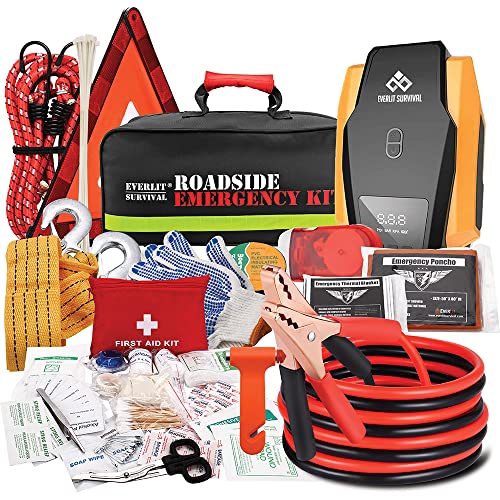
The Road Guardian- The portable roadside assistance kit is designed and hand picked by a group of experienced veterans and experts to provide every essential tools you need in roadside emergencies. The automotive safety bag contains accessories such as repair cable ties, bungee cords, electrical tape, space blanket, rain poncho, reflective warning triangle, glass breaker, seatbelt cutter, safety gloves, tow rope and more to get your vehicle back on the road and continue your travel.
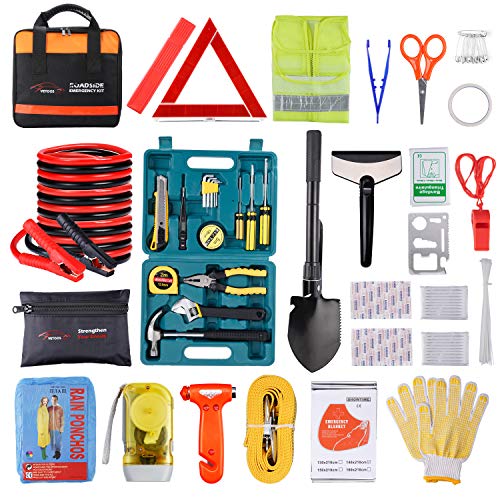
ESSENTIAL RESOURCES: Packed with practical supplies from jumper cables, reflective triangle and vest to tow rope, and tire presure gauge, we've got everything you need to stay safe during an roadside emergency. But that's not all - it also includes rarely used but essential items like safety hammer, emergency blanket, and survival whistle. With these, you'll be prepared for almost everything the road throws your way.

【Stay Safe On The Road】Be prepared with this compact,practical emergency roadside kit for car,including Jumper Cables,Tow Rope,Safety Hammer,Reflective Warning Triangle,Reflective Safety Vest,Tire Pressure Gauge, Safety Gloves, Hand-pressing flash light,Screwdriver,Rain Coat,Snow shovel,PVC Tape,Voltage Tester,Fuse Set,Whistle and Multi-function tool card so you can quickly and confidently get back on the road.
Other Activities to Enjoy During Your Northern Lights Trip
A Northern Lights trip does not need to depend entirely on the night sky. Daytime and indoor activities give the itinerary value even when clouds cancel an aurora outing.
Geothermal pools and hot springs are popular winter options. The Blue Lagoon is one well-known choice, while municipal pools and smaller bathing facilities are available in many communities. Check current opening information, road access, and local alerts before traveling.
Winter sports are available at areas such as Bláfjöll near Reykjavík and Hlíðarfjall near Akureyri when snow and operating conditions permit. Museums, food tours, geothermal exhibitions, and indoor aurora shows can fill poor-weather days.
Ice caves and glacier walks can also be memorable, but they require qualified guidance. Glaciers move continuously and contain hidden crevasses, unstable ice, and rapidly changing weather. SafeTravel advises visitors not to enter a glacier without appropriate experience and equipment and recommends using a qualified glacier guide.
Warning: Never enter an ice cave or walk onto a glacier independently. Book with a qualified operator that performs current site and weather assessments.
Planning Your Trip to Iceland for the Northern Lights
Begin by choosing dates between late August and late April. Select November through March when maximum darkness is the priority, or consider September, October, or March when you also want more daylight for sightseeing.
Plan several nights in Iceland and avoid building the trip around a single aurora outing. Reserve accommodations early when traveling during holidays or other busy periods, but keep evening plans flexible.
Choose transportation according to your experience. A rental car gives you control over timing and location, but only when weather, road conditions, and driver ability make the trip reasonable. A guided tour reduces navigation and parking concerns and may offer another attempt after an unsuccessful night, depending on the operator’s terms.
Pack thermal layers, a wind-resistant and water-resistant outer layer, insulated footwear, gloves, a warm hat, traction aids where appropriate, a reusable water bottle, snacks, a power bank, and spare batteries. Bring a swimsuit if geothermal pools are part of the trip.
Check the aurora forecast, general weather forecast, SafeTravel alerts, and road conditions each day. Do not lock yourself into a remote destination before seeing where the clearest sky is expected.
Finally, leave room for Iceland’s other landscapes and culture. Museums, geothermal areas, waterfalls, local pools, winter tours, and regional food can make the trip worthwhile even if clouds prevent a Northern Lights sighting.
Products Worth Considering

Iceland Northern Lights design. Do you love Iceland, with its fiery volcanoes, geysers and thermal pools? How about its icy glaciers and snowy peaks? You can't beat a famous Iceland aurora or northern lights show!

Do you love Iceland - land of the Vikings, beautiful contrasting landscapes and auroras - with its fiery volcanoes, geysers and thermal pools? How about its icy glaciers and snowy peaks? You can't beat a famous Iceland aurora or northern lights show!

Iceland Natural Phenomena design. Do you love Iceland, with its fiery volcanoes, geysers and thermal pools? How about its icy glaciers and snowy peaks? You can't beat a famous Iceland aurora or northern lights show!
Frequently Asked Questions
What is the best time to travel to Iceland for the Northern Lights?
The usable season normally runs from late August to late April. November through March provide the longest dark nights, while September, October, and March offer a useful balance of nighttime darkness and daylight for sightseeing.
Why is this the best time to see the Northern Lights in Iceland?
These months provide enough nighttime darkness for an aurora to become visible. A successful sighting still requires clear or partly clear skies and suitable auroral activity.
What are the peak months for the Northern Lights in Iceland?
November through March are the darkest core months. No month guarantees clearer weather or a sighting, so the best choice depends on how much darkness, daylight, and winter travel you want.
Are some Iceland locations better for viewing the Northern Lights?
Dark areas at Þingvellir, Snæfellsnes, Jökulsárlón, and in North Iceland can be excellent when the sky is clear. Darker areas around Reykjavík may also work. The best location on a given night is a safe, accessible place beneath the clearest expected sky.
Is Landmannalaugar a good winter Northern Lights location?
It is not a routine winter self-drive destination. Highland access is condition-dependent and may require specialized vehicles, local expertise, and an organized tour. Most visitors should choose a safer and more accessible location.
What time of night should I look for the Northern Lights?
An aurora can appear whenever the sky is dark. A practical viewing period is roughly 10 p.m. to 1 a.m., with activity often observed around 11 p.m., but displays may occur earlier or later.
Can you see the Northern Lights in Iceland during summer?
Normal viewing is not possible during the brightest midnight-sun period because the sky does not become dark enough. The first useful darkness generally begins returning in late August.
What should I consider when planning a Northern Lights trip?
Allow several nights, monitor cloud and aurora forecasts, check road and weather alerts, choose safe parking, pack warm layers, and keep evening plans flexible. Review tour rebooking terms if you are not driving independently.
Sources
- NASA — Auroras — explains how auroras form and why they display different colors.
- Icelandic Meteorological Office — Aurora Forecast — provides cloud-cover and auroral-activity forecasts for Iceland.
- Visit Iceland — The Auroras — supports the official viewing season and practical viewing-time guidance.
- SafeTravel Iceland — Driving Guidance — supports winter-driving and rapidly changing condition advice.
- Icelandic Road and Coastal Administration — Road Conditions — provides live road-status and travel-condition information.
- NOAA National Centers for Environmental Information — Chasing the Northern Lights — supports guidance about darkness, moonlight, and aurora viewing.
