
Last Updated on November 4, 2026 by Mason Reed
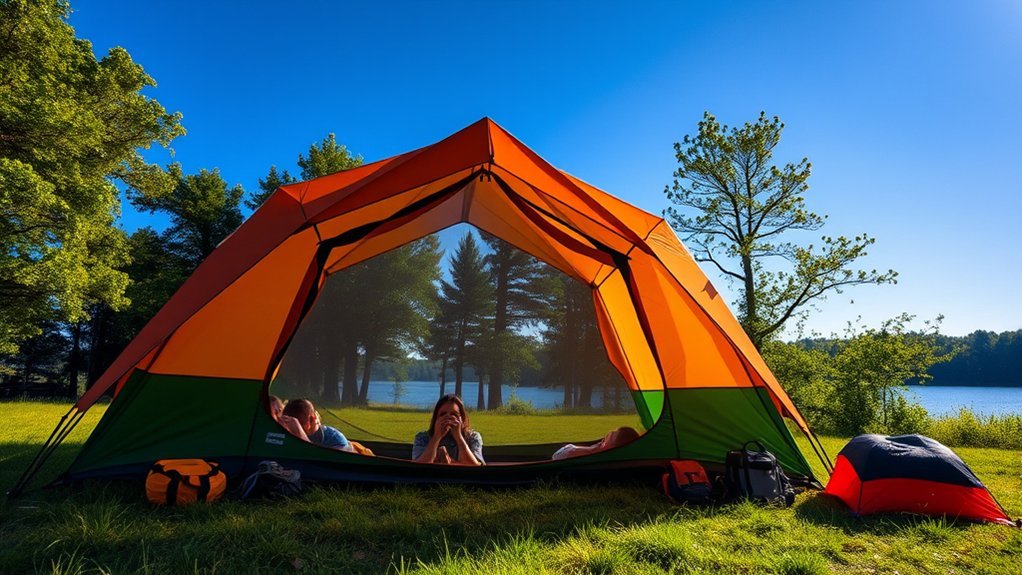
If you want a family camping tent with a screen room, start with the Coleman Evanston 6-Person Screened Tent for an all-around balance of sleeping space and a separate bug-reduced lounge. Choose the Coleman 4-Person Cabin for headroom, the Wenzel Klondike for a convertible screened area, or the CORE 11-Person Cabin for a larger group. The best choice depends on how many people need to sleep indoors, whether the porch must handle rain, and how much campsite space you have.
Disclosure: As an Amazon Associate I earn from qualifying purchases. Some links on this page are affiliate links, at no extra cost to you.
Quick Answer: Which Screen-Room Tent Should You Choose?
Best overall: Coleman Evanston 6-Person. Best standing room: Coleman 4-Person Cabin. Best flexible layout: Wenzel Klondike. Best faster setup design: Coleman Steel Creek. Best large family layout: CORE 11-Person. Best for sleeping past sunrise: Coleman Carlsbad 4-Person.
Important: A mesh porch reduces insect entry when fully zipped, but it does not automatically provide rain protection. Check the rainfly coverage and sleeping-area dimensions separately.
Our Top Tents With Screen Rooms Compared
| Tent | Image | Best For | Rated Capacity | Setup | Key Consideration | Amazon | Details |
|---|---|---|---|---|---|---|---|
| Coleman Evanston 6-Person Screened Tent | Best Overall | 6 persons | About 15 minutes | Screened porch may get wet | Check Price on Amazon | Read Our Analysis | |
| Coleman 4-Person Cabin Tent With Screened Porch | Best for Standing Room | 4 persons | As fast as 10 minutes | Confirm porch cover options | Check Price on Amazon | Read Our Analysis | |
| Wenzel Klondike 8-Person Tent With Screen Room | Best Convertible Screen Room | 8 persons total | Not specified | Capacity includes screen room | Check Price on Amazon | Read Our Analysis | |
| Coleman Steel Creek 6-Person Fast Pitch Tent With Screen Room | Best Fast Pitch | 6 persons | Fast Pitch; time varies | Check exact size diagram | Check Price on Amazon | Read Our Analysis | |
| CORE 11-Person Cabin Tent With Screen Room | Best for Big Families | 11 persons rated | Not specified | Large and heavy to transport | Check Price on Amazon | Read Our Analysis | |
| Coleman Carlsbad 4-Person Dark Room Tent With Screen Room | Best for Darker Sleeping | 4 persons | About 15 minutes | Screened porch is rain-exposed | Check Price on Amazon | Read Our Analysis |
How these picks were compared: We considered published product specifications, useful sleeping space, screened-room design, setup features, ventilation, and limitations. These are specification-based recommendations, not claims of personal hands-on testing. Product configurations may change, so confirm the selected variant before purchasing.
More Details on Our Top Picks
-
Coleman Evanston 6-Person Screened Tent
The Coleman Evanston 6-Person Screened Tent is a balanced choice for families who want a separate place to sit away from mosquitoes. Its 10 x 9 ft. sleeping area accommodates two queen-size airbeds according to Coleman, while the 10 x 5 ft. screened front area gives you room for shoes, chairs, or dry-weather lounging. Continuous pole sleeves and Insta-Clip attachments help with assembly. WeatherTec features protect the main sleeping compartment.
Why You’ll Like It: A genuine separate screen room and a useful six-person sleeping layout make it suitable for family car camping.
Who Should Buy This: Couples or families who want an airy sitting area without giving up the main sleeping floor.
Who Should Avoid This: If you need a fully rain-sealed porch. The screened section may get wet in rain.
- Capacity: 6-person rated
- Tent sleeping area: 10 x 9 ft.
- Screen room: 10 x 5 ft.; floored
- Estimated setup: About 15 minutes
- Weather protection: WeatherTec main compartment
- Center height: 68 in.
- Approximate weight: 19.2 lb
- Warranty: 1-year limited
-
Coleman 4-Person Cabin Tent With Screened Porch
The Coleman 4-Person Cabin Tent With Screened Porch suits campers who dislike crouching inside a dome tent. Its nearly vertical walls and approximately 6 ft. ceiling provide better standing space, while the screened porch gives you a place for bug-reduced lounging and gear. The listed 11 x 8 ft. footprint includes the overall tent arrangement, so do not treat all of that area as sleeping space. Ground vents, panoramic windows, and a detachable rainfly offer flexible ventilation and weather management.
Why You’ll Like It: Cabin-style headroom and a relatively straightforward three-pole setup.
Who Should Buy This: Smaller families and couples who prioritize standing room and a screened entry area.
Who Should Avoid This: If your group needs four full-size sleeping spaces plus lots of gear, or you expect the porch to stay dry without checking its cover configuration.
- Capacity: 4-person rated
- Overall size: 11 x 8 ft. including porch
- Center height: 6 ft.
- Estimated setup: As fast as 10 minutes
- Screen room: Screened porch; verify cover options
- Weather protection: Detachable rainfly; WeatherTec
- Ventilation: Ground vents and panoramic windows
- Warranty: 1-year limited
-
Wenzel Klondike 8-Person Tent With Screen Room
The Wenzel Klondike 8-Person Tent offers a more flexible layout than a basic open-mesh porch. Its main room is described for about five sleepers, with room for up to three more in the convertible screened section. You can instead use that section for a dining spot, changing area, or gear storage. A mesh roof, rear vent, and zippered windows help airflow. Weather Armor polyester with a polyurethane coating and a seam-sealed fly are designed to resist rain when correctly pitched.
Why You’ll Like It: You can switch the screened area between lounging and extra sleeping space in suitable conditions.
Who Should Buy This: Families who want separate zones and do not need all eight advertised places in one main bedroom.
Who Should Avoid This: If you expect eight people plus luggage to fit comfortably in the sleeping compartment, or want a lightweight backpacking tent.
- Advertised capacity: 8 total; about 5 main + 3 screen room
- Overall footprint: 16 x 11 ft.
- Screen room: Convertible, with zippered flaps
- Center height: 78 in.
- Setup time: No reliable time verified
- Weather protection: Seam-sealed removable rainfly
- Frame: Fiberglass roof and steel uprights
- Ventilation: Mesh roof and side windows
-
Coleman Steel Creek 6-Person Fast Pitch Tent With Screen Room
The Coleman Steel Creek 6-Person Fast Pitch Tent is worth considering when you want less assembly work at the campsite. The Fast Pitch design uses pre-attached poles and a hub to simplify pitching. Its screened front room creates a place to sit away from insects in fair weather, while the main dome uses WeatherTec features, welded corners, and inverted seams to help manage rain. Polyguard 2X fabric is intended for repeat seasonal use. Published dimensions for this specific model are inconsistent across specification fields, so check the current size diagram before buying.
Why You’ll Like It: Pre-attached pole connections reduce the number of loose setup steps.
Who Should Buy This: Car campers who arrive late or pitch a tent frequently.
Who Should Avoid This: If an enclosed all-weather porch or guaranteed ultrafast solo setup is essential.
- Capacity: 6-person rated
- Screen room: Separate floored area
- Setup: Fast Pitch poles and hub
- Rainfly: Integrated
- Weather protection: WeatherTec construction
- Fabric: Polyguard 2X
- Sleeping fit: Manufacturer lists one queen airbed
- Warranty: 1-year limited
-
CORE 11-Person Cabin Tent With Screen Room
The CORE 11-Person Cabin Tent With Screen Room has one of the most generous footprints in this comparison at approximately 17 x 12 ft. Its straight-wall design, 86-inch peak height, room divider, and screened living area make it appealing for extended family trips. CORE rates this model for eleven sleepers under the industry standard but describes about five campers plus gear as a more comfortable arrangement. Adjustable ground vents, a mesh ceiling, an electrical access port, and storage pockets add convenience. At approximately 36 lb., it is primarily a car-camping tent.
Why You’ll Like It: Tall interior space, flexible room division, and a substantial screened area.
Who Should Buy This: Big families or groups who want space for gear and a standing-height shelter at a drive-up campsite.
Who Should Avoid This: If you have a small campsite, limited vehicle storage, or need to carry your shelter any distance.
- Capacity: 11 rated; ~5 with gear comfortably
- Footprint: 17 x 12 ft. overall
- Center height: 86 in.
- Screen room: Dedicated lounging/storage area
- Weather protection: H2O Block construction
- Ventilation: Adjustable lower vents, mesh ceiling
- Approximate packed weight: 36 lb
- Warranty: 1-year limited
-
Coleman Carlsbad 4-Person Dark Room Tent With Screen Room
The Coleman Carlsbad 4-Person Dark Room Tent is designed for people who want less early-morning light in their sleeping space. Coleman states that its Dark Room fabric blocks 90% of sunlight under its comparison conditions; actual darkness depends on the setup and surroundings. The main area is about 9 x 7 ft., with a 9 x 4 ft. floored screen room for dry-weather lounging. It includes a rainfly, WeatherTec features, an E-Port, and storage pockets. The main limitation is the exposed screened porch, which should not be relied on to keep gear dry in rain.
Why You’ll Like It: Reduced morning light plus a separate insect-screened sitting area.
Who Should Buy This: Couples, small families, and campers who prefer a darker morning sleeping environment.
Who Should Avoid This: If you need to stand upright inside or keep the screened area dry during rainfall.
- Capacity: 4-person rated
- Main sleeping area: 9 x 7 ft.
- Screen room: 9 x 4 ft.
- Center height: 59 in.
- Light reduction: Manufacturer claims 90% sunlight blocking
- Estimated setup: About 15 minutes
- Weather protection: WeatherTec main compartment
- Warranty: 1-year limited
Factors to Consider When Choosing a Tent With a Screen Room
A screened porch can make a busy family campsite easier to use, but the most important distinction is between the protected sleeping compartment and the mesh-enclosed living space. Compare these features before you buy.
Size and Capacity
Advertised tent capacity usually describes the maximum number of people sleeping close together, with little room for luggage. Look at the dimensions of the main sleeping area, not only the full footprint. For example, the Klondike’s eight-person layout includes sleepers in its convertible screen room, while CORE describes its eleven-person model as more comfortable for roughly five people plus gear. Check airbed dimensions and allow space to open the doors.
Weather Protection and Porch Coverage
Examine the rainfly, floor seams, bathtub-style floor, door overlap, and ventilation openings. A screen room is not necessarily a weatherproof room: some porches have mostly exposed mesh walls, and water may reach the porch floor during rain. Store bedding and electronics in the protected main compartment unless the porch has suitable weather panels. Pitch on higher ground and use all stakes and guylines.
Setup Time and Ease
Published pitching times are estimates, often based on favorable conditions. Color-coded pole sleeves, clips, hubs, and pre-attached poles can help, but a large tent may still be awkward for one person. Practice at home before your trip, check for missing stakes, and allow extra time for the rainfly and guylines.
Material Durability
Compare the tent fabric, floor material, seam construction, zipper quality, and pole type. Higher fabric denier can indicate thicker yarn, but it does not guarantee better waterproofing or longer life. Keep sharp objects away from the floor, do not pull wet fabric tightly against hard edges, and dry the tent fully before storing it.
Ventilation and Airflow
Mesh doors, roof vents, and lower vents help reduce heat buildup and condensation. The screened porch lets you sit with more airflow while limiting insects. Keep ventilation openings clear, especially in humid conditions, and balance airflow with rain protection when positioning the fly.
Screened Room Functionality
Decide whether you want a place for chairs and shoes, a dining area, or occasional extra sleeping space. Look for a floor, secure zippers, useful door placement, privacy panels, and overhead rain protection. A fully zipped mesh room can reduce insect entry, but fine insects may enter through gaps or damaged screening. Never use fuel-burning stoves, heaters, or grills inside the tent or screened porch.
Storage Options Available
Storage pockets, gear lofts, and room dividers keep smaller items from cluttering the sleeping floor. A screened porch is useful for muddy boots and chairs in dry weather, but valuables and water-sensitive items belong in the protected compartment. Electrical ports should be closed or secured according to the manufacturer’s instructions.
Portability and Transportability
These larger screen-room tents are mainly intended for car camping. Consider their packed dimensions, tent weight, number of pole pieces, and how far you must carry the bag from the vehicle. For example, the CORE 11-Person model is approximately 36 lb. Check that the full tent footprint, guylines, and door clearance will fit your campsite.
Before You Buy: Quick Checklist
- Check the exact linked size and model number, not just the product-family name.
- Confirm the protected sleeping-floor dimensions and comfortable group size.
- Check whether the screened porch has a floor, rain cover, or closable panels.
- Compare packed weight and ensure your campsite can fit the entire tent.
- Read the manufacturer’s current setup, cleaning, and warranty instructions.
Frequently Asked Questions
Can I Set Up a Tent With a Screen Room Alone?
Often, yes, but the largest models are easier with two people. Practice the setup in a yard, lay out the poles first, and follow the instructions for your exact tent. Never rush staking and guyline tension.
What’s the Best Way to Clean a Screened Tent?
Shake off loose dirt, then gently clean the fabric and mesh with water and a mild cleaner recommended by the maker. Avoid harsh detergents or scrubbing the mesh. Air-dry the tent completely before storage to help prevent mildew.
Are Screen Rooms Bug-Proof?
No. Screens reduce insect entry, but gaps, opened doors, and damaged mesh can let bugs through. Keep zippers closed and repair tears before you travel.
Does a Screen Room Stay Dry in Rain?
Not necessarily. Some screened porches have little or no rainfly coverage, while others include closeable weather panels. Check the exact design before using the porch for sleeping or storing anything that must remain dry.
How Do I Improve Water Resistance on a Tent With a Screen Room?
Start with the manufacturer’s care instructions. Inspect the rainfly, seams, fabric coating, and floor. Apply compatible seam sealer or fabric treatment only where recommended, and test the pitched tent before the trip. Waterproofing products will not turn exposed mesh into a sealed wall.
Can I Use a Tent With a Screen Room in Winter?
Only when the exact tent is suitable for the forecast conditions. Most family screen-room tents are designed for fair-weather or three-season camping, not heavy snow or severe winter winds. Use the proper cold-weather sleeping system and never operate fuel-burning heaters or stoves inside the tent or screened porch.
Conclusion
For most family car-camping trips, the Coleman Evanston 6-Person Screened Tent offers a useful balance of sleeping space and a separate sitting area. Choose the Coleman 4-Person Cabin if standing room matters, the Wenzel Klondike if you want flexible space, or the CORE 11-Person Cabin if your group needs a larger footprint. For simpler pitching, consider the Coleman Steel Creek, while the Coleman Carlsbad suits campers who prefer a darker sleeping area. Whatever you choose, verify the actual sleeping dimensions and weather coverage before checking out.
