
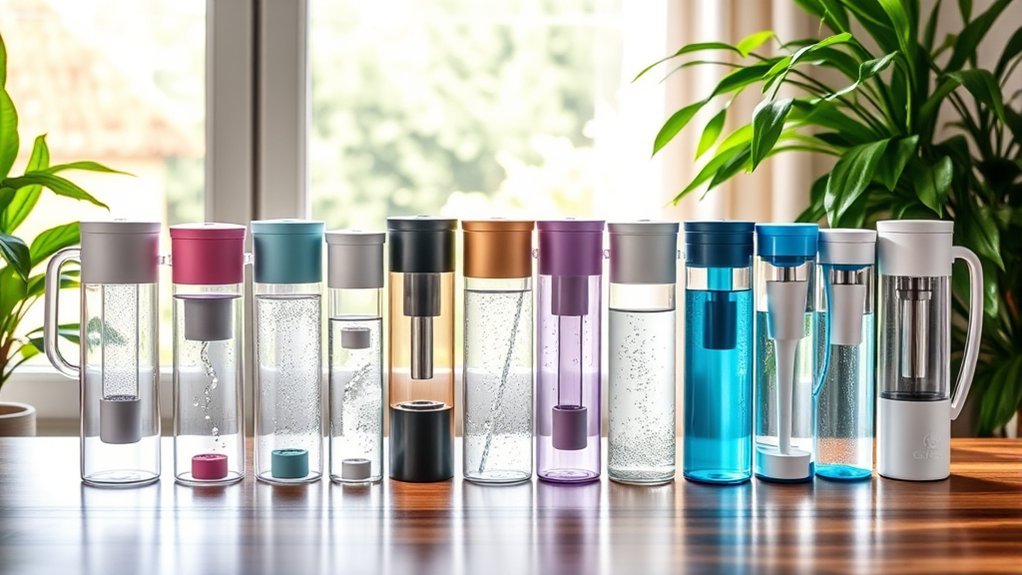
Last Updated on August 15, 2026 by Logan Reeves
Disclosure: As an Amazon Associate, we earn from qualifying purchases. If you click a link on this page and make a purchase, we may receive a small commission at no extra cost to you.
Well water can carry sediment, heavy metals, and bacteria that city tap water rarely has, and a standard fridge pitcher usually can’t keep up. If you’ve noticed a metallic taste, cloudy water, or a filter that clogs faster than the box promised, you’re not imagining it. This guide breaks down the pitcher and dispenser filters built to handle well water’s tougher contaminant load, so you can pick one that actually matches your water instead of guessing.
Key Takeaways
- Look for pitchers with advanced multi-stage filtration to effectively remove contaminants commonly found in well water, such as bacteria and heavy metals.
- Prioritize filter lifespan; options like LifeStraw Home and Clearly Filtered offer extended usage, reducing replacement frequency and costs.
- Ensure the pitcher has NSF, WQA, or IAPMO certifications, confirming its ability to meet safety and contaminant removal standards for well water.
- Consider design and size for easy access and storage in your refrigerator, encouraging regular use and minimizing refills.
- Evaluate maintenance needs; frequent filter replacements may be necessary for well water due to higher contaminant levels.
| Water Filter Pitcher – 150 Gallons WQA Certified | Best Longevity | Filtration Technology: Activated Carbon Fiber (ACF) | TDS Measurement: No TDS meter | Filter Lifespan: 150 gallons (WQA certified) | Check Price on Amazon | Read Our Analysis | |
| ZeroWater 22-Cup Water Filter Dispenser | Best Capacity | Filtration Technology: 5-stage ion exchange filtration | TDS Measurement: Integrated TDS Meter | Filter Lifespan: Change at TDS of 006 (IAPMO certified) | Check Price on Amazon | Read Our Analysis | |
| LifeStraw Home Water Pitcher (7-Cup White Glass) | Best Purification | Filtration Technology: Membrane purification system | TDS Measurement: No TDS meter | Filter Lifespan: 264 gallons (1 year) | Check Price on Amazon | Read Our Analysis | |
| Culligan 7-Cup Water Filter Pitcher with ZeroWater Technology | Best Technology | Filtration Technology: 5-stage advanced filtration | TDS Measurement: Built-in TDS meter | Filter Lifespan: 99.9% TDS removal (new Culligan filters only) | Check Price on Amazon | Read Our Analysis | |
| ZeroWater 52-Cup 5-Stage Water Filter Pitcher | Most Efficient | Filtration Technology: 5-stage Ion Exchange Filter | TDS Measurement: Integrated TDS Meter | Filter Lifespan: 99.9% TDS removal (IAPMO certified) | Check Price on Amazon | Read Our Analysis | |
| Waterdrop Water Filter Pitcher with 1 Filter | Best for Apartments | Filtration Technology: Reduces PFOA/PFOS and more | TDS Measurement: No TDS meter (LED filter indicator) | Filter Lifespan: 200 gallons (3 months) | Check Price on Amazon | Read Our Analysis | |
| Clearly Filtered Water Pitcher with Contaminant Filter | Best Contaminant Removal | Filtration Technology: Advanced Affinity Filtration Technology | TDS Measurement: No TDS meter | Filter Lifespan: 100 gallons (approx. 4 months) | Check Price on Amazon | Read Our Analysis | |
| Waterdrop 10-Cup Water Filter Pitcher with Filter | Best Compact Design | Filtration Technology: Reduces PFOA/PFOS and more (NSF certified) | TDS Measurement: No TDS meter | Filter Lifespan: 200 gallons (3 months) | Check Price on Amazon | Read Our Analysis | |
| LifeStraw Home Water Filter Dispenser (18-Cup) | Best Social Impact | Filtration Technology: Membrane and carbon filtration | TDS Measurement: No TDS meter | Filter Lifespan: 264 gallons (1 year) | Check Price on Amazon | Read Our Analysis | |
| Culligan 10-Cup Water Filter Pitcher with 5-Stage Filter | Best Multi-Stage Filtration | Filtration Technology: 5-stage advanced filtration | TDS Measurement: Built-in TDS meter | Filter Lifespan: 99.9% TDS removal (IAPMO certified) | Check Price on Amazon | Read Our Analysis |
More Details on Our Top Picks
-
Water Filter Pitcher – 150 Gallons WQA Certified
This pitcher’s standout feature is its 150-gallon filter lifespan, roughly four times longer than a typical 40-gallon fridge filter. It uses Activated Carbon Fiber (ACF) instead of loose granular carbon, which packs more filtering surface into the same cartridge size. That design removes 98% of chlorine and mercury, plus lead, rust, and sediment, all common in well-water supplies. It’s WQA certified to NSF/ANSI standards, so the removal claims are independently verified rather than self-reported.
Unlike most pitchers in this roundup that top out around 100 to 200 gallons, this one’s longer cartridge life means fewer replacement purchases per year, a real advantage for well-water households that go through filters faster than city-water ones. It doesn’t include a TDS meter, so you’re relying on the gallon count rather than a live reading to know when to swap the filter. The sleek, space-saving shape fits standard refrigerator door shelves without crowding out other items, and it filters at a brisk 1.3 liters per minute so you’re not standing at the fridge waiting.
It’s a solid, no-frills pick if long filter life and easy fridge storage matter more to you than a built-in water quality readout. It’s a smart buy for well-water households trying to keep replacement costs down over the year.
Pick this if: you want the longest filter life in this roundup and don’t need a TDS readout to know when to change it.
-
ZeroWater 22-Cup Water Filter Dispenser
The ZeroWater 22-Cup Dispenser (model ZD-022-RR) uses a 5-stage ion exchange filter designed to strip out nearly all total dissolved solids, not just chlorine and taste-related compounds. That includes lead, chromium, and PFOA/PFOS, all contaminants that show up more often in well water than in treated municipal supplies. The filtration is IAPMO certified, so the reduction claims have been independently tested rather than taken on faith.
Where this dispenser differs from most pitchers here is the built-in TDS meter: instead of guessing when to change the filter, you get a live number, and the brand recommends replacing the cartridge once it reads 006. At 22 cups, it also holds noticeably more water than a standard 7 or 10-cup pitcher, which matters if you’re filling water bottles for a family or refilling a coffee maker daily. ZeroWater estimates you’ll save around 110 single-use plastic bottles per filter, or up to 660 a year with regular use.
The BPA-free dispenser body and Ready-Read design make it easy to check water quality at a glance before you pour. It’s a consistent, well-reviewed pick for households that want a measurable number rather than a rough gallon estimate.
Pick this if: you want a live TDS readout and a larger reservoir so you’re not refilling constantly.
-
LifeStraw Home Water Pitcher (7-Cup White Glass)
LifeStraw built its name on membrane microfiltration for outdoor survival gear, and the Home Pitcher applies that same core technology to the kitchen counter. Instead of relying only on activated carbon, its membrane purification system physically filters out bacteria, parasites, and microplastics, contaminants that a well can pick up from groundwater intrusion in a way city water rarely does. It also reduces lead, mercury, and other heavy metals while leaving beneficial minerals like magnesium and potassium in the water.
Where most pitchers in this list focus on chemical reduction, this one adds biological filtration, which matters if your well has ever tested positive for bacteria. The 7-cup capacity fits a glass-and-BPA-free-plastic build that looks more like a carafe than a plastic pitcher, an easy fit for open shelving as well as the fridge. The membrane system is rated for 264 gallons, or about a year of typical household use, before it needs replacing.
It’s a highly rated choice among buyers specifically concerned about bacterial contamination rather than just taste or hardness. Just note it doesn’t include a TDS meter, so you’re tracking filter age by time rather than a live reading.
Pick this if: your well water has tested positive for bacteria or parasites and you want physical membrane filtration, not just carbon.
-
Culligan 7-Cup Water Filter Pitcher with ZeroWater Technology
Culligan licensed ZeroWater’s 5-stage ion exchange filtration for this 7-cup pitcher, so you get the same removal profile: 99.9% of dissolved solids, including lead and PFAS, certified rather than marketing-only. The built-in TDS meter is the practical payoff of that technology, giving you a live reading instead of a calendar guess for when to swap the filter.
The one catch worth knowing before you buy: this pitcher only works with the newer Culligan-branded ZeroWater filters, not legacy ZeroWater cartridges, so double-check compatibility if you already own ZeroWater filter stock. The BPA-free, space-saving body is sized to fit standard fridge door shelves, and Culligan estimates the filter saves roughly 150 single-use plastic bottles over its life.
For households that want ZeroWater-level filtration performance but prefer buying from the Culligan brand, this pitcher is a straightforward, well-reviewed option. It’s a smart buy if a built-in TDS meter is a must-have for you but you don’t need the larger 22-cup dispenser format.
Pick this if: you want ZeroWater-grade filtration with a built-in TDS meter in a smaller 7-cup pitcher.
-
ZeroWater 52-Cup 5-Stage Water Filter Pitcher
At 52 cups, this is the largest-capacity option in the roundup, built for households or offices that would otherwise be refilling a smaller pitcher multiple times a day. It uses the same 5-stage ion exchange filtration as ZeroWater’s other models, removing metals, chlorine, lead, and PFOA/PFOS, and it’s IAPMO certified for those reduction claims.
The integrated TDS meter lets you check water quality in real time rather than tracking gallons or months, which is useful for well water where contaminant levels can shift after heavy rain or seasonal changes. Where the 22-cup dispenser suits a mid-size household, this 52-cup version is really aimed at larger families or shared spaces where refill frequency is the main pain point. ZeroWater estimates it can save up to 660 single-use plastic bottles a year with regular use.
All BPA-free materials keep the build consistent with the rest of the ZeroWater line, and it’s a consistent, well-reviewed pick among buyers who specifically need volume over anything else.
Pick this if: you need the largest capacity in this roundup and don’t want to refill a pitcher multiple times a day.
-
Waterdrop Water Filter Pitcher with 1 Filter
This 10-cup Waterdrop pitcher is built around a filter rated for 200 gallons, or roughly three months of typical use, and it targets PFOA, PFOS, chlorine, and heavy metals while leaving beneficial minerals in the water. Unlike the pitchers here with a full TDS meter, Waterdrop uses a simpler intelligent LED indicator that tells you at a glance when the filter needs changing, which is a lower-maintenance way to track filter life without reading a number.
The hands-free lid is the other practical difference: you fill it directly under the tap without lifting a separate cap, which is a small but noticeable convenience during daily refills. The compact footprint is designed to fit neatly on a fridge shelf, making it a solid pick for apartments or smaller kitchens with limited storage space.
It’s a strong value pick for buyers who want reliable contaminant reduction without paying for a built-in TDS readout they may not use. It consistently ranks as a customer favorite among budget-conscious well-water households.
Pick this if: you want low-maintenance filter tracking (LED indicator, not a TDS meter) in a compact, apartment-friendly size.
-
Clearly Filtered Water Pitcher with Contaminant Filter
Clearly Filtered’s Advanced Affinity Filtration Technology is built to target more than 365 individual contaminants, a notably broader list than most competitors in this roundup, which tend to focus on a shorter set like chlorine, lead, and mercury. It removes up to 99.9% of substances including fluoride, lead, and PFAS while keeping beneficial minerals intact, which matters for well water that can carry a wider mix of agricultural runoff and mineral contamination than treated municipal supplies.
The pitcher itself is made from medical-grade, BPA-free Tritan plastic rather than standard BPA-free polymer, which adds some durability against drops and daily handling. Its filter is rated for 100 gallons, or roughly four months, shorter than several other pitchers here, which is the tradeoff for its broader contaminant-removal profile. An ergonomic handle and hinge-fill lid keep daily refills simple.
It’s a top-rated choice among buyers specifically concerned about a long list of contaminants rather than just the basics, and worth it for the coverage you get even with the shorter filter life.
Pick this if: you want the broadest contaminant coverage in this roundup and don’t mind a shorter filter lifespan in exchange.
-
Waterdrop 10-Cup Water Filter Pitcher with Filter
This is a separate 10-cup Waterdrop pitcher from the brand’s apartment-focused model above, and it carries its own NSF certification for reducing PFOA, chlorine, iron, and mercury. Its compact shape is built to fit most refrigerator door shelves without eating up interior space, which is a common complaint with bulkier dispenser-style filters.
Like Waterdrop’s other pitcher, the filter here is rated for 200 gallons or about three months, and it pairs a hands-free automatic dispensing lid with an intelligent LED indicator so you’re not guessing when it’s time for a new cartridge. Unlike the ZeroWater and Culligan pitchers in this list, it skips the TDS meter entirely, keeping the design simpler and the price lower.
It’s a consistent, well-reviewed option for anyone who wants NSF-certified reduction of the most common well-water contaminants without extra hardware to maintain. It’s a smart buy for everyday use in kitchens where fridge space is tight.
Pick this if: compact fridge fit and NSF certification matter more to you than a built-in water quality meter.
-
LifeStraw Home Water Filter Dispenser (18-Cup)
This is the larger, 18-cup dispenser version of LifeStraw’s 7-cup pitcher, using the same membrane and carbon filtration to physically remove bacteria, parasites, and microplastics rather than relying on carbon alone. It also reduces lead, mercury, and chlorine, which covers both the biological and chemical contamination risks that well water is more prone to than treated tap water.
The membrane microfilter carries the same 264-gallon, roughly one-year rating as the smaller pitcher, but the added capacity means fewer refills for larger households. It has a compact, pebble-shaped design that’s distinct from the boxier dispensers in this roundup, and the BPA-free build keeps it consistent with LifeStraw’s safety standards across the product line.
What sets this one apart beyond the filtration itself is LifeStraw’s give-back model: each purchase helps fund a year of safe water access for a child in a community that needs it, a social-impact angle none of the other pitchers here offer. It’s a customer favorite among buyers who want their purchase to do double duty.
Pick this if: you want LifeStraw’s membrane filtration at higher capacity, plus a purchase that funds water access elsewhere.
-
Culligan 10-Cup Water Filter Pitcher with 5-Stage Filter
This 10-cup Culligan pitcher is the larger sibling to the 7-cup Culligan model above, built on the same ZeroWater-licensed 5-stage filtration that removes 99.9% of dissolved solids, including lead, mercury, and fluoride. The built-in TDS meter gives you a live reading rather than a gallon or month-based estimate, which is useful for well water where contaminant levels can vary by season.
Compared to the 7-cup version, the extra capacity here means fewer refills for a mid-size household without stepping all the way up to a 22-cup dispenser. The space-saving shape and ergonomic handle keep daily pouring simple, and Culligan estimates the filter saves roughly 150 single-use plastic bottles over its life.
It’s a strong value pick for households that already like the ZeroWater filtration profile but want a pitcher format with a bit more capacity than the 7-cup option. It’s built to last through daily use without the bulk of a full dispenser.
Pick this if: you want ZeroWater-level filtration and a built-in TDS meter, but in a mid-size 10-cup pitcher rather than the 7-cup or 22-cup options.
Factors to Consider When Choosing Pitcher Water Filters for Well Water
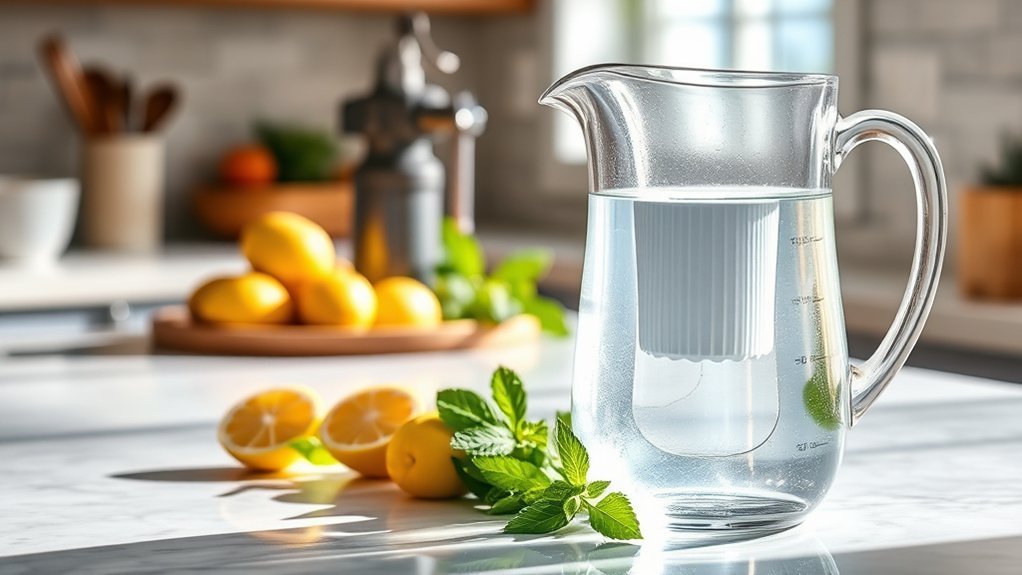
When choosing a pitcher water filter for well water, you need to take into account several key factors to guarantee you’re getting the best option. Focus on contaminant removal efficiency, filter lifespan, and maintenance needs, along with the design and size that fits your lifestyle. Don’t forget to check material safety standards and whether the filter can measure total dissolved solids (TDS) for peak performance.
Contaminant Removal Efficiency
Choosing the right pitcher water filter for well water is essential for getting clean, safe drinking water. Prioritize filters that use advanced technologies to remove a variety of contaminants, including heavy metals, bacteria, and pesticides. Look for certifications that confirm the filter’s ability to eliminate specific well water contaminants like lead, mercury, and total dissolved solids, as indicated by NSF/ANSI standards. Multi-stage filtration systems offer thorough contaminant removal, tackling both physical and chemical impurities effectively. Additionally, check if the filter retains essential minerals while eliminating harmful substances, so your water is not just safe but tasty too. Focusing on these factors will enhance your water quality and your health.
Filter Lifespan and Maintenance
Ensuring your pitcher water filter effectively removes contaminants is just the start; understanding its lifespan and maintenance matters just as much. Filter lifespans vary greatly, from around 40 gallons up to 264 gallons. You should replace filters according to the manufacturer’s recommendations, typically every 2 to 12 months, depending on usage and water quality. If you’re using well water, expect more frequent changes due to higher contaminant levels. Filters with LED indicators or TDS meters help you track usage so performance stays consistent. A model with a longer lifespan can save you money and cut down on the number of replacement filters you go through each year.
Design and Size
Selecting the right pitcher water filter for well water involves considering design and size, which can greatly affect your day-to-day experience. Think about the pitcher’s capacity first. Larger pitchers hold more water, so you won’t have to refill as often, but make sure it still fits comfortably in your refrigerator. Ergonomics matter too: look for a well-designed handle and lid that make pouring and filling simple while minimizing spills. Choose a model made from BPA-free materials for safety, especially since you’re filtering well water. Finally, opt for a design that complements your kitchen, which encourages you to actually use it regularly.
Material Safety Standards
Material safety standards play a crucial role in choosing a pitcher water filter for well water. Make sure the filters you consider are made from BPA-free materials to prevent harmful chemicals from leaching into your water. Look for products certified by reputable organizations like NSF, WQA, or IAPMO, which verify compliance with safety standards for both contaminant removal and material safety. Filters meeting NSF/ANSI standards 42 and 53 are particularly effective at reducing chlorine, lead, and other harmful substances. Certifications like NSF/ANSI 372 confirm a filter is lead-free. Choosing durable, well-certified materials keeps both the filter and the water you drink safer for your household.
TDS Measurement Capability
Understanding the TDS measurement capability of pitcher water filters for well water matters because it directly affects the quality of your drinking water. TDS, or Total Dissolved Solids, indicates the concentration of dissolved substances like minerals, salts, and metals. A TDS meter lets you monitor these levels in real time, helping you know when it’s time to replace your filter. High TDS levels can signal potential contamination or a rise in harmful substances, which is exactly why effective filtration matters. Many pitcher filters, like the ZeroWater and Culligan models above, come with built-in TDS meters, making it easier to track performance and keep your water safe.
Environmental Impact Considerations
Monitoring TDS levels is just one part of keeping your drinking water safe; the environmental impact of your pitcher water filter matters too. Choosing a pitcher filter can significantly cut down on single-use plastic bottles, potentially saving up to 660 bottles a year depending on the model. Many filters use advanced technologies to remove harmful contaminants, leading to cleaner water and less bottled-water waste. Opt for BPA-free materials to avoid leaching chemicals and support safer consumption. Selecting filters with longer-lasting cartridges also minimizes how often you need replacements, lowering the environmental footprint tied to manufacturing and disposal.
Cost and Replacement Filters
Choosing the right pitcher water filter for well water involves weighing both initial costs and ongoing expenses. You’ll find pitcher prices ranging from about $20 to $50 depending on the brand and filtration capabilities. Replacement filters typically cost between $10 and $20 each, and some need replacing more often than others. Pay attention to filter lifespan: some last only a few months, while others purify hundreds of gallons before needing a swap. Your household’s water consumption will influence how often you need replacements. Regularly checking filter performance with built-in indicators or TDS meters helps you avoid unnecessary changes and keeps costs down over time.
Frequently Asked Questions
What does an NSF, WQA, or IAPMO certification actually mean?
These are independent testing bodies that verify a filter actually removes the contaminants a brand claims it does, rather than relying on the brand’s own marketing. A certified filter has been tested against specific NSF/ANSI standards for substances like lead, chlorine, or PFAS.
Should I get a pitcher or a larger dispenser for well water?
A 7 to 10-cup pitcher works well for one or two people, while an 18 to 52-cup dispenser suits larger households that would otherwise refill several times a day. Well water households that filter more volume daily often save money over time with a larger dispenser, since the per-gallon filter cost is usually lower.
Why do well water filters need replacing more often than city water filters?
Well water typically carries more sediment, minerals, and dissolved solids than treated municipal water, which fills up a filter’s capacity faster. If your filter has a TDS meter, watch the reading rather than relying only on the manufacturer’s gallon estimate.
Can these pitcher filters remove bacteria from well water?
Not all of them can. Standard carbon or ion-exchange filters, like most ZeroWater, Culligan, and Waterdrop models here, are not designed to remove bacteria. Only membrane-based filters, like the LifeStraw Home pitcher and dispenser in this list, are built to physically filter out bacteria and parasites.
Conclusion
Well water needs a filter that can handle more than just taste, and the right pick depends on what your water actually needs help with. If broad contaminant removal is your top priority, start with the Clearly Filtered Pitcher. For bacteria and parasite concerns, the LifeStraw Home Pitcher or 18-Cup Dispenser delivers membrane filtration the others don’t offer. And if a live water-quality readout matters most, the ZeroWater or Culligan pitchers with built-in TDS meters cover that without overspending. Pick the model that matches your main concern and get it in your fridge before your next water test comes back.
