
Last Updated on July 28, 2026 by Daniel Globe
Milan is Italy’s main fashion-business capital, but not every famous Italian luxury house was founded there. Armani, Prada, Versace, Dolce & Gabbana, and Moschino have direct Milan roots. Gucci began in Florence, Fendi and Valentino in Rome, and Bottega Veneta in Vicenza. All nine, however, shape Milan’s runways, boutiques, and global fashion influence.
Quick Answer
Milan’s strongest homegrown luxury houses include Armani, Prada, Versace, Dolce & Gabbana, and Moschino. The city is also a major runway and retail center for Italian houses founded elsewhere, including Gucci, Fendi, Valentino, and Bottega Veneta. In 2026, several are under new creative leadership.
Key Takeaways
- Milan is both a birthplace for major labels and the main Italian stage for brands founded in Florence, Rome, and Vicenza.
- Via Montenapoleone and the surrounding Quadrilatero della Moda form one of the world’s best-known luxury shopping districts.
- Creative leadership changed at Armani, Gucci, Versace, Fendi, Moschino, Valentino, and Bottega Veneta between 2024 and 2026.
- The houses cover very different styles, from Armani’s quiet tailoring and Prada’s intellectual minimalism to Versace’s glamour and Moschino’s satire.
Disclosure: As an Amazon Associate I earn from qualifying purchases. Some links on this page are affiliate links, at no extra cost to you.
Why Milan Is the Heart of Luxury Fashion
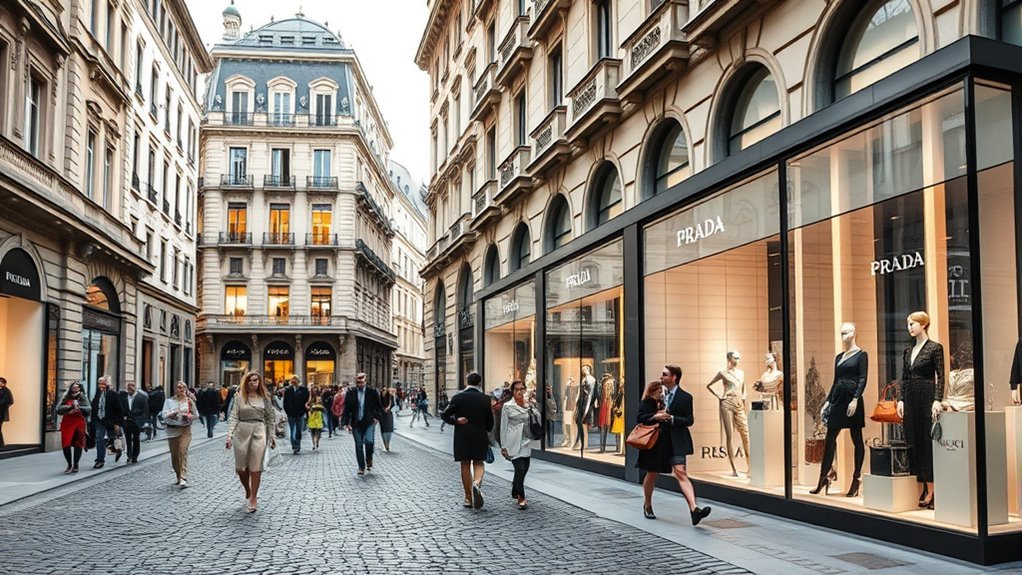
Milan connects design, manufacturing, media, retail, and finance in one compact city. Seasonal fashion weeks bring designers, buyers, editors, celebrities, and students together, while local schools and ateliers feed new talent into the industry.
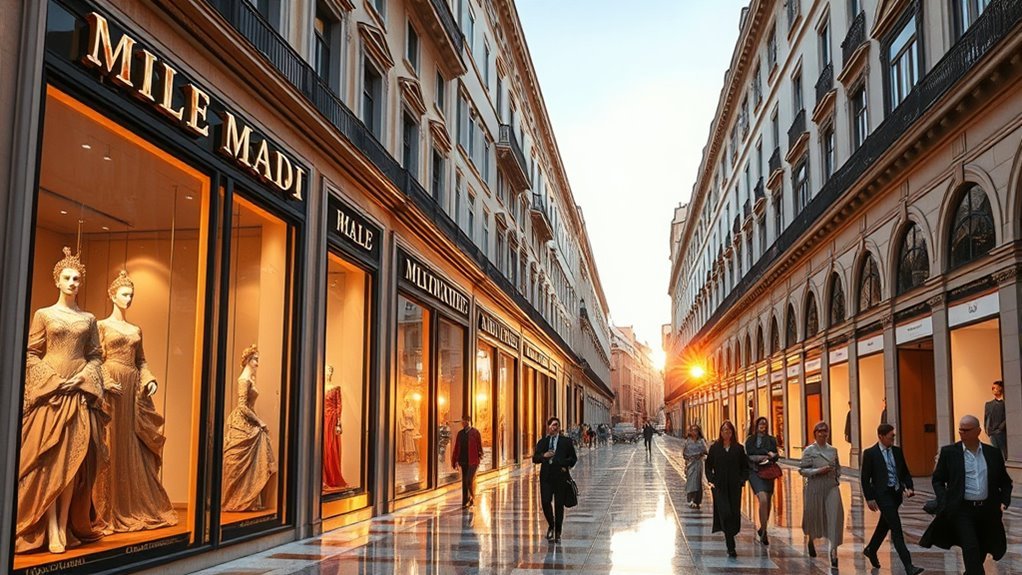
The city’s best-known luxury district is the Quadrilatero della Moda. It is framed by Via Montenapoleone, Via Manzoni, Via della Spiga, and Corso Venezia, with more boutiques on Via Sant’Andrea, Via Gesù, and nearby streets. Via Montenapoleone briefly ranked first worldwide for prime retail rents in 2024. The 2025 ranking placed it second behind London’s New Bond Street, so calling it the current world’s most expensive shopping street would be outdated.
Milan is the stage for Italian luxury, but the city of origin differs from house to house.
Note: “Milan fashion brand” can mean a house founded in Milan, headquartered there today, shown during Milan Fashion Week, or simply sold through a Milan flagship. Check the origin column below when that distinction matters.
Milan Luxury Fashion Brands at a Glance
| Brand | Origin | Best Known For | Current Creative Leadership |
|---|---|---|---|
| Giorgio Armani | Milan, 1975 | Soft tailoring, neutral palettes, eveningwear | Transition led by long-time family and design executives, including Silvana Armani and Leo Dell’Orco |
| Dolce & Gabbana | Milan, 1985 | Sicilian imagery, lace, corsetry, Alta Moda | Domenico Dolce and Stefano Gabbana |
| Gucci | Florence, 1921 | Leather goods, Horsebit, Bamboo, bold reinvention | Demna |
| Prada | Milan, 1913 | Nylon, intellectual minimalism, unusual proportions | Miuccia Prada and Raf Simons |
| Versace | Milan, 1978 | Medusa, vivid prints, body-conscious glamour | Pieter Mulier, from July 1, 2026 |
| Fendi | Rome, 1925 | Baguette and Peekaboo bags, leather craft | Maria Grazia Chiuri |
| Valentino | Rome, 1960 | Couture, romantic eveningwear, Valentino Red | Alessandro Michele |
| Moschino | Milan, 1983 | Pop satire, slogans, visual jokes | Loris Messina and Simone Rizzo |
| Bottega Veneta | Vicenza, 1966 | Intrecciato leather, quiet branding, sculptural design | Louise Trotter |
How to Choose a Luxury Brand in Milan
Start with the style you will actually wear, not the loudest logo or newest runway headline.
- For quiet tailoring: Giorgio Armani.
- For modern, idea-led fashion: Prada.
- For bold glamour: Versace or Dolce & Gabbana.
- For leather craftsmanship: Bottega Veneta, Gucci, or Fendi.
- For couture romance: Valentino.
- For humor and statement pieces: Moschino.
Pro Tip: Compare a house’s permanent icons with its current-season pieces. Classic bags, loafers, and tailoring usually show the brand’s long-term identity more clearly than a single runway collection.
Giorgio Armani: Timeless Milanese Elegance
Giorgio Armani built his house on precision without stiffness. The brand’s relaxed jackets, fluid trousers, muted colors, and clean eveningwear created a form of luxury that looks controlled rather than showy.
Tailored Excellence and Craftsmanship
Founded in Milan in 1975 by Giorgio Armani and Sergio Galeotti, the company became known for deconstructed tailoring. Softer shoulders and lighter internal structure gave suits more movement while keeping a polished line. The main Giorgio Armani collection remains the most refined expression of that idea, while Emporio Armani is younger and more casual.
Iconic Fashion Legacy
The house expanded from menswear into womenswear, accessories, fragrance, eyewear, interiors, hospitality, and Armani Privé couture. Its strongest legacy is still the same: clothing that makes the wearer look composed without appearing overstyled.
Giorgio Armani died on September 4, 2025. The company is now moving through the succession structure he prepared. A 2026 Emporio Armani collection was the first developed jointly by Silvana Armani and Leo Dell’Orco, two long-time figures inside the house.
Versatile Design Aesthetics
Armani works best for shoppers who value fabric, cut, and repeat wear over obvious branding. Look closely at jacket balance, trouser drape, evening fabrics, and neutral color combinations. Those details carry the brand identity more than logos do.
Dolce & Gabbana: Mediterranean Glamour Redefined
Domenico Dolce and Stefano Gabbana founded the house in Milan in 1985. Sicily remains its strongest visual source, appearing through black lace, corsetry, floral prints, religious imagery, gold decoration, and dramatic tailoring.
Iconic Design Elements
Dolce & Gabbana turns Italian heritage into highly recognizable fashion. Lace dresses, fitted jackets, leopard print, citrus motifs, and ornate accessories return often, but their scale and styling change from season to season.
Cultural Narrative Inspiration
The house’s references are not limited to one product category. Southern Italian imagery appears in womenswear, menswear, jewelry, home collections, and tailored suiting. The result is theatrical, romantic, and often intentionally excessive.
Haute Couture Excellence
Alta Moda began in Taormina in 2012 and is the house’s highest expression of handwork and spectacle. Three elements define it:
- Sicilian roots: Local architecture, folklore, ceremony, and craft shape the visual story.
- Hand-finished construction: Embroidery, lace, appliqué, and jewelry-like decoration require specialist work.
- Destination presentations: Shows are often staged in historic Italian settings rather than standard runway spaces.
Alta Moda is closer to an invitation-only cultural event than a conventional ready-to-wear launch.
Gucci: Tradition Meets Reinvention
Gucci was founded in Florence in 1921, not Milan. Its early identity grew from leather goods and travel, leading to enduring codes such as the Bamboo handle, Horsebit hardware, green-red-green Web stripe, and GG monogram.
The house has changed direction several times in the past decade. Alessandro Michele’s eclectic era ended in 2022. Sabato De Sarno led a quieter phase through early 2025. Kering appointed Demna as artistic director from July 2025, and his first Gucci runway show was presented in Milan in February 2026.
For shoppers, Gucci offers the widest mix in this group: loafers, handbags, luggage, jewelry, tailoring, sneakers, and statement runway pieces. The most durable choices usually connect to a long-running house code rather than a short-lived seasonal graphic.
Prada: Minimalism and an Intellectual Point of View
Prada began in 1913 with a luxury-goods store in Milan’s Galleria Vittorio Emanuele II. The house is often called minimalist, but its real strength is tension: elegant with awkward, polished with industrial, familiar with strange.
- Unexpected materials: Prada turned utilitarian nylon into a luxury signature.
- Idea-led collections: Proportion, uniform, gender, taste, and social codes often matter as much as decoration.
- Shared leadership: Miuccia Prada and Raf Simons have worked as co-creative directors since 2020.
Prada suits shoppers who like clothes and accessories that reveal their logic slowly. The Re-Edition bags, nylon pieces, loafers, and sharply cut outerwear are useful entry points into the brand.
Versace: Bold Milanese Glamour
Gianni Versace founded the house in Milan in 1978. Its design language combines classical references, sensual silhouettes, vivid color, metal hardware, and prints made to be recognized across a room.
The recent leadership timeline needs careful dating. Donatella Versace stepped down as chief creative officer in March 2025 and became chief brand ambassador. Dario Vitale served for one season. Prada Group completed its acquisition of Versace on December 2, 2025. Pieter Mulier became chief creative officer on July 1, 2026, so the house is no longer searching for a creative director.
Iconic Dress Designs
- Vibrant color and print: Baroque patterns, saturated shades, and graphic contrast make the clothes instantly visible.
- Daring cuts: Body-conscious construction, slashes, draping, and metal details create controlled drama.
- Classical motifs: The Medusa head and Greek-key border connect the house to Mediterranean antiquity.
Celebrity Influence
Versace has long understood the power of a red-carpet image. Jennifer Lopez’s green jungle-print dress at the 2000 Grammy Awards remains one of the house’s defining pop-culture moments. Relationships with performers including Madonna and Lady Gaga further tied Versace to music, celebrity, and confident self-display.
Innovative Material Use
The house uses silk, metal mesh, leather, stretch fabrics, crystals, metallic finishes, and engineered prints to support its dramatic silhouettes. Under new ownership and creative leadership, the key question is not whether Versace will become quiet, but how Mulier will reinterpret that bold vocabulary.
Fendi: Roman Craftsmanship With a Playful Edge
Fendi was established in Rome in 1925 by Adele and Edoardo Fendi. It is not a Milan-founded house, although it is a major presence in Milan’s fashion calendar and luxury stores.
The brand built its reputation through leather and fur craftsmanship. Silvia Venturini Fendi created the Baguette bag in 1997 and the Peekaboo in 2008, giving the house two lasting handbag icons. The playful Fendace exchange with Versace later showed how easily Fendi could place its codes in conversation with another Italian house.
Creative leadership changed in October 2025, when Maria Grazia Chiuri was appointed chief creative officer and Silvia Venturini Fendi became honorary president. Chiuri presented her first Fendi collection for Fall/Winter 2026–27.
Valentino: Classic Romance and Contemporary Flair
Valentino was founded in Rome in 1960 by Valentino Garavani and Giancarlo Giammetti. The house is known for couture-level finish, elegant eveningwear, bows, lace, embroidery, and the vivid shade associated with Valentino Red.
Pierpaolo Piccioli left in March 2024 after a long tenure. Alessandro Michele became creative director on April 2, 2024, taking responsibility for women’s, men’s, accessories, and haute couture. His layered, decorative approach has shifted the mood from Piccioli’s cleaner romanticism toward a denser mix of historical references and personal styling.
Three reasons Valentino stands out are:
- Exquisite craftsmanship: Couture techniques shape even the house’s ready-to-wear image.
- Recognizable color: Valentino Red remains a powerful visual code.
- Romantic range: The house can move from restrained gowns to highly decorated statement looks without losing its identity.
Moschino: Satirical Fashion With a Twist
Franco Moschino founded the label in Milan in 1983. The brand uses fashion as commentary, turning logos, food packaging, uniforms, cartoons, and consumer culture into jokes that can also function as luxury objects.
The original leadership information is now outdated. Jeremy Scott led Moschino from 2013 until 2023. Adrian Appiolaza served from January 2024 to June 19, 2026. On June 21, 2026, Aeffe appointed Loris Messina and Simone Rizzo as creative directors, with their debut scheduled for Milan Fashion Week in September 2026.
| Design Area | Key Features | Typical Pieces |
|---|---|---|
| Pop satire | Visual jokes, parody, bright color | Slogan T-shirts and novelty dresses |
| Runway | Irreverent themes and exaggerated scale | Concept gowns and sculptural outerwear |
| Accessories | Novelty shapes and playful branding | Quirky handbags, jewelry, and shoes |
| Menswear | Graphics, tailoring with humor, bold styling | Printed shirts, knitwear, and sweatshirts |
Bottega Veneta: Artisan Craftsmanship in Luxury Fashion
Bottega Veneta was founded in Vicenza in 1966. Its signature Intrecciato technique weaves strips of leather into a flexible, recognizable surface. The approach supports the house’s long preference for craft and shape over large exterior logos.
Daniel Lee left in 2021, and Matthieu Blazy led the house from 2021 through late 2024. Louise Trotter joined at the end of January 2025 and presented her first collection for Summer 2026. Her work continues the house’s emphasis on material, movement, and everyday objects made with unusual precision.
Bottega is a strong choice for shoppers who want a luxury bag or shoe that is recognizable through construction rather than a monogram. Intrecciato bags, the Knot clutch, woven shoes, and softly structured leather pieces show the house most clearly.
Where to Shop for Luxury Fashion in Milan
Quadrilatero della Moda
Start in the Quadrilatero for the highest concentration of flagship boutiques. Via Montenapoleone is the main spine, while Via della Spiga offers a calmer pedestrian setting. Via Sant’Andrea and Via Manzoni connect more stores, showrooms, hotels, and historic buildings.
Galleria Vittorio Emanuele II
The Galleria is essential for Prada because the house opened its first store there in 1913. It is also close to the Duomo, La Rinascente department store, and central shopping streets, making it easy to compare luxury boutiques with multi-brand retail in one walk.
Shopping Smart
- Check the brand’s official store locator before visiting because boutiques can move, renovate, or operate by appointment.
- Ask whether a product is permanent, seasonal, limited, or exclusive to that location.
- Keep the receipt, authenticity materials, care booklet, and original packaging.
- For costly leather goods, inspect stitching, hardware, edge paint, lining, and return terms before leaving.
Tax-Free Shopping Note: Travelers who live outside the EU may qualify for an Italian VAT refund when the value on a single invoice exceeds €70, VAT included, and the other customs conditions are met. Ask the store to create the tax-free paperwork, keep the goods available for inspection, and validate the export when leaving the EU. Fees mean the cash refund is usually less than the full VAT shown on the receipt.
Frequently Asked Questions
Which luxury brands were founded in Milan?
Major luxury houses founded in Milan include Giorgio Armani, Prada, Versace, Dolce & Gabbana, and Moschino. Gucci began in Florence, Fendi and Valentino in Rome, and Bottega Veneta in Vicenza, even though all have a major presence in Milan.
Is Gucci a Milan brand?
No. Guccio Gucci founded the house in Florence in 1921. Gucci is deeply involved in Milan’s fashion calendar and retail scene, but its historical home is Florence.
What luxury brands are based in Italy?
Italy’s best-known luxury houses include Armani, Prada, Versace, Gucci, Dolce & Gabbana, Fendi, Valentino, Bottega Veneta, and Moschino. Other major Italian names include Ferragamo, Zegna, Loro Piana, Tod’s, and Miu Miu.
What brands should I buy in Milan?
Choose by style and product strength. Armani is strong for tailoring, Prada for nylon and modern accessories, Bottega Veneta for woven leather, Gucci for loafers and heritage bags, Fendi for the Baguette and Peekaboo, and Versace or Dolce & Gabbana for statement fashion.
Where is Milan’s luxury fashion district?
The Quadrilatero della Moda sits around Via Montenapoleone, Via Manzoni, Via della Spiga, and Corso Venezia. Via Sant’Andrea, Via Gesù, and nearby streets add more boutiques and showrooms.
Who are the newest creative directors in 2026?
As of July 2026, Pieter Mulier leads Versace, Maria Grazia Chiuri leads Fendi, Demna leads Gucci, Louise Trotter leads Bottega Veneta, and Loris Messina with Simone Rizzo lead Moschino. Alessandro Michele has led Valentino since 2024.
Can non-EU visitors claim a VAT refund in Milan?
Eligible travelers who live outside the EU can generally request tax-free paperwork when a qualifying Italian invoice exceeds €70, VAT included. The goods must meet customs rules and the export must be validated when the traveler leaves the EU.
Conclusion
Milan’s luxury scene makes more sense once you separate birthplace from influence. Armani, Prada, Versace, Dolce & Gabbana, and Moschino are Milan-founded houses. Gucci, Fendi, Valentino, and Bottega Veneta come from other Italian cities but remain central to Milan’s stores and runway culture.
The best choice depends on your taste: Armani for restraint, Prada for ideas, Versace for drama, Dolce & Gabbana for Mediterranean romance, Fendi and Bottega Veneta for leather craft, Valentino for couture, Gucci for heritage mixed with reinvention, and Moschino for humor. Because creative leadership changed quickly from 2024 through 2026, check the latest collection before assuming a house looks exactly as it did a few years ago.
Sources
- YesMilano: Quadrilatero della Moda — official city guide to the fashion district and its main streets.
- Armani Group announcement, September 4, 2025 and Emporio Armani Fall/Winter 2026–27 show notes — confirm Giorgio Armani’s death and the first collection jointly developed by Silvana Armani and Leo Dell’Orco.
- Kering: Gucci and Kering: Bottega Veneta — founding histories and current creative leadership.
- Prada Group: Versace acquisition and Pieter Mulier appointment — ownership and 2026 creative leadership.
- LVMH: Maria Grazia Chiuri named Chief Creative Officer at Fendi — confirms the October 2025 appointment.
- Aeffe: Moschino appoints Loris Messina and Simone Rizzo — confirms the June 2026 creative-director change.
