
Last Updated on July 28, 2026 by Daniel Globe
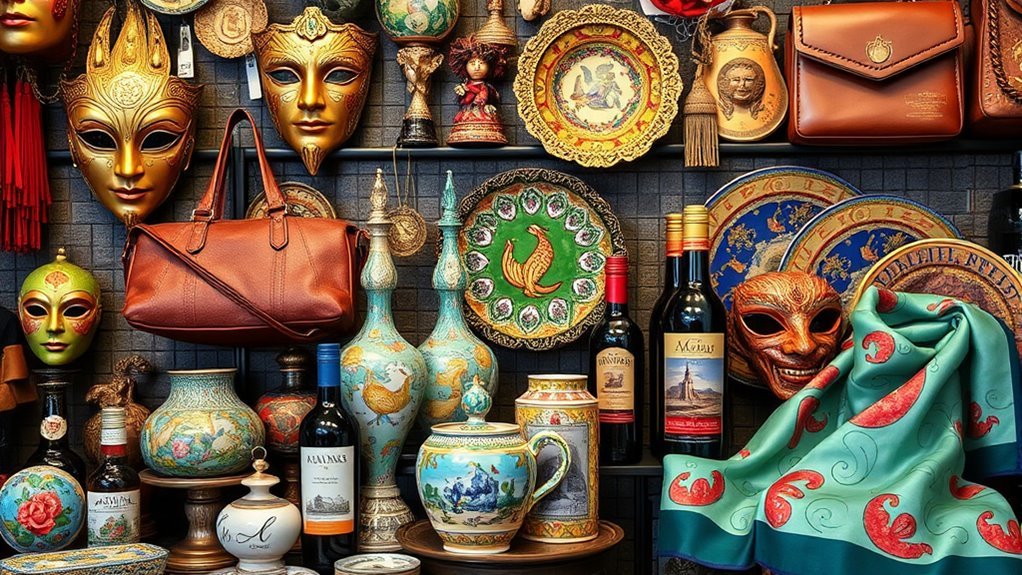
Italy is packed with gifts that reflect its regional crafts, food traditions, and design heritage. The best souvenirs are not simply labeled “Made in Italy”; they have a clear maker, place of production, material description, and receipt. This guide covers what to buy, where each craft comes from, realistic budget ranges, how to check authenticity, and how to bring your purchases home safely.
Quick Answer
The best souvenirs from Italy are tied to a known place and maker: Deruta or Vietri ceramics, glass made on Murano, Tuscan leather, Como silk, regional extra virgin olive oil, and DOC or DOCG wine. Check labels and receipts, avoid suspiciously cheap “artisan” goods, and review airline and customs rules before packing.
Key Takeaways
- A certificate can help, but it is not a universal guarantee. Match it to the maker, workshop, product, and receipt.
- DOP, IGP, DOC, and DOCG labels protect origin and production rules; they do not guarantee that every buyer will prefer the taste.
- Small fragile items are often safer in carry-on luggage. Large pieces and liquids may need careful checked packing or insured shipping.
- Declare food and agricultural products when required, and check the rules of your destination country before departure.
- Non-EU residents may qualify for a VAT refund on eligible goods taken out of the EU when the retailer and customs requirements are met.
Disclosure: As an Amazon Associate I earn from qualifying purchases. Some links on this page are affiliate links, at no extra cost to you.
Traditional Italian Ceramics: Where to Find Authentic Pieces
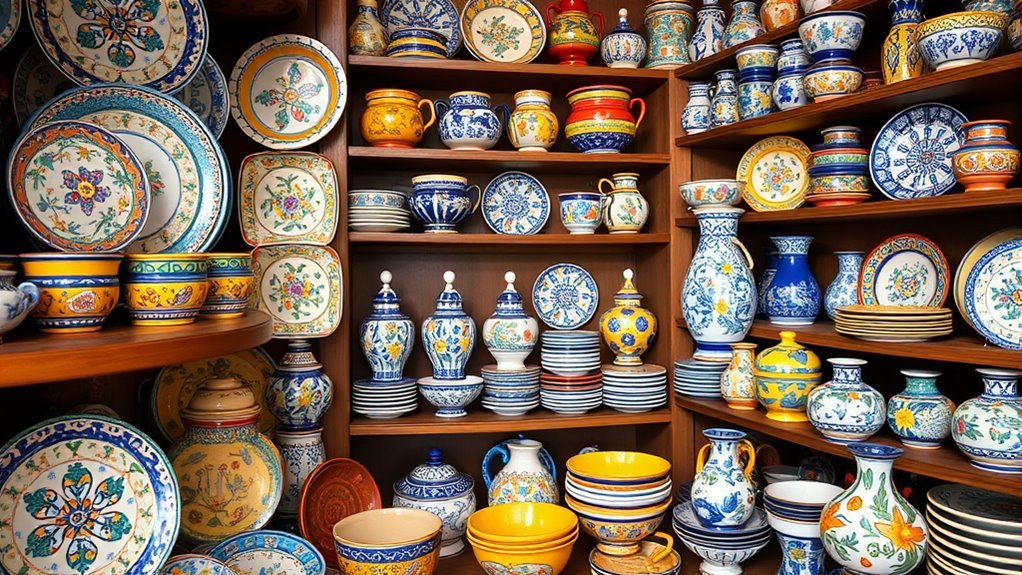
For traditional Italian ceramics, start with places known for long-running workshops. Deruta and Gubbio in Umbria, Vietri sul Mare in Campania, Faenza in Emilia-Romagna, and Caltagirone in Sicily are strong choices. In these towns, you can find majolica plates, bowls, serving pieces, tiles, and decorative objects painted by hand.
Look underneath the piece for a workshop name, artist signature, town, or production code. Ask whether it is food-safe, dishwasher-safe, microwave-safe, or intended only for display. A certificate or maker card is useful when it identifies the actual workshop, but Italy does not have one universal certificate that authenticates every ceramic souvenir.
Pro Tip: Turn the piece over before buying. A clear workshop mark, handwritten signature, care instructions, and itemized receipt are stronger evidence than a generic “authentic Italian ceramic” sticker.
Italian Souvenirs at a Glance
| Souvenir | Best-Known Area | Planning Budget | What to Check |
|---|---|---|---|
| Hand-painted ceramics | Deruta, Vietri sul Mare, Faenza, Caltagirone | About €10–€40 for small pieces; €50–€250+ for larger work | Workshop mark, intended use, care instructions |
| Murano glass | Murano, Venice | About €25–€100 for jewelry; €80–€500+ for art glass | Maker, numbered label, itemized receipt |
| Leather goods | Florence and the Tuscan leather district | About €25–€100 for small goods; €120–€600+ for bags | Material, construction, origin of leather and assembly |
| Extra virgin olive oil | Tuscany, Puglia, Sicily, Liguria, Umbria | About €12–€40 for 500 ml | Harvest date, origin, dark container, DOP or IGP where relevant |
| Regional wine | All 20 regions | About €10–€35 for many good bottles; premium wines cost more | Producer, vintage, appellation, airline and customs rules |
| Silk scarf | Como | About €40–€180 for artisan pieces; luxury labels cost more | Fiber content, printing, finishing, place of manufacture |
| Food gifts | Region-specific | About €5–€30 per item | Sealed package, ingredients, expiration date, import rules |
These are broad planning ranges, not fixed prices. Size, artist reputation, material, shop location, and production time can change the price sharply.
Artisan Murano Glass: The Colorful Elegance of Italy
Murano glass is made on the Venetian island of Murano using techniques such as blown glass, lampworking, filigree, murrine, and millefiori. Pieces range from beads and jewelry to glasses, vases, lighting, and large sculptures. Handwork naturally creates small differences, but uneven quality alone does not prove that an item is genuine or fake.
The strongest official origin marker is the regional Vetro Artistico® Murano trademark, used by licensed producers. Its numbered label supports traceability. Not every legitimate Murano furnace uses the mark, so also ask for the maker’s name, workshop address, technique, and itemized receipt. A loose certificate with no matching maker or product details is weak evidence.
Warning: “Murano style,” “Venetian glass,” or an Italian flag on the packaging does not prove that the object was made on Murano.
Authentic Italian Olive Oil: The Mediterranean’s Finest
Italian extra virgin olive oil varies by cultivar, climate, harvest timing, and milling method. Tuscan oils are often green and peppery, Ligurian oils tend to be milder, and many oils from Puglia and Sicily are bold and aromatic. Taste before buying when possible, then choose a size you can pack and use while it is fresh.
Types of Olive Oil
These common Italian cultivars can give you a useful starting point, although flavor changes by region, ripeness, blending, and production.
| Olive Variety | Common Flavor Profile |
|---|---|
| Frantoio | Fruity, grassy, and sometimes peppery |
| Leccino | Mild, balanced, and gently fruity |
| Coratina | Robust, bitter, and peppery |
| Ogliarola | Herbaceous, almond-like, and moderately fruity |
Extra virgin is a legal quality category based on production, chemical limits, and sensory evaluation. It is not automatically “first cold pressed.” Under current EU labeling rules, “first cold pressing” applies only to oil produced below 27°C with a traditional hydraulic press, while “cold extraction” applies to qualifying modern extraction below 27°C. A DOP or IGP name protects geographic origin and an approved production specification.
Choose a sealed dark-glass bottle or tin. Check the harvest date, best-before date, producer, and stated origin. Store it away from heat and light after you return home.
Health Benefits Overview
Extra virgin olive oil supplies mostly unsaturated fat and contains minor compounds such as polyphenols. The strongest evidence concerns using olive oil within an overall Mediterranean-style eating pattern, especially in place of saturated fats. It should not be presented as a treatment for high cholesterol, diabetes, inflammation, or cognitive decline.
Handcrafted Italian Leather Goods: Luxury You Can Carry
When you choose handcrafted Italian leather goods, ask two separate questions: where was the leather tanned, and where was the finished item cut and assembled? “Italian leather” can describe the material without proving that the whole product was made by an Italian artisan.
Timeless Craftsmanship Techniques
Good leatherwork shows clean edge finishing, even stitching, secure hardware, aligned panels, and a construction method suited to the item. Hand-stitching can be strong and attractive, but machine stitching is not automatically inferior. Florence and the Tuscan leather district remain important centers for leather production and finished goods.
Sustainable Sourcing Practices
Vegetable tanning uses plant-based tannins, but the word “vegetable” does not by itself prove that a product is environmentally harmless. For a more specific origin claim, look for programs such as the Pelle Conciata al Vegetale in Toscana trademark, which is tied to consortium rules and traceability. Ask the seller for the care card and documentation that matches the item.
Regional Italian Wines: Sip on Italy’s Best
Each of Italy’s 20 regions produces wine, and the country grows hundreds of grape varieties. Rather than chasing a large number, shop by place, producer, vintage, and style. Chianti Classico and Brunello di Montalcino come from Tuscany; Barolo and Barbaresco come from Piedmont; Prosecco is associated with northeastern Italy; and Franciacorta is a traditional-method sparkling wine from Lombardy.
| Wine Region | Notable Grapes or Styles | Food Pairing Idea |
|---|---|---|
| Tuscany | Sangiovese | Bistecca alla Fiorentina |
| Piedmont | Nebbiolo | Truffle risotto |
| Veneto and Friuli-Venezia Giulia | Glera and Prosecco styles | Seafood or light appetizers |
| Lombardy | Franciacorta | Creamy polenta or aperitivo foods |
DOC and DOCG are Italian traditional terms used within the EU geographical-indication system. They show that the wine follows a defined origin and production specification; they do not promise that every bottle is better than every unclassified wine.
Classic Italian Pasta: A Culinary Treasure
Dry pasta is one of the easiest Italian souvenirs to pack because it is light, shelf-stable, and available in regional shapes that may be hard to find at home. Choose an intact sealed package and protect long or delicate shapes from crushing.
Pasta Varieties and Shapes
Italy has hundreds of pasta shapes, and many are linked to a place or sauce. Spaghetti suits smooth or oil-based sauces; penne holds chunky sauces; orecchiette is closely associated with Puglia; trofie is associated with Liguria; and filled fresh pastas such as ravioli are best bought only when you can keep them safely chilled.
Traditional Italian Ingredients
Most dried Italian pasta is made from durum wheat semolina and water. Pasta di Gragnano IGP follows a protected production specification linked to Gragnano in Campania. For a useful gift, look for bronze-die texture, an intact package, a clear ingredient list, and a shape that travels well.
Cooking Techniques and Tips
Cook dried pasta in salted boiling water until it reaches the texture you prefer. Fresh pasta cooks much faster. Reserving some starchy cooking water can help a sauce cling and emulsify.
| Cooking Technique | What to Do |
|---|---|
| Boiling | Use plenty of boiling water and taste before draining. |
| Fresh Pasta | Cook briefly and pair with a sauce that will not overwhelm it. |
| Pasta Water Reserve | Add a small amount to loosen and bind the sauce. |
Italian Cookbooks Featuring Authentic Recipes
Italian cookbooks make practical gifts because they explain regional dishes long after the trip ends. Essentials of Classic Italian Cooking by Marcella Hazan and The Silver Spoon are broad references. Books by Massimo Bottura and Lidia Bastianich offer different viewpoints, from contemporary restaurant cooking to Italian and Italian-American home cooking.
Before buying, check the language, measurement system, recipe difficulty, and whether the book focuses on the region you visited. A small regional cookbook from a museum, culinary school, or independent bookstore may feel more personal than a large general collection.
Cool Venetian Masks You’ll Love
Venetian masks range from inexpensive molded souvenirs to handmade papier-mâché pieces painted and decorated in local workshops. Ask what the base is made from and whether the decoration was done in the shop.
- Bauta: A full-face historical form with a projecting lower section that allowed the wearer to speak and eat.
- Colombina: A decorative half-mask associated with theatrical and carnival traditions.
- Medico della Peste: A long-beaked design inspired by the protective clothing associated with plague doctors.
- Moretta: A small oval mask historically associated with women in Venice and traditionally held in place without visible ties.
Symbolic meanings vary by period, maker, and modern interpretation, so treat fixed one-line meanings as stories rather than universal historical facts.
Italian Gourmet Chocolates: Sweet Indulgences
Italy’s chocolate traditions include gianduja from Turin, hazelnut pralines, Perugian chocolates, and the distinctive grainy texture of chocolate from Modica. Brands such as Venchi and Caffarel are widely available, while small chocolatiers offer local flavors and limited batches.
Choose sealed packaging with an ingredient list and expiration date. In warm weather, buy chocolate near the end of your trip, keep it out of direct sun, and use an insulated pouch if needed. Avoid leaving it in a parked car or hot luggage compartment.
Stunning Handmade Italian Jewelry: From Necklaces to Bracelets
Italian jewelry can feature Murano glass, coral, cameos, filigree, enamel, silver, or gold. The most important buying details are the maker, metal fineness, stone or glass description, weight where relevant, return policy, and an itemized receipt.
Unique Design Elements
- Millefiori Patterns: Colorful cross-sections made from patterned glass canes.
- Florentine Motifs: Engraving, texture, and ornamental patterns associated with Florentine goldsmithing traditions.
- Gold Accents: Ask whether the detail is solid gold, vermeil, gold-filled, plated, or simply gold-colored.
- Jewelry Documentation: The receipt should identify the maker, materials, fineness, and any stones rather than relying on a generic certificate.
Artisan Craftsmanship Techniques
Filigree uses fine metal wire to build delicate patterns. Granulation uses tiny metal beads fused to a surface. Murano glass jewelry may be lampworked or assembled from murrine and other glass elements. Inspect clasps, solder joints, symmetry, sharp edges, and finishing before purchase.
Vintage Italian Posters: Timeless Artistry
Vintage Italian posters began as advertising, tourism, film, and product graphics. Today, originals and licensed reproductions are both popular, but they have very different values.
With posters, age, printing method, condition, dimensions, and documented provenance matter more than a dramatic sales description.
- Artistic Heritage: Italian posters reflect movements such as Art Nouveau, Futurism, modernism, and mid-century commercial design.
- Known Artists: Work associated with artists such as Leonetto Cappiello can be collectible, but attribution should be documented.
- Historical Significance: Travel, food, fashion, and cinema posters can capture a specific period of Italian culture.
- Condition and Provenance: Restoration, fading, trimming, backing, and reproduction status strongly affect price.
For an expensive piece, ask for condition details and provenance in writing. Roll suitable paper prints in a rigid tube rather than folding them.
Italian Espresso Makers: Brew the Perfect Cup
The iconic Bialetti Moka Express is a compact, useful souvenir. A moka pot makes strong stovetop coffee, but it does not produce the same pressure or drink as a pump-driven espresso machine.
For the classic method, fill the lower chamber with water without covering the safety valve, add coffee to the funnel without tamping it, assemble the pot, and heat it gently. Bialetti’s own guidance says not to press the grounds. Choose a size based on small moka “cups,” not standard U.S. measuring cups, and confirm that the model works with your stove. Traditional aluminum models generally need an adapter or a compatible version for induction cooktops.
Italian Olive Wood Kitchenware: Functional Beauty
Olive wood has dramatic grain and makes attractive cutting boards, spoons, bowls, and utensil holders. Its performance depends on construction, dryness, finish, and care; do not rely on broad antibacterial claims when choosing it for food use.
- Olive wood cutting boards
- Serving spoons
- Salad bowls
- Utensil holders
Hand wash the piece, dry it promptly, and avoid long soaking, dishwashers, and extreme heat. Apply a food-safe oil or conditioner when the surface looks dry, following the maker’s directions.
Whimsical Murano Glass Figurines for Home Decor
Murano glass figurines often depict animals, flowers, musicians, abstract forms, and miniature scenes. Small figures can be more affordable than large sculpture, but genuine work is not defined by a narrow price range. Complexity, furnace, artist, size, technique, and retail location all matter.
Use the same authenticity checks described for Murano glass: identify the maker, look for the official numbered mark when used, match any certificate to the piece, and keep the receipt. Examine thin ears, tails, leaves, and stems for stress or damage before the shop wraps the item.
Flavorful Italian Spices and Seasonings
Spices, salts, and dried herbs are easy gifts when they are commercially packaged and clearly labeled.
- Regional Herb Blends: Read the ingredient list instead of assuming every “Italian seasoning” is a traditional local formula.
- Sicilian Sea Salt: Available in coarse and fine textures for cooking and finishing.
- Peperoncino: Dried chili flakes or whole chilies used in many southern Italian dishes.
- Flavored Olive Oils: Buy sealed commercial products and follow the storage instructions on the label.
Keep powders and salts in their original labeled packaging for customs inspection. Homemade herb bundles, fresh leaves, seeds, and plant material can face stricter agricultural rules.
Hand-Painted Italian Tiles: Artistic Home Accents
Hand-painted Italian tiles can be framed, used as trivets, set into tabletops, or installed as part of a backsplash. Before buying for construction, ask for technical information rather than assuming every decorative tile is suitable for floors, showers, freezing weather, or outdoor use.
Unique Design Variations
- Majolica Patterns: Bright glazes and painted decoration vary by region and workshop.
- Durability: Suitability depends on the clay body, firing, glaze, water absorption, wear rating, and installation.
- Unique Craftsmanship: Deruta and Vietri sul Mare are well-known, but many Italian ceramic towns have distinct styles.
- Functional Art: A decorative tile can become a small backsplash accent, tabletop insert, framed panel, or wall display.
Cultural Symbolism and History
Italian maiolica developed through centuries of Mediterranean exchange and local innovation. Patterns may draw from plants, coats of arms, religious imagery, geometry, landscapes, and everyday life. Ask the artist what a specific design means instead of applying one universal symbolism chart.
| Aspect | What to Ask |
|---|---|
| Color | Which pigments and firing method created it? |
| Design | Is it traditional to the town, original to the artist, or adapted for tourists? |
| Craftsmanship | Was it painted, printed, transferred, or finished by hand? |
Functional Art for Homes
- Use a few accent tiles in a kitchen backsplash.
- Set decorative pieces into a protected tabletop.
- Choose rated floor tile only when the technical specification supports foot traffic.
- Frame a single tile or coordinated panel as wall art.
For installation, buy extra pieces from the same batch and photograph the maker’s label. Hand-painted color and size can vary, which is part of the appeal but can complicate replacement.
Italian Tableware: Elevate Your Dining Experience
Italian tableware includes earthenware, stoneware, porcelain, glass, and stainless steel. Deruta and Gubbio are known for ceramics, but a regional name alone does not prove that every item in a nearby shop was made there.
Ask whether plates and bowls are certified for food contact and whether metallic decoration makes them unsuitable for a microwave. “Dishwasher-safe” should come from the maker’s care instructions, not a guess based on the glaze. For a gift, a serving bowl, platter, or pair of cups is easier to pack than a full dinner set.
Luxurious Italian Silk Scarves: Fashion Essentials
Como has a long silk-production and printing tradition, making a scarf a fitting northern Italian souvenir. Check the fiber label carefully: “designed in Italy,” “Italian silk,” and “made in Italy” describe different things.
Timeless Designs and Patterns
- Intricate Patterns: Printed, woven, and hand-finished designs range from traditional motifs to modern graphics.
- Traditional Craftsmanship: Look at the printing clarity, edge finish, stitching, and fabric hand.
- Fashion House Favorites: Gucci and Ferragamo sell Italian-designed luxury scarves, while independent Como makers can offer less familiar work.
- Versatile Elegance: A scarf can be worn casually, formally, or used as a decorative accessory.
Versatile Styling Options
Wear a silk scarf around the neck, in the hair, on a bag handle, as a belt accent, or over the shoulders. Follow the care label; many silk scarves require gentle hand washing or professional cleaning.
Ideal Gift Choices
- Classic Neck Scarf: A practical size for casual and formal wear.
- Chic Headband: A narrow scarf or twilly-style piece adds color without much bulk.
- Waist Accent: A longer scarf can be tied over a dress or trousers.
- Elegant Wrap: A larger silk piece works as a light evening layer.
Artisan Honey From Italy: Sweetness in Every Jar
Italian honey can reflect chestnut, acacia, citrus blossom, eucalyptus, alpine flowers, and mixed wildflowers. Flavor and color vary by floral source and harvest. Buy a sealed jar with the producer, net weight, origin, lot, and best-before date clearly shown.
Honey is a food, not a substitute for medical treatment. It may crystallize naturally without being spoiled. Pack the jar in a sealed bag and padded container, and remember that honey is treated as a liquid or gel at airport security. Honey should not be fed to children younger than 12 months because of infant botulism risk.
Bake Your Own Italian Focaccia: Must-Have Kits
A focaccia kit or a group of regional baking ingredients can bring part of the trip into your kitchen. Choose sealed, shelf-stable components and confirm that your destination permits each ingredient.
The most useful food souvenir is one you can identify, pack safely, and realistically cook after you return home.
- Italian Flour: Check the flour type and choose a sealed bag that will survive the trip.
- Sea Salt: A small labeled container travels more easily than a large sack.
- Dried Yeast: Keep it sealed and check import rules for your destination.
- Flavor Additions: Commercially dried herbs, packaged olives, or sun-dried tomatoes are usually easier than fresh plant products.
Handcrafted Pocket Knives: Practical Art
Italian cutlery traditions include kitchen knives, table knives, and regional folding knives. Brands such as Coltellerie Berti produce handcrafted pieces with steel blades and natural or composite handles. Ask about the steel, locking mechanism, handle material, warranty, and sharpening care.
A knife is both a souvenir and a regulated sharp object. For U.S. air travel, pocket knives are not allowed in carry-on bags and must be sheathed or securely wrapped in checked baggage. Local possession and import laws can differ, especially for automatic, locking, or unusually long blades, so check every jurisdiction on your route before buying.
Italian Leather Journals: Keep Your Memories Alive
Italian leather journals combine a reusable object with space for travel notes, sketches, or photographs. Florence and other Tuscan towns have many workshops, but use the same origin checks as you would for a bag or wallet.
- Quality Materials: Ask what kind of leather is used and whether the cover is full leather, bonded material, or a coated substitute.
- Paper: Acid-free paper is useful for archival writing and sketching, but confirm the claim on the label.
- Custom Designs: Embossing or initials can make the gift personal; verify spelling before the work begins.
- Replaceable Insert: A refillable design can outlast a permanently bound notebook.
Cozy Italian Scented Candles: Perfect Gifts
Italian fragrance houses and home-design brands sell candles inspired by citrus, fig, woods, herbs, flowers, and Mediterranean landscapes. Culti Milano and Acqua di Parma are recognizable examples, while local makers may use regional waxes, vessels, and scents.
| Fragrance Style | Example Seller Type | What to Check |
|---|---|---|
| Fig and fruit | Italian home-fragrance brand | Net weight, burn instructions, vessel condition |
| Citrus and herbs | Luxury fragrance house | Scent notes, wax blend, packaging |
| Lavender, olive leaf, or woods | Local artisan | Maker details, safety label, secure lid or box |
Pack glass candle vessels as fragile objects and protect the wax from high heat. Never burn a candle without following its safety label.
Traditional Italian Fruit Preserves: A Taste of Tradition
Traditional preserves are compact, giftable, and easy to pair with bread, yogurt, cheese, or desserts. Choose commercial jars with intact seals and clear labels.
- Fig Preserves: Pair with bread, yogurt, or aged cheese.
- Cherry Compote: Use with desserts or breakfast foods.
- Cognà or Cugnà: A Piedmontese grape-based preserve that may include fruit and nuts; recipes vary.
- Amarena Cherries: Dark sour cherries packed in syrup for desserts, drinks, and gelato toppings.
Because preserves are liquids or gels for security screening, jars larger than 100 ml generally belong in checked baggage unless bought after the checkpoint under applicable rules.
Indulgent Italian Bath Products: Self-Care Essentials
Italian soaps, bath salts, lotions, and fragrances can be useful gifts, especially when the packaging identifies the producer and ingredients. Check liquid limits before placing full-size products in carry-on luggage.
| Product Type | Example | What to Check |
|---|---|---|
| Signature fragrances | Acqua di Parma | Bottle size, ingredients, airline restrictions |
| Olive oil-based soaps | Italian soap maker or pharmacy brand | Ingredient list and skin sensitivities |
| Artisanal bath salts | Local artisan | Sealed package and declared ingredients |
| Hand creams and lotions | Santa Maria Novella or another Italian producer | Volume, fragrance, allergens, packaging seal |
| Bath accessories | Local ceramic, textile, or wood artisan | Material, care, and place of manufacture |
How to Check Whether an Italian Souvenir Is Authentic
- Identify the maker: Ask for the workshop, furnace, tannery, farm, winery, or artist—not just the country name.
- Read the wording carefully: “Made in Italy,” “designed in Italy,” “Italian style,” and “Italian materials” are not interchangeable.
- Match the paperwork: The receipt, certificate, label, and product should show consistent names or codes.
- Use official protected marks: Examples include Vetro Artistico® Murano, DOP, IGP, DOC, DOCG, and specialized consortium trademarks.
- Ask specific questions: Where was it made? Which parts were handmade? What material is it? How should it be cared for?
- Be cautious with pressure sales: A rushed “today only” claim or an implausibly low price is a reason to slow down.
Packing, Shipping, Customs, and VAT Refunds
Pack Fragile Souvenirs by Risk, Not by One Rule
Small glass, ceramic, jewelry, and other high-value fragile items are often safer in carry-on luggage when airline size and security rules allow. Wrap each item separately, protect projections and handles, and place the item in a rigid inner box surrounded by cushioning. Do not place it against the outer wall of any suitcase.
Large pieces may need professional double-boxing and insured shipping. Ask who is responsible for customs paperwork, breakage, duties, and delivery claims before paying for international shipping.
Liquids, Food, Olive Oil, Honey, and Wine
At U.S. security checkpoints, liquids, gels, and spreads in carry-on bags generally must be in containers of 3.4 oz or 100 ml or less, subject to the standard liquids rule. Food oils such as olive oil are allowed in checked baggage, but bottles should be sealed inside two leak-resistant bags and cushioned in the center of the suitcase.
Wine at 24% alcohol by volume or less is not subject to the FAA’s hazardous-material quantity limit in checked baggage, although airline weight, packaging, and customs rules still apply. Use a bottle sleeve or molded shipping insert, and verify your airline’s policy.
Declare Food and Agricultural Products
Rules depend on the country you are entering. U.S. Customs and Border Protection requires travelers to declare agricultural products, including meats, fruits, vegetables, plants, seeds, and related products. Commercially packaged olive oil, dried pasta, chocolate, and preserves are often simpler than fresh produce, meat, or dairy, but admissibility can change with disease and pest conditions. Declare the items and let the inspector decide.
Ask About a VAT Refund Before You Pay
Travelers who live outside the EU may qualify for a VAT refund on eligible goods carried out of the EU. The retailer must participate and provide the required paperwork. Keep the goods, receipts, passport, and forms available for customs inspection at your final EU departure point, and complete the export validation within the required period. Processing fees mean the refund is usually less than the full VAT shown.
Note: VAT refund rules do not remove your obligation to follow the import, duty, and tax rules of the country where you live.
Frequently Asked Questions
What are the best places to shop for Italian souvenirs?
Shop where a craft is actually produced: Deruta, Gubbio, Vietri sul Mare, Faenza, or Caltagirone for ceramics; Murano for glass; Florence and the Tuscan leather district for leather; and Como for silk. Workshops, producer shops, museum stores, food cooperatives, wineries, and established specialty retailers usually provide better maker information than anonymous souvenir stalls.
How do I ensure authenticity when purchasing Italian gifts?
Identify the maker, read the exact country-of-origin wording, inspect marks and care labels, and keep an itemized receipt. Match any certificate to the product and workshop. For protected products, look for the relevant official mark, such as Vetro Artistico® Murano or an EU DOP or IGP designation.
Are there customs restrictions on bringing food items home?
Yes. The rules come from the country you enter and can change with animal- and plant-health conditions. Sealed olive oil, dried pasta, chocolate, and preserves are often easier than fresh produce, meat, or dairy. Declare all agricultural products required by your destination and check its customs agency before travel.
What is the best way to pack fragile items for travel?
Carry small, valuable fragile pieces in the cabin when airline and security rules allow. Wrap items separately, place them in rigid inner boxes, and cushion all sides. For checked luggage, keep the package in the center of a hard-sided case. Use professional double-boxing and insurance for large or expensive work.
Can I bring Italian wine home on a flight?
Usually, but ordinary wine bottles exceed carry-on liquid limits unless purchased after security under applicable rules. Pack them in checked baggage with protective sleeves or use approved shipping. Check airline limits, the alcohol laws of your destination, and customs declaration or duty requirements.
Can I fly with an Italian pocket knife?
Not in a U.S. carry-on bag. TSA directs travelers to put pocket knives in checked baggage and sheath or securely wrap them. Also check Italian law, any transit-country rules, your airline, and the laws at your destination before buying or carrying a knife.
Can tourists get a VAT refund on Italian souvenirs?
Eligible residents of countries outside the EU may be able to claim a VAT refund on qualifying goods taken out of the EU. Ask the participating retailer for the paperwork at purchase, keep the goods available for customs inspection, and obtain export validation at the final EU departure point within the required time.
Note: For checked fragile souvenirs, place the wrapped inner box in the middle of the suitcase and surround every side with clothing or other soft items. Photograph the item and receipt before packing.
Can I Find Italian Gifts Online After My Trip?
Yes. Buying later can be sensible when an item is too large, fragile, or restricted for your luggage. Use the maker’s official site, an authorized retailer, a museum shop, or a recognized producer consortium. Check the legal business name, physical address, return policy, shipping insurance, import charges, and who handles damage claims.
For Murano glass, confirm the furnace or maker and verify any official numbered mark. For food, check whether the seller is authorized to ship the product to your country. For vintage posters and jewelry, request detailed photographs and written condition or material information before paying.
Conclusion
The most memorable Italian souvenir has a real connection to its maker and region. A hand-painted ceramic from a named workshop, a traceable Murano glass piece, a well-made Tuscan leather journal, a Como silk scarf, or a sealed regional food product tells a stronger story than a generic trinket. Buy slowly, document the purchase, and plan the packing and customs steps before you reach the airport.
Sources
- Regione del Veneto — Vetro Artistico® Murano trademark — supports the official origin mark and licensed-producer guidance.
- European Commission — Geographical indications and quality schemes — explains PDO/DOP and PGI/IGP origin protections for food and wine.
- EUR-Lex — Olive-oil marketing standards — supports the legal use of “first cold pressing” and “cold extraction.”
- Your Europe — VAT refunds for non-EU travelers — supports the eligibility and export-validation guidance.
- U.S. Customs and Border Protection — Bringing agricultural products into the United States — supports declaration and admissibility guidance.
- Transportation Security Administration — Pocket knives and sharp objects — supports checked-baggage requirements for knives.
