
Last Updated on July 27, 2026 by Daniel Globe
Istanbul’s coffee scene works on two levels at once: centuries-old Turkish coffee culture and a modern specialty-coffee movement built around espresso, filter brews, and locally roasted beans. The best stop depends on whether you want a traditional cup, a serious pour-over, a Bosphorus view, a pastry, or a comfortable place to open your laptop.
Quick Answer
For classic Turkish coffee in Istanbul, start with Mandabatmaz or Şark Kahvesi. For specialty coffee, look to Kronotrop, Petra Roasting Co., Coffee Department, and MOC. Pierre Loti Hill is a strong choice for Golden Horn views, while The House Café Ortaköy combines coffee and food with a Bosphorus-side setting.
Key Takeaways
- Istanbul’s coffeehouse tradition dates to the 16th century, but that does not mean today’s individual cafés have been operating since then.
- For traditional Turkish coffee, consider Mandabatmaz, Şark Kahvesi, Çorlulu Ali Paşa Medresesi, or Pierre Loti Hill.
- For modern specialty coffee, Kronotrop, Petra Roasting Co., Coffee Department, and MOC are stronger fits than view-focused restaurants.
- Some famous rooftop venues, including 360 Istanbul and Vogue Restaurant, are restaurants or bars rather than coffee-first cafés.
- Hours, Wi-Fi, menus, seating, and branch details change, so check the current venue page before crossing the city for one café.
Disclosure: As an Amazon Associate I earn from qualifying purchases. Some links on this page are affiliate links, at no extra cost to you.
Historical Coffee Houses in Istanbul
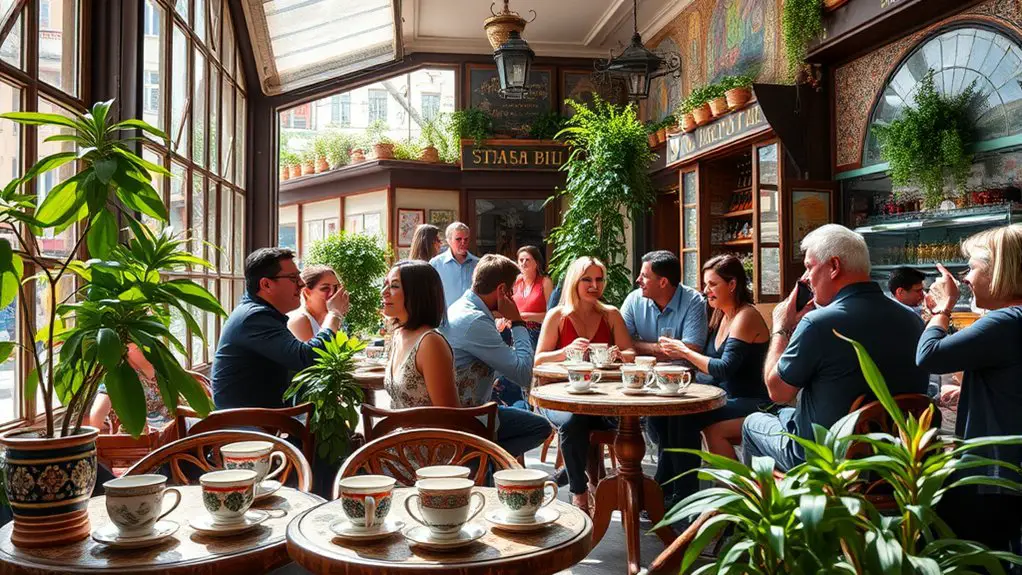
Istanbul’s relationship with coffee goes back centuries. Türkiye’s Ministry of Culture and Tourism traces the city’s coffeehouse tradition to the 16th century, when coffeehouses became places for conversation, reading, storytelling, and social life.
That history needs one important qualification: the coffeehouse tradition is centuries old, but most cafés serving visitors today are not businesses that have continuously operated since the 1500s. What you can still experience is the social ritual, brewing style, and atmosphere that developed from that earlier culture.
Turkish coffee culture and tradition was inscribed on UNESCO’s Representative List of the Intangible Cultural Heritage of Humanity in 2013.
For a classic cup near İstiklal Avenue, Mandabatmaz in Beyoğlu is one of the city’s best-known Turkish-coffee stops. It is a compact place, so think of it as a focused coffee experience rather than a long café session.
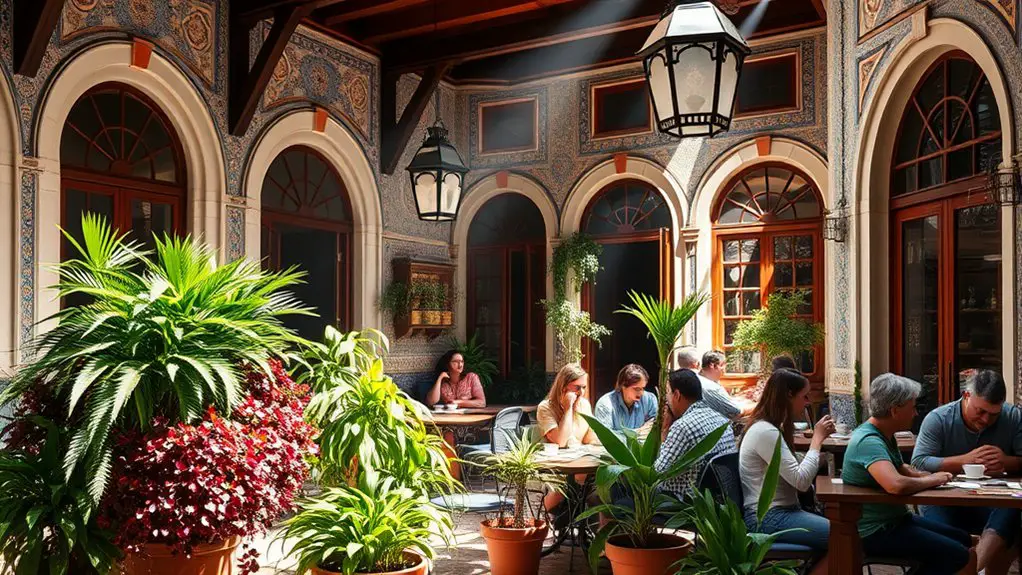
Inside the Grand Bazaar, Şark Kahvesi provides another traditional-style stop in an atmospheric setting. Near Beyazıt, Çorlulu Ali Paşa Medresesi serves Turkish coffee inside a historic complex dating to the early 18th century. Its current menu also emphasizes nargile, so smoke-sensitive visitors may prefer another venue.
For history combined with scenery, Pierre Loti Hill in Eyüpsultan overlooks the Golden Horn and remains a popular place for tea or Turkish coffee.
Coffee and Drinks With Stunning Istanbul Views
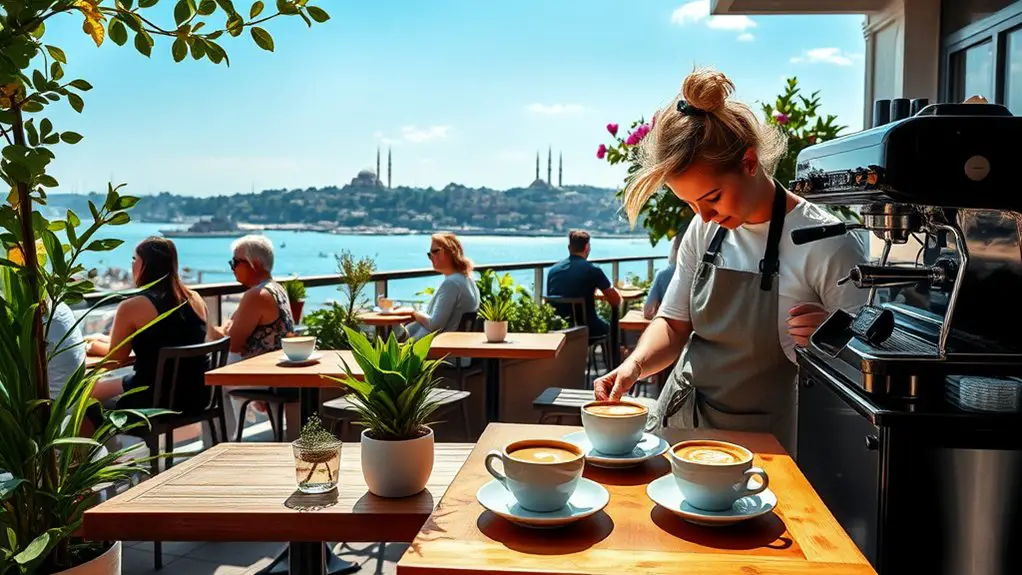
A great Istanbul view does not always come from a specialty coffee shop. Some of the city’s most famous panoramas belong to restaurants and bars, so it helps to decide whether your priority is the coffee or the scenery.
| Venue | Best For |
|---|---|
| Pierre Loti Hill | Turkish tea or coffee with a broad Golden Horn panorama |
| The House Café Ortaköy | Coffee, food, and terrace seating beside the Bosphorus |
| 360 Istanbul | Panoramic city views in a restaurant, bar, and nightlife setting |
| Vogue Restaurant | Bosphorus views with full-service dining rather than a coffee-first experience |
The House Café Ortaköy is the strongest fit here when you want an actual café-restaurant experience beside the water. The official branch description highlights its Bosphorus shoreline location and sea-facing terraces.
360 Istanbul, meanwhile, is better treated as a view-first restaurant and bar. Its current concept centers on lunch, dinner, drinks, entertainment, and later-night club activity.
Vogue Restaurant also belongs in the dining category. Its main draw is the combination of Bosphorus views, modern European food, sushi, cocktails, and an upscale setting.
Note: A rooftop with a spectacular view is not automatically one of Istanbul’s best coffee shops. Choose a specialty roaster when cup quality is your priority and a restaurant terrace when the panorama matters more.
Traditional Turkish Coffee Experiences
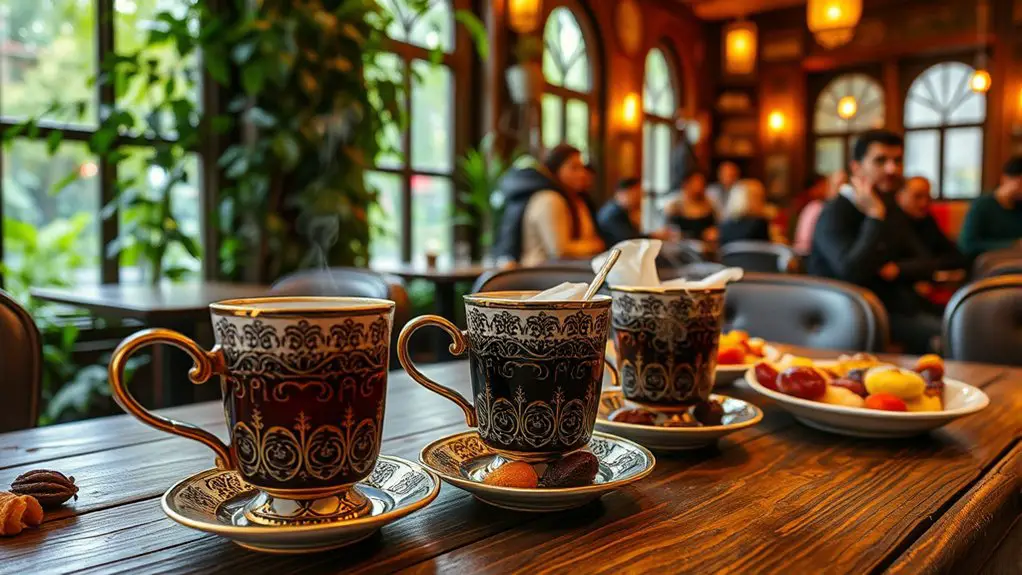
Ordering Turkish coffee is more than choosing another espresso-style drink. It is a distinct preparation in which very finely ground coffee is brewed with water in a small pot and served unfiltered, leaving the grounds to settle in the cup.
How Turkish Coffee Is Brewed
The small long-handled pot is called a cezve. It is the brewing vessel, not the name of the brewing method. The official GoTürkiye guide to Turkish coffee describes adding finely ground coffee, water, and the desired sugar to the cezve before heating it gently.
The mixture is heated until foam develops and rises. It is then poured into a small cup without filtering out the grounds. Those grounds settle at the bottom, so the final sip is normally left in the cup rather than swallowed like filtered coffee.
Turkish coffee is quite different from espresso. Espresso uses pressure to force water through a compact bed of coffee. Turkish coffee keeps the fine grounds in contact with the water throughout preparation and serves them in the cup.
| Brewing Style | What to Expect |
|---|---|
| Turkish Coffee | Very finely ground coffee brewed in a cezve and served unfiltered |
| Espresso | Concentrated coffee extracted under pressure |
| Pour Over | Filtered manual brew with a cleaner cup and more separation of flavors |
| Cold Brew | Coffee steeped cold for an extended period and then filtered |
How to Order Turkish Coffee
Sugar is normally incorporated during preparation, which means the server may ask how sweet you want the coffee before it is brewed. Plain coffee contains no added sugar, while lightly, moderately, and heavily sweetened versions are also common.
A small glass of water commonly accompanies the cup. Turkish delight or another small sweet may also be served. Let the grounds settle for a moment before drinking and stop when you reach the thick sediment at the bottom.
Pro Tip: Decide how sweet you want Turkish coffee when you order. Because the sugar is traditionally added during brewing, sweetening it afterward is not quite the same experience.
Cultural Significance of Coffee
UNESCO describes Turkish coffee as both a preparation method and a communal tradition associated with hospitality, friendship, conversation, and ceremonial occasions.
| Tradition | Role of Coffee |
|---|---|
| Welcoming guests | A familiar expression of hospitality |
| Conversation with friends | A reason to slow down, talk, and spend time together |
| Engagement traditions | Coffee can form part of family ceremonies surrounding marriage |
| Holidays and gatherings | A shared drink within wider social traditions |
| Coffee-ground reading | A playful tradition in which patterns left by the grounds are interpreted |
That cultural background is why an Istanbul coffee stop can feel different from simply ordering caffeine. The drink is closely tied to conversation and hospitality as well as taste.
Best Places for Traditional Turkish Coffee
Mandabatmaz is a convenient choice while exploring Beyoğlu and İstiklal Avenue. The small setting keeps the focus firmly on the coffee.
Şark Kahvesi works well when your itinerary already includes the Grand Bazaar, giving you a traditional-style pause without leaving the market.
Çorlulu Ali Paşa Medresesi offers a historic architectural setting close to Beyazıt, though its nargile culture makes it a different atmosphere from a smoke-free modern café.
Pierre Loti Hill is the view-focused choice. Go for the Golden Horn panorama and the ritual of sitting over tea or coffee rather than for a modern specialty-coffee program.
Specialty Coffee Roasters to Visit
Istanbul also has a substantial modern specialty-coffee scene. Here the focus shifts from the traditional cezve to espresso, hand-brewed filter coffee, single-origin beans, processing methods, roast profiles, and seasonal offerings.
For travelers who normally seek independent roasters rather than chains, this side of Istanbul’s coffee culture can be every bit as interesting as the traditional experience.
Specialty Brewing Methods You May Find
| Brewing Technique | Description |
|---|---|
| Pour Over | Manual filter brewing that lets the barista control water flow and extraction |
| Cold Brew | Coffee extracted in cool water over a long period for a smooth, chilled drink |
| Espresso | Pressure-brewed coffee used alone or as the base for drinks such as flat whites and lattes |
| Turkish Coffee | Finely ground coffee brewed in a cezve and served unfiltered |
The exact menu changes by roaster, branch, season, and available beans, so ask the barista what is currently on filter if you want to taste a particular origin or processing style.
How Istanbul Specialty Roasters Source Coffee
The original idea of Istanbul cafés sourcing coffee beans from “local farmers” is misleading. Coffee is sourced from coffee-growing origins around the world and then roasted locally in Türkiye. What matters at a serious specialty roaster is traceability: origin, producer or cooperative, processing method, harvest, roast date, and how the coffee is brewed.
Four useful starting points are:
- Kronotrop — a long-running specialty brand with multiple Istanbul locations, including branches on both the European and Asian sides.
- MOC – Ministry of Coffee — a specialty-focused option in Nişantaşı/Teşvikiye and other locations, with espresso and manual-brew choices.
- Petra Roasting Co. — a roaster with several Istanbul concepts; its official site lists specialty coffee alongside bakery, food, beans, and brewing equipment.
- Coffee Department — an Istanbul specialty roaster whose current catalog clearly identifies coffees by country and producer or processing details.
For the Asian side, Kronotrop’s Moda location makes an easy specialty stop while exploring Kadıköy. On the European side, Nişantaşı, Şişhane, Gayrettepe, Balat, and Beyoğlu all offer strong coffee options.
Cozy Neighborhood Cafes for Relaxation
Not every coffee break needs to be a tasting session. Istanbul also has plenty of places where the setting, neighborhood, food, and ability to linger matter as much as the beans.
| Café | Area |
|---|---|
| MOC – Ministry of Coffee | Nişantaşı / Teşvikiye |
| The House Café | Teşvikiye, Ortaköy, Akaretler, and other Istanbul branches |
| Café Privato | Galata / Beyoğlu |
MOC Nişantaşı is a better match for specialty coffee and extended sitting than the earlier description suggesting a Beşiktaş location.
The House Café has several Istanbul branches. The Teşvikiye locations suit a neighborhood café-restaurant break, while Ortaköy is the stronger option when a Bosphorus setting matters.
Café Privato belongs in Galata/Beyoğlu, not Kadıköy. It is better known as a relaxed café-restaurant and breakfast stop near Galata than as a dedicated specialty roaster.
Cafes With Unique Ambiance and Decor
Atmosphere is one of Istanbul’s strengths, but it is more useful to describe what is actually distinctive about a venue than to rely on vague claims about murals or “Instagrammable” interiors.
- MOC Nişantaşı — a modern, design-conscious specialty café that suits longer sit-down visits as well as quick coffee stops.
- Karaköy Güllüoğlu — not a specialty café, but a famous self-service Karaköy dessert institution where baklava is the main attraction.
- Pelit — a long-established patisserie and cake-café brand with numerous Istanbul locations, best chosen for desserts rather than third-wave coffee.
- Çorlulu Ali Paşa Medresesi — a dramatically different experience inside an early-18th-century historic complex, with Turkish coffee and a strong nargile culture.
These four places represent very different kinds of atmosphere: modern specialty coffee, a busy baklava institution, a classic patisserie, and a historic courtyard setting.
Coffee Shops With Delicious Pastry Options
Coffee and dessert are easy to combine in Istanbul, although the strongest pastry shop is not always the strongest coffee shop.
Baklava is an obvious companion to Turkish coffee. Karaköy Güllüoğlu is a particularly useful stop when pastry quality is the priority; its current menu includes multiple types of baklava as well as other sweets.
Petra Roasting Co. is a better fit when you want specialty coffee and baked goods under the same roof. Some Petra locations combine coffee with bakery products, sourdough breads, desserts, and a larger food menu.
You will also find Turkish delight, cakes, cookies, tarts, and syrup-based desserts throughout the city. Künefe, made with shredded pastry and cheese and served warm with syrup, is richer than a typical café pastry but can work well after a meal with unsweetened coffee.
Those avoiding certain ingredients should check the current menu at the exact branch. For example, Karaköy Güllüoğlu currently lists gluten-free and vegan baklava categories, but ingredient handling and cross-contact should still be discussed directly with staff when allergies are involved.
Less-Obvious Coffee Stops Beyond the Main Tourist Route
“Hidden gem” is overused in Istanbul, especially when applied to brands with several branches. A better approach is to choose a strong coffee stop in the neighborhood you are already exploring rather than crossing the city for a supposedly secret café.
- Coffee Department in Balat — a useful specialty-coffee break if your day already includes Fener and Balat.
- Kronotrop Moda — an easy way to combine specialty coffee with a walk through Moda and Kadıköy on the Asian side.
- Petra in Bebek — the brand’s official site describes a garden setting in the back streets of Bebek, with specialty coffee, food, and bakery items.
- Çorlulu Ali Paşa Medresesi — close to major Old City sights but visually and culturally very different from a modern café.
These are better described as neighborhood-specific stops than secret cafés, but they can make a day of sightseeing feel much less generic.
Cafes for Digital Nomads and Laptop Work
Istanbul has plenty of cafés where people work on laptops, but Wi-Fi quality, outlet access, music, crowd levels, and laptop policies vary from one branch to another.
MOC Nişantaşı is one of the better fits when you want a specialty-coffee environment with enough seating to settle in for a while. Another MOC branch near Osmanbey also works well for people moving through the Şişli area.
Caffè Nero has multiple Istanbul branches and can be a practical choice when predictable seating and chain-café convenience matter more than seeking out an independent roaster. The Bebek branch is particularly useful if you are spending time along the Bosphorus.
Kahve Dünyası is another widespread local chain that can work for an informal laptop break, but the experience varies considerably by location.
Note: Do not plan an important video call around a café’s reputation alone. Check the exact branch, test the Wi-Fi after ordering, and keep a mobile-data backup if you have a deadline.
Traditional vs. Specialty Coffee: Which Should You Choose?
| Your Priority | Best Type of Stop |
|---|---|
| Turkish culture and ritual | Mandabatmaz, Şark Kahvesi, or another traditional Turkish-coffee venue |
| Single-origin beans and pour overs | Kronotrop, Petra, Coffee Department, or MOC |
| Golden Horn view | Pierre Loti Hill |
| Bosphorus-side café meal | The House Café Ortaköy |
| Rooftop panorama and nightlife | 360 Istanbul rather than a coffee-focused café |
| Baklava first, coffee second | Karaköy Güllüoğlu |
| Laptop time | A roomy branch of MOC, Caffè Nero, Kahve Dünyası, or another café with confirmed Wi-Fi |
This distinction prevents one of the most common mistakes when searching for Istanbul coffee recommendations: assuming the café with the best view, oldest-looking interior, or most famous name will also make the best specialty coffee.
Frequently Asked Questions
What is the best time to visit Istanbul coffee shops?
Morning is a good choice for quieter specialty-coffee stops, while late afternoon is ideal for a relaxed break between sightseeing and dinner. Popular view cafés can become much busier around sunset, so arrive earlier when the view matters.
Are there coffee shops with vegan options in Istanbul?
Yes. Many modern cafés and café-restaurants offer plant-based milk or vegan food, but the selection varies by branch and can change. Check the current menu rather than assuming every location of a chain has the same options.
Do Istanbul cafes offer free Wi-Fi?
Many modern cafés provide customer Wi-Fi, especially larger specialty cafés and chains, but it is not universal and connection quality varies. Ask the staff at the exact branch and keep mobile data available when you need a dependable connection.
Can I find gluten-free pastries at Istanbul coffee shops?
Yes, but availability is not consistent across cafés. Some dessert businesses, including Karaköy Güllüoğlu, currently advertise gluten-free products. For celiac disease or a serious allergy, ask the staff specifically about ingredients and cross-contact before ordering.
Are specialty coffee tours available in Istanbul?
Yes. Coffee-making workshops, tastings, and food tours that include Turkish coffee operate in Istanbul. Offerings and schedules change, so compare the current itinerary before booking if you specifically want brewing instruction rather than a general food tour.
Is Turkish coffee the same as espresso?
No. Turkish coffee is made from powder-fine coffee brewed with water in a cezve and served unfiltered. Espresso is extracted under pressure through a compact bed of ground coffee. Both are concentrated drinks, but their preparation, texture, and flavor are different.
Do I need to find coffee brewed in hot sand for an authentic Turkish coffee?
No. Hot sand is one way to control heat around a cezve, but it does not define Turkish coffee. The essentials are the very fine grind, water, cezve-style preparation, foam, and unfiltered service. A carefully made stovetop cup can be just as traditional.
Sources
- UNESCO — Turkish Coffee Culture and Tradition — cultural significance, traditional preparation, hospitality, and 2013 heritage inscription.
- Türkiye Ministry of Culture and Tourism — history of Turkish coffee and Istanbul coffeehouse culture.
- GoTürkiye — Turkish Coffee in Istanbul — brewing method, cezve terminology, sugar, water service, and coffee traditions.
- GoTürkiye — Pierre Loti Hill — Golden Horn setting and hilltop café experience.
- Kronotrop — Official Store List — current specialty-coffee locations.
- The House Café — Official Branches — current Istanbul branches and location information.
Conclusion
Istanbul’s best coffee experience depends on what you want from the stop. Choose Mandabatmaz or Şark Kahvesi for a traditional Turkish cup, Kronotrop, Petra, Coffee Department, or MOC for specialty coffee, and Pierre Loti Hill or The House Café Ortaköy when the setting matters as much as the drink.
The key is not to treat every famous café, rooftop restaurant, and pastry shop as interchangeable. Istanbul’s coffee culture ranges from centuries-old social traditions to modern single-origin brewing, and experiencing both sides gives you a much better sense of the city than chasing one supposed “best” café.
