
Last Updated on July 28, 2026 by Daniel Globe
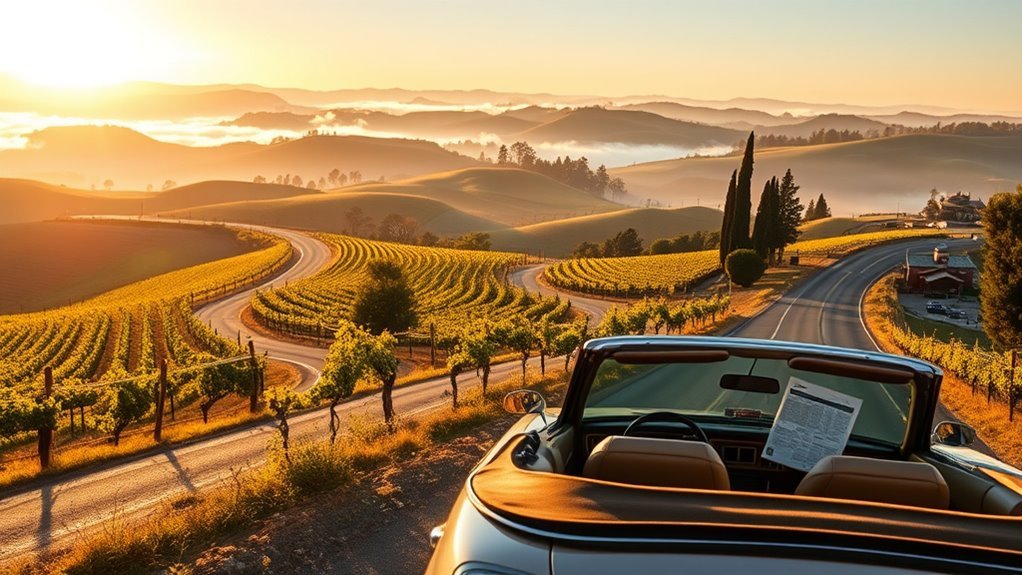
Sonoma makes an excellent base for a one-day escape because several very different landscapes sit within a few hours of town. You can walk beneath old-growth redwoods, spend the day tasting local wine, watch wildlife along the Pacific, or settle in for seafood beside Bodega Bay. The best choice depends on how much driving, hiking, and advance planning you want.
Quick Answer
The best day trips from Sonoma are Sonoma Valley for an easy wine day, Bodega Bay for seafood and coastal walks, Armstrong Redwoods for an accessible forest visit, Muir Woods for reserved old-growth trails, and Point Reyes for wildlife, beaches, and a longer wilderness adventure.
Key Takeaways
- Stay around Sonoma Plaza for the easiest day with the least driving, but reserve popular winery experiences and arrange a sober driver.
- Choose Bodega Bay for coastal scenery, beach walking, birding, and seafood rather than dependable swimming.
- Muir Woods requires an advance parking reservation; its shuttle runs only on selected seasonal schedules.
- Point Reyes is the biggest and most time-consuming option, so choose one section of the park instead of trying to see everything.
- Armstrong Redwoods offers a mostly flat, accessible main trail and is easier to combine with Guerneville or the Sonoma Coast.
Disclosure: As an Amazon Associate I earn from qualifying purchases. Some links on this page are affiliate links, at no extra cost to you.
How to Choose the Best Day Trip from Sonoma
Drive times around Sonoma are affected by weekend traffic, slow two-lane roads, weather, construction, and the exact entrance or trailhead you select. Treat the following times as planning ranges and check live navigation before leaving.
| Destination | Typical Drive from Sonoma | Best For | Suggested Visit | Planning Notes |
|---|---|---|---|---|
| Sonoma Valley | In town to about 25 minutes | Wine, food, art, minimal driving | Half day to full day | Reserve special tastings; use a designated driver |
| Bodega Bay | About 50–70 minutes | Coastal walks, seafood, birding | Five to eight hours | Pack layers; avoid unsafe surf and cliff edges |
| Muir Woods | About 75–100 minutes | Famous old-growth redwoods | Two to four hours in the park | Advance parking or operating-day shuttle reservation required |
| Armstrong Redwoods | About 75–95 minutes | Easy forest walks and picnics | Two to four hours | Vehicle fee; dogs prohibited on trails |
| Point Reyes | About 75–105 minutes to Bear Valley; longer to the lighthouse | Wildlife, long hikes, wild coastline | Full day | Choose one park zone and check road, trail, and lighthouse conditions |
For perspective, Point Reyes has about 150 miles of trails, while the oldest redwoods at Muir Woods are at least 1,200 years old.
Note: Park hours, trail access, winery policies, reservation availability, and fees can change. Open each destination’s official conditions or booking page on the morning of your trip.
Muir Woods National Monument: Ancient Redwoods and Easy Trails
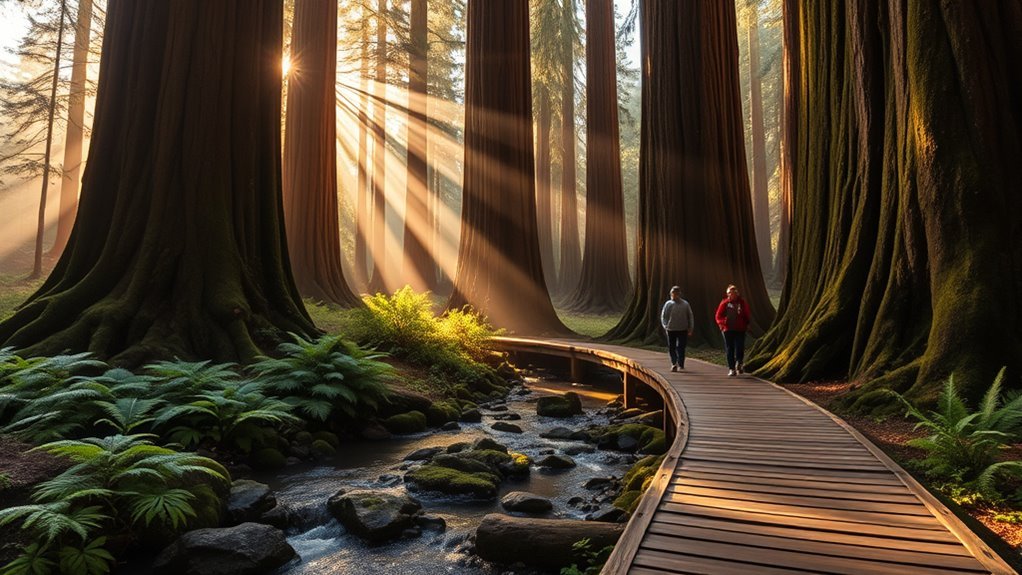
Muir Woods protects one of the Bay Area’s remaining old-growth coast-redwood forests. The National Park Service reports that the trees average roughly 600 to 800 years old, with the oldest at least 1,200 years old.
Best One-Day Plan
Begin on the Main Trail along Redwood Creek. Nearly two miles of firm, mostly flat trail provide an accessible way to experience the forest, with benches placed along the route. Short loops let you spend about 90 minutes beneath the redwoods, while connecting trails climb into the surrounding hills for a longer hike.
Arrive early, walk quietly through Cathedral Grove, and allow time to stop rather than treating the forest as a quick photo opportunity. The cool, damp setting can feel much colder than Sonoma, so pack a light jacket even on a warm inland day.
Reservations, Access, and Pets
Muir Woods requires an advance reservation for every personal vehicle. A shuttle also operates on selected seasonal dates, and shuttle riders must reserve their seats when that service is running. Entrance charges are separate from parking or shuttle fees. Review the current schedule and book through the National Park Service planning page before leaving Sonoma.
Note: There is no drive-up parking without a reservation. Pets are not permitted in Muir Woods; trained service animals are allowed under applicable rules.
Muir Woods is the most famous redwood choice in this guide, but its reservation system and southern location make it less spontaneous than Armstrong Redwoods. Choose it when seeing this specific national monument matters more than minimizing drive time.
Sonoma Valley Wine Country: Wineries, Tasting Rooms, and Gardens

Sonoma Valley is the easiest day trip because you are already there. The valley’s official tourism organization lists more than 100 wineries, ranging from small tasting rooms to large vineyard estates.
Best One-Day Plan
Start around Sonoma Plaza, where tasting rooms, boutiques, restaurants, and the Sonoma Valley Museum of Art sit within a walkable area. Plan two or three tastings with a proper lunch instead of rushing through a long list. That leaves time to talk with hosts and notice how grape variety, soil, barrels, and aging affect each wine.
For a break from the tasting rooms, visit Bartholomew Park. Its 375 acres include vineyards, gardens, forest, walking paths, and hiking trails. Trail access can close because of rain, maintenance, or other conditions, so check before arriving. Coursey Graves Estate and other valley producers also offer more structured experiences, while the Sonoma Valley Museum of Art provides a compact art stop near the Plaza.
Reservations and Transportation
Some tasting rooms accept walk-ins, especially around the Plaza, but popular weekend times, food pairings, tours, and seated estate tastings may require reservations. Confirm each property’s policy instead of assuming every cellar door can accommodate an unannounced visit.
Pro Tip: Build the day around one reserved experience, then add flexible Plaza tasting rooms, lunch, shopping, or the museum around that fixed time.
Warning: Do not drive after drinking. Walk between Plaza tasting rooms, appoint a completely sober driver, or reserve a local driver, trolley, taxi, or car service before the first tasting.
This is wine country without the need to race. A slower schedule gives you more time for gardens, local food, art, and conversation, which usually makes the day more memorable than collecting as many tasting stops as possible.
Bodega Bay and the Pacific Coast: Beaches, Seafood, and Coastal Walks

Drive west from Sonoma’s warm vineyards to Bodega Bay, where fishing boats, salt air, rocky headlands, marshes, and broad beaches create a completely different kind of day. Allow roughly 50 to 70 minutes each way in ordinary conditions, with extra time on busy weekends.
Best One-Day Plan
Begin with a walk at Bodega Head for broad ocean views and a chance to see migrating gray whales during winter and spring. Continue to Doran Regional Park, which has a wide two-mile beach suited to walking, picnics, sand play, kite flying, birdwatching, fishing, and access to Bodega Harbor.
For lunch, Spud Point Crab Company is known for clam chowder and seafood sandwiches. Hours, menu items, crab availability, and lines can change, so check the restaurant directly before making it the fixed point of your itinerary.
| Activity | Spot | Why Go |
|---|---|---|
| Hiking | Bodega Head | Ocean panoramas and seasonal whale watching |
| Beach Time | Doran Regional Park | Walking, picnics, sand play, kites, and birding |
| Seafood | Spud Point | Chowder, seafood sandwiches, and harbor views |
| Tide Pooling | Designated rocky-shore areas at low tide | Observe marine life without touching or removing it |
Warning: The Sonoma Coast has cold water, strong currents, unstable rocks, and waves that can surge much farther up the beach than expected. Never turn your back on the ocean, keep children away from the surf line, and do not climb wet rocks or bluffs.
Check the tide before exploring rocky shorelines, stay within marked public-access areas, and leave shells, animals, and plants where you find them. Pack layers because wind and fog can make the coast much colder than Sonoma even when the inland forecast looks warm.
Point Reyes National Seashore: Cliffs, Wildlife, and the Lighthouse

Point Reyes National Seashore combines rolling grasslands, beaches, wetlands, forests, working ranch landscapes, and dramatic Pacific headlands. It is also far larger than the other destinations in this guide. The park maintains about 150 miles of trails, and driving between major sights can consume a large part of the day.
Choose One Part of the Park
For a first visit, begin at Bear Valley Visitor Center and choose one nearby walk or continue to Limantour Beach. For wildlife and headland views, focus on Chimney Rock and the elephant-seal overlooks. For tule elk, Tomales Point is a separate northern objective. Trying to combine Bear Valley, Tomales Point, Limantour, Chimney Rock, and the lighthouse in one day creates more driving than exploring.
Elephant seals can often be viewed from designated overlooks, while tule elk may be seen around Tomales Point and in other parts of the park. Use binoculars or a long camera lens, remain on open routes, and never approach or block wildlife.
Visiting the Point Reyes Lighthouse
The Point Reyes Lighthouse began operating in 1870 and was retired from active service in 1975 after an automated light was installed. Its historic first-order Fresnel lens remains preserved at the site.
From the parking lot, visitors walk about 0.45 mile to the Lighthouse Visitor Center and then descend 313 stairs to reach the lighthouse. The staircase is roughly equivalent to a 20-story climb on the return. It closes when winds exceed 40 mph and may also be unavailable because of staffing, hours, or other conditions.
Note: Check the official lighthouse access page and current conditions before making the long drive to the headlands.
Warning: Point Reyes beaches can have sneaker waves, rip currents, cold water, and rapidly changing tides. Stay well back from open-ocean surf and never turn your back on incoming waves.
Bicycles and horses are permitted only on designated routes, and pets are allowed in very limited areas. Point Reyes rewards a slow, focused visit: choose one landscape, leave room for delays, and let the size of the park set the pace.
Armstrong Redwoods State Natural Reserve: Towering Trees and Quiet Hikes
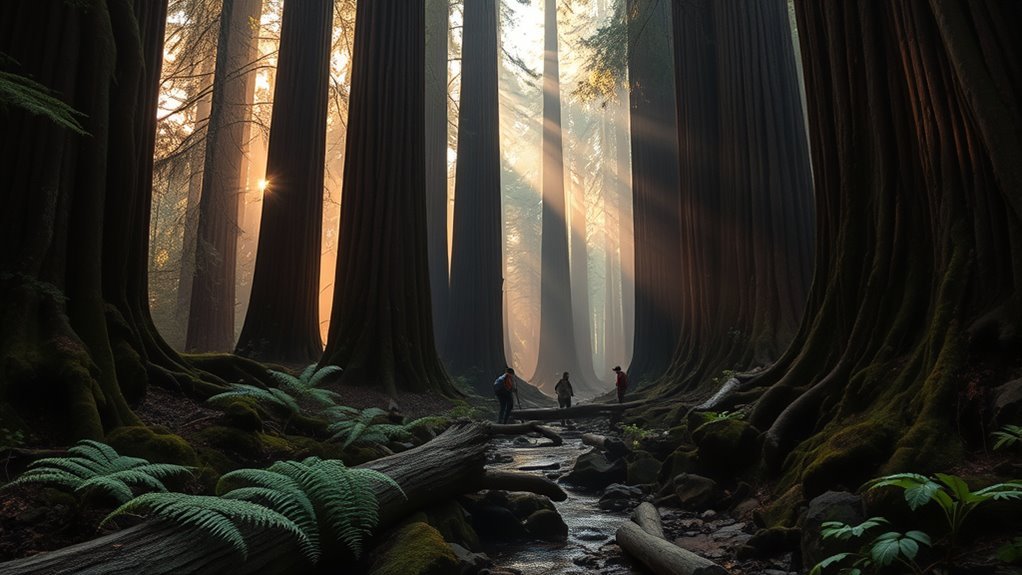
Armstrong Redwoods State Natural Reserve protects a grove of coast redwoods near Guerneville. The Parson Jones Tree rises more than 310 feet, while the Colonel Armstrong Tree is estimated to be more than 1,400 years old.
Best One-Day Plan
The mostly flat Pioneer Nature Trail reaches the reserve’s main trees and is about 1.5 miles round trip. California State Parks identifies it as wheelchair accessible, making Armstrong one of the strongest choices for families, mixed-mobility groups, and visitors who want a rewarding forest walk without a strenuous climb.
Allow two to three hours for the grove, visitor information, photography, and a picnic. Longer routes climb into Austin Creek State Recreation Area, but those trails require more time, elevation effort, water, and current-condition checks.
Fees, Conditions, and Pets
California State Parks currently lists a $10 vehicle day-use charge to enter or use the main parking areas. Fees and trail conditions can change, so check the official park page before departure. Parking outside the entrance may reduce the fee but adds walking and should be done only where legal.
Note: Leashed dogs are allowed on the main paved road and in designated developed picnic areas, but they are not allowed on dirt trails or dirt roads within the reserve.
Picnic areas invite a slow meal beneath the canopy, while signs and visitor exhibits explain the forest’s ecology and conservation. Stay on designated surfaces and avoid stepping across protective fencing; repeated foot traffic can damage the shallow-rooted plants and compact the soil around these ancient trees.
Planning Tips for Any Sonoma Day Trip
- Start early: Morning departures reduce traffic pressure and improve your chances of finding parking at popular coastal and trail destinations.
- Check conditions: Review official road, trail, weather, reservation, and facility pages on the day of travel.
- Choose one main destination: Build the day around one forest, one coastal zone, or one wine area rather than spending most of the day in the car.
- Pack layers: Sonoma may be warm while Muir Woods, Point Reyes, Bodega Bay, and Armstrong remain cool, windy, damp, or foggy.
- Carry water and food: Services become sparse near remote trailheads, and operating hours can change.
- Download directions: Mobile reception can be inconsistent on rural roads and inside large parks.
- Confirm accessibility: An accessible visitor center or trail does not mean every overlook, beach, staircase, or restroom is accessible.
- Plan pet care: Never assume a park allows dogs, and do not leave an animal unattended in a parked vehicle.
- Use a sober driver: Arrange transportation before wine tasting rather than attempting to find a ride from a rural winery afterward.
Frequently Asked Questions
What is the best time of year for a Sonoma day trip?
Late spring and fall usually bring comfortable inland weather and fewer peak-summer crowds. The coast and redwood forests can remain cool or foggy in any season, while winter rain may affect trails and roads. Pack layers and check the destination forecast rather than relying on Sonoma’s temperature.
Are guided tours or private drivers available?
Yes. Sonoma Valley has wine trolleys, tour companies, chauffeurs, and designated-driver services. Private guides and small-group excursions are also available for redwood and coastal trips. Compare the included stops, pickup area, cancellation terms, tasting fees, and total driving time before booking.
Can I bring my dog on these day trips?
Rules differ sharply. Pets are prohibited at Muir Woods. Point Reyes permits leashed pets only in selected areas and may impose seasonal closures. Armstrong limits leashed dogs to paved roads and designated developed picnic areas, not trails. Doran Regional Park allows dogs on a leash. Wineries and tasting rooms set their own policies.
Which towns are best for dining and supplies?
Use Sonoma, Glen Ellen, or Kenwood for Sonoma Valley; Bodega Bay for coastal seafood; Guerneville for Armstrong Redwoods; and Point Reyes Station, Olema, or Inverness for Point Reyes. Mill Valley and Larkspur are practical food stops near Muir Woods. Check business hours because rural kitchens may close earlier than expected.
Can I visit these destinations without a car?
Sonoma Plaza is walkable once you reach it, and Muir Woods has a reservable shuttle on selected seasonal operating days. Bodega Bay, Armstrong Redwoods, and most of Point Reyes are difficult to explore efficiently without a car or organized tour. Do not rely on finding a return ride-share from a remote trailhead.
Can I combine two destinations in one day?
Armstrong Redwoods and Bodega Bay can work as a long day when you start early and keep the forest walk short. Sonoma Plaza can also be paired with a nearby park or one reserved tasting. Combining Muir Woods with Point Reyes or trying to see several distant Point Reyes zones usually creates too much driving for a relaxed day.
Is Muir Woods or Armstrong Redwoods better?
Choose Muir Woods for the famous national-monument experience, highly developed accessible main trail, and easy pairing with southern Marin. Choose Armstrong for a quieter Sonoma County grove, simpler spontaneous planning, picnic space, and a possible combination with Guerneville or Bodega Bay. Both protect impressive coast redwoods.
Conclusion
The best Sonoma day trip is not necessarily the one with the longest attraction list. Choose Muir Woods or Armstrong for redwoods, Sonoma Valley for a low-driving food-and-wine day, Bodega Bay for seafood and gentler coastal exploring, or Point Reyes for a full wilderness outing. Start early, check current conditions, and leave enough open time to enjoy the landscape instead of racing through it.
Sources
- National Park Service — Muir Woods Know Before You Go — reservations, transportation, visitor preparation, and seasonal shuttle guidance
- Sonoma Valley Visitors Bureau — Wine Tasting Etiquette — tasting-room count, reservations, pacing, and designated-driver guidance
- Sonoma County Regional Parks — Doran Regional Park — beach length, activities, facilities, and dog rules
- California State Parks — Sonoma Coast State Park — surf, rip-current, cliff, tide-pool, and beach-safety guidance
- National Park Service — Point Reyes Lighthouse — approach distance, 313 stairs, operating limits, and wind closures
- California State Parks — Armstrong Redwoods — tree measurements, accessible trail, fees, closures, and pet restrictions
