
Last Updated on July 25, 2026 by Daniel Globe
Some of England’s best-known castles, university cities, countryside villages, and seaside attractions are close enough to visit from London in a single day. Windsor is the easiest choice for royal history, Oxford suits architecture and literature lovers, Brighton delivers a classic seaside break, Canterbury combines medieval history with a major cathedral, and the Cotswolds offer a slower countryside escape with slightly more complicated transport.
Quick Answer
The best day trips from London include Windsor for royal history, Oxford for university architecture, Brighton for the seaside, Canterbury for medieval heritage, and the Cotswolds for villages and countryside. Windsor is among the quickest by train, while the Cotswolds require the most advance transport planning.
Key Takeaways
- Windsor and Eton: Visit Windsor Castle, St George’s Chapel when open for sightseeing, Windsor town centre, and Eton High Street.
- The Cotswolds: Choose one or two well-connected towns or villages rather than trying to cover the whole region in a day.
- Canterbury: Combine Canterbury Cathedral with the medieval centre, the city’s UNESCO-listed heritage, and the reopened Canterbury Tales Experience.
- Brighton: Enjoy Brighton Palace Pier, the pebble beach, The Lanes, and the Royal Pavilion on one of the easiest seaside trips from London.
- Oxford: Explore university streets, the Bodleian Libraries, Radcliffe Camera, museums, and literary landmarks, but remember that some historic interiors require advance tour tickets.
Disclosure: As an Amazon Associate I earn from qualifying purchases. Some links on this page are affiliate links, at no extra cost to you.
Which Day Trip From London Is Best for You?
All five destinations can work as day trips, but they offer very different experiences. Approximate rail times below are useful for comparison only; always check live timetables and planned engineering work for your actual travel date.
| Destination | Best For | Typical Transport | Planning Level |
| Windsor | Royal history | About 35 minutes from Paddington with a change at Slough on many GWR journeys | Easy |
| Cotswolds | Villages and countryside | Train to a gateway such as Moreton-in-Marsh, then bus, taxi, walking, or tour | Most planning |
| Canterbury | Cathedral and medieval history | Around an hour on faster London services | Easy |
| Brighton | Beach and seaside culture | About one hour from London Victoria on faster services | Easy |
| Oxford | University history and architecture | About one hour from London Paddington | Easy |
Products Worth Considering
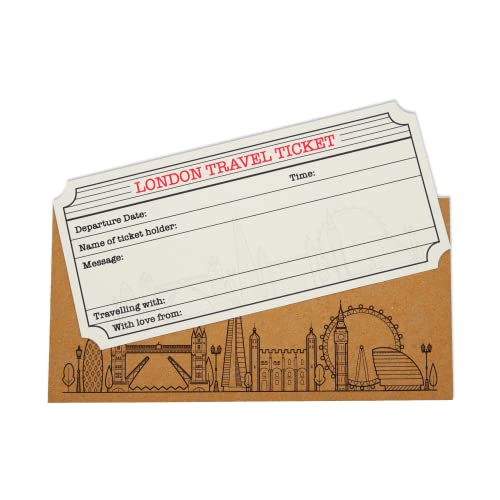


CARDS SIZE: Boarding pass card measure 3.5" x 8.3". 1 boarding pass cards and 1 envelopes per package.
Windsor and Eton: The Royal Connection
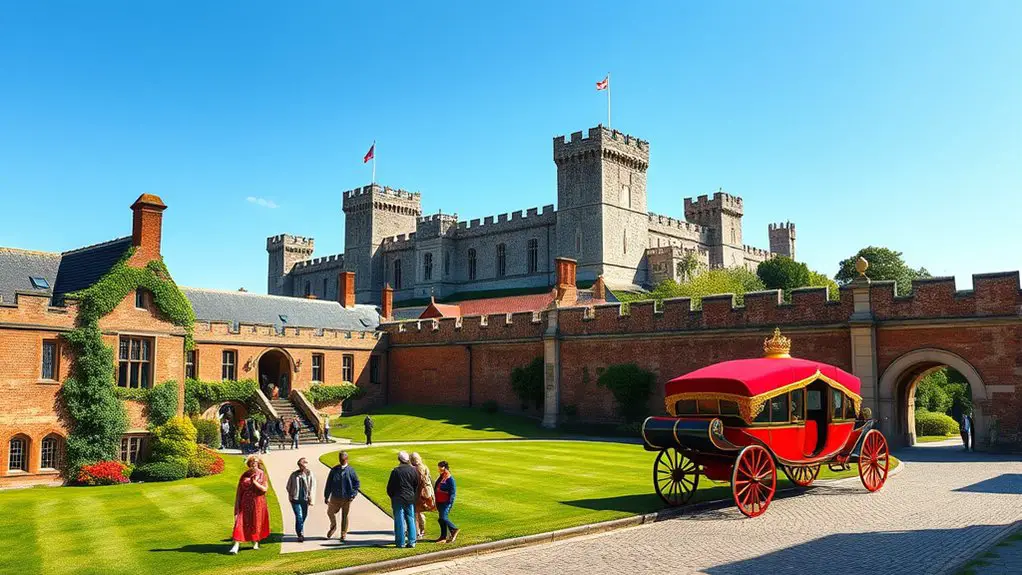
Windsor is one of the simplest day trips from London when you want major sights without spending much of the day in transit. Great Western Railway lists journeys from London Paddington to Windsor & Eton Central at around 35 minutes, usually with a change at Slough.
The main attraction is Windsor Castle, which the Royal Collection Trust describes as the oldest and largest occupied castle in the world. Founded by William the Conqueror in the 11th century, it remains a working royal residence.
The Castle’s State Apartments contain ceremonial rooms still used by the Royal Family, alongside historic interiors and works from the Royal Collection. St George’s Chapel is another major highlight and contains the tombs of several monarchs.
Windsor Castle combines nearly 1,000 years of royal history with ceremonial rooms that remain part of a working royal residence.
Note: Windsor Castle can close completely or partially for official events. St George’s Chapel normally closes to sightseeing at 4 p.m. and is closed to sightseeing on Sundays, although worship services remain separate from tourist admission. Check the official closure calendar before travelling.
After the castle, walk through Windsor town centre and cross the River Thames into Eton. Eton High Street offers historic buildings, independent shops, cafés, and views connected with the famous school.
Do not assume you can freely tour Eton College itself. Eton College Collections states that its Heritage Tours programme is not operating during 2026 because of essential building works. Its museums and gallery have more limited public opening, normally on Sunday afternoons, subject to changes and closures.
Pro Tip: Give Windsor Castle at least 1½ to 2 hours, which is the Royal Collection Trust’s own suggested visit length. Allow extra time for the uphill visitor route and security screening.
The Cotswolds: Quintessential English Countryside
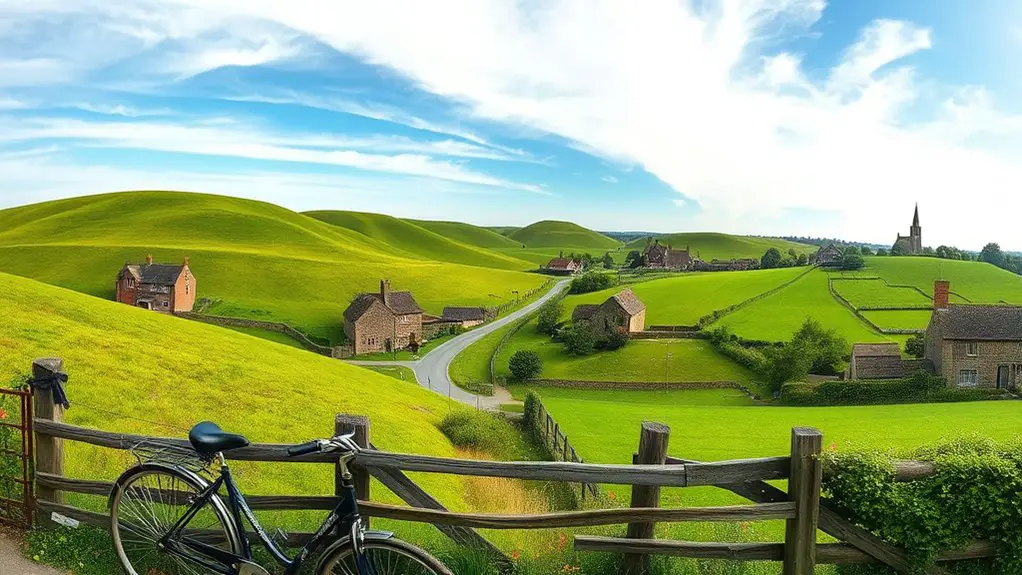
The Cotswolds offer a completely different day from Windsor or Oxford. Instead of one compact city, this broad rural area contains historic market towns, small villages, walking routes, rolling hills, and the honey-coloured limestone buildings for which the region is famous.
Popular stops include Bourton-on-the-Water, Stow-on-the-Wold, Moreton-in-Marsh, and other villages spread across the countryside. The important point for a day visitor is that these places are not all clustered around one railway station.
For a car-free trip, Moreton-in-Marsh is one of the most practical gateways. From there, local buses connect with destinations including Bourton-on-the-Water and Stow-on-the-Wold. The official Cotswolds visitor site recommends checking connections carefully because frequencies vary, particularly on Sundays and in more rural areas.
Once you arrive, slow down. Narrow streets, riverside walks, traditional pubs, independent shops, and countryside paths are a large part of the appeal. Trying to rush through four or five villages usually means spending too much of the day waiting for or sitting on transport.
Warning: Do not plan a car-free Cotswolds day as though it were a city break. Trains do not serve every village, and rural bus frequencies can be limited. Check the final bus back to your rail station before setting out.
For most first-time day visitors without a car, it is more relaxing to focus on Moreton-in-Marsh plus one nearby village, or to use an organised small-group tour that handles the transfers between villages.
Canterbury and Its Historic Cathedral
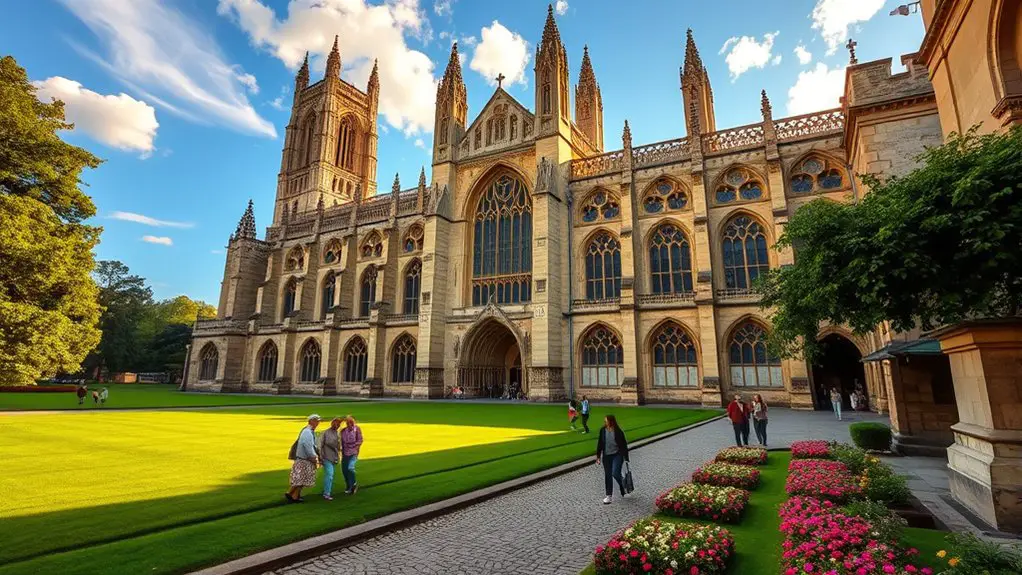
Canterbury is a compact historic city that works well as a separate day trip from London. Its medieval streets are easy to explore on foot, and its history stretches from Roman settlement through centuries of Christian pilgrimage.
The centrepiece is Canterbury Cathedral. Together with St Augustine’s Abbey and St Martin’s Church, the Cathedral forms a UNESCO World Heritage property associated with the development of Christianity in England.
Inside the Cathedral, visitors can see medieval stained glass, monumental architecture, tombs, chapels, and spaces linked with Thomas Becket, whose murder in the Cathedral in 1170 turned Canterbury into one of medieval Europe’s great pilgrimage destinations.
Opening arrangements can change for worship, special events, rehearsals, conservation work, and university ceremonies, so check the Cathedral’s official visitor page before committing to a specific time.
Beyond the Cathedral, leave time for the old town, Westgate area, independent shops, historic buildings, and the River Stour.
Another current attraction is the Canterbury Tales Experience. The immersive attraction reopened in spring 2026 after a long closure and redevelopment, bringing Geoffrey Chaucer’s pilgrimage stories to life through sets, effects, technology, and performance.
Highlights for a one-day visit include:
- Canterbury Cathedral and its historic precincts
- The medieval streets of the old city
- The UNESCO heritage associated with St Augustine’s Abbey and St Martin’s Church
- The reopened Canterbury Tales Experience
- A walk beside the River Stour or through Westgate Gardens if time allows
Brighton: Seaside Charm and Vibrant Culture
Brighton is one of the easiest choices when you want to swap London streets for the coast. Southern Railway currently lists the average London Victoria to Brighton journey at about 1 hour 1 minute, with the fastest services taking about 58 minutes.
From Brighton station, walk downhill toward the sea and the Brighton Palace Pier. The pier combines sea views with arcades, rides, food stalls, and the atmosphere of a traditional English seaside resort.
The beach itself is pebbled rather than sandy, so it is better suited to a seafront walk, sitting by the water, or swimming in suitable conditions than to the classic soft-sand beach experience.
From the seafront, head into The Lanes, a maze of narrow streets filled with independent shops, cafés, jewellery stores, and restaurants.
Nearby, the Royal Pavilion provides a striking contrast to the seafront. Its elaborate architecture and richly decorated interiors reflect the tastes of George IV and make it one of Brighton’s most distinctive historic attractions.
Pro Tip: Brighton works especially well as a flexible day trip because the station, North Laine, The Lanes, Royal Pavilion, beach, and pier can all be linked into a walk rather than requiring multiple transfers.
A simple route is Brighton station → North Laine → Royal Pavilion → The Lanes → seafront → Palace Pier. That leaves plenty of flexibility for lunch, shopping, or extra beach time.
Oxford: The City of Dreaming Spires
Oxford combines university history, museums, medieval streets, libraries, literary connections, and some of England’s most recognisable academic architecture. Great Western Railway lists journeys from London Paddington at around one hour, with its fastest current services taking about 52 minutes.
Oxford rewards slow exploration: many of its best-known colleges, libraries, church towers, courtyards, and historic streets sit within a compact walkable centre.
The Radcliffe Camera and Bodleian Library are among the city’s defining sights, but visitors should understand the access rules. The ground floor of Weston Library is open to the public, while the Old Bodleian Library and Radcliffe Camera require an appropriate Bodleian tour ticket.
Oxford also has deep literary associations. Lewis Carroll studied and taught at Christ Church, while J.R.R. Tolkien and C.S. Lewis were part of the Inklings literary circle.
The famous Eagle and Child pub is connected with that history, but it should not currently be planned as a place to stop for a drink. The building remains under restoration, with the Ellison Institute of Technology overseeing its restoration and reopening. You can still pass the exterior while exploring St Giles.
Good alternatives for a full Oxford day include:
- Radcliffe Square and the exterior of the Radcliffe Camera
- A pre-booked Bodleian Libraries tour
- University Church of St Mary the Virgin
- The Ashmolean Museum
- Oxford Covered Market
- College visits where public opening permits
- A walk along High Street and through the historic centre
Note: Oxford colleges are working academic institutions. Public opening hours and visitor routes vary by college and can change during exams, ceremonies, holidays, or university events.
How to Plan a Day Trip From London
Most of these trips are straightforward, but a little preparation can prevent lost sightseeing time.
- Choose one main destination. Trying to combine Oxford, the Cotswolds, Windsor, or Canterbury into an independent multi-stop day can turn the trip into a transport exercise.
- Check the complete journey. Look at both the outbound train and the final practical return service before booking attractions.
- Check planned rail works. Weekend engineering can change departure stations, journey times, and connections.
- Book restricted attractions first. Windsor Castle and Bodleian tours are examples where opening arrangements or ticket availability can shape the rest of the day.
- Leave breathing room. A good day trip usually feels better with two or three major sights than with an hour-by-hour race across the destination.
A total day of around 8 to 12 hours is realistic for many visitors once the journey from their London accommodation, railway travel, sightseeing, meals, and return trip are included.
Products Worth Considering

CARDS SIZE: Boarding pass card measure 3.5" x 8.3". 1 boarding pass cards and 1 envelopes per package.

CARDS SIZE: Boarding pass card measure 3.5" x 8.3". 1 boarding pass cards and 1 envelopes per package.
Frequently Asked Questions
What are the best months for day trips from London?
Late spring through early autumn gives you longer daylight and generally better conditions for walking, gardens, countryside, and the seaside. July and August can also bring larger crowds. April, May, June, September, and early October can offer a useful balance. Winter still works well for city-focused trips such as Oxford, Canterbury, and Windsor, but daylight is shorter and attraction hours may differ.
How long does a day trip from London typically take?
Plan on roughly 8 to 12 hours for the full outing. Windsor can be reached from Paddington in around 35 minutes on many journeys, Oxford takes about an hour, and Brighton is also around an hour on faster services. Canterbury has fast rail options of roughly an hour, while a Cotswolds trip takes longer once onward buses or other local transfers are included.
Are guided tours available for these destinations?
Yes. Guided tours are available for Windsor, Oxford, Canterbury, Brighton, and the Cotswolds. They are most useful in the Cotswolds, where a tour can simplify transfers between rural villages. In compact cities such as Brighton, Canterbury, and Oxford, independent rail travel is usually straightforward if you prefer to explore at your own pace.
Is public transportation sufficient for these day trips?
Yes for Windsor, Oxford, Brighton, and Canterbury, all of which have useful rail connections from London and walkable central areas. The Cotswolds require more planning because trains do not reach every village. A common car-free approach is to take a train to a gateway such as Moreton-in-Marsh and continue by local bus, taxi, walking route, or organised tour.
Which London day trip is easiest without a car?
Windsor, Oxford, Brighton, and Canterbury are all strong car-free choices. Their main sights are reachable from railway stations on foot or with short local connections. The Cotswolds are possible without a car but require the most timetable planning.
Do I need to book attractions in advance?
Advance booking is sensible for attractions with timed or capacity-controlled entry, especially Windsor Castle and Bodleian tours. It is also worth checking official closure calendars before buying non-refundable rail tickets because working royal, religious, and university buildings can close for ceremonies or events.
What should I pack for a day trip from London?
Wear comfortable walking shoes and take a light waterproof layer because conditions can change during the day. Bring a reusable water bottle, phone charger or power bank, any required rail and attraction tickets, and a small bag that is easy to carry. Check the forecast before leaving London.
Conclusion
The best day trip from London depends on the experience you want. Choose Windsor for royal history and an easy journey, Oxford for university architecture and literary heritage, Brighton for the coast, or Canterbury for a compact medieval city centred on one of England’s most important cathedrals. Pick the Cotswolds when countryside and traditional villages matter more than simple transport.
Whichever destination you choose, check live train schedules, official attraction opening times, and any required advance tickets before leaving London. A realistic itinerary with a few well-chosen sights will usually make a better day than trying to fit every attraction into one trip.
Sources
- Royal Collection Trust — Windsor Castle — castle history, visitor information, tickets, State Apartments and current access.
- Eton College Collections — Heritage Tours — confirms the absence of a public Heritage Tours programme during 2026.
- Cotswolds official tourism site — Train and bus travel — public-transport connections and rural travel planning.
- Canterbury Cathedral — Tickets and opening times — current sightseeing access and closure guidance.
- Southern Railway — London Victoria to Brighton — current journey-time information.
- Great Western Railway — London to Oxford — current rail journey and service information.
