
Last Updated on August 26, 2026 by Mason Reed
If you’re camping or backpacking in bear country, a bear canister may be required—but the rule depends on the park, forest, wilderness area, season, and sometimes your exact route. Even where a canister is optional, proper food storage helps prevent bears from getting human food and becoming food-conditioned. Before every trip, check the current regulations from the agency that manages your destination.
Quick Answer
Bear canisters are required in many high-use bear areas, including most Yosemite Wilderness trips and New York’s Eastern High Peaks during specified months. Other areas use seasonal, route-specific, or unit-specific rules. Always check the managing agency’s current food-storage regulations and approved-container list before your trip.
Key Takeaways
- Bear-canister rules are location-specific; being in “bear country” does not automatically mean the same storage rule applies everywhere.
- A product that is IGBC-certified is bear-resistant, not bear-proof, and a park may maintain its own list of allowed containers.
- Food, trash, toiletries, medications, pet food, and other scented items may all need protected storage.
- Food-hanging rules vary. Hanging is prohibited in some places, including Yosemite Wilderness, while other areas still allow a correctly executed hang in certain situations.
- Bear canisters are not necessarily waterproof or watertight, so protect moisture-sensitive food inside the container.
Warning: Food-storage regulations and approved-container lists can change. Follow the current rule issued by the park, forest, state agency, or other land manager for your exact destination, even if it differs from general advice in this article.
Disclosure: As an Amazon Associate I earn from qualifying purchases. Some links on this page are affiliate links, at no extra cost to you.
Importance of Bear Canisters in Wilderness Areas
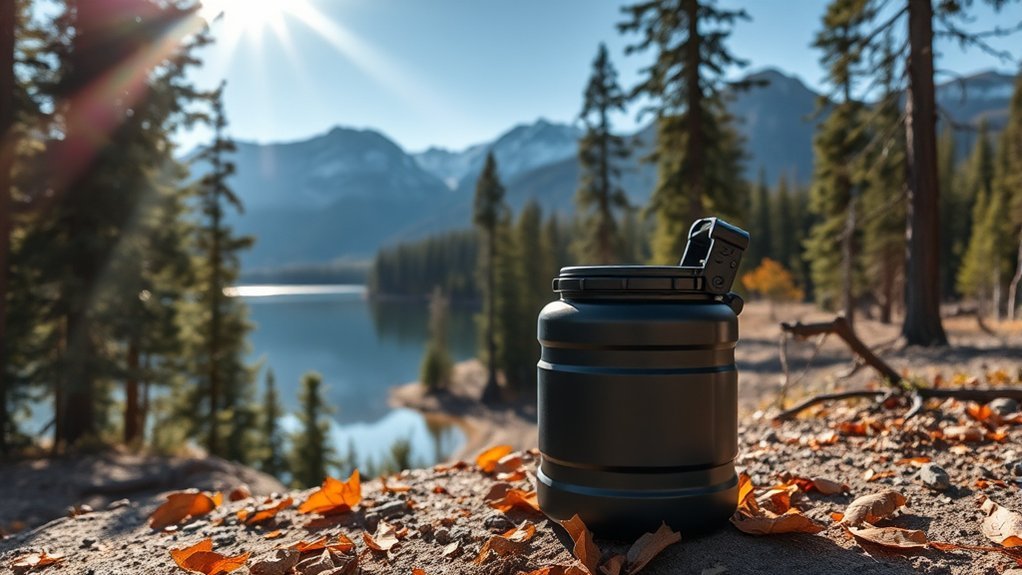
Bear-resistant food containers help prevent bears from obtaining human food, trash, toiletries, and other attractants. This is important because bears that repeatedly find food around people can become food-conditioned and may return to campsites, vehicles, or developed areas looking for another reward.
The Interagency Grizzly Bear Committee (IGBC) tests and certifies many bear-resistant products. Certification means a product has met minimum bear-resistance standards; it does not mean the product is completely bear-proof or impossible for a bear to breach.
Canisters are especially useful where trees are unsuitable for hanging food, where hanging is prohibited, or where bears have learned to defeat traditional food hangs. In places such as Yosemite Wilderness, allowed bear-resistant containers are the standard method required for most wilderness food storage.
Legal Requirements for Bear Canisters
There is no single nationwide rule requiring every camper in bear habitat to use the same type of canister. Regulations are set by individual parks, forests, wilderness areas, and state or federal agencies. Requirements can also change by season or route.
Here’s a current reference for several well-known destinations:
| Location | Current Rule | What to Check |
|---|---|---|
| Yosemite National Park | Allowed bear-resistant food containers are required for food storage throughout Yosemite Wilderness, subject to limited exceptions such as specific winter conditions. | Yosemite Wilderness Regulations and the park’s current allowed-container list. |
| Eastern High Peaks Wilderness, New York | Overnight campers must use a bear-resistant canister from April 1 through November 30. | NYSDEC bear-canister guidance. DEC warns that bears in this area have defeated clear-plastic canisters and encourages another design. |
| Denali National Park | Bear Resistant Food Containers are required for overnight camping in designated backcountry units, with current permit and seasonal instructions applying. | Denali BRFC requirements and your backcountry permit instructions. |
| Sequoia & Kings Canyon National Parks | Canisters are required in designated wilderness areas during specified periods and are strongly recommended elsewhere. | SEKI wilderness food-storage rules for your exact route and dates. |
Always verify the regulation shortly before departure. A canister that is certified or accepted in one area may not automatically satisfy the rules somewhere else.
How to Check Bear Canister Requirements Before a Trip
- Identify the land manager: Determine whether your route is inside a national park, national forest, state wilderness, tribal land, or another jurisdiction.
- Find the official food-storage page: Search the managing agency’s website for “food storage,” “bear canister,” “bear-resistant container,” or “wilderness regulations.”
- Check your exact route and dates: Requirements may apply only to certain zones, backcountry units, trail corridors, or seasons.
- Check the allowed-product list: Do not assume that every IGBC-certified product is automatically accepted by every park.
- Review your permit conditions: Backcountry permits may contain more specific instructions than general visitor information.
Pro Tip: Save a screenshot or offline copy of the current food-storage rule before entering the backcountry. Cell service may be unavailable at the trailhead or campsite.
Consequences of Not Using a Bear Canister
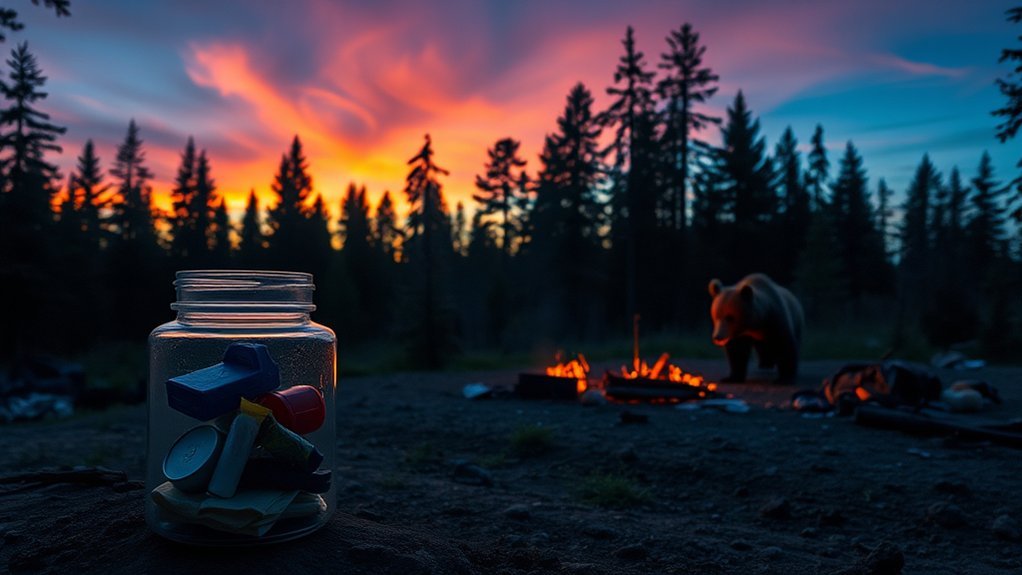
Ignoring a required food-storage rule can have consequences beyond losing your dinner. Depending on the jurisdiction, improper storage may lead to a citation, fine, permit-related enforcement action, or confiscation of improperly stored food.
The wildlife consequences can be more serious. Bears that repeatedly obtain food from people may become increasingly persistent around camps and developed areas. Wildlife managers sometimes have to take action against food-conditioned bears that become a public-safety problem.
Proper storage also protects your equipment. A bear investigating food smells may damage packs, tents, coolers, or other gear while searching for the source.
A bear-resistant container is designed to make human food difficult for bears to obtain; it works only when you store all attractants correctly and keep the container fully closed.
Limitations of Bear Hanging Methods
Hanging food from a tree has long been used in bear country, but it has important limitations. Bears may learn to defeat hangs, suitable trees may be unavailable, and many campers struggle to meet the exact height and distance requirements for a compliant hang.
- Rules vary: Hanging food is illegal in some places, including Yosemite Wilderness, while other areas still permit a properly executed hang under certain conditions.
- Bears can learn: In areas with experienced bears, even carefully arranged hangs can fail.
- Suitable trees may be scarce: Alpine areas and some coastal or desert environments may not provide appropriate branches.
- Correct technique matters: A bag hanging close to the trunk, ground, or supporting branch may still be accessible to a bear.
For these reasons, many land managers prefer or require hard-sided bear-resistant containers. Never choose a food hang simply because it is lighter than a canister; first confirm that hanging is legal for your destination and that you can meet the required method.
Choosing the Right Bear Canister
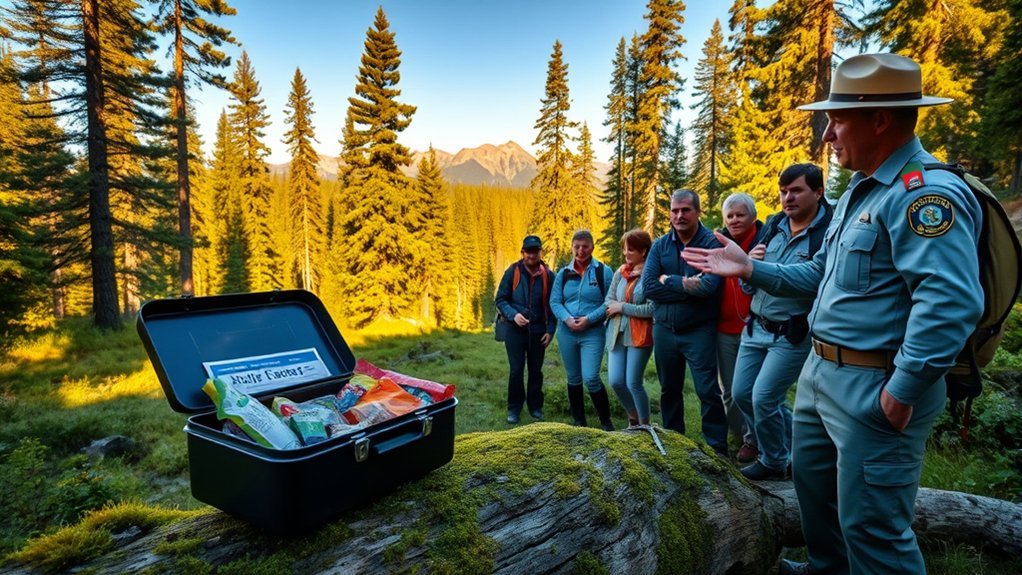
Start with the rules for your destination rather than choosing by brand, weight, or price. Some agencies publish their own list of approved containers; others rely on products certified by organizations such as the IGBC.
Next, choose enough capacity for your food, trash, toiletries, medications, and other scented items. Trip-day estimates are only approximate because food density and packing style vary. For example, the BearVault BV425 has about 5 liters of usable space and is marketed for roughly 1–2 days, while the larger BV500 has about 11.5 liters and is intended for substantially longer trips. Other brands and designs use different capacities.
Also consider weight, opening size, how the lid operates, whether the canister fits inside your backpack, and whether you can open and close it correctly in cold or wet conditions.
IGBC-Certified vs. Park-Approved
An IGBC-certified product has met the organization’s bear-resistance testing criteria. The IGBC emphasizes that this designation does not guarantee that a product is bear-proof.
A park-approved product is one that the individual land manager allows under its own rules. These categories overlap, but they are not always identical. For example, Yosemite maintains a specific allowed food-storage container list.
Note: New York’s DEC says black bears in the Eastern High Peaks have repeatedly defeated some clear-plastic bear-resistant canisters. Clear plastic is not universally unsafe, but campers in that specific area are encouraged to choose another approved style.
Renting Instead of Buying
Renting can make sense for occasional trips. Prices and availability vary widely. Yosemite currently rents Garcia Backpackers’ Cache canisters for $5 per week with a credit-card deposit, while Denali loans BRFCs to backpackers through its backcountry program. Always check current availability before relying on a park rental.
Proper Use of Bear Canisters
A certified or approved canister can still fail to protect your food if it is left open, placed poorly, or used incorrectly. Follow both the manufacturer’s directions and your destination’s food-storage regulation.
- Store all attractants: Put food, trash, toiletries, sunscreen, lip balm, medications, pet food, and other required scented items inside.
- Close and lock it fully: Keep the lid secured whenever you are not actively removing or replacing an item.
- Follow the local distance rule: General NPS guidance often recommends at least 100 feet from camp, while locations such as Denali use a 100-yard camping, cooking, and storage separation. Follow the rule for your destination.
- Choose safe ground: Keep the canister away from cliffs, steep slopes, lakes, streams, and other places where a bear could roll it away.
- Do not attach ropes or loose straps: An attached rope or carrying case may give a bear something to grab.
- Inspect the canister: Check the body, lid, locking tabs, threads, and other closure components before the trip.
Food Storage Guidelines
Efficient packing matters because everything with an attractive odor may need to fit in the canister. That can include items people do not normally think of as food, such as toothpaste, sunscreen, lip balm, medication, feminine products, pet food, and food-contaminated trash.
Proper Packing Techniques
- Remove bulky packaging: Repackage appropriate dry foods into compact resealable bags to reduce wasted space.
- Choose calorie-dense foods: Nuts, nut butters, dehydrated meals, energy bars, and similar compact foods can reduce volume.
- Plan for trash: Your wrappers and food waste may also need to remain inside the canister until you leave the regulated area.
- Pack smellables together: Keeping toiletries and other small scented items organized makes it easier to verify that nothing is accidentally left in your tent.
- Protect against moisture: Use suitable inner bags or containers for items that must stay dry because a bear canister is not necessarily watertight.
Compliance With Regulations
Food-storage regulations are part of protecting both visitors and wildlife. Yosemite requires proper food storage throughout the park and generally requires allowed bear-resistant containers for wilderness backpacking. Denali has its own BRFC rules for backcountry units, while Sequoia and Kings Canyon use route- and season-specific requirements in parts of their wilderness.
Check current rules instead of relying on an old trip report, retailer description, or product package. The land manager’s rule controls whether your storage method is acceptable.
Benefits of Using a BearVault or Other Approved Canister
A BearVault or another properly approved bear-resistant container can simplify food storage because it does not depend on finding the right tree or correctly rigging a hang. The primary benefit is reducing a bear’s opportunity to obtain human food when the container is used correctly.
Bear Safety Enhancement
- Resists bear access: A properly secured bear-resistant container is designed to make the contents difficult for bears to reach.
- Works without trees: It can be used in alpine, tundra, coastal, and other environments where an appropriate food-hanging tree may be unavailable.
- Supports wildlife conservation: Preventing food rewards helps reduce food-conditioning behavior.
- Simplifies compliance: In areas that require an approved canister, using the correct model gives you a straightforward way to meet the storage requirement.
No bear-resistant container should be treated as a guarantee. Keep a clean camp, store every required attractant, and follow wildlife-safety instructions in addition to using the canister.
Food Protection Assurance
A securely closed canister protects your provisions much better than leaving food in a backpack, tent, or ordinary plastic container. It can also reduce access by smaller wildlife, although its official purpose is bear resistance and performance against every smaller animal is not guaranteed.
Because canisters do not eliminate food odors, you should still place them where required by local guidance and away from your sleeping area. Do not bring the canister into your tent merely because the lid is closed.
Additional Recommendations for Safe Camping
Bear-canister use is only one part of safe camping in bear habitat. Combine proper storage with clean-camp practices and current local wildlife guidance.
Good bear-country food storage protects your trip, other campers, and wildlife by reducing opportunities for bears to receive a human-food reward.
- Check regulations before leaving home: Confirm whether a canister is mandatory and which models or storage methods are accepted.
- Use rentals when practical: Check park or outfitter availability if you do not camp in regulated bear country often.
- Keep attractants out of your tent: Store all regulated food, toiletries, trash, and scented items correctly.
- Keep camp clean: Pack out food scraps and garbage rather than burning or burying them.
- Follow bear-encounter guidance: Food storage does not replace knowing how to behave if you see a bear.
- Teach everyone in your group: Make sure adults and children understand which items belong in the canister and how the closure works.
Frequently Asked Questions
Can I Use a Bear Canister for Items Other Than Food?
Yes. In many regulated areas, you are expected to store not only food but also trash, toiletries, sunscreen, medication, pet food, lip balm, and other scented items in the bear-resistant container. Check the exact definition of “food” or “attractant” used by your destination.
How Long Can I Leave Food in a Bear Canister?
You can use the canister throughout your backcountry trip, but a bear canister is not a refrigerator. Follow normal food-safety limits for anything perishable. Keep the canister closed when it is not actively being used and pack out all remaining food and trash.
Are Bear Canisters Waterproof?
Do not assume they are. Bear resistance and waterproofing are different features. NYSDEC specifically notes that bear-resistant canisters are not watertight and do not float. Protect moisture-sensitive contents inside resealable bags and keep the canister away from streams, lakes, and other water.
What Should I Do if My Canister Is Damaged?
Do not rely on a cracked, badly worn, or improperly closing canister. Inspect the lid and locking system, follow the manufacturer’s instructions, and replace or rent another approved container if the damage could affect its ability to resist a bear. Some parks specifically tell visitors not to use containers with obvious damage.
Can Children Use Bear Canisters Independently?
It depends on the child’s age, strength, and understanding of the closure. An adult should teach the child how the canister works and verify that it is fully closed and stored correctly. Do not depend on a child alone for compliance with a required food-storage rule.
Does an IGBC-Certified Canister Work Everywhere?
Not automatically. IGBC certification shows that a product met the organization’s bear-resistance criteria, but individual parks and wilderness areas may maintain their own allowed-product lists. Check the rule for your destination before relying on a specific model.
Can I Hang My Food Instead of Carrying a Bear Canister?
Only where local regulations allow it. Yosemite Wilderness generally prohibits hanging food as a substitute for an allowed canister, while some other areas permit a properly executed hang when a canister is not mandatory. Never assume a food hang is legal without checking the current regulation.
Conclusion
A bear canister is required in many popular wilderness areas, but not everywhere. The safest approach is to check the current food-storage regulation for your exact route, dates, and land manager before leaving home. Use a container that your destination accepts, store every required attractant inside, close it correctly, and follow the local placement rules. Those simple steps protect your food while reducing the chance that bears learn to associate people with an easy meal.
Sources
- Yosemite National Park — Wilderness Regulations — current wilderness food-storage requirements.
- New York State Department of Environmental Conservation — Bear-Resistant Canisters — Eastern High Peaks dates, storage guidance, and clear-plastic canister warning.
- Denali National Park — Bear Resistant Food Containers — backcountry BRFC rules and accepted-container guidance.
- Sequoia & Kings Canyon National Parks — Wilderness Food Storage — area-specific canister requirements and wilderness guidance.
- Interagency Grizzly Bear Committee — Bear-Resistant Products — certification standards and the distinction between bear-resistant and bear-proof.
