
Last Updated on July 27, 2026 by Daniel Globe
Hiking poles, also called trekking poles, are optional for most hikers, but they can make rough, steep, slippery, or heavily loaded hikes more comfortable and stable. They give you extra points of contact with the ground, can shift some work from your legs to your upper body, and may reduce lower-extremity loading on descents. The key is knowing when they help, how to size them, and how to use them without becoming overly dependent on them.
Quick Answer
You do not need hiking poles for every hike. They are most useful on steep descents, loose or slippery ground, stream crossings, snow, and hikes with a heavy pack. Properly used poles can improve stability and reduce some lower-body loading, but they also occupy your hands and increase upper-body work.
Key Takeaways
- Hiking poles are helpful rather than mandatory for most hikers.
- Research supports improved stability and reduced lower-extremity loading in some conditions, but poles do not guarantee less total effort.
- The main designs are telescoping, folding, and fixed-length poles; some folding poles are also adjustable.
- On level ground, start with your elbows near a 90-degree bend. Shorten adjustable poles for long climbs and lengthen them for long descents.
- Two poles give more symmetrical support than one, especially with a backpack or on difficult terrain.
- Check locks before hiking, use the right baskets or tips for the terrain, and keep carbide tips on the established trail surface to limit damage.
At a Glance
| Time Required | About 5–10 minutes to size the poles and practice basic technique |
| Difficulty | Beginner |
| Tools Needed | A pair of trekking poles; optional rubber tips, mud baskets, or snow baskets |
| Cost | No extra cost if you already own poles; new-pole prices vary widely by material, weight, construction, and features |
Disclosure: As an Amazon Associate I earn from qualifying purchases. Some links on this page are affiliate links, at no extra cost to you.
Benefits of Hiking Poles
The biggest advantage of hiking poles is the extra stability they provide. Instead of balancing only on your feet, you can create additional contact points with the ground when crossing loose rock, mud, roots, snow, or uneven trail.
A 2020 review in Wilderness & Environmental Medicine found that trekking poles can reduce lower-extremity loading and improve balance in certain walking conditions. The same review also found an important tradeoff: using poles can increase upper-body involvement, oxygen use, and cardiovascular demand. In other words, poles can make your legs feel less loaded without necessarily making the entire hike easier.
Research supports a balanced view of trekking poles: they can reduce lower-body loading and improve stability, but they may also increase upper-body and cardiovascular work.
Poles can be particularly helpful on descents. By planting a pole before stepping down, you can transfer part of the load through your arms and poles instead of asking your legs to absorb every step alone. This does not eliminate stress on the knees, but it can reduce lower-extremity loading.
They can also help when carrying a backpack. With a heavy load, small balance corrections become harder, and two poles provide extra contact with the ground. Research reviewed in 2020 found benefits to balance and lower-limb muscle loading under loaded conditions.
Another benefit is rhythm. Once the movement becomes natural, alternating your poles with your steps can help you settle into a consistent walking pattern. That does not guarantee greater endurance, but some hikers find the rhythm comfortable over long distances.
Types of Hiking Poles
Hiking poles come in several designs. The categories can overlap, so a folding pole may also include a small adjustable section.
Telescoping Poles
Telescoping poles use two or three shaft sections that slide inside one another. Lever locks, twist locks, or similar mechanisms hold the selected length.
The main advantage is versatility. You can change the length for climbs, descents, side slopes, or different users. Their disadvantages are extra moving parts and a larger packed size compared with many folding poles.
Folding or Z-Style Poles
Folding poles separate into connected sections similar to a tent pole. An internal cord keeps the pieces together, allowing the pole to fold into a compact package.
They are popular with fast hikers, travelers, trail runners, and anyone who wants poles that pack down small. Some models are fixed at one working length, while others add a short adjustable section.
Fixed-Length Poles
Fixed-length poles do not let you change the working length. With fewer adjustment parts, they can be simple and light. The tradeoff is less flexibility when switching between long climbs and descents.
Two Trekking Poles vs. One Hiking Staff
A pair of trekking poles provides support on both sides of your body. That can be especially useful with a backpack, on steep terrain, or when balance is a priority.
A single hiking staff can still be useful on relatively easy trails, for testing mud or water depth, or when you want to keep one hand free. It does not provide the same symmetrical support as a pair.
Aluminum vs. Carbon Fiber
Aluminum poles are generally durable, economical, and tolerant of impacts. Under very high stress, an aluminum shaft may bend rather than break immediately.
Carbon-fiber and carbon-composite poles are usually lighter and can reduce vibration. Their tradeoff is that severe damage or loading can cause a carbon shaft to crack, splinter, or fail rather than simply bend.
For rough or remote trips where durability matters more than a small weight saving, aluminum is a practical choice. For hikers focused on low swing weight and pack weight, carbon can be attractive.
Grip Materials
Cork, foam, and rubber are common grip materials. Cork resists moisture and can gradually conform to the hand. Foam is soft and absorbs moisture. Rubber provides good insulation in cold conditions but may be less comfortable for sweaty hands in hot weather.
When to Use Hiking Poles
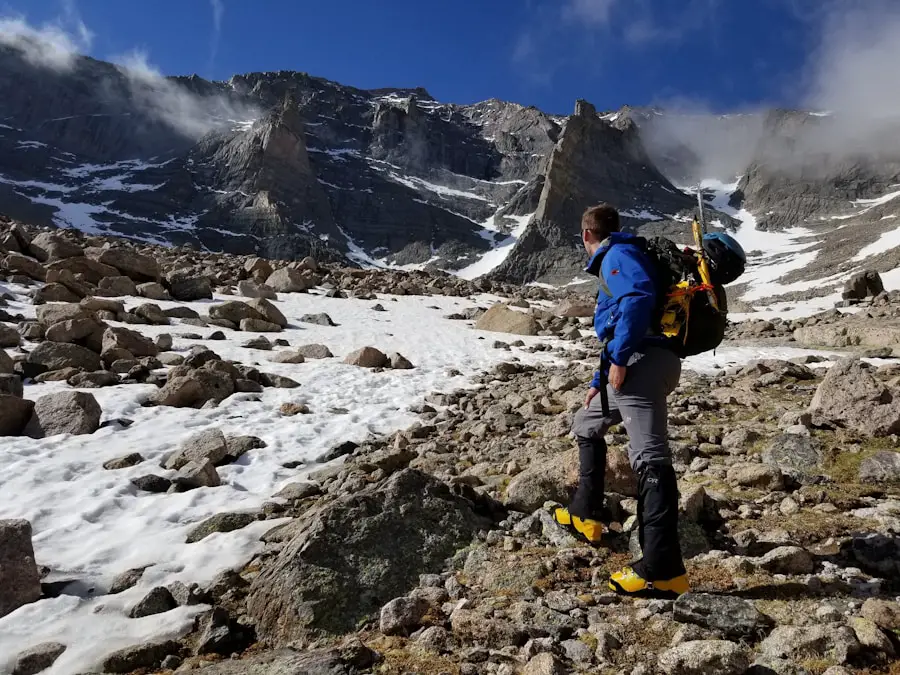
The decision to use hiking poles depends on the terrain, your pack weight, the conditions, and your own comfort level.
Poles tend to provide the most value in the following situations:
- Long or steep descents: They let you share some of the downward load with your arms and upper body.
- Steep climbs: Proper pole plants allow the upper body to contribute to forward movement.
- Loose rock and scree: Extra contact points can improve stability while your feet search for secure positions.
- Mud and slippery trails: A secure pole plant can give you another point of support.
- Heavy backpacks: Extra stability can be particularly useful when your center of mass is changed by a load.
- Snow: Poles with appropriate snow baskets help with balance and keep the shafts from sinking as deeply.
- Stream crossings: Poles can help you establish stable contact with the bottom before taking the next step.
- Fatigue late in a hike: Poles may provide useful support when precise foot placement becomes harder.
Note: Trekking poles are outdoor equipment, not a replacement for a medically prescribed cane, crutch, walker, or other mobility aid. If you need poles because of significant pain, a recent injury, surgery, or a balance disorder, ask a qualified healthcare professional or physical therapist what support is appropriate.
When You May Not Need Poles
Poles are less valuable on short, flat, dry, well-maintained trails when you already feel stable and are carrying little weight. Some hikers also prefer having their hands completely free for scrambling, photography, eating, map use, or other tasks.
If a trail includes frequent hands-on scrambling, poles may spend more time attached to your pack than in your hands. Compact folding poles can be useful in that situation because they are easier to stow.
How to Use Hiking Poles Properly
| Technique | What to Do |
| Normal pole length | Start with your elbows near a 90-degree bend when the tips are beside your feet. |
| Walking rhythm | Move the pole opposite your forward foot for a natural alternating rhythm. |
| Long climbs | Shorten adjustable poles by roughly 5–10 cm (2–4 inches) as a starting point. |
| Long descents | Lengthen adjustable poles by roughly 5–10 cm (2–4 inches) to help you stay more upright. |
| Side slopes | Shorten the uphill pole and lengthen the downhill pole when a long traverse makes that adjustment useful. |
1. Set the Correct Length
On ordinary terrain, stand upright with the pole tips near your feet. Adjust the poles until your elbows are close to a 90-degree bend. Your shoulders should remain relaxed rather than lifted toward your ears.
This is a starting point, not a rigid rule. Adjust a little if another length feels more natural with your arm proportions and walking style.
2. Check the Locks
Before hiking, make sure each locking mechanism is fully engaged and properly tensioned. Adjustable locks can loosen over time. A pole that suddenly collapses when you put weight on it can cause a loss of balance.
Warning: Never assume an adjustable pole is locked just because it looks extended. Test each section with firm downward pressure before relying on it on a steep descent, stream crossing, or other consequential terrain.
3. Use the Wrist Straps Correctly
For the common trekking-pole strap design, bring your hand up through the bottom of the strap and then lower your hand onto the grip. Adjust the strap so it supports the heel of your hand without squeezing your wrist.
This lets the strap carry part of the load and allows you to keep a lighter grip. Constantly squeezing the handle harder than necessary can tire the hands and forearms.
4. Match the Opposite Arm and Foot
On normal trail, move the left pole with the right foot and the right pole with the left foot. This opposite-side pattern closely matches a natural walking arm swing.
Do not worry if your rhythm is awkward for the first few minutes. Walk slowly on easy ground until the pattern becomes automatic.
Pro Tip: Keep your grip relaxed. Let the straps and pole plants provide support instead of squeezing the handles with every step.
5. Adjust for Climbs and Descents
For a sustained uphill section, shortening adjustable poles by about 5–10 cm (2–4 inches) can improve leverage and keep your shoulders from being pushed upward.
For a sustained descent, lengthening them by roughly the same amount can help you remain upright while placing the poles before stepping down.
On a long sidehill traverse, you can shorten the uphill pole and lengthen the downhill pole.
6. Use Double Plants When Extra Stability Helps
The normal alternating rhythm is not the only technique. On an unusually steep step, large rock, or awkward descent, planting both poles before moving your feet can provide a more stable base.
Avoid trying to pull your full body weight upward with your shoulders. The poles should assist your movement rather than force your shoulders into an uncomfortable position.
7. Use Poles Carefully for Stream Crossings
Poles can be valuable when crossing shallow moving water, but they do not make a dangerous crossing safe.
Plant each pole firmly on the streambed and make sure it is secure before shifting your weight or moving the next foot. If the water is deep enough that your normal pole setting cannot reach the bottom comfortably, adjustable poles can be lengthened.
Do not use pole support as a reason to enter water that is too deep, swift, cold, or otherwise unsafe to cross.
Tips, Baskets, and Trail Conditions
Carbide or Steel Tips
Hard metal tips provide traction on many natural trail surfaces. They can also scratch rock and damage sensitive surfaces when planted carelessly.
Rubber Tips
Rubber tip covers are useful on pavement, some hard surfaces, and areas where you want to reduce scratching and trail impact. They also protect sharp tips while the poles are stored.
Mud and Snow Baskets
Baskets reduce how deeply a pole sinks into soft material. Small trekking baskets work for normal trail use, while larger baskets can help in mud or snow.
Choose baskets for the conditions you expect rather than assuming the largest basket is always best. Large baskets can catch vegetation and other obstacles when they are unnecessary.
Potential Drawbacks of Hiking Poles
Hiking poles offer real advantages, but there are tradeoffs.
They Occupy Your Hands
Using two poles makes it harder to take photos, check a phone or map, eat, or perform tasks that require both hands. Collapsible poles reduce this problem because you can secure them to your pack when they are not useful.
They Add Weight and Gear to Manage
Modern poles can be light, but they are still extra equipment. On an easy day hike, a minimalist hiker may decide that the benefit does not justify carrying them.
They Increase Upper-Body Work
Poles do not simply make hiking effortless. Research shows that they can increase upper-body muscle recruitment and, in some circumstances, cardiovascular demand even while decreasing loading on the lower extremities.
This tradeoff can be useful because it spreads work across more of the body, but hikers should not assume poles always lower overall energy expenditure.
Tips Can Become Trapped
A pole can wedge between rocks, roots, or other obstacles. Do not twist your arm aggressively to save a stuck pole. Stop, reduce the load on the pole, and free it carefully.
They Can Cause Hand, Wrist, or Shoulder Fatigue
A pole that is too long, a strap that is poorly adjusted, or a grip that is too tight can make your hands and upper body sore.
Shoulder discomfort on a climb is often a sign that the poles are too long or that you are pulling too hard with your arms.
They Can Affect the Trail
Repeated carbide-tip use can scar rock, disturb soft soil, damage plants beside the trail, and contribute to trail widening. The American Hiking Society and Appalachian Mountain Club recommend thoughtful pole placement and rubber tips where appropriate.
Keep your pole plants on the established tread whenever possible and avoid repeatedly stabbing soft vegetation beside the trail.
Hiking Poles vs. No Poles
Neither approach is automatically better. The right choice depends on the trail and the hiker.
Poles make the strongest case on steep descents, loose surfaces, snow, water crossings, and backpacking trips where extra stability is useful. They also give hikers an easy way to redistribute some work toward the upper body.
Going without poles keeps both hands free, removes gear weight, and can feel more natural on smooth trails. Experienced hikers with good balance may prefer this on easier terrain.
You also do not have to make an all-or-nothing choice. Collapsible poles can stay on your backpack during easy sections and come out for a long descent, stream crossing, snowfield, or other section where they provide a clear benefit.
Choosing the Right Hiking Poles for You
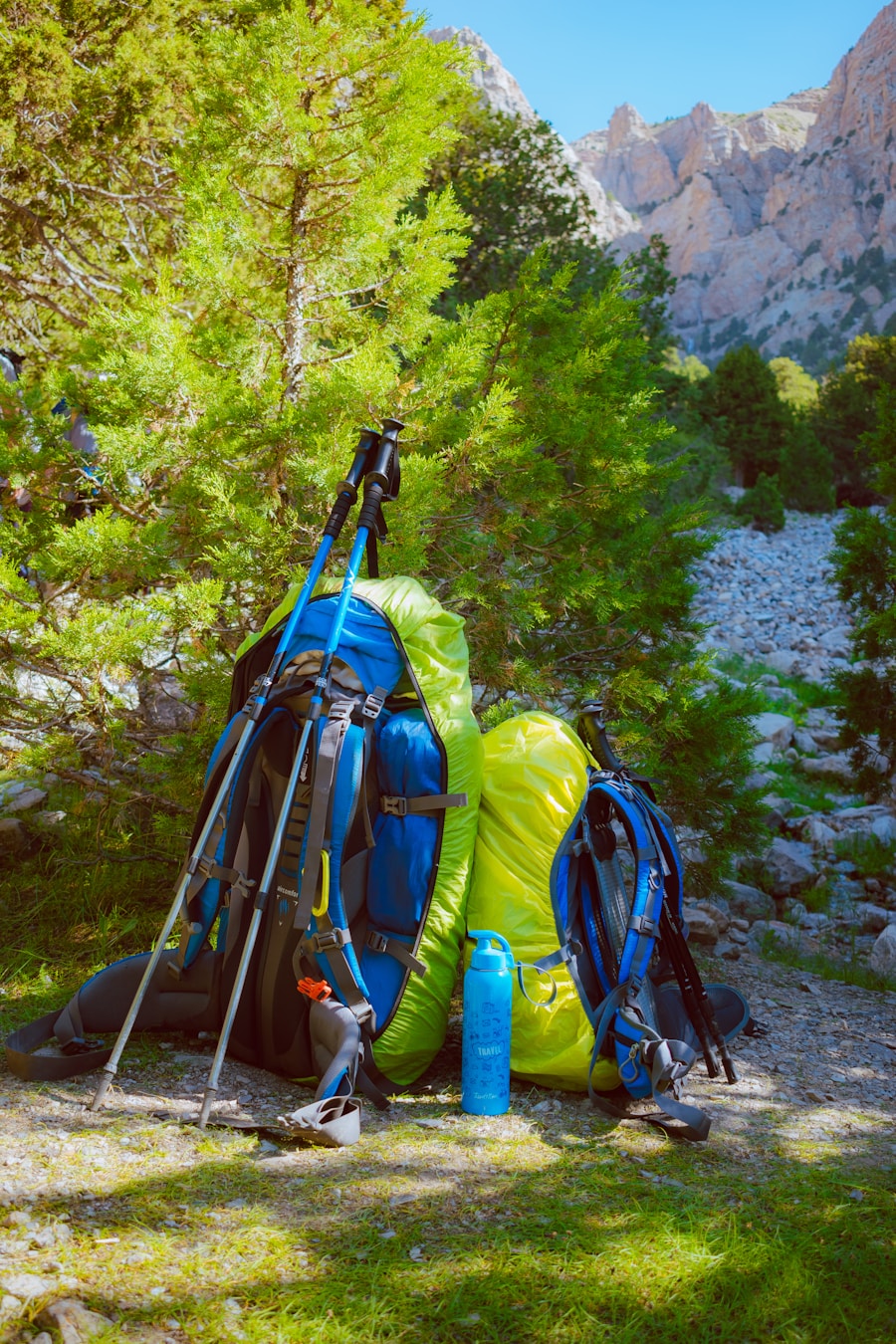
Start by deciding where and how often you expect to use the poles.
Choose Aluminum for Durability and Value
Aluminum is a strong option for general hiking, backpacking, rugged terrain, and hikers who prefer durability over the lowest possible weight. A heavily loaded aluminum pole can bend, but it is generally more tolerant of impact than carbon fiber.
Choose Carbon When Low Weight Matters
Carbon-fiber poles reduce swing weight and can damp vibration. They can be attractive for long-distance hiking and fast travel, although they usually cost more and can be less forgiving of severe impacts or structural damage.
Consider Packed Length
If the poles will often ride inside luggage or on a small backpack, folding models are especially convenient. If maximum adjustment range matters more, telescoping poles may be the better choice.
Check the Locking System
External lever locks are easy to inspect and adjust. Twist locks can also work well but rely on an internal expansion mechanism. Regardless of design, learn how to tighten and inspect the lock before depending on it in difficult terrain.
Pick a Comfortable Grip
Grip shape matters just as much as material. Hold several models if possible. Your fingers should wrap naturally around the handle without forcing your wrist into an awkward angle.
Cork works well for hikers who dislike a damp grip. Foam feels soft and absorbs moisture. Rubber provides useful insulation in cold conditions but can feel less comfortable against sweaty hands.
Make Sure the Length Range Fits You
An adjustable pole should reach your normal 90-degree elbow position while leaving enough range to shorten it for climbs and lengthen it for descents.
For fixed-length models, follow the manufacturer’s sizing chart rather than choosing by appearance alone.
Common Hiking Pole Problems and Quick Fixes
The Pole Keeps Getting Shorter While I Walk
The lock is probably too loose, dirty, or incorrectly adjusted. Stop using the pole for heavy support until the locking mechanism is secure. Clean dirt from the shaft and adjust the lock according to the manufacturer’s instructions.
My Hands or Forearms Get Tired
Relax your grip and check the strap adjustment. When a strap is fitted correctly, you should not need to squeeze the grip tightly throughout the hike.
My Shoulders Hurt on Climbs
Try shortening the poles. Poles that are too long can push your shoulders upward and make every plant feel like a shrug.
The Pole Tip Keeps Catching Between Rocks
Use smaller, more deliberate plants and avoid inserting the tip deeply into gaps. If a pole becomes stuck, stop and free it rather than twisting your wrist or continuing forward while it is trapped.
The Sections Are Dirty After a Muddy Hike
Wipe dirt from the shafts and locking areas before collapsing the poles for long-term storage. Let wet grips and straps dry fully before putting the poles away.
Are Hiking Poles Necessary?
No. Hiking poles are not necessary for most people on every trail.
They are a tool that becomes increasingly useful as terrain gets steeper, rougher, more slippery, or more demanding. They can also be valuable when carrying a heavy backpack or when you simply feel more confident with extra contact points.
They are less compelling on short, smooth trails where you feel stable without them. Some hikers enjoy using poles on nearly every trip; others carry compact poles only for difficult sections.
For a broader spring packing list, TakeTravelInfo also has a guide to 5 Must-Have Minimalist Travel Backpacks for Spring Adventures 2025. A comfortable pack and properly fitted poles can work together well when a hike involves longer distances or heavier gear.
Frequently Asked Questions
What are hiking poles?
Hiking poles, commonly called trekking poles, are lightweight poles designed to provide additional contact with the ground while hiking. Most are sold as a pair and may be telescoping, folding, fixed-length, or a combination of folding and adjustable.
Do I need hiking poles?
Not necessarily. They are most useful on steep descents, loose or slippery terrain, stream crossings, snow, and hikes with a heavy pack. On short, flat, easy trails, many hikers are comfortable without them.
What are the benefits of using hiking poles?
Trekking poles can improve stability, provide extra support on uneven ground, and reduce some lower-extremity loading. They also shift part of the work toward your arms and upper body. Benefits vary with terrain, pack weight, technique, and the individual hiker.
Are there any drawbacks to using hiking poles?
Yes. Poles occupy your hands, add equipment to carry, increase upper-body work, and can cause hand or shoulder fatigue when adjusted poorly. Metal tips can also damage rock, vegetation, and soft trail surfaces if they are planted carelessly.
How do I choose the right hiking poles?
Consider the shaft material, working length, packed length, locking system, grip, weight, and terrain you hike most often. Aluminum favors durability and value, while carbon fiber favors lower weight. Adjustable poles provide the most flexibility for changing terrain.
Can I use just one hiking pole?
Yes. A single pole or hiking staff can add stability and leaves one hand free. Two poles provide more symmetrical support, however, and are usually more helpful when carrying a backpack or hiking steep and uneven terrain.
How long should trekking poles be?
For normal walking, a good starting point is a length that gives you roughly a 90-degree elbow bend with the pole tip beside your foot. For long climbs, shorten adjustable poles about 5–10 cm (2–4 inches); for long descents, lengthen them by about the same amount.
Do trekking poles make hiking easier?
They can make certain parts of hiking feel easier by improving stability and shifting some work away from the legs, especially on descents or with a pack. However, poles also engage the upper body and can increase cardiovascular demand, so they do not always reduce total energy expenditure.
Sources
- Wilderness & Environmental Medicine — Are Trekking Poles Helping or Hindering Your Hiking Experience? A Review — research on lower-extremity loading, balance, energy expenditure, and cardiovascular demand.
- REI Co-op — How to Use Trekking Poles and Hiking Staffs — pole length, uphill/downhill adjustments, straps, baskets, stream crossings, and technique.
- REI Co-op — How to Choose Trekking Poles and Hiking Staffs — pole designs, locking mechanisms, materials, grips, tips, and sizing.
- LEKI — Hiking Poles — current manufacturer information on aluminum, carbon, folding, adjustable, and fixed-length construction.
- American Hiking Society — Trekking Poles — hiking-pole benefits, safe storage, and trail-impact guidance.
- Appalachian Mountain Club — Leave No Trace for Trekking Poles — guidance on rubber tips, vegetation, soft ground, and responsible pole placement.

