
Last Updated on July 28, 2026 by Daniel Globe
Delta Air Lines—often searched as “Delta Airlines”—has operated passenger flights for nearly a century. Its history includes fatal accidents, nonfatal runway events, and more recent incidents involving regional partners. A fair safety review must separate Delta mainline from Delta Connection operators, use official investigation records, and avoid treating raw crash totals as a current safety score.
Quick Answer
Delta Air Lines has had fatal accidents in its long history, including Flights 191, 1141, and 1288. That history alone does not show how safe the airline is today. Delta operates under FAA Part 121 rules and a required Safety Management System. The 2025 Toronto accident involved Endeavor Air, a Delta Connection operator, and remains under investigation.
Key Takeaways
- Delta’s accident history includes serious fatal crashes, but historical totals are not a reliable measure of present-day risk.
- Delta mainline and Delta Connection are not the same operating carrier; the name on the ticket may differ from the airline flying the aircraft.
- Endeavor Air Flight 4819 overturned during landing in Toronto on February 17, 2025. All 80 occupants evacuated; 21 were injured, and the investigation is still open.
- There is no authoritative universal ranking of the airline with “the most crashes” because results change with the time period, operator definitions, exposure, and event criteria.
- For reliable research, use the NTSB, FAA, Transportation Safety Board of Canada, and the relevant foreign investigation authority—not unsourced airline ranking pages.
Disclosure: As an Amazon Associate I earn from qualifying purchases. Some links on this page are affiliate links, at no extra cost to you.
History of Delta Air Lines
Delta traces its roots to Huff Daland Dusters, an aerial crop-dusting business founded in 1924 and incorporated in 1925. Investors acquired its assets and formed Delta Air Service in 1928. The company began scheduled passenger service on June 17, 1929, flying from Dallas to Jackson, Mississippi, with stops in Shreveport and Monroe, Louisiana. Delta moved its headquarters from Monroe to Atlanta in 1941, and the corporate name became Delta Air Lines, Inc. in 1945.
Major expansion points included the 1972 merger with Northeast Airlines, the 1987 merger with Western Airlines, the purchase of much of Pan Am’s transatlantic network in 1991, and the 2008 acquisition of Northwest Airlines. Delta’s official history also shows that SkyMiles began as a frequent-flyer program in 1981 and adopted the SkyMiles name in 1995. See Delta’s official company timeline for the full chronology.
According to Delta’s 2025 Form 10-K, the airline and its regional partners operated 1,314 aircraft at the end of 2025, including 989 mainline aircraft and 325 regional aircraft. Delta reported serving more than 300 destinations on six continents and offering up to 5,500 peak-day flights in 2025. The current fleet table does not include the Boeing 777, which Delta retired in 2020; current widebody types include the Airbus A330 and A350 and the Boeing 767. The filing is available in Delta’s 2025 Form 10-K.
Delta Air Lines Safety Record Today

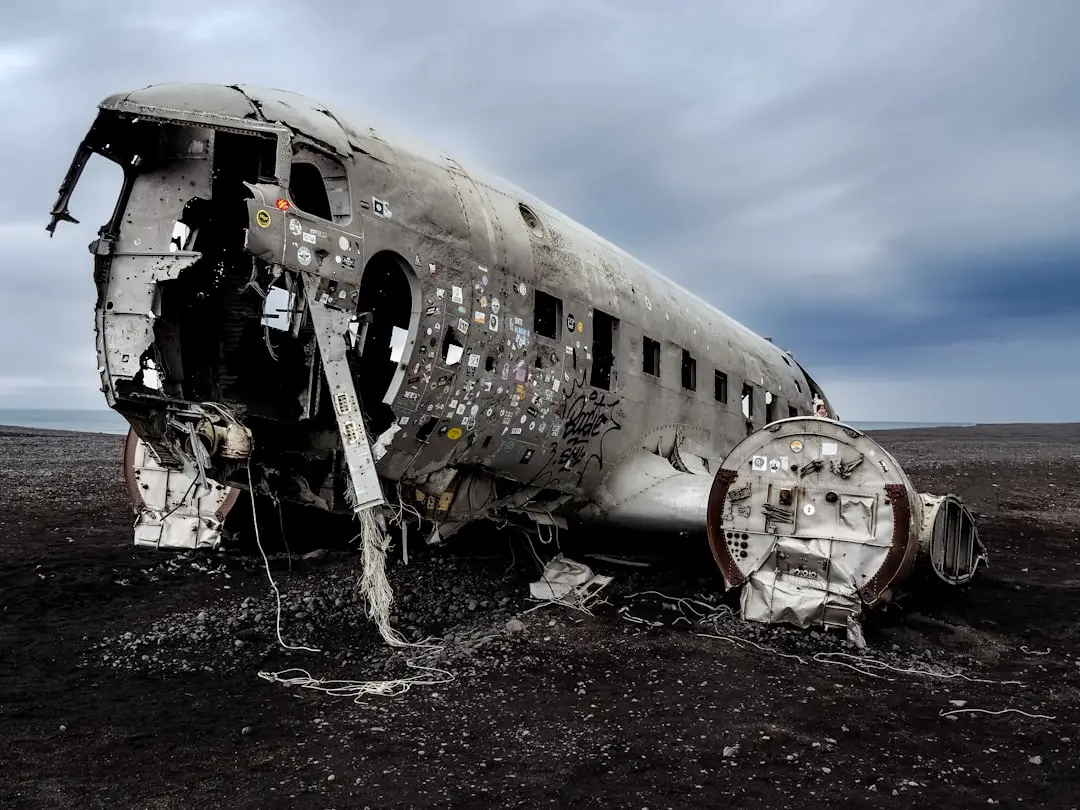
Illustrative image only; it does not show a Delta aircraft or a documented Delta accident.
Delta is a U.S. certificated air carrier operating under Federal Aviation Regulations for scheduled airlines. Like other Part 121 carriers, it must maintain a Safety Management System under 14 CFR Part 5. The FAA describes an SMS as a formal, organization-wide system for identifying hazards, managing risk, checking whether controls work, and supporting a positive safety culture.
Delta’s 2025 annual filing states that its Safety Management System is central to proactively managing safety risk for employees and customers. That is useful evidence of a current safety framework, but it is not an independent “safety rating.” No responsible review should label an airline safe or unsafe from a single accident count, customer survey, on-time statistic, or marketing statement.
A crash count without the time period, operating carrier, number of flights, and event definition can mislead more than it informs.
Notable Delta and Delta Connection Accidents
Note: The table below highlights selected major events and is not a complete list of every accident or incident. “Delta mainline” means Delta Air Lines was the operating carrier. “Delta Connection” identifies a separate regional operator flying under Delta branding.
| Date and flight | Operator | Outcome | Official finding or status |
|---|---|---|---|
| Aug. 2, 1985 — Flight 191 Dallas/Fort Worth |
Delta mainline, Lockheed L-1011 | 136 occupants and one person on the ground died. | The aircraft encountered a severe microburst during approach. The accident accelerated windshear detection, warning, avoidance, and training improvements. FAA accident summary. |
| Aug. 31, 1988 — Flight 1141 Dallas/Fort Worth |
Delta mainline, Boeing 727 | 14 people died; 26 were seriously injured. | The NTSB found that the flight crew did not properly configure the flaps and slats for takeoff; cockpit discipline and the takeoff warning system were also central issues. NTSB accident report. |
| July 6, 1996 — Flight 1288 Pensacola |
Delta mainline, MD-88 | Two passengers died and two were seriously injured. | An uncontained engine failure sent debris into the cabin. The NTSB cited a fatigue crack and failure of the inspection process to detect it. NTSB investigation page. |
| Aug. 27, 2006 — Comair Flight 5191 Lexington |
Comair, operating as Delta Connection | 49 people died; the first officer survived with serious injuries. | The crew attempted takeoff from the wrong, shorter runway. The NTSB cited failures to use available location cues and verify the runway, along with nonessential conversation and ATC policy issues. NTSB accident report. |
| March 5, 2015 — Flight 1086 New York-LaGuardia |
Delta mainline, MD-88 | No fatalities; 29 passengers had minor injuries. | The aircraft left a snow-covered runway. The NTSB found that excessive reverse thrust reduced rudder effectiveness, with workload and situational stress contributing. NTSB accident report. |
| Feb. 17, 2025 — Endeavor Air Flight 4819 Toronto Pearson |
Endeavor Air, operating as Delta Connection | All 80 occupants evacuated; 21 were injured, including two seriously. | The CRJ-900 struck the runway, lost its right wing, caught fire, and overturned. The Transportation Safety Board of Canada says the investigation remains in the examination and analysis phase. TSB investigation page. |
Warning: Do not assign a cause to the 2025 Toronto accident from videos, social posts, or the preliminary report. The TSB states that information may change and that the final analysis is still in progress.
What Contributed to Delta’s Past Accidents?
There is no single “Delta crash cause.” Official investigations show different combinations of weather, human performance, aircraft configuration, maintenance, runway awareness, and operational conditions.
Severe Weather and Windshear
Flight 191 entered a powerful microburst during approach to Dallas/Fort Worth in 1985. The disaster exposed weaknesses in airport windshear detection and flight-crew knowledge at the time. It became a major catalyst for improved windshear alerting, avoidance guidance, and training across commercial aviation.
Aircraft Configuration and Cockpit Discipline
Flight 1141 attempted takeoff with the wing flaps and slats retracted. The NTSB also examined checklist performance, nonessential cockpit conversation, and the takeoff warning system. The accident shows why sterile-cockpit discipline, challenge-and-response checklists, and effective warning systems must work together.
Maintenance and Inspection
Flight 1288 involved a fatigue crack in an engine fan hub that was not detected during inspection. The NTSB’s findings focused on manufacturing, nondestructive inspection, and the need for more robust inspection safeguards—not a simple claim that “mechanical failure happens.”
Runway Identification and Landing Control
Comair Flight 5191 involved an attempted takeoff from the wrong runway. Flight 1086 involved loss of directional control during a snowy landing. These events led investigators to examine runway awareness, cockpit cross-checks, ATC clearances, reverse-thrust limits, runway-condition reporting, and crew workload.
Measures Used to Improve Safety
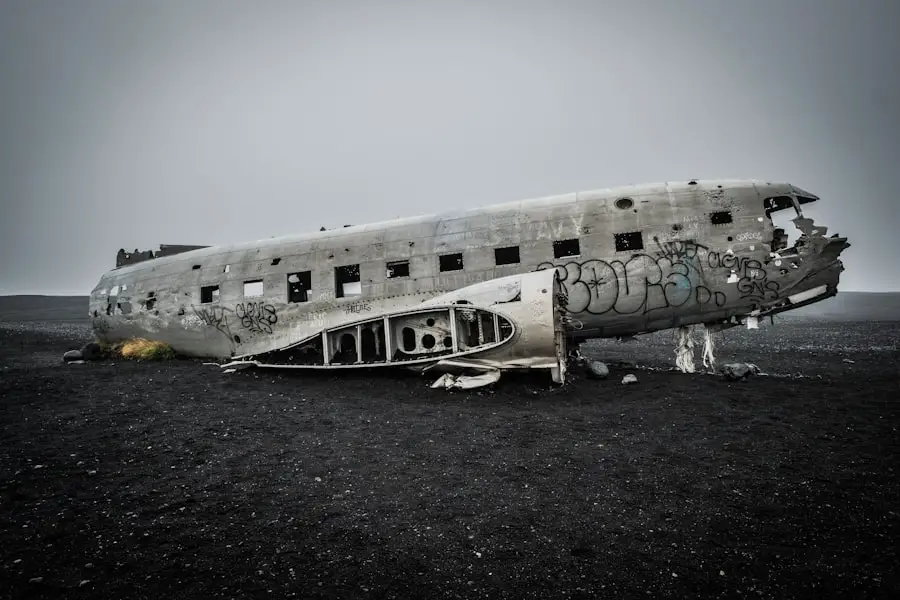
Illustrative image only; it does not show a Delta aircraft or a documented Delta accident.
Modern airline safety relies on layers of protection rather than one program. For Delta and other major U.S. carriers, those layers include FAA certification and surveillance, recurrent crew training, maintenance programs, operational data review, hazard reporting, emergency planning, and a formal Safety Management System.
The FAA says an SMS has four connected parts: safety policy, safety risk management, safety assurance, and safety promotion. In practice, that means an airline should identify hazards before they lead to an accident, assess and reduce risk, verify that controls continue to work, and train employees to support the system.
- Windshear defenses: Better airport sensors, airborne alerts, avoidance procedures, and simulator training followed lessons from accidents such as Flight 191.
- Checklist and warning improvements: Flight 1141 reinforced the need for reliable takeoff-configuration warnings, disciplined checklist use, and sterile-cockpit compliance.
- Runway-awareness defenses: Comair Flight 5191 led to recommendations involving airport markings, runway alerting systems, cockpit procedures, and explicit ATC clearances.
- Maintenance quality controls: Flight 1288 produced recommendations related to inspection methods, manufacturing defects, and redundant safeguards.
- Landing and runway-condition guidance: Flight 1086 prompted recommendations about reverse thrust, braking reports, runway friction, and emergency communication.
Pro Tip: Check the “operated by” line on your reservation. A flight sold by Delta may be flown by Delta mainline, Endeavor Air, SkyWest, or Republic Airways, and each operator has its own certificate and investigation record.
How Delta Compares With Other Airlines
No U.S. government agency publishes a single consumer score naming Delta, American, United, or another carrier as the “safest airline.” A useful comparison must define the period, separate mainline from regional operators, distinguish accidents from incidents, and account for exposure such as departures or passenger miles.
The U.S. Department of Transportation does publish service-quality measures. In April 2026, Delta mainline reported 84.1% on-time arrivals and the Delta network reported 83.1%. Those figures show operational reliability for that month, not accident risk. Customer satisfaction, baggage handling, revenue, and punctuality should never be presented as substitutes for safety data. See the June 2026 Air Travel Consumer Report.
| Metric | What it can tell you | What it cannot prove |
|---|---|---|
| Accident history | What happened, why it happened, and what recommendations followed. | A precise prediction of risk on your next flight. |
| Raw crash count | The number of events within a clearly defined dataset. | A fair comparison without adjusting for age, fleet size, flights, mergers, and affiliates. |
| On-time performance | Schedule reliability during the reporting period. | Whether an airline is safer than another airline. |
| Customer reviews | Passenger experience, service recovery, and comfort. | Technical or operational safety performance. |
How to Check an Airline’s Safety Record
- Identify the operating carrier. Read the “operated by” line rather than relying only on the marketing airline’s logo.
- Search official investigation records. For U.S. events, use the NTSB Aviation Investigation Search. For foreign events, use the national investigation authority responsible for the occurrence.
- Separate preliminary and final reports. Preliminary reports provide early facts; final reports contain the authority’s analysis, findings, probable cause, and recommendations.
- Define the comparison. State the years, event type, operating carrier, and whether regional affiliates or predecessor airlines are included.
- Adjust for exposure where possible. An airline that operates far more flights may have a higher raw event count without having a higher event rate.
- Do not confuse service data with safety data. Delays, complaints, and mishandled bags matter to travelers, but they measure a different part of airline performance.
Public Perception of Delta Air Lines
Delta generally promotes operational reliability, customer service, and safety as core parts of its brand. Public trust, however, can change quickly after an accident, a large disruption, or confusing communication. Social media can spread accurate updates and unsupported theories at the same speed, which makes clear sourcing especially important.
Public perception should be separated from investigation findings. A dramatic video may shape opinion before investigators have examined recorders, weather data, maintenance records, training, aircraft structures, and crew procedures. The Toronto investigation is a current example: the aircraft overturned and burned, yet every occupant evacuated, and the final cause has not been issued.
Impact on Delta Air Lines’ Business
Safety events can affect passenger confidence, litigation, insurance, aircraft availability, regulatory scrutiny, and operating costs. Delta’s 2025 Form 10-K states that an accident involving Delta, a regional carrier, or an alliance or codeshare partner could create negative public perception and significant liability.
Safety investment also costs money, but it is not optional overhead. Training, maintenance, data systems, emergency preparedness, fleet renewal, and risk controls are basic requirements for a large airline. The business challenge is to fund those systems consistently while operating a complex global network.
Steps Delta Can Take to Maintain Trust
Trust is strengthened by accurate, timely communication rather than broad claims that an airline is “the safest.” Delta can support confidence by clearly identifying the operating carrier, linking passengers to official investigation updates, explaining what is known and unknown, and describing corrective actions after final findings are released.
Service recovery also matters after disruptions. Prompt rebooking, transparent reimbursement rules, accessible support, and respectful communication do not replace safety performance, but they influence whether passengers believe the airline is accountable and prepared.
Future Outlook for Delta Air Lines
Delta’s safety outlook will depend on how well it manages familiar risks—weather, runway events, maintenance, fatigue, human factors, and regional-partner oversight—while adopting new aircraft and technology. Fleet modernization may improve reliability and fuel efficiency, but new systems also require careful training, maintenance planning, and change management.
Delta’s 2025 filing shows a large order book for Airbus A220, A321neo, A350, Boeing 737-10, and future Boeing 787-10 aircraft. The strongest safety signal will not be the age of one airplane or the presence of a new model; it will be whether the airline’s safety system identifies risks early, learns from data and investigations, and applies controls consistently across mainline and regional operations.
Conclusion and Recommendations
Delta Air Lines has a long operating history that includes fatal accidents and important safety lessons. Flight 191 changed the industry’s approach to windshear. Flight 1141 highlighted configuration and cockpit-discipline failures. Flight 1288 exposed inspection weaknesses. Comair Flight 5191 focused attention on runway awareness, and Flight 1086 led to recommendations on landing control and runway conditions.
The 2025 Toronto accident is the most recent major Delta-branded event in this review, but it was operated by Endeavor Air as Delta Connection, no one died, and the investigation remains open. Travelers evaluating Delta should use official records, check the operating carrier, and avoid websites that convert raw historical crash totals into unsupported present-day safety rankings.
Claims that one airline has “the most crashes” are usually incomplete unless they define the database, years, operator, event threshold, and exposure. A better question is whether the airline is properly regulated, maintains an effective safety system, responds to findings, and shows evidence of continuous risk control.
Frequently Asked Questions
Has Delta Air Lines ever crashed?
Yes. Delta mainline has experienced fatal accidents, including Flights 191, 1141, and 1288. Delta-branded regional operators have separate records, including Comair Flight 5191. Historical accidents should be reviewed through official reports rather than used as a stand-alone current safety rating.
What was the most recent major Delta-branded accident?
Endeavor Air Flight 4819, operating as Delta Connection, crashed during landing at Toronto Pearson on February 17, 2025. The aircraft overturned and caught fire. All 80 occupants evacuated; 21 were injured, including two seriously. The Transportation Safety Board of Canada’s investigation remains open.
When was Delta mainline’s most recent fatal passenger accident?
In this review of official NTSB records, Delta mainline’s most recent accident with passenger fatalities was Flight 1288 at Pensacola on July 6, 1996. An uncontained engine failure killed two passengers. Regional flights sold under the Delta Connection brand must be evaluated separately.
Is Delta safer than American Airlines or United Airlines?
There is no official U.S. government ranking that gives one of these airlines a universal “safest” score. A fair comparison would need a defined period, consistent accident criteria, exposure data, and clear treatment of regional operators and merged airlines. On-time performance and customer satisfaction are not safety ratings.
What airline has the most crashes?
There is no single authoritative answer that works across all countries and time periods. A raw total changes depending on whether the dataset includes cargo flights, regional affiliates, predecessor airlines, nonfatal accidents, incidents, wartime losses, or only modern scheduled passenger operations. Rate-based comparisons are more useful when reliable exposure data are available.
How can I find an airline’s official safety record?
First identify the operating carrier. Search the NTSB aviation database for U.S. events and the responsible national investigation authority for events abroad. Read final reports when available, and treat preliminary reports as subject to change. The FAA regulates carriers but does not provide a simple consumer “safety rating” for each airline.
What factors can contribute to airline accidents?
Investigations may identify weather, human performance, maintenance, aircraft design, manufacturing, runway conditions, air traffic control, organizational processes, or several interacting factors. The cause should come from the investigating authority’s final report, not speculation based on one image or video.
Sources
- Delta Air Lines official history — founding, passenger service, mergers, headquarters, and corporate milestones.
- Delta Air Lines 2025 Form 10-K — current network, fleet, regional operators, and Safety Management System statements.
- FAA Safety Management System guidance for Part 121 operators — federal SMS requirements for scheduled airlines.
- NTSB Aviation Investigation Search — official U.S. civil aviation accident and selected incident records.
- FAA Lessons Learned: Delta Flight 191 — accident facts and the development of windshear defenses.
- Transportation Safety Board of Canada: Endeavor Air Flight 4819 — current investigation status and confirmed facts.
