
Last Updated on July 28, 2026 by Daniel Globe
Lists of airlines with the most crashes can look alarming, but raw historical totals do not tell you which carrier is most dangerous today. Airlines differ in age, fleet size, flight volume, reporting practices, corporate structure, and operating environment. A useful safety comparison must define what is being counted and account for how much each airline flies.
Quick Answer
Historical databases often place long-running operators such as Aeroflot, Air France, Turkish Airlines, and China Airlines high in raw accident counts. However, there is no universal ranking, and those totals do not measure current safety. A fair comparison requires accident rates, flight exposure, a defined time period, and consistent event criteria.
Key Takeaways
- A crash, accident, serious incident, and routine incident are not interchangeable terms.
- Raw totals favor older, larger, and busier airlines because those carriers have had more exposure.
- Different databases produce different results because their scope and classification rules vary.
- A carrier’s historical accidents do not reliably predict the safety of a future flight.
- Current regulatory oversight, operational audits, maintenance, training, and safety-management performance are more useful traveler checks.
Disclosure: As an Amazon Associate I earn from qualifying purchases. Some links on this page are affiliate links, at no extra cost to you.
What Does “Most Crashes” Actually Mean?
Before comparing airlines, the event being counted must be defined. The word crash is an informal term and may refer to anything from a survivable runway accident to a fatal loss of an aircraft. Aviation authorities use more precise definitions.
Under the National Transportation Safety Board’s definitions, an aircraft accident is an event connected with operating an aircraft in which a person dies, suffers a serious injury, or the aircraft receives substantial damage. An incident affects or could affect operational safety but does not meet the accident threshold.
- Accident: An occurrence involving death, serious injury, or substantial aircraft damage.
- Fatal accident: An accident in which at least one person dies under the applicable reporting definition.
- Incident: A safety-related event that does not meet the accident threshold.
- Serious incident: An event indicating that an accident nearly occurred.
- Hull loss: An aircraft that is destroyed, missing, or damaged beyond economical repair under the database’s criteria.
Note: A database that counts only fatal passenger accidents will produce a different list from one that includes nonfatal hull losses, cargo flights, training flights, hijackings, ground events, and serious incidents.
Airlines Commonly Named in Historical Crash Totals
There is no single authoritative table that establishes a permanent ranking of airlines with the most crashes. The exact order changes according to the database, date range, aircraft category, damage threshold, and treatment of predecessor companies. However, several names frequently appear in articles based on broad historical totals.
| Airline or historical operator | Why it may appear in raw-count lists | Important limitation |
|---|---|---|
| Aeroflot | The Aeroflot name covered a vast Soviet civil-aviation system, numerous regional directorates, many aircraft types, and decades of operations. | Combining Soviet-era events with the modern airline does not create a fair present-day comparison. |
| Air France | It has a long operating history and has accumulated events across several generations of commercial aviation. | A lifetime total does not account for decades of flights or changes in technology and procedures. |
| Turkish Airlines | Its historical record spans a long period, changing fleets, and substantial network growth. | Earlier accidents should not be treated as a current operating-risk score. |
| China Airlines | Several major historical accidents make the airline prominent in retrospective accident lists. | Historical visibility does not substitute for an analysis of current oversight and recent exposure-adjusted performance. |
Warning: Do not interpret this group as a current “most dangerous airlines” list. It summarizes names commonly found in historical raw-count discussions, not a standardized safety ranking.
Why Raw Crash Counts Can Be Misleading
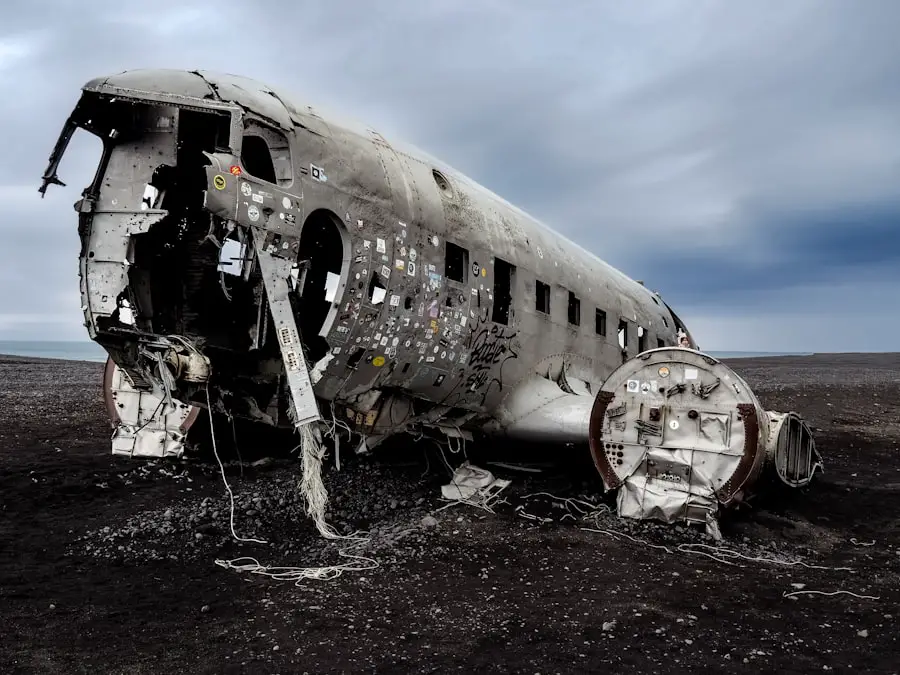
The FAA’s aviation-safety data guidance warns that accident counts by themselves cannot be used to compare airlines, aircraft types, or industry segments. The busiest and longest-running operators naturally have more opportunities to experience a rare event.
Flight volume and fleet size
An airline operating hundreds of thousands of flights a year has far more exposure than a small carrier flying a few thousand sectors. Ten accidents across several million flights represent a different rate from ten accidents across a much smaller operation.
Years in operation
A carrier founded many decades ago has passed through periods when navigation, weather forecasting, airport infrastructure, aircraft design, and crew training were less advanced. Comparing its lifetime total with a recently founded airline is not meaningful.
Changing airline identities
Mergers, subsidiaries, franchise operators, code-share partners, government reorganizations, and reused brand names complicate attribution. The airline that sells a ticket may not be the operator named in an accident report.
Different database rules
Some datasets count only scheduled passenger operations. Others include cargo flights, charter operations, positioning flights, training flights, hijackings, sabotage, ground damage, or aircraft written off without fatalities.
Reporting quality
A strong reporting culture may generate more documented incidents because employees are encouraged to report hazards and mistakes. More incident reports can therefore reflect better safety surveillance rather than more dangerous operations.
The meaningful question is not simply how many events an airline has recorded, but how often serious events occurred relative to its flights, operating conditions, and time period.
Better Ways to Compare Airline Safety
Safety analysts normally relate events to an exposure measure and use a clearly defined period. Even then, airline accidents are so rare that a single event can sharply change a one-year rate.
| Measure | What it shows | Limitation |
|---|---|---|
| Accidents per million departures | Adjusts for the number of flights operated. | Reliable airline-level departure data may not be publicly available. |
| Accidents per flight hour | Accounts for time spent operating aircraft. | Different route lengths and operation types complicate comparisons. |
| Fatal accident rate | Focuses on the rare events involving loss of life. | One catastrophic event can dominate a short reporting period. |
| Fatality risk | Estimates the passenger exposure to loss of life. | Methodologies and included operations can differ among organizations. |
| Five- or ten-year rolling average | Reduces the effect of one unusually good or bad year. | Older events may reflect technology and procedures that have since changed. |
Pro Tip: When reading an airline-safety statistic, look for four details: the event definition, years covered, number of flights or hours used as exposure, and whether the data refer to the ticketing airline or the actual operating carrier.
Current Global Airline Safety Trend

Commercial aviation accidents remain rare. According to the IATA 2025 Safety Report, airlines recorded 51 accidents across 38.7 million flights in 2025. That equals 1.32 accidents per million flights, or about one accident for every 759,646 flights.
IATA counted eight fatal accidents and 394 onboard fatalities in 2025. Although the total accident rate improved from 2024, the fatality risk increased because a small number of severe accidents accounted for most of the lives lost.
The five-year rolling measure still shows long-term progress. IATA reported approximately one fatal accident per 5.6 million flights during 2021–2025, compared with one per 3.5 million flights during 2012–2016.
The International Civil Aviation Organization’s 2025 analysis reports different totals because its scope and classification criteria differ from IATA’s. This is normal and reinforces the need to use one dataset consistently rather than combining unmatched figures.
Factors That Contribute to Airline Accidents
Modern accident investigations rarely identify one isolated cause. An event usually develops through interacting technical, human, environmental, operational, and organizational conditions.
| Factor category | Examples | Common defenses |
|---|---|---|
| Human performance | Workload, fatigue, communication breakdowns, loss of situational awareness, or an incorrect response to an abnormal condition. | Recurrent training, crew resource management, fatigue-risk controls, checklists, and cockpit design. |
| Technical condition | Component failure, incorrect maintenance, manufacturing defects, system faults, or undetected structural damage. | Scheduled maintenance, inspections, airworthiness directives, redundant systems, and reliability monitoring. |
| Weather and environment | Icing, wind shear, thunderstorms, poor visibility, contaminated runways, terrain, wildlife, or volcanic ash. | Forecasting, onboard detection systems, operating limits, diversion policies, runway assessments, and crew training. |
| Operational procedures | Unstable approaches, incorrect loading, runway incursions, dispatch errors, or failure to follow required procedures. | Standard operating procedures, independent cross-checks, audits, flight-data monitoring, and clear go-around policies. |
| Organizational and oversight factors | Weak reporting culture, poor supervision, resource pressure, inadequate training, ineffective risk controls, or regulatory gaps. | Safety Management Systems, independent oversight, protected reporting, internal audits, and accountable leadership. |
Aircraft age can create maintenance challenges, including fatigue, corrosion, and aging wiring or systems. However, age alone does not establish whether an aircraft is unsafe. A properly maintained older aircraft that meets its approved design and continuing-airworthiness requirements can remain fit for service.
Safety Measures Implemented by Airlines
Safety Management Systems
A Safety Management System, or SMS, gives an airline a formal process for identifying hazards, assessing risk, monitoring controls, encouraging reporting, and improving performance. In the United States, certificate holders operating under Parts 121 and 135 must have an SMS meeting 14 CFR Part 5 requirements.
Pilot and crew training
Airlines use recurrent classroom, procedural, and simulator training to practice abnormal and emergency situations. Crew resource management training focuses on communication, leadership, decision-making, workload management, and effective teamwork rather than technical flying skills alone.
Maintenance and continuing airworthiness
Airlines must follow approved maintenance programs and respond to mandatory airworthiness directives. Reliability monitoring, inspection findings, service-difficulty reports, manufacturer information, and aircraft-system data can help identify problems before they become accidents.
Flight-data and voluntary-reporting programs
Flight-data monitoring can reveal unstable approaches, excessive speeds, hard landings, and other trends across many flights. Confidential reporting programs help crews and employees disclose hazards that may not otherwise appear in accident statistics.
Operational safety audits
The IATA Operational Safety Audit evaluates an airline’s operational management and control systems. IOSA registration is a useful oversight signal, but it is not a guarantee that an airline will never experience an accident.
How Accident Investigations Improve Safety
Accident investigations are designed to determine what happened, identify contributing conditions, and prevent recurrence. Their safety purpose is different from criminal proceedings or civil-liability cases.
In the United States, the NTSB leads civil aviation accident investigations, determines probable cause, and issues safety recommendations. The FAA regulates operators, aircraft, pilots, maintenance, and airspace, and it participates in NTSB investigations.
For an accident in another country, the state where the event occurred normally controls the investigation under international arrangements. Other states may participate when the aircraft, operator, registration, engines, or major components are connected to them.
Within the European system, national safety investigation authorities generally conduct investigations. EASA may provide technical support, coordinate with investigation bodies, and act on safety recommendations within its authority.
Investigation findings can lead to revised procedures, additional training, aircraft modifications, airworthiness directives, airport changes, improved emergency equipment, or new regulations.
Changes in Safety Regulations and Oversight
Aviation rules evolve as investigators and safety analysts identify weaknesses. Changes may address pilot qualifications, fatigue, cockpit procedures, aircraft certification, structural inspections, runway safety, emergency response, or the reporting of hazards.
Safety regulation has increasingly moved from a purely reactive model toward proactive risk management. Instead of waiting for an accident, regulators and operators analyze normal-flight data, incident reports, maintenance findings, and operational changes to detect hazards earlier.
Travelers should also understand that oversight occurs at several levels:
- Operator certification: The airline must hold the required operating approvals.
- State oversight: A national civil aviation authority supervises the airline.
- Aircraft airworthiness: The aircraft must comply with design, maintenance, and mandatory safety requirements.
- International standards: ICAO establishes global standards and recommended practices for member states.
- Additional audits or restrictions: Programs such as IOSA and the EU Air Safety List provide further information.
How Travelers Can Check an Airline’s Safety Oversight
No public tool can guarantee that a specific future flight will be risk-free. However, travelers can use several credible resources when evaluating an unfamiliar operator.
- Check the operating carrier. The company operating the aircraft may differ from the airline selling the ticket. Look for wording such as “operated by” during booking.
- Review the EU Air Safety List. The European Commission’s Air Safety List identifies airlines subject to a full or partial EU operating ban for failure to meet applicable international safety standards.
- Check the airline’s home-country oversight. The FAA International Aviation Safety Assessment program evaluates whether another country’s civil aviation authority complies with ICAO oversight standards. It rates the country’s oversight system, not individual airlines.
- Look for IOSA registration. IOSA evaluates airline operational management and control systems. Absence from the registry is not automatic proof that an airline is unsafe because some operators are outside the program’s normal scope.
- Read official investigation reports. Use the NTSB for U.S. events or the responsible national investigation authority for accidents in other countries.
- Use historical databases carefully. The Aviation Safety Network database is useful for researching events, but raw search results should not be converted into a current safety ranking without exposure data.
Note: Private “safest airline” rankings may combine audits, fleet age, incident history, government oversight, and editorial judgment. Review the methodology before relying on the final score.
Impact of Accidents and Incidents on Airline Reputation
A major accident can cause lasting reputational and financial damage. Passengers may change bookings, regulators may increase oversight, insurers may reassess risk, and business partners may review code-share or leasing arrangements.
Reputation alone is not a safety metric, however. An airline may receive intense media attention because it is large, recognizable, or based in a heavily covered market. Other events may receive less attention even when their technical significance is similar.
The strongest response is transparent cooperation with investigators, prompt support for affected families, corrective action based on evidence, and clear communication that does not speculate before investigators establish the facts.
Conclusion and Recommendations for Safer Air Travel
Historical crash reports have played a major role in improving commercial aviation, but a simple list of airlines with the most crashes can create the wrong impression. Raw totals blend different eras, operating environments, definitions, and levels of flight exposure. They should not be treated as a prediction of what will happen on a future flight.
Airlines and regulators can continue improving safety through effective Safety Management Systems, recurrent crew training, strong maintenance programs, protected reporting, flight-data analysis, independent oversight, and timely action on investigation findings.
Travelers comparing airlines should focus on the actual operating carrier, current regulatory standing, home-country oversight, recognized operational audits, and recent official findings. These checks provide more useful context than an unsupported historical ranking.
Frequently Asked Questions
Which airlines have had the most crashes?
There is no universal answer because databases use different definitions and date ranges. Historical raw-count articles often mention Aeroflot, Air France, Turkish Airlines, and China Airlines. These names should not be treated as a current danger ranking because the totals do not consistently account for flights operated, years in service, corporate changes, or improvements in safety.
How is the number of airline crashes determined?
The answer depends on the database. A count may include fatal accidents, nonfatal accidents, hull losses, hijackings, cargo flights, training flights, or serious incidents. A credible comparison must state the event definition, date range, operation type, and treatment of predecessor or affiliated airlines.
Does a high historical crash count mean an airline is unsafe today?
No. A high lifetime total may reflect a large fleet, many flights, decades of operation, older historical technology, or broad database rules. Current oversight, recent exposure-adjusted rates, maintenance, training, audit results, and corrective actions are more useful indicators.
Are budget airlines less safe than full-service airlines?
A low-cost business model does not by itself make an airline less safe. Airlines must meet the operating and airworthiness requirements of their regulators. Safety depends on factors such as oversight, maintenance, training, risk management, reporting culture, and the conditions in which the airline operates.
Is an older aircraft automatically more dangerous?
No. Aircraft age can increase inspection and maintenance demands, but age alone is not a safety verdict. The aircraft must remain airworthy, follow an approved maintenance program, comply with mandatory directives, and be in a condition for safe operation.
What measures improve airline safety?
Important measures include Safety Management Systems, recurrent simulator training, crew resource management, approved maintenance programs, airworthiness directives, flight-data monitoring, confidential reporting, runway-safety programs, and independent regulatory oversight.
How can I check whether an unfamiliar airline has safety restrictions?
Confirm the actual operating carrier, check the EU Air Safety List, review the FAA IASA status of the airline’s home country when applicable, look for IOSA registration, and read reports from the responsible accident-investigation authority. No single check guarantees future performance, so use several sources together.
Sources
- IATA 2025 Safety Report — global accident rates, fatal accidents, fatalities, and rolling safety trends.
- ICAO 2025 Global Safety Analysis — scheduled commercial aviation traffic, accident trends, and dataset scope.
- National Transportation Safety Board Accident and Incident Definitions — official U.S. definitions of accidents, incidents, and fatal injuries.
- FAA Aviation Safety Data Guidance — limitations of raw accident counts and airline-safety comparisons.
- FAA International Aviation Safety Assessment Program — evaluation of national aviation-safety oversight systems.
- European Commission EU Air Safety List — airlines subject to full or partial operating restrictions in the European Union.
