

Last Updated on October 30, 2026 by Caleb Warren
Choosing the best rucking backpack can make weighted walking, fitness training, and day hikes more practical. A well-designed ruck holds weight securely, stays close to your back, and gives you adjustable straps for a more comfortable fit. Whether you are starting with light weights or building a regular rucking routine, the right backpack should match your body, weight plates, and training goals.
In this guide, we compare five rucking backpacks from GORUCK, Polyfit, and Ruckercise. You will find compact options for daily weighted walks, larger packs with room for essentials, and a specialized backpack for Olympic weight plates. We explain what each model does well, its limitations, and what to check before buying.
Disclosure: As an Amazon Associate I earn from qualifying purchases. Some links on this page are affiliate links, at no extra cost to you.
Quick Answer: Which Rucking Backpack Should You Buy?
The GORUCK Rucker 4.0 20L is our best overall pick among the backpacks compared here. It combines dedicated weight-plate storage with enough capacity for training essentials. Its reinforced construction, padded straps, and 20L size make it a versatile choice for regular rucking.
For a smaller fit, consider the GORUCK Rucker 4.0 15L. The Polyfit Rucking Backpack 2.0 is worth comparing if you want a simpler, compact plate-loading design. Choose the Ruckercise Ridge 21L for additional storage and hydration features, or the Polyfit PL8 if you want to use compatible Olympic weight plates.
Important: GORUCK has introduced the newer Rucker 5.0. The Rucker 4.0 models discussed here are previous-generation options. Verify the exact model, plate compatibility, and purchasing terms before ordering.
Key Takeaways
- Best overall: GORUCK Rucker 4.0 20L for rucking and carrying everyday essentials.
- Best compact backpack: GORUCK Rucker 4.0 15L for shorter torsos and smaller loads.
- Best simpler plate-loading option: Polyfit Rucking Backpack 2.0 for compatible flat plates.
- Best for storage and hydration: Ruckercise Ridge 21L with two dedicated weight pockets.
- Best for Olympic weight plates: Polyfit PL8 for people who already own compatible gym plates.
- Most important buying check: Confirm plate size, torso fit, load limit, and whether weights are included.
Top Picks: Best Rucking Backpacks Compared
| Category | Product | Key Advantage | Amazon |
|---|---|---|---|
| 🏆 Best Overall | GORUCK Rucker 4.0 20L | Two plate pockets and 20L capacity | Check Price |
| 💰 Compact Value Option | Polyfit Rucking Backpack 2.0 | Side-loading design for flat plates | Check Price |
| 🎯 Best for Shorter Torsos | GORUCK Rucker 4.0 15L | Compact 15L size and standard plate pocket | Check Price |
| 💼 Best for Storage | Ruckercise Ridge 21L | Dual weight pockets, MOLLE, and hydration compatibility | Check Price |
| 🏋️ Best for Olympic Plates | Polyfit PL8 Backpack | Designed for compatible Olympic weight plates | Check Price |
Note: Prices, product listings, and purchasing terms may change. The recommendations above are based on product design, documented features, and intended use, not personal hands-on testing or independently measured performance scores.
How We Chose These Rucking Backpacks
We compared the backpacks using documented product features, manufacturer specifications, intended training uses, and the practical concerns that matter when carrying additional weight.
- Rucking suitability: The backpack must be designed to carry weight securely during walking or training.
- Plate compatibility: We looked at supported plate sizes, pocket designs, retention systems, and stated load limits.
- Comfort and fit: Shoulder padding, back-panel construction, torso sizing, and adjustable straps affect the wearing experience.
- Durability: We considered stated materials, reinforced construction, and intended use.
- Practical features: Storage volume, hydration compatibility, grab handles, and attachment options help distinguish models.
- Buying value: We considered how useful each design may be for its intended buyer rather than relying on unverified discounts or price rankings.
We did not conduct independent laboratory tests or personally measure the backpacks. Product specifications should be confirmed with the manufacturer or seller before purchase.
Detailed Reviews of the Best Rucking Backpacks
1. GORUCK Rucker 4.0 20L: Best Overall Rucking Backpack

Why You’ll Like It
The GORUCK Rucker 4.0 20L is a strong choice if you want a dedicated training backpack without giving up space for everyday essentials. Unlike a minimalist plate carrier, it has a main compartment that can accommodate smaller items alongside its dedicated weight pockets.
The elevated plate pockets help position compatible weights close to your back and limit unwanted movement. Thick shoulder straps and lumbar padding provide cushioning when you carry a loaded pack.
The 20L design makes it useful for regular weighted walks, organized ruck training, and shorter hikes. Its reinforced construction and multiple handles also make it suitable for rucksack-based fitness exercises.
Key Features
- 20-liter backpack capacity for training equipment and essentials.
- Two dedicated plate pockets for compatible GORUCK standard and long Ruck Plates.
- 1000D CORDURA primary material with reinforced construction.
- 210D CORDURA on the back panel and underside of the shoulder straps.
- Extra-padded shoulder straps and lumbar cushioning.
- Multiple grab handles for training movements.
- MOLLE attachment options for compatible accessories.
Who Should Buy This?
Choose this model if you train regularly, want dedicated plate storage, and need more carrying flexibility than a plate-only system provides. The 20L size is especially worth considering if you plan to carry water, snacks, and additional training items.
Who Should Avoid This?
If you only need a small weight carrier for short workouts, this backpack may offer more space and structure than necessary. It is also a previous-generation model, so compare its condition, included accessories, and purchase terms with newer options.
What People Say
The source article highlighted padded straps, durable construction, and secure plate placement as positive features. However, its review statistics and sentiment methodology could not be independently confirmed. Fit and shoulder comfort should be assessed individually.
Original article sentiment illustration:

This archived chart is not a live or independently verified summary of current Amazon reviews.
Pros and Cons
| Pros | Cons |
|---|---|
| Dedicated pockets for different compatible plate sizes | Plates generally need to be purchased separately |
| Useful 20L capacity and sturdy construction | May be more specialized than a casual walking backpack needs to be |
| Padded straps, lumbar support, and training handles | Previous-generation model; confirm the exact listing |
Pro Tip: GORUCK’s Rucker 4.0 20L has separate standard and long plate pockets. Check your plate dimensions instead of assuming all GORUCK plates are interchangeable.
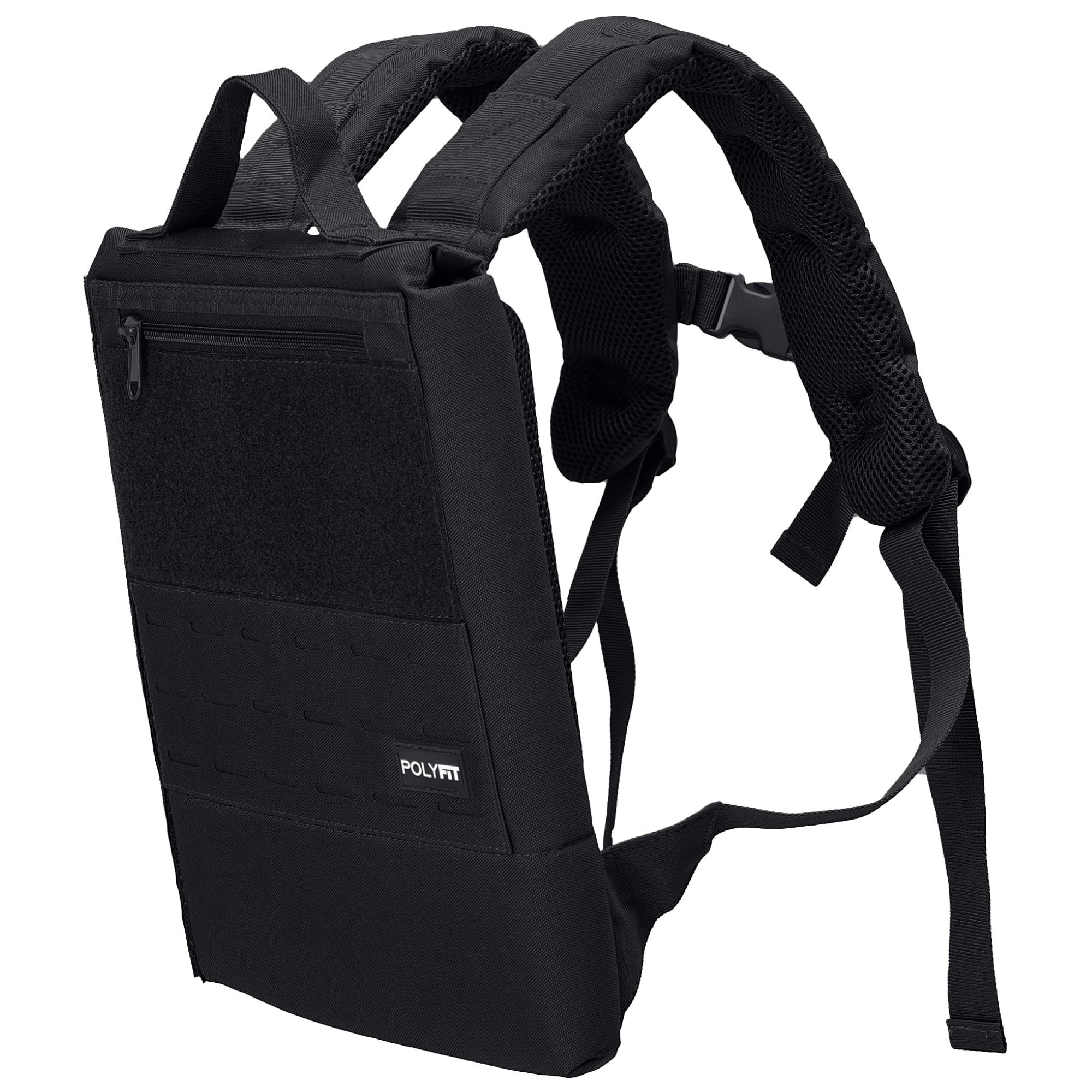
2. Polyfit Rucking Backpack 2.0: Best Compact Value Option
Why You’ll Like It
The Polyfit Rucking Backpack 2.0 focuses on carrying flat weight plates rather than offering a large general-purpose compartment. Its side-loading design makes inserting and removing compatible plates straightforward.
An internal retention system helps keep the plate in place while you walk or perform training movements. The compact shape keeps the load close to your body, while padded shoulder straps and a breathable back panel provide cushioning and ventilation.
For people beginning a weighted-walking routine, this is a practical style of backpack to compare with larger rucks. You can choose a manageable plate weight and adjust the load as your training develops, provided you stay within the manufacturer’s limits.
Key Features
- Side-loading system for convenient plate insertion and removal.
- Compatible with Polyfit plates and suitable flat rucking plates up to 10 × 12 inches.
- Manufacturer-stated maximum load of 40 lb.
- Internal buckle and plate-retention arrangement.
- Padded shoulder straps and breathable back panel.
- Compact profile for weighted walks and bodyweight training.
- MOLLE attachment system for compatible accessories.
- 600D polyester Oxford primary material.
Who Should Buy This?
Consider the Polyfit 2.0 if you want a dedicated pack for flat plates and prefer a small design over a larger rucksack. It may be particularly useful for short weighted walks, fitness circuits, and regular conditioning sessions.
Who Should Avoid This?
This backpack is not the best option if you need substantial general-purpose storage. It is also not designed for large round Olympic plates. Polyfit currently describes the fit range as XS–L and advises that larger or broader users may find it snug.
What People Say
The original article discussed convenient side-loading and compact fit as positive features, while raising concerns about fit for taller users. These are useful points to consider, but the original customer-review totals were not verified as current.
Original article sentiment illustration:

This archived chart is not a live or independently verified summary of current Amazon reviews.
Pros and Cons
| Pros | Cons |
|---|---|
| Convenient side-loading plate system | Not suitable for standard round Olympic plates |
| Compact shape and padded straps | Fit may be restrictive for XL or tall, broad users |
| Designed for weighted training with up to 40 lb | Weight plates sold separately |
Compatibility Note: This backpack is intended for compatible flat plates up to 10 × 12 inches. Measure your existing plates, including thickness, and check the seller’s fit information before ordering.
3. GORUCK Rucker 4.0 15L: Best Compact Ruck for Shorter Torsos
Why You’ll Like It
The GORUCK Rucker 4.0 15L takes the purpose-built design of the larger Rucker and puts it into a smaller backpack. It is a practical choice when a 20L or 25L ruck feels too long or bulky on your back.
Its dedicated plate pocket is designed for compatible standard-size GORUCK Ruck Plates. The pocket helps hold the weight in a defined position instead of allowing it to settle at the bottom of the main compartment.
The back panel combines lumbar padding with a structured design, while the wide shoulder straps provide cushioning. You still get a main compartment for small essentials, although the overall capacity is more limited than that of the 20L model.
Key Features
- 15L backpack capacity.
- One dedicated standard-size Ruck Plate pocket.
- Compatible with appropriately sized standard 10 lb, 20 lb, and 30 lb GORUCK plates.
- 1000D CORDURA primary material.
- 210D CORDURA on the back panel and shoulder strap undersides.
- 10 mm EVA lumbar padding.
- Compact dimensions of approximately 11 inches wide, 16.5 inches high, and 3.25 inches deep.
Who Should Buy This?
This is worth considering if a larger rucking backpack hangs too low or feels oversized. GORUCK’s sizing guidance generally identifies the 15L Rucker as a good starting point for torso lengths of about 17.5 inches or shorter. Actual comfort still depends on your body shape and adjustment preferences.
Who Should Avoid This?
If you need two separate plate pockets, want to carry long GORUCK plates, or regularly bring more equipment, the 20L model is more suitable. Taller users should also compare torso measurements carefully.
What People Say
The source article emphasized the compact design, shoulder padding, and sturdy construction. Its comments about stiffness and individual fit are reasonable considerations, although the historical review figures are not treated as current verified data.
Original article sentiment illustration:

This archived chart is not a live or independently verified summary of current Amazon reviews.
Pros and Cons
| Pros | Cons |
|---|---|
| Compact design suited to shorter torsos | Less space for personal items than larger Ruckers |
| Dedicated pocket for standard-size plates | Does not have a dedicated long plate pocket |
| Padded straps and reinforced materials | Previous-generation model and specialized design |
Fit Tip: Measure your torso before choosing between the 15L and 20L. A smaller pack is not automatically more comfortable if its shoulder straps and back panel do not fit your proportions.
4. Ruckercise Ridge 21L: Best for Storage and Hydration
Why You’ll Like It
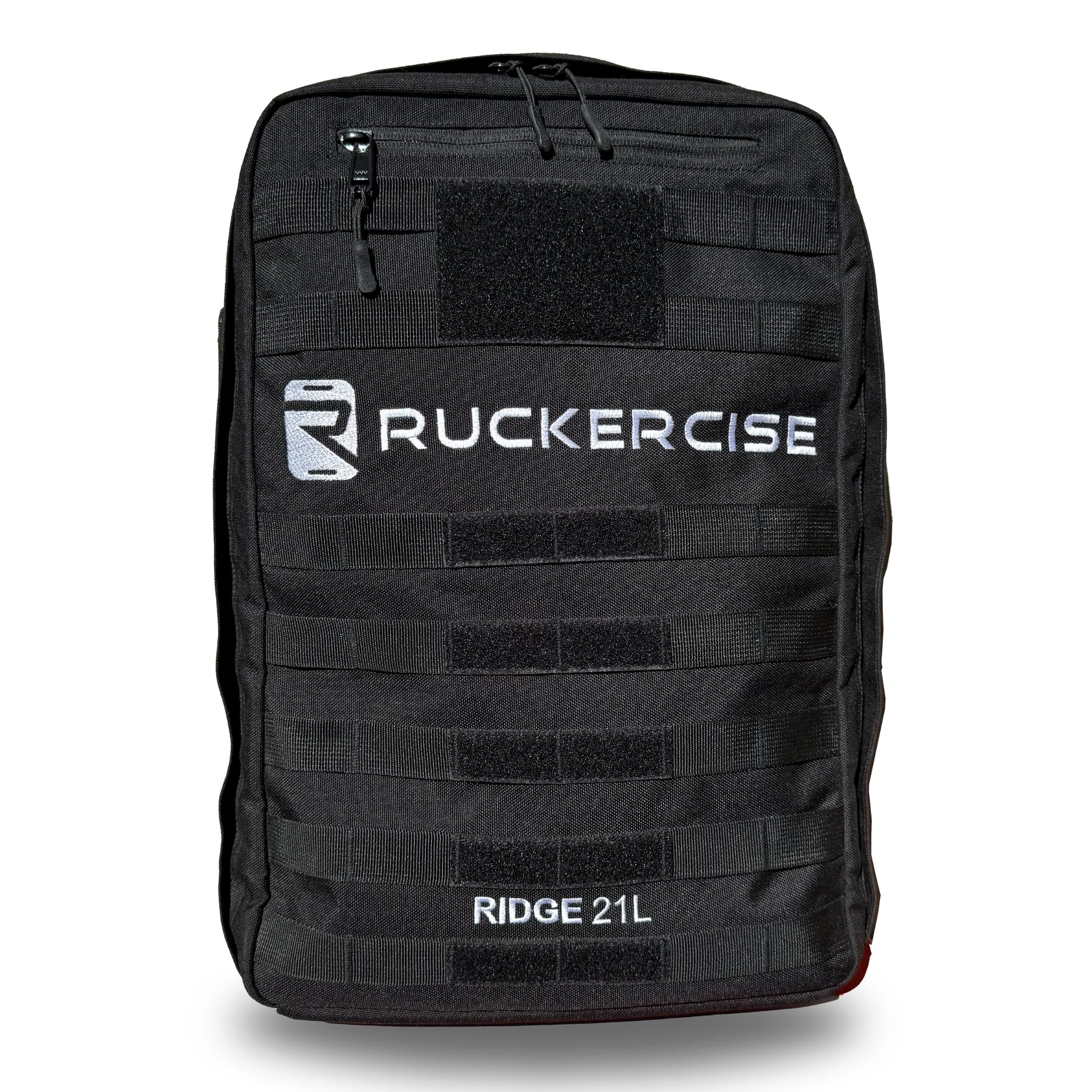
The Ruckercise Ridge 21L is designed for users who want both secure weight storage and room for additional gear. Its two dedicated weight pockets make it possible to organize compatible ruck plates separately from the rest of your belongings.
The primary weight pocket measures approximately 15.5 × 10.5 inches, while the smaller pocket measures approximately 11 × 8.5 inches. These measurements are particularly useful if you already own plates and want to check their fit before buying.
The backpack also features a hydration reservoir attachment point and tube port. MOLLE webbing allows compatible accessories to be attached, and a separately available hip belt provides another option for adjusting how a load is carried.
With its 21L capacity, this is one of the more versatile choices in this comparison for people who combine weighted training with day hikes or everyday carry.
Key Features
- 21L backpack capacity.
- Two dedicated pockets for compatible rucking weights.
- Primary plate pocket measuring approximately 15.5 × 10.5 inches.
- Secondary plate pocket measuring approximately 11 × 8.5 inches.
- 1000D CORDURA nylon construction.
- Extra-padded shoulder straps and back panel.
- Hydration reservoir compatibility with a tube exit port.
- MOLLE attachment system.
- Compatible with an optional hip belt.
- Manufacturer-listed dimensions of approximately 18 × 13.5 × 5 inches.
Who Should Buy This?
Choose the Ridge 21L if you want a substantial rucking backpack with organized weight storage and useful accessories for training outdoors. It may appeal to users who need space for hydration and additional essentials.
Who Should Avoid This?
If you want the smallest possible setup for short weighted walks, the Ridge may be more backpack than you need. You should also confirm the price of any optional belt and weight plates before comparing the total cost with another pack.
What People Say
The original article emphasized the weight pockets, padding, and accessory options as the main reasons to consider this backpack. Those features are documented by the manufacturer, although the original review scores and customer sentiment figures have not been independently verified.
Original article sentiment illustration:

This archived chart is not a live or independently verified summary of current Amazon reviews.
Pros and Cons
| Pros | Cons |
|---|---|
| Two dedicated weight pockets | Weight plates and optional hip belt may add to total cost |
| 21L capacity, hydration compatibility, and MOLLE | Larger than compact plate-focused designs |
| Durable 1000D CORDURA material | Plate dimensions must still be checked individually |
Pro Tip: If you plan to use the Ridge for longer walks, compare the additional cost and fit of the compatible hip belt. A correctly fitted belt may improve how heavier loads feel, although results vary by user.
5. Polyfit PL8 Backpack: Best for Olympic Weight Plates

Why You’ll Like It
The Polyfit PL8 is different from most traditional rucking backpacks because it is designed specifically for Olympic-style weight plates. If you already own compatible round gym plates, this design may allow you to use your existing equipment rather than buying separate flat ruck plates.
Its dual-lock system combines internal retention hardware with external compression to help limit shifting. Adjustable sternum and waist straps provide more control over how the pack fits your body.
The manufacturer states that the PL8 accepts compatible Olympic plates with a diameter of up to 17.5 inches and a thickness of up to 3 inches. Its recommended maximum load is 45 lb.
This makes the PL8 a useful choice for people who want to combine rucking with bodyweight exercises and gym-style training. However, it is more specialized than a backpack designed to carry clothing, food, and other belongings.
Key Features
- Designed for compatible Olympic weight plates with 2-inch center holes.
- Supports plates up to approximately 17.5 inches in diameter and 3 inches thick.
- Manufacturer-recommended maximum load of 45 lb.
- Internal locking arrangement and external compression system.
- Adjustable sternum and waist straps.
- 600D polyester with reinforced stitching.
- Water-resistant coating for easier wipe-down care.
- Quick-release buckles.
- Compatible weight plates are sold separately.
Who Should Buy This?
The PL8 is especially relevant if you already have suitable Olympic plates and want a backpack designed to carry them during weighted walks and training sessions. It is also worth considering for workouts that combine walking with squats, lunges, and other bodyweight movements.
Who Should Avoid This?
Do not choose this model expecting a conventional 20L rucksack with multiple storage compartments. It is a specialized weight-carrying design. Very thick bumper plates, unusually shaped plates, and plates exceeding the supported dimensions may not fit correctly.
What People Say
The original article focused on the dual-lock arrangement, adjustable straps, and compatibility with gym plates. These are useful features to compare, but the source’s customer-rating figures and sentiment calculations were not independently verified.
Original article sentiment illustration:

This archived chart is not a live or independently verified summary of current Amazon reviews.
Pros and Cons
| Pros | Cons |
|---|---|
| Accepts compatible Olympic weight plates | Not intended as a conventional general-storage backpack |
| Dual-lock retention and adjustable support straps | Some thick or oversized plates may not fit |
| Can make use of existing compatible gym plates | Recommended load limit of 45 lb must be respected |
Compatibility Warning: Olympic plates are not all the same thickness or diameter. Measure the exact plate you intend to carry, verify the locking arrangement, and follow the manufacturer’s recommended load limit. Do not assume that every 45 lb bumper plate will fit.
Rucking Backpack Buying Guide
The best rucking backpack for you depends on more than its appearance or advertised weight capacity. Before buying, consider your body measurements, training distance, plate dimensions, and how much additional equipment you need to carry.
1. Choose the Right Backpack Size
A compact backpack may be more comfortable for a shorter torso, while a larger ruck usually offers additional storage. However, backpack volume alone does not determine fit.
Pay attention to the length of the back panel, shoulder strap adjustment range, and where the bottom of the backpack sits when loaded.
GORUCK provides an official Rucker sizing guide that explains how torso measurements affect backpack selection.
2. Check Your Weight Plate Compatibility
Rucking backpacks do not all use the same weight plates. Some are designed for flat plates, others have dedicated pockets for manufacturer-specific plates, and specialized designs may use round Olympic gym plates.
| Plate Type | Relevant Backpack | What to Check |
|---|---|---|
| GORUCK standard Ruck Plates | Rucker 4.0 15L and 20L | Plate dimensions and pocket designation |
| GORUCK long Ruck Plates | Rucker 4.0 20L | Use the compatible long plate pocket |
| Flat plates up to 10 × 12 inches | Polyfit Rucking Backpack 2.0 | Plate length, width, thickness, and total weight |
| Compatible short and long ruck weights | Ruckercise Ridge 21L | Fit within either of its two specified weight pockets |
| Olympic weight plates | Polyfit PL8 | 2-inch center hole, diameter, thickness, and supported load |
Important: A weight plate that fits inside a backpack is not necessarily approved for use in that backpack. Always follow the manufacturer’s compatibility guidance and make sure the plate can be secured properly.
3. Consider Shoulder Straps and Back Padding
Look for adjustable shoulder straps that sit comfortably without creating concentrated pressure. A padded back panel can improve the feeling of contact between the backpack and your body.
A sternum strap may help stabilize the shoulder straps, while some larger rucks support optional hip belts. Neither feature guarantees a pain-free experience, so personal fit remains important.
4. Compare Materials and Durability
Rucking backpacks may use materials such as CORDURA nylon or polyester Oxford fabric. Higher-denier fabrics are often chosen for abrasion resistance, but fabric thickness alone does not determine a backpack’s overall durability.
Also inspect the stitching, strap anchors, handles, buckles, and plate-retention hardware. These areas experience repeated stress during loaded walking and training.
5. Think About Storage and Hydration
If you only need to carry a weight plate for short sessions, a compact design may be enough. For longer walks or hikes, room for water, snacks, spare clothing, and other essentials becomes more important.
A hydration-compatible backpack can make drinking more convenient, but check whether the reservoir is included or must be purchased separately.
6. Calculate the Total Setup Cost
The backpack price is only one part of the purchase. Depending on the model, you may also need compatible plates, an optional hip belt, a hydration reservoir, or other accessories.
Compare the complete setup rather than assuming the lowest-priced backpack will be the least expensive choice overall.
How to Start Rucking Safely
Rucking adds resistance to ordinary walking. That extra load changes how your body handles the activity, so it is sensible to begin conservatively.
- Start with a manageable load: Choose a weight that allows you to walk comfortably with controlled posture. You do not need to use the backpack’s maximum rated load.
- Secure the weight: Use the intended plate pocket and retention system before starting.
- Adjust the backpack: Tighten the shoulder straps and position the sternum or hip straps according to the manufacturer’s guidance.
- Begin with a short walk: Use level, familiar terrain and a comfortable walking pace.
- Increase gradually: Build walking time and frequency before making substantial increases in load or difficulty.
- Pay attention to discomfort: Stop and reassess the fit or load if you experience sharp pain, persistent discomfort, dizziness, or unusual symptoms.
- Allow recovery: Give yourself time to adapt between more demanding training sessions.
The CDC’s physical activity guidance recommends starting slowly and increasing activity over time. If you have an existing medical condition, a previous injury, or concerns about loaded exercise, consult an appropriate healthcare professional before starting.
Safety Note: A backpack’s stated maximum weight is a product limit, not a recommended training load. Do not assume that a pack designed to carry heavy plates makes those loads safe for every person.
Common Rucking Backpack Mistakes to Avoid
- Buying before checking plate dimensions: Flat ruck plates and round Olympic plates are not interchangeable across all backpacks.
- Choosing only by volume: A 20L backpack can still fit poorly if its torso length does not suit you.
- Starting too heavy: Carrying more weight than your body is ready for can increase discomfort and injury risk.
- Leaving weights unsecured: Shifting plates may make the backpack harder to control.
- Ignoring strap adjustment: Loose or poorly positioned straps can contribute to bouncing and pressure points.
- Forgetting extra accessories: Plates, hydration bladders, and hip belts are not necessarily included.
- Using the wrong backpack for the job: A compact plate-loading design is not always suitable for carrying hiking equipment or travel essentials.
Before You Buy: Rucking Backpack Checklist
- Confirm the exact backpack model and version.
- Measure your torso and check the manufacturer’s fit guide.
- Check plate pocket dimensions and approved plate types.
- Confirm the maximum supported load.
- Check whether weight plates are included.
- Compare shoulder padding, sternum straps, and hip belt options.
- Choose enough storage capacity for your training needs.
- Check care instructions, warranty, and return terms.
- Review current product details and recent customer feedback before ordering.
Frequently Asked Questions
How Do I Choose the Right Rucking Backpack for My Body and Goals?
Start with your torso length, intended training weight, and the amount of equipment you need to carry. A smaller backpack may suit a shorter torso or a short daily walk, while a larger model can provide additional storage for longer sessions.
Next, confirm that your preferred weight plates fit the intended pocket and can be secured correctly. Choose adjustable shoulder straps and consider optional hip support if appropriate for your training.
What Is the Difference Between a Rucking Backpack and a Regular Backpack?
A purpose-built rucking backpack usually includes reinforced weight storage and a retention system for compatible plates. Many also have padded straps, reinforced handles, or additional support features.
A regular backpack may carry some weight, but loose weights can shift or damage compartments. Always respect the manufacturer’s intended use and load recommendations.
Can Beginners Use a Rucking Backpack?
Yes, but beginners should use manageable weights and progress gradually. The most suitable starting load depends on fitness, walking experience, health, and comfort. Start with short, comfortable walks before increasing the difficulty.
Will Rucking Hurt My Back or Shoulders?
Rucking does not automatically cause back or shoulder pain, but carrying additional weight increases physical demands. Poor fit, excessive loading, and rapid increases in training can contribute to discomfort or injury.
Use a suitable backpack, secure the weight properly, and adjust the straps. Stop if you experience sharp or persistent pain, and seek professional medical advice when appropriate.
Do Rucking Backpacks Come With Weight Plates?
Not always. Many backpacks are sold separately from their compatible plates. Check the exact product listing to see what is included. Do not assume that a product photograph showing plates means they come with the backpack.
Can I Use Olympic Weight Plates for Rucking?
Only with a backpack designed to accept them. The Polyfit PL8 is one example of a product made for compatible Olympic-style plates. Most dedicated flat-plate rucking backpacks use a different pocket design.
Check plate diameter, thickness, center-hole compatibility, total weight, and retention requirements before use.
How Should I Clean and Maintain My Rucking Backpack?
Remove the weight plates and empty the backpack before cleaning. Follow the manufacturer’s care instructions, which commonly recommend spot cleaning or gentle hand cleaning with mild soap and water.
Allow the backpack to air dry completely before storage. Inspect seams, straps, buckles, and plate pockets regularly. Avoid machine washing unless the manufacturer explicitly permits it.
Is a 15L or 20L Rucking Backpack Better?
A 15L ruck may be more convenient for shorter torsos and compact training setups. A 20L ruck generally provides more space for accessories and other essentials.
For the GORUCK Rucker 4.0 models specifically, the 15L has one standard plate pocket, while the 20L has two plate pockets. Choose based on fit and plate compatibility rather than capacity alone.
Final Recommendation: Which Rucking Backpack Is Best?
The GORUCK Rucker 4.0 20L is the best overall choice in this comparison if you want a dedicated rucking backpack that combines weight storage and everyday utility. It offers two plate pockets, padded support, and a practical 20L capacity. Because it is a previous-generation model, confirm the exact listing before purchasing.
For shorter torsos, the GORUCK Rucker 4.0 15L offers a more compact fit. The Polyfit Rucking Backpack 2.0 is worth considering for flat-plate training, while the Ruckercise Ridge 21L offers a useful combination of storage, weight pockets, hydration compatibility, and accessory attachment options.
If you already own compatible Olympic gym plates, the Polyfit PL8 provides a different approach that may reduce the need to buy specialty rucking weights.
Before making a final decision, prioritize correct fit, verified plate compatibility, secure weight retention, and a realistic training load. Those details matter more than marketing claims or unverified customer scores.
Rucking Backpack Specifications at a Glance
| Product | Image | Capacity | Weight Compatibility | Best Use |
|---|---|---|---|---|
| GORUCK Rucker 4.0 20L – Black |
 |
20 liters | Standard and long GORUCK Ruck Plates in designated pockets | Regular rucking and carrying essentials |
| Polyfit Rucking Backpack 2.0 – Black |
 |
Compact plate-focused design; liter capacity not confirmed | Compatible flat plates up to 10 × 12 inches; maximum 40 lb | Short weighted walks and fitness workouts |
| GORUCK Rucker 4.0 15L – Black |
 |
15 liters | Standard-size GORUCK Ruck Plates | Compact training and shorter torsos |
| Ruckercise Ridge 21L |
 |
21 liters | Two dedicated pockets for compatible short and long ruck weights | Training, hydration, and carrying extra gear |
| Polyfit PL8 Backpack for Olympic Weight Plates |
 |
Specialized plate-loading design | Compatible Olympic plates up to 17.5 inches in diameter and 3 inches thick; recommended maximum 45 lb | Using existing Olympic gym plates for rucking |
Specification note: Product specifications are based on available manufacturer information. Designs, included accessories, compatibility, and seller descriptions may change. Verify the exact model and specifications before purchasing.
This roundup is reader-supported. When you purchase through qualifying affiliate links, we may earn a commission at no additional cost to you.

