
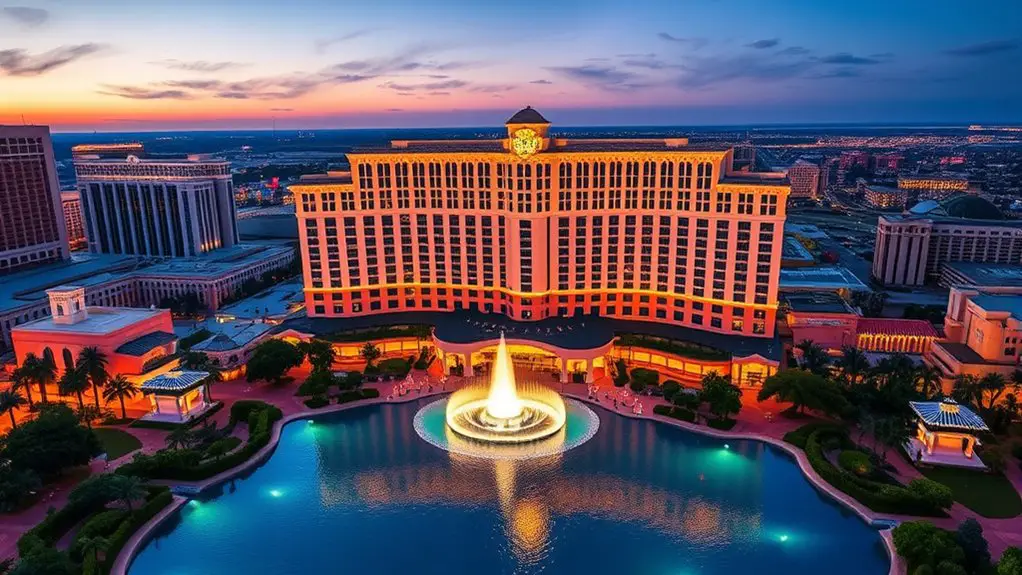
Last Updated on July 26, 2026 by Daniel Globe
Understanding who owns the Bellagio Hotel and Casino in Las Vegas requires separating the physical real estate from the resort operations. While guests interact exclusively with MGM Resorts International staff and branding, the land and building are owned by a multi-billion-dollar real estate joint venture. Through strategic financial transactions, the Bellagio pioneered the “asset-light” commercial model that now dominates the Las Vegas Strip.
Quick Answer
The Bellagio’s operations and resort brand are 100% owned and managed by MGM Resorts International. However, the physical real estate is owned by a joint venture consisting of Blackstone Real Estate Income Trust (BREIT) (73.1%), Realty Income Corporation (21.9%), and MGM Resorts (5%). MGM operates the resort under a long-term triple-net lease.
Key Takeaways
- Developed by Mirage Resorts: Visionary casino developer Steve Wynn built and opened the Bellagio in 1998 before Mirage Resorts merged with MGM Grand Inc. in 2000.
- 2019 Sale-Leaseback Deal: MGM Resorts sold the real estate assets to Blackstone (BREIT) for $4.25 billion, leasing back the property to run resort operations.
- 2023 Realty Income Acquisition: Realty Income Corp invested $950 million to acquire a 21.9% indirect interest in the real estate JV.
- Operational Control: MGM Resorts retains full control over guest services, gaming operations, dining, marketing, and staffing.
Disclosure: As an Amazon Associate I earn from qualifying purchases. Some links on this page are affiliate links, at no extra cost to you.
The Origins of Bellagio’s Ownership
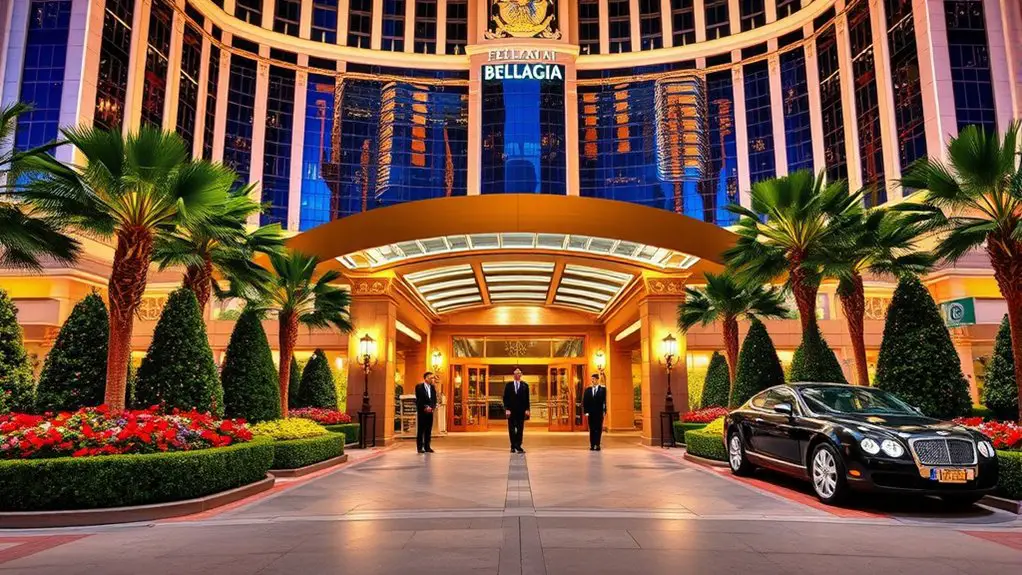
The Bellagio Hotel in Las Vegas was originally conceived and developed by casino pioneer Steve Wynn through his company, Mirage Resorts. When the property opened on October 15, 1998, at a construction cost of $1.6 billion, it was the most expensive resort ever built and set a new standard for luxury on the Las Vegas Strip.
In 2000, MGM Grand Inc. acquired Mirage Resorts in a landmark $6.4 billion merger, creating MGM Mirage (later renamed MGM Resorts International). Following this acquisition, MGM owned and operated the physical property and casino outright for nearly two decades.
As the gaming and commercial real estate markets evolved, holding billions of dollars in fixed real estate assets became capital-inefficient for resort operators. This led MGM to rethink its ownership structure while maintaining full operational authority.
MGM Resorts International’s Role: Operator and Leaseholder

MGM Resorts International remains the sole operator of the Bellagio. Under a long-term triple-net (NNN) lease structure, MGM handles all day-to-day activities, oversees guest services, manages the casino floor, and maintains the property’s reputation for luxury.
Because MGM holds the gaming license and resort operations, guests experience no difference in service despite the underlying real estate ownership split. Below is a breakdown of MGM’s operational and corporate responsibilities versus the real estate joint venture:
At a Glance: Bellagio Corporate & Operational Structure
| Resort Operator | MGM Resorts International (100% operational ownership) |
| Real Estate Deed Owners | BREIT (73.1%), Realty Income Corp (21.9%), MGM Resorts (5%) |
| Lease Agreement Type | Long-term Triple-Net (NNN) Lease (Initial annual rent ~$245 Million) |
| Key Operational Roles | Casino gaming management, hospitality, dining, staffing, marketing |
The Role of The Blackstone Group & Realty Income

In November 2019, major private equity firm The Blackstone Group, through its flagship real estate vehicle Blackstone Real Estate Income Trust (BREIT), completed a landmark acquisition of the Bellagio real estate assets for $4.25 billion.
Under this sale-leaseback transaction, MGM Resorts received significant cash proceeds to pay down debt and fund new growth ventures while renting the property back from the joint venture. Initially, BREIT held a 95% stake in the real estate JV, with MGM holding 5%.
In August 2023, Realty Income Corporation (a publicly traded net-lease Real Estate Investment Trust) acquired a 21.9% indirect interest in the Bellagio real estate JV from BREIT for $950 million ($300 million in equity plus assumption of debt). This transaction valued the Bellagio real estate at approximately $5.1 billion, demonstrating the property’s long-term appreciation.
Pro Tip: In commercial real estate, a triple-net (NNN) lease means the tenant (MGM Resorts) pays all operational costs, property taxes, insurance, and maintenance expenses, while the property owner (the JV) collects predictable, inflation-indexed rental income.
The Influence of Investment and Management Firms
Institutional investment firms like Blackstone and Realty Income view premium hospitality assets as strong income-generating real estate. While institutional investors do not make decisions regarding casino games, hotel pricing, or restaurant menus, their lease terms influence property reinvestment.
“The 2023 investment by Realty Income valued the Bellagio real estate at $5.1 billion — proving that premier Las Vegas gaming real estate remains one of the world’s most durable institutional asset classes.”
MGM maintains capital expenditure requirements under its lease to continuously renovate guest rooms, update amenities, and maintain luxury standards. This guarantees that institutional financial backing directly aligns with preserving property value and enhancing the guest experience.
The Future of Bellagio’s Ownership Structure
The ownership model of the Bellagio reflects a permanent shift in gaming industry finance. Modern gaming companies increasingly operate as “asset-light” entities, focusing on gaming entertainment, digital sports betting, and brand management rather than holding billions in fixed bricks-and-mortar assets.
While future equity shifts among REITs and private equity partners like BREIT or Realty Income may occur, MGM Resorts’ long-term lease ensures stability in resort management for decades to come.
Frequently Asked Questions
When Was Bellagio Hotel Las Vegas Originally Built?
The Bellagio Hotel in Las Vegas was built by Mirage Resorts (led by Steve Wynn) and opened on October 15, 1998. MGM Grand Inc. acquired the property in 2000 during its merger with Mirage Resorts.
Has the Ownership of Bellagio Changed Recently?
Yes. In November 2019, MGM sold the real estate assets to a joint venture with Blackstone BREIT for $4.25 billion in a sale-leaseback transaction. In August 2023, Realty Income Corporation purchased a 21.9% stake in the real estate joint venture for $950 million.
Are There Any Minority Shareholders in Bellagio’s Ownership?
Yes. The real estate joint venture is owned by Blackstone BREIT (73.1%), Realty Income Corporation (21.9%), and MGM Resorts International (5%). MGM Resorts also retains 100% operational ownership of the resort.
How Does Ownership Influence Bellagio’s Luxury Services?
The triple-net lease structure mandates that MGM Resorts maintain high luxury standards and make ongoing capital improvements. This guarantees top-tier guest experiences, dining, and hospitality operations regardless of underlying land deed holders.
What Legal Entities Control Bellagio’S Ownership Rights?
The real estate is held under a joint venture legal entity comprising BREIT (Blackstone), Realty Income Corp, and MGM. Operations are governed by MGM Resorts International and its gaming-licensed operating subsidiaries.
Conclusion
While MGM Resorts International continues to manage operations and maintain the iconic luxury reputation of the Bellagio, the physical real estate is owned by a joint venture featuring Blackstone BREIT, Realty Income Corporation, and MGM itself. This dual-ownership structure exemplifies modern casino finance, balancing institutional real estate investment with premier operational management.
Sources
- MGM Resorts International Investor Relations — SEC filings and sale-leaseback transaction announcements
- Blackstone Real Estate Income Trust (BREIT) — Official Bellagio acquisition disclosures
- Realty Income Corporation Press Room — August 2023 Bellagio investment transaction press release
- U.S. Securities and Exchange Commission (SEC) — Corporate filing records and asset ownership structures
