

Last Updated on July 25, 2026 by Daniel Globe
Boeing aircraft are used by hundreds of passenger and cargo airlines worldwide. Major operators include American Airlines, United Airlines, Delta Air Lines, Southwest Airlines, Alaska Airlines, Emirates, Qatar Airways, Lufthansa, Korean Air, All Nippon Airways, Ethiopian Airlines, and the Ryanair Group. The exact Boeing models each airline flies depend on its routes, passenger demand, cargo needs, and fleet strategy.
Quick Answer
Airlines using Boeing aircraft include American, Delta, United, Southwest, Alaska, Ryanair, Emirates, Qatar Airways, Lufthansa, Korean Air, ANA, and Ethiopian Airlines. Common models include the 737 for short and medium routes, the 777 and 787 for long-haul service, and the 747, 767, and 777F for passenger or cargo operations.
Key Takeaways
- The Boeing 737 is the company’s most widely used passenger-aircraft family and is common among both network and low-cost airlines.
- The 777 and 787 are widely used for international and long-distance routes.
- Passenger 747 service is now limited, but the aircraft remains important in cargo and special-purpose operations.
- The 767 continues to serve passenger airlines, cargo companies, and package-delivery networks.
- Regional affiliates usually use Embraer or CRJ aircraft rather than Boeing mainline jets.
- Aircraft assignments can change before departure, so travelers should check their airline’s current seat map or flight details.
Disclosure: As an Amazon Associate I earn from qualifying purchases. Some links on this page are affiliate links, at no extra cost to you.
Which Airlines Use Boeing Aircraft?
Boeing aircraft appear in the fleets of large network airlines, low-cost carriers, cargo operators, charter companies, and government organizations. Some airlines rely heavily on Boeing, while others operate mixed fleets that also include aircraft from Airbus, Embraer, ATR, or other manufacturers.
The following table gives representative examples as of July 2026. It is not a complete list, and fleet counts or aircraft assignments may change as airlines receive, lease, transfer, or retire airplanes.
| Airline or Group | Examples of Boeing Aircraft | Typical Roles |
| American Airlines | 737-800, 737 MAX 8, 777-200, 777-300ER, 787-8, and 787-9 | Domestic, short-haul international, and long-haul international flights |
| Delta Air Lines | 717, 737-800, 737-900ER, 757, and 767 | Domestic, transcontinental, and selected international flights |
| United Airlines | 737, 757, 767, 777, and 787 families | Domestic service and one of the world’s largest long-haul networks |
| Southwest Airlines | 737-700, 737-800, and 737-8 | Short and medium-haul point-to-point service |
| Alaska Airlines | 737-700, 737-800, 737-900ER, 737-8, and 737-9 | Mainline service within North America, Mexico, Central America, and the Caribbean |
| Ryanair Group | 737-800 and 737-8200, plus Airbus A320s at group airlines | High-frequency low-cost routes across Europe and nearby markets |
| Emirates | 777-200LR, 777-300ER, and 777 Freighter | Long-haul passenger service and international cargo |
| Qatar Airways | 777 and 787 families, along with Boeing freighters | Long-haul passenger routes and international cargo |
| Lufthansa | 747-8 and 787-9, with 777 freighters operated within Lufthansa Group | Long-haul passenger and cargo operations |
| Korean Air | 737, 747, 777, and 787 families | Domestic, regional, long-haul, and cargo service |
| All Nippon Airways | 737, 767, 777, and 787 families | Japanese domestic, regional, and international routes |
| Ethiopian Airlines | 737, 777, and 787 families | African regional service, intercontinental flights, and cargo |
Note: An airline may own some aircraft, lease others, or use partner airlines for certain flights. A ticket sold under a major airline’s code may therefore be operated by a regional or international partner using a different aircraft type.
How Boeing Aircraft Families Compare
Airlines do not choose one aircraft simply because it is made by Boeing. They select a model based on range, seat capacity, airport limits, cargo volume, fuel use, maintenance requirements, fleet commonality, and the expected number of passengers on a route.
| Boeing Family | Main Use | Current Status | Example Operators |
| 737 | Short and medium-haul passenger service | 737NG models remain in service; 737-8 and 737-9 are in service; 737-7 and 737-10 are still completing certification as of July 2026 | Southwest, Ryanair, United, American, Alaska |
| 747 | High-capacity passenger, cargo, charter, and special missions | Production ended in 2023; a limited number remain in passenger service, while freighters remain important | Lufthansa, Korean Air, UPS, Atlas Air |
| 767 | Passenger service, medium wide-body cargo, and package delivery | Passenger models are no longer offered for new commercial orders; the 767 Freighter remains important | Delta, United, FedEx, UPS |
| 777 | High-capacity long-haul passenger and cargo service | Current-generation 777s remain widely used; the 777-9 is targeting first deliveries in 2027 | Emirates, United, American, Qatar Airways, Cathay Pacific |
| 787 | Long-haul routes, including routes that cannot support the capacity of a larger 777 | 787-8, 787-9, and 787-10 are in active production and airline service | ANA, United, American, Qatar Airways, Ethiopian Airlines |
Why Airlines Choose Boeing Aircraft
Fleet selection is a long-term business decision. An airline may operate an aircraft for 20 years or longer, so it must consider far more than the purchase or lease cost.
- Route length: A 737 may be suitable for a two-hour route, while a 787 or 777 may be needed for an intercontinental flight.
- Passenger demand: Larger aircraft can lower the cost per seat when an airline can fill them, but an oversized aircraft can lose money on a lightly traveled route.
- Fleet commonality: Related models may share pilot qualifications, maintenance processes, spare parts, ground equipment, or cabin components.
- Cargo capacity: Wide-body passenger aircraft can carry freight below the passenger cabin, while dedicated freighters carry packages, machinery, perishables, and other goods.
- Airport compatibility: Runway length, gate size, pavement strength, elevation, weather, and local noise restrictions affect which aircraft can serve an airport.
- Cabin strategy: Airlines configure the same model differently depending on whether they prioritize premium seats, total capacity, cargo, or route range.
For example, Southwest benefits from operating variations of one basic aircraft family, the Boeing 737. A large global airline such as United uses several Boeing families because its network includes short domestic flights, transcontinental routes, and long-distance international service.
Boeing 737: A Common Choice for Short and Medium Routes
The Boeing 737 is widely used by network airlines and low-cost carriers. Its single-aisle cabin, airport compatibility, and range make it suitable for domestic service, regional international flights, and some longer narrow-body routes.
The family includes older 737 Classic aircraft, the widely used 737 Next Generation series, and the newer 737 MAX series. The 737-700, 737-800, and 737-900ER remain common, while the 737-8 and 737-9 are the main MAX models currently carrying passengers.
As of July 2026, Boeing says the 737-7 is nearing certification and the larger 737-10 is still completing certification work. Airlines may have placed orders for those models, but an order does not mean the aircraft is already operating scheduled passenger flights.
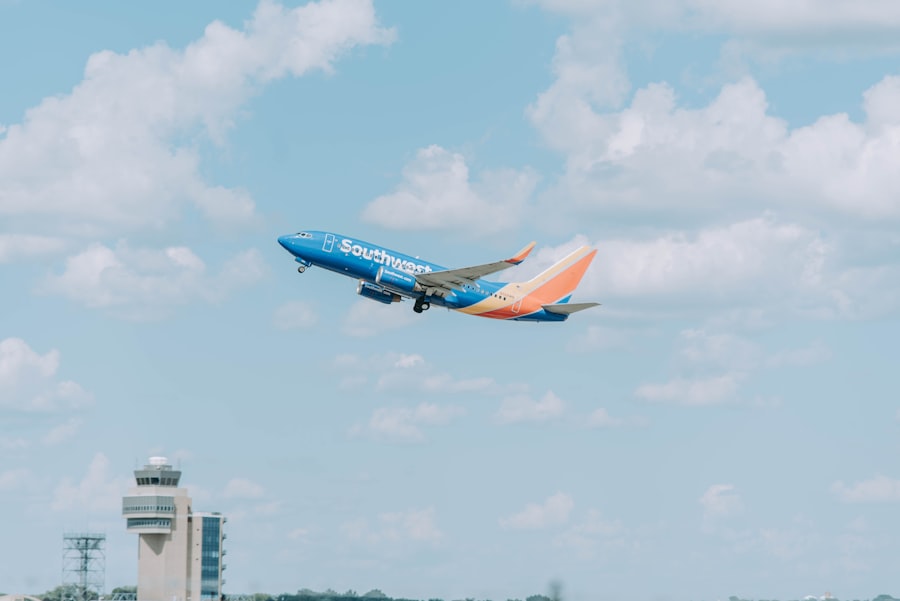
Southwest Airlines has built its mainline fleet around the 737 family. This reduces the number of aircraft types for which it needs pilot training, maintenance programs, spare parts, and ground equipment. The Ryanair Group operates hundreds of 737-800s and 737-8200 aircraft, although the wider group also includes Airbus A320s.
American, United, Alaska, Air Canada, Turkish Airlines, flydubai, Copa Airlines, and many other carriers also use 737 aircraft. The exact seat count varies because each airline chooses its own cabin layout.
Pro Tip: Do not rely only on the general aircraft name shown during booking. A “Boeing 737” could be a 737-800, 737-8, 737-9, or another variant with a different seat map, exit-row layout, and onboard features.
Boeing 747: An Iconic Aircraft with a Smaller Passenger Role
| Aspect | Correct Details |
| First 747 family flight | February 9, 1969, using the first 747-100 |
| Entry into passenger service | January 22, 1970, with Pan Am between New York and London |
| Total production | 1,574 aircraft; the final 747-8 Freighter was delivered to Atlas Air in January 2023 |
| 747-400 approximate range | Up to about 7,260 nautical miles, depending on configuration and operating conditions |
| 747-8 Intercontinental approximate range | Up to about 7,730 nautical miles, depending on payload and operating conditions |
| 747-8 length | 250 ft 2 in, or approximately 76.2 m |
| Current roles | Limited scheduled passenger service, cargo operations, charter flights, government transport, and special missions |
The Boeing 747 transformed long-distance air travel by carrying far more passengers than earlier jetliners. Its wide-body design, upper deck, and long range made it one of the most recognizable aircraft ever built.
British Airways and Qantas were major 747 operators for decades, but both retired the type in 2020. Passenger 747 service has become much less common as airlines replace four-engine aircraft with twin-engine models that are generally more economical on comparable routes.
Lufthansa and Korean Air remain notable passenger operators of the 747-8 Intercontinental. Airlines can change schedules and retire aircraft with limited notice, so travelers seeking a 747 flight should verify the aircraft type before booking and again near departure.
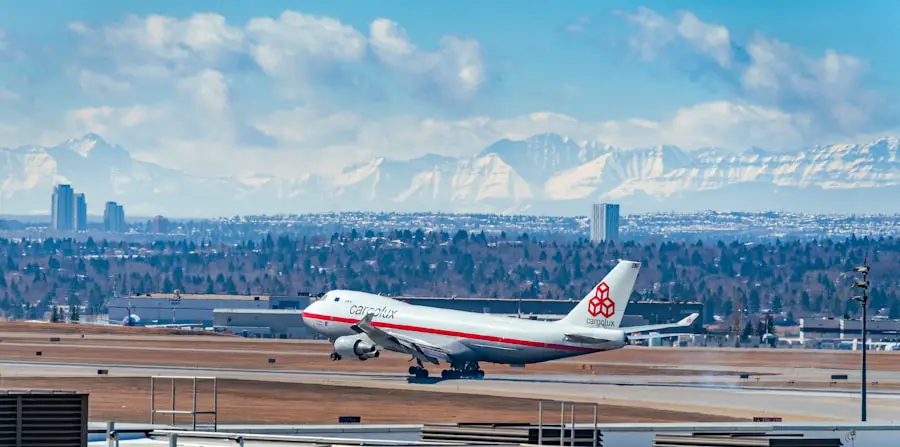
The 747 remains especially important in cargo service. Its large main deck, high payload capability, and nose-loading option on freighter variants make it useful for oversized or unusually shaped cargo. Atlas Air, UPS Airlines, Cargolux, and Korean Air Cargo are among the operators associated with 747 freighters.
Boeing 767: Still Important for Passenger and Cargo Flights
The Boeing 767 is older than the 787 but remains active in both passenger and freight service. Passenger 767s are still used by airlines such as Delta and United on selected domestic, transcontinental, and international routes.
The aircraft has become particularly important to cargo and express-delivery companies. FedEx is a major operator of the 767-300 Freighter, using it alongside the larger 777F. UPS also operates a large 767 freighter fleet for domestic and international package movements.
The 767F offers more capacity than a narrow-body freighter without requiring the size or operating profile of a 747. That makes it useful for package networks in which aircraft move between regional sorting facilities and major international hubs.
Boeing 777: A Mainstay of Long-Haul Aviation
The Boeing 777 entered airline service with United Airlines in 1995. Its combination of passenger capacity, cargo space, range, and twin-engine operation made it a replacement for many older three-engine and four-engine wide-body aircraft.
The 777-300ER became especially popular on high-demand international routes. Boeing lists a two-class seating range of approximately 350 to 425 passengers, although actual airline layouts vary significantly. Some airlines install large premium cabins, while others emphasize total seat capacity.
Emirates operates the world’s largest 777 fleet and uses the aircraft across its international network. American, United, Qatar Airways, Cathay Pacific, Air France, Korean Air, Turkish Airlines, EVA Air, and many other carriers also operate 777 passenger aircraft.
The 777 Freighter serves cargo airlines and package networks that need long range and high payload capacity. FedEx, Qatar Airways Cargo, Emirates SkyCargo, Lufthansa Cargo, Korean Air Cargo, and other operators use or have ordered members of the 777 freighter family.
What About the Boeing 777X?
The 777X is Boeing’s next generation of the 777 family. Its most visible feature is a folding wingtip that allows the aircraft to use existing airport gates while providing a longer wingspan during flight.
However, the 777-9 is not yet in normal airline service. Boeing reported in July 2026 that approximately half of its planned certification testing had been completed and that the company was working toward first deliveries in 2027. Airlines with 777X orders include Emirates, Lufthansa, Qatar Airways, Singapore Airlines, British Airways, Cathay Pacific, and others.
Warning: An airline order does not mean an aircraft is certified, delivered, or available for booking. Check the airline’s active fleet rather than relying only on aircraft-order announcements.
Boeing 787 Dreamliner: Long Range with Flexible Capacity
The Boeing 787 Dreamliner entered airline service in 2011. The family includes the 787-8, 787-9, and 787-10, allowing airlines to choose different combinations of capacity and range.
Advanced Materials and Efficiency
The 787 makes extensive use of composite materials in its airframe. Reducing structural weight, improving aerodynamics, and using newer engines allow it to consume less fuel than many previous-generation aircraft designed for similar missions.
The 787-8 and 787-9 can serve long-distance routes that may not attract enough passengers for a larger 777. This has helped airlines launch nonstop service between city pairs that previously required a connection or a larger passenger market.
Passenger Experience
Passenger-facing features include larger electronically dimmable windows, a lower cabin altitude equivalent than many older aircraft, higher cabin humidity, large overhead bins, and systems designed to reduce cabin noise.
The exact seat width, legroom, entertainment system, Wi-Fi service, and cabin comfort still depend on the airline’s configuration. Two airlines can operate the same 787 model while offering very different onboard experiences.
Airlines Operating the 787
ANA was the 787’s launch customer and remains one of its largest operators. Other 787 airlines include American, United, Air Canada, British Airways, Lufthansa, KLM, Qatar Airways, Etihad Airways, Ethiopian Airlines, Kenya Airways, Royal Air Maroc, Japan Airlines, Korean Air, Qantas, Air New Zealand, and Singapore Airlines.
Qatar Airways describes its 787 cabins as offering lower altitude-equivalent pressure, improved air quality, and optimized humidity. Ethiopian Airlines uses 787s as part of a mixed long-haul fleet that also includes Boeing 777s and Airbus A350s.
Boeing reports that more than 14,000 Boeing commercial airplanes are operating in the global fleet, but the aircraft scheduled for a particular flight can still change before departure.
Do Regional Airlines Use Boeing Aircraft?
Regional airlines generally do not use Boeing aircraft as their primary regional-jet equipment. In the United States, regional affiliates commonly operate Embraer E170 and E175 aircraft or Bombardier/Mitsubishi CRJ models.
These smaller aircraft connect communities with major hubs, where passengers transfer to larger Boeing or Airbus aircraft operated by the mainline airline. The ticket may carry the major airline’s name even though a regional partner operates the first segment.
Horizon Air illustrates this distinction. Horizon currently operates Embraer E175 regional jets for Alaska Airlines, while Alaska Airlines’ mainline operation uses Boeing 737 aircraft. The E175 may fly from a smaller city to Seattle or Portland, where a passenger connects to an Alaska 737 for a longer flight.
Some smaller independent airlines do use 737s, especially where passenger demand supports a mainline-size aircraft. However, a 737 is normally classified as a narrow-body mainline jet rather than a regional jet.
Cargo Airlines and Boeing Freighters
Boeing aircraft play a major role in global air cargo. Some aircraft are built as factory freighters, while others begin as passenger airplanes and are later converted for cargo use.
Common Boeing cargo aircraft include:
- 737-800 Boeing Converted Freighter: Used for shorter regional cargo routes and express-package networks.
- 747-400F and 747-8F: Used for high-volume, long-distance, and oversized cargo.
- 757 Freighter: Widely used in express-delivery networks.
- 767-300F: Used extensively by FedEx and UPS for domestic and international package routes.
- 777F: Used for long-distance cargo routes that need high payload capacity and twin-engine efficiency.
FedEx currently operates Boeing 767F and 777F aircraft as part of its global network. It does not currently operate the 747 freighters described in the original version of this article.
UPS operates 767 freighters and 747 freighters, including the 747-8F. Atlas Air operates several Boeing freighter types and received the final newly built 747 in January 2023.
Cargo operators select aircraft according to shipment volume, package density, route distance, airport facilities, loading method, and delivery deadlines. A 747 may be suitable for intercontinental heavy freight, while a 737 converted freighter may be more efficient on a shorter regional route.
Current Safety and Certification Context
Aircraft safety cannot be judged only by the manufacturer’s name. Safe airline operations depend on aircraft design, regulator certification, production quality, maintenance, airworthiness directives, crew training, airline procedures, weather, air traffic control, and airport conditions.
In the United States, the Federal Aviation Administration reviews aircraft designs, conducts or oversees testing, evaluates production systems, and monitors continued airworthiness. Other national and regional aviation authorities perform similar work and coordinate on international aircraft approvals.
On July 17, 2026, the FAA announced that Boeing could resume issuing airworthiness certificates for all newly produced 737 MAX and 787 aircraft under the FAA’s delegation system. The agency said it would continue inspections, audits, production monitoring, and oversight of Boeing’s safety-management and quality systems.
This does not mean every aircraft or airline is identical. Travelers concerned about a specific flight should review the operating airline, regulator notices, aircraft type, and current official information rather than relying on broad claims that one manufacturer is always safer than another.
Note: A commercial aircraft must remain in an airworthy condition and comply with applicable maintenance requirements and airworthiness directives throughout its operating life. Certification is not a one-time substitute for continued inspection and maintenance.
How to Find the Aircraft Type for Your Flight
Airlines often show the scheduled aircraft during booking, seat selection, or online check-in. Look for a label such as “Boeing 737-800,” “Boeing 787-9,” or an abbreviated equipment code such as 738, 789, or 77W.
- Open the flight details on the airline’s website or mobile app.
- Find the aircraft, equipment, or seat-map section.
- Check the full model rather than only the broad family name.
- Open the seat map to confirm the cabin layout.
- Check again near departure because operational substitutions can occur.
Aircraft changes happen for many reasons, including maintenance, weather disruption, schedule recovery, passenger demand, crew availability, or a late arrival of the originally planned airplane. An airline normally sells transportation between two locations rather than guaranteeing a particular aircraft model unless its terms specifically state otherwise.
Future of Boeing Aircraft in the Airline Industry
Boeing’s active commercial portfolio centers on the 737 MAX, 787 Dreamliner, 777 and 777X families, the 767 Freighter, and dedicated or converted cargo aircraft. Older models such as the 717, 737NG passenger family, 747, 757, and passenger 767 are no longer offered as newly produced passenger aircraft, but many remain in service.
Boeing’s 2026 Commercial Market Outlook projects that airlines and cargo operators will need nearly 44,000 new commercial airplanes through 2045. Boeing expects about half of those deliveries to replace previous-generation aircraft, while the rest would support fleet growth.
Actual demand will depend on economic growth, fuel prices, airline finances, supply-chain capacity, regulation, passenger demand, geopolitical conditions, and the pace of aircraft certification and production.
The 777-9, 777-8 Freighter, 737-7, and 737-10 are important parts of Boeing’s future plans, but their commercial availability depends on successful completion of regulatory requirements. Airlines may also adjust or defer orders when market conditions change.
Environmental Impact of Boeing Aircraft
Newer aircraft can reduce fuel use and carbon dioxide emissions per passenger compared with many aircraft they replace. The exact improvement depends on the models being compared, seating configuration, passenger load, cargo load, route length, weather, and airline operations.
The 787 and 737 MAX use newer engines, aerodynamic improvements, and lighter structures to reduce fuel consumption compared with many previous-generation aircraft. The planned 777X uses a new wing and GE9X engines, but its real-world airline performance will be evaluated after certification and commercial entry into service.
Sustainable aviation fuel, or SAF, can reduce lifecycle emissions compared with conventional fossil-based jet fuel. However, the reduction varies according to the feedstock, production process, energy source, transportation, land-use effects, and accounting method. The International Air Transport Association states that many current waste- and residue-based pathways typically provide lifecycle reductions of around 80%.
SAF does not eliminate carbon dioxide at the engine exhaust, and global supply remains limited. Reaching aviation’s aspirational net-zero goal for 2050 would require a combination of SAF, fleet renewal, operational improvements, cleaner energy, infrastructure changes, policy support, carbon management, and future propulsion technologies.
The Versatility and Impact of Boeing Aircraft in the Aviation Industry
Boeing aircraft serve a wide range of airline needs. The 737 carries passengers on short and medium routes, the 777 and 787 connect distant international markets, the 767 supports both passenger and cargo networks, and the 747 continues in a smaller number of passenger, cargo, charter, and special-purpose roles.
The most suitable aircraft depends on the route rather than the manufacturer alone. Airlines balance capacity, range, operating cost, cargo demand, airport restrictions, maintenance, crew training, financing, and passenger expectations when building a fleet.
For travelers, the scheduled aircraft can provide clues about seat layout, cabin features, and onboard comfort. It should not be treated as a guarantee, because airlines can substitute equipment at any time for operational reasons.
Travel Planning Beyond the Aircraft Type
Knowing the scheduled aircraft can help you compare seat maps and cabin features, but it is only one part of planning a trip. Check baggage limits, connection times, weather, airport terminals, and rules for special equipment before departure.
If wet weather is expected, this existing guide to waterproof travel sneakers may help with footwear planning. Carry-on luggage and fishing equipment must meet the operating airline’s size, weight, security, and dangerous-goods rules, which can differ between airlines and countries.
Frequently Asked Questions
What airlines use Boeing aircraft?
Airlines using Boeing aircraft include American Airlines, Delta Air Lines, United Airlines, Southwest Airlines, Alaska Airlines, Ryanair, Emirates, Qatar Airways, Lufthansa, Korean Air, ANA, Ethiopian Airlines, Air Canada, British Airways, Turkish Airlines, Qantas, and many others. The models operated vary by airline and route.
Which Boeing aircraft are most commonly used by airlines?
The Boeing 737 is the most common Boeing passenger-aircraft family. Airlines also widely use the 777 and 787 for long-haul routes. The 757, 767, and 747 remain in service with selected passenger and cargo operators even though most passenger versions are no longer produced.
Are there airlines with all-Boeing fleets?
Southwest Airlines operates Boeing 737 aircraft throughout its mainline fleet. Some other airlines rely heavily on Boeing but may have additional aircraft types at subsidiaries, cargo divisions, or regional partners. Fleet composition changes as aircraft are delivered or retired.
Which airlines still fly passenger Boeing 747s?
Lufthansa and Korean Air are notable scheduled passenger operators of the Boeing 747-8. Passenger 747 fleets are small and retirement plans can change, so travelers should confirm the aircraft through the airline’s current schedule and seat map.
Do low-cost airlines use Boeing aircraft?
Yes. Southwest Airlines, Ryanair, flydubai, SunExpress, and several other low-cost or leisure airlines use Boeing 737 aircraft. The 737’s range, capacity, and fleet commonality can suit high-frequency short and medium-haul operations.
Do regional airlines operate Boeing aircraft?
Most regional affiliates use smaller Embraer E-Jets, CRJ aircraft, or turboprops. Their passengers may connect to Boeing aircraft operated by the associated mainline airline. Some independent smaller airlines use 737s, but the 737 is generally considered a mainline narrow-body jet rather than a regional jet.
Are Boeing aircraft used by cargo airlines?
Yes. Cargo operators use Boeing 737 converted freighters, 747 freighters, 757 freighters, 767 freighters, and 777 freighters. FedEx, UPS, Atlas Air, Cargolux, Qatar Airways Cargo, Emirates SkyCargo, and Lufthansa Cargo are examples of major Boeing freighter operators.
Are Boeing aircraft safe?
Commercial Boeing aircraft must meet applicable certification and continued-airworthiness requirements before and during airline service. Safety also depends on production quality, airline maintenance, crew training, regulator oversight, operating procedures, weather, and airport conditions. A manufacturer’s name alone cannot determine the safety of a specific flight.
How can I tell which Boeing model will operate my flight?
Check the flight details, aircraft label, or seat map on the operating airline’s website or app. Look for the full variant, such as 737-800, 737-8, 777-300ER, or 787-9. Check again near departure because airlines may substitute another aircraft.
Sources
- Boeing Commercial Airplanes — current commercial product families and legacy-aircraft status
- Boeing 737 MAX — model capacities, ranges, and technical specifications
- Boeing 747 History — first flight, entry into service, production history, and final aircraft
- Boeing 777 and Boeing 787 Dreamliner — official family specifications and capabilities
- Federal Aviation Administration — July 2026 Boeing production and airworthiness-certificate oversight update
- International Air Transport Association — sustainable aviation fuel lifecycle-emissions guidance
