
Last Updated on July 24, 2026 by Daniel Globe
Choosing where to stay in San Diego can shape your whole trip. Some areas put you steps from beaches, while others make restaurants, nightlife, museums, or public transit easier to reach. The best choice depends less on finding one “perfect” neighborhood and more on deciding which parts of San Diego you want closest to your hotel.
Quick Answer
Stay in the Gaslamp Quarter or Little Italy for a city-focused trip, Coronado or La Jolla for an upscale coastal escape, Pacific or Mission Beach for beach energy, Old Town or Mission Valley for central access, and North County for a slower beach-town or resort experience.
Key Takeaways
- Best for first-time visitors without a car: Little Italy, the downtown waterfront, or the Gaslamp Quarter.
- Best for a classic beach vacation: Coronado, La Jolla, Mission Beach, or Pacific Beach.
- Best for nightlife: Gaslamp Quarter or Pacific Beach.
- Best for families: Coronado, Mission Beach, Carlsbad, or La Jolla Shores.
- Best for central access: Old Town and Mission Valley are practical bases when your plans are spread across the city.
Disclosure: As an Amazon Associate I earn from qualifying purchases. Some links on this page are affiliate links, at no extra cost to you.
How to Choose Where to Stay in San Diego
San Diego is spread across downtown districts, inland neighborhoods, bays, and a long stretch of Pacific coastline. Before booking, decide whether you care most about walking to restaurants, waking up near the beach, minimizing driving, enjoying nightlife, or staying close to a specific attraction.
A downtown base works well for short sightseeing trips and travelers who do not want to drive every day. Beach neighborhoods offer a stronger vacation atmosphere but usually require a bus, rideshare, or car when you want to visit inland sights. North County makes more sense when places such as LEGOLAND California, Del Mar, Encinitas, Carlsbad, or Oceanside are a major part of your itinerary.
Note: Treat labels such as “budget,” “mid-range,” and “luxury” as general guidance rather than fixed hotel categories. San Diego room prices can change dramatically with season, weekends, conventions, sporting events, parking charges, and resort or destination fees. Compare the total stay price for your actual dates.
Best San Diego Areas at a Glance
| Area | Best For | Main Tradeoff |
| Old Town | History, central transit, short stays | Limited nightlife |
| Coronado | Families, couples, beach resorts | Less convenient for repeated inland sightseeing |
| Gaslamp Quarter | Nightlife, events, Petco Park | Late-night noise and costly parking |
| Little Italy | Food, walkability, first visits | Urban rather than beach-resort atmosphere |
| La Jolla | Scenery, luxury, coastal activities | Different La Jolla areas are not all easily walkable to one another |
| Pacific Beach | Beach bars, surfing, younger nightlife | Busy and noisy around nightlife zones |
| Mission Beach | Families, boardwalk, vacation rentals | Parking can be difficult |
| Ocean Beach | Laid-back surf-town atmosphere | Fewer large resort-style hotels |
| Downtown Waterfront | USS Midway, bay views, conventions | Not a beach neighborhood |
| Mission Valley | Central location, broad hotel choice | Less walkable vacation atmosphere |
| North County | Families, resorts, quieter beach towns | Longer trips to Downtown San Diego |
Old Town
Old Town works well when you want historic character and a central location without staying in the middle of Downtown. The neighborhood’s main attraction is Old Town San Diego State Historic Park, where museums, historic buildings, shops, restaurants, and exhibits explore the area’s Kumeyaay, Mexican, and American history.
Mexican restaurants, colorful shops, and historic sites make the immediate neighborhood easy to explore on foot. Hotel options include the small historic Cosmopolitan Hotel, Hilton Garden Inn San Diego Old Town/SeaWorld Area, and Best Western Plus Hacienda Hotel Old Town. Compare rates for your dates rather than assuming one property will always be the cheapest.
Transportation is one of Old Town’s biggest advantages. Old Town Transit Center is served by both the UC San Diego Blue Line and Green Line, and San Diego International Airport operates the free San Diego Flyer between the airport and Old Town Transit Center. That makes Old Town particularly practical for travelers combining public transit with occasional rideshares.
The tradeoff is atmosphere after dark. Old Town has restaurants and evening activity, but travelers seeking clubs, rooftop bars, or a dense late-night scene will generally be happier Downtown or in Pacific Beach.
Coronado Island
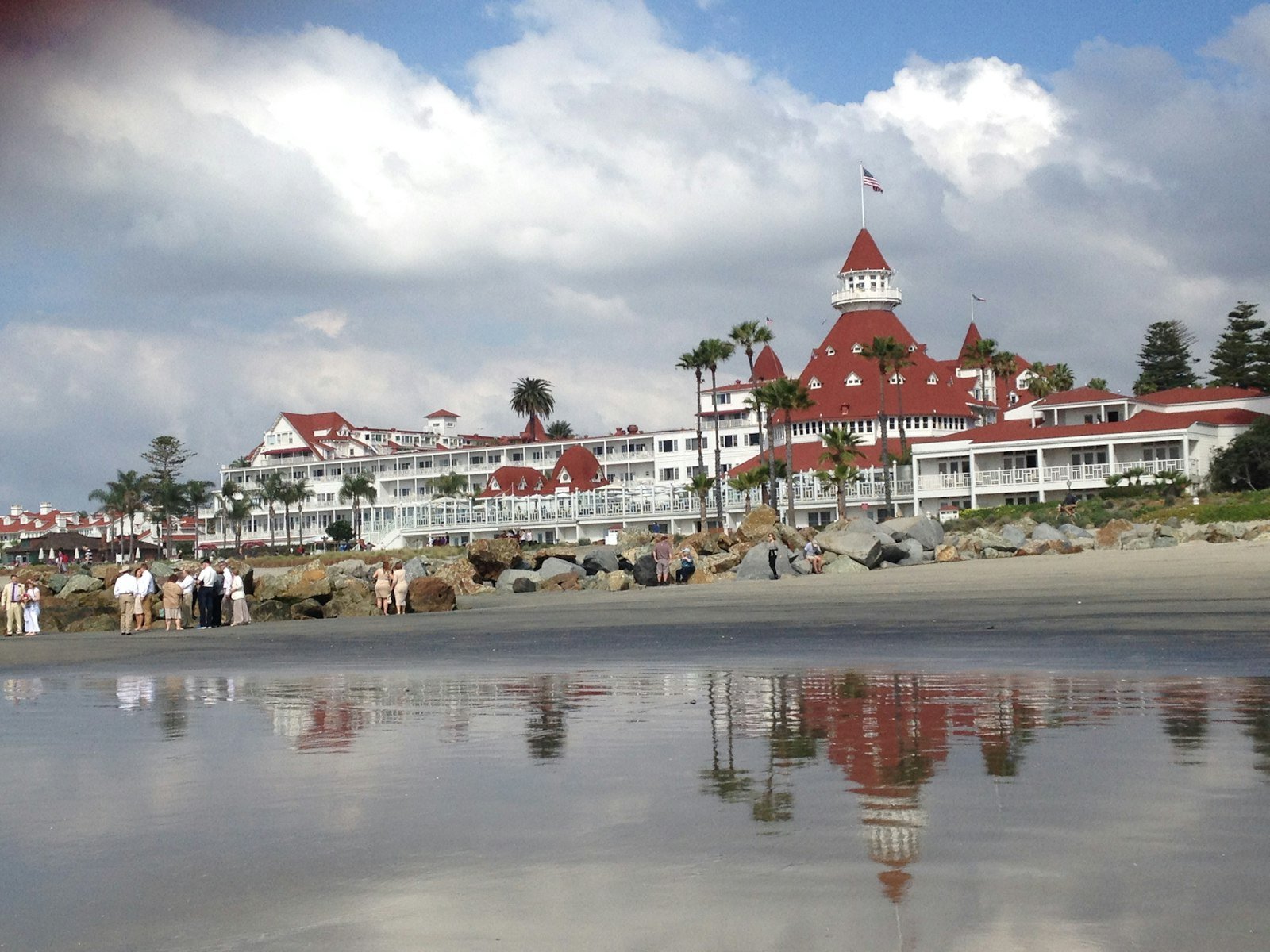
Coronado gives you a classic San Diego beach vacation with a calmer feel than the central beach neighborhoods. Coronado Central Beach, Orange Avenue, landscaped residential streets, and the famous Hotel del Coronado make the area especially appealing to couples and families.
For accommodations, Hotel del Coronado is the landmark beachfront resort. Glorietta Bay Inn offers a smaller historic alternative near the beach and Orange Avenue. Vacation rentals can also work well for families who want kitchens or more living space.
Coronado is connected to the mainland by the San Diego-Coronado Bridge, while ferry service links the Coronado Ferry Landing with Downtown San Diego. The official Coronado beach guide also highlights Orange Avenue, Coronado Central Beach, Glorietta Bay, and the Ferry Landing.
The biggest tradeoff is convenience. Coronado is relaxing, but staying there can add travel time when your itinerary repeatedly takes you to La Jolla, Balboa Park, North County, or other mainland areas. Nightlife is also much quieter than in the Gaslamp Quarter or Pacific Beach.
Gaslamp Quarter
The Gaslamp Quarter is one of the strongest choices for nightlife, sporting events, conventions, and a walkable Downtown stay. Historic buildings now house restaurants, lounges, clubs, and rooftop bars, while Petco Park and the San Diego Convention Center sit nearby.
Seaport Village, the Embarcadero, and other waterfront attractions are reachable on foot from many Downtown hotels, although the exact walking time depends on where you stay. The USS Midway Museum is on the waterfront rather than inside the Gaslamp itself. Balboa Park is better treated as a short transit or rideshare trip than as a casual stroll from the Gaslamp.
The MTS Trolley serves Gaslamp Quarter and Convention Center stations, making it possible to handle many Downtown trips without driving.
Hotels include Margaritaville Hotel San Diego Gaslamp Quarter, Pendry San Diego, and Moxy San Diego Downtown/Gaslamp Quarter. The neighborhood’s energy is also its main drawback: late-night crowds and street noise can make it a poor fit for travelers who value quiet evenings. Hotel parking can add substantially to the total cost of a stay.
Little Italy
Little Italy is one of the best all-around choices for travelers who want excellent dining and Downtown convenience without placing nightlife at the center of the trip. The neighborhood has restaurants, cafés, cocktail bars, boutiques, galleries, boutique hotels, and the Piazza della Famiglia within a compact urban area.
The San Diego Tourism Authority’s Little Italy guide highlights the area’s strong food scene, public spaces, shopping, and weekly Mercato farmers market.
Little Italy is close to the waterfront and Santa Fe Depot, and both the Green Line and UC San Diego Blue Line serve the Downtown/Little Italy corridor. San Diego International Airport is also only a short distance away.
Choose Little Italy if restaurants, walkability, and a city atmosphere matter more than direct beach access. For many first-time visitors planning to use transit and rideshares, it is one of San Diego’s easiest bases.
La Jolla
La Jolla is a strong choice for dramatic coastal scenery, upscale dining, outdoor activities, and a quieter evening atmosphere. However, it helps to know which part of La Jolla you are booking because the Village, La Jolla Shores, and the Torrey Pines area offer different experiences.
La Jolla Village
The Village puts restaurants, galleries, boutiques, La Jolla Cove, and coastal viewpoints close at hand. La Valencia Hotel is a landmark option here and works especially well for travelers who want to stroll to dining and the Cove.
La Jolla Shores
La Jolla Shores is better for travelers who want a broader sandy beach and easy access to swimming, surfing, kayaking, or scuba activities. The La Jolla Shores Hotel provides a beachfront base in this part of the community. The official La Jolla beach guide describes the Shores as a mile-long crescent popular with families, swimmers, surfers, kayakers, and divers.
Torrey Pines
At the northern end of the La Jolla area, The Lodge at Torrey Pines is suited to travelers focused on golf, hiking, and a secluded luxury-resort experience. Nearby Torrey Pines State Natural Reserve protects coastal cliffs, native Torrey pines, and a network of hiking trails.
La Jolla’s main drawback is transportation. The community looks compact on a map, but its major areas are spread apart, and the trolley does not take you directly to La Jolla Cove or La Jolla Shores. A car, bus, or rideshare is useful for moving between the coast and other San Diego attractions.
Pacific Beach
Pacific Beach is for travelers who want the beach and nightlife in the same neighborhood. The community has more than two miles of shoreline, restaurants, pubs, shops, surfing, and a busy social scene centered around the beach, Garnet Avenue, and surrounding streets.
The beachside path connects Pacific Beach with Mission Beach, making it easy to walk or bike between the two areas. During the day, you can surf, swim, cycle, or relax by the water. At night, the bars and restaurants give Pacific Beach one of the livelier coastal scenes in San Diego.
Accommodation ranges from simple beach hotels to more polished properties, but pricing can jump during summer and event weekends. Pacific Beach is a better fit for travelers who prioritize coastal living over frequent Downtown sightseeing.
The tradeoffs are crowds, nightlife noise in certain blocks, and transportation. Downtown San Diego is not within practical walking distance, so plan on a bus, rideshare, or car for city attractions.
Mission Beach
Mission Beach sits directly south of Pacific Beach on a narrow strip between the Pacific Ocean and Mission Bay. It combines a classic boardwalk setting with easy access to both ocean surf and calmer bay activities.
The City of San Diego identifies Mission Beach as one of the city’s most popular beach areas and notes its location beside Belmont Park. Around the neighborhood, you can swim, bike, play beach volleyball, surf, or cross over to Mission Bay for activities such as paddleboarding and kayaking.
Mission Beach has hotels and a large supply of vacation rentals, which can make it especially useful for families or groups that want a kitchen and extra space. Belmont Park adds rides and games within steps of the beach.
The biggest challenge is parking. The neighborhood is densely developed, and popular weekends can bring heavy beach traffic. Once you are settled in, though, the boardwalk makes walking and biking between Mission Beach and Pacific Beach easy.
Ocean Beach
Ocean Beach offers a more laid-back and independent feel than Pacific Beach or Mission Beach. Newport Avenue has restaurants, surf shops, vintage stores, bars, and local businesses, while nearby Sunset Cliffs provides some of the area’s most dramatic coastal scenery.
The neighborhood attracts surfers, dog owners, and travelers who prefer a casual beach-town atmosphere over large resorts. The official Ocean Beach guide highlights surfing, Dog Beach, Newport Avenue, and Sunset Cliffs among its main attractions.
Ocean Beach is a good alternative when Pacific Beach feels too nightlife-focused and Coronado or La Jolla feels too polished. You will find fewer large resort hotels, though, and getting to Downtown or La Jolla generally means using a car, bus, or rideshare.
Seaport Village and the Downtown Waterfront
Seaport Village is not a separate residential neighborhood in the same way as La Jolla or Pacific Beach. It is a waterfront shopping and dining destination within Downtown’s Marina/Embarcadero area. When people talk about staying “near Seaport Village,” they generally mean hotels along the Downtown waterfront.
Seaport Village sits on San Diego Bay just steps from the Convention Center and offers boutiques, restaurants, entertainment, and waterfront views. From this part of Downtown, you can walk along the bay toward the USS Midway Museum, Ruocco Park, and other Embarcadero attractions.
The Green Line serves Seaport Village and Convention Center stations, while Downtown’s compact street grid makes many restaurants and attractions accessible without a car.
This area is a strong choice for convention attendees, first-time visitors, couples who want bay views, and travelers interested in maritime attractions. The main compromise is that the Downtown waterfront is on San Diego Bay, not on a Pacific Ocean swimming beach.
Mission Valley and Hotel Circle
Mission Valley is one of San Diego’s most practical lodging bases when your sightseeing plans are scattered across the region. It sits inland between Downtown and many coastal neighborhoods, with large shopping centers, restaurants, trolley stations, and a significant concentration of hotels.
The San Diego Tourism Authority notes that Hotel Circle alone has more than 20 hotels, ranging from simpler properties to full-service resorts.
Mission Valley works particularly well for families with a car, road-trippers, and travelers who care more about central positioning than staying inside a tourist neighborhood. Green Line trolley service also connects parts of Mission Valley with Old Town and Downtown.
The tradeoff is walkability. Mission Valley is built around major roads, shopping centers, hotels, and freeways, so it does not offer the same step-out-the-door vacation atmosphere as Little Italy, Coronado, or the beach communities.
North County Beach Towns
Del Mar, Encinitas, Carlsbad, and Oceanside stretch north along the coast and offer a slower-paced alternative to central San Diego. Historic Highway 101 links many of these coastal communities, each with a different mix of beaches, restaurants, shops, resorts, and surf culture.
Del Mar
Del Mar combines an upscale village atmosphere with beaches, restaurants, shopping, and the Del Mar Racetrack area. It works well for couples and travelers who want a polished coastal base away from Downtown.
Fairmont Grand Del Mar is often associated with the greater Del Mar area, but it is important to know that the resort is inland at Grand Del Mar Court near Los Peñasquitos Canyon Preserve rather than directly on Del Mar’s beach.
Encinitas
Encinitas has a relaxed surf-town character, with Coast Highway 101 connecting restaurants, cafés, shops, and beach access. Vacation rentals and boutique-style accommodations can work particularly well for travelers who want a less resort-oriented coastal stay.
Carlsbad
Carlsbad is one of the strongest North County choices for families, especially when LEGOLAND California is a priority. Carlsbad Village has restaurants, shops, and beach access, while larger resorts sit farther inland or along the area’s lagoons and golf courses.
Park Hyatt Aviara Resort, Golf Club & Spa and Omni La Costa Resort & Spa are two of the area’s large resort options. Staying in Carlsbad is convenient for a North County itinerary but adds considerable travel time when most of your sightseeing is in Downtown San Diego.
Oceanside
Oceanside combines a walkable coastal downtown with beaches, restaurants, the harbor, and rail connections. The Seabird Ocean Resort & Spa and Mission Pacific Hotel are prominent beachfront properties near the pier area.
These hotels are modern additions to Oceanside’s waterfront, but they are no longer new: Hyatt announced Mission Pacific’s opening in May 2021, followed by The Seabird that same month.
The broader North County Coastal region works best when you want beach towns and resorts to be the trip rather than simply a base for daily Downtown sightseeing.
Getting Around San Diego: Do You Need a Car?
You can enjoy San Diego without renting a car, but the right neighborhood makes a major difference. Downtown, Little Italy, and Old Town are the easiest bases for combining walking, trolley service, buses, and rideshares.
The MTS Trolley serves Old Town, Little Italy, Downtown, Mission Valley, UC San Diego, UTC, and other parts of the region. It does not run directly to major oceanfront destinations such as La Jolla Cove, La Jolla Shores, Coronado Beach, Mission Beach, or central Pacific Beach, so those trips usually require a connecting bus, ferry, rideshare, or car.
For airport arrivals, San Diego International Airport provides public-transportation information including the free San Diego Flyer between the airport and Old Town Transit Center. Route 992 also connects the airport with Downtown transit connections.
Travelers staying in coastal North County can also use COASTER rail service for selected trips between Oceanside, Carlsbad, Encinitas, Solana Beach, Old Town, and Downtown San Diego.
Pro Tip: Build your itinerary before choosing your hotel. If four of your five main activities are near Downtown, saving a little on a distant beach hotel can quickly be canceled out by parking, rideshares, and travel time. The reverse is true for a beach-first trip: staying by the ocean can be worth more than shaving a few minutes off the drive to Downtown.
Conclusion
There is no single best place to stay in San Diego for every traveler. Old Town and Mission Valley are practical central bases, Little Italy and the Gaslamp Quarter make city sightseeing easier, and the Downtown waterfront is ideal for bayfront attractions. Coronado and La Jolla offer a more polished coastal experience, while Pacific Beach, Mission Beach, and Ocean Beach put beach culture at the center of the trip.
For a slower getaway, head north to Del Mar, Encinitas, Carlsbad, or Oceanside. Match your neighborhood to the places you plan to visit most often, compare the full cost of your hotel rather than the room rate alone, and you will spend more of your San Diego trip enjoying the city instead of traveling across it.
Sources
- California State Parks — Old Town San Diego State Historic Park — Old Town history, facilities, and visitor information.
- California State Parks — Torrey Pines State Natural Reserve — Torrey Pines visitor and trail information.
- San Diego Metropolitan Transit System — Trolley — trolley lines, stations, and regional transit connections.
- San Diego International Airport — Public Transportation — airport buses, rail connections, and San Diego Flyer information.
- San Diego Tourism Authority — Downtown San Diego — Downtown districts, attractions, and neighborhood context.
- Hyatt Newsroom — Mission Pacific Hotel and The Seabird Resort Debut — verifies the Oceanside hotels’ May 2021 openings.
