
Last Updated on July 24, 2026 by Daniel Globe
Choosing where to stay in Los Angeles can shape your entire trip. LA’s best attractions are spread across the coast, Hollywood, the Westside, Downtown, and the San Fernando Valley, so there is no single neighborhood that is perfect for everyone. The smartest approach is to stay near the places you plan to visit most, then choose a hotel that fits your budget and travel style.
Quick Answer
West Hollywood is one of the best all-around bases for first-time sightseeing and nightlife, while Santa Monica is best for beaches and a walkable coastal stay. Choose Beverly Hills for luxury, Universal City or West Burbank for studio attractions, Hollywood for classic sights and rail access, and Los Feliz or Silver Lake for a more local feel.
Key Takeaways
- Pick your hotel around your top two or three attraction clusters rather than searching for the geographic center of Los Angeles.
- West Hollywood works well for dining, nightlife, shopping, and mixed sightseeing, but it does not have a Metro rail station.
- Santa Monica is one of the easiest choices for a beach-focused or partly car-free trip thanks to its walkable core and Metro E Line.
- Universal City and West Burbank are especially convenient when Universal Studios Hollywood, Warner Bros., or other studio attractions dominate your itinerary.
- For a longer trip, splitting your stay between a coastal hotel and a central or Hollywood-area hotel can reduce repeated cross-city travel.
Disclosure: As an Amazon Associate I earn from qualifying purchases. Some links on this page are affiliate links, at no extra cost to you.
Deciding Where to Stay in Los Angeles: Key Considerations
When planning your trip to Los Angeles, start with your itinerary rather than the hotel. Traffic can make two places that look close on a map feel much farther apart, especially when you repeatedly cross the city during busy periods.
Group your must-see attractions by area. Griffith Observatory, Hollywood, and Universal Studios Hollywood lean toward the Hollywood and northeast side of the central city. LACMA, the Academy Museum, Beverly Hills, and West Hollywood form a different cluster. Santa Monica, Venice, Malibu, and the Getty Villa pull you toward the coast.
Public transportation also matters more than it once did. Metro’s D Line extension opened three new stations in May 2026 at Wilshire/La Brea, Wilshire/Fairfax, and Wilshire/La Cienega, improving rail access to Miracle Mile and the eastern edge of Beverly Hills. The LA Metro D Line Extension is especially useful for travelers visiting museums along Wilshire Boulevard.
Pro Tip: Plot your five highest-priority attractions on a map before booking. If most fall on one side of the city, staying nearby can save more time than choosing a cheaper hotel across town.
Finally, compare the total hotel cost rather than the room rate alone. Overnight parking, destination or amenity fees, taxes, and valet charges can change the value equation significantly. Policies vary by property, so check the hotel’s current terms before booking.
Where to Stay in Los Angeles: Best Areas at a Glance
| Area | Best For | Main Advantages | Main Trade-Off |
| West Hollywood | First visits, nightlife, dining | Walkable local districts and a useful position between Hollywood and Beverly Hills | No Metro rail station within West Hollywood |
| Beverly Hills | Luxury, shopping, couples | High-end hotels, Rodeo Drive, excellent dining, good Westside position | Generally expensive and less convenient for eastern LA |
| Santa Monica | Beach trips, families, car-free stays | Beach access, walkability, restaurants, Metro E Line | Longer trips to Hollywood, Universal, and eastern LA |
| Universal City / West Burbank | Universal Studios, studios, families | Short trips to major studios plus B Line access from Universal City | Far from the coast |
| Hollywood | Classic attractions, transit | Walk of Fame attractions, B Line, easy access toward Universal | Busy, tourist-oriented atmosphere in the core |
| Los Feliz / Silver Lake | Local atmosphere, food, Griffith Park | Neighborhood restaurants, cafés, and convenient access to Griffith Park | Smaller hotel selection than major visitor districts |
| Downtown Los Angeles | Arts, events, transit | Strong rail connections and access to major cultural and event venues | Far from the beach and not equally visitor-oriented on every block |
| Malibu | Scenic coastal escapes | Ocean scenery and a quieter coastal focus | Limited transit and lengthy trips to many classic LA attractions |
The biggest choice is usually central sightseeing versus beach time. West Hollywood, Beverly Hills, Hollywood, and nearby neighborhoods make it easier to build days around museums, entertainment, shopping, and Hollywood sights. Santa Monica gives you a more relaxed coastal routine but increases travel time when several days are devoted to inland attractions.
Staying in West Hollywood
West Hollywood is one of the strongest all-around choices for visitors who want restaurants, nightlife, shopping, and a fairly central position. Its compact districts are notably walkable, especially around the Sunset Strip, Santa Monica Boulevard, and the Design District. The official Visit West Hollywood neighborhood guide breaks the city into four pedestrian-friendly districts with distinct personalities.
The Sunset Strip is the obvious choice for nightlife, rooftop hotels, music history, and late evenings. Staying farther south around Santa Monica Boulevard or the Design District can put you closer to restaurants and shopping while still keeping the Strip nearby.
For accommodations, The London West Hollywood remains a polished luxury option near the Sunset Strip. Petit Ermitage offers a smaller, artistic atmosphere, while The Charlie provides a more residential, historic bungalow-style experience.
One important update: Pendry West Hollywood is no longer the current hotel name at 8430 Sunset Boulevard. The property now operates as The Sun Rose West Hollywood, a luxury hotel with a rooftop pool, restaurants, spa, and an on-site music venue.
West Hollywood is useful for visiting Beverly Hills, Hollywood, the Fairfax/Miracle Mile area, and central dining districts. It is less convenient if nearly every day of your trip revolves around Santa Monica or Downtown LA. It is also worth knowing that West Hollywood itself does not have a Metro rail station, so buses, rideshare, taxis, or a car may still be part of your sightseeing plan.
Staying in Beverly Hills
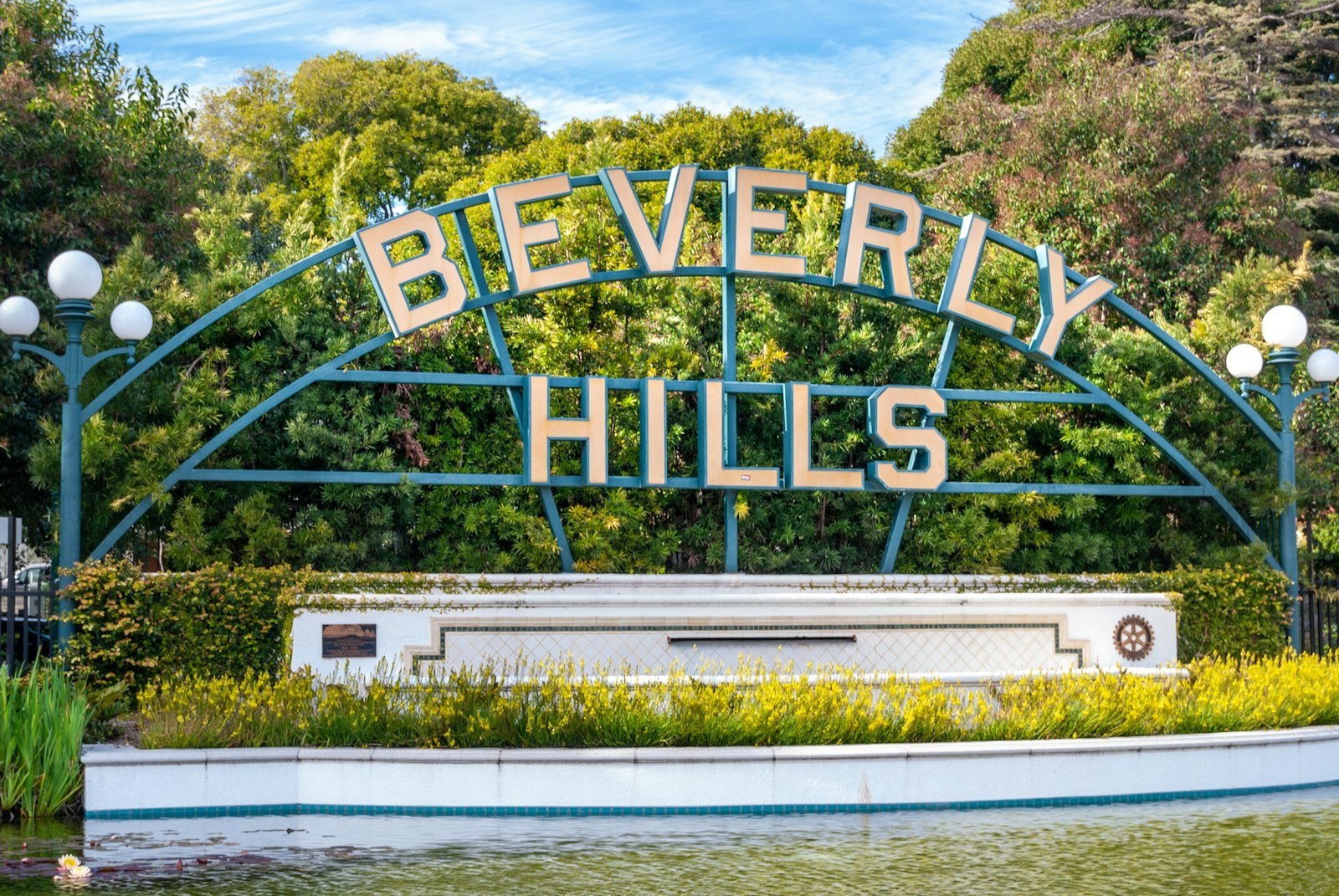
Beverly Hills is a natural fit if luxury hotels, polished surroundings, fine dining, and designer shopping matter more than nightlife or beach access. Rodeo Drive and the surrounding Golden Triangle create one of the easiest areas in LA for combining shopping, restaurants, cafés, and hotels on foot.
Luxury choices include The Beverly Hills Hotel, Beverly Wilshire, A Four Seasons Hotel, and The Maybourne Beverly Hills. Beverly Wilshire sits at Wilshire Boulevard and Rodeo Drive, while The Maybourne is beside Beverly Cañon Gardens. The official Beverly Hills visitor guide maintains current accommodation information for the city.
Beverly Hills also works well for museum-heavy itineraries. LACMA and the Academy Museum sit east along the Wilshire corridor, and the 2026 Metro D Line expansion now reaches Wilshire/La Cienega on the eastern edge of Beverly Hills and Wilshire/Fairfax at Miracle Mile.
The trade-off is cost. Hotels, valet parking, dining, and other trip expenses can be higher here than in many nearby neighborhoods. Beverly Hills is also better known for restaurants, hotel bars, and lounges than the late-night club concentration found in West Hollywood.
Staying in Santa Monica
Santa Monica is the better choice when the beach is part of your daily routine rather than a one-day excursion. The city combines Santa Monica Beach, the Pier, Ocean Avenue, Downtown Santa Monica, Third Street Promenade, restaurants, shops, and several walkable residential districts.
Hotel location matters. Ocean Avenue and the area near the Pier put you closest to the water and major visitor attractions. Downtown gives you excellent access to shopping, restaurants, and the Downtown Santa Monica Metro station. Hotels farther inland can offer a quieter atmosphere and sometimes better value.
Santa Monica Proper is an upscale design-focused option with a rooftop pool. Viceroy Santa Monica sits close to the beach and has two pools. The Ambrose Hotel offers a quieter neighborhood setting away from the busiest coastal blocks while remaining only minutes from Downtown Santa Monica.
Santa Monica is also one of the more practical LA bases without a car. The Metro E Line serves three Santa Monica stations, including Downtown Santa Monica, and connects the city with destinations across the wider Metro network.
For day trips, Santa Monica gives you a convenient starting point for Venice, Malibu, and the Getty Villa. The trade-off is that repeated trips to Hollywood, Griffith Park, Universal Studios, or neighborhoods farther east can consume a significant part of the day.
Staying in Universal City & West Burbank
Universal City and West Burbank make sense when film and television attractions are the focus of your trip. Instead of repeatedly crossing Los Angeles from the beach or Westside, you can stay close to Universal Studios Hollywood, Warner Bros. facilities, and the broader studio district.
Hilton Los Angeles/Universal City is about 0.45 miles from Universal Studios Hollywood and offers an outdoor pool. Universal also lists it among its partner hotels with convenient shuttle access to the park and CityWalk.
The Garland is roughly 1.8 miles from Universal Studios Hollywood and is especially practical for families because it provides complimentary trolley service to the park. Its retro design, pool, family-oriented rooms, and on-site dining make it a resort-style alternative to staying immediately beside the theme park.
In West Burbank, The Tangerine is a smaller boutique property near Warner Bros., Disney, and The Burbank Studios. It has an outdoor pool, free on-site parking, breakfast, and restaurants within walking distance.
Universal City also has a major public-transit advantage. The Metro B Line serves Universal City/Studio City, and Universal operates a free shuttle from the pedestrian bridge area to the theme park and CityWalk. See the current Universal Studios Hollywood transportation information before your visit.
Staying in Hollywood
Hollywood can be a practical base when your itinerary is heavy on classic attractions. Hotels around Hollywood Boulevard put you near the Walk of Fame, TCL Chinese Theatre area, Dolby Theatre, and Metro B Line stations at Hollywood/Highland and Hollywood/Vine.
The B Line makes Hollywood particularly useful for travelers planning to visit Universal Studios Hollywood or Downtown LA without driving. Hollywood also puts you closer to Griffith Park and the Hollywood Bowl than Santa Monica or Beverly Hills.
The downside is atmosphere. The busiest blocks around Hollywood Boulevard are highly tourist-oriented and can be noisy. Look carefully at the exact hotel location rather than booking anywhere with “Hollywood” in the name and assuming it will provide the same experience.
Staying in Los Feliz & Silver Lake
Los Feliz and Silver Lake are better choices for travelers who want neighborhood restaurants, cafés, bars, independent shops, and easier access to Griffith Park without staying in the middle of Hollywood’s tourist zone.
Los Feliz is especially appealing when Griffith Observatory, hiking, or evenings around Vermont Avenue are priorities. Silver Lake has a more spread-out collection of dining and shopping areas, including stretches around Sunset Boulevard.
These neighborhoods can feel more residential and local than the major hotel districts, but that comes with a smaller accommodation selection. They are strongest for travelers whose itinerary already leans toward Griffith Park, Hollywood, Echo Park, and other central or eastern neighborhoods rather than the coast.
Staying in Downtown Los Angeles
Downtown Los Angeles deserves more consideration than a simple “skip it” recommendation. It can be an efficient base for travelers focused on The Broad, Walt Disney Concert Hall, Grand Central Market, Little Tokyo, sporting events, conventions, and performing arts.
Its biggest advantage is transportation. Downtown is one of the most connected parts of the Metro system, making it easier to reach Hollywood, Santa Monica, Miracle Mile, and other rail-served destinations without using a car for every trip.
The trade-off is that Downtown’s visitor experience changes significantly from block to block, and it does not provide the beach atmosphere of Santa Monica or the compact nightlife scene of West Hollywood. Pick a hotel based on the exact attractions, station, or event venue you expect to use rather than choosing “DTLA” as one interchangeable district.
Staying in Malibu
Malibu is best treated as a coastal destination rather than a central Los Angeles sightseeing base. It makes sense when your priorities are beaches, ocean views, scenic drives, and a slower schedule.
It is less practical for a first trip packed with Hollywood, Downtown, museums, and Universal Studios. Public transportation is also more limited than in Santa Monica, and driving times can vary greatly with Pacific Coast Highway traffic.
For many visitors, Santa Monica is the easier compromise: you can enjoy the coast while staying in a denser, more walkable area with rail connections, then visit Malibu as a day trip.
Best Los Angeles Area by Trip Type
For first-time visitors: West Hollywood is a strong all-around choice when your itinerary mixes Hollywood, museums, shopping, and restaurants. Santa Monica may be better when the beach is one of the main reasons for the trip.
For families: Universal City and West Burbank are excellent when Universal Studios is a major priority. Santa Monica is another strong option for families who prefer the beach, parks, walking, and a slower pace.
For nightlife: West Hollywood is the clear standout, particularly around the Sunset Strip and Santa Monica Boulevard.
For luxury: Beverly Hills offers the densest concentration of classic high-end hotels, designer shopping, polished restaurants, and spa experiences.
For beach time: Santa Monica is the most versatile choice because it combines the coast with restaurants, shopping, hotels, and the Metro E Line. Malibu is better for a more secluded coastal trip.
For Universal Studios: Universal City offers the shortest commute, while West Burbank provides more studio-area hotel choices and easy access to local restaurants.
For a local neighborhood feel: Los Feliz and Silver Lake offer a less resort-like stay with cafés, restaurants, nightlife, and convenient access to Griffith Park and nearby central neighborhoods.
For museums and cultural venues: Beverly Hills and the Wilshire corridor work well for LACMA and the Academy Museum, while Downtown is stronger for The Broad, Disney Concert Hall, and nearby cultural destinations.
Where to Stay in Los Angeles Without a Car
You can visit Los Angeles without renting a car, but neighborhood choice becomes even more important. Santa Monica combines a walkable core with the Metro E Line. Hollywood and Universal City sit directly on the B Line. Downtown provides the widest range of rail connections. West Hollywood is highly walkable within its own boundaries but relies more heavily on buses and rideshare for longer trips.
The 2026 D Line expansion has also made Miracle Mile easier to reach by train, with Wilshire/Fairfax serving the museum district and Wilshire/La Cienega reaching the eastern side of Beverly Hills.
Note: Los Angeles is still too spread out to expect every attraction to be convenient from one rail-served neighborhood. Public transit works best when you group each day’s activities geographically instead of crossing the city several times.
Getting From LAX to Your Hotel Area
Your airport can also influence where you stay. LAX is convenient to the Westside and beach communities but can involve lengthy surface travel to Hollywood or Burbank during busy periods. Hollywood Burbank Airport can be more convenient for Universal City, Burbank, and some Hollywood-area itineraries when your flight options work.
The LAX/Metro Transit Center now connects the airport area with Metro’s C and K Lines. As of July 2026, Los Angeles World Airports directs rail passengers to use a free shuttle between the Metro station and the airport terminals. Check current LAX transportation guidance before arrival because the airport is undergoing major transportation and roadway changes.
Should You Split Your Stay Between Two Areas?
For a short weekend, changing hotels usually costs more time than it saves. For a longer trip, however, a split stay can work well when your plans are divided between the coast and central or eastern Los Angeles.
For example, you could spend the first part of the trip in Santa Monica for beach days, Malibu, and Westside sightseeing, then move to West Hollywood, Hollywood, or Universal City for Griffith Park, nightlife, studio attractions, and central LA. This prevents you from making the same long cross-city trip several days in a row.
Conclusion
When choosing where to stay in Los Angeles, let your itinerary make the decision. West Hollywood is a versatile base for nightlife, dining, and mixed sightseeing; Beverly Hills suits a luxury-focused trip; Santa Monica is ideal for beach time and a walkable coastal stay; and Universal City or West Burbank can save substantial travel time for studio-focused visits.
Hollywood, Los Feliz, Silver Lake, Downtown LA, and Malibu each make sense for more specific itineraries. The key is not finding one neighborhood that is “central” to everything. It is choosing the part of Los Angeles that keeps you closest to what you actually want to do.
Sources
- Visit West Hollywood — Neighborhoods — West Hollywood districts, walkability, nightlife, and visitor context.
- Love Beverly Hills — Official Visitor Information — current Beverly Hills hotel and location information.
- Visit Santa Monica — Metro E Line — Santa Monica rail stations and connections.
- LA Metro — D Line Extension — 2026 Wilshire/La Brea, Wilshire/Fairfax, and Wilshire/La Cienega station openings.
- Universal Studios Hollywood — Directions and Transportation — B Line access and free Universal shuttle information.
- Los Angeles World Airports — LAX Transportation Guidance — current LAX/Metro Transit Center and terminal shuttle information.

1 Comment
Pingback: Hotels in Los Angeles: Best Areas, Prices & First-Trip Tips - Mediascopedaily.com