
Last Updated on July 30, 2026 by Ethan Caldwell
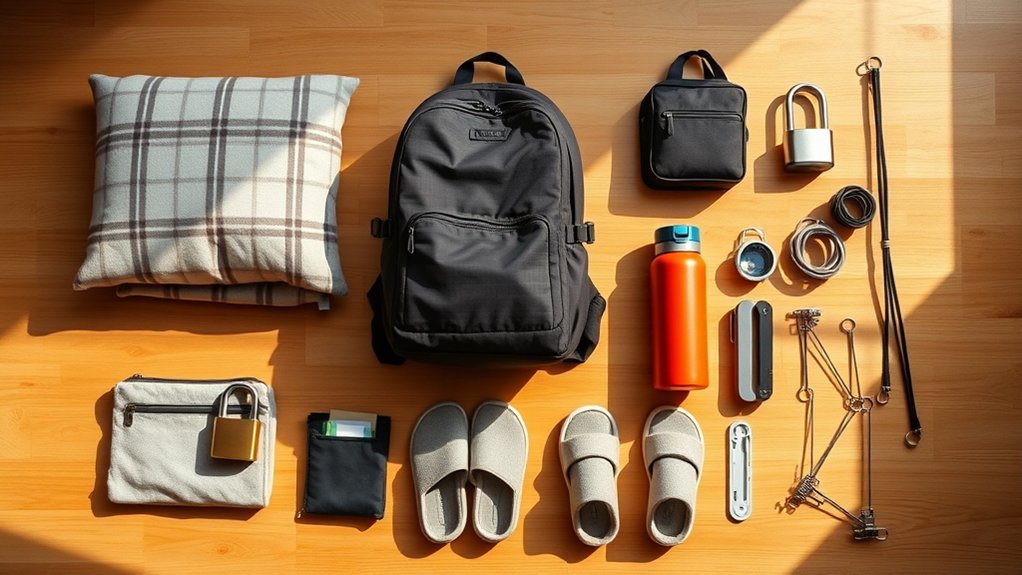
Hostel living is easier when you pack for shared bedrooms, shared bathrooms, limited storage, and different house rules. The best hostel packing list covers sleep, hygiene, security, charging, laundry, and daily sightseeing without filling your bag with items the property already supplies. Check your booking details first, then pack only what your stay and destination require.
Quick Answer
For hostel living, pack a locker-compatible padlock, quick-dry towel, shower sandals, hanging toiletry bag, earplugs, eye mask, reusable water bottle, portable charger, plug adapter, modest sleepwear, and a small daypack. Check the hostel’s amenities and rules first so you do not carry towels, linens, locks, or kitchen gear it already provides.
Key Takeaways
- Confirm locker size, towel and linen availability, kitchen rules, laundry access, and quiet hours before packing.
- Prioritize sleep and hygiene items: earplugs, an eye mask, shower sandals, a quick-dry towel, and a hanging toiletry bag.
- Use a compact padlock and keep passports, cash, and electronics locked away or under your direct control.
- Check plug type and voltage at your destination; a plug adapter changes the plug shape but does not convert voltage.
- Keep power banks in your carry-on baggage when flying, and follow the airline’s battery limits.
At a Glance
| Time Required | About 30–60 minutes to check amenities, make a list, and pack |
| Difficulty | Easy |
| Tools Needed | Hostel listing, destination weather forecast, airline baggage rules, and a packing checklist |
| Cost | About $0–$100+ depending on what you already own and what the hostel provides |
Disclosure: As an Amazon Associate I earn from qualifying purchases. Some links on this page are affiliate links, at no extra cost to you.
Before You Pack: Check the Hostel
Hostel amenities vary. Some properties include towels, linens, lockers, hair dryers, laundry machines, kitchen equipment, and luggage storage; others charge a fee or provide none of these. Read the property description and recent guest information, then contact the hostel when a detail affects what you need to carry.
- Lockers: Confirm that a locker is available and ask whether you need your own lock. If possible, check the shackle opening or locker style.
- Towels and linens: Find out whether they are included, rented, or unavailable.
- Bathrooms: Check whether they are shared, en suite, or separated by gender.
- Kitchen and food: Review cooking hours, food-labeling rules, refrigerator space, and restrictions on alcohol or outside food.
- Laundry: Check the price, payment method, opening hours, and whether detergent is sold on-site.
- Dorm rules: Note quiet hours, check-in times, age restrictions, and policies on sleeping bags, speakers, and personal appliances.
Pro Tip: Save the hostel’s address, check-in instructions, door code, and phone number offline. You may need them when your phone has weak service or the front desk is closed.
Essential Packing Items for Hostels
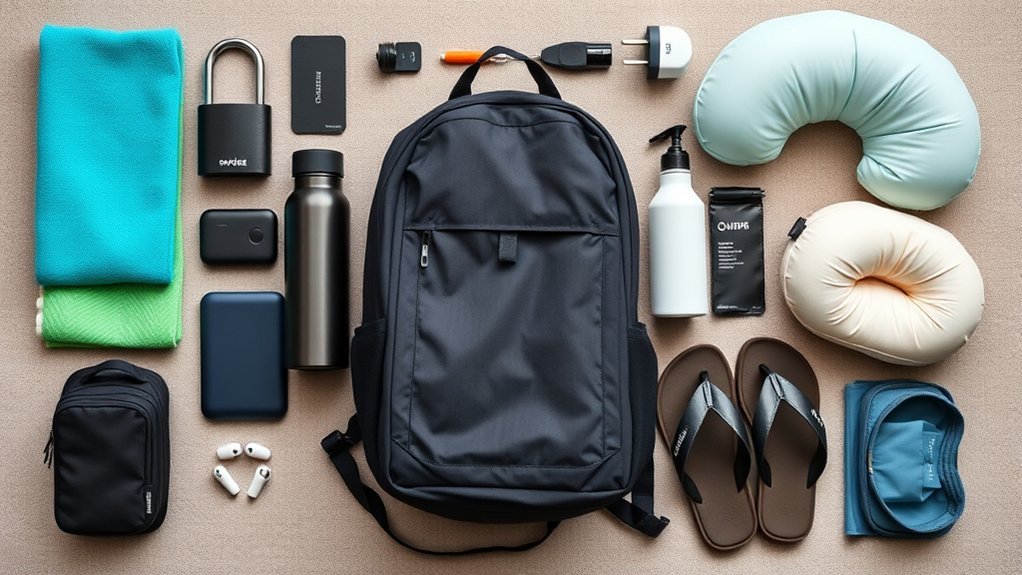
Start with items that solve the main challenges of hostel living: shared space, limited privacy, wet bathrooms, uneven access to outlets, and the need to carry valuables during the day. A hanging toiletry bag and quick-dry towel save space. Shower sandals protect your feet from direct contact with shared shower floors. A compact padlock helps secure a locker, while earplugs and an eye mask make a shared dorm easier to sleep in.
Products Worth Considering

【Earplugs Never Drop/lost】This 3D Contoured Sleep Mask With Earplug Retainer Cord secures a wide variety of sleep earplugs from falling out or getting lost. Never search for a missing earplug again. Where your sleep mask is, your earplugs will always be.

【True Blackout for Better Sleep, Day or Night】:Designed with a curved nose bridge and ergonomic 3D contour, this sleep mask blocks light around the nose, edges, and eye area for real blackout—even during daytime naps. Ideal for shift work, shared bedrooms, morning light, TV glare, hotels, and ambient light at night.

No light Leakage: With the heightened 22 mm adaptive hollow nose bridge, LitBear sleep mask fully fits all nose shapes, helps improve sleep, and gets longer deep sleep
Core Hostel Packing Checklist
| Category | Pack | Why It Helps |
|---|---|---|
| Sleep | Earplugs, eye mask, modest sleepwear | Reduces disturbance from lights, noise, and different schedules |
| Bathroom | Shower sandals, quick-dry towel, hanging toiletry bag | Keeps your routine compact and suited to shared facilities |
| Security | Combination padlock, document copies, discreet pouch | Helps protect valuables and speeds replacement of lost documents |
| Power | Charging cable, compatible plug adapter, portable charger | Keeps essential devices available when outlets are limited |
| Organization | Packing cubes, laundry bag, dry sack | Separates clean, dirty, and wet items in a small storage area |
| Daily use | Daypack, reusable bottle, headphones, small first-aid kit | Covers sightseeing, hydration, quiet entertainment, and minor problems |
Security Measures for Your Belongings
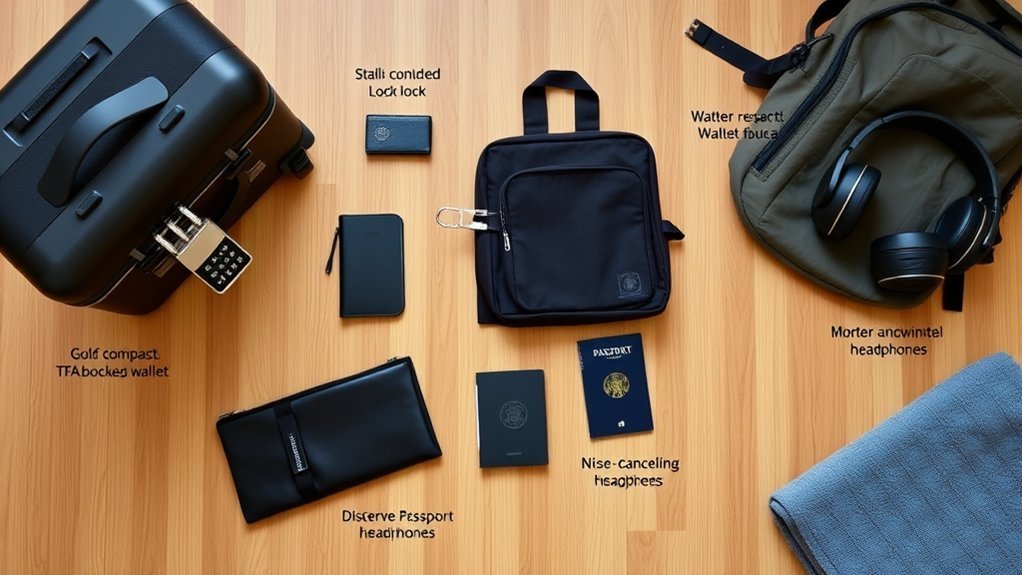
A hostel locker is useful only when your belongings fit and the lock works with the latch. Pack a compact combination padlock so you do not have to manage a key. A thin cable lock can add a layer of deterrence for a backpack when no full-size locker is available, but it is not a substitute for secure storage.
Use Padlocks for Security
Choose a lock that fits the hostel’s locker rather than buying by brand alone. The Master Lock 1505D, 1535DWD, and 1500iD are examples of compact combination-lock styles, but their shackle dimensions and suitability vary. Check the locker opening before relying on any model. A lock can deter casual access; it cannot guarantee that an item will not be stolen.
- Lock the locker every time you leave the room, even for a short trip to the bathroom or kitchen.
- Do not leave a laptop, passport, wallet, or phone unattended on a bed or charging in an empty common area.
- Keep your locker combination private and avoid setting an obvious code.
- Use device tracking and a strong screen lock on your phone and laptop.
Keep Valuables Securely Stored
Carry only the cash and cards you need for the day. Keep other valuables in a locked locker or approved safe. The U.S. Department of State advises travelers to avoid displaying expensive items, stay alert, and use device-location tools. It also recommends making copies of travel documents and storing the copies separately from the originals.
| Security Measure | Purpose | Practical Tip |
|---|---|---|
| Padlock for lockers | Restricts casual access | Confirm the shackle fits before arrival |
| Money belt or discreet pouch | Keeps cash and ID close in crowded places | Do not open it publicly unless necessary |
| Cable lock | Adds a deterrent when storage is limited | Attach the bag to a solid fixture without blocking exits |
| Document copies | Helps replace lost or stolen documents | Store copies separately and leave another set with a trusted person |
Warning: No padlock makes valuables theft-proof. Do not travel with irreplaceable jewelry or unnecessary high-value items, and do not leave passports, cash, or electronics unattended in dorms or common areas.
Clothing and Comfort Considerations
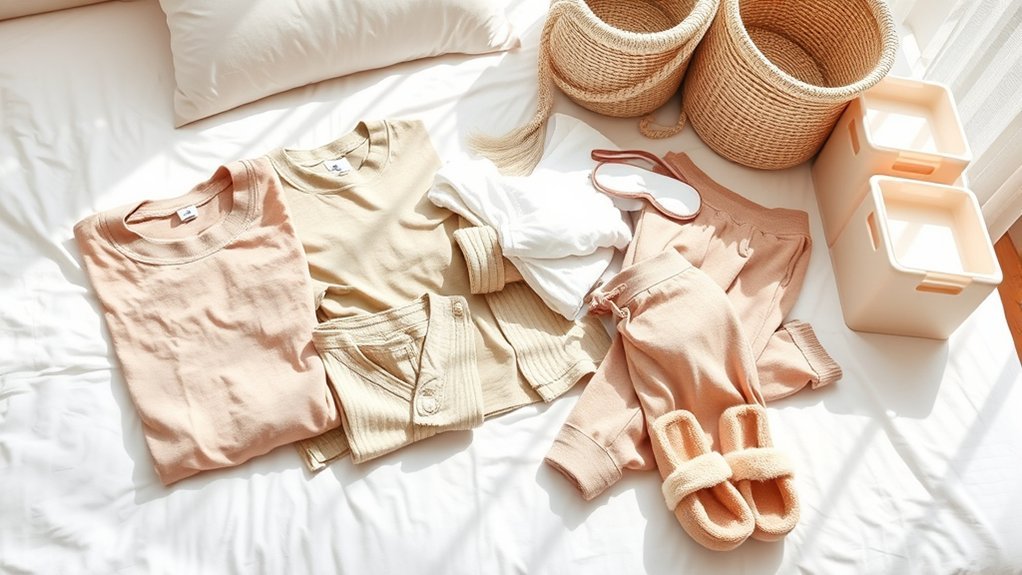
Pack clothing for the destination’s weather, planned activities, laundry access, and local customs. Neutral colors can make outfits easier to mix, while breathable or moisture-wicking fabrics help in warm climates and dry faster after washing. Include comfortable, modest sleepwear for shared dorms and one warm layer for strong air conditioning or cool nights.
The 5-4-3-2-1 packing rule can be a useful starting point, not a fixed formula. One version is five tops, four bottoms, three pairs of shoes, two outer layers, and one dressy or special-purpose outfit. Adjust the numbers for trip length, weather, and how often you can do laundry.
- Choose versatile pieces: Pack items that work in several outfits and settings.
- Limit bulky clothing: Wear the heaviest shoes or jacket in transit when practical.
- Roll or fold by fabric: Rolling saves space for many casual garments, but it will not keep every fabric wrinkle-free.
- Separate worn clothing: Use a laundry cube or breathable bag rather than mixing it with clean clothes.
- Respect local customs: Add shoulder or knee coverage when religious sites or local norms require it.
Toiletries and Personal Care Essentials
Pack only the personal-care items you use regularly. Leak-resistant travel containers, solid toiletries, and a hanging bag reduce clutter in shared bathrooms. Bring prescription medicine, basic first-aid supplies, and any menstrual or personal-care products that may be hard to replace at your destination.
Travel-Sized Toiletry Necessities
For carry-on travel through a U.S. airport, the TSA liquids rule generally limits liquids, aerosols, gels, creams, and pastes to containers of 3.4 ounces (100 milliliters) or less inside one quart-size bag. Rules and exemptions can differ by country, airport, and medical need, so check the authority that applies to your departure airport.
- Shampoo and conditioner or solid bars
- Soap or body wash
- Toothbrush, toothpaste, and floss
- Deodorant
- Sunscreen and insect repellent suited to the destination
- Personal medications in labeled containers
- Wet wipes or tissues for times when a sink is not nearby
Sanitary Shower Footwear
Pack shower sandals or flip-flops for shared bathrooms. The American Academy of Dermatology recommends wearing shower shoes in shared shower and locker areas to reduce exposure to the fungus that causes athlete’s foot. Choose a pair with a grippy outsole, rinse it after use, let it dry, and store it in a ventilated or resealable wet-item bag.
Organized Hanging Toiletry Bags
A hanging toiletry bag keeps bottles off wet counters and makes it easier to carry everything to and from the bathroom in one trip. Look for:
- Multiple compartments that keep wet and dry items separate
- A secure hook that fits a door, rail, or towel rack
- Water-resistant fabric that can be wiped clean
- Zippered pockets and elastic loops that hold small containers upright
- A size that fits inside your main bag without overloading it
Sleep Essentials for Shared Dorms
People in a dorm may arrive late, leave before sunrise, snore, turn on lights, or set alarms. A small sleep kit often improves a hostel stay more than an extra outfit.
- Earplugs: Carry more than one pair and keep them in a clean case.
- Eye mask: Choose a washable design that blocks light without pressing hard on your eyes.
- Comfortable sleepwear: Pack something you are comfortable wearing around strangers.
- Warm layer: A hoodie or light layer helps in air-conditioned dorms.
- Small light: Use a dim book light or your phone’s lowest setting instead of the main room light.
A light sleep sheet may add comfort, but check the hostel’s policy first. Some properties restrict outside bedding or sleeping bags as part of their pest-control rules.
Note: Use headphones, silence keyboard sounds, and prepare early-departure clothes the night before. Good packing also means reducing noise and light for other guests.
Daypack Options for Daily Adventures
A small daypack lets you leave your larger bag locked at the hostel while carrying water, a light layer, medicine, a charger, and daily essentials. Look for comfortable straps, secure zippers, a size that meets venue rules, and a design that does not advertise expensive equipment.
| Example or Style | Best For | What to Check |
|---|---|---|
| Fjällräven or Herschel compact backpack | General city use | Strap comfort, water resistance, and secure pockets |
| Aer Go Pack or another packable daypack | Minimal bulk inside a larger bag | Structure, zipper quality, and packed size |
| Patagonia sling or similar cross-body bag | Light loads and quick access | Capacity, balanced fit, and zipper position |
| Packing cubes | Organizing the main bag, not replacing a daypack | Useful sizes, mesh visibility, and durable seams |
Prices change by size, retailer, country, and season, so compare current specifications instead of relying on a fixed price list.
Electrical Needs and Charging Solutions
Before international travel, use the IEC World Plugs guide to check the destination’s plug type, voltage, and frequency. A plug adapter changes how a plug fits the outlet; it does not convert voltage or frequency. Read the input label on every charger or appliance before connecting it.
- Plug adapter: Choose a grounded, safety-certified adapter that matches the countries on your route. “Universal” adapters do not fit every outlet or support every appliance.
- Multi-port USB charger: This is often safer and smaller than carrying a general-purpose power strip for phones, watches, and tablets.
- Portable charger: The FAA requires spare lithium batteries and power banks to travel in carry-on baggage, not checked baggage. Protect them from short circuits and follow airline capacity limits.
- Hair dryer: Use only a model rated for the destination’s voltage and set any voltage switch correctly. A plug adapter alone cannot make a single-voltage dryer safe.
- Power strip: Use one only when the hostel permits it. Do not overload it, connect one strip to another, use it near water, or use damaged equipment.
Warning: High-wattage appliances can overheat an undersized adapter or power strip. The U.S. Consumer Product Safety Commission advises checking cord ratings, avoiding overloads, and replacing damaged cords. Stop using any charger, adapter, or strip that becomes unusually hot, sparks, smells burned, or shows exposed wiring.
Products previously suggested for this purpose—including the K-Century Travel Power Strip, EPICKA Universal Travel Adapter, and Conair 1600 Watt hair dryer—may change over time and may not suit every destination. Verify the current model’s safety certification, voltage rating, plug compatibility, wattage limit, and any hostel restrictions before use.
Products Worth Considering

[Multi-port Charging Station] This multi-port charging station can support charging of up to eight devices at the same time, with a total power of 20W. It is compatible with...
Tips for Staying Organized With Packing Cubes
Packing cubes reduce the need to unpack your whole bag in a dorm. Use different sizes for tops, bottoms, underwear, and accessories. Mesh panels make contents easier to identify and improve airflow, while a water-resistant cube or dry sack separates damp items.
- Keep one small cube accessible for sleepwear and the next day’s clothes.
- Use a separate cube or bag for laundry.
- Assign colors by category when that helps you find items faster.
- Do not compress clothes so tightly that zippers and seams are strained.
- Store frequently used items near the top of the main bag.
Hygiene and Cleaning Supplies
Shared facilities make compact hygiene supplies useful, but you do not need to carry a full cleaning cabinet. Pack personal items and follow the hostel’s rules for sinks, laundry rooms, kitchens, and waste disposal.
- Travel-sized toiletries or solid alternatives
- Hanging toiletry bag
- Quick-dry towel
- Shower sandals
- Hand sanitizer and a small pack of wipes
- Travel laundry soap or detergent sheets
- Breathable laundry bag and a small dry sack for wet items
- Optional sink stopper only when sink washing is allowed
Let towels, sandals, and washed clothing dry before packing them. Do not hang wet items over another guest’s bed or block heaters, fans, walkways, or fire-safety equipment.
Travel Documents, Medication, and Emergency Basics
The U.S. Department of State’s international travel checklist recommends making multiple copies of required travel documents, keeping a set separate from the originals, and leaving another set with a trusted person. Store secure digital copies that you can access if your phone is lost.
- Passport, visa, identification, and required booking records
- Travel insurance details and emergency contact information
- Copies of prescriptions and medicine in original labeled containers
- A small first-aid kit for minor cuts, blisters, and headaches
- Any allergy information or medical alert details you may need to communicate
Medicine that is legal at home may be restricted abroad. Check the destination’s official entry and health information before departure, especially for controlled medicines, syringes, or large quantities.
Entertainment and Social Interaction Tools
Hostels can be social, but every guest still deserves quiet and personal space. Pack entertainment that works both alone and with a group, then follow house rules and ask before bringing noise into a shared area.
Games for Interaction
- Playing cards: Compact, inexpensive, and easy to share.
- Travel games: Small versions of Uno, chess, or other familiar games can help start a conversation.
- Group games: Trivia or charades require little equipment and work well in common rooms.
- Portable speaker: Use only with permission and at a low volume in an appropriate common area. Headphones are the better default.
Reading Materials for Downtime
An e-reader, downloaded audiobook, podcast, or paperback gives you a quiet option during downtime. Download content before travel so it works offline. A journal is also useful for recording bookings, recommendations, expenses, and memories without relying on battery power.
Shared Cooking Activities
Communal kitchens can make meals affordable and social. Bring a reusable utensil or spork if useful, but do not assume you need pots, pans, or knives until you check the kitchen inventory and local transport rules.
- Label food with your name and checkout date.
- Respect refrigerator shelves and discard rules.
- Clean dishes, counters, and cooking tools immediately after use.
- Ask before sharing food and mention common allergens when cooking for others.
- Do not use personal hot plates, kettles, or cooking appliances in dorm rooms.
Additional Items You Might Want to Bring
A few small extras can solve common hostel problems without adding much weight.
| Item | Purpose | Packing Tip |
|---|---|---|
| Portable charger | Keeps navigation and check-in details available | Keep it in carry-on baggage when flying |
| Reusable water bottle | Supports hydration and reduces disposable bottle use | Confirm local tap-water guidance and empty it before airport screening |
| Travel laundry detergent sheets | Makes small laundry loads easier | Keep them dry and follow machine instructions |
| Lightweight dry sack | Separates wet clothing or sandals | Air items out as soon as possible |
| Earplugs and eye mask | Improves sleep in a shared dorm | Store them in a clean pouch near the top of your bag |
| Small light or headlamp | Lets you move around without turning on the dorm light | Aim it down and use the lowest practical setting |
Items to Avoid Bringing to a Hostel
- Irreplaceable valuables: Leave expensive jewelry, sentimental items, and unnecessary electronics at home.
- Oversized hard luggage: It may not fit inside lockers or under bunks and can block narrow dorm walkways.
- Too many clothes: Pack around laundry access rather than carrying a new outfit for every day.
- Single-voltage high-watt appliances: Hair tools and small cooking devices can be unsafe or prohibited.
- Sleeping bags without approval: Many hostels provide bedding and may restrict outside sleep systems.
- Strong-smelling or messy food: Keep it out of dorm rooms and follow kitchen-storage rules.
- Large speakers: Shared accommodation is not a private sound system.
The best hostel packing list is not the longest one. It is the shortest list that covers your safety, sleep, hygiene, charging, and daily plans after you confirm what the property already provides.
Frequently Asked Questions
What should I do if I forget something important?
Ask reception whether the hostel lends or sells the item, then check a nearby pharmacy, supermarket, outdoor shop, or convenience store. For medication, documents, or another essential item, use an official or trusted source rather than borrowing an unknown product from another traveler.
Are there any items I should avoid bringing?
Avoid irreplaceable valuables, bulky luggage, too many clothes, large speakers, prohibited cooking devices, and high-watt appliances that are not compatible with local voltage. Check the hostel’s rules before bringing outside bedding, alcohol, or large amounts of food.
How can I keep my valuables safe in a hostel?
Use a locker with a compatible padlock, keep valuables out of sight, carry only what you need, and never leave a phone, laptop, passport, or wallet unattended. Enable device tracking and store document copies separately from the originals.
What’s the best way to handle laundry in hostels?
Use the hostel’s laundry room or a nearby laundromat. Carry a breathable bag for dirty clothing and a small amount of detergent. Ask before washing items in a sink, follow machine instructions, and give clothing enough time to dry before checkout.
Can I bring food or drinks to my hostel?
Often yes, but rules vary. Some hostels ban food in dorms, restrict alcohol, or require labels on refrigerated items. Check the property’s policy and local rules, store food only in approved areas, and clean up immediately.
Do hostels provide towels, locks, and toiletries?
There is no universal standard. Some include these items, some rent or sell them, and others expect guests to bring their own. Review the amenities list and ask the property before packing.
Do I need a sleeping bag for a hostel?
Usually not, because hostels commonly provide bed linen. Some properties do not allow sleeping bags or outside bedding, so check the rules before bringing one. A light sleep sheet should also be approved first.
Is a backpack better than a suitcase for hostel travel?
A backpack is often easier on stairs, public transport, and uneven streets, while a wheeled suitcase may be more comfortable on smooth routes. Choose the option you can handle safely and confirm that it fits the hostel’s storage space and your airline’s baggage limits.
Conclusion
A good hostel packing list prepares you for shared space without weighing you down. Confirm the property’s amenities, then focus on a compatible lock, sleep kit, shower footwear, quick-dry towel, organized toiletries, charging equipment, document backups, and a small daypack. Pack for the destination and house rules, secure your valuables, and show consideration for the people sharing the room.
Sources
- Transportation Security Administration — Liquids, Aerosols & Gels Rule — carry-on toiletry limits at U.S. airport security checkpoints.
- Federal Aviation Administration — PackSafe: Lithium Batteries — baggage rules for power banks and spare lithium batteries.
- International Electrotechnical Commission — World Plugs — destination plug types, voltage, and frequency.
- U.S. Department of State — International Travel Checklist — document copies, medication planning, and travel preparation.
- American Academy of Dermatology — How to Prevent Athlete’s Foot — use of shower shoes in shared wet areas.
- U.S. Consumer Product Safety Commission — Household Extension Cords Can Cause Fires — cord inspection, ratings, and overload prevention.
