

Last Updated on July 25, 2026 by Daniel Globe
Hotel pillows are not all the same. A property may use feather-and-down pillows, pure down, down-alternative fiberfill, or specialty options such as memory foam or latex. The best choice depends less on a “hotel standard” and more on the pillow’s loft, firmness, construction, and how you sleep.
Quick Answer
Hotels commonly use a mix of feather-and-down and down-alternative pillows, often in more than one firmness. Some luxury properties also use all-down pillows or offer specialty choices. There is no universal hotel pillow. For a better stay, ask the front desk for a firmer, softer, feather-free, or different-loft pillow if the standard one does not suit you.
Key Takeaways
- Hotels use several pillow types; feather-and-down and down-alternative are common choices.
- Down clusters create softness and loft, while feathers usually add more structure and support.
- Fill power measures the loft of down and feather filling; it does not, by itself, tell you how firm a pillow will feel.
- Side sleepers often need more loft, back sleepers usually need medium loft, and stomach sleepers often do better with a thinner pillow.
- Do not assume natural down is automatically allergy-proof. Guests with sensitivities can ask for a feather-free pillow and an allergen-resistant pillow cover.
Disclosure: As an Amazon Associate I earn from qualifying purchases. Some links on this page are affiliate links, at no extra cost to you.
What Kinds of Pillows Do Hotels Use?
There is no single pillow used by every hotel. Current Marriott retail listings, for example, include down, feather-and-down, and down-alternative pillows across its hotel brands. That is a useful real-world example of why “hotel pillow” describes a category of bedding rather than one fixed material or specification.
Common hotel pillow constructions include:
- Down pillows: filled mainly with soft down clusters from ducks or geese. They are compressible and plush, but the feel depends on fill quality, fill weight, construction, and density.
- Feather-and-down pillows: combine feathers for structure with down for softness. Some use a chamber design with a supportive feather core and a softer down outer layer.
- Down-alternative pillows: use synthetic fiberfill to imitate a soft, lofty feel without animal-derived filling. They are often chosen for feather-free rooms or guests who prefer non-down bedding.
- Specialty pillows: memory foam, latex, buckwheat, cooling designs, and other fills may be available at some properties, but availability varies by hotel.
The practical answer is simple: hotels often offer a mix of pillow materials and firmness levels because one pillow cannot suit every sleeper.
A Brief History of Down Pillows
The history of pillows goes back thousands of years, but the common claim that ancient Egyptians were among the first people to sleep on duck- or goose-down pillows is not well supported. Evidence from The Metropolitan Museum of Art shows that ancient Egyptians commonly used raised headrests made from materials such as wood or stone, sometimes padded for comfort. Soft stuffed pillows also existed in antiquity, but the exact origin of down-filled pillows is difficult to pin to one civilization.
Down and feather bedding later became associated with comfort and wealth in parts of Europe, and improvements in textile production eventually made filled bedding available to a much wider market. As modern hotels developed, bedding quality became one part of the guest-comfort experience. Today, hotels may choose natural down, feather blends, synthetic alternatives, or a combination based on cost, durability, maintenance, brand standards, and guest preference.
The Benefits of Using Luxury Down Pillows
Luxury down pillows are valued mainly for softness, low weight, and moldability. Down clusters compress easily around the head, which can create a plush, cushioned feel. That does not mean every down pillow automatically provides good neck support. A pillow still needs the right loft and firmness for the sleeper and mattress.
Down also has a high loft-to-weight ratio, which is why fill power is used as one quality measurement. According to IDFL, fill power is a volumetric measurement used to estimate the loft and insulation value of down and feather filling. Higher fill power generally means a given amount of down occupies more space, but pillow firmness also depends on how much filling is used and how the pillow is constructed.
Note: “Down,” “feather,” and “feather-and-down” are not interchangeable terms. Down is the soft, three-dimensional undercoating beneath a bird’s outer feathers; feathers contain a shaft or quill and usually add more structure.
How Down Pillows Enhance Comfort in Hotel Rooms
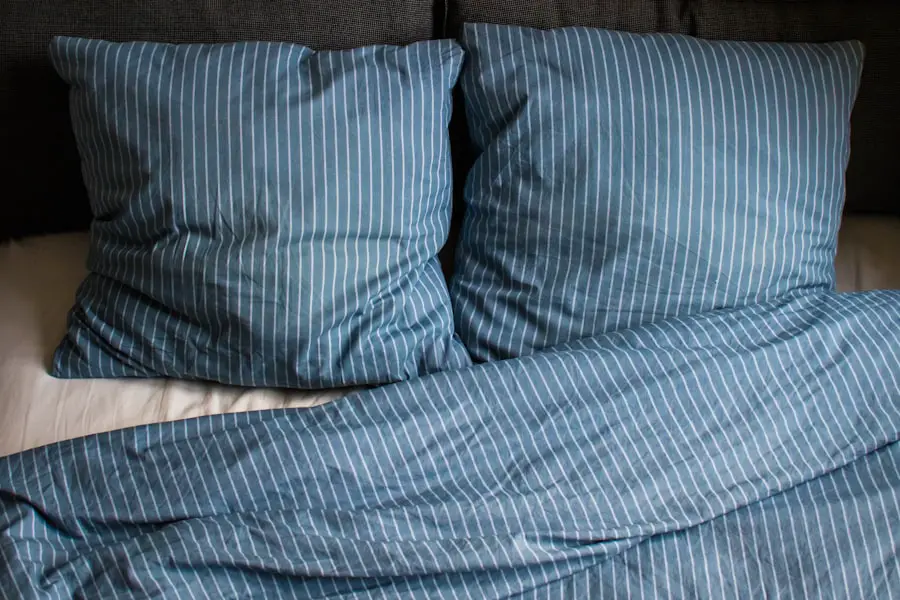
When travelers check into a hotel, they often want the bed to feel immediately comfortable. A moldable down pillow can create that soft, sink-in sensation, while a feather-and-down chamber pillow can combine a softer surface with a more supportive inner core. The exact feel varies widely by model.
The right pillow can also help keep the neck in a more neutral position. Cleveland Clinic advises choosing a pillow that supports the neck without bending it sharply up, down, or to the side. That is why loft and sleeping position matter more than the prestige of the filling alone.
Appearance also contributes to the hotel-bed experience. Full, well-fluffed pillows make a bed look inviting, while multiple pillows let guests stack, remove, or swap them to change the feel. The visual effect is part of the sense of comfort, but the best pillow is still the one that keeps the sleeper comfortable through the night.
The Different Types of Down Pillows Available
| Pillow Type | Typical Filling | Typical Feel | What to Know |
|---|---|---|---|
| Goose Down Pillow | Goose down clusters | Soft, moldable, lofty | Goose down can achieve high fill power, but species alone does not guarantee quality. |
| Duck Down Pillow | Duck down clusters | Soft and compressible | Good duck down can outperform lower-quality goose down; compare actual fill power and construction. |
| Feather-and-Down Chamber Pillow | Feather core with down outer layer, or another down/feather blend | Supportive center with a softer surface | A common hotel-style construction because it balances softness and structure. |
| Synthetic Down-Alternative Pillow | Polyester or microfiber fiberfill | Varies from soft to firm | Feather-free and often easy to machine wash; fill power is not normally used the same way as for natural down. |
Goose and duck down are both used in pillows. IDFL notes that goose down clusters are generally larger, but it also cautions that excellent duck down can be better than mediocre goose down. Instead of assuming “goose” always means premium, compare the fill composition, fill power, fill weight, construction, and care instructions.
Fill Power vs. Firmness
Fill power is often misunderstood. It describes loft, not how hard a pillow feels. A high-fill-power pillow can still feel soft if it contains less filling, while a lower-fill-power pillow can feel firmer if it is densely packed or uses a feather core. For a hotel stay, firmness labels such as soft, medium, or firm are often more useful than a fill-power number alone.
Tips for Choosing the Right Down Pillow for Your Hotel Stay
Your sleeping position is a useful starting point. Side sleepers usually need more loft to fill the space between the head and shoulder. Back sleepers generally need moderate loft, while stomach sleepers often prefer a thin, soft pillow that does not push the head too far upward. Mattress firmness and body size can change those needs.
- Side sleeper: ask for a higher-loft or firmer pillow if your head drops toward the mattress.
- Back sleeper: look for medium loft that supports the natural curve of the neck without pushing the chin toward the chest.
- Stomach sleeper: try a low-loft, soft pillow, or use less pillow height if a thick pillow strains your neck.
- Combination sleeper: a medium, moldable pillow or adjustable-fill pillow may be easier to reposition.
Pro Tip: Call the front desk or housekeeping rather than assuming the pillows on the bed are your only options. Ask specifically for “firm,” “soft,” “higher loft,” “lower loft,” or “feather-free” so staff know what you need.
If a pillow repeatedly causes neck pain, numbness, or poor sleep, try a different loft or material rather than assuming a luxury down pillow is automatically the best match.
Down Pillows, Allergies, and Hotel Hygiene
Down should not be described as naturally dust-mite-proof. Dust mites can live in bedding, and Mayo Clinic guidance focuses on reducing exposure with washable bedding, humidity control, and allergen-resistant covers rather than relying on a particular pillow fill. The American Academy of Allergy, Asthma & Immunology has also noted that synthetic pillows are not automatically less prone to dust-mite allergen than feather pillows.
Guests with known sensitivities can request a feather-free pillow and, where available, an allergen-resistant pillow encasement. If a hotel pillow smells damp, appears stained, or seems poorly maintained, ask for a replacement rather than trying to clean the hotel’s property yourself.
Warning: “Hypoallergenic” is not a guarantee that a pillow cannot trigger symptoms. People can react to different allergens, and persistent allergy or breathing symptoms should be discussed with a qualified healthcare professional.
The Importance of Proper Care and Maintenance for Down Pillows

Proper care helps preserve the loft and cleanliness of down and feather pillows. The original care label should control because washing instructions vary by shell fabric, filling, construction, and manufacturer. Do not assume that every down pillow should be washed at high temperature.
For example, DOWNLITE care instructions for one hotel-style chamber pillow call for a large-capacity washer, mild detergent, a gentle cycle, and low-heat drying. Complete drying is especially important because trapped moisture can cause odor, clumping, or mildew. Pillow protectors can also reduce how often the pillow itself needs to be washed.
Regular fluffing helps redistribute the filling. When pillows are stored, they should be kept clean and completely dry, with enough airflow to avoid trapping moisture. Hotels may have their own commercial laundry and replacement procedures, so guests should report a problem to staff rather than attempting to wash a room pillow.
The Environmental Impact of Down Pillows
Down is an animal-derived material, so responsible sourcing matters. Animal-welfare concerns in the down supply chain include live plucking and force-feeding. The Responsible Down Standard (RDS), administered by Textile Exchange, is a voluntary third-party standard that prohibits live plucking, molt harvesting, and force-feeding within certified supply chains and uses chain-of-custody requirements to track certified material. As of July 2026, Textile Exchange says brands and producers can continue using RDS for down; down is not included in the first version of its newer Materials Matter Standard.
That makes certification more useful than a vague claim such as “ethically sourced.” Travelers or hotels that want natural down can look for credible third-party certification and verify the supplier’s claims. People who prefer to avoid animal-derived materials can choose down-alternative, latex, memory foam, or other non-down fills.
Environmental trade-offs also vary by material. Natural down comes from animal agriculture, while many down-alternative pillows use polyester, a synthetic fiber. A more useful sustainability comparison looks at sourcing, recycled content, durability, care needs, and how long the pillow remains usable rather than assuming one material is automatically best in every category.
Alternatives to Down Pillows for Hotel Comfort
For travelers who prefer alternatives to down because of personal comfort, allergies, maintenance, or animal-welfare concerns, several options may be available.
- Down alternative: synthetic fiberfill designed to create a soft, lofty feel without feathers or down.
- Latex: springier and more resilient than down, with a firmer feel that some sleepers prefer for neck support.
- Memory foam: contours closely and tends to hold its shape better than loose down, although heat retention and firmness vary by design.
- Buckwheat hulls: adjustable and breathable but noticeably firmer and noisier as the hulls shift.
No alternative is automatically best for everyone. The right hotel pillow is the one that gives you enough support without forcing your neck into an uncomfortable angle.
Can You Buy the Same Pillows Hotels Use?
Sometimes. Hotel groups may sell bedding through official retail stores, and some hotel suppliers sell similar or identical models directly to consumers. Marriott, for example, currently lists feather-and-down, down, and down-alternative pillows through its official retail store. Before buying, check the exact hotel brand, pillow name, size, fill composition, and firmness because one chain may use several pillow models.
Beyond bedding, staying hydrated can also make travel more comfortable. For a separate packing resource, see TakeTravelInfo’s portable water bottle guide for spring travel.
Frequently Asked Questions
What kind of pillows do hotels use?
Hotels use several types, including feather-and-down, all-down, and down-alternative pillows. Some properties also offer memory foam, latex, or specialty pillows. There is no single pillow type used by every hotel.
Why do hotels use down and feather pillows?
Down adds softness and moldability, while feathers can add structure. A feather-core/down-outer chamber design can give a hotel pillow a supportive center with a softer surface.
Do all hotels use the same type of pillows?
No. Pillow choices vary by hotel brand, property, room type, supplier, maintenance needs, and guest-comfort standards. Even one hotel family may offer several pillow constructions and firmness levels.
Are hotel pillows available for purchase?
Some are. Certain hotel brands sell pillows through official retail stores, while hotel-bedding suppliers also sell hospitality models. Match the exact model and firmness rather than buying a product labeled only “hotel style.”
Can guests request different types of pillows at hotels?
Often, yes, although availability varies. Ask the front desk or housekeeping for a softer, firmer, higher-loft, lower-loft, feather-free, or specialty pillow. Not every property keeps every type in stock.
Are down pillows hypoallergenic?
Not automatically. A “hypoallergenic” label does not mean a pillow is allergen-proof. Guests with feather or bedding sensitivities can request a feather-free pillow and an allergen-resistant cover when available.
Is goose down always better than duck down?
No. Goose down often has larger clusters and can reach high fill power, but quality still varies. High-quality duck down can be better than lower-quality goose down, so compare the actual specifications instead of species alone.
What fill power is best for a hotel-style down pillow?
There is no single best number. Fill power measures loft, while pillow firmness also depends on fill weight and construction. For sleep comfort, choose the loft and firmness that keep your neck in a comfortable, neutral position.
Sources
- Marriott Bonvoy Boutiques — Pillows — examples of current hotel-brand down, feather-and-down, and down-alternative pillow offerings.
- IDFL — Goose vs. Duck — differences between goose and duck down and why species alone does not determine quality.
- IDFL — Fill Power — definition of fill power as a loft/volume measurement.
- Mayo Clinic — Dust Mite Allergy: Diagnosis & Treatment — bedding and allergen-exposure guidance.
- Textile Exchange — Responsible Down Standard — animal-welfare and chain-of-custody requirements for certified down.
- Cleveland Clinic — Choosing a Pillow for Neck Support — guidance on pillow loft, neck position, and sleep comfort.
