

Last Updated on September 11, 2026 by Logan Reeves
The M1 Carbine shaped infantry tactics and logistics in World War Two because it combined light weight, reliable firepower, and mass production. You benefit from understanding this weapon whether you are a collector, historian, shooter, or restorer, because knowledge of its variants, markings, and manuals lets you identify authentic parts, make informed buying decisions, and preserve historical accuracy.
This article points you to the best references and a realistic replica so you can quickly find authoritative sources that match your needs.
Disclosure: As an Amazon Associate I earn from qualifying purchases. Some links on this page are affiliate links, at no extra cost to you.
Top Picks
|
Category |
Product |
Score |
|---|---|---|
|
🏆 Best Visual Reference |
95/100 |
|
|
💰 Best Value Reprint |
86/100 |
|
|
🎯 Best Field Manual |
90/100 |
|
|
⭐ Most Realistic Replica |
78/100 |
Selection Criteria
You need sources that are accurate, usable, and matched to your purpose. Priority was given to works with clear photography and illustrations when visual identification matters, to faithful reprints of original technical manuals when repair and maintenance detail is required, and to contemporary field manuals for operational context. Value and accessibility were considered so you can obtain material without excessive cost or rarity premium.
For replicas, realism of feel and ergonomics, plus user feedback on reliability, guided the choice so you know what to expect from a hands-on example.
M1 Carbine Guide

This compact, image-rich guide gives you a clear, focused look at M1 Carbine variants, markings, ammunition and common accessories. You can use it as a quick visual reference when comparing parts, as a prep tool before buying or restoring a piece, or as a handy resource at a show or swap meet. The book balances photos and concise text so you get useful detail without wading through an encyclopedia, and it’s a practical recommendation if you want authoritative visuals and straightforward identification tips.
What People Say
You’ll find most readers praise the visuals and clear presentation, noting the illustrations and color photos help with identifying parts and variants. Collectors appreciate the focused content that fills gaps left by larger references, and reviewers often call it a worthwhile, practical addition to a reference shelf.
A small number of buyers mention ordering or delivery hassles, but the content itself is consistently described as informative and well produced.
Overall Sentiment: Positive

Versatility
This guide works well whether you need a bookshelf reference, a field identification aid at a gun show, or a quick refresher before a restoration project. You can rely on it for visual checks, comparison of markings, and as a companion to technical manuals when you need deeper repair detail.
Safety
The book highlights correct ammunition types, markings and accessory identification so you can avoid mismatches; it does not replace hands-on safety training or official manuals but points you toward accurate references for safe handling and maintenance.
Key Benefits
- High-quality color photos that make variant and parts ID easier
- Concise breakdowns of markings and accessories for quick reference
- Compact, accessible format suited to collectors, restorers, and enthusiasts
Rating: 4.8 (total: 70+)
Cal .30 Manual

This is a faithful reproduction of the original TM 9-1276 technical manual, and it gives you granular detail on the operation, maintenance and sub-assembly repair of the .30 caliber carbines. You can use it as a day-to-day reference when you’re cleaning, diagnosing faults, or cataloging parts, and it also serves well for special projects like restorations, reenactments, or in-depth research.
If you want authoritative, mechanic-level information straight from the source, this manual is a practical and reliable choice.
What People Say
Readers consistently value the manual for its original diagrams and detailed repair guidance, saying it fills a gap where modern summaries fall short. Collectors and reenactors appreciate the clarity of illustrations and the practical focus on sub-assembly work, while a few note it assumes some prior mechanical experience rather than walking through basic teardown steps.
Overall Sentiment: Positive

Versatility
This manual is geared toward hands-on use: it’s handy on the bench for repairs, useful at a swap meet for verifying parts, and informative for research or reenactment planning. It complements visual guides when you need the nuts-and-bolts procedures.
Safety
The manual specifies correct ammunition, lubrication points and inspection criteria that help you avoid mismatches and unsafe configurations, but it is a technical document and not a substitute for formal firearms safety training.
Key Benefits
- Faithful reprint of the original technical manual with clear diagrams
- Repair-focused content useful for maintenance, parts ID and restoration
- Compact, durable format that’s easy to bring to the bench or range
Rating: 4.7 (total: 87+)
FM 23-7 Manual

This field manual gives you a thorough, practical look at the M1 Carbine’s operation and service procedures. You can keep it on the bench for routine maintenance, bring it to the range to check procedures, or use it when planning a restoration or a historical display. It reads like an authoritative source rather than a modern primer, so it pairs well with visual guides and parts references when you need both context and technical detail.
What People Say
Readers commonly call this a must-have if you shoot or collect M1 Carbines, appreciating the depth of information and the practical photos. Many buyers note the manual’s thoroughness for routine care and operation, while a few mention that some historical photos are low resolution compared with modern prints.
Overall Sentiment: Positive

Versatility
This manual is useful on the range, at the workbench, and as a research source. You’ll find it helpful for everyday maintenance tasks as well as for special projects like restorations, reenactments, or compiling an accurate reference library.
Safety
The manual specifies correct ammunition, inspection criteria and maintenance steps that reduce the chance of unsafe configurations; it complements hands-on safety training but does not replace formal instruction.
Key Benefits
- Authoritative field-level procedures straight from the original manual
- Extensive operational and maintenance detail useful for shooters and restorers
- Solid reference for historical context and technical understanding
Rating: 4.6 (total: 248+)
Springfield Air Rifle

This replica puts the look and handling of an M1 Carbine in a package you can shoot at the range or enjoy with family. You’ll appreciate the metal frame, realistic sights and blowback action that give a convincing feel without the legal and safety requirements of a firearm.
It’s handy for casual target practice, historical display, or introducing younger shooters to basic shooting fundamentals under supervision. If you want a tactile, affordable way to experience the M1 profile, this is a practical pick.
What People Say
Most buyers praise how closely this replica resembles the original M1 in appearance and ergonomics, and they often mention the sights and accuracy for casual shooting. Common complaints center on magazine fiddliness, occasional feeding or cycling issues, and higher CO2 consumption than some expect.
A number of users report that small adjustments or replacement parts resolved reliability concerns.
Overall Sentiment: Neutral

Versatility
You can use it for backyard plinking, teaching safe handling to new shooters, or as a display piece in a collection. It bridges the gap between a static replica and a functional airgun that you can shoot for fun without the complexity of a real firearm.
Safety
Being CO2-powered, it’s crucial to treat this as a working airgun: always follow basic firearm safety, use eye protection, supervise younger users and ensure proper CO2 handling. The manual lists maintenance steps and basic troubleshooting to reduce jams and ensure safer operation.
Key Benefits
- Realistic look and feel with metal frame and authentic sights
- Blowback action provides a convincing shooting experience
- Suitable for casual target practice, display, and supervised family use
Rating: 4.1 (total: 239+)
FAQ
How Do I Verify Authenticity And Markings
You should compare receiver stamps, cartouches, and part numbers against high-quality photographic references and original manuals before buying; consistent tooling marks and correct stamping locations are strong indicators of authenticity. Inspect the bore, serial ranges, and shop marks and, when possible, ask the seller for close-up images of critical areas rather than just a single overview shot.
If something looks inconsistent, consult a reputable collector, armorer, or the photographic guides to avoid expensive mistakes.
What References Should I Use For Maintenance And Repair
Use original or faithful reprints of the TM 9-1276 and FM 23-7 for service procedures and sub-assembly diagrams, and pair those with an identification guide that shows markings and accessory variants for part matching. The field manual gives operational and inspection steps while the technical manual covers repair-level disassembly and reassembly, so keep both handy at the bench and cross-check visuals when replacing parts. If you’re not trained in gunsmithing, follow the manuals for inspections and basic maintenance but leave complex repairs to a qualified gunsmith.
Are Replicas Useful For Training And Display
Replicas and CO2 airguns are excellent for learning ergonomics, sighting, and safe handling because they offer realistic weight and controls without firearm legalities, but treat them with the same safety rules as firearms. Check magazines, feed reliability, and CO2 fittings before supervised use, use eye protection, and be aware that replicas may not duplicate original recoil or cycling exactly. For collection display, a high-quality visual guide helps you confirm finish patterns and accessory correctness so your replica complements the historical narrative accurately.
Buyer Preferences
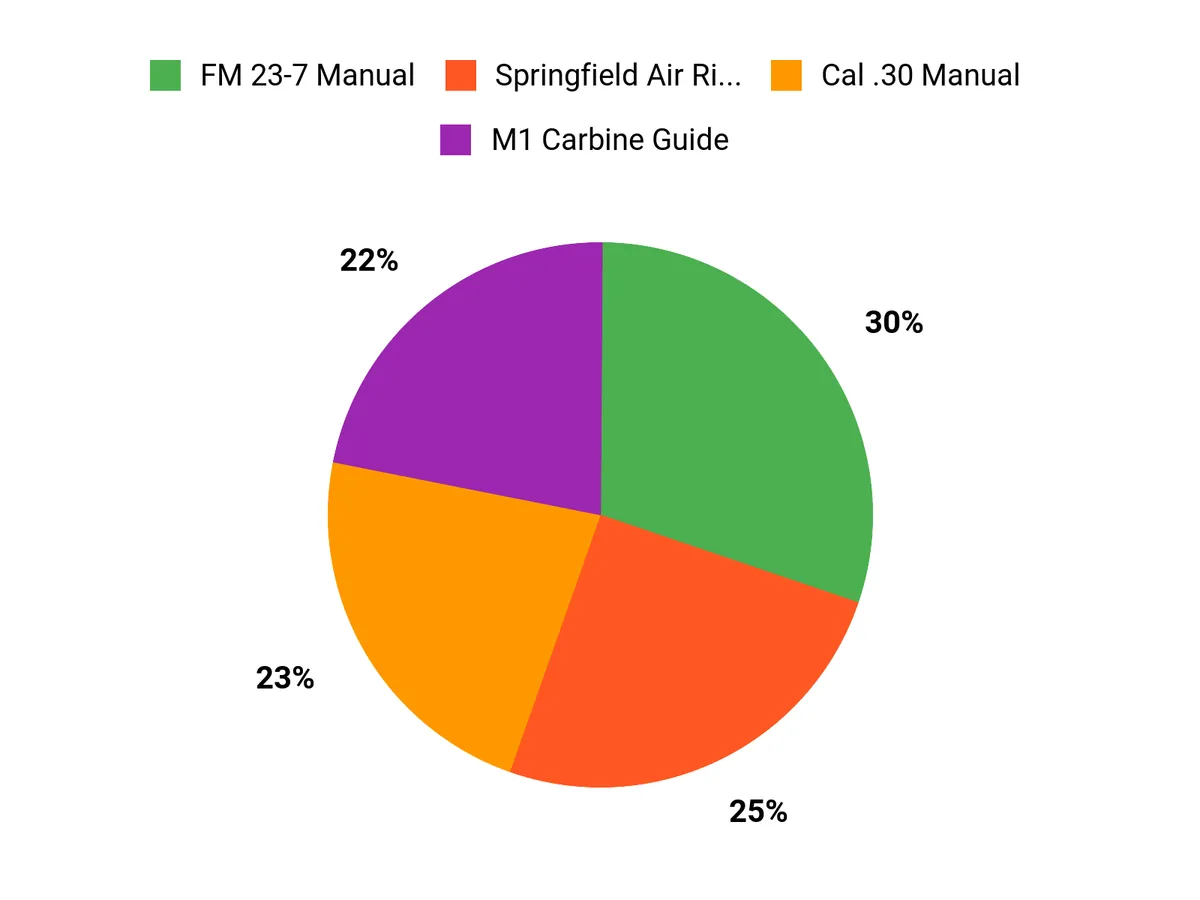
You decide based on whether you need quick visual identification, repair-level procedures, or field-oriented operational guidance. If you want fast part and marking recognition you’ll prefer the photo-rich M1 Carbine Guide; if you’re doing restorations you’ll reach for the Cal .30 manual for its disassembly diagrams; and if you need service and inspection procedures you’ll choose the FM 23-7 field manual.
Wrapping Up
If you want a compact, image-rich survey of M1 Carbine variants and accessories, the M1 Carbine Guide is the clearest visual reference and worth its $24.99 price for collectors and identifiers. If your priority is original technical content at a lower cost, the Cal .30 Manual reprint offers practical repair-level diagrams and historic accuracy for $14.25.
For operational procedures and an authoritative service perspective, the FM 23-7 Manual is the best field manual and a good addition to any reference shelf at $14.95. If you are looking for a hands-on experience that mimics look and handling without the legal complexity of a firearm, the Springfield Air Rifle is the most realistic replica option. Each pick is chosen to serve a different practical need so you can select the reference or replica that helps you identify, maintain, or experience the M1 Carbine with confidence.
| Product Name | Image | Rating | Publisher | Publication Date | Print Length |
|---|---|---|---|---|---|
| The M1 Carbine: Variants, Markings, Ammunition, Accessories (Classic Guns of the World, 10) |
|
4.8/5 (N reviews) | Schiffer Military History | August 24, 2021 | 80 pages |
| Cal. .30 Carbines M1, M1A1, M2, and M3 Rifles TM 9-1276 |
|
4.7/5 (N reviews) | Pentagon Publishing | April 1, 2007 | 182 pages |
| U.S. Carbine, Caliber .30, M1 Field Manual: FM 23-7 |
|
4.6/5 (N reviews) | Periscope Film LLC | October 1, 2013 | 150 pages |
| Springfield Armory M1 Carbine, Blowback CO2 .177cal BB Rifle air Rifle |
|
4.1/5 (239 reviews) | SPRINGFIELD ARMORY | N/A | N/A |
This Roundup is reader-supported. When you click through links we may earn a referral commission on qualifying purchases.
