Last Updated on July 27, 2026 by Daniel Globe
Hiking boots and jeans can work very well together when the fit and proportions are right. Straight, slim, tapered, and relaxed jeans can all pair with hiking boots, but the best hem treatment depends on the boot height and jean opening. For casual wear and easy walks, denim is practical and stylish. For wet, cold, or demanding trails, however, quick-drying hiking pants are usually a safer choice than cotton jeans.
Quick Answer
Wear hiking boots with straight, slim, or tapered jeans that reach the top of the boot without heavy bunching. Cuff the hem to show the boots, tuck narrow jeans when appropriate, or let straight and bootcut jeans fall over the collar. Add wool or synthetic socks, and save cotton denim for mild, mostly dry conditions.
Key Takeaways
- Straight, slim, and tapered jeans are the easiest cuts to wear with hiking boots because they control excess fabric around the ankle.
- Cuffing is best when you want to show the boot, while straight or bootcut jeans can fall naturally over the boot.
- Tuck jeans only when the leg opening is narrow enough to sit smoothly inside the boot without pressure or bulky folds.
- Choose hiking socks made from merino wool or quick-drying synthetic fibers, and make sure their thickness does not make the boots too tight.
- Waterproof boots are useful in wet conditions, but breathable non-waterproof footwear may be more comfortable in hot, dry weather.
- For serious hiking in wet, cold, or changeable weather, replace cotton denim with quick-drying hiking pants.
At a Glance
| Time Required | About 5–10 minutes to choose the jeans, socks, cuff, and layers |
| Difficulty | Easy |
| Tools Needed | Hiking boots, well-fitting jeans, hiking socks, and weather-appropriate layers |
| Cost | $0 if you already own suitable boots, jeans, and socks |
Disclosure: As an Amazon Associate I earn from qualifying purchases. Some links on this page are affiliate links, at no extra cost to you.
Choose the Right Hiking Boots First
Selecting the appropriate hiking boots is the first step toward a comfortable outfit. More importantly, the footwear needs to match where you plan to walk. A casual day around town has very different requirements from a rocky trail or multi-day backpacking trip.
For longer trips, rough terrain, or heavier loads, a sturdier mid- or high-cut boot can provide more structure and protection. On maintained trails or casual walks, a lighter hiking shoe or flexible low-cut model may be enough. REI’s hiking footwear guide recommends choosing footwear according to distance, terrain, load, and fit rather than assuming one boot style is best for everyone.
Fit is especially important. A hiking boot should feel snug without painful pressure and leave room for your toes to move. Trying boots later in the day can also help because feet normally swell during activity. Wear the same sock thickness you expect to use outdoors when checking the fit.
Pro Tip: Check the fit on an incline if possible. Your heel should remain reasonably secure, and your toes should not repeatedly hit the front of the boot on a downhill slope.
Leather vs. Synthetic Hiking Boots
Full-grain leather is valued for durability, abrasion resistance, and good water resistance, but it is usually heavier and less breathable. Synthetic uppers are generally lighter, dry faster, and need less break-in time, although some may wear sooner. Many modern boots combine several materials.
Do Hiking Boots Need to Be Waterproof?
Not always. A waterproof membrane can help when you expect rain, wet vegetation, mud, or shallow water. The tradeoff is reduced ventilation compared with an open-mesh or non-waterproof shoe. In hot, dry weather, a breathable hiking shoe may feel better and dry faster.
Cuffing Your Jeans
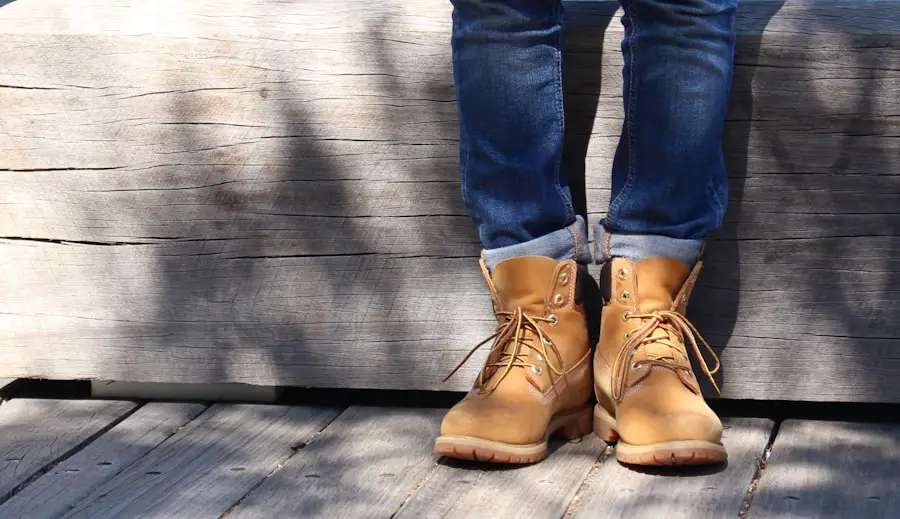
Cuffing is one of the easiest ways to wear jeans with hiking boots because it controls the hem and puts more of the boot on display. Start with one clean fold. Add a second fold only if the jeans are long enough that the hem still looks intentional rather than bulky.
A single cuff usually gives a cleaner appearance. Two smaller rolls create a more relaxed look. The important point is to keep the cuff above or near the boot collar instead of creating a thick bundle that rubs against your ankle.
Note: Cuffing helps keep an overly long hem off the ground, but it is not a substitute for trail gaiters. If rocks, sand, mud, or brush entering the boot is a real concern, gaiters are designed for that job.
When to Tuck Jeans Into Hiking Boots
Tucking works best with skinny, slim, or strongly tapered jeans. Smooth the fabric before lacing the boot so you do not create thick folds against your shin or ankle. If the boot becomes tight or uncomfortable after the jeans are tucked inside, wear the hem outside instead.
Tucking can have a practical purpose in tick-prone areas. The CDC advises long pants tucked into boots or socks as one part of tick-bite prevention for people working or spending time around woods, brush, tall grass, and leaf litter. Follow current repellent and clothing-treatment guidance as well rather than relying on the tuck alone.
When to Wear Jeans Over the Boots
Straight-leg and bootcut jeans often look best when they fall naturally over the boot. The hem should clear the ground and should not be so narrow that it catches awkwardly on the top of the boot. This method creates a simple casual look and avoids putting extra material inside the boot collar.
Sock Selection
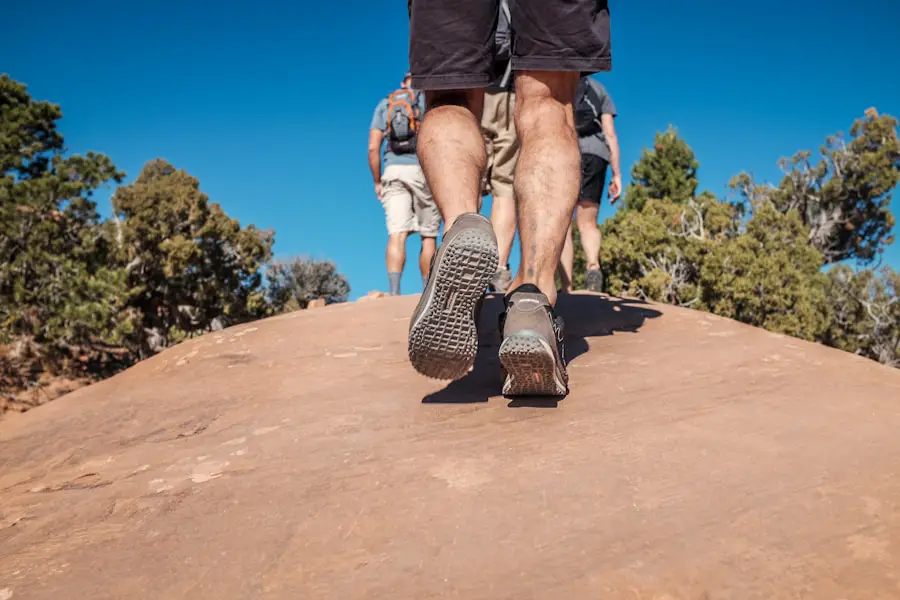
Socks play a major role in hiking comfort. Choose hiking socks made from merino wool or quick-drying synthetic fibers rather than ordinary cotton socks. These materials manage moisture better during active use, while hiking-specific construction can add cushioning where your feet need it.
Merino wool performs across a broad range of temperatures and offers cushioning and moisture management. Synthetic fibers such as polyester and nylon dry quickly and are widely used in technical hiking socks. REI’s sock-selection guide also recommends paying attention to thickness, padding, height, and shoe fit.
Do not automatically choose the thickest sock. Extra cushioning takes up room inside the boot. A sock that is too thick can make otherwise well-fitting footwear tight and uncomfortable. The sock cuff should generally reach at least as high as the boot collar so your skin is protected from rubbing.
Styling with Different Types of Jeans
| Jeans Type | Fit | Popular Styling |
|---|---|---|
| Skinny Jeans | Close-fitting through the leg | Tuck neatly into the boot or add a small cuff; balance with a relaxed top or sweater |
| Straight Jeans | Straight from thigh toward ankle | Let the hem fall over the boot or use one clean cuff for an easy everyday look |
| Bootcut Jeans | Fitted through the thigh with a wider lower leg | Wear over the boot for a relaxed, retro, or bohemian-inspired look |
| Boyfriend Jeans | Loose and relaxed | Cuff above the boot and pair with a more fitted top to balance the extra volume |
Straight-leg jeans are the easiest all-around option because they work with both low and mid-height hiking boots. They can fall naturally over the footwear or be cuffed to expose the upper.
Skinny and slim jeans create a cleaner line and are the easiest to tuck. However, very rigid skinny denim may restrict movement, so stretch and comfort matter if you plan to walk for more than a short distance.
Relaxed-fit and boyfriend jeans provide more room through the leg. Cuffing them keeps extra fabric away from the boot and makes the proportions look more deliberate. Distressed jeans can add an edgy casual look, but rips and worn areas should be treated as a style choice rather than a technical hiking feature.
Match the Jean Cut to the Boot Height
The relationship between the jean opening and the boot collar matters more than following a single fashion rule.
- Low hiking shoes: Straight, tapered, cropped, and slim jeans are all easy to combine with them.
- Mid-cut hiking boots: Straight or slim jeans work especially well. Use a cuff when you want the entire collar visible.
- High-cut hiking boots: Slim jeans can tuck inside, while straight jeans can fall over the top if the leg opening is wide enough.
- Chunky hiking boots: A straight or relaxed jean usually balances the larger sole better than an extremely narrow ankle.
Get the Jean Length Right
Jeans that are much too long tend to bunch on top of the boot and can drag against wet or dirty ground. Jeans that are unintentionally short may leave an awkward gap between the hem and boot collar.
A good starting point is a hem that either rests neatly near the boot or has enough extra length for one controlled cuff. Cropped jeans can also work when the exposed ankle is intentional and the weather is suitable.
Pro Tip: Put on the socks and boots before deciding whether a pair of jeans is the right length. A hem that looks perfect with sneakers may bunch differently around a thick hiking-boot collar.
Coordinate Boot and Jean Colors
Blue denim is easy to combine with brown, tan, gray, black, olive, or mixed-color hiking boots. Dark indigo jeans create a slightly cleaner appearance, while faded blue denim looks more relaxed.
Black or charcoal jeans pair naturally with gray, tan, brown, and many black boots. When both the jeans and boots are very dark, add contrast through the socks, shirt, jacket, or texture of the boot.
Earth tones are particularly easy to combine. Brown hiking boots, blue jeans, a cream sweater, and an olive jacket create a simple outdoors-inspired palette without requiring every piece to match exactly.
When Jeans Work for Hiking—and When They Do Not
There is an important difference between wearing hiking boots with jeans and choosing jeans as technical hiking clothing.
For a dry stroll, short maintained trail, travel day, campsite, or casual outing, jeans may be comfortable enough. In cold rain, wet brush, snow, exposed terrain, or situations where you could remain outside for many hours, cotton denim is a poor choice because it absorbs moisture and dries slowly.
The National Park Service advises hikers in demanding Denali conditions to use wool or synthetic clothing and specifically warns against jeans and other cotton layers because cotton stays wet and provides little insulating value when soaked.
Warning: Do not choose cotton jeans simply because you are wearing true hiking boots. For wet, cold, remote, or strenuous hikes, use quick-drying hiking pants and carry weather-appropriate layers instead.
Hiking boots can make jeans look trail-ready, but the footwear does not change the performance limits of wet cotton denim.
Adding Layers
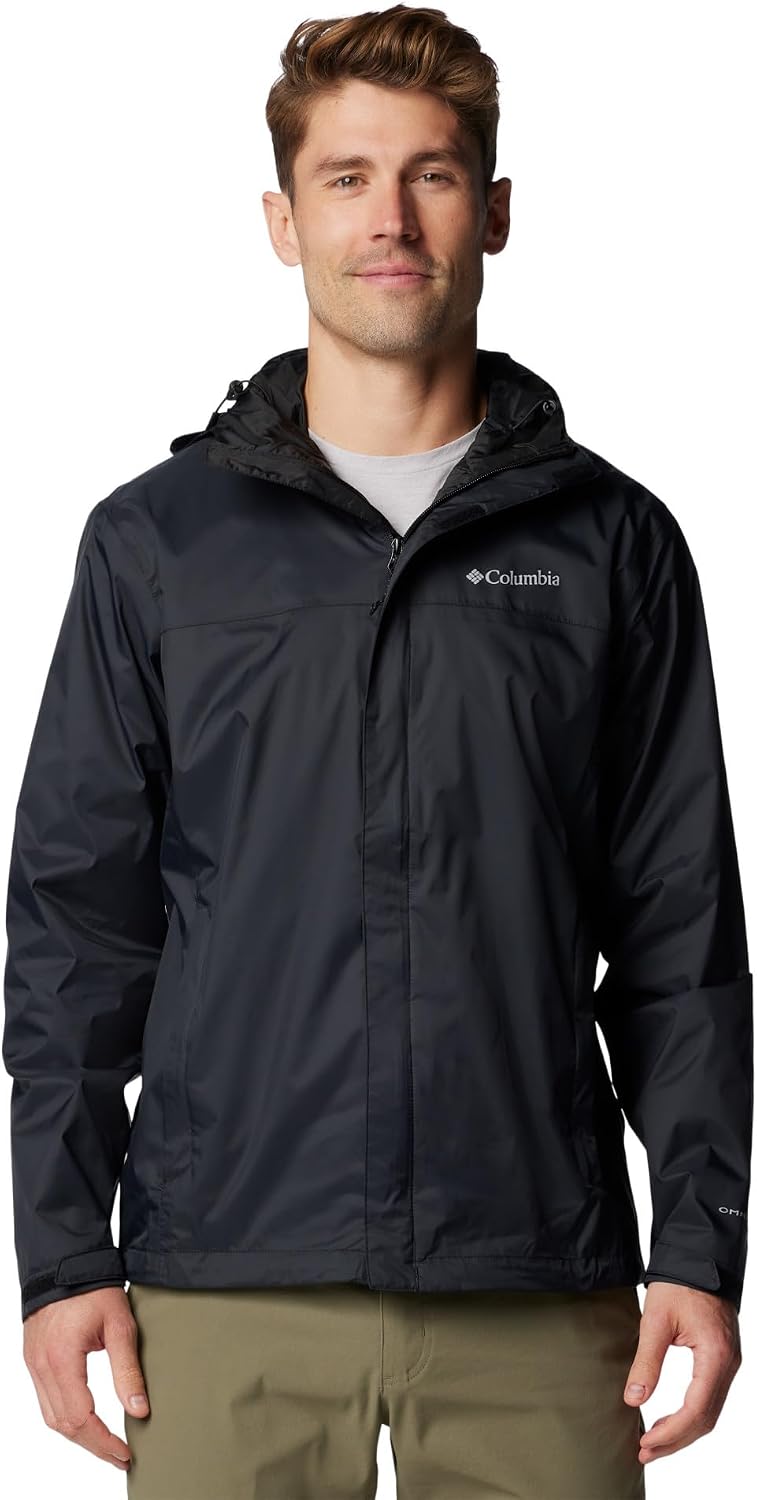
Layering lets you adapt to changing conditions without giving up comfort or style. Start with a moisture-managing base layer when you expect to be active. Add an insulating mid-layer such as fleece when temperatures are cool, then carry a weather-resistant outer layer when rain or wind is possible.
The National Park Service’s Ten Essentials guidance recommends carrying extra clothing appropriate for the most severe conditions you may encounter.
With jeans, keep the proportions simple. A longer fleece, sweater, or tunic can balance narrow jeans. A shorter jacket works well with straight or relaxed denim. For actual trail use, function should take priority over silhouette: the layers need to let you move freely and stay prepared for changing weather.
Accessorizing
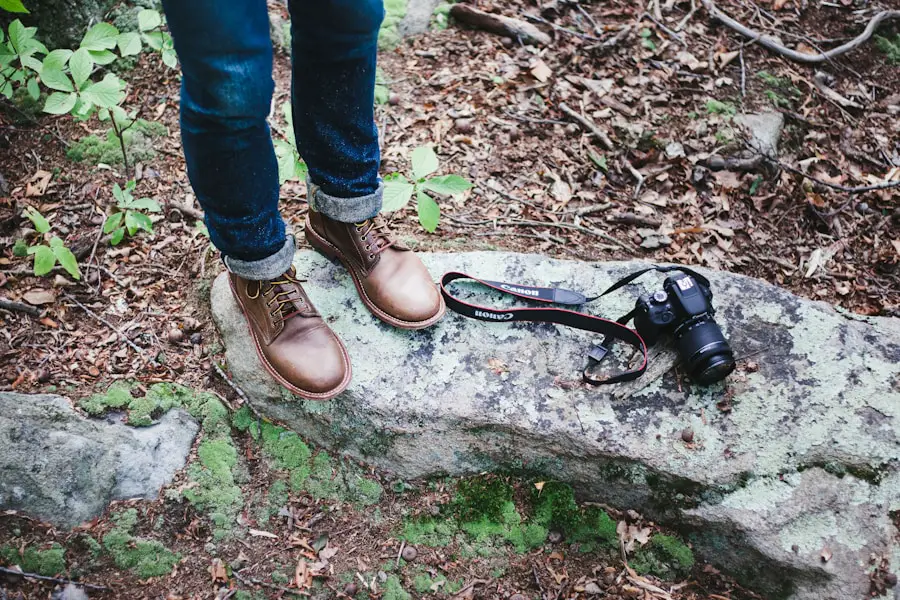
Headwear Essentials
A brimmed hat adds sun protection and fits naturally with an outdoors-inspired outfit. For active hiking, choose a breathable, quick-drying hat that stays secure in wind. Straw hats are better reserved for relaxed warm-weather outings where durability and rain resistance are less important.
Versatile Scarves
A scarf can add color and provide light warmth around the neck. Smaller scarves can also work as a headband or hair tie. On rugged trails, keep loose ends secured so they do not snag on branches or equipment.
Functional and Stylish Backpacks
The right backpack should fit the activity before it matches the outfit. For casual use, a compact daypack may be enough. Longer hikes require room for water, food, extra layers, navigation, sun protection, first aid supplies, and other essentials appropriate to the route.
Neutral packs in black, gray, brown, or olive are easy to coordinate with denim and hiking boots. A brighter pack or jacket can also provide useful visibility outdoors.
Playing with Proportions
Mixing fitted and relaxed pieces helps chunky hiking boots feel intentional rather than oversized. Fitted or tapered jeans pair well with an oversized sweater, fleece, or jacket because the narrower lower half balances the heavier footwear.
Boyfriend or relaxed jeans already create more volume. Pairing them with a closer-fitting T-shirt, henley, thermal top, or sweater usually keeps the outfit balanced.
A longer tunic with cropped jeans can emphasize the leg line, while high-waisted jeans and a shorter jacket bring more attention to the waist. Wide-leg jeans can also work with hiking boots, but make sure the hem clears the ground and does not hide so much of the footwear that the proportions look accidental.
Experimenting with Different Outfits
The easiest way to find a combination that works is to build the outfit around where you are going. The same boots can look very different depending on the jeans, socks, and outer layer.
Casual Everyday Outfit
Pair straight blue jeans with brown or tan hiking boots, a plain T-shirt or henley, and a lightweight jacket. Let the jeans fall naturally over the boot or add one small cuff.
Cool-Weather Outfit
Try slim or straight dark jeans, merino or synthetic crew socks, hiking boots, a fleece or sweater, and a weather-resistant jacket. A beanie or scarf can add warmth without making the outfit complicated.
Relaxed Outdoor Outfit
Wear cuffed boyfriend jeans with hiking boots, a fitted top, and a practical daypack. This combination gives you more room through the legs while keeping the boots visible.
Easy Dry-Trail Outfit
For a short, maintained walk in mild and dry conditions, comfortable jeans may be acceptable if they let you move freely. Pair them with properly fitted footwear, technical socks, and enough water and weather protection for the outing. Change to quick-drying hiking pants when conditions become wet, cold, remote, or demanding.
Bold colors and patterns can add personality. A bright jacket works well against neutral jeans, while patterned socks or scarves can provide a smaller accent. Jewelry should stay simple during active outdoor use so it does not snag on clothing, packs, or vegetation.
By mixing different jean cuts, boot heights, layers, and accessories, you can create outfits that feel personal without giving up the practical advantages of properly fitted hiking footwear.
If you’re looking for more travel gear recommendations, you may also want to check out this article on the best travel fishing rod. A compact fishing setup can be useful when your trip combines hiking, camping, and access to remote fishing spots.
Frequently Asked Questions
What are the best jeans to wear with hiking boots?
Straight-leg, slim, and tapered jeans are the easiest options because they control excess fabric around the ankle. Boyfriend jeans also work well when cuffed. Bootcut jeans are best worn over the boot rather than tucked inside.
Should I tuck my jeans into my hiking boots?
You can tuck slim or tapered jeans into hiking boots if the fabric sits smoothly and does not make the boot tight. Straight, loose, and bootcut jeans usually look and feel better outside the boot. In tick-prone environments, long pants tucked into boots or socks can also be part of a broader tick-prevention strategy.
Can I cuff my jeans with hiking boots?
Yes. One or two neat cuffs can keep an overly long hem off the ground and show more of the boot. Avoid making the cuff so thick that it presses against the boot collar or creates bulky folds around your ankle.
What socks should I wear with hiking boots and jeans?
Choose merino-wool or quick-drying synthetic hiking socks. The sock should normally reach at least as high as the boot collar to reduce rubbing. Pick a thickness that complements the boot fit rather than automatically choosing the heaviest cushioning.
Are there any specific considerations for wearing hiking boots with jeans?
Check the jean length, ankle opening, boot height, sock thickness, and weather. Avoid hems that drag or bunch heavily around the collar. For actual hiking, remember that cotton denim dries slowly, so quick-drying hiking pants are safer in wet, cold, or demanding conditions.
Are jeans good for an actual hike?
They can be acceptable for short, easy walks in mild, dry weather, but they are not ideal technical hiking clothing. Cotton denim absorbs moisture and dries slowly. For rain, cold, wet vegetation, long routes, or remote terrain, choose quick-drying synthetic or purpose-built hiking pants.
Do hiking boots have to be waterproof when worn with jeans?
No. Waterproof boots make sense for rain, mud, wet vegetation, and similar conditions, but waterproof membranes usually reduce ventilation. A breathable non-waterproof hiking shoe can be more comfortable in hot and dry weather.
Sources
- REI Co-op — How to Choose Hiking Boots and Shoes — boot types, fit, materials, terrain, and waterproofing tradeoffs
- REI Co-op — How to Choose Socks — hiking-sock materials, cushioning, height, and fit
- National Park Service — Denali Discovery Hikes — appropriate footwear, layering, and avoiding cotton jeans in wet backcountry conditions
- National Park Service — Ten Essentials — clothing, weather preparation, hydration, and basic hiking preparedness
- CDC/NIOSH — Tickborne Diseases in Workers — protective clothing, tucking long pants, repellents, and tick checks
- Timberland — How to Wear Hiking Boots — manufacturer styling guidance for hiking boots with jeans and casual clothing