
Last Updated on July 27, 2026 by Daniel Globe
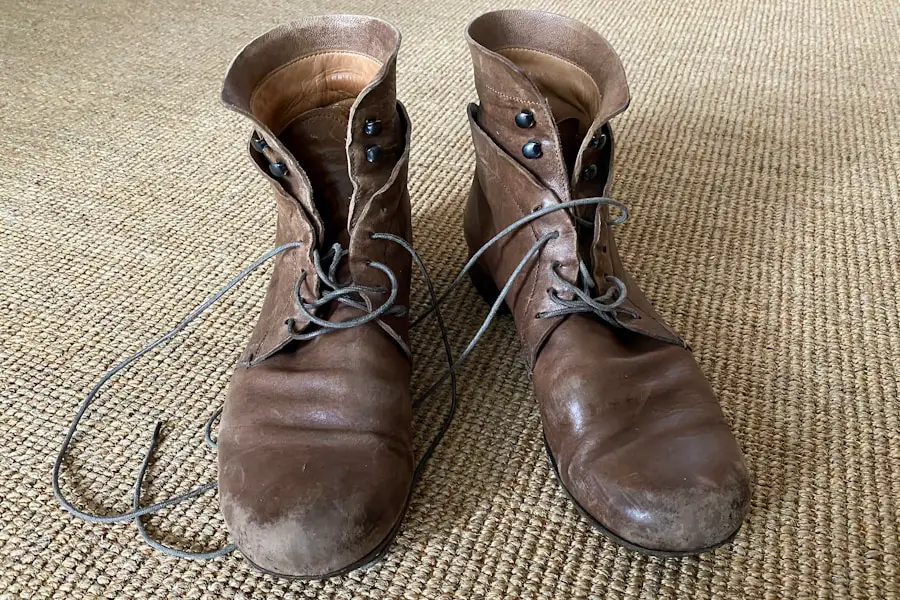
Hiking boots should give your toes room to move without letting the rest of your foot slide around. That does not mean everyone should automatically buy boots a half size or full size larger than their everyday shoes. Brand sizing, foot width, boot volume, socks, and orthotics all affect the right fit. The number on the box matters less than what happens when you walk uphill and downhill in the boots.
Quick Answer
Hiking boots do not automatically need to be a size bigger. Choose the size that leaves roughly a thumb’s width of space in front of your longest toe while keeping your heel and midfoot secure. Some hikers end up a half size larger than their everyday shoes, while others wear the same marked size.
Key Takeaways
- Do not size up automatically. Hiking boot sizes vary between brands and models.
- Aim for about 3/8 to 1/2 inch, or roughly a thumb’s width, between your longest toe and the front of the boot.
- Your heel and midfoot should feel secure, while your toes should be able to wiggle naturally.
- If a boot feels narrow, try a wide model or a different boot shape before buying unnecessary extra length.
- Try boots with your normal hiking socks and any orthotics or replacement insoles you plan to use.
- Walk downhill or use a store ramp. Your toes should not strike the front of the boot.
At a Glance
| Time Required | About 5–10 minutes for an initial fit check, plus extra time to compare pairs |
| Difficulty | Easy |
| Tools Needed | Your usual hiking socks, any orthotics or replacement insoles, and ideally a ramp or stairs |
| Best Fit | Roomy at the toes, secure at the heel and midfoot, with no pinching or downhill toe contact |
Disclosure: As an Amazon Associate I earn from qualifying purchases. Some links on this page are affiliate links, at no extra cost to you.
Potential Benefits of Wearing Hiking Boots That Are a Size Bigger
A larger hiking boot can be the right choice when your normal shoe size does not provide enough length once you account for hiking socks, foot swelling, and downhill movement. The important distinction is that the larger size must still fit securely around the rest of your foot.
Extra toe clearance is particularly useful on long descents. When you walk downhill, your foot tends to move toward the front of the boot. If your longest toe is already close to the end, repeated contact can cause soreness or bruised toenails.
REI recommends roughly a thumb’s width of space between your longest toe and the end of the insole. Salomon gives similar guidance and recommends enough room for the toes to move without pressing against the toe box.
A slightly larger size can also be useful when your planned hiking socks or orthotics require additional interior space. However, fit the boot while wearing those items rather than assuming in advance that you need to go up by a particular number.
The American Academy of Orthopaedic Surgeons notes that feet can swell throughout the day, which is one reason trying footwear later in the day can give you a more realistic fit.
Note: A larger size is helpful only when it creates needed toe clearance without introducing heel slip, side-to-side movement, or excessive empty space.
Potential Drawbacks of Wearing Hiking Boots That Are a Size Bigger
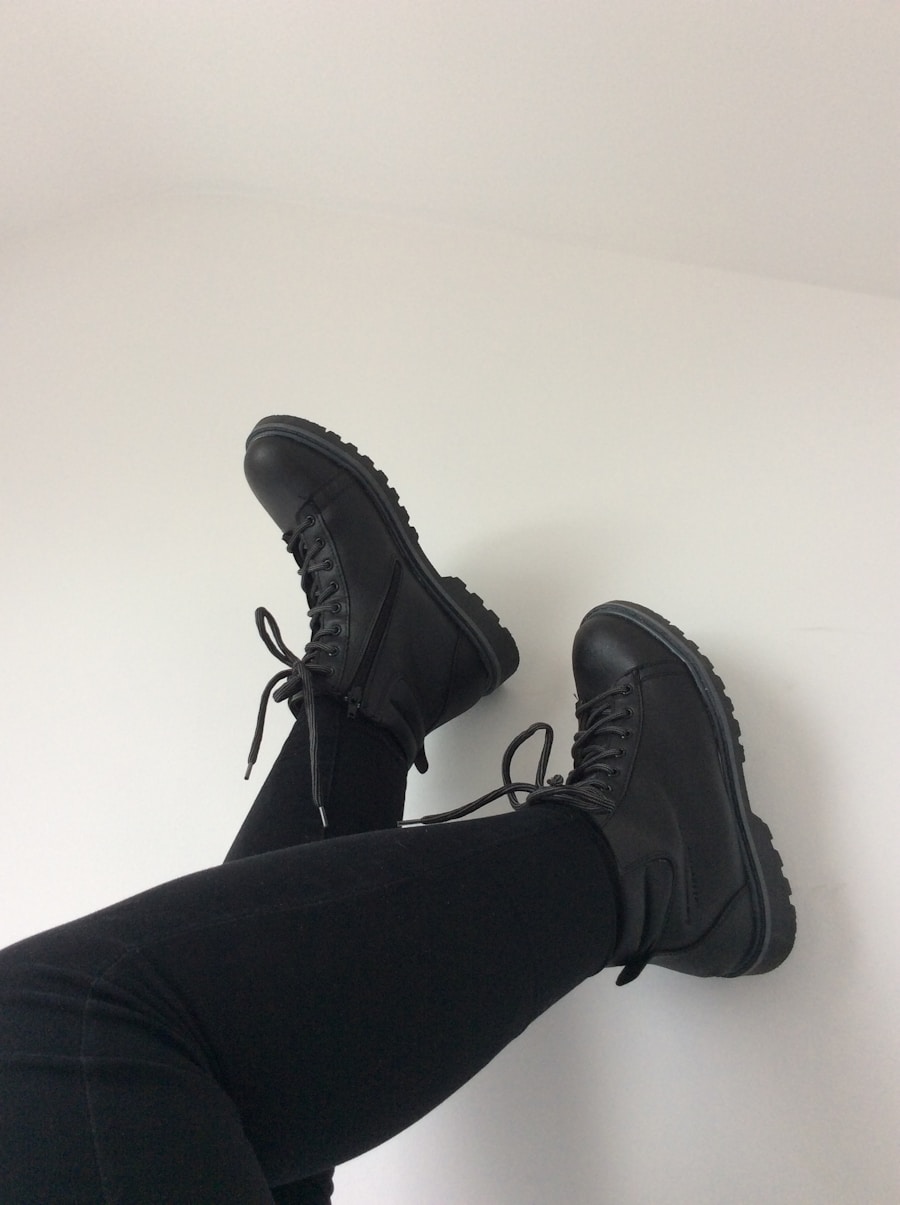
Boots that are too large can cause as many problems as boots that are too small. Excess room allows the foot to slide forward, backward, or sideways with each step. That movement can reduce control on rough ground and create rubbing at the heel or toes.
Friction is one of the main causes of hiking blisters. REI’s blister guidance notes that footwear that is either too large or too small is more likely to rub the skin. A boot should therefore be roomy where your toes need space without feeling loose everywhere else.
An oversized boot may also make it harder to place your feet precisely on rocks, roots, or steep ground. Tightening the laces can sometimes improve mild heel movement, but lacing cannot compensate for a boot that is fundamentally too long or has the wrong shape for your foot.
For a current overview of hiking boot selection and fit, see REI’s hiking boot fit guide.
Warning: Do not buy an extra-long boot just because your forefoot feels cramped. If the pressure is caused by width or boot shape, moving to a wide size or a different model is usually a better solution than adding unnecessary length.
Considerations for Choosing the Right Size Hiking Boots
| Consideration | What to Look For |
| Proper Fit | Secure heel and midfoot with no painful pressure points |
| Toe Room | About 3/8–1/2 inch, or roughly a thumb’s width, ahead of the longest toe |
| Ankle and Heel Hold | Heel should remain controlled rather than repeatedly lifting or rubbing |
| Arch and Instep Fit | Even support without numbness, pinching, or excessive space above the foot |
| Width | Forefoot should not be squeezed; try wide sizes or another last if needed |
| Waterproofing | Choose for climate and trail conditions; remember that different liners and materials can change the feel and internal volume of a boot |
Start by measuring both feet. Many people have one foot that is slightly longer or wider than the other, so fit the larger foot rather than forcing it into a smaller boot.
Foot shape matters just as much as measured length. Two boots marked with the same size can fit very differently because manufacturers use different lasts, which are the foot-shaped forms around which footwear is designed.
The American Academy of Orthopaedic Surgeons advises shoppers not to rely only on the size printed inside a shoe because sizing varies by brand and style. It also recommends choosing footwear that matches the shape of the foot rather than expecting the foot to adapt to the shoe.
Length, Width, and Volume Are Different
A boot may feel wrong for several reasons:
- Not enough length: Your toes touch or strike the front.
- Not enough width: The sides of your forefoot feel squeezed or your toes are crowded together.
- Too much volume: Your heel lifts or there is excessive space over the top of the foot even after proper lacing.
- Wrong shape: Pressure remains in one area even though the length seems correct.
If you have wide feet, do not automatically compensate by purchasing a much longer boot. AAOS recommends considering a wider version or another shoe with a more suitable toe-box shape instead.
Tips for Ensuring a Proper Fit for Hiking Boots
A good fitting session should reproduce the conditions you expect on the trail as closely as possible.
- Try boots later in the day. Feet commonly become larger after hours of standing and walking.
- Wear your real hiking socks. Sock thickness changes how much room is available inside the boot.
- Install your normal insoles or orthotics. Do this before judging the fit because they can change both volume and heel position.
- Check the toe space while standing. Your longest toe should have about a thumb’s width of clearance.
- Walk on level ground. Your heel should feel controlled, and you should not notice rubbing or pinching.
- Walk up and down a ramp or stairs. Your toes should not hit the front while descending.
- Pay attention to pressure immediately. A hot spot, numbness, or concentrated pressure during a short fitting session is a reason to try another size, width, or model.
Pro Tip: Remove the insole and stand on it while wearing your hiking socks. REI recommends checking for roughly a thumb’s width between your longest toe and the end of the insole. This is a simple way to assess length before considering the boot’s shape and volume.
Check Heel Movement
A small sensation of movement is different from the heel repeatedly lifting and rubbing with every step. If your heel moves excessively, first make sure the boot is laced correctly. REI’s hiking-boot lacing guide describes a surgeon’s-knot technique that can improve heel hold in otherwise correctly fitting boots.
If the heel still slides after reasonable lacing adjustments, the problem may be excess boot volume or a mismatch between the boot’s heel shape and your foot. In that case, try another model rather than relying on extreme lace tension.
How to Determine if Hiking Boots Should Be a Size Bigger
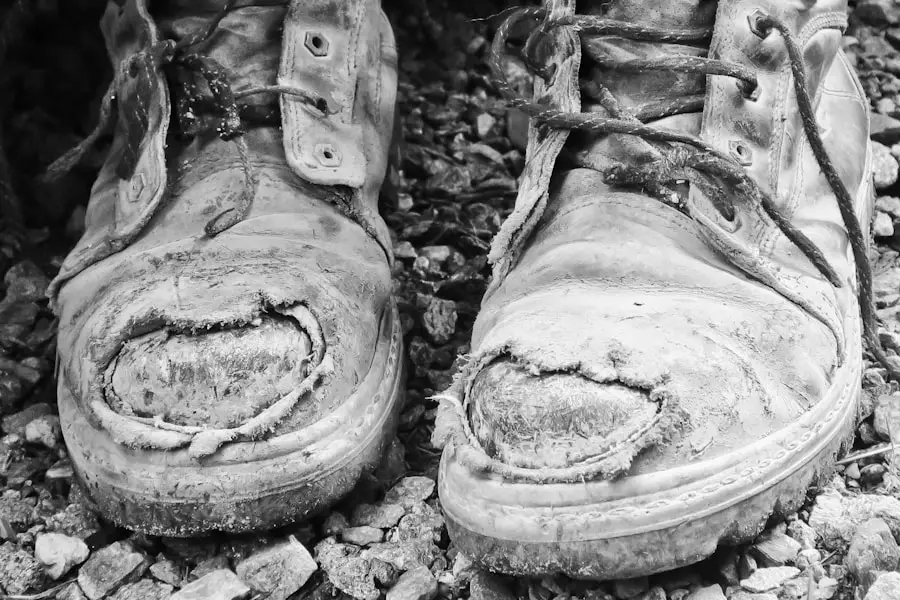
Consider the next half size only when your current size fails the length test and the larger size still holds the heel and midfoot securely. Do not size up simply because your street shoes have a particular number printed on them.
Signs Your Hiking Boots Are Too Small
- Your longest toe touches the front while standing or walking downhill.
- Your toes feel cramped or cannot move naturally.
- You feel pinching at the forefoot.
- Your toes become numb or tingly after the boots are laced.
- You develop repeated pressure on the toenails during descents.
If the toes are hitting the front because the boot is genuinely too short, moving up a half size may solve the problem. If the pressure is mainly across the sides of the forefoot, try a wider version or different boot shape first.
Signs Your Hiking Boots Are Too Big
- Your heel repeatedly lifts or rubs.
- Your foot slides forward on descents.
- You have to overtighten the laces to keep your foot in place.
- Your foot shifts sideways on uneven ground.
- You develop friction blisters despite having plenty of toe space.
Signs the Fit Is About Right
- You can wiggle your toes.
- Your longest toe stays clear of the front on descents.
- Your heel feels secure when walking uphill.
- The midfoot feels supported without being squeezed.
- No seam, edge, or pressure point demands your attention.
This is why there is no reliable rule saying every hiker should buy exactly a half size or full size larger. Your final marked size is simply the size that produces these fit characteristics in a particular boot.
How Socks and Orthotics Affect Hiking Boot Size
Hiking socks occupy space inside the boot. A heavily cushioned sock can make a boot feel noticeably tighter than a lightweight sock, so use the same sock thickness during fitting that you expect to use on the trail.
For moisture management, choose properly fitting hiking socks made from materials such as wool or performance synthetics rather than relying on an oversized boot for ventilation. REI advises against cotton for active hiking because it absorbs moisture and dries slowly.
Winter hikers may need more room for thicker socks, but buying a full size larger by default can create new problems. Test the complete winter setup instead. If the larger size gives you proper toe space without heel movement, it may be appropriate. If it becomes loose, look for a different width, volume, or boot model.
Custom orthotics and replacement footbeds can also change internal volume. REI recommends bringing custom orthotics when trying footwear. Always recheck toe clearance and heel hold after the orthotic is installed.
Do Hiking Boots Stretch or Break In?
Some hiking boots soften with use, especially models made with substantial leather. That does not mean a boot that is painfully short, narrow, or poorly shaped will eventually become the correct size.
REI’s break-in guidance is explicit that breaking in boots does not turn a poor fit into a good one. Stiffer backpacking or mountaineering boots may need gradual wear so the materials flex more naturally, while lighter hiking footwear may require little break-in.
Start indoors, then take short walks before using new boots on a long hike. Increase distance gradually and pay attention to hot spots.
Note: Break-in can soften a stiff boot, but it cannot add meaningful length or correct a boot last that does not match your foot.
Expert Opinions on Sizing for Hiking Boots
Current footwear guidance is remarkably consistent about what matters most, even though experts do not prescribe one universal hiking-boot size increase.
REI recommends footwear that is snug without being tight, with room to wiggle the toes. It also advises measuring foot length, width, arch length, and volume and trying boots later in the day with the socks you plan to hike in.
Salomon’s 2026 guidance similarly recommends a secure heel and midfoot plus enough front space for the toes to move. It suggests roughly a thumb’s width between the longest toe and the front of the footwear.
The American Academy of Orthopaedic Surgeons advises consumers to judge shoes by how they actually fit instead of the marked size. It recommends roughly 3/8 to 1/2 inch of space beyond the longest toe, fitting the larger foot, and testing footwear while walking before purchase.
LOWA also emphasizes toe room, heel security, forefoot width, instep fit, and flex-point alignment. Its guidance notes that persistent heel movement or pressure may indicate a shape or volume mismatch rather than simply the wrong numerical size.
The practical lesson is simple: test several brands, models, widths, and sizes until one matches your foot. Brand loyalty is less important than proper fit.
Warning: Persistent foot pain, numbness, loss of sensation, or recurring skin damage should not be treated as a normal part of breaking in hiking boots. Stop using footwear that causes these symptoms and seek appropriate professional care when needed.
Conclusion: Making the Right Decision for Your Hiking Boots
Hiking boots should be large enough to protect your toes during long days and downhill walking, but they should not be loose. For many hikers, the best-fitting boot may be a half size larger than an everyday shoe. For others, the same marked size—or a different width in the same size—will fit better.
Use your foot rather than the size label as the final judge. Look for roughly a thumb’s width in front of your longest toe, a secure heel and midfoot, enough forefoot width, and no toe contact on descents. Fit the boots with your real hiking socks and orthotics, and try another model when the shape is wrong instead of forcing a poor fit to work.
If you’re looking for a gift for an adventurous traveler, you can also browse the best travel gifts for her. For additional travel information, visit taketravelinfo.com. Details about how site data is handled are available in the privacy policy.
Sources
- REI — How to Choose Hiking Boots and Shoes — current hiking boot fit, toe clearance, socks, orthotics, foot volume, and late-day fitting guidance; updated May 18, 2026.
- Salomon — High, Mid, or Low-Cut Hiking Shoes — current manufacturer guidance on heel and midfoot security, toe room, and hiking-footwear fit; published June 29, 2026.
- American Academy of Orthopaedic Surgeons — Shoes: Finding the Right Fit — shoe sizing, toe clearance, swelling, widths, heel fit, and fitting the larger foot.
- REI — How to Lace Hiking Boots — lacing methods for heel slip and pressure points.
- REI — How to Break in Your Hiking Boots — break-in guidance and the limits of using break-in to address fit problems.
- LOWA — How Should Hiking Boots Fit? — 2026 manufacturer guidance on toe room, heel security, width, instep volume, orthotics, and break-in.
Frequently Asked Questions
Why should hiking boots be a size bigger?
They should be bigger only when extra length is necessary to provide proper toe clearance while wearing your hiking socks and walking downhill. Feet can become larger during a day of activity, and toes need room on descents. However, a boot that is already long enough should not be made larger simply because it is a hiking boot.
How much bigger should hiking boots be?
There is no universal half-size or full-size rule. Aim for about 3/8 to 1/2 inch, or roughly a thumb’s width, between your longest toe and the front of the boot while keeping your heel and midfoot secure. The marked size that gives you this fit is the right starting point.
What are the benefits of wearing hiking boots that are a size bigger?
When the larger size is genuinely the better fit, it can give your toes enough clearance for downhill walking, hiking socks, orthotics, and normal changes in foot size during a long day. These benefits disappear if the larger boot allows the heel or midfoot to slide.
Are there any drawbacks to wearing hiking boots that are a size bigger?
Yes. Boots that are too large can allow the foot to slide, create heel friction, cause blisters, reduce control on uneven terrain, and let the toes move forward on descents. Extra size is useful only when the boot remains secure around the heel and midfoot.
How can I determine the right size for hiking boots?
Try boots later in the day while wearing your normal hiking socks and any orthotics or replacement insoles. Check for roughly a thumb’s width in front of your longest toe, walk on level ground, and then walk downhill or on stairs. Your toes should not hit the front, and your heel should remain secure.
Should I size up if I have wide feet?
Not automatically. If the boot has enough length but squeezes the sides of your forefoot, try a wide version or a model with a different toe-box shape. Buying extra length to solve a width problem can leave the boot too loose and allow your foot to slide.
Will hiking boots stretch enough to fix a tight fit?
No. Some materials soften during break-in, but a boot that is too short, painfully narrow, or the wrong shape should be exchanged. Break-in helps a correctly sized boot flex more naturally; it does not turn a poor fit into a good one.

