
Last Updated on August 29, 2026 by Daniel Globe
Disclosure: As an Amazon Associate, we earn from qualifying purchases. If you click a link on this page and make a purchase, we may receive a small commission at no extra cost to you.
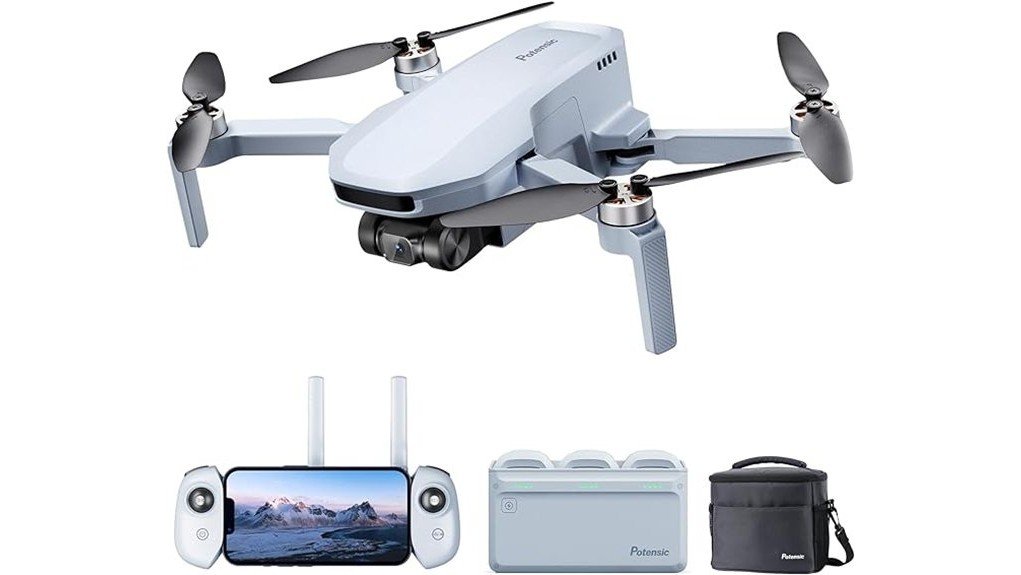
A compact GPS drone can be easier to travel with, but camera stabilization, battery life, and flight controls still determine whether it is enjoyable to use. The Potensic ATOM SE GPS Drone combines a sub-249g folding body with a 4K EIS camera, GPS-assisted flight, and a three-battery Fly More bundle rated for up to 93 minutes of combined flight time. Its strongest advantages are portability and useful camera specifications, while its main compromise is electronic stabilization instead of a full 3-axis mechanical camera gimbal. This review explains where the ATOM SE performs well and where you may want a more advanced alternative.
Quick Verdict
Rating: 8.5/10, Recommended with caveats
Best For: Beginners, travelers, and hobby pilots who want a lightweight GPS drone with 4K recording and multiple batteries.
Bottom Line: The ATOM SE gives you strong flight time, a lightweight folding design, RAW photo support, and GPS-assisted features without moving into a heavier drone. Its EIS system can produce useful footage, but buyers focused mainly on cinematic video may prefer a model with a 3-axis mechanical gimbal.
Product Specifications and Features
| Specification | Detail |
|---|---|
| Brand | Potensic |
| Model | ATOM SE, drone model DSDR04B |
| Product Type | Foldable GPS camera drone |
| Takeoff Weight | Under 249g with the original battery, propellers, and microSD card |
| Folded Size | 88 × 143 × 58 mm |
| Unfolded Size | 300 × 242 × 58 mm with propeller blades |
| Camera | 1/3-inch CMOS sensor, 12MP still photos |
| Maximum Video | 4K at 24/25/30fps |
| Stabilization | ShakeVanish electronic image stabilization with single-axis camera tilt |
| Field of View | 118° |
| Camera Tilt | -90° to +20° |
| Photo Formats | JPG and JPG + RAW (DNG) |
| Max Flight Time | Up to 31 minutes per battery under test conditions |
| Bundle Flight Time | Up to 93 minutes combined with the three-battery ASIN-specific bundle |
| Battery | 2500mAh, 7.2V Li-ion, 18Wh |
| Transmission | PixSync 2.0, up to 4km in unobstructed, interference-free conditions |
| Live View | 720p at 30fps |
| Flight Modes | Video, Normal, and Sport |
| Max Sport Speed | 16 m/s horizontal speed |
| Wind Resistance | Up to 38 km/h, Level 5 specification |
| GNSS | GPS + GLONASS + Galileo + BeiDou |
| Storage | microSD, U1 or Class 10 rating or higher |
| Operating Temperature | 0°C to 40°C (32°F to 104°F) |
What Is the Potensic ATOM SE?
The Potensic ATOM SE is a lightweight GPS camera drone designed for adults who want a portable aircraft without giving up 4K recording, RAW photos, return-to-home functions, or longer-range digital transmission. Its arms fold inward, reducing the body to 88 × 143 × 58 mm for storage.
The camera uses a 1/3-inch CMOS sensor for 12MP images and video up to 4K at 30fps. Potensic’s ShakeVanish system applies electronic image stabilization, while the camera itself can tilt from -90° downward to +20° upward. This arrangement keeps weight down, but it is different from the 3-axis mechanical gimbal used on some competing camera drones.
The ASIN in this review corresponds to a Fly More configuration associated with three 2500mAh batteries and a parallel charging hub. Each battery has a maximum rated flight time of 31 minutes, giving the bundle up to 93 minutes when the three maximum figures are added together. Actual flying time can be shorter because wind, speed, temperature, battery condition, and return-to-home reserves affect endurance.
Before You Buy: Check the exact bundle contents before ordering. Potensic sells ATOM SE packages with different battery counts, while this Amazon ASIN has been associated with the three-battery Fly More configuration. Also remember that electronic stabilization is not the same as a full 3-axis mechanical gimbal.
Who Should Buy It?
Best For
- Newer pilots who want GPS positioning and predictable Video, Normal, and Sport modes.
- Travelers who want a folding drone under 249g with 4K recording.
- Hobby photographers who value 12MP JPG + RAW capture and multiple batteries.
Skip If
- You want a 3-axis mechanical gimbal for smoother cinematic footage.
- You need obstacle-avoidance sensors for navigating around objects.
- You need a transmission specification substantially beyond 4km.
Products Worth Considering

【𝐋𝐢𝐠𝐡𝐭𝐰𝐞𝐢𝐠𝐡𝐭 𝐚𝐧𝐝 𝐋𝐞𝐯𝐞𝐥-𝟓 𝐖𝐢𝐧𝐝 𝐑𝐞𝐬𝐢𝐬𝐭𝐚𝐧𝐜𝐞】ATOM SE drone weighs 𝐥𝐞𝐬𝐬 𝐭𝐡𝐚𝐧 𝟐𝟒𝟗𝐠, 𝐧𝐨 𝐧𝐞𝐞𝐝 𝐟𝐨𝐫 𝐅𝐀𝐀& 𝐑𝐞𝐦𝐨𝐭𝐞 𝐈𝐃 𝐑𝐞𝐠𝐢𝐬𝐭𝐫𝐚𝐭𝐢𝐨𝐧. The fold-up design packs up small enough to fit in a jacket pocket. Built-in 𝐛𝐫𝐮𝐬𝐡𝐥𝐞𝐬𝐬 𝐦𝐨𝐭𝐨𝐫 makes the drone 𝐫𝐞𝐬𝐢𝐬𝐭 𝐥𝐞𝐯𝐞𝐥-𝟓 𝐰𝐢𝐧𝐝 and fly stably
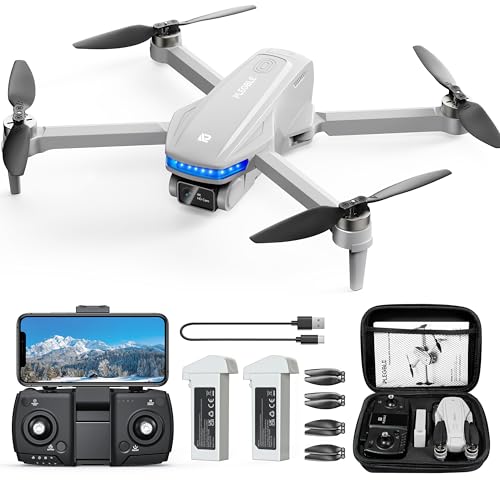
Smart GPS Functions: The professional drone is equipped with an advanced GPS module for safer, more reliable flights. It automatically returns to its takeoff point if it loses signal or runs low on battery—so you won’t have to worry about it flying off unexpectedly. Designed for pilots of all skill levels, it’s easy to control and packed with fun features like GPS Auto Return, Follow Me, Waypoint Flight, and Circle Fly. Explore more flight options and take your drone experience to the next level

No Registration Needed - Under 249 g, this drone with camera for adults 4K does not require FAA registration or Remote ID for recreational use. Visit the FAA's official website for requirements related to drone registration and Remote ID. [1]
Camera Performance and Imaging Technology
The ATOM SE records video up to 4608 × 2592 at 24, 25, or 30fps and captures 12MP still photos. The 118° field of view is relatively wide, which helps when you want landscapes, shorelines, buildings, or large outdoor scenes in the frame.
ShakeVanish electronic image stabilization is designed to reduce visible vibration. It is useful for casual aerial video, but you should keep expectations realistic. Electronic stabilization and single-axis tilt do not provide the same physical isolation from aircraft movement as a 3-axis mechanical gimbal.
Photographers get another useful feature: JPG + RAW (DNG) capture. RAW files preserve more editing flexibility than a finished JPEG, which matters when you want to adjust exposure or color later.
The camera tilts from -90° to +20°, allowing straight-down compositions as well as slightly upward framing. There is no supported digital zoom on the ATOM SE, so framing is mainly controlled through flight position and camera angle.
Flight Modes and Control System
The ATOM SE uses Potensic’s SurgeFly flight-control system with three primary flight modes: Video, Normal, and Sport. Video mode favors gentler movement for recording, Normal mode balances response and control, and Sport mode raises the maximum horizontal speed to 16 m/s.
This layout gives you a sensible progression when learning. Start with slower, deliberate control inputs in an open area before moving into Sport mode. Faster movement shortens reaction time and can increase the distance required to stop or correct your path.
GPS-assisted features include return-to-home and intelligent functions such as Circle Flight, GPS Tracking, and Waypoint Flight. The downward vision system also assists with low-altitude positioning when environmental conditions are suitable.
Pro Tip: Before flying farther away, wait for reliable positioning and confirm that the home point has been updated correctly. Keep enough battery in reserve for the return trip instead of treating the maximum flight-time figure as usable outbound time.
Battery Life and Charging
Each ATOM SE smart flight battery has a 2500mAh capacity, 7.2V nominal voltage, and 18Wh of energy. Potensic rates maximum flight time at 31 minutes per battery when measured under controlled, low-altitude, windless conditions.
With three batteries, the reviewed bundle can provide up to 93 minutes by adding the three 31-minute maximum figures. That does not mean you can fly continuously for 93 minutes. You must land and change batteries, and real flight times vary according to wind, temperature, speed, hovering, battery age, and the reserve needed for a safe return.
Potensic lists approximately 1.5 hours as the fastest charging time when using the supported parallel charging hub. That is more realistic than the original article’s 60-minute charging claim.
Design, Build Quality, and Portability
The ATOM SE’s folding design is one of its strongest practical features. Folded dimensions are 88 × 143 × 58 mm, while the aircraft measures 300 × 242 × 58 mm when unfolded with its propeller blades.
Its takeoff weight is below 249g when configured with the original battery, propellers, and a microSD card. That makes it easier to pack for road trips, hikes, and vacations than a larger camera drone.
Brushless motors support a maximum specified wind resistance of 38 km/h, classified by Potensic as Level 5. That rating does not mean you should deliberately fly in difficult weather. Gusts can still affect battery use, positioning, video quality, and the ability to return safely.
Transmission and App Experience
Potensic’s PixSync 2.0 system is rated for a maximum transmission distance of 4km when the route is unobstructed and free from interference. The controller receives a 720p/30fps live view, while the aircraft records higher-resolution footage to its microSD card.
The 4km figure is a technical maximum, not a recommendation to fly four kilometers away. Buildings, trees, radio interference, terrain, local regulations, and visual-line-of-sight requirements can reduce your practical operating distance substantially.
The controller supports common Lightning, USB-C, and Micro-USB phone connections. Potensic specifies support for mobile devices up to approximately 170 × 100 × 8.5 mm, so confirm fit if your phone is unusually large or is inside a thick case.
How It Performs in Real Use
For Learning Basic GPS Drone Flight
The ATOM SE gives a newer pilot useful tools without requiring an especially large aircraft. GPS positioning, return-to-home, Video mode, and downward positioning support can make early flights easier to manage. You should still practice takeoff, hovering, orientation, manual landing, and emergency reactions in a large open area.
For Travel and Outdoor Trips
The sub-249g weight and compact folded body are especially useful when luggage space matters. A three-battery bundle also lets you divide a flying session into several shorter flights rather than relying on one battery for the entire outing.
For Aerial Photos and Casual 4K Video
The 12MP RAW option, 118° field of view, and 4K/30fps recording give you useful tools for scenery and travel footage. Slower, smoother control inputs help the electronic stabilization produce better-looking results. If smooth video while turning aggressively is your main goal, a 3-axis gimbal drone has an advantage.
For Breezy Conditions
The Level 5 wind-resistance specification provides more capability than the drone’s small size might suggest, but wind should still influence your flight plan. Strong headwinds on the return leg can increase power use, so turn back with more battery remaining when conditions are less favorable.
Setup and Flight Tips
- Use an appropriate microSD card: Potensic specifies a U1 or Class 10 card or better.
- Confirm the home point: Wait for reliable positioning and verify the home-point update before traveling farther from takeoff.
- Start in an open area: Keep away from trees, power lines, buildings, crowds, roads, and other obstacles while learning.
- Keep visual contact: Do not treat the 4km transmission specification as permission to exceed applicable visual-line-of-sight rules.
- Plan for the return flight: Wind direction and distance can make the trip back consume more battery than the outbound leg.
- Inspect the propellers: Check for cracks, deformation, looseness, or damage before takeoff.
Safety, Weather, and U.S. Flight Rules
Potensic instructs users not to fly the ATOM SE in adverse weather such as rain, snow, hail, dense fog, strong winds, or thunderstorms. The drone should also be kept away from moisture because water can damage its electronics and mechanical parts.
In the United States, the sub-249g weight does not automatically remove every FAA requirement. Drones weighing less than 250g generally do not need FAA registration when flown solely under the recreational exception. Drones operated under Part 107 must be registered regardless of weight. Recreational flyers must also follow applicable rules, including TRUST requirements and airspace restrictions.
Regulations vary by country and can change. Check the rules for your location and intended type of flight before takeoff.
Pros and Cons
Pros
- Under-249g folding design is convenient for travel and storage.
- 4K/30fps video and 12MP JPG + RAW photography provide useful imaging options.
- Up to 31 minutes of rated flight time per battery.
- 4km PixSync 2.0 transmission specification with 720p live view.
- GPS positioning, return-to-home, and several intelligent flight functions add practical control features.
Cons
- Electronic image stabilization is less capable than a full 3-axis mechanical gimbal for demanding video work.
- No obstacle-avoidance system for detecting objects in the flight path.
- Battery count can differ between ATOM SE packages, so you need to confirm the exact bundle before buying.
Ease of Use and Buyer Experience
The ATOM SE’s appeal comes from giving you a fairly complete GPS-drone feature set in a compact body. The folding airframe is simple to carry, the three flight modes let you adjust response as your confidence improves, and the GPS-assisted functions reduce the amount of manual navigation required for certain tasks.
The main learning curve is understanding that automated features are aids rather than substitutes for basic piloting skills. You still need to monitor battery level, wind, satellite status, surroundings, and the aircraft’s orientation throughout the flight.
The camera system is also best judged according to your priorities. It is capable of detailed 4K recording and RAW still photography, but buyers who place video stabilization above portability and bundle value may prefer a mechanically stabilized alternative.
Is It Worth the Price?
The ATOM SE sits in the value-oriented part of the compact GPS camera-drone market. It makes the strongest case for itself when you care about low weight, several batteries, RAW still photos, 4K recording, GPS functions, and a folding design more than you care about having the most advanced gimbal system.
The three-battery configuration can be particularly useful because batteries often determine how much actual practice or filming you can complete during one outing. You should still compare the current package contents because ATOM SE bundles are sold with different battery counts.
It is less compelling if your priority is cinematic stabilization, obstacle sensing, or the longest available transmission system. In those cases, spending more on a mechanically stabilized model may provide better long-term value.
Products Worth Considering

【1/2" 48MP CMOS & 3-Axis Gimbal】Equipped with a premium 1/2" 48MP CMOS sensor, this drone captures superior light and detail for stunning 8K photos and 4K/30fps video. The 3-axis brushless gimbal and EIS technology ensure ultra-smooth cinematic footage.

Screen Controller, No Phone Needed: This drone comes with a 4.5-inch remote controller with a built-in screen, making connection simple and convenient. No smartphone connection or app download is required, allowing you to fly and view real-time footage directly on the controller. Without distractions from incoming calls, messages, or notifications, you can enjoy an immersive flying experience. The all-in-one design also reduces reliance on mobile devices.
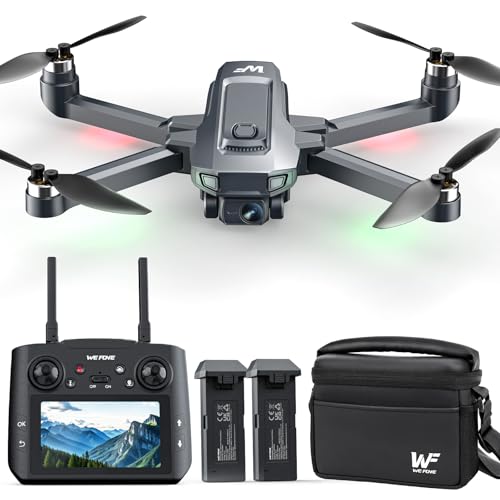
【4K Ultra HD Camera with 8GB Card】Equipped with a high-resolution 4K UHD camera, this drone captures stunning aerial photos and videos with exceptional clarity. An 8GB microSD card is included for immediate storage, with expandable memory support for extended recording.
How It Compares to Alternatives
The standard Potensic ATOM is the most natural step up within the same brand. It remains under 249g but uses a 3-axis mechanical gimbal, extends the stated transmission range to 6km, and provides up to 32 minutes per battery. That makes it better suited to buyers who care more about smoother video than keeping the purchase focused on ATOM SE value.
The DJI Mini 4K is another direct alternative. It weighs about 246g, records 4K video, uses a 3-axis mechanical gimbal, and has a longer maximum transmission specification. The ATOM SE still makes sense when its battery bundle, wide 118° field of view, RAW support, and Potensic flight system better match your priorities.
Products Worth Considering

3-Axis Gimbal Drone 4K Camera: Unlike electronic stabilization, our mechanical 3-axis gimbal delivers professional-grade shake-free 4K footage at 30fps. Dual camera system with 90° adjustable angle and 5x digital zoom captures every detail for cinema-quality aerial video that outperforms standard drones with camera for adults 4k.

【𝐑𝐨𝐜𝐤 𝐒𝐭𝐞𝐚𝐝𝐲 𝟒𝐊 𝟑-𝐀𝐱𝐢𝐬 𝐆𝐢𝐦𝐛𝐚𝐥】Equipped with 𝐒𝐎𝐍𝐘 𝐂𝐌𝐎𝐒 𝐒𝐞𝐧𝐬𝐨𝐫 and a 𝟏𝟐𝐌𝐏 camera capable of recording 𝟒𝐊/𝟑𝟎𝐟𝐩𝐬 video, the ATOM drone with camera for adults 4k delivers respectable aerial image and video quality. The 𝟑-𝐚𝐱𝐢𝐬 𝐛𝐫𝐮𝐬𝐡𝐥𝐞𝐬𝐬 𝐠𝐢𝐦𝐛𝐚𝐥 ensures smooth and steady footage even in 𝐥𝐞𝐯𝐞𝐥-𝟓 𝐰𝐢𝐧𝐝𝐲 𝐜𝐨𝐧𝐝𝐢𝐭𝐢𝐨𝐧𝐬

No Registration Needed - Under 249 g, FAA Registration, and Remote ID are not required if you fly for recreational purposes. Visit the FAA's official website for requirements related to drone registration and Remote ID. [1]
Frequently Asked Questions
Is the Potensic ATOM SE suitable for beginners?
Yes. GPS positioning, return-to-home, downward positioning support, and Video, Normal, and Sport flight modes give newer pilots room to learn gradually. You should still practice in a large open area and learn basic manual control before relying heavily on automated functions.
Does the ATOM SE really provide 93 minutes of flight time?
The three-battery bundle can provide up to 93 minutes by combining the maximum 31-minute rating of each battery. It is not 93 minutes of uninterrupted flight, and real flight times can be shorter because of wind, speed, temperature, battery condition, and safety reserves.
What is the maximum video transmission distance?
Potensic specifies up to 4km in an unobstructed environment without interference. Real operating range can be much shorter, and you must follow local flight rules, including applicable visual-line-of-sight requirements.
Can you fly the Potensic ATOM SE in light rain?
You should not fly it in rain. Potensic’s operating guidance says to avoid rain and other adverse weather and to keep the aircraft away from moisture, so land before wet weather reaches your flight area.
How long do the ATOM SE batteries take to charge?
Potensic lists about 1.5 hours as the fastest charging time with the supported parallel charging hub. Charging time can depend on the charger, power source, battery temperature, and charging setup.
Does the ATOM SE have a 3-axis gimbal?
No. The ATOM SE uses electronic image stabilization with a single-axis tilting camera. If a 3-axis mechanical gimbal is a priority, compare it with the Potensic ATOM or DJI Mini 4K.
Do you need to register the ATOM SE with the FAA?
For U.S. recreational flying, drones weighing less than 250g generally fall under the registration exception. Part 107 operations require registration regardless of weight, and recreational pilots still need to follow other FAA requirements such as TRUST and applicable airspace rules.
What memory card does the ATOM SE need?
The ATOM SE records to a microSD card. Potensic specifies a U1 or Class 10 card or higher, so check the card’s speed rating rather than choosing only by storage capacity.
The Bottom Line
The Potensic ATOM SE is a strong fit if you want an under-249g GPS drone with 4K/30fps recording, RAW photos, a compact folding body, and the convenience of a multi-battery bundle. You should skip it if a 3-axis mechanical gimbal or obstacle avoidance is essential, but for travel, learning, and casual aerial photography, its feature set earns a recommended-with-caveats verdict.
Ready to Buy?
Check the latest price, bundle contents, and product details before you decide.
