

Last Updated on September 10, 2026 by Daniel Globe
Disclosure: As an Amazon Associate, we earn from qualifying purchases. If you click a link on this page and make a purchase, we may receive a small commission at no extra cost to you.
Choosing a lightweight camera drone usually means balancing image quality, flight time, range, and beginner-friendly control. The Potensic ATOM aims to cover those basics with a sub-249 g body, a 12MP Sony CMOS camera, 4K/30fps video, and a 3-axis mechanical gimbal. Its strongest points are portability and stabilized video, while its biggest limitation is the lack of collision-avoidance sensors. This review explains what the ATOM does well, where it falls short, and who should consider it today.
Quick Verdict
Rating: 8.4/10
Best For: Beginners, travelers, and casual aerial creators who want a compact 4K drone with mechanical gimbal stabilization.
Bottom Line: The Potensic ATOM combines a light foldable body, 4K/30fps recording, a 3-axis gimbal, and up to 32 minutes of flight time per battery. It is easy to recommend for entry-level aerial photography, but you must fly carefully because it does not provide obstacle avoidance.
Key Specifications
| Specification | Detail |
|---|---|
| Brand | Potensic |
| Model | ATOM |
| Product type | Foldable GPS camera drone |
| Takeoff weight | Under 249 g with original battery, propellers, and a MicroSD card |
| Folded size | 88 × 143 × 58 mm (about 3.46 × 5.63 × 2.28 in) |
| Camera | 1/3-inch Sony CMOS, 12MP |
| Video | 4K up to 30fps, 2.7K up to 30fps, 1080p up to 60fps |
| Stabilization | 3-axis mechanical gimbal |
| Photo format | JPG and JPG + RAW (DNG) |
| Maximum flight time | Up to 32 minutes per battery under test conditions |
| Maximum transmission distance | Up to 6 km in unobstructed, interference-free conditions |
| Positioning | GPS, GLONASS, Galileo, BeiDou, plus downward vision positioning |
| Wind resistance | Level 5 |
| Maximum flight altitude setting | 120 m / 393.7 ft, subject to local flight rules |
| Standard Kit | Drone, remote controller, one intelligent battery, spare propellers and screws, camera protector, screwdriver, device cables, and Velcro tape |
What Is the Potensic ATOM?
The Potensic ATOM is a compact GPS camera drone designed for adults and beginner pilots who want mechanical gimbal stabilization without moving into a much larger aircraft. The Standard Kit tied to this review includes one battery, and the drone folds down to 88 × 143 × 58 mm, making it easier to carry in a small camera bag or daypack.
The camera uses a 1/3-inch Sony CMOS sensor and records up to 4K at 30fps. You also get 12MP still photos, RAW DNG support, visual tracking, waypoint flight, and QuickShots such as Pull-away, Rocket, Circle, Spiral, and Boomerang. The ATOM uses the PotensicPro app for camera settings, flight information, firmware updates, and intelligent flight modes.
Design and Portability Features
Portability is one of the ATOM’s clearest advantages. At under 249 g, the aircraft is light enough for travel and compact enough to pack without dedicating much space to it. The folded dimensions are 88 × 143 × 58 mm, while the unfolded size without propellers is 210 × 152 × 58 mm.
The low takeoff weight can simplify U.S. registration requirements for people flying only under the Exception for Limited Recreational Operations. It does not create a blanket exemption from drone rules, though. Recreational flyers still need to follow FAA operating requirements, and drones flown under Part 107 must be registered regardless of weight.
Before You Buy: Do not choose the ATOM only because it weighs under 249 g. Registration, Remote ID, airspace, altitude, and pilot requirements depend on how and where you fly. Check the current rules that apply to your operation before takeoff.
Camera and Video Capabilities
The camera is built around a 12MP 1/3-inch Sony CMOS sensor. Video options include 4K at 24, 25, or 30fps, 2.7K at 24, 25, or 30fps, and 1080p up to 60fps. That gives you a useful choice between maximum resolution and smoother Full HD motion.
The 3-axis mechanical gimbal is more important than the resolution number alone. It stabilizes tilt, roll, and pan movement so footage looks steadier than video from a camera that relies only on electronic stabilization. The camera also supports JPG + RAW DNG stills, which gives you more flexibility if you edit photos after the flight.
QuickShots add simple automated camera moves, and visual tracking can keep a selected subject framed. These modes can help beginners create more polished clips, but they do not replace careful piloting around trees, buildings, cables, or other obstacles.
User-Friendly Control and Navigation
The ATOM uses GNSS positioning with GPS, GLONASS, Galileo, and BeiDou. It also uses downward vision positioning to improve low-altitude hovering when conditions allow. These systems help the aircraft hold position and make basic flight easier for a new pilot.
Smart Return-to-Home can bring the aircraft back when you trigger it or when the system detects conditions such as low battery or loss of control signal. The PotensicPro app also supports on-screen guidance and firmware-over-the-air updates.
| Feature | What It Does | Buyer Benefit |
|---|---|---|
| GNSS positioning | Uses four satellite systems | Helps maintain a stable outdoor position |
| Downward vision system | Assists low-altitude positioning | Supports steadier hovering in suitable conditions |
| Return-to-Home | Returns toward the recorded home point | Adds a useful recovery tool for low battery or signal loss |
| PotensicPro app | Shows flight data and camera controls | Keeps core settings in one interface |
| FOTA updates | Updates firmware through the app | Makes software maintenance easier |
Flight Performance and Battery Life
Potensic rates the ATOM for up to 32 minutes of flight time per battery under controlled conditions. Real flight time can be shorter because wind, speed, temperature, camera use, return-to-home reserve, and battery condition all affect endurance. The Standard Kit linked in this article includes one intelligent battery, while other ATOM bundles use additional batteries.
The maximum transmission distance is rated at up to 6 km when the path is unobstructed and free of interference. That number describes the link capability, not a recommendation to fly beyond visual line of sight. Your legal operating distance may be much shorter because local rules can require you to keep the drone in sight.
Level 5 wind resistance gives the ATOM useful capability for a lightweight drone, but a sub-249 g aircraft can still be pushed around by gusts. If wind increases, keep extra battery reserve for the return leg and avoid sending the drone far downwind.
Pro Tip: Start each flight with a clear home point, enough satellite lock, and more battery reserve than you think you need. On windy days, fly into the wind early so the return trip is not fighting a strong headwind on a low battery.
Who Should Buy It?
Best For
- Beginners who want GPS positioning and a 3-axis gimbal.
- Travelers who value a foldable drone under 249 g.
- Casual creators who want 4K/30fps video and RAW-capable 12MP stills.
Skip If
- You need obstacle avoidance for flying near complex environments.
- You want higher-resolution still photos or newer tracking features.
- You need more than one battery in the box and are considering only the Standard Kit.
Products Worth Considering

【𝐋𝐢𝐠𝐡𝐭𝐰𝐞𝐢𝐠𝐡𝐭, 𝐥𝐞𝐬𝐬 𝐭𝐡𝐚𝐧 𝟐𝟒𝟗𝐠】 The palm-sized drone, ATOM, 𝐝𝐨𝐞𝐬𝐧'𝐭 𝐫𝐞𝐪𝐮𝐢𝐫𝐞 𝐅𝐀𝐀 𝐨𝐫 𝐑𝐞𝐦𝐨𝐭𝐞 𝐈𝐃 𝐫𝐞𝐠𝐢𝐬𝐭𝐫𝐚𝐭𝐢𝐨𝐧. The foldable and compact design makes it easy to carry along on adventures.
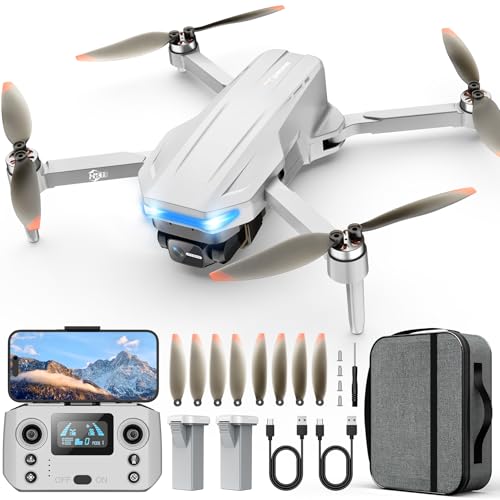

【Impressive 10000FT Long Range & 5G FPV Transmission】: Control this GPS drone from up to 10000 feet away with crystal-clear 5G real-time FPV feed on the 4.5" HD screen remote – great for exploring vast areas while seeing exactly what the drone with camera sees.
How It Performs in Real Use
For First Flights
The combination of GNSS, downward positioning, one-button takeoff and landing, and Return-to-Home reduces the amount of manual correction a beginner needs in open areas. You still need to learn orientation, safe altitude control, and how the drone reacts to wind before using automated modes near obstacles.
For Travel and Day Trips
The folded 88 × 143 × 58 mm body is easy to pack, and the under-249 g takeoff weight keeps the aircraft light in a day bag. The main travel limitation of the Standard Kit is battery count. One battery provides up to 32 minutes under ideal test conditions, so multiple shooting locations may require charging between flights or choosing a multi-battery bundle.
For Aerial Photos and Video
4K/30fps and the mechanical gimbal are the strongest reasons to buy the ATOM. You can capture stabilized landscape and travel footage without relying only on electronic image stabilization. RAW DNG support is also useful if you plan to adjust exposure and color from still photos later.
For Automated Shots
QuickShots and visual tracking make it easier to produce orbiting, pull-away, rising, and boomerang-style clips. Use these modes in wide, clear areas. The ATOM does not have obstacle avoidance, so an automated flight path can still intersect a tree, wall, wire, or other object.
Setup and Flight Tips Before First Use
- Update firmware before an important trip. Use the PotensicPro app and complete updates while you have reliable power and internet access.
- Use a suitable MicroSD card. Potensic specifies U1 or Class 10 or above for the ATOM.
- Wait for a reliable home point outdoors. A correct home point is important before depending on Return-to-Home.
- Set return altitude for the environment. It should account for nearby obstacles while remaining within applicable flight rules.
- Inspect propellers before flight. Replace damaged, cracked, or deformed propellers before taking off.
- Keep visual line of sight. A 6 km transmission rating does not override local operating rules.
Safety and Operating Limits
The ATOM’s low weight does not remove the need for safe piloting. Keep clear of people, airports, restricted airspace, roads, power lines, and obstacles. The manufacturer manual identifies the ATOM as suitable for ages 16 and older, so it should not be treated as a toy for unsupervised children.
The aircraft uses fast-moving propellers and lithium battery power. Follow the manual for charging, battery storage, propeller replacement, calibration, and flight-environment limits. Avoid rain and wet conditions, and do not assume the drone is weatherproof.
Pros and Cons
Pros
- Under-249 g foldable design is easy to travel with.
- 3-axis mechanical gimbal provides stable video.
- Records up to 4K/30fps and 1080p/60fps.
- Up to 32 minutes of rated flight time per battery.
- GNSS, Return-to-Home, QuickShots, visual tracking, and RAW stills add useful capability for beginners.
Cons
- No obstacle avoidance, so automated and manual flights require extra clearance.
- The 12MP 1/3-inch camera is less capable than newer ATOM models for still-image resolution and low-light work.
- The Standard Kit includes only one flight battery.
Customer Feedback and Ratings
At the time of this August 2026 review refresh, the Amazon listing showed a 4.5 out of 5 rating from more than 4,000 customer ratings. Ratings and review counts change over time, so treat that number as a snapshot rather than a permanent product specification.
Independent reviews commonly praise the ATOM for its compact size, easy controls, smooth 4K footage, and value for new pilots. The most important repeated drawback is the lack of obstacle avoidance, which matters if you plan to fly near trees, structures, or narrow spaces.
Is It Worth the Price?
The Potensic ATOM sits in the entry-to-mid-range part of the consumer camera-drone market. Its value comes from giving you a real 3-axis gimbal, 4K/30fps recording, GNSS positioning, intelligent flight modes, and up to 32 minutes of rated flight time in a body under 249 g.
It makes the most sense if you care more about stabilized video and portability than the newest imaging features. It is less compelling if you need obstacle avoidance, higher-resolution photos, stronger low-light capability, or a multi-battery kit without buying a different bundle.
Products Worth Considering
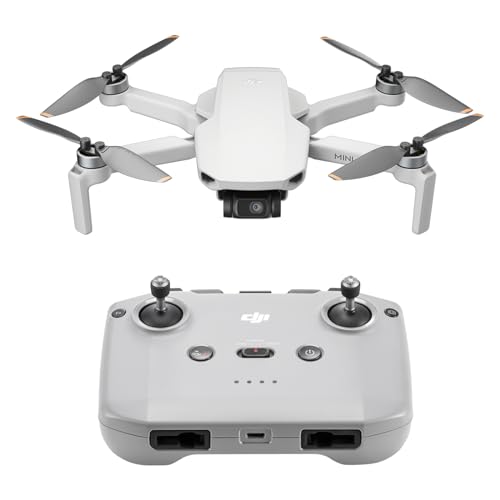
No Registration Needed - Under 249 g, this drone with camera for adults 4K does not require FAA registration or Remote ID for recreational use. Visit the FAA's official website for requirements related to drone registration and Remote ID. [1]

【𝐑𝐨𝐜𝐤 𝐒𝐭𝐞𝐚𝐝𝐲 𝟒𝐊 𝟑-𝐀𝐱𝐢𝐬 𝐆𝐢𝐦𝐛𝐚𝐥】Equipped with 𝐒𝐎𝐍𝐘 𝐂𝐌𝐎𝐒 𝐒𝐞𝐧𝐬𝐨𝐫 and a 𝟏𝟐𝐌𝐏 camera capable of recording 𝟒𝐊/𝟑𝟎𝐟𝐩𝐬 video, the ATOM drone with camera for adults 4k delivers respectable aerial image and video quality. The 𝟑-𝐚𝐱𝐢𝐬 𝐛𝐫𝐮𝐬𝐡𝐥𝐞𝐬𝐬 𝐠𝐢𝐦𝐛𝐚𝐥 ensures smooth and steady footage even in 𝐥𝐞𝐯𝐞𝐥-𝟓 𝐰𝐢𝐧𝐝𝐲 𝐜𝐨𝐧𝐝𝐢𝐭𝐢𝐨𝐧𝐬

No Registration Needed - Under 249 g, this drone with camera for adults 4K does not require FAA registration or Remote ID for recreational use. Visit the FAA's official website for requirements related to drone registration and Remote ID. [1]
How It Compares to Alternatives
The Potensic ATOM 2 is the clearest upgrade within the same brand. It keeps the under-249 g format but moves to a larger 1/2-inch sensor, 48MP photos, 4K HDR video, a longer 10 km transmission rating, and newer AI tracking features. The original ATOM still makes sense when its simpler feature set meets your needs and the current listing offers better value.
The DJI Mini 4K is another compact alternative with a 3-axis gimbal, 4K video, and up to 31 minutes of rated flight time. Compare current bundle contents, app experience, camera features, local availability, and support before deciding.
Products Worth Considering

𝟒𝐊 𝟔𝟎𝐟𝐩𝐬 𝐇𝐃𝐑, 𝟏/𝟏.𝟑’’ 𝐂𝐌𝐎𝐒: Capture more clearer details easily with ATOM 3's camera, powered by a 𝟏/𝟏.𝟑’’ 𝐂𝐌𝐎𝐒 sensor featuring 𝟒𝐊 𝟔𝟎𝐟𝐩𝐬 𝐇𝐃𝐑 𝐯𝐢𝐝𝐞𝐨 and 𝟓𝟎𝐌𝐏 𝐩𝐡𝐨𝐭𝐨. 𝐏-𝐋𝐨𝐠 𝐦𝐨𝐝𝐞 preserves realistic raw footage for flexible, professional-grade color grading.
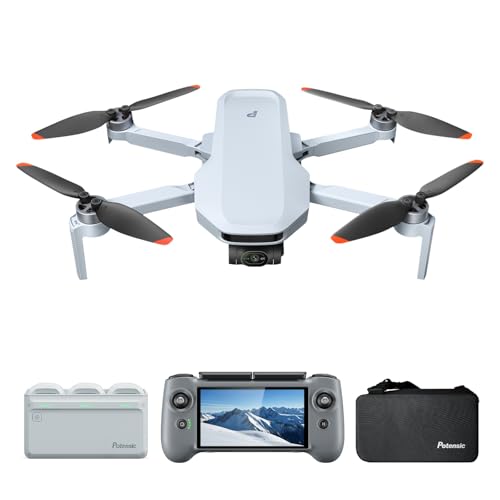
【𝐁𝐮𝐢𝐥𝐭-𝐢𝐧 𝟓.𝟓" 𝐅𝐇𝐃 𝐓𝐨𝐮𝐜𝐡𝐬𝐜𝐫𝐞𝐞𝐧】The PTD 1 RC's integrated 𝟓.𝟓-𝐢𝐧𝐜𝐡 𝟏𝟗𝟐𝟎×𝟏𝟎𝟖𝟎 𝐅𝐇𝐃 touchscreen delivers 𝟕𝟎𝟎 𝐧𝐢𝐭𝐬 of brightness. Enjoy total awareness and control—just power on the PTD 1 and take off. 𝐍𝐨𝐭𝐞: 𝐓𝐡𝐞 𝐏𝐓𝐃 𝟏 𝐑𝐂 𝐢𝐬 𝐨𝐧𝐥𝐲 𝐜𝐨𝐦𝐩𝐚𝐭𝐢𝐛𝐥𝐞 𝐰𝐢𝐭𝐡 𝐭𝐡𝐞 𝐀𝐓𝐎𝐌 𝟐.

【𝐌𝐚𝐬𝐭𝐞𝐫 𝐋𝐢𝐠𝐡𝐭 & 𝐂𝐨𝐥𝐨𝐫】 The ATOM 2 Fly More Combo comes with both ND and CPL filters—the ND filter provides 1-5 stop light reduction, lets you control exposure in any lighting, and CPL filter enhances saturation by cutting non-metallic reflections. Easy to attach and use, help you capture cinematic photos with ease.
Frequently Asked Questions
Is the Potensic ATOM suitable for children?
The ATOM manual identifies the drone as suitable for ages 16 and older. Younger users should not operate it as an unsupervised toy because the aircraft has fast-moving propellers and requires safe airspace judgment.
Does the Potensic ATOM require FAA registration in the U.S.?
A drone under 250 g may qualify for the limited recreational registration exception when it is flown only under the Exception for Limited Recreational Operations. Drones flown under Part 107 must be registered regardless of weight, and other FAA rules still apply.
What is the maximum flight altitude of the Potensic ATOM?
Potensic specifies a maximum flight altitude setting of 120 m, or 393.7 ft. Your legal altitude may be lower depending on local rules, airspace, and where you operate.
Can I fly the Potensic ATOM in rain?
You should avoid rain and wet conditions. The ATOM is an electronic camera drone, and the manual warns against water use, so land if conditions become wet and follow the manufacturer’s care instructions.
How long does the Potensic ATOM battery last?
Potensic rates the ATOM for up to 32 minutes of flight time per battery under controlled conditions. Wind, temperature, flight speed, battery age, and the reserve needed to return and land can reduce real-world flight time.
Does the Potensic ATOM have obstacle avoidance?
No. The original ATOM does not provide collision-avoidance sensing, so you need to keep a clear flight path and supervise automated modes around trees, buildings, wires, and other obstacles.
What kind of video can the Potensic ATOM record?
It records up to 4K at 30fps, 2.7K at 30fps, and 1080p at 60fps. A 3-axis mechanical gimbal stabilizes the camera during flight.
Should I buy the original ATOM or the ATOM 2?
Choose the original ATOM if you mainly want a lightweight 4K drone with a 3-axis gimbal and its current price is attractive. Consider the ATOM 2 if you want a larger sensor, 48MP photos, 4K HDR, longer rated transmission, and newer AI shooting features.
The Bottom Line
The Potensic ATOM remains a strong choice for beginners and travelers who want a compact sub-249 g drone with 4K/30fps video, a 3-axis gimbal, GNSS positioning, and up to 32 minutes of rated flight time. Skip it if obstacle avoidance, higher-resolution stills, or the newer ATOM 2 feature set matters more to you than simplicity and value.
Ready to Buy?
Check the latest price, seller availability, and bundle details before you decide.
