

Last Updated on September 11, 2026 by Daniel Globe
NGK spark plugs are ignition components designed for gasoline-powered engines and the combustion-engine side of many hybrids. A correctly specified plug creates the spark that ignites the compressed air-fuel mixture. Worn, fouled, overheated, incorrectly gapped, or incorrectly fitted plugs can contribute to misfires, rough idling, difficult starting, reduced performance, and poor fuel economy. The key is to use the exact plug specification required for your engine and replace it according to the vehicle manufacturer’s maintenance schedule.
Quick Answer
NGK spark plugs ignite the air-fuel mixture in gasoline engines. NGK is now an ignition-parts brand of Niterra, the company formerly known in English as NGK Spark Plug. Choose the exact plug specified for your engine, follow the manufacturer’s replacement interval, and investigate misfires or fouling instead of assuming the plug alone is at fault.
Key Takeaways
- NGK remains the ignition-parts brand, but the former NGK Spark Plug company changed its English corporate name to Niterra in April 2023.
- Bad or fouled spark plugs can cause misfires, rough idle, difficult starting, hesitation, and reduced fuel economy.
- There is no universal spark-plug replacement mileage; follow your vehicle manufacturer’s maintenance schedule.
- Correct heat range, thread reach, seat style, gap, and application matter more than simply choosing the most expensive electrode material.
- Proper installation matters: work on a cool engine, start the plug by hand, and tighten it to the specified torque.
Disclosure: As an Amazon Associate I earn from qualifying purchases. Some links on this page are affiliate links, at no extra cost to you.
What Is an NGK Spark Plug?
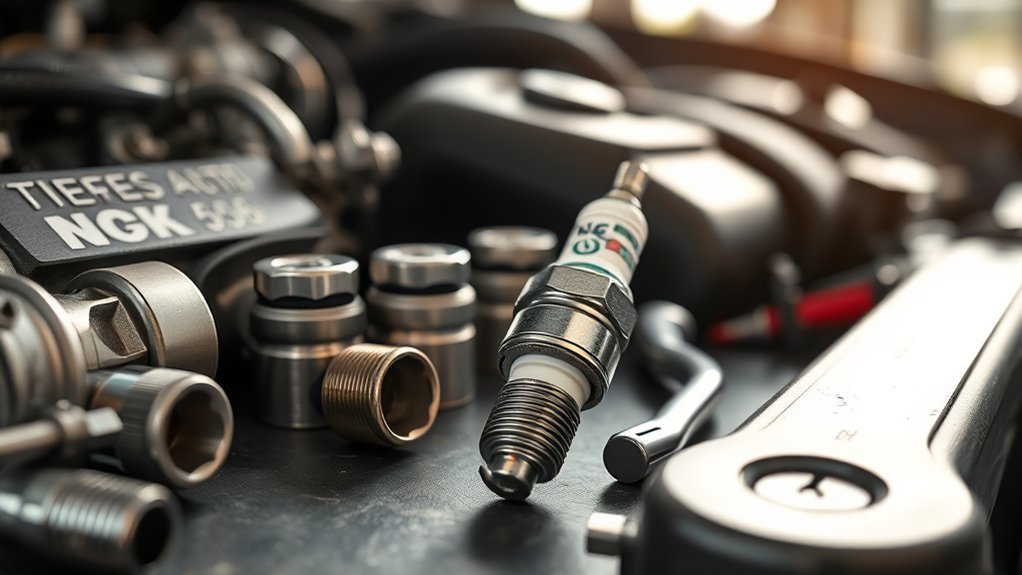
An NGK spark plug is an ignition component sold under the NGK Ignition Parts brand. The company behind the brand is now Niterra. Its predecessor, NGK Spark Plug Co., Ltd., was founded in Nagoya, Japan, in 1936 after being spun off from NGK Insulator Company Ltd. The English corporate name changed from NGK Spark Plug to Niterra in April 2023, but the NGK brand continues to be used for ignition products. You can verify that history on Niterra’s official history page.
Note: NGK is still the correct brand name to look for on spark plugs and other ignition products. Niterra is the current English corporate name of the company behind the NGK and NTK automotive brands.
The initials NGK trace back to “Nippon Gaishi Kabushiki-gaisha,” the Japanese name associated with the company from which the spark-plug business originated. Today, NGK offers several spark-plug technologies, including nickel-alloy, platinum, iridium, OE-style, and other specialized designs.
Spark plugs are used in spark-ignition gasoline engines. Conventional diesel engines use compression ignition instead and commonly use glow plugs for cold-start assistance rather than spark plugs.
How Does a Spark Plug Work?
A spark plug sits in the cylinder head with its firing end exposed to the combustion chamber. The ignition system applies high voltage to the plug. When that voltage becomes high enough, electricity jumps the gap between the center electrode and ground electrode and forms an electric arc.
That spark ignites the compressed air-fuel mixture at the correct point in the engine cycle. The resulting combustion pushes the piston and produces engine power. The spark plug must repeat this process reliably under high pressure and temperature.
A plug also has an important thermal job. It must transfer heat from its firing end into the cylinder head at the correct rate. That characteristic is called the heat range. Heat range does not describe how “hot” or powerful the spark is; it describes how quickly the plug moves combustion heat away from its firing tip.
NGK explains that the correct heat range keeps the firing end hot enough to resist carbon fouling while remaining cool enough to avoid overheating and pre-ignition. See NGK’s heat-range technical guide for additional detail.
What Are the Signs Your Spark Plugs Are Failing?
Common symptoms of worn, fouled, damaged, or incorrectly specified spark plugs include engine misfires, rough idling, difficult starting, hesitation, loss of power, and reduced fuel economy. However, these symptoms can also come from ignition coils, injectors, air leaks, compression problems, sensors, or other engine faults.
Poor Fuel Economy
Worn or fouled spark plugs can contribute to poor fuel economy when they cause weak or inconsistent ignition. A larger worn electrode gap can also require more ignition voltage, increasing the chance of a misfire when engine conditions are demanding.
If fuel economy suddenly drops, do not assume the plugs are automatically the cause. Check for warning lights and diagnostic trouble codes, and consider other causes such as low tire pressure, fuel-delivery problems, sensor faults, or ignition-coil issues.
Rough Engine Idling
When one or more cylinders do not ignite consistently, the engine may idle unevenly. You may notice:
- Shaking or vibration at idle
- Unstable engine speed
- Intermittent misfires
- Hesitation during acceleration
- A flashing or steady check-engine light
A worn plug can cause an ignition misfire, but it does not necessarily create an incorrect air-fuel mixture. If new plugs foul again quickly, diagnose the underlying reason rather than repeatedly replacing them.
Warning: A flashing check-engine light can indicate a severe active misfire that may damage the catalytic converter. Reduce load and have the fault diagnosed promptly instead of continuing normal driving.
Hard Starting Issues
Worn or fouled spark plugs can make a gasoline engine crank normally but take longer to fire and start. You may also notice rough running immediately after startup or a misfire until the engine warms.
| Symptom | What It May Suggest |
|---|---|
| Engine cranks but takes longer to start | Weak ignition, fouled plug, fuel or other starting-system issue |
| Engine misfire | Spark plug, coil, injector, compression, wiring, or mixture problem |
| Poor fuel economy | Possible incomplete combustion or another engine/vehicle fault |
If the starter motor itself turns the engine unusually slowly, investigate the battery, starter, electrical connections, engine oil viscosity, or another cranking-system problem. Spark plugs normally do not control starter-motor speed.
Why Do Spark Plugs Fail?
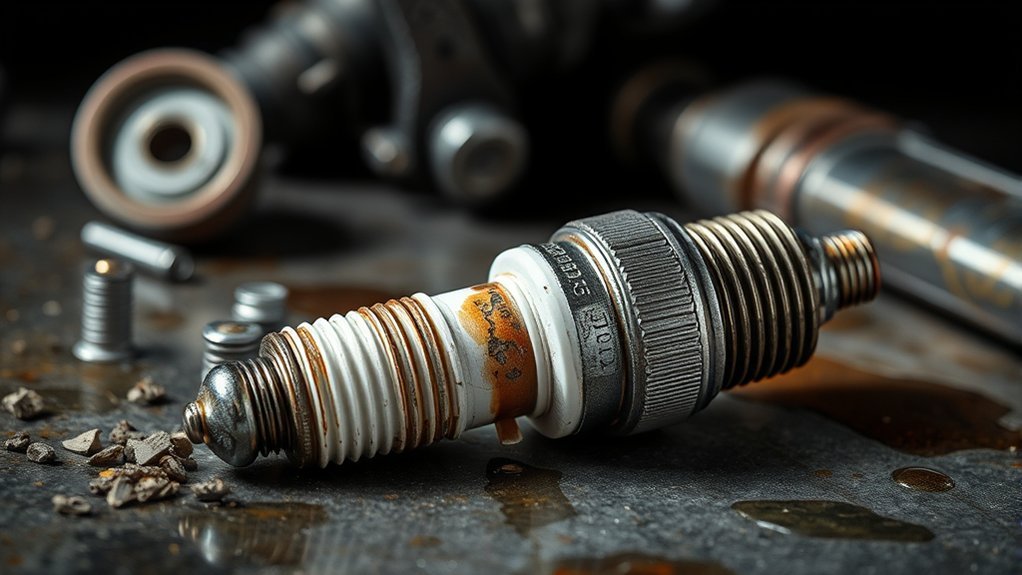
Spark plugs wear naturally as their electrodes erode, but premature trouble can also result from carbon fouling, oil contamination, overheating, incorrect gap, incorrect heat range, improper installation, or an underlying engine problem. Niterra lists old age, carbon buildup, overheating, oil in the combustion chamber, and incorrect spark gap among common causes of spark-plug problems.
Old Age and Wear
Each time a plug fires, a tiny amount of electrode material can wear away. Over many operating cycles, the electrode edges become rounded and the gap may increase. The ignition system then needs more voltage to bridge the gap.
- Electrode erosion can increase the firing gap.
- A larger gap may increase ignition-voltage demand.
- Normal heat cycling gradually ages the plug.
- Damaged insulators or electrodes can cause misfires.
- Precious-metal designs generally resist electrode wear better than standard nickel designs.
Replace plugs according to the specified maintenance schedule instead of waiting until they fail completely.
Carbon Buildup and Overheating
Carbon fouling occurs when deposits coat the firing end and create an easier path for electrical leakage than the intended electrode gap. NGK lists incorrect heat range, poor combustion, repeated short trips, and continuous low-speed operation among conditions that can contribute to carbon fouling.
Oil fouling may point to oil entering the combustion chamber through worn piston rings, valve-guide or valve-seal problems, or another mechanical fault. An overly rich fuel mixture can also leave dark deposits.
Overheating can be caused by a plug with an unsuitable heat range, excessively lean operation, advanced ignition timing, insufficient plug torque, cooling problems, heavy engine load, or other abnormal combustion conditions.
A fouled spark plug is often evidence of another problem. Replacing the plug may restore firing temporarily, but the deposits can return unless the underlying cause is corrected.
How Often Should You Replace Spark Plugs?
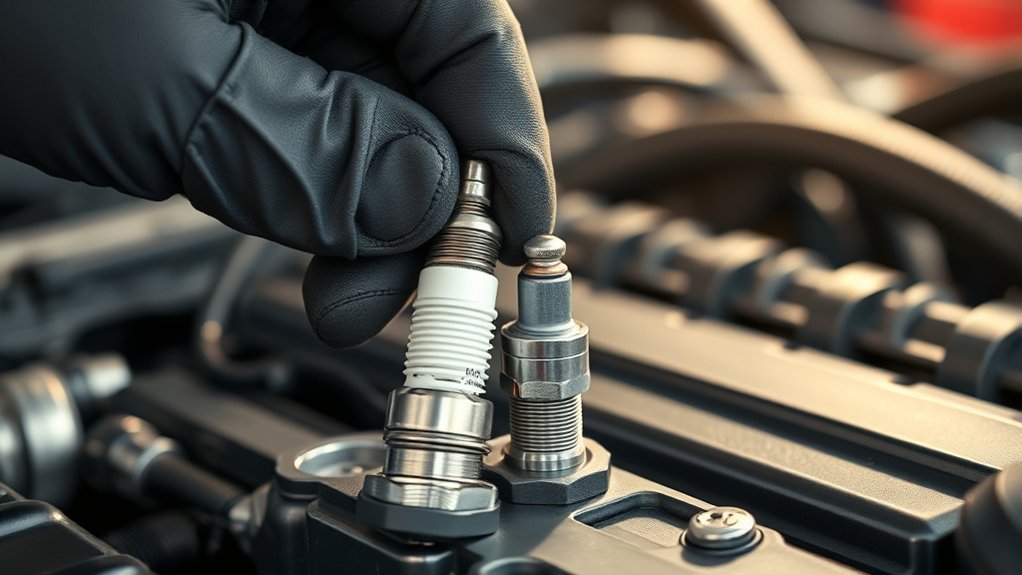
There is no single replacement mileage that applies to every NGK spark plug or every vehicle. Follow the interval in your vehicle owner’s manual or official maintenance schedule. Plug construction, engine design, ignition system, operating conditions, and electrode material all influence service life.
Niterra notes that vehicle-manufacturer replacement requirements can vary considerably and that precious-metal plugs usually have longer service intervals than standard nickel plugs. That does not mean an iridium or platinum plug should automatically be installed in an engine that specifies something different.
- Follow the vehicle manufacturer’s maintenance interval first.
- Use the exact plug specification approved for the engine.
- Inspect plugs sooner when diagnosing a misfire or starting problem.
- Investigate plugs that foul repeatedly instead of simply replacing them again.
- Do not extend the maintenance interval solely because a replacement plug is marketed as “premium.”
Pro Tip: If you do not know the correct NGK part number, use the vehicle manufacturer’s specification and NGK’s official Part Finder. Matching physical thread size alone is not enough.
Which Materials Are Used in Spark Plugs?
The phrase “copper spark plug” can be misleading. NGK explains that its standard-material plugs normally use nickel-alloy firing electrodes with a copper core. Copper transfers heat very well, but it is too soft to serve as the exposed firing surface in the way the phrase “copper electrode” often suggests.
Precious-metal plugs use materials such as platinum or iridium at the firing surfaces. These materials resist erosion and allow fine electrode designs that can maintain consistent ignition characteristics over a long service interval.
| Material / Design | Typical Role | Main Advantage |
|---|---|---|
| Nickel alloy | Standard center/ground firing surfaces | Reliable and economical for applications designed for it |
| Copper core | Inside the center electrode | Improves heat transfer and helps control electrode temperature |
| Platinum | Fine-wire or precious-metal firing surface | Good wear resistance and long-life OE designs |
| Iridium | Fine-wire center-electrode tip | Very high wear and heat resistance with a fine firing tip |
NGK’s Laser Iridium designs can combine an iridium center electrode with a platinum ground-electrode element. The important point is not simply which metal sounds more advanced; it is whether the entire plug design matches the engine.
Iridium vs Platinum Spark Plugs: What’s the Difference?
Both iridium and platinum spark plugs are precious-metal designs intended to resist electrode erosion better than standard-material plugs. Iridium is exceptionally hard and has a very high melting point, which allows manufacturers to use a very fine center electrode while maintaining durability.
Platinum also provides strong wear resistance and is used in many long-life OE applications. NGK’s Laser Platinum products, for example, are designed with vehicle manufacturers for specific applications.
- Iridium: extremely wear-resistant and suitable for fine-wire electrode designs.
- Platinum: durable precious-metal technology used in many OE and long-life applications.
- Laser Iridium: can combine an iridium center electrode with platinum on the ground electrode.
- Correct application: more important than choosing one material solely because it is marketed as an upgrade.
If your engine was designed for a specific NGK iridium or platinum part number, stay with the specified plug or an officially approved equivalent. A different material, heat range, reach, or gap can change how the plug behaves.
What Does NGK Spark Plug Heat Range Mean?
A spark plug’s heat range describes its ability to transfer heat from the firing tip into the cylinder head. It does not describe the temperature or strength of the electrical spark.
In NGK’s numbering system, a lower heat-range number generally indicates a hotter plug, while a higher number indicates a colder plug. A hotter plug retains more heat at the firing end; a colder plug transfers heat away more quickly.
For an unmodified street vehicle, use the heat range specified for the engine. Installing a hotter plug to cure fouling can reduce the engine’s safety margin against pre-ignition, while a plug that runs too cold may be more prone to deposits.
Modified, turbocharged, supercharged, racing, or unusual-duty engines may require different specifications, but those changes should be based on the engine builder’s or calibrator’s requirements rather than guesswork.
How to Choose the Correct NGK Spark Plug
Spark plugs that look similar can have very different specifications. NGK warns against a “one size fits all” approach. Before buying a replacement, confirm:
- Application and part number: Match the vehicle, engine, model year, and manufacturer specification.
- Thread diameter and reach: The threaded section must fit the cylinder head and extend the correct distance into the chamber.
- Seat style: The plug may use a gasket seat or tapered seat.
- Heat range: Use the range specified for the engine unless a qualified engine builder specifies otherwise.
- Spark gap: Verify the vehicle manufacturer’s required gap.
- Electrode design: Nickel, platinum, iridium, and other designs are application-specific.
- Resistor specification: Modern vehicles normally require the appropriate resistor-type plug specified for their electronic systems.
Warning: Never install a spark plug simply because its threads fit. Incorrect thread reach or projection can interfere with engine components, while the wrong heat range can contribute to fouling, overheating, or pre-ignition.
Spark Plug Gap and Installation Tips
Most NGK plugs are supplied with a factory-set gap, but the gap should still be checked against the vehicle manufacturer’s specification. NGK advises extra care with fine-wire iridium and platinum plugs because their small center electrodes can be damaged by improper gapping.
If an adjustment is allowed and needed, move only the ground electrode with the correct tool. Do not pry against the fine center electrode or ceramic insulator. NGK provides additional guidance in its official spark-plug gap guide.
Install Spark Plugs Correctly
- Allow the engine to cool before removing or installing plugs.
- Clean dirt and debris from around the spark-plug wells.
- Confirm the new plug’s part number, gap, thread reach, and seat style.
- Start the plug carefully by hand so it does not cross-thread.
- Tighten it to the vehicle or plug manufacturer’s specified torque or tightening angle.
- Reconnect the ignition coil or plug wire securely.
Proper torque matters because the spark plug must seat correctly against the cylinder head to transfer heat. Too little torque can impair heat transfer and sealing, while too much torque can stretch the metal shell, damage threads or seals, and potentially damage the engine. NGK’s installation guide explains these risks in detail.
Note: NGK states that its spark plugs use thread plating designed to provide corrosion resistance and release characteristics, so it does not recommend adding anti-seize or lubricant to NGK spark-plug threads unless specific application instructions explicitly require otherwise. Lubricating the threads changes the relationship between tightening torque and clamping force.
Frequently Asked Questions
What Is Special About NGK Spark Plugs?
NGK offers a broad range of application-specific ignition products, including nickel-alloy, platinum, iridium, OE-style, and other spark-plug technologies. The important advantage is correct engineering for the intended engine, including the required heat range, gap, electrode design, thread reach, and seat style.
What Kills Spark Plugs Quickly?
Premature spark-plug problems can result from carbon or oil fouling, overheating, incorrect heat range, incorrect gap, improper torque, an overly rich or lean mixture, ignition problems, or other engine faults. Repeated fouling usually deserves diagnosis rather than repeated plug replacement.
What Does NGK Stand For?
The NGK initials trace to “Nippon Gaishi Kabushiki-gaisha,” the Japanese name associated with NGK Insulator Company Ltd., from which the spark-plug business was spun off in 1936. The company later known in English as NGK Spark Plug changed its corporate name to Niterra in April 2023, while NGK continues as an ignition-parts brand.
Is NGK a Reputable Brand?
Yes. NGK is a long-established ignition-parts brand with original-equipment and aftermarket applications. However, brand reputation does not make every NGK plug interchangeable; the correct part number and engine specification still matter.
Can I Use a Different NGK Heat Range for Better Performance?
For a stock engine, use the manufacturer-specified heat range. A different heat range may be appropriate for some modified or racing engines, but it should be selected according to the engine builder’s or calibrator’s requirements. A colder or hotter plug is not automatically a performance upgrade.
Should You Put Anti-Seize on NGK Spark Plugs?
NGK generally advises against using anti-seize or lubricant on its plated spark-plug threads. Lubrication changes the torque-to-clamping-force relationship and can increase the risk of over-tightening. Follow the instructions for the exact plug and engine application.
Conclusion
NGK spark plugs are critical ignition components, but choosing the right plug involves more than picking between nickel, platinum, or iridium. Match the exact application, heat range, thread reach, seat, and gap specified for your engine. Replace the plugs according to the vehicle manufacturer’s maintenance schedule, and investigate repeated fouling or misfires instead of treating every plug problem as normal wear. Correct selection and installation help the ignition system operate the way the engine was designed to run.
Sources
- Niterra — Company History — company founding and the 2023 change from NGK Spark Plug to Niterra.
- Niterra — Spark Plugs — spark-plug function, materials, symptoms, failure causes, and replacement guidance.
- NGK — Understanding Spark Plug Heat Range — heat-range operation and overheating/fouling guidance.
- NGK — 5 Things You Should Know About Spark Plugs — copper-core construction, gapping, torque, and anti-seize guidance.
- NGK — Spark Plug Installation — correct installation and torque precautions.

