
Last Updated on July 25, 2026 by Daniel Globe
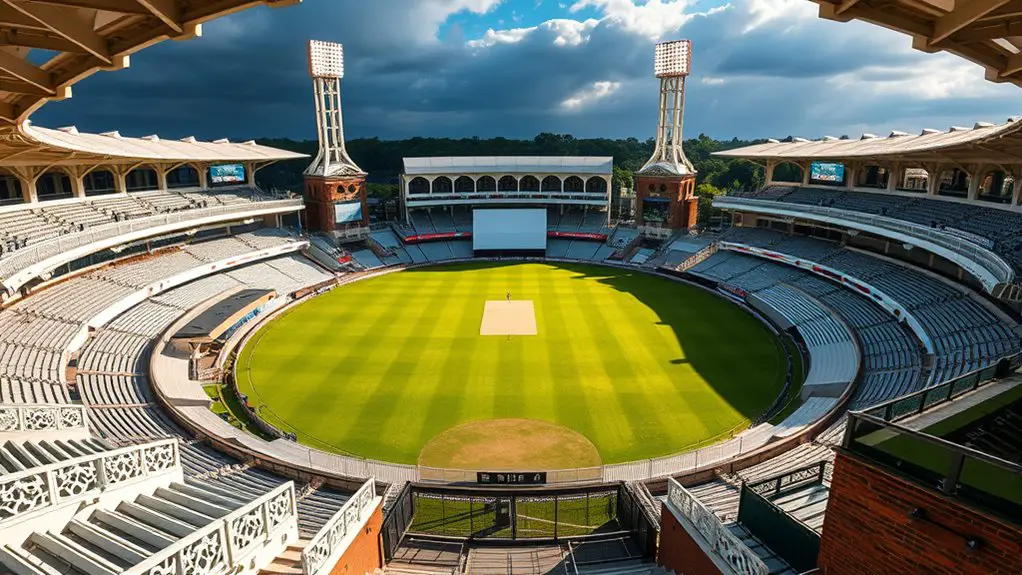
A tour of Lord’s Cricket Ground gives you access to parts of the Home of Cricket that most visitors only see from the stands. Depending on ground operations, a standard guided tour can take you through the Victorian Pavilion, Long Room, players’ dressing rooms, Barclays Media Centre and MCC Museum. Along the way, you’ll see how more than two centuries of cricket history sit alongside a modern, working international venue.
Quick Answer
A standard Lord’s Cricket Ground guided tour takes about 100 minutes and usually includes the Victorian Pavilion, Long Room, players’ dressing rooms and Honours Boards, Barclays Media Centre, a stand, and MCC Museum. In 2026, adult tickets are £32.95, but access can change because Lord’s remains a working cricket venue.
Key Takeaways
- MCC was founded in 1787, but the present Lord’s Cricket Ground in St John’s Wood has been its home since 1814.
- The standard Guided Tour normally includes the Pavilion, Long Room, dressing rooms, Honours Boards, Barclays Media Centre, a stand and MCC Museum.
- Lord’s is a working ground, so the Pavilion, dressing rooms, Media Centre or other advertised areas can close at short notice.
- The MCC Museum is home to the Ashes Urn and a major collection of cricket art, archives and memorabilia.
- For 2026, standard tickets are listed at £32.95 for adults, £26.95 for seniors and students, £22.95 for children aged 5–15, and free for under-fives.
At a Glance
| Time Required | Allow about 2–2.5 hours on site. The standard tour is listed at about 100 minutes, and arriving 30 minutes early is the safest plan. |
| Difficulty | Easy to moderate. Expect walking and standing, with stairs in some areas; accessibility adaptations are available on much of the route. |
| Tools Needed | Booking confirmation, comfortable shoes, suitable clothing for the weather and a refillable water bottle. Avoid bringing large luggage. |
| Cost | 2026 standard prices: Adult £32.95; Senior/Student £26.95; Child 5–15 £22.95; under 5 free. Prices can change, so check the official booking page. |
Disclosure: As an Amazon Associate I earn from qualifying purchases. Some links on this page are affiliate links, at no extra cost to you.
History of Lord’s Cricket Ground
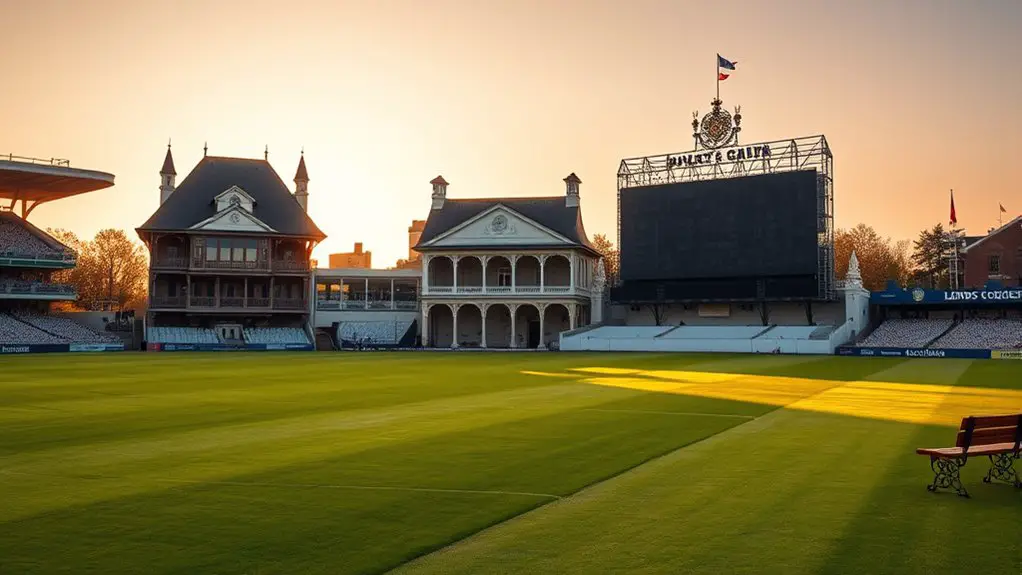
When you step into Lord’s Cricket Ground, you are entering a place connected with more than two centuries of organized cricket. One important date needs explaining, though: Marylebone Cricket Club was founded in 1787, when Thomas Lord established an earlier ground at Dorset Fields in Marylebone. MCC moved to the present St John’s Wood site in 1814.
Lord’s has roots stretching back to 1787, but the cricket ground visitors tour today has occupied its St John’s Wood home since 1814.
That distinction makes the history more interesting rather than less. The venue has evolved repeatedly while remaining tied to MCC, which owns Lord’s and remains the custodian of the Laws of Cricket.
Its architecture now combines different eras. Historic spaces such as the Victorian Pavilion sit opposite modern structures such as the Barclays Media Centre, while the outfield has hosted generations of famous cricketers, including Sir Ian Botham and Sachin Tendulkar.
The Pavilion seen today was designed by architect Thomas Verity and constructed in 1889–90. It later received Grade II* listed status, reflecting its architectural and sporting importance.
Lord’s continues to add to that history. In June 2026, it hosted its 150th Test match. MCC noted that no other ground had staged as many Tests at that point.
Highlights of the Stadium Tour
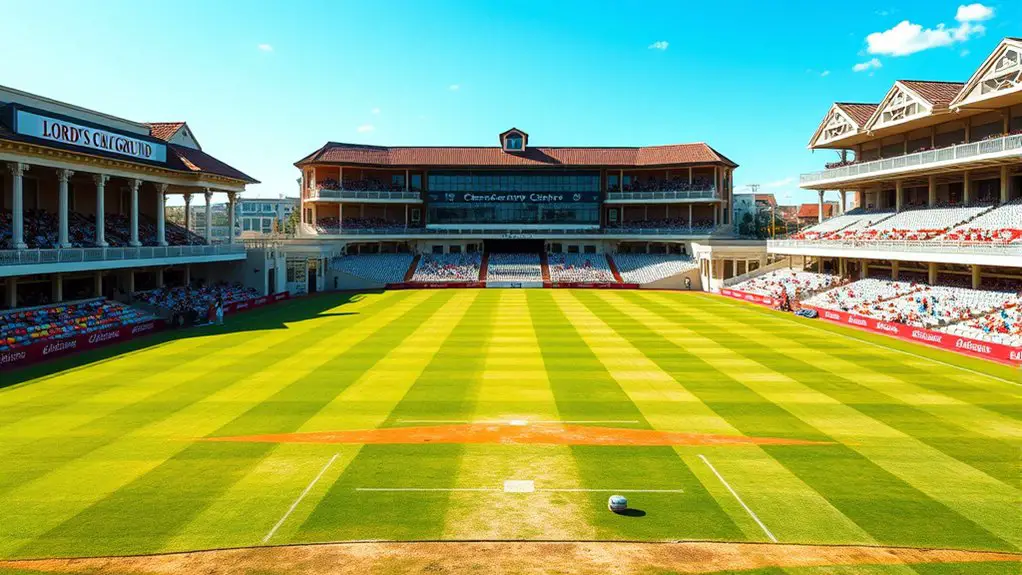
The main Lord’s Guided Tour combines history, architecture and behind-the-scenes access. According to the current official Lord’s tour information, the advertised route includes the Victorian Pavilion, Long Room, players’ dressing rooms, Barclays Media Centre, a stand and MCC Museum.
Walking through those areas gives you a different view from attending a match. You can see where players prepare, where the Honours Boards record outstanding international performances, and where broadcasters and journalists work high above the ground.
The contrast between the historic Pavilion and modern Media Centre is one of the tour’s strongest visual features. Your guide also provides the context that connects those buildings with major matches and changes in cricket.
Warning: Do not assume every advertised area will be open on your date. Lord’s is a working ground, and operational needs, matches, maintenance or events can close the Pavilion, Long Room, dressing rooms, Media Centre or other areas. Check the official closure information before travelling.
This makes each visit slightly different. When an area is unavailable, MCC may alter the route or provide an alternative, but the standard itinerary is not guaranteed.
The Pavilion and Long Room
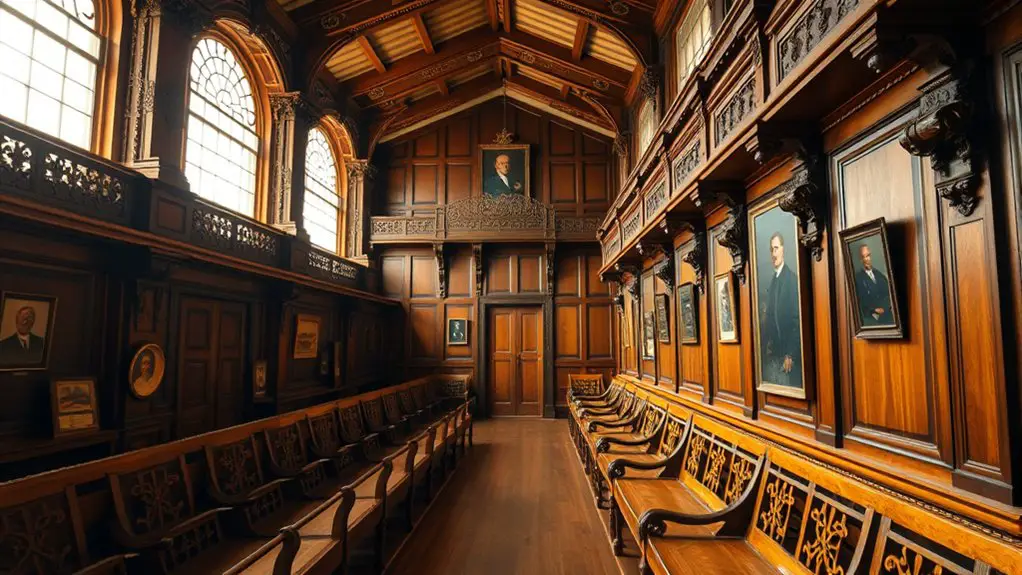
For many cricket fans, the Pavilion and Long Room are the emotional center of a Lord’s tour. The Pavilion dates from 1889–90, and its Victorian architecture feels very different from the newer stands around the ground.
The Long Room sits at the heart of the Pavilion and contains important works from MCC’s art collection. On match days, players pass through this room on their journey between the dressing rooms and the field, making it one of the rare sporting interiors that directly connects players with the traditions of the venue.
The paintings and portraits lining the room add another layer of cricket history. Instead of simply being a decorative waiting area, the Long Room functions as both a working part of the Pavilion and one of Lord’s best-known ceremonial spaces.
Access is one reason the Guided Tour is attractive: ordinary match tickets do not normally let spectators wander through these Pavilion areas. However, you should still check the tour closure calendar because Pavilion access can disappear on operational days.
The MCC Museum
The official name of the venue’s museum is the MCC Museum. MCC describes it as one of the oldest sporting museums in the world, and its collections trace the development and culture of cricket.
The underlying MCC collection began in 1864, when members were invited to donate objects for display in the Pavilion. A dedicated public museum space followed in the twentieth century.
Today the Museum provides the historical foundation for the rest of the tour. Instead of simply seeing famous rooms, you can connect them with objects, archives and stories explaining how the game developed.
Exhibits of Cricket History
The Museum and wider MCC collections contain cricket art, equipment, archival material and objects associated with major moments in the sport.
Items and displays can change, so it is better not to promise every individual bat, shirt or scorecard on every visit. However, the collection as a whole includes material such as:
- historic cricket bats and playing equipment;
- original scorecards and scorebooks held in the MCC Archive;
- paintings and photographs documenting players and matches;
- World Cup memorabilia and trophies;
- objects linked with the development of MCC and the Laws of Cricket.
This gives the Museum more value than a simple trophy room. The displays show changes in equipment, competition, international cricket and the culture surrounding the game.
Interactive Displays and Activities
The standard MCC Museum visit should not be described as a guaranteed virtual-reality or gaming experience. Current official tour information focuses instead on real objects, guided interpretation and cricket history.
Your guide can make those objects more engaging by explaining why particular matches, traditions and pieces of memorabilia matter. Some special or bespoke Lord’s experiences may offer additional behind-the-scenes access or object handling, but these should not be confused with what is guaranteed on every standard Guided Tour.
For most visitors, the interaction comes through the guide, questions from the group, close-up viewing of historic material and seeing how the Museum connects to the rest of Lord’s.
Iconic Memorabilia Collections
The best-known object in the MCC Museum is the Ashes Urn, one of cricket’s most recognizable artefacts.
Current Lord’s tour information also highlights the 1983 World Cup trophy. Depending on the exhibition programme, you may encounter other items connected with World Cups and important players.
Among the broader types of material preserved by MCC are:
- the Ashes Urn;
- the 1983 World Cup trophy and other tournament material;
- historic scorebooks and scorecards;
- match-worn clothing and playing equipment;
- portraits, photographs and cricket artwork.
Because exhibitions rotate, treat individual objects beyond the permanent headline pieces as possible highlights rather than guaranteed displays.
Iconic Matches and Moments
Lord’s has staged some of international cricket’s most famous matches. The history is especially rich in World Cup finals, Test cricket and the Ashes.
| Match | Year | Significance |
|---|---|---|
| Men’s World Cup Final | 1983 | India defeated West Indies by 43 runs to win its first men’s World Cup. |
| Ashes Test | 2005 | Australia won the opening Test by 239 runs before England recovered later in the series to regain the Ashes. |
| Women’s World Cup Final | 2017 | England defeated India; Anya Shrubsole took 6 for 46, a performance now recorded on the Lord’s Honours Boards. |
| Men’s World Cup Final | 2019 | England and New Zealand tied both the match and Super Over; England won under the boundary-count rule then in force. |
The 1983 final remains one of India’s defining cricket moments. Kapil Dev’s side beat the two-time defending champion West Indies after defending a modest total.
The 2005 Lord’s Ashes Test is memorable for a different reason. Despite England eventually winning that celebrated series, Australia won the opening Lord’s Test by 239 runs. Glenn McGrath reached 500 Test wickets during the match.
The 2019 World Cup final produced an even more extraordinary finish. England and New Zealand both made 241, then tied the Super Over. England were declared champions using the tournament’s boundary-count tie-break rule at the time.
Behind the Scenes: Dressing Rooms and More
One of the biggest differences between a normal match visit and a Guided Tour is access to working areas associated with the players.
The dressing rooms, when open, let you see where international teams prepare before walking through the Pavilion toward the field.
Dressing Room Experience
The most famous features inside the dressing rooms are the Lord’s Honours Boards. They record players who have produced qualifying outstanding performances at the ground.
For Test matches, a century, five wickets in an innings or ten wickets in a match can put a player’s name on the boards. Since their 2019 update, the boards also recognize qualifying centuries and five-wicket hauls in men’s and women’s One-Day Internationals at Lord’s.
That makes the dressing-room visit more than a look at lockers and seating. Names such as Jack Hobbs, Ian Botham and other major figures become part of the room itself, connecting the space directly with performances visitors may already know.
The atmosphere before an actual international cannot be reproduced on a tour, but seeing the route players use gives you a much clearer sense of how the Pavilion functions on match day.
Player Facilities Overview
Lord’s contains extensive facilities for elite cricket, but the standard public tour should not be presented as unrestricted access to every training, rehabilitation, coaching, nutrition or analytics area.
The advertised Guided Tour focuses on specific behind-the-scenes spaces: the dressing rooms, Pavilion, Long Room, Media Centre, a stand and Museum.
This is still enough to explain the rhythm of a professional match. You can see where teams change and prepare, where players emerge onto the field, where journalists work, and how historical traditions remain integrated into a modern venue.
Special premium and private experiences may provide access beyond the standard itinerary, so check the exact description of the product you book rather than assuming every Lord’s tour is identical.
Lord’s Tour Options and 2026 Prices
Lord’s now offers more than one type of visit. The right choice depends on how much time you have and whether Pavilion access matters to you.
| Tour | Typical Duration | 2026 Price Information | Best For |
|---|---|---|---|
| Lord’s Guided Tour | About 100 minutes; the 2026 FAQ lists 105–110 minutes | Adult £32.95; Senior/Student £26.95; Child 5–15 £22.95; under 5 free | First-time visitors wanting the classic Pavilion, dressing-room, Media Centre and Museum experience |
| Guided Tour Plus | 110–120 minutes | From £57.95 | Visitors aged 12+ wanting a smaller group and enhanced behind-the-scenes access |
| Lord’s Look-In | About 60 minutes | Check live booking calendar | Families, photographers and visitors short on time; normally no Pavilion, Long Room or dressing-room access |
Note: Prices, tour products and available areas can change. Treat these 2026 figures as a planning guide and confirm the exact details on the official Lord’s booking page before paying.
Tips for Your Visit
A visit to Lord’s Cricket Ground becomes much easier when you plan around the fact that this is an active sporting venue rather than a museum operating on an identical route every day.
Check the live tour schedule and area closures before travelling. The Long Room or dressing rooms can be unavailable even when tours themselves are running.
- Wear comfortable shoes: Expect a significant amount of standing and walking.
- Dress for the weather: Tours can continue in rainy conditions, so bring suitable outerwear when needed.
- Bring a refillable water bottle: Water fountains are available around the ground.
- Leave large luggage elsewhere: Lord’s does not provide luggage-storage facilities for tour guests.
- Ask your guide questions: The guide’s explanations are one of the best ways to connect individual rooms and objects with the ground’s history.
Pro Tip: MCC’s 2026 Tour FAQ mentions arriving 15 minutes early, while its 2026 Tour Terms recommend 30 minutes. Planning to arrive about 30 minutes before your start time gives you the safer buffer for security and any entry instructions.
Getting to Lord’s
Lord’s is in St John’s Wood, London, with the postcode NW8 8QN. Public transport is usually easier than driving.
The official Lord’s travel information lists several Underground stations within walking distance. St John’s Wood on the Jubilee line is about a 10-minute walk from the ground, while Baker Street, Warwick Avenue, Marylebone and Edgware Road provide alternatives.
Bus routes 139 and 189 run close to Grace Gate, while routes 13 and 113 serve the eastern side of the ground.
There is normally no general visitor parking at Lord’s. Visitors who need accessible parking or drop-off arrangements should contact MCC in advance because provision is limited and subject to availability.
Accessibility and Family Visits
MCC asks visitors with accessibility requirements to contact the Tours Office before visiting so suitable arrangements can be discussed.
According to the 2026 Tour FAQ, most of the normal tour route is accessible. Lifts are available in areas including the Pavilion and Media Centre, and there are seated points along the route. The upper floor of the Museum, however, is accessible only by stairs.
There is no minimum age for the standard tour, but children under 16 must be accompanied by an adult aged 18 or older. Very young children may find a 100-plus-minute guided tour long, which is why Lord’s also promotes shorter experiences for families.
Under-fives attend free on the standard 2026 Guided Tour but still need to be included in the booking for capacity and safety purposes.
Photography, Bags, Food and Other Rules
Photography is not unrestricted. Under the current tour rules:
- take photographs only in areas designated by your tour guide;
- do not use flash photography in the Museum or Pavilion;
- filming, video calls and similar recording are prohibited during the tour;
- large luggage is not accepted and there is no luggage-storage facility;
- food and drink must not be consumed in the Museum, Pavilion, Media Centre, shop and other restricted areas;
- refreshments are not normally served during the tour, but water fountains are available;
- Lord’s operates cashless/card-based payment arrangements in its visitor retail areas.
MCC recommends smart-casual clothing and can refuse entry for clearly inappropriate dress. Practical, comfortable clothing is the best choice for most visitors.
How to Book Your Tour
Booking a Lord’s Cricket Ground tour is straightforward. The safest method is to use the official Lord’s tour booking system, choose your preferred tour type, then select an available date and time.
Standard tours should be booked and paid for in advance. Walk-up places may sometimes exist, but availability is not guaranteed.
For 2026, the standard Guided Tour is listed at:
- Adult: £32.95
- Senior aged 60+: £26.95
- Student: £26.95 with qualifying ID
- Child aged 5–15: £22.95
- Under 5: Free, but still include the child in the reservation
After booking, keep your confirmation available for entry. MCC’s terms state that visitors who arrive more than 10 minutes after the scheduled start may be denied entry, with no refund for a missed tour.
If you need to cancel or reschedule, current terms require contacting MCC at least 72 hours before the tour. Changes inside that window are restricted and subject to MCC’s conditions and availability.
Check Area Closures Before You Travel
This step is especially important at Lord’s. Matches, preparations, events, maintenance and redevelopment can alter both tour dates and routes.
Check the official Lord’s area-closure page shortly before your visit rather than relying solely on information you read when you first booked.
Also follow the gate or entrance shown on your booking confirmation. Lord’s occasionally changes access arrangements when construction or cricket operations affect normal entrances.
Frequently Asked Questions
Are there any age restrictions for the Lord’s stadium tour?
There is no minimum age for the standard Guided Tour. Children under 16 must be accompanied by an adult aged 18 or older. Under-fives are free in 2026 but must still be included in the booking. Because the full tour lasts around 100–110 minutes, a shorter Lord’s experience may suit very young children better.
Is photography allowed during the Lord’s tour?
Photography is allowed only in areas designated by the tour guide. Flash photography is not permitted in the Museum or Pavilion, and filming, video calls and similar recording are prohibited during the tour.
Can I bring food and drinks on the tour?
Refreshments are not normally served during the tour, and food or drink cannot be consumed in areas including the MCC Museum, Pavilion and Media Centre. A refillable water bottle is useful because water fountains are available around the ground. Follow your guide’s directions about where drinking is permitted.
How long is the Lord’s Cricket Ground tour?
Allow roughly 100–110 minutes for the standard Guided Tour. The main 2026 Lord’s tour page lists 100 minutes, while MCC’s 2026 Tour FAQ states 105–110 minutes. Tour Plus takes around 110–120 minutes, and the shorter Lord’s Look-In takes about 60 minutes.
Are guided tours available in multiple languages?
No multilingual standard tour is currently advertised. MCC’s 2026 Tour FAQ states that all tours are conducted in English.
Will I definitely see the Long Room and dressing rooms?
No. They are part of the advertised standard Guided Tour, but Lord’s is a working ground and access can change because of cricket, events, maintenance or other operational requirements. Check the official closure calendar before visiting.
Can I bring a suitcase or large bag?
Large luggage should be left elsewhere. Lord’s does not provide luggage storage for tour visitors. Smaller handbags and rucksacks are generally permitted subject to security rules.
Is the Lord’s tour accessible?
Most of the normal route can accommodate visitors with accessibility needs, and lifts are available in parts of the Pavilion and Media Centre. The upper floor of the MCC Museum is accessible only by stairs. Contact the Tours Office before your visit so MCC can discuss suitable arrangements.
Conclusion
A tour of Lord’s Cricket Ground is most rewarding when you know what makes the venue special and what to expect on the day. The Pavilion, Long Room, dressing rooms, Honours Boards, Barclays Media Centre and MCC Museum connect modern cricket with a story that stretches from MCC’s beginnings in 1787 to the current St John’s Wood ground opened in 1814.
Just remember that Lord’s remains a working venue. Check current availability and closures, allow plenty of time for arrival and security, and confirm the exact tour you are booking. Do that, and you can spend your visit enjoying the history rather than dealing with avoidable surprises.
Sources
- Lord’s — Guided Tours of Lord’s Cricket Ground — 2026 tour inclusions, standard prices, duration and Tour Plus information.
- MCC — Lord’s Tour FAQs 2026 — age rules, languages, duration, photography, luggage, weather and accessibility.
- MCC — Lord’s Tours Terms & Conditions 2026 — booking, arrival, route changes, food and drink restrictions and tour regulations.
- MCC — Our History — MCC’s founding in 1787 and move to the present St John’s Wood ground in 1814.
- MCC — Heritage & Collections — museum and collection history, archives and cricket heritage.
- International Cricket Council — 2019 Men’s World Cup Final — verifies the tied final, tied Super Over and England’s title.
