
Last Updated on July 31, 2026 by Logan Reeves
Disclosure: As an Amazon Associate, we earn from qualifying purchases. If you click a link on this page and make a purchase, we may receive a small commission at no extra cost to you.
Ultralight fishing is more enjoyable when your rod can cast small lures, show light bites, and travel without taking over your gear bag. The LITTMA Wild Streams Rod is a two-piece carbon-fiber rod sold in spinning and casting versions from 5’6″ to 7′. It is aimed mainly at trout, crappie, panfish, and micro-fishing rather than large or hard-pulling species. This review explains where its low weight and cork handle help, plus the limits you should check before choosing a length and reel style.
Quick Verdict
Rating: 8/10, recommended with caveats
Best For: Beginners and mobile anglers targeting trout, crappie, panfish, and other small freshwater species with light line and small lures.
Bottom Line: The Wild Streams offers a light carbon-fiber blank, a comfortable cork grip, and convenient two-piece storage across several lengths. Its ultralight power is fun and sensitive for small fish, but it is not the right tool for heavy lures, thick cover, or consistently large species.
| Specification | Detail |
|---|---|
| Brand | LITTMA |
| Series | Wild Streams |
| Product type | Ultralight trout, crappie, panfish, and micro-fishing rod |
| Rod styles | Spinning and casting variants |
| Lengths listed | 5’6″, 6′, 6’6″, and 7′ |
| Number of pieces | 2 |
| Blank material | Carbon fiber |
| Handle material | Cork |
| Guides | Stainless steel |
| Color | Green |
| Example listed setup | The 5’6″ spinning variant is listed as ultralight, two-piece, 0.18 kg, with 6 lb line and a 3 g lure specification |
| Best use | Small freshwater species, light line, small lures, streams, ponds, and portable setups |
What Is the LITTMA Wild Streams Rod?
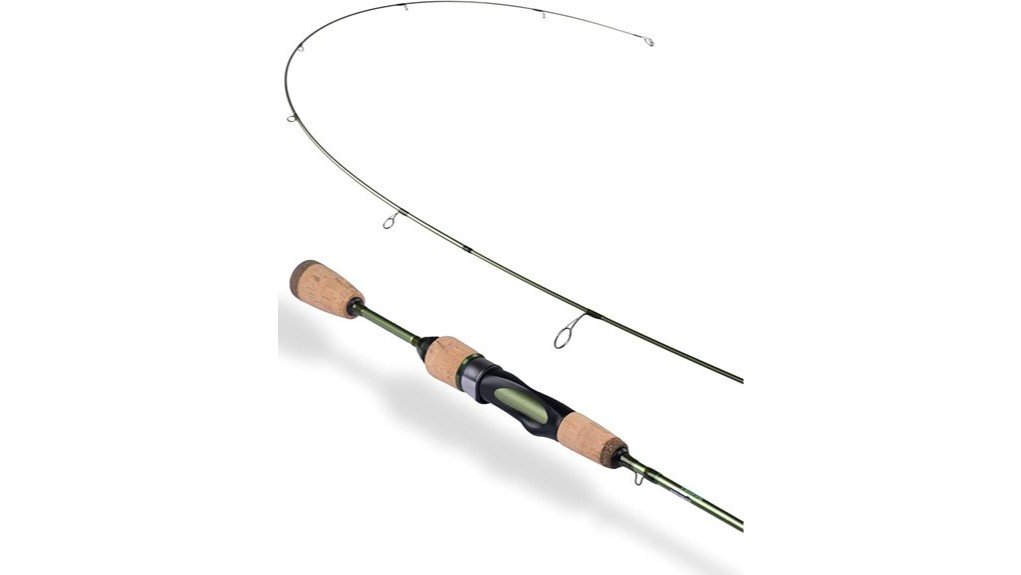
The LITTMA Wild Streams is an ultralight fishing rod built around a green carbon-fiber blank, a cork handle, stainless-steel guides, and a two-piece layout. The product range includes spinning and casting versions, so you need to match the rod to the reel you already own or plan to buy.
Its purpose is narrow in a useful way. This is a rod for small presentations and smaller freshwater fish, including trout, crappie, and panfish. The lighter blank should help you feel subtle bites and enjoy more bend from modest fish, but the same ultralight design gives you less reserve power than a light, medium-light, or medium rod.
Before You Buy: Check both the reel style and the exact length before ordering. A spinning reel needs the spinning version, while a baitcasting or spincast setup needs a compatible casting version. Specifications can also differ by length and variant.
Who Should Buy It?
Best For
- Beginners building an affordable ultralight trout or panfish setup
- Anglers who hike, travel, or store rods in a smaller vehicle
- Fishers who prefer light line, small lures, and a more responsive fight
Skip If
- You regularly throw heavy lures or fish dense weeds and timber
- You mainly target large bass, pike, catfish, salmon, or saltwater species
- You want the simpler feel and uninterrupted blank of a one-piece rod
Carbon-Fiber Blank and Ultralight Performance
The carbon-fiber blank is the main reason to consider this rod. A lighter rod reduces the amount of weight in your hand during repeated casting, and an ultralight blank bends more easily under small loads. That combination suits small jigs, tiny hard baits, and other light presentations used for trout and panfish.
Sensitivity is also part of the appeal. A thin, light blank can transmit taps and changes in lure movement more clearly than a heavier general-purpose rod. You still need a balanced reel and suitable line, because an oversized reel can make a short ultralight rod feel tip-light or awkward.
The tradeoff is power. Ultralight rods are designed to protect light line and make small fish enjoyable, not to force large fish away from cover. You should use a smooth drag, avoid high-sticking the blank, and let the rod absorb runs instead of trying to lift fish with the tip.
Cork Handle and Casting Control
The cork handle gives you a firm, familiar grip without adding much bulk. Cork also stays comfortable across long sessions and gives your fingers a direct connection to the blank and reel seat. That matters when you are working small lures with short twitches or watching for light pressure changes.
The original listing describes the grip as secure in wet conditions, but no handle is slip-proof. Keep fish slime, sunscreen, and grit off the cork, and dry it before storage. A gentle wipe with a damp cloth is usually better than soaking the handle or using harsh cleaners.
Stainless-Steel Guides and Build Quality
Stainless-steel guides give the Wild Streams a practical level of corrosion resistance for everyday freshwater use. They also keep the line path organized while the blank flexes. Before each trip, run a cotton swab around the guide rings. Fibers that catch can reveal a chip or rough edge that may damage light line.
The rod is still an affordable ultralight model, so handle it as precision tackle rather than a heavy-duty utility rod. Do not close a tailgate on it, pull snagged lures free with the rod bent sharply, or carry it assembled through brush where the tip can catch.
Two-Piece Portability and Storage
A two-piece rod is easier to fit in a trunk, closet, backpacking setup, or travel case than a comparable one-piece rod. The Wild Streams separates near the middle, which reduces packed length without requiring a telescoping blank. That makes it useful for short hikes to streams and ponds or for keeping a light setup in your vehicle.
The joint is also a maintenance point. Seat the two sections firmly and align the guides before fishing, but do not force the ferrule until it becomes difficult to separate. Check the joint during the day, especially after repeated casting, because a loose connection can twist the guides or concentrate stress near the ferrule.
Pro Tip: Mark the aligned sections with two tiny removable tape tabs before your first trip. You can then assemble the rod faster and confirm that every guide is in a straight line.
Choosing the Right Length and Reel Style
The listed range runs from 5’6″ to 7′. Shorter options are easier to control around brush, tight creek banks, docks, and small boats. Longer versions can improve casting distance, line control, and the ability to guide a light lure across current, but they need more room behind and beside you.
Spinning versions are the most familiar choice for many ultralight anglers because small spinning reels handle light line and tiny lures well. Casting versions are for compatible casting or spincast reels. Read the selected variant name in your cart before checkout, since the product page groups several lengths and reel styles together.
How It Performs in Real Use
Small Trout Streams
The shorter 5’6″ or 6′ options make sense where overhanging branches limit your casting motion. The light blank should help with small spinners, spoons, and jigs, while the two-piece build is convenient when the fishing spot requires a walk. A longer model may be better where you need to mend line or reach across wider current.
Ponds and Panfish
For bluegill, crappie, perch, and similar fish, the ultralight power makes small bites easier to notice and gives modest fish more bend in the rod. Pair it with light line and a compact reel so the setup stays balanced. Use the drag rather than tightening down and pulling hard.
Travel and Backup Use
The two-piece format is the clearest advantage for travel. It is easier to protect in a rod sleeve or compact case than a one-piece rod, and it can serve as a backup for vacations, camping trips, or a vehicle kit. It is still a full rod, not a rugged travel tube, so use a protective case when luggage may be stacked on it.
Wind and Open Water
Wind can push light line and small lures off course, regardless of rod brand. The longer versions may help with casting distance, but they do not remove the limits of an ultralight presentation. In strong wind, shorten your cast, keep the line low, and use a lure that remains within the selected rod’s stated range.
Setup and Care Tips
- Match the reel seat: Choose the spinning or casting variant that fits your reel type.
- Confirm the exact ratings: Line and lure specifications may vary by length, so use the markings printed on your selected rod.
- Align the guides: Assemble both sections in a straight line and recheck the ferrule during the day.
- Protect light line: Inspect guides for rough spots and set the reel drag before your first cast.
- Transport it covered: Use a sleeve or tube to protect the tip and guides in a car, backpack, or luggage.
- Clean after use: Wipe the blank, guides, and handle with fresh water and dry the rod before storage, especially after exposure to dirty or mineral-heavy water.
Pros and Cons
Pros
- Carbon-fiber blank keeps the setup light and responsive
- Two-piece design is easier to transport and store
- Cork handle offers a comfortable, direct grip
- Multiple lengths support tight streams or more open water
- Spinning and casting versions cover different reel preferences
Cons
- Ultralight power is not suited to heavy lures, thick cover, or large target species
- Variant-specific line, lure, and weight details may differ from the example listing
- The two-piece ferrule needs correct assembly and occasional checks
Is It Worth the Price?
The LITTMA Wild Streams sits in the budget-oriented part of the ultralight rod market. Its value comes from combining a carbon-fiber blank, cork handle, stainless-steel guides, two-piece construction, and several length choices in one series. It is worth considering when you want a portable entry point into trout or panfish fishing without moving straight to a premium rod.
You get the most value when the rod’s narrow purpose matches your fishing. It is less convincing as an all-purpose purchase because ultralight power limits lure size, cover control, and target species. Buyers who need one rod for both small panfish and heavier bass techniques should compare light or medium-light models instead.
How It Compares to Alternatives
The Shakespeare Micro Series is another budget-focused option for light lines and small species, while the Okuma Celilo “b” range gives you a broad set of trout, crappie, and panfish configurations. The Ugly Stik Elite line is worth comparing when toughness and a more substantial blank matter more than minimum weight.
The LITTMA makes the most sense when you prioritize a green carbon-fiber blank, cork grip, two-piece storage, and a choice of spinning or casting variants. Compare exact length, power, lure rating, guide design, and warranty terms rather than choosing by brand name alone.
Frequently Asked Questions
What fishing techniques suit the LITTMA Wild Streams Rod?
It is designed for ultralight spinning or casting with small lures and light line. It is not a fly rod, so use the version that matches a spinning, baitcasting, or compatible spincast reel.
Which fish is this rod made to target?
The listing names trout, crappie, and panfish, and it also positions the series for micro-fishing. Its ultralight power is better suited to small freshwater species than large fish or heavy cover.
Is the LITTMA Wild Streams suitable for saltwater fishing?
The product is presented mainly as a trout, crappie, panfish, and micro-fishing rod. Stainless-steel guides offer some corrosion resistance, but the listing does not position this as a heavy-duty saltwater rod. Confirm the selected variant’s instructions and rinse it with fresh water after any salt exposure.
Can it handle larger fish?
An unexpected larger fish may be landed with open water, light pressure, and a correctly set drag, but that is not the rod’s main job. Do not choose it for repeated use with large species, heavy cover, or forceful hooksets.
Which length should you choose?
Choose 5’6″ or 6′ for brushy creeks, docks, and compact storage. Consider 6’6″ or 7′ when you want more casting distance and line control in open ponds, lakes, or wider streams.
Does it include a reel?
The product reviewed here is presented as a fishing rod, not a complete rod-and-reel combo. Check the package contents on the selected Amazon variant before ordering because listing bundles can change.
What warranty does the rod have?
A specific warranty period was not stated in the product information reviewed for this article. Check the current seller terms and contact LITTMA or the retailer before purchase if warranty coverage is a deciding factor.
How should you store the two-piece rod?
Separate the sections, wipe them dry, and use a sleeve or rigid tube that protects the tip and guides. Avoid leaving the rod under heavy luggage or in extreme vehicle heat for long periods.
The Bottom Line
The LITTMA Wild Streams Rod is a sensible choice for beginners, travelers, and ultralight anglers who target trout, crappie, and panfish with light tackle. Its main strengths are the light carbon-fiber blank, cork grip, two-piece portability, and range of lengths, while its main limitation is the reduced power that comes with an ultralight design. Skip it if you need one rod for heavy lures, dense cover, large species, or demanding saltwater use.
Ready to Buy?
Check the selected length, reel style, current price, and product details before you decide.
