Last Updated on September 11, 2026 by Logan Reeves
Wading with a child can turn a simple fishing trip into a memorable outdoor lesson, but waterproof gear alone does not make natural water safe. The best setup combines properly fitted waders, dependable footing, a small repair kit, close adult supervision, and a properly fitted life jacket. This guide compares three useful pieces of wading gear while explaining where each one helps—and where it does not.
Quick Answer
For kids who wade or fish near natural water, start with well-fitting waterproof waders, a properly fitted U.S. Coast Guard-approved life jacket, and close adult supervision. HISEA chest waders cover the basic waterproofing role, Flex Tape is useful for temporary field repairs, and Orvis PosiGrip studs can improve traction on compatible wading boots.
Key Takeaways
- Waders keep clothing drier; they are not flotation devices and do not prevent drowning.
- Children in or around natural water need close, constant adult supervision and a properly fitted life jacket.
- Fit matters: oversized waders and loose boots can make walking and balance harder.
- Repair tape is best treated as a temporary field fix, not a substitute for proper wader repair.
- Boot studs can improve traction, but only when the boot sole is compatible and the local waterway permits the footwear being used.
Affiliate disclosure: This roundup is reader-supported. When you click through affiliate links, we may earn a referral commission on qualifying purchases at no additional cost to you.
Warning: Waders, reflective bands, traction studs, and repair tape are not substitutes for a life jacket or active adult supervision. The CDC recommends close, constant supervision around water and says children in or around natural water are best protected by a properly fitted, fully fastened U.S. Coast Guard-approved life jacket. Avoid fast current, sudden drop-offs, cold water, poor visibility, and any depth where the supervising adult cannot maintain safe control.
Top Picks
|
Category |
Product |
Use-Case Score* |
|---|---|---|
|
🏆 Best For Young Anglers |
92/100 |
|
|
💡 Best Repair Tape |
78/100 |
|
|
🎯 Best Traction Upgrade |
86/100 |
*Use-case scores are editorial comparisons within each product’s role. They are not laboratory safety ratings or manufacturer certifications.
Selection Criteria
You want gear that reduces hassle without creating a false sense of security, so we prioritized fit, waterproof construction, traction, repairability, portability, and ease of use. For children’s waders, fit and freedom of movement matter more than simply buying the largest size. For traction accessories, boot compatibility and secure installation matter. For repair tape, dependable adhesion and realistic limitations are more important than dramatic waterproof claims.
Safety equipment was considered separately from comfort equipment: waders help keep a child dry, while a properly fitted life jacket, close adult supervision, conservative water-depth choices, and sound judgment address the more serious water hazards.
How to Use Kids’ Wading Gear More Safely
Use a Life Jacket and Stay Close
The CDC’s current drowning-prevention guidance recommends close and constant supervision when children are in or near water. In natural water, children are best protected by a properly fitted, fully fastened U.S. Coast Guard-approved life jacket.
An adult should stay close enough to intervene immediately. Do not assume swimming lessons, shallow-looking water, reflective clothing, or waterproof waders eliminate the risk.
Check Water Conditions Before Stepping In
Look at current speed, depth, water clarity, temperature, weather, bank stability, and the bottom before a child enters. Rocks covered with algae can be extremely slick, and clear water can hide holes or sudden drop-offs.
If the current pushes noticeably against the child’s legs, footing becomes uncertain, or the water is rising, turn back. There is no piece of gear in this roundup that makes unsafe water conditions acceptable.
Fit Waders Without Creating a Trip Hazard
Measure the child’s height, chest or torso, inseam, and foot size according to the current manufacturer’s chart. Allow enough room for comfortable base layers and movement, but avoid excessive extra length that bunches around the legs or oversized boots that slide on the feet.
If the waders include a belt, use it according to the manufacturer’s directions and keep it appropriately snug. A wading belt may slow water entry if a wearer falls, but it does not turn waders into flotation equipment.
Pro Tip: Test the complete setup on dry ground before the trip. Have your child walk, crouch, step over a low obstacle, and practice getting out of the waders. If the boots slip, the legs bunch heavily, or movement feels awkward, correct the fit before entering the water.
Clean and Dry Wading Gear Between Waters
Wading footwear can move aquatic organisms from one waterway to another. The National Park Service advises anglers to avoid felt soles because they can transport aquatic nuisance species, and some destinations prohibit them. For example, Glacier National Park prohibits felt-soled wading boots.
Check the rules for the specific destination before fishing, and clean and dry boots, waders, studs, and other wet gear thoroughly before moving to another waterway.
HISEA Waders
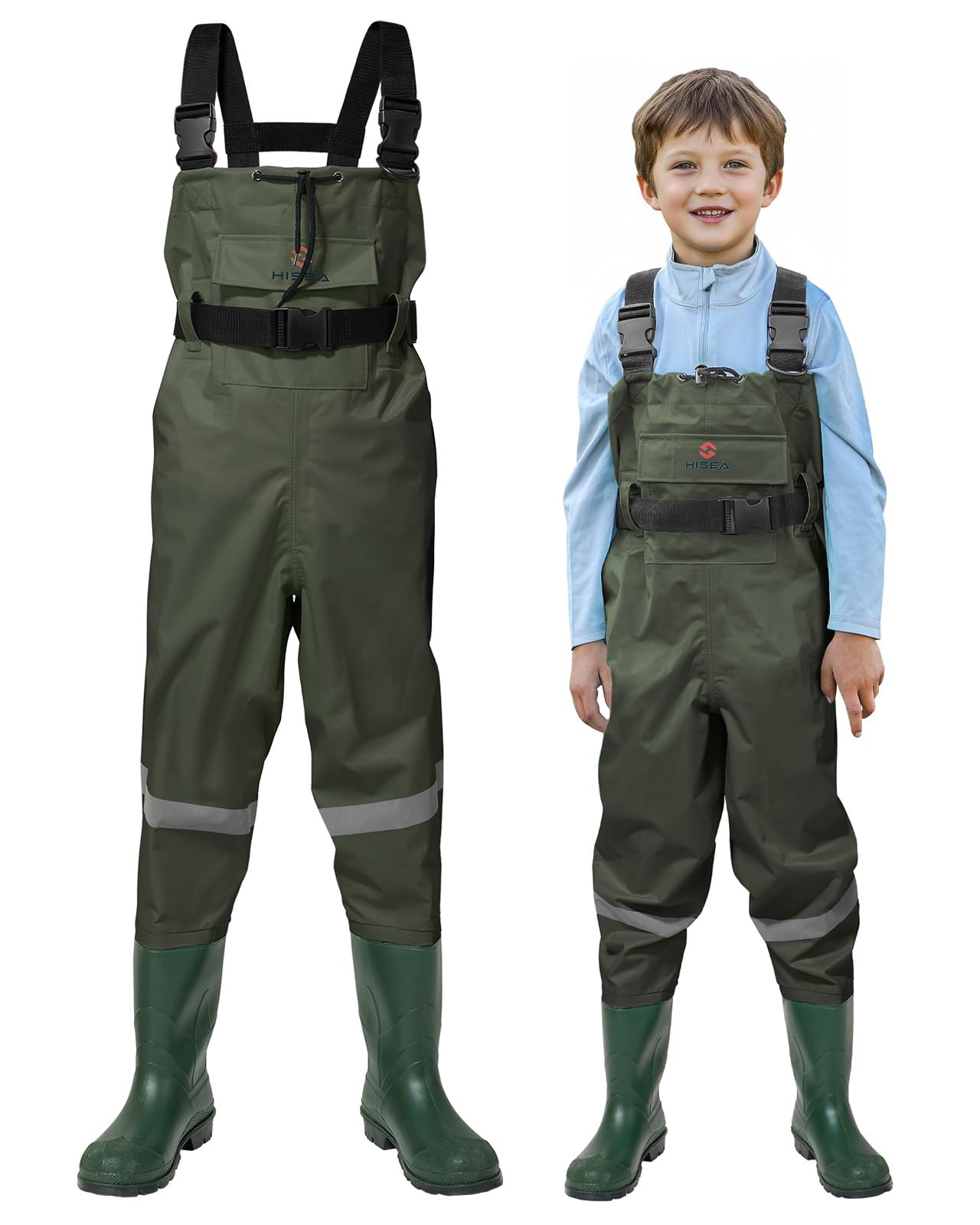
These HISEA kids chest waders are a straightforward option for shallow-water fishing, stream activities, beach exploring, and other supervised wet-weather outings. The listed design uses a nylon/PVC upper with attached boots, while reflective bands can make the wearer easier to see in dim conditions.
The main advantage is simple waterproof coverage from the chest down. Measure carefully rather than relying only on age or shoe size, and allow reasonable space for layers without creating loose folds that interfere with walking.
What People Say
In the feedback snapshot supplied with the original article, buyers commonly praised the waders for keeping children dry during ordinary shallow-water use and liked the convenience of the integrated boots and reflective detailing. Fit was the recurring caution, which makes checking the current size chart before ordering especially important.
Source sentiment snapshot: Positive

|
Pros |
Cons |
|---|---|
|
✅ Helps keep clothing dry during supervised shallow-water use |
❌ Fit can vary by child; accurate measurements are important |
|
✅ Attached boots eliminate a separate boot-to-wader interface |
❌ Integrated boot sizing may not suit every foot shape |
|
✅ Reflective bands improve visibility in low light |
❌ Waterproof shell is not a substitute for insulation in cold conditions |
|
✅ Useful for fishing, field activities, and wet-weather outdoor use |
Educational Value
Waders can make supervised stream study, shoreline exploration, and fishing more comfortable because a child can spend time near wet habitat without immediately soaking ordinary clothes. They also provide a practical opportunity to teach children that outdoor equipment has limits: staying dry is different from being protected from deep water or current.
Safety Features
The chest-wader construction, attached boots, adjustable fit features, and reflective bands are useful for waterproofing and visibility. They should not be treated as drowning-prevention features. Pair the waders with a properly fitted life jacket around natural water, keep the child within immediate reach, and avoid fast current, deep crossings, unstable banks, and slippery routes.
If a wading belt is supplied, fit it according to the manufacturer’s instructions. Check buckles, seams, boots, and the belt before every outing.
Key Benefits
- Waterproof coverage from chest area through the attached boots
- Integrated boots simplify dressing for wet conditions
- Reflective detailing can improve visibility in dim light
- Adjustable features help fine-tune fit as a child grows
- Useful for fishing, stream activities, mud, and other supervised wet environments
Rating snapshot from the original source: 4.6/5 (791+ ratings at the time captured). Amazon ratings and review totals change over time, so check the current listing for today’s figure.
Flex Tape
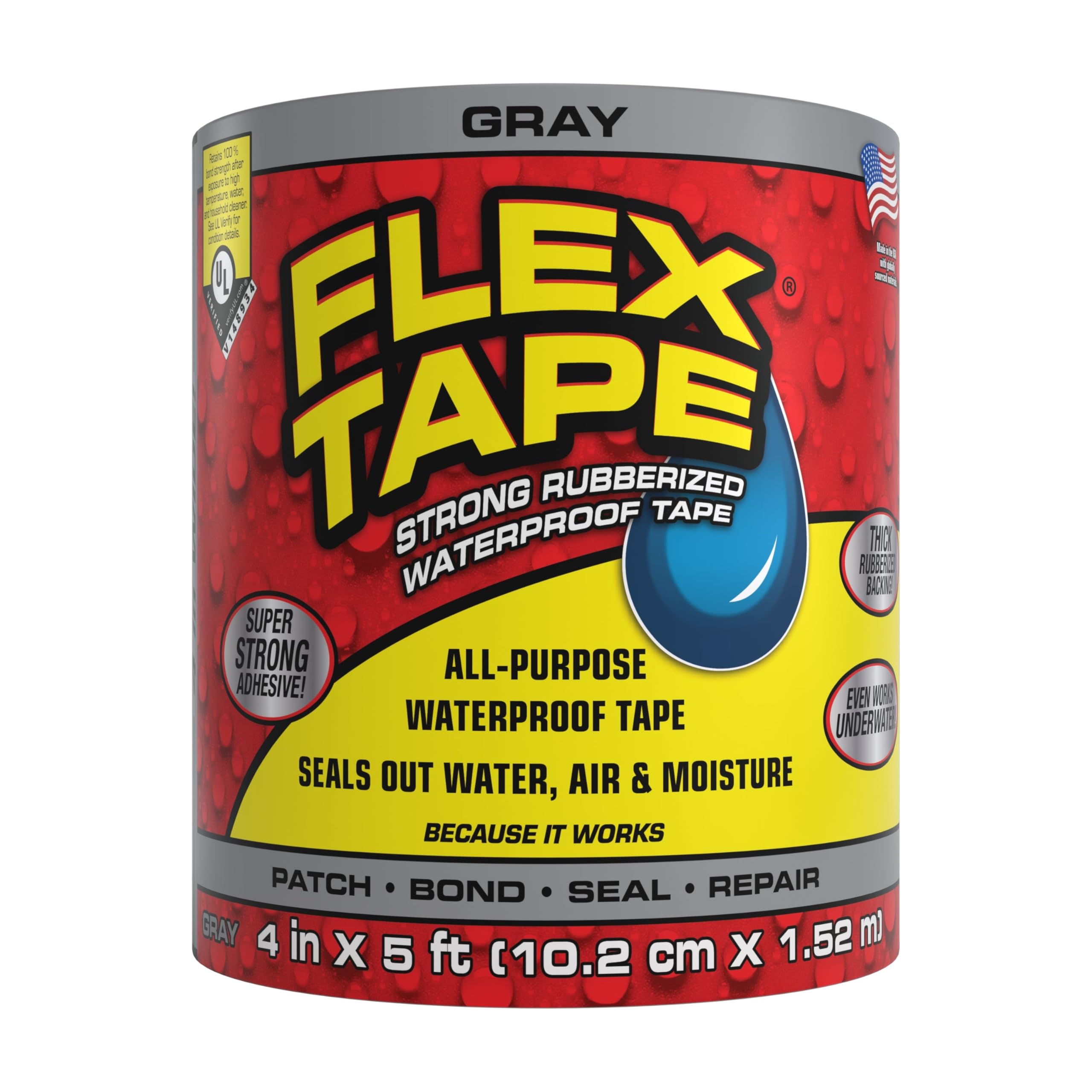
Flex Tape gives you a compact way to make a temporary emergency repair when a compatible piece of gear develops a small tear or leak. The manufacturer describes it as a thick, flexible, waterproof rubberized tape that can be applied to many surfaces and, under suitable conditions, to wet or underwater surfaces.
Application quality matters. Flex Seal’s application instructions say the repair area should be free of grease, oil, dirt, and debris; the tape should be pressed firmly into place; and wet or underwater applications work best on smooth, clean, non-porous surfaces.
For a family wading kit, prepare appropriately sized pieces before leaving home so a razor blade or utility knife does not need to be handled around children at the water’s edge. Treat the tape as an emergency patch and arrange a proper repair before the next serious outing.
What People Say
The feedback snapshot in the source material highlights strong adhesion and convenience for quick leak repairs. The same strength can make positioning difficult because the adhesive grabs quickly, so careful preparation and correctly sized pieces improve the chance of a neat patch.
Source sentiment snapshot: Neutral

|
Pros |
Cons |
|---|---|
|
✅ Waterproof adhesive can handle many temporary field repairs |
❌ Very tacky adhesive can be difficult to position cleanly |
|
✅ Can work on wet surfaces and underwater when application conditions are suitable |
❌ Temporary repair only; damaged safety-critical gear still needs proper repair or replacement |
|
✅ Small enough to carry in a field repair kit |
❌ Adhesion varies by surface, cleanliness, porosity, and technique |
Educational Value
A simple field repair can teach children an important outdoor lesson: inspect equipment, respond calmly to small problems, and know when temporary gear fixes are no longer enough. Adults should handle all cutting and application steps that involve sharp tools or difficult adhesives.
Safety Features
The tape can reduce continued leakage from a compatible damaged surface until you can make a proper repair, but it should not be relied upon to make badly damaged waders, watercraft, flotation equipment, or other safety-critical equipment safe. If essential equipment fails, leave the water rather than trying to continue the outing on the strength of an improvised patch.
Key Benefits
- Provides a quick temporary waterproof patch for compatible surfaces
- Works with many materials, including rubber, metal, glass, vinyl, and some plastics and fabrics
- Flexible backing conforms to irregular shapes
- Compact enough for a field repair kit
- Can be applied in wet conditions when the surface and preparation meet manufacturer guidance
Rating snapshot from the original source: 4.1/5 (20,315+ ratings at the time captured). Current marketplace totals may differ by date and product variation.
Orvis PosiGrip

If slippery rock is your main concern, screw-in studs can add bite to compatible wading-boot soles. Orvis currently describes PosiGrip as screw-in studs designed to add traction to wading boots. Manufacturer materials for this product line identify tungsten-carbide tips, compatibility with felt or rubber soles, an installation adapter, and 24 studs per package.
Do not assume every boot can safely accept a screw-in stud. Check the boot manufacturer’s stud-compatibility guidance and Orvis’s current installation directions before drilling. Avoid over-tightening, inspect the studs before each outing, and remember that extra traction cannot compensate for strong current, unstable footing, or excessive water depth.
What People Say
The feedback snapshot supplied with the original article emphasizes the improvement in grip after installation and the durability of the studded setup. Installation is generally described as straightforward when the boot is compatible, but compatibility and careful placement matter more than simply installing as many studs as possible.
Source sentiment snapshot: Positive

|
Pros |
Cons |
|---|---|
|
✅ Adds extra traction to compatible wading boots |
❌ Not every boot sole is designed for screw-in studs |
|
✅ Manufacturer materials identify durable tungsten-carbide tips |
❌ Installation requires a drill and careful placement |
|
✅ Installation adapter simplifies fitting on compatible soles |
❌ Local rules can restrict certain wading-footwear materials, especially felt soles |
|
✅ The listed package includes 24 studs |
Educational Value
Traction equipment gives you a useful way to teach a child why surfaces behave differently when wet and why equipment should be matched to conditions. Kids can learn to test each step, avoid jumping between rocks, and turn back when a route becomes unstable rather than trusting the studs to prevent every slip.
Safety Features
The stud tips are designed to increase grip on compatible wading soles, but they should be treated as a traction aid rather than a guarantee against falling. Inspect each stud regularly, follow the manufacturer’s placement and installation instructions, and check the rules for the destination before using the boots.
Footwear regulations are especially important if the underlying boot has felt soles. Some U.S. waters prohibit felt because it can transport aquatic invasive organisms between waterways.
Key Benefits
- Adds extra bite to compatible wading-boot soles
- Tungsten-carbide tips are designed for durable traction
- Installation adapter simplifies fitting
- Listed 24-piece package provides multiple studs for a pair of boots
- Studs can be removed or replaced as the boot setup changes
Rating snapshot from the original source: 4.6/5 (201+ ratings at the time captured). Check the live listing for the current rating and review total.
Frequently Asked Questions
How Do I Choose the Right Size and Fit?
Measure your child’s height, torso or chest, inseam, and foot size and compare those numbers with the current manufacturer’s sizing chart. Leave reasonable room for a thin insulating layer, but avoid excessively long legs or oversized boots that can interfere with walking. After buying, have the child walk and crouch on dry ground before the first trip. Follow the current care label and manufacturer cleaning instructions to preserve seams and waterproofing.
Are Waders Safe for Kids to Use?
Waders can keep a child drier and more comfortable, but they do not prevent drowning. Use them only with close adult supervision and a properly fitted life jacket around natural water. Stay in conservative depths, avoid fast current and slippery or unstable routes, and leave the water immediately if conditions change or the child loses secure footing.
What Should I Pack for a Safe Wading Trip?
Pack the child’s properly fitted life jacket, dry base layers and socks, spare clothes in a waterproof bag, a compact first-aid kit, drinking water, weather protection, and a small repair kit. A whistle or charged communication device can also be useful. Check weather, water conditions, and local fishing or footwear rules before leaving home.
Should a Child Wear a Wading Belt?
If the waders are designed to use a belt, fit and use it according to the manufacturer’s instructions. A snug belt can help limit how quickly water enters chest waders after a fall, but it does not make the waders buoyant and does not replace a properly fitted life jacket.
Can I Add Screw-In Studs to Any Wading Boot?
No. Use screw-in studs only with a sole that the boot manufacturer identifies as stud-compatible. Follow the stud manufacturer’s installation and placement instructions, inspect the studs regularly, and check destination rules. Some waters regulate particular sole materials such as felt because of invasive-species concerns.
Is Waterproof Tape a Permanent Wader Repair?
No. Waterproof repair tape is best used as a temporary field patch when it is compatible with the damaged material. Clean and prepare the surface according to the tape manufacturer’s instructions, leave the water while making the repair, and complete a proper permanent repair or replace badly damaged gear before another demanding trip.
Preferred Features
When choosing wading gear for a child, prioritize fit and safe movement before extra features. Waders should provide dependable waterproof coverage without excessive bunching; repair material should work with the actual surface being patched; and traction studs should be installed only in compatible boots. Reflective details, durable construction, easy cleaning, and simple field repairs are useful, but none replaces supervision, conservative water choices, and a life jacket.
Full Product Comparison
| HISEA Kids Chest Waders with Boots | Flex Tape, Original Thick Flexible Rubberized Waterproof Tape | Orvis Posigrip Screw-in Studs for Wading Boots | |
|---|---|---|---|
|
|
|
|
|
| Rating | Source snapshot: 4.6/5 (791 reviews) | Source snapshot: 4.1/5 (20,315 reviews) | Source snapshot: 4.6/5 (201 reviews) |
| Material | Nylon/PVC waterproof construction | Flexible rubberized backing | Tungsten-carbide-tipped studs |
| Durability | Designed for repeated wet-weather and shallow-water use; inspect seams and boots regularly. | Strong temporary adhesion when used on a compatible, properly prepared surface. | Hard stud tips designed for repeated traction use on compatible wading boots. |
| Special Highlights |
|
|
|
| Shop Now | Shop Now | Shop Now |
Sources
- Centers for Disease Control and Prevention — Summer Swim Safety — supports close supervision, natural-water safety, and properly fitted life-jacket guidance.
- National Park Service — Fly Fishing — supports wading-footwear guidance and invasive-species concerns related to felt soles.
- Glacier National Park — Fishing Regulations — confirms the park’s prohibition on felt-soled wading boots.
- Flex Seal Products — How to Apply Flex Tape — supports surface preparation, application, compatibility, and wet/underwater-use guidance.
- Orvis — PosiGrip Screw-In Studs — confirms the product’s purpose as a traction upgrade for wading boots.
Wrapping Up
For a child who fishes or explores shallow natural water, the best gear strategy starts with safety rather than accessories. Choose waders that fit without restricting movement, use a properly fitted life jacket, maintain close and constant adult supervision, and stay out of water where current, depth, temperature, visibility, or footing creates doubt.
HISEA chest waders can help keep a child dry, Flex Tape can provide a useful temporary repair, and compatible Orvis PosiGrip studs can add traction. None of those products makes hazardous water safe, so check the conditions, inspect the gear, follow local footwear rules, and turn back early when the environment changes.
This Roundup is reader-supported. When you click through links we may earn a referral commission on qualifying purchases.