
Last Updated on July 25, 2026 by Daniel Globe
Saturday can feel like a major airline travel day because families, vacationers, tour groups, and event travelers often fly on weekends. However, a crowded Saturday at one airport does not mean Saturday is the busiest day for airlines nationwide. The answer changes depending on whether you measure security screenings, scheduled flights, airport foot traffic, or demand on a particular route.
Recent U.S. data generally points to Thursday, Friday, or Sunday as stronger national peak days. Saturday may still be extremely busy during holiday periods, school breaks, cruise departure days, major events, or on routes serving popular leisure destinations.
Quick Answer
Saturday is usually not the busiest day for U.S. airlines overall. The answer depends on the metric: recent FAA flight-operation peaks have often fallen on Thursdays, while TSA checkpoint traffic commonly surges on Fridays or Sundays. Saturday can still be extremely busy at leisure airports, on holiday weekends, and on specific routes.
Key Takeaways
- There is no single busiest airline day that applies to every airport, route, season, and travel period.
- FAA flight-operation data and TSA passenger-screening data measure different parts of the travel system.
- Thursday and Friday often have heavy departure schedules, while Sunday commonly sees strong return traffic.
- Saturday can become a peak day at leisure-focused airports or during holidays, school breaks, festivals, and cruise weekends.
- Saturday fares and crowd levels are not guaranteed to be lower, so compare the exact flights and dates available for your trip.
Disclosure: As an Amazon Associate I earn from qualifying purchases. Some links on this page are affiliate links, at no extra cost to you.
What Does “Busiest Day for Airlines” Mean?
The term busiest day can describe several different measurements. These measurements do not always peak on the same day.
- TSA checkpoint volume counts people screened at U.S. airport security checkpoints.
- FAA flight operations measure aircraft activity in the National Airspace System.
- Airport passenger traffic may include departing, arriving, and connecting passengers.
- Route demand measures how many people want seats between two particular destinations.
- Terminal crowding depends on when flights are grouped, checkpoint staffing, gate layouts, parking demand, and local events.
Note: A day with the most flights is not automatically the day with the longest security lines. One airport may experience a morning rush even when nationwide passenger traffic is moderate.
Factors That Can Make Saturday Busy for Airlines
The Traditional Workweek and Leisure Travel
Saturday attracts leisure travelers because many people are free from work or school. Families may begin vacations, passengers may travel to weddings or sporting events, and cruise guests may fly to a port city before a weekend departure.
However, Saturday does not capture as much traditional business travel as Thursday or Friday, and it does not always receive the same volume of travelers returning home as Sunday. Those differences help explain why Saturday may feel busy without leading national traffic totals.
Airline Scheduling and Route Demand
Airlines build schedules around demand for each route rather than applying one pattern to every airport. A business-focused route may have fewer Saturday flights than it has on Thursday or Friday. A route serving beaches, theme parks, ski areas, cruise ports, or major weekend events may remain busy or even experience a Saturday peak.
Recent national examples do not support Saturday as the normal operational leader. The Federal Aviation Administration’s 2025 summer forecast said Thursdays would be the busiest day of the week. The FAA’s 2026 summer travel page also highlighted a Thursday as the expected operational peak for a busy July week.
Holidays, Events, and School Calendars
Normal weekly patterns can change around Thanksgiving, Christmas, New Year’s Day, spring break, Independence Day, long weekends, and major events. A Saturday immediately before or after a holiday may be far busier than an ordinary Saturday.
Local conditions also matter. A convention, championship game, concert, festival, cruise departure, or severe weather event can change passenger demand at one airport without creating the same effect nationwide.
Passenger Traffic on Saturdays
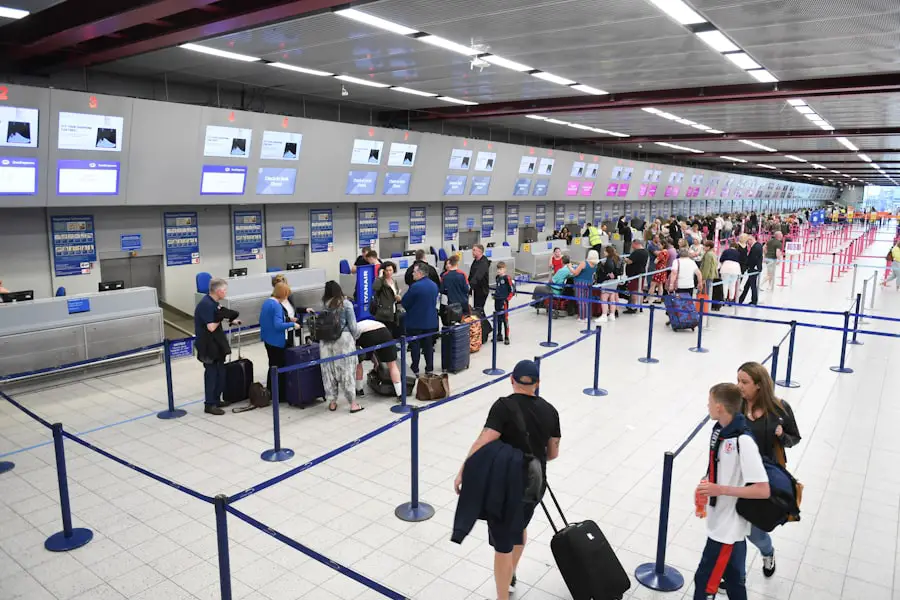
Official passenger-screening data shows why Saturday should not automatically be called the busiest day. The TSA checkpoint travel table frequently records lower Saturday totals than the adjacent Friday or Sunday.
For example, TSA screened 3,009,812 people on Friday, May 23, 2025, compared with 2,388,782 on Saturday, May 24. Sunday and Monday traffic then increased as the Memorial Day travel period continued. This is one holiday example rather than a permanent rule, but it demonstrates that Saturday does not consistently lead weekend traffic.
TSA’s first day screening more than three million people nationwide occurred on Sunday, July 7, 2024, not on a Saturday.
Airport-specific patterns can still differ. Hartsfield-Jackson Atlanta International Airport advises that its busiest security periods commonly occur between 5 a.m. and 9 a.m. and on the days surrounding holidays and long weekends. Its guidance focuses on the time and travel period rather than identifying Saturday as the standard peak day. Travelers can review the airport’s current passenger-security guidance before departure.
Flight Schedules on Saturdays
Saturday flight schedules are not universally more extensive than weekday schedules. Airlines may reduce flights on business-heavy routes while maintaining or increasing capacity on leisure routes. Seasonal service, aircraft availability, airport operating limits, and connecting-bank schedules also affect the number of Saturday departures.
| Measurement | What It Tracks | What Saturday Usually Means |
|---|---|---|
| TSA checkpoint volume | Travelers passing through U.S. security checkpoints | Often below Friday or Sunday, although holidays and local events can create exceptions |
| FAA flight operations | Aircraft activity across the national airspace system | Recent summer forecasts have placed major peaks on Thursdays rather than Saturdays |
| Individual airport traffic | Departing, arriving, and connecting traffic at one airport | May be heavy at leisure, cruise, resort, or event-focused airports |
| Individual route demand | Bookings and seat availability between two locations | Can be high or low depending on the route, season, and passenger mix |
The most useful schedule is therefore the one for the traveler’s exact route. Checking several nearby departure dates may reveal that Saturday has fewer nonstop options, better availability, or a different aircraft than Friday or Sunday.
Popular Saturday Destinations
Saturday demand is often strongest on leisure-oriented routes. Flights to beach destinations such as Cancun, Miami, or Honolulu may fill quickly during vacation periods. Airports serving ski areas in Colorado or Utah may also experience heavy weekend demand during winter.
Cities hosting concerts, festivals, conventions, college events, or professional sports may receive a temporary Saturday increase. Cruise schedules can create similar patterns at airports serving major ports.
These examples do not prove that Saturday is the busiest national travel day. They show why a particular route or airport can be crowded even when nationwide statistics point to another day.
Challenges Airlines and Passengers May Face on Saturdays
Congestion and Flight Disruptions
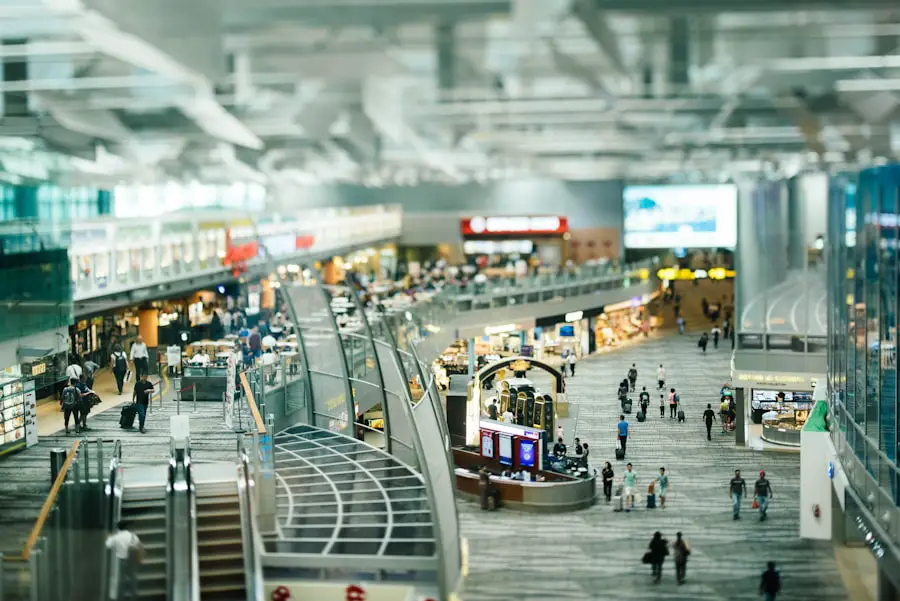
Busy terminals, limited gate space, bad weather, air traffic restrictions, maintenance problems, and late-arriving aircraft can disrupt a Saturday schedule. These problems are not unique to Saturdays, but a disruption may affect more people when flights are full.
The FAA identifies weather as a leading cause of delays in the National Airspace System. A delayed aircraft can also make later flights depart late as it continues through its scheduled route.
Staffing and Airport Resources
Airlines, airports, concession operators, baggage handlers, security teams, and ground-transportation providers must match staffing to expected traffic. Long lines may develop when actual demand exceeds the forecast, equipment fails, or employees are unavailable.
Travelers should not assume that a lower national passenger total guarantees a short local wait. Several flights departing close together can overwhelm a checkpoint or check-in area for a limited period.
Consequences for Passengers
Longer lines can cause missed check-in, bag-drop, boarding, or connection deadlines. Full flights may also leave fewer same-day rebooking options after a cancellation.
Warning: Do not use a quiet-looking terminal or a short security line as a reason to arrive after your airline’s check-in or boarding deadline. Missing a deadline may be treated differently from an airline-caused cancellation or delay.
Strategies for Traveling on Saturdays
- Compare Friday, Saturday, Sunday, and nearby weekdays. Saturday is not automatically the cheapest or least crowded option. The U.S. Department of Transportation recommends flexibility because lower fares may be limited to particular days or departure times.
- Choose an early departure when practical. DOT guidance says flights early in the day are less susceptible to delay because operational problems can accumulate through later aircraft rotations.
- Check your exact airport’s guidance. Review parking conditions, construction alerts, checkpoint hours, security-wait tools, and recommended arrival times.
- Follow the stricter arrival recommendation. TSA generally encourages travelers to arrive two hours before departure, but an airline or airport may recommend more time for international flights, holiday periods, checked baggage, special assistance, or a large airport.
- Complete check-in before leaving home. Save the boarding pass, verify the terminal, review baggage limits, and confirm that the flight time has not changed.
- Avoid a very tight connection. A longer connection provides additional protection against gate changes, taxi delays, and late-arriving aircraft.
- Monitor the airline’s app. Enable notifications for delays, cancellations, boarding times, and gate changes.
- Know the disruption policy. The DOT cancellation and delay dashboard shows the services U.S. airlines commit to providing during controllable disruptions.
Pro Tip: Search for the same itinerary on several dates before booking. A Saturday flight may have a lower fare, but it may also have fewer nonstop choices or fewer backup flights if something goes wrong.
If an airline cancels or significantly changes a flight and the passenger declines the changed flight, replacement transportation, travel credit, or other compensation, the passenger may qualify for an automatic refund under current U.S. Department of Transportation refund rules.
Is Saturday the Busiest Day for Airlines?
Usually, no. Saturday can be a busy airline travel day, but official U.S. traffic patterns do not support calling it the normal nationwide peak. Recent FAA operational forecasts have emphasized Thursdays, while TSA screening totals often rise on Fridays and Sundays.
Saturday may still be the busiest day for a particular leisure route, resort airport, cruise gateway, or holiday weekend. Travelers should therefore check the exact airport, route, date, and departure time instead of relying on a universal day-of-week rule.
Comfort can also matter during a crowded trip or an overnight stay. A portable white noise machine for travel may help reduce background noise at a hotel or during a long layover. Keep the volume low enough to hear boarding announcements and safety instructions.
Frequently Asked Questions
What is usually the busiest day for airlines?
There is no permanent nationwide answer. Recent FAA flight-operation peaks have often occurred on Thursdays, while TSA checkpoint traffic commonly becomes heavy on Fridays or Sundays. The peak can move during holidays and special events.
Is Saturday normally less crowded than Friday or Sunday?
National TSA totals frequently show fewer Saturday screenings than Friday or Sunday. However, a Saturday morning at a leisure airport may still be crowded because several full flights can depart within a short period.
Are flights cheaper on Saturdays?
Sometimes, but not consistently. Prices depend on the route, season, departure time, remaining seats, local events, and competition. Compare the exact itinerary across several dates instead of assuming Saturday will be cheaper.
What is the best time to fly on Saturday?
An early departure is often the safer choice when schedule reliability matters. Flights later in the day have more time to be affected by weather, congestion, crew issues, or an aircraft arriving late from an earlier trip.
When can Saturday become the busiest travel day?
Saturday may become a local or temporary peak during holiday periods, school vacations, cruise departures, festivals, major sporting events, severe-weather recovery periods, and high-demand resort seasons.
How can I check whether my airport will be busy?
Check the airport’s official website or app for security waits, parking alerts, terminal construction, holiday advisories, and recommended arrival times. Also review the airline app and the FAA airport-status page before leaving home.
Should I travel on Saturday to avoid crowds?
Saturday can be a good option, but it is not guaranteed to be quiet. Compare the available flight times, airport conditions, fare, nonstop options, and backup flights before deciding.
Sources
- Transportation Security Administration checkpoint travel numbers — daily U.S. passenger-screening totals.
- Federal Aviation Administration summer travel information — current flight forecasts, airport-status resources, and delay information.
- FAA Gears Up for Busy Summer Travel — 2025 flight-operation forecasts and busiest-day guidance.
- TSA record passenger-screening announcement — confirmation of the Sunday, July 7, 2024 screening record.
- U.S. Department of Transportation fare guidance — advice about flexible travel dates and fare availability.
- U.S. Department of Transportation flight-delay guidance — why early departures are generally less susceptible to accumulated delays.
