
Last Updated on July 28, 2026 by Daniel Globe
PLAY was an Icelandic low-cost airline that connected Iceland, Europe, and North America through Keflavík International Airport. Although it operated modern Airbus aircraft under European aviation rules, the most important fact for travelers today is that Fly Play hf. stopped operating on September 29, 2025, and cancelled all of its flights.
Quick Answer
You cannot currently fly with the original Icelandic PLAY Airlines because Fly Play hf. ceased operations on September 29, 2025. During its operating years, no fatal PLAY accident was identified in the reviewed Aviation Safety Network records, but that historical record does not change the airline’s present status or guarantee refunds for cancelled bookings.
Key Takeaways
- Fly Play hf. ceased operations on September 29, 2025, and its flights are no longer a current travel option.
- PLAY formerly operated through a Keflavík hub rather than as a purely point-to-point airline.
- The airline held an Icelandic Air Operator Certificate and operated within the European aviation-safety framework.
- Available specialist records show nonfatal occurrences but no identified fatal PLAY accident during its short operating history.
- Fly Play Europe is a separate Malta-registered entity and should not be confused with a restart of the defunct Icelandic airline.
Disclosure: As an Amazon Associate I earn from qualifying purchases. Some links on this page are affiliate links, at no extra cost to you.
Did PLAY Airlines Cease Operations?
Yes. Keflavík International Airport confirmed that PLAY ceased operations on September 29, 2025. Six scheduled departures and six arrivals were cancelled at Keflavík that day, affecting about 1,750 passengers.
Warning: Do not rely on an old PLAY route page, review, timetable, fare screenshot, or cached booking result. The Icelandic airline’s former schedules are no longer active, and a third-party page may not clearly show that the carrier has stopped operating.
PLAY was incorporated in 2019, received its Icelandic Air Operator Certificate in May 2021, and operated its first scheduled commercial flight on June 24, 2021. Its operating history therefore lasted a little over four years, even though the company itself had existed since 2019.
A past safety record answers what happened while an airline was flying. It does not prove that the airline is still operating, financially stable, or available for a future trip.
What Former PLAY Customers Should Do
Travelers with an unresolved PLAY booking should use the recovery route that matches how the ticket was purchased. The Icelandic Transport Authority’s passenger guidance advises people who paid by credit or debit card to ask their card provider or bank about a refund.
- Credit or debit card: Contact the card issuer or bank and ask about a chargeback or card-purchase claim. Supply the booking confirmation, proof of payment, cancellation notice, and any correspondence.
- Travel agency: Contact the agency that sold the ticket. The agency may be responsible for handling the booking or explaining the available claim process.
- Package holiday: Contact the package organizer or travel company. Package-travel protections may differ from flight-only protections.
- Travel insurance: Review the policy wording for airline failure, insolvency, trip cancellation, or travel disruption. Coverage is not automatic under every policy.
- Bankruptcy claim: Follow instructions from the appointed administrator or trustee when applicable. A claim against an insolvent company may take time and may not be paid in full.
Note: Refund rights and practical recovery options depend on the booking method, country, card rules, package status, insurance policy, and insolvency process. Keep every receipt and booking document until the matter is resolved.
How PLAY’s Former Route Network Worked
PLAY did not operate only as a point-to-point airline. Its published business documents described a hub-and-spoke model centered on Keflavík International Airport. Travelers could fly between Iceland and individual destinations, while connecting passengers used Iceland as a midpoint between Europe and North America.
This model allowed PLAY to use narrow-body Airbus aircraft on transatlantic journeys with a connection in Iceland. It also meant that disruption at Keflavík could affect both sectors of a connecting itinerary. A delay on an inbound flight could therefore create a missed onward connection even when the second aircraft was operating normally.
Safety Oversight and Regulation
Air Operator Certificate
Before carrying commercial passengers, a European airline must hold an Air Operator Certificate, commonly called an AOC. EASA explains that an AOC authorizes an operator to conduct specified commercial air-transport operations.
PLAY’s public prospectus stated that the Icelandic authority granted its AOC on May 15, 2021. Holding an AOC meant the airline had to operate within the approved scope and remain subject to continuing oversight while the certificate and operating licence were valid.
EASA, Icelandic Authorities, and ICAO
These organizations had different roles:
- Icelandic aviation authorities: Issued and oversaw the Icelandic operator’s approvals within the applicable European system.
- EASA: Developed and administered the common European aviation-safety framework, including requirements affecting operations, airworthiness, crew qualifications, and oversight.
- ICAO: Developed international standards and recommended practices used by member states. ICAO did not function as PLAY’s day-to-day airline regulator.
Compliance with this framework was a basic requirement for legal operation. It should not be turned into an unsupported claim that an airline was risk-free or met a unique safety standard above every competitor.
Fleet and Maintenance
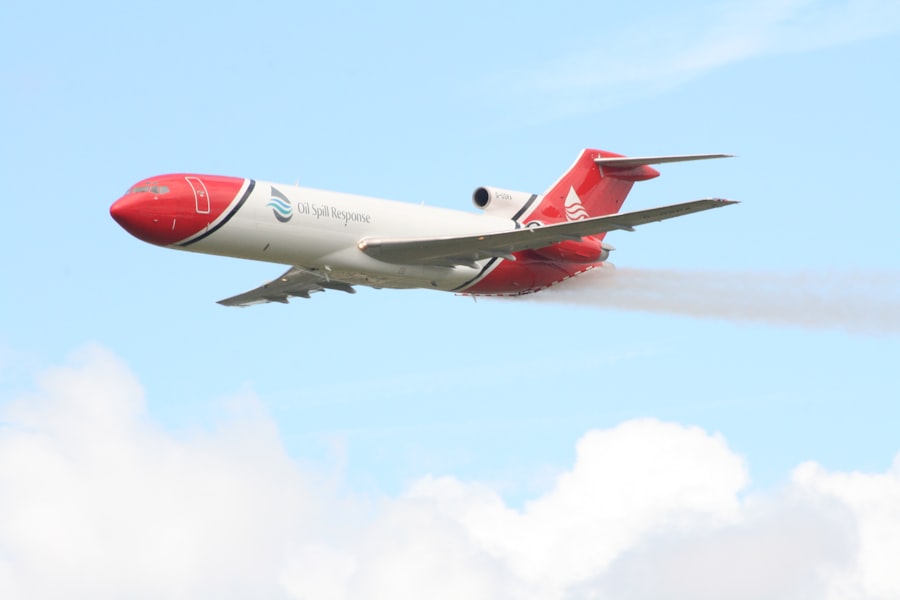
PLAY operated aircraft from the Airbus A320neo family. The mix changed during the airline’s life, so any fleet count or model description should be tied to a specific date. PLAY’s August 2024 prospectus described a ten-aircraft A320neo-family fleet, including A320neo and A321neo variants used across its network.
The Airbus A320neo family uses newer engines and aerodynamic improvements intended to lower fuel use, noise, and emissions compared with earlier-generation aircraft. That can improve operating efficiency, but an aircraft being new or fuel-efficient does not by itself prove the quality of an airline’s daily operation.
How Maintenance Was Arranged
The original article claimed that PLAY employed a dedicated in-house maintenance team. Its public prospectus instead described an agreement under which GMT ehf. provided certified aircraft mechanics for line inspections and maintenance required by aircraft manuals and regulations.
Airlines commonly use approved outside maintenance organizations, contracted mechanics, or a combination of internal and external teams. The relevant safety question is whether the work is performed by authorized personnel under an approved maintenance and continuing-airworthiness system—not whether every mechanic receives a paycheck directly from the airline.
Pro Tip: When researching a lesser-known airline, look for its active AOC, home-country regulator, aircraft types, official incident reports, and current operating status. Fleet age or a consumer-review score should never be your only safety test.
Pilot Training and Experience
PLAY pilots had to hold the licences, medical certificates, ratings, and operator qualifications required for their assigned roles. Pilots operating the Airbus fleet also needed the applicable type qualification and operator training before serving as required flight crew.
However, the original article’s blanket figures of “1,000 flight hours” and “50 hours” of simulator training were not supported by a cited PLAY manual, regulator record, recruitment standard, or approved training document. Those figures should not be treated as official airline-wide requirements.
| Category | What Can Be Verified |
|---|---|
| Commercial operation | PLAY held an Icelandic AOC while it was operating. |
| Aircraft qualification | Flight crew needed the applicable licence, ratings, medical status, operator training, and Airbus-family qualification for the assigned duty. |
| Recurrent checks | European commercial operators must maintain approved training, checking, and competency processes. |
| Claimed 1,000-hour minimum | No reliable public source was identified for a universal PLAY requirement at this exact number. |
| Claimed 50 simulator hours | No reliable public source was identified for a universal PLAY requirement at this exact number. |
Customer Reviews and Service Experience
Historical customer reviews of PLAY were mixed, as is common for low-cost airlines. Travelers often considered the base fare attractive, while complaints tended to focus on disruption handling, baggage charges, seat fees, food costs, limited included service, and the consequences of missed connections.
These service issues should not be used as direct proof that an airline was mechanically unsafe. Customer experience, punctuality, financial resilience, and aviation safety overlap in some operational areas, but they are not the same measure.
PLAY’s business documents described an unbundled model with revenue from seat allocation, checked baggage, large cabin baggage, booking changes, onboard sales, and other optional products. A fair historical price comparison therefore required adding every service needed for the trip before comparing PLAY’s total with another airline’s fare.
Safety Record and Recorded Occurrences
A review of the Aviation Safety Network database for Icelandic-registered aircraft shows PLAY entries dated June 13, 2022, and February 20, 2024. The displayed records identify zero fatalities for those occurrences.
No fatal PLAY accident was identified in the reviewed database during the airline’s operating years. That is useful historical information, but it needs context: PLAY flew for only a little over four years. A short record contains fewer years and flights from which to draw conclusions than the record of an airline that has operated for several decades.
How to Interpret the Record
- No identified fatal accident is not the same as “nothing ever went wrong.”
- An occurrence may involve a technical, ground, operational, or procedural event without deaths or serious damage.
- A consumer complaint about a delay, bag, seat, or refund is not automatically a safety incident.
- Financial collapse does not prove that the airline’s aircraft were unsafe, but it is highly relevant to whether a future ticket can be honored.
Note: Public databases can summarize recorded occurrences, but they are not substitutes for a regulator’s full oversight files or an official investigation report. Safety conclusions should remain limited to what the evidence actually shows.
Emergency Response and Preparedness
Commercial airlines operating under an AOC must maintain approved procedures for abnormal and emergency situations. Crew training generally covers evacuation, fire and smoke, decompression, medical events, rejected takeoffs, communication, and coordination between cockpit and cabin crews.
The original article described PLAY-specific drills, simulations, emergency plans, and coordination arrangements without citing an operations manual or regulator document. It is safer to state that PLAY had to meet the applicable operator requirements while its AOC was active than to invent details about the frequency or exact content of internal exercises.
Emergency preparedness also involves airports, air traffic services, first responders, ground handlers, and other organizations. Keflavík Airport’s activation of a contingency plan after PLAY’s shutdown was a business-continuity and passenger-support response, not an aircraft accident response.
COVID-19 Safety Measures: Historical Context
During the COVID-19 pandemic, airlines and airports introduced changing health measures such as enhanced cleaning, destination-document checks, contactless processes, distancing where practical, and masks when required by government or airport rules.
Those measures changed over time and by destination. They should not be described as permanent PLAY policy. Because the airline has ceased operations, there is no current PLAY mask, cleaning, boarding, or check-in policy for travelers to follow.
How PLAY Compared With Other Airlines
While it was operating, PLAY competed mainly through low base fares, a single-family narrow-body fleet, high aircraft use, digital sales, and paid optional services. The experience was closer to an unbundled low-cost carrier than to a full-service airline that included checked bags, meals, flexible changes, or connection support in a higher fare.
PLAY can no longer be compared as a current booking choice because it does not operate scheduled flights. Travelers choosing another airline should compare:
- The final round-trip price after bags, seats, food, and changes
- Whether all sectors are on one protected reservation
- Schedule frequency and rebooking options after disruption
- The airline’s active operating certificate and regulator
- Recent operational reliability and route continuity
- Card, package, and travel-insurance protections
A newer aircraft or lower fare does not automatically make one airline safer than another. Regulatory status, operating history, maintenance control, crew qualification, safety findings, and current business stability all provide more meaningful context.
Is Fly Play Europe the Same Airline?
No. Fly Play Europe is a Malta-registered company that holds a Maltese Air Operator Certificate. It was established while the original Icelandic PLAY was operating, but it is legally and operationally distinct from the defunct Fly Play hf.
On April 1, 2026, Icelandair announced a letter of intent to discuss a possible purchase of a 49% interest in Fly Play Europe. The announcement said any transaction remained subject to due diligence, a final agreement, creditor arrangements, and required approvals.
That announcement did not say that the original PLAY Airlines had resumed its former scheduled Iceland–Europe–North America network. Travelers should verify the exact legal operator, flight number, ticket seller, and operating carrier rather than relying on the word “Play” in a company name.
Is PLAY Airlines Safe for Travel Today?
The practical answer is that the original Icelandic PLAY Airlines is not available for travel today. It ceased operations and cancelled its flights on September 29, 2025.
Historically, PLAY operated under Icelandic and European aviation oversight, used Airbus A320neo-family aircraft, and had no identified fatal accident in the reviewed specialist database. However, some nonfatal occurrences were recorded, several detailed claims in the original article could not be verified, and the airline’s short operating history limits broad safety conclusions.
Travel accessories can make a journey more convenient, and a suitable carry-on suitcase with a USB charger may help organize devices and belongings. It does not, however, establish an airline’s safety, operating authority, or financial condition.
Travelers planning a new trip should choose an airline that is currently operating, confirm the final fare and connection protections, and pay by a method that offers appropriate consumer protection.
Frequently Asked Questions
Is PLAY Airlines still operating?
No. Fly Play hf. ceased operations on September 29, 2025, and all of its flights were cancelled. Old schedules, reviews, and fare pages should not be treated as evidence that the Icelandic airline is still flying.
Was PLAY Airlines safe while it operated?
PLAY held an Icelandic Air Operator Certificate and operated within the European aviation framework. No fatal PLAY accident was identified in the reviewed Aviation Safety Network records, although nonfatal occurrences were recorded. That historical evidence should not be turned into an absolute guarantee.
Did PLAY Airlines have any accidents or incidents?
The Aviation Safety Network database includes PLAY occurrences dated June 13, 2022, and February 20, 2024, with zero fatalities shown. No fatal PLAY accident was identified in the reviewed records.
Who regulated PLAY Airlines?
PLAY’s Icelandic approvals were overseen by the competent Icelandic aviation authority within the European safety framework. EASA establishes and administers common European aviation rules, while ICAO develops international standards used by member states.
How can I seek a refund for a cancelled PLAY flight?
Contact the card issuer or bank if you paid by card, the travel agency if it sold the booking, the package organizer for a package holiday, and the insurer if your policy may cover airline failure. Keep the booking confirmation, payment record, cancellation notice, receipts, and correspondence.
Is Fly Play Europe a restart of PLAY Airlines?
No. Fly Play Europe is a separate Malta-registered company with a Maltese Air Operator Certificate. A disclosed 2026 Icelandair letter of intent concerned a possible investment and did not revive the former Icelandic PLAY network.
Can I book a new PLAY Airlines flight?
You cannot book a valid new scheduled flight with the defunct Icelandic Fly Play hf. Verify the operating carrier carefully if a third-party result or similarly named company uses PLAY branding.
Sources
- Keflavík International Airport — PLAY Airlines Ceases Operations — confirms the September 29, 2025 shutdown, cancelled flights, and immediate passenger impact.
- Icelandic Transport Authority — Airline Bankruptcy or Strike Guidance — explains passenger options after an airline suddenly stops operating.
- European Union Aviation Safety Agency — Air Operator Certificates — explains AOC approval and competent-authority oversight.
- Fly Play hf. Prospectus Hosted by the Central Bank of Iceland — supports the company timeline, Keflavík hub model, fleet, outsourced maintenance arrangement, and ancillary-fee structure.
- Aviation Safety Network — Icelandic Aircraft Occurrence Database — provides specialist occurrence records used to assess PLAY’s historical record.
- Nasdaq — Icelandair Letter of Intent Concerning Fly Play Europe — explains the separate Maltese entity and the conditional nature of the proposed 2026 transaction.

