
Last Updated on August 26, 2026 by Ethan Caldwell
A very dirty toilet is a poor reason to justify a restroom fee. If you are asked to pay, the facility should at least be functional, reasonably clean, stocked with basic supplies, and safe to use. Busy stations, tourist areas, and privately operated facilities may charge because cleaning, water, staffing, and repairs cost money, but a fee does not excuse dirty, broken, or unsanitary conditions. The better question is not simply whether a toilet charges—it is whether the service you receive is worth the fee and meets basic standards for hygiene, privacy, and safety.
Quick Answer
You should expect a paid toilet to be functional, reasonably clean, private, and supplied with water and basic handwashing facilities. A small fee can help fund cleaning and maintenance, but a filthy, flooded, unsafe, or unusable restroom represents a service failure rather than good value.
Key Takeaways
- A restroom fee can be reasonable when it clearly supports cleaning, staffing, water, supplies, and repairs.
- Paying does not make a dirty, broken, flooded, or unsafe toilet acceptable.
- The most useful hygiene precaution is washing your hands thoroughly with soap and running water after using the toilet.
- If a paid restroom is unusable, report the problem and ask the operator about another stall or a refund when appropriate.
- When traveling, identify backup restrooms before you urgently need one because access rules vary between stations, cafés, hotels, attractions, and public facilities.
Disclosure: As an Amazon Associate I earn from qualifying purchases. Some links on this page are affiliate links, at no extra cost to you.
When Do Toilet Fees Make Sense?
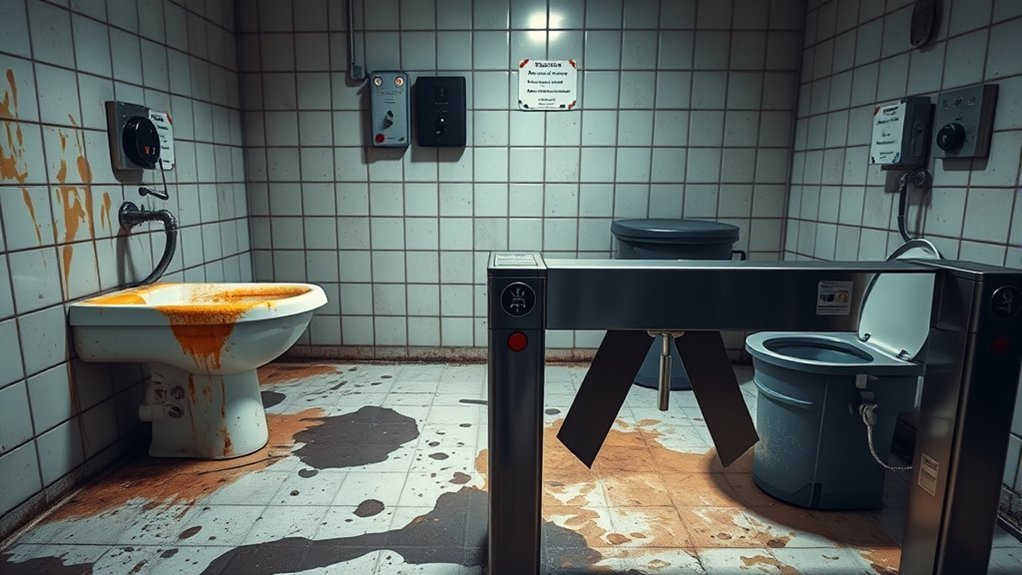
Toilet fees make the most sense when the money supports a visible service: regular cleaning, attendants, water, soap, toilet paper where locally expected, repairs, lighting, and safe operation. High-traffic facilities may require frequent cleaning and restocking, so a modest charge can be one way to help cover those costs.
That does not mean every fee is automatically fair. The United Nations recognizes access to water and sanitation as a human-rights issue and emphasizes safe, accessible, affordable, and dignified sanitation. You can read the underlying resolution from the United Nations General Assembly. A good payment system should therefore support usable sanitation rather than become a barrier to basic access.
What Should a Fair Restroom Fee Provide?
There is no universal price or service standard for every country, but these practical signs can help you judge whether a paid restroom is being maintained properly:
| Toilet | Functional, not overflowing, and reasonably clean |
| Handwashing | Running water and soap should be available |
| Privacy | Door and lock should work properly |
| Floor | No major flooding, sewage, or obvious slipping hazard |
| Maintenance | Problems should be addressed promptly, especially in busy facilities |
A restroom fee should support a usable service; it should not be used to excuse a maintenance failure.
Why Dirty Public Toilets Lead to Fees
Dirty public toilets do not automatically “cause” fees. More often, the same conditions that make a restroom difficult to maintain—heavy traffic, frequent restocking, vandalism, plumbing problems, water use, and the need for attendants—also increase operating costs. Some operators respond by charging users to help fund cleaning, supplies, and repairs.
The important issue is whether that money produces better conditions. A restroom that collects a fee but still has overflowing waste, no soap, broken fixtures, or unsafe floors is not demonstrating effective maintenance. By contrast, a frequently serviced facility with working plumbing, stocked handwashing supplies, functioning locks, and quick repairs gives users a clear benefit in return for the charge.
Cleanliness also affects whether people are willing to use shared sanitation facilities. Research on shared and public sanitation has repeatedly identified cleanliness, maintenance, privacy, and safety as important parts of a usable facility. Fees are only one possible funding method; they are not a substitute for good management.
Should You Pay for a Very Dirty Toilet?
If you can inspect the restroom before paying and it is obviously filthy or unsafe, choosing another facility is reasonable when a suitable alternative exists. If payment is required before entry, the operator should still provide a basic level of service. A fee does not guarantee perfection, especially during a sudden rush, but it is reasonable to expect a functional and hygienic facility.
| Condition | User Impact | Fair Charge? |
|---|---|---|
| Clean, stocked | Comfortable and usable | Potentially reasonable |
| Stained, smelly | Unpleasant; severity matters | Questionable if poorly maintained |
| Broken lock | Privacy or safety problem | Not reasonable for that stall |
| No soap | Poor hand-hygiene support | Poor value |
| Flooded floor or sewage | Potential hygiene and slipping hazard | No |
Warning: Avoid a stall with visible sewage, an overflowing toilet, standing contaminated water, exposed sharp objects, or another obvious safety hazard. Report the problem to staff and use another facility when possible.
If you have already paid and discover that the restroom is unusable, tell an attendant or employee. Ask whether another stall or facility is available. If the service cannot be provided, you can also ask whether the fee can be refunded. Refund policies vary, so treat this as a reasonable request rather than a guaranteed right.
What Are the Real Hygiene Risks in a Dirty Restroom?
A dirty restroom can contain microorganisms on high-touch surfaces such as flush controls, toilet seats, faucets, and door handles. A 2024 restroom fomite risk assessment examined potential exposure to viruses including norovirus and adenovirus through contact with restroom surfaces. This does not mean touching a dirty toilet automatically makes you sick. Infection depends on the organism, contamination level, your behavior, and whether germs reach vulnerable areas such as your mouth, nose, or eyes.
The most practical protection is good hand hygiene. The CDC explains that fecal material can contain germs such as norovirus, Salmonella, and certain E. coli, and recommends washing hands with soap and clean running water. Scrub for about 20 seconds, rinse well, and avoid touching your face with unwashed hands.
Better Ways to Fund Public Toilets
Better funding does not have to put the entire burden on individual users. Public toilets can be financed through taxes, transportation or facility budgets, business partnerships, concession agreements, advertising, modest user fees, or combinations of these approaches. The right model depends on local costs, demand, public policy, and who operates the facility.
A modest fee may help support routine cleaning, restocking, staffing, and repairs, but operators still need accountability. Visible cleaning schedules, easy problem reporting, inspections, and prompt repairs can matter as much as the funding source itself.
Local authorities and property managers can also reduce long-term costs by choosing durable fixtures, good drainage, easy-to-clean surfaces, efficient water systems, appropriate ventilation, and accessible designs. Better design does not eliminate maintenance, but it can make maintenance easier and reduce repeated failures.
Accessibility also deserves attention. A clean restroom is not fully usable if a traveler with limited mobility cannot enter it, reach the sink, close the door, or use the toilet safely. Funding decisions should therefore consider access, privacy, lighting, safety, and maintenance together rather than measuring success only by the number of toilets installed.
How to Find Cleaner Toilets While Traveling?
If you are traveling, finding a cleaner toilet often comes down to knowing where to look before the need becomes urgent. Search mapping services for nearby transportation terminals, shopping centers, museums, visitor centers, fuel stations, cafés, hotels, libraries, or other public-facing buildings. Check recent reviews when available, because restroom quality and opening hours can change.
Do not assume that a private business will allow non-customers to use its restroom. Hotels, restaurants, cafés, and shops may have different access rules, so ask an employee politely when you are unsure.
- Ask station staff, tourism employees, or locals where the nearest maintained public restroom is.
- Check recent traveler reviews when cleanliness is especially important.
- Carry a small backup kit with tissues and hand sanitizer for situations where supplies are missing.
- Keep some small local currency when traveling in places where paid toilets are common.
- Learn basic local restroom customs, including whether toilet paper goes in the toilet or a separate bin.
- Look for accessible-restroom symbols in advance if you or someone traveling with you has mobility needs.
Pro Tip: When you arrive at a station, attraction, or unfamiliar neighborhood, identify one usable restroom before you actually need it. This is particularly helpful when traveling with children, older adults, or anyone who cannot comfortably wait.
A clean restroom is an important part of comfortable travel, but no location will be perfect every time. Having a backup option, basic supplies, and realistic expectations makes it much easier to avoid being stuck with a facility that is dirty or unusable.
Frequently Asked Questions
How Far Does Fecal Matter Travel When You Flush?
There is no single distance that applies to every toilet. Research shows that flushing can create droplets and small aerosols that rise into the air and contaminate nearby surfaces, but the amount and distance vary with toilet design, flush energy, ventilation, particle size, and other conditions. A 2023 systematic review reported that flushing-generated aerosols can rise to at least about 1.52 meters in some experimental conditions. Older C. difficile research also demonstrated aerosolization and nearby surface contamination. If a lid is available, closing it may reduce some emissions in certain toilet designs, but it should not be treated as complete protection. Handwashing and regular cleaning remain important.
Can a Man Get an Infection From a Dirty Toilet?
A man can be exposed to germs in a dirty restroom, just as any restroom user can, but simply sitting on a toilet seat does not mean an infection will occur. A more realistic route is touching a contaminated surface and then touching your mouth, nose, eyes, or food with unwashed hands. Good handwashing greatly reduces this concern. Sexually transmitted infections such as chlamydia and gonorrhea are not normally transmitted through ordinary toilet-seat contact.
Do You Get Charged if You Clog a Hotel Toilet?
There is no universal hotel rule. An ordinary plumbing problem may simply be handled by maintenance, while a hotel could charge for damage or unusual misuse under its own policies. Report a clogged toilet quickly rather than repeatedly flushing it, because an overflow can cause additional damage.
Do Some Cultures Not Wipe After Pooping?
Many cultures rely primarily on water cleansing rather than dry toilet paper. People may use a bidet, handheld spray, water vessel, or integrated washing system and then use paper or a towel for drying. These are different hygiene methods rather than an absence of cleaning. When traveling, follow local plumbing and disposal instructions, because some systems cannot safely handle toilet paper.
Does Paying a Toilet Fee Guarantee a Clean Restroom?
No. A fee may fund cleaning, staffing, supplies, or maintenance, but payment itself is not proof that the restroom will be spotless. Look for basic signs of good management such as working fixtures, soap and water, safe floors, functioning locks, and visible maintenance.
What Should You Do if a Paid Toilet Is Unusable?
Report the problem to the attendant, operator, station staff, or property manager. Ask for another usable stall or nearby facility. If you paid but no usable service is available, you can also request a refund, although whether one is provided depends on the operator’s policy.
Conclusion
If you encounter a very dirty toilet while traveling, a fee does not automatically make the conditions acceptable. Charges can help fund cleaning, water, staffing, repairs, and supplies, but users should receive a restroom that is functional, reasonably hygienic, private, and safe. If the facility is flooded, overflowing, missing basic handwashing supplies, or otherwise unusable, report it and look for another option when possible. Ultimately, the fairest restroom system is one that combines sustainable funding with reliable maintenance and affordable access.
Sources
- United Nations General Assembly Resolution 64/292 — recognition of the human right to water and sanitation and the importance of safe, accessible, and affordable services.
- CDC: Handwashing Facts — fecal germs, handwashing benefits, and the recommendation to scrub with soap for about 20 seconds.
- Best, Sandoe & Wilcox, Journal of Hospital Infection — experimental evidence of C. difficile aerosolization and environmental contamination after flushing.
- American Journal of Infection Control: Toilet Plume Bioaerosols Systematic Review — review of evidence on toilet-flush aerosols, exposure pathways, and research limitations.
- Abney et al., Food and Environmental Virology — 2024 quantitative microbial risk assessment of viral exposure through restroom high-touch surfaces.
- American Journal of Infection Control: Lid Closure and Viral Surface Contamination — evidence that closing a toilet lid does not necessarily prevent contamination of restroom surfaces.
