

Last Updated on July 25, 2026 by Daniel Globe
The hotel industry has changed from a business centered mainly on providing a room for the night into a complex global industry built around accommodation, service, food, technology, design, entertainment, wellness, and experiences. Modern hotels range from small independent properties to international resorts, while technology, sustainability, changing guest expectations, and rising operating costs continue to reshape how they compete.
Quick Answer
The hotel industry is becoming more digital, experience-focused, sustainable, and personalized. Guests increasingly encounter mobile check-in, digital room keys, lifestyle-focused design, destination dining, and more flexible services, while hotel operators rely on data, automation, revenue management, strong service teams, and measurable sustainability programs to run properties efficiently.
Key Takeaways
- Hotel design has evolved from basic lodging toward spaces built around comfort, identity, social interaction, and local character.
- Technology now affects booking, check-in, room access, guest communication, pricing, payments, and back-office operations.
- Boutique and lifestyle hotels compete through distinctive design and experiences rather than relying only on standardized rooms.
- Credible hotel sustainability programs measure energy, water, waste, community impact, and other outcomes instead of relying on vague “eco-friendly” claims.
- Food, beverage, customer service, accessibility, and staff quality remain central to the guest experience even as more processes become automated.
- AI, automation, cost pressures, changing demand, privacy concerns, and global brand expansion are major forces shaping the industry in 2026.
Disclosure: As an Amazon Associate I earn from qualifying purchases. Some links on this page are affiliate links, at no extra cost to you.
How Hotel Design Evolved
Early lodging businesses were largely functional. Their main purpose was to provide travelers with a place to sleep, eat, and rest between stages of a journey. As rail networks and urban travel expanded during the 19th century, major hotels increasingly became social and architectural landmarks as well as places to stay.
Some famous properties illustrate that change. The Savoy in London, which opened in 1889, combined luxury with technologies that were advanced for its time, including electric lighting and running hot and cold water. Ritz Paris, founded in 1898, also became associated with a new standard of comfort, service, and luxury.
By the late 19th century, leading hotels were no longer simply places to sleep. Design, dining, technology, service, and social life were becoming part of the product.
During the 20th century, hotel architecture continued to respond to new patterns of travel. Modernist hotels favored cleaner lines and functional layouts, while the spread of automobile travel encouraged motels and roadside lodging designed around parking, quick access, and lower prices.
Today, hotel design covers a much wider spectrum. A property may deliberately look minimalist, residential, historic, theatrical, nature-focused, or highly local. Public areas have also become more important because many hotels now use lobbies, lounges, bars, coworking areas, and outdoor spaces as places where guests and local residents can spend time rather than simply pass through.
How the Hotel Industry Works Today
The hotel industry is the part of the wider hospitality sector that provides short-term lodging and related guest services. Hotels may also operate restaurants, bars, meeting rooms, spas, pools, entertainment venues, shops, transportation services, and event facilities.
The broader hospitality industry is larger. It can include restaurants, event businesses, tourism services, attractions, and other guest-focused businesses that do not provide lodging.
Main Types of Hotels
Hotel categories overlap, but common types include:
- Luxury hotels: High-service properties with premium rooms, dining, amenities, and personalized service.
- Full-service hotels: Properties that typically combine lodging with restaurants, meeting facilities, room service, or other substantial services.
- Limited-service and select-service hotels: Hotels that focus on lodging and a smaller set of amenities, often at a lower operating cost.
- Boutique hotels: Smaller or design-led properties distinguished by character, style, location, or personalized service.
- Lifestyle hotels: Experience-focused properties that often emphasize social spaces, design, entertainment, food, and local culture.
- Resorts: Destination properties where recreation, pools, beaches, golf, spas, dining, or other activities are a major part of the stay.
- Extended-stay hotels: Properties designed for longer visits and often equipped with kitchens, laundry facilities, and residential-style features.
- Motels: Lodging traditionally designed around convenient vehicle access and shorter stays.
Core Hotel Departments
A hotel guest may see only part of the operation. Behind the front desk, several teams have to coordinate every day.
- Front office and guest services manage reservations, arrivals, departures, room assignments, questions, and service recovery.
- Housekeeping prepares rooms and maintains cleanliness throughout the property.
- Engineering and maintenance keep building systems, equipment, lighting, plumbing, heating, cooling, and guest-room features working.
- Food and beverage may operate restaurants, bars, banquets, room service, kitchens, and catering.
- Sales and marketing attract leisure travelers, corporate accounts, meetings, groups, and events.
- Revenue management adjusts prices and room availability in response to demand and market conditions.
- Finance, human resources, security, and management support the operation behind the scenes.
Hotel Ownership and Business Models
A familiar hotel name on a building does not always mean the brand owns the property. Hotels can operate under several structures.
An independent hotel runs without belonging to a major chain. A franchised hotel generally has an independent owner that licenses a brand, systems, standards, and distribution network. Under a management agreement, an owner hires a hotel company to operate the property. Some hotel companies also own certain properties directly.
These differences help explain why two hotels carrying the same brand can share common standards while still having different owners, building designs, staff structures, or local features.
How Hotels Make Money
Guest rooms are a major source of hotel revenue, but full-service and resort properties may also earn substantial income from restaurants, bars, meetings, weddings, parking, spas, resort services, entertainment, and other amenities.
Three common room-performance terms are:
- Occupancy: The percentage of available rooms that were sold during a period.
- ADR, or average daily rate: Room revenue divided by the number of rooms sold.
- RevPAR, or revenue per available room: Room revenue divided by available rooms. It can also be calculated by multiplying ADR by the occupancy rate.
A hotel can therefore sell many rooms at a low rate or fewer rooms at a higher rate. Revenue management tries to find a better balance between demand, price, occupancy, distribution cost, and profitability.
How Hotel Rooms Are Sold
Guests can book directly through a hotel website, app, reservation center, or property. Hotels can also receive reservations through online travel agencies, travel advisers, corporate travel programs, wholesalers, tour operators, and other distribution systems.
Direct and third-party channels each have advantages. Third-party sites can expose a hotel to a large audience, while direct booking gives the hotel more control over the guest relationship and can reduce dependence on outside distribution.
The Hotel Industry in 2026
The industry’s current position is easier to understand when broad trends are paired with real operating data. In its 2026 State of the Industry report, the American Hotel & Lodging Association projects U.S. hotel guest spending of nearly $805 billion in 2026 and direct hotel operations employment of about 2.2 million.
The same report also describes continued pressure from operating expenses. That distinction matters: strong travel spending does not automatically mean every hotel is enjoying equally strong profit growth.
In the United States, hotel guest spending is projected to approach $805 billion in 2026, while hotels continue to manage significant operating-cost pressure.
Note: These figures describe the U.S. market. Hotel demand, labor conditions, development, pricing, and regulation vary significantly by country and city.
The Impact of Technology on the Hotel Experience
Technology has changed almost every stage of a hotel stay, beginning well before a guest reaches the property. Travelers can compare hotels, examine maps and photos, read reviews, check rates, and make reservations from a phone or computer.
Hotel apps have also moved more tasks away from the traditional front desk. For example, the Hilton Honors app supports features such as digital check-in, room selection, hotel messaging, digital room keys, and online checkout at participating properties. Marriott likewise offers Mobile Key at participating hotels.
Technology Inside the Guest Room
Depending on the property, room technology may include app-based or connected controls for lighting, temperature, televisions, streaming, curtains, and service requests. Reliable Wi-Fi is also an important part of the experience for guests who work, communicate, or stream media during a stay.
The key point is that these features are not universal. A traveler should check the individual property rather than assume that every hotel within a brand supports the same digital tools.
AI, Automation, and Hotel Operations
The next wave of hotel technology goes beyond guest-room gadgets. The American Hotel & Lodging Association’s 2026 technology priorities highlight AI agents, robotic process automation, revenue-management systems, new payment technology, robotics, and tools for selling additional services during the guest journey.
Hotels can use automation for repetitive work such as reporting, answering common questions, processing information, forecasting demand, or routing routine requests. This can free staff to spend more time on situations that require judgment, empathy, or personal attention.
Guest data can also support personalization. A hotel might remember a room preference, recognize a loyalty member’s usual requests, or suggest dining and activities based on information the guest has chosen to share.
Warning: Convenience should not come at the expense of privacy or security. Technologies involving biometrics, including facial recognition, can create data-security, consent, accuracy, and fairness concerns. Hotels considering these systems need appropriate safeguards and must follow applicable privacy and consumer-protection rules.
The Rise of Boutique and Lifestyle Hotels
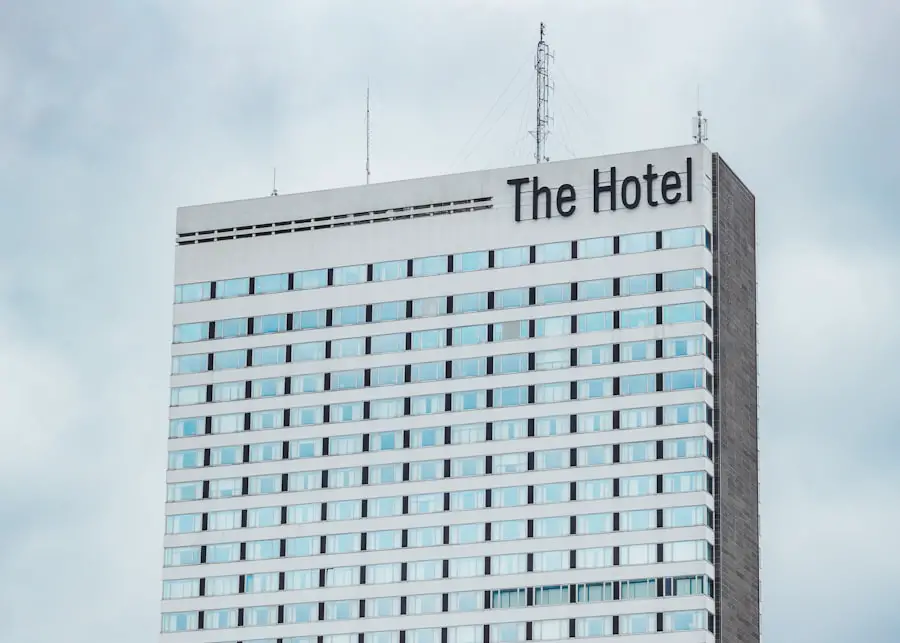
Boutique and lifestyle hotels have gained attention because many travelers want a property to feel connected to its location rather than interchangeable with a hotel hundreds of miles away.
Boutique hotels often emphasize distinctive architecture, art, interiors, personalized service, or a strong sense of place. They may operate independently or belong to a larger collection or hotel company.
Lifestyle hotels bring some of the same ideas to a broader brand format. Marriott’s Moxy brand, for example, explicitly emphasizes lively communal areas and social interaction. Its hotels often use lounges, bars, games, coworking areas, and informal public spaces as an important part of the product.
This does not mean every traveler prefers an unconventional hotel. Standardized brands remain valuable because guests may prioritize predictability, loyalty benefits, familiar room layouts, or reliable service over novelty. The modern industry supports both approaches.
The Influence of Sustainable Practices in the Hotel Industry
Sustainability has become an important operating and development issue for hotels, but credible sustainability requires more than calling a property “green.” Hotels need to measure resource use, identify meaningful improvements, and consider environmental and community impacts.
| Metric | What a Hotel Can Measure |
|---|---|
| Energy consumption | Total energy use, energy use intensity, seasonal changes, and performance before and after efficiency projects. |
| Water usage | Overall water consumption and major uses such as guest rooms, laundry, kitchens, landscaping, pools, and cooling systems. |
| Waste management | Waste generation, food waste, recycling or diversion, purchasing practices, and opportunities to prevent waste before it occurs. |
| Guest satisfaction | Whether conservation measures, housekeeping choices, amenities, and sustainability programs maintain a positive guest experience. |
| Operating costs | Changes in utility, laundry, purchasing, maintenance, and waste costs after efficiency improvements. Results vary by property and project. |
The U.S. Environmental Protection Agency’s WaterSense H2Otel resources, for example, help hotels assess water use and identify efficiency projects. Measures can include efficient fixtures, better leak detection, smarter irrigation, improved laundry practices, and closer monitoring of large water-consuming systems.
Energy strategies can include more efficient heating and cooling, lighting controls, building-management systems, insulation improvements, equipment upgrades, and renewable electricity. Some properties also install on-site solar systems where the building and location make them practical.
What Credible Hotel Sustainability Looks Like
Sustainability also includes more than utilities. The Global Sustainable Tourism Council Hotel Standard addresses sustainability planning, environmental impacts, local economic and social benefits, and cultural heritage.
For travelers, that means a credible sustainability claim should ideally be supported by measurable actions or recognized standards. A vague promise to “care for the planet” tells a guest far less than published energy goals, water-management practices, waste data, responsible purchasing policies, or credible certification.
Pro Tip: When comparing supposedly eco-friendly hotels, look for specific practices, measurable targets, and credible certification rather than relying only on green-colored branding or broad environmental claims.
The Role of Food and Beverage in the Hotel Experience
Food and beverage can be much more than a basic amenity. In many full-service hotels and resorts, restaurants, bars, room service, banquets, weddings, and events are important parts of both the guest experience and the hotel’s business.
Some hotels use destination restaurants to attract local residents as well as overnight guests. Four Seasons, for example, currently promotes an international portfolio of Michelin-recognized and award-winning restaurants and bars.
Hotels can also use food to create a stronger connection with a destination. Regional dishes, seasonal menus, locally sourced ingredients, chef collaborations, tasting menus, and local beverages can make dining feel specific to the place rather than identical across properties.
At the same time, hotel dining has become more flexible. A property may combine a formal restaurant with a lobby café, rooftop bar, grab-and-go counter, pool service, room delivery, or casual all-day dining.
Dietary needs are another important consideration. Many hotels now provide vegetarian, vegan, gluten-free, allergy-aware, or wellness-focused choices, although guests with serious allergies should still communicate their requirements directly with the property.
The Importance of Customer Service in the Hospitality Industry

Technology can remove friction from a hotel stay, but service remains one of the industry’s main differentiators. A guest may forget the exact check-in software a hotel used but remember how staff handled a delayed room, a maintenance problem, a lost item, a special occasion, or a complicated request.
Strong service depends on training, staffing, communication, and the ability to resolve problems quickly. It also depends on coordination. A front-desk employee cannot solve every issue alone; housekeeping, maintenance, management, security, food and beverage, and other departments may all affect the final outcome.
Digital tools can support this work. Messaging platforms and automated systems can answer routine questions or route requests, while employees focus on interactions where a human response matters more.
Feedback is also important. Reviews, surveys, complaints, loyalty data, and direct guest comments can reveal recurring problems. Useful hotels do more than collect that feedback; they identify patterns and correct the underlying cause.
Accessibility and Inclusive Service
Accessible hospitality is another essential part of good service. In the United States, hotels and other covered places of lodging are subject to accessibility requirements under the Americans with Disabilities Act.
The ADA Title III regulations include hotel-reservation requirements intended to help travelers identify accessible features and reserve suitable accessible rooms.
Good accessibility goes beyond physical room design. Clear information about entrances, bathrooms, showers, communication features, mobility access, and other room characteristics can help guests determine whether a property meets their needs before they arrive.
The Globalization of Hotel Brands
Hotel companies now operate enormous networks across countries and market segments. Global brands give travelers access to familiar booking systems, loyalty programs, service standards, and recognizable brand promises even when the individual property is thousands of miles from home.
Accor, for example, currently describes a portfolio of more than 45 hotel brands and approximately 5,800 hotels across more than 110 countries. Its portfolio spans economy, midscale, premium, luxury, and lifestyle segments.
This scale does not mean successful hotels simply copy the same design everywhere. International brands frequently adapt individual properties to local architecture, food, customs, demand patterns, regulations, and traveler expectations while retaining the larger brand identity.
That balance between consistency and local character is increasingly important. Too much standardization can make a property feel disconnected from its destination, while too little consistency can weaken the predictability guests expect from a known brand.
The Future of Hotel Development and Trends
The future of the hotel industry is likely to be shaped less by one dramatic invention than by several changes happening at the same time.
AI and Operational Automation
AI systems can help hotels analyze demand, manage routine communications, summarize data, support revenue decisions, and automate repetitive administrative work. The challenge is deciding where automation genuinely improves the stay and where human judgment remains more valuable.
More Flexible Hotel Spaces
Hotel lobbies and public areas are increasingly expected to serve several purposes. A lounge may function as a breakfast area in the morning, coworking space during the day, and social venue at night. Flexible spaces can help hotels get more value from limited real estate while giving guests additional reasons to spend time on the property.
Wellness and Biophilic Design
Hotels are also experimenting with design that emphasizes natural light, greenery, outdoor connections, quiet areas, sleep quality, fitness, spas, and other wellness features. Biophilic design is one part of that approach, using elements of nature and natural materials to create a stronger connection between indoor spaces and the environment.
More Measurable Sustainability
Future hotel development is likely to face stronger pressure to consider energy, water, climate resilience, waste, materials, and long-term operating efficiency from the design stage rather than treating sustainability as an add-on after construction.
Technology With More Privacy Expectations
Mobile keys, connected rooms, AI, and personalized offers can make stays easier, but they also increase the amount of data hotels and their technology providers may handle. Future guest technology will therefore have to compete on trust and security as well as convenience.
Continued Growth of Lifestyle and Collection Brands
Large hotel groups continue expanding lifestyle brands and collections that allow individual properties to preserve more local identity while gaining access to larger reservation and loyalty systems. This gives global hotel companies another way to serve travelers who want both distinctive design and the benefits of a major network.
What These Changes Mean for Travelers
Guests should expect more choice rather than a single universal “hotel of the future.” One property may focus heavily on automation and digital service, while another deliberately emphasizes face-to-face hospitality. One may have a highly standardized brand experience, while another uses local design, independent restaurants, and neighborhood partnerships as its main appeal.
The best option therefore depends on what matters most for a particular trip: price, location, reliability, technology, dining, accessibility, environmental practices, loyalty benefits, service, or a distinctive experience.
In conclusion, the hotel industry continues to evolve through a combination of design, technology, sustainability, food and beverage, customer service, global expansion, and changing business practices. Technology is becoming more important behind the scenes as well as in guest rooms, but hotels still depend on fundamentals such as cleanliness, reliable operations, thoughtful service, and a clear understanding of what their guests need.
A hotel stay is also only one part of travel planning. Travelers spending time away from reliable power may find a solar charger for backpacking useful, while those concerned about carrying valuables can explore travel pants with hidden pockets as another trip-preparation option.
Frequently Asked Questions
What is the hotel industry?
The hotel industry is the part of the hospitality sector that provides short-term lodging and related guest services. It includes properties ranging from small independent hotels and motels to luxury resorts, extended-stay hotels, boutique properties, and large international hotel brands.
What services are offered in the hotel industry?
Services vary by property but can include accommodation, housekeeping, front-desk assistance, concierge service, restaurants and bars, room service, meeting facilities, parking, pools, fitness centers, spas, entertainment, transportation, and event services.
What are the different types of hotels in the industry?
Common categories include luxury, full-service, limited-service, select-service, boutique, lifestyle, resort, extended-stay, all-suite, and motel-style properties. Categories often overlap, and a single hotel can fit more than one description.
What are the major trends in the hotel industry?
Major trends in 2026 include greater use of AI and automation, mobile guest services, digital room access, sophisticated revenue management, expansion of lifestyle brands, more flexible social spaces, measurable sustainability programs, wellness-oriented design, and increased attention to privacy and cybersecurity.
What are the challenges facing the hotel industry?
Hotels face challenges including rising operating costs, staffing and retention, changing demand, competition from other lodging options, cybersecurity and privacy risks, property-maintenance costs, climate and resource pressures, economic uncertainty, and adapting global brands to local markets.
How do hotels make money?
Hotels primarily earn revenue by selling rooms. Depending on the property, additional revenue can come from restaurants, bars, conferences, weddings, spas, parking, resort activities, entertainment, retail, and other services.
What do occupancy, ADR, and RevPAR mean?
Occupancy is the percentage of available rooms sold. ADR, or average daily rate, is room revenue divided by rooms sold. RevPAR, or revenue per available room, combines rate and occupancy by dividing room revenue by all available rooms or multiplying ADR by occupancy.
How is AI changing hotels?
Hotels can use AI for guest messaging, data analysis, forecasting, revenue management, personalization, reporting, and automation of repetitive work. Human staff remain important for complex service problems, judgment, empathy, safety, and personal interaction.
Sources
- American Hotel & Lodging Association — 2026 State of the Industry — current U.S. hotel spending, employment, and operating outlook.
- American Hotel & Lodging Association — Top Industry Technology Challenges — AI, automation, revenue-management systems, payments, and hotel technology priorities.
- Hilton Honors Mobile App — current examples of digital check-in, digital keys, messaging, and mobile guest services.
- Global Sustainable Tourism Council — Hotel Standard — sustainability planning, environmental impact, community benefits, and cultural heritage.
- U.S. EPA WaterSense — H2Otel Challenge — hotel water assessment and efficiency practices.
- ADA.gov — Title III Regulations — accessibility and reservation requirements affecting covered places of lodging in the United States.
