

Last Updated on July 24, 2026 by Tyler Morgan
For most flights within the United States, plan to walk into the airport terminal about two hours before departure. For international flights, use three hours as your starting point. Add more time when you are checking bags, using a large airport, traveling during a holiday, or handling children, pets, mobility needs, or extra document checks.
Quick Answer
Arrive about two hours before a domestic flight and three hours before an international flight. Consider arriving 30 to 60 minutes earlier if you must check luggage, park far from the terminal, travel during a busy period, use special assistance, or complete passport and visa checks.
Key Takeaways
- Use two hours for most domestic departures and three hours for most international departures.
- Treat these times as planning buffers, not as airline check-in or bag-drop deadlines.
- TSA PreCheck and CLEAR may reduce part of the security process, but they do not change airline cutoffs.
- Add time for checked bags, large terminals, parking shuttles, holidays, children, pets, or mobility assistance.
- Check your airline and departure airport because their instructions override general advice.
Disclosure: As an Amazon Associate I earn from qualifying purchases. Some links on this page are affiliate links, at no extra cost to you.
How Early Should You Get to the Airport?
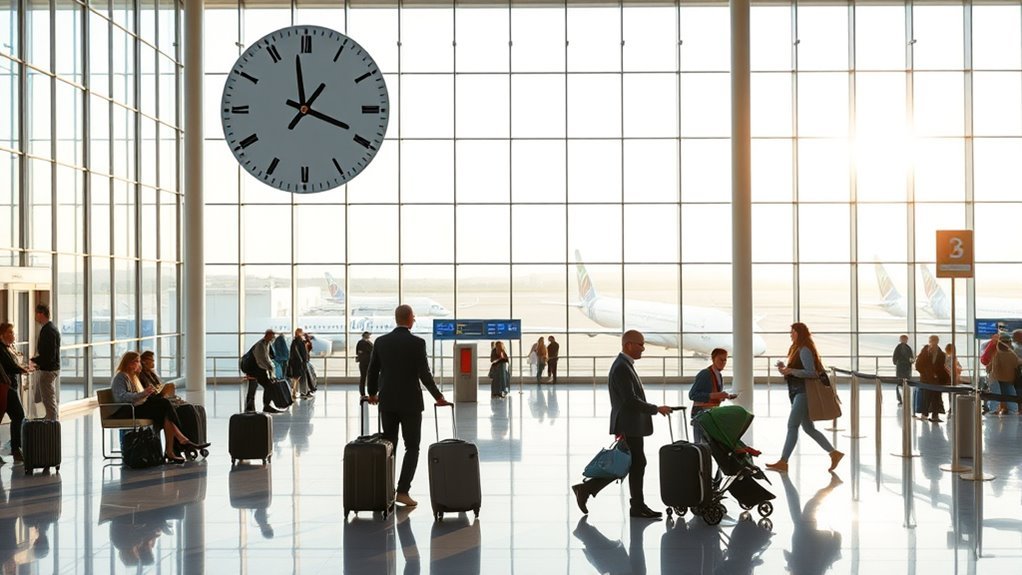
The safest general plan is to arrive two hours before a domestic flight and three hours before an international flight. The Transportation Security Administration encourages travelers to arrive about two hours before scheduled departure, while major airlines commonly recommend two hours for U.S. flights and three hours for international travel.
Your personal arrival time may need to be earlier. Airport size, traffic, parking, checked luggage, security lines, document checks, and the distance to your gate can all affect how long the process takes.
Airport Arrival Times at a Glance
| Most domestic flights | About 2 hours before departure |
| Most international flights | About 3 hours before departure |
| Busy airport or peak travel period | Add 30 to 60 minutes |
| Children, pets, special bags, or assistance | Add at least 30 minutes and follow airline instructions |
Pro Tip: Count your arrival time from the moment you enter the terminal. Time spent finding parking, returning a rental car, waiting for a shuttle, or walking from a train station should be added before your airport buffer.
Your flight’s departure time is not the time you should reach the gate. Check-in, bag-drop, security, and boarding deadlines happen earlier.
When Two Hours Is Still Right
Two hours remains the best default for many domestic flights. It gives you time to check in, drop luggage, pass through security, locate your gate, and handle a moderate delay without running through the terminal.
| Situation | Recommended approach |
|---|---|
| Holiday or school break | Use at least two hours and consider adding 30 to 60 minutes. |
| Large or unfamiliar airport | Allow time to find the correct terminal, checkpoint, train, or gate. |
| Checked luggage | Stay ahead of your airline’s bag-acceptance cutoff. |
| Family or first flight | Add time for strollers, questions, food, restrooms, and finding the gate. |
| Airport construction or traffic | Check airport alerts and leave home earlier. |
Arriving two hours early is not about expecting a problem. It gives you enough space to recover when a parking shuttle is late, a bag-tag kiosk stops working, your checkpoint changes, or your gate is farther away than expected.
How Early to Arrive for Domestic Flights
For most domestic flights in the United States, arrive inside the terminal about two hours before scheduled departure. This is especially important when you need to check luggage or are departing from a major airport.
Before leaving home:
- Check in online when your airline opens check-in, often about 24 hours before departure.
- Confirm the terminal and airport because some cities have several airports.
- Review your airline’s check-in and checked-bag deadlines.
- Check the departure airport’s official site or app for parking, construction, checkpoint, and terminal alerts.
- Make sure every adult traveler has acceptable identification.
- Keep your boarding pass, ID, and travel documents easy to reach.
Can You Arrive 90 Minutes Before a Domestic Flight?
Ninety minutes may be workable for an experienced traveler who has already checked in, carries no checked luggage, knows the airport well, and has access to a predictable expedited-security lane. It is still a smaller buffer and creates more risk if traffic, parking, security, or a gate change causes a delay.
Do not use a 90-minute plan when you are traveling during a holiday, checking luggage, returning a rental car, using a large hub, traveling with young children, or requesting airport assistance.
When to Arrive More Than Two Hours Early
Consider arriving 2.5 to 3 hours before a domestic flight when:
- You are departing during a major holiday or severe-weather period.
- You need to check oversized, fragile, sporting, or special equipment.
- You are traveling with a pet or need to visit a special-service counter.
- You need wheelchair, medical, language, or mobility assistance.
- Your airport has construction, remote parking, or long terminal transfers.
- You do not have acceptable ID and may need additional identity verification.
How Early to Arrive for International Flights
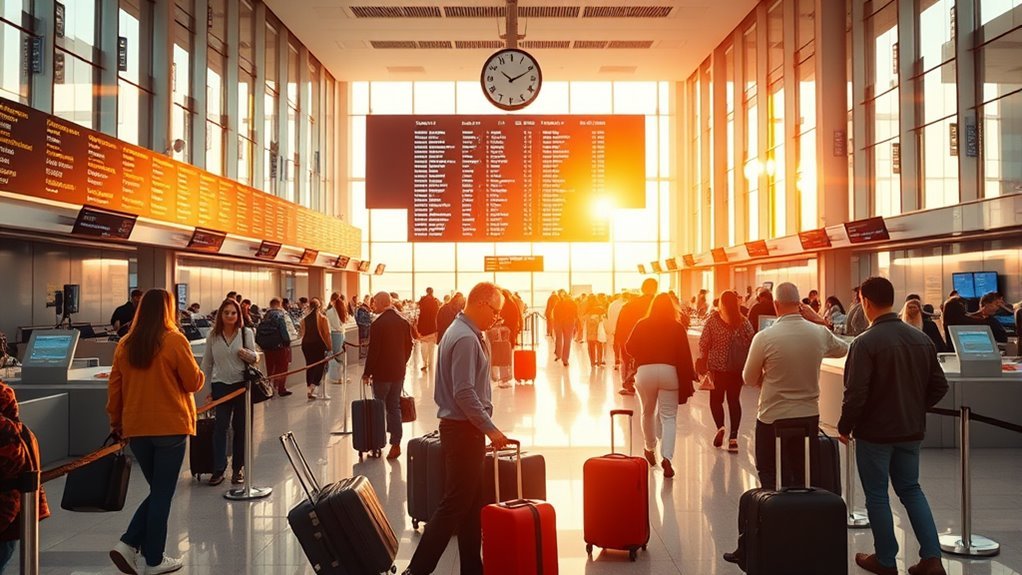
For most international departures, arrive about three hours before scheduled departure. International check-in can take longer because the airline may need to verify your passport, visa, onward ticket, health documents, or destination entry requirements.
Depending on the country and airport, you may also pass through departure immigration or passport control after security. This process is not the same at every airport, so follow the instructions from your airline and departure airport.
Add another 30 to 60 minutes when:
- You are departing from a large international hub.
- Your airline instructs passengers to arrive earlier.
- You need a visa or other document checked manually.
- You are traveling with checked or oversized luggage.
- You must complete a tax-refund, customs-declaration, or special-document process.
- You are traveling during a holiday or known peak period.
- You need assistance or are unfamiliar with international travel.
Warning: Online check-in does not always complete the international check-in process. An airline may still require an in-person passport, visa, or destination-document check before issuing or activating your boarding pass.
Recommended Arrival Times Are Not Airline Cutoffs
The two-hour and three-hour recommendations help you plan a safe buffer. They are different from mandatory deadlines for check-in, bag acceptance, and boarding.
For example, American Airlines recommends arriving at least two hours before a U.S. flight and three hours before a flight outside the United States. However, its general airport check-in and checked-bag cutoffs are 45 minutes for U.S. flights and 60 minutes for international travel, with earlier limits at certain airports.
A 45-minute bag cutoff means your luggage must normally be accepted before that deadline. It does not mean you can enter the airport 45 minutes before departure and expect to complete check-in.
You must also reach the gate before boarding closes. The scheduled departure time is when the aircraft is expected to leave, not when you should join the boarding line. Use the boarding time shown in your airline app or boarding pass and be near the gate before boarding begins.
Note: Airport-specific deadlines can be earlier than an airline’s standard rule. Check the operating airline, especially when your ticket includes a codeshare flight operated by another carrier.
Factors That Change How Early You Should Arrive
Checked or Special Luggage
Checked bags add a counter, kiosk, or bag-drop step. Oversized items, sports equipment, musical instruments, firearms, pets, and mobility devices may require a separate counter or inspection. Follow the airline’s instructions and add at least 30 minutes.
Airport Size and Terminal Layout
A small regional airport may take less time to cross than a large hub with several terminals, trains, buses, and satellite gates. Check the terminal map before the day of travel.
Parking and Ground Transportation
Remote parking, rental-car returns, traffic, train delays, and hotel shuttles can use a large part of your buffer. Plan these steps separately from your terminal arrival time.
Traveling With Children
Families may need extra time for car seats, strollers, liquids for infants, restroom stops, meals, and airline document checks. Arriving earlier also reduces pressure if a child needs an unexpected break.
Disabilities, Medical Conditions, or Mobility Needs
Travelers who need screening assistance can contact TSA Passenger Support and TSA Cares before a U.S. departure. You should also arrange wheelchair or airline assistance directly with the carrier and allow additional time.
Peak Travel Periods
Holiday weekends, school breaks, early-morning departure banks, major events, and severe weather can create longer lines. Use airport alerts and airline notifications, but keep a reasonable buffer even when an app shows a short wait.
How to Get Through Security Faster
You can reduce avoidable delays before reaching the checkpoint:
- Check in online and save your boarding pass to your phone or wallet app.
- Place your ID and boarding pass where you can reach them quickly.
- Review TSA’s carry-on rules before packing.
- Keep liquids and electronics easy to remove when standard screening requires it.
- Empty your pockets before reaching the screening equipment.
- Use the correct checkpoint for your airline, gate, and screening program.
- Check your airport’s official site or app for current checkpoint information.
TSA PreCheck and CLEAR Are Different
TSA PreCheck provides expedited screening for eligible travelers whose boarding passes show the TSA PreCheck indicator. Members can usually keep shoes, belts, light jackets, compliant liquids, and laptops in place during screening.
CLEAR+ uses identity-verification technology to move eligible members through the document-check stage at participating airports. It does not replace TSA screening. CLEAR and TSA PreCheck can be used together at some airports, but availability varies. CLEAR explains the distinction in its official service comparison.
Neither service changes your airline’s bag-drop, document-check, or boarding deadline. Expedited lanes may also close, move, or become crowded, so they should not be your only time buffer.
Check Your Identification Before Leaving Home
For U.S. airport security, adult passengers age 18 and older must present an acceptable form of identification. Since May 7, 2025, a standard state license that is not REAL ID compliant is no longer accepted as normal checkpoint identification.
Bring a REAL ID-compliant state credential or another document on the TSA acceptable-identification list, such as a valid passport or certain federal and trusted-traveler cards.
A traveler without acceptable ID may be asked to complete additional identity verification. That can cause a delay, and entry to the checkpoint is not guaranteed if TSA cannot confirm the traveler’s identity.
TSA generally does not require identification from children under 18 on domestic trips, but an airline may have its own requirements. International travelers should carry a valid passport and any visa or destination documents required for the trip.
Frequently Asked Questions
What is the 3-3-3 rule for flights?
There is no widely recognized official 3-3-3 airport-arrival rule. The normal planning guideline is about two hours for domestic flights and three hours for international flights. You may be thinking of TSA’s 3-1-1 rule for carry-on liquids.
Can I get to the airport 45 minutes before my flight?
You should not depend on it. Forty-five minutes may already be the check-in or checked-bag cutoff for a domestic flight. Even without luggage, you still need time for security and must reach the gate before boarding closes.
Is one hour early enough for a domestic flight?
One hour may work at a small, familiar airport when you are checked in, carrying no checked bag, and facing a short security line. It leaves little room for traffic, parking, identity checks, checkpoint delays, or a distant gate, so it is not the safest general plan.
Does TSA PreCheck mean I can arrive later?
TSA PreCheck may shorten or simplify security screening, but it does not change check-in, bag-drop, passport-check, or boarding deadlines. Keep enough time for every other airport step.
How early should I arrive when checking a bag?
Use at least two hours for a domestic flight and three hours for an international flight. Add more time for oversized or special luggage and verify the airline’s airport-specific bag-acceptance cutoff.
Should I arrive later when my flight is delayed?
Do not automatically leave later. Airlines may shorten a delay, change the aircraft, or keep the original check-in and bag deadlines. Continue using the original schedule unless your airline gives clear updated arrival and boarding instructions.
Sources
- Transportation Security Administration Travel Tips – airport arrival, screening, packing, and passenger-support guidance.
- TSA Acceptable Identification at the Checkpoint – current REAL ID and alternative-identification requirements.
- American Airlines Check-in and Arrival – recommended arrival times and check-in or checked-bag cutoffs.
- CLEAR+ Service Comparison – differences between CLEAR+, TSA PreCheck, and Global Entry.
- TSA Passenger Support – screening help for travelers with disabilities, medical conditions, and other needs.
Conclusion
For a calm and reliable departure, arrive about two hours before a domestic flight and three hours before an international flight. Move that time earlier when you have checked luggage, special equipment, children, pets, mobility needs, a large airport, or holiday crowds.
Check your airline’s exact deadlines, confirm your terminal, carry acceptable identification, and treat expedited screening as a helpful advantage rather than a guarantee. A little extra time is usually easier to manage than a missed bag cutoff or closed boarding gate.

