
Last Updated on July 25, 2026 by Daniel Globe
London’s best-known sights draw the biggest crowds, but some of the city’s most memorable places sit behind church walls, beneath railway arches, or inside historic artists’ homes. These five hidden gems in London mix gardens, art, architecture and unusual history, with practical details to help you decide which are worth adding to your trip.
Quick Answer
Five standout hidden gems in London are St Dunstan in the East, Leighton House, The Vaults beneath Waterloo, Postman’s Park and the Whispering Gallery at St Paul’s Cathedral. Three cluster around the City of London, while Leighton House is in Kensington and The Vaults is near Waterloo.
Key Takeaways
- St Dunstan in the East combines the ruins of a historic City church with climbing greenery, benches and a fountain.
- Leighton House is the former home and studio of Victorian artist Frederic Leighton, with the richly decorated Arab Hall as its best-known interior.
- The Vaults is currently an underground immersive-theatre and alternative-arts venue near Waterloo, rather than a permanent attraction called “The Secret Bar.”
- Postman’s Park contains the Watts Memorial to Heroic Self-Sacrifice, with 54 ceramic tablets commemorating 62 people.
- St Paul’s Whispering Gallery is open but requires a 257-step climb. Photography is not permitted in the Whispering Gallery.
Disclosure: As an Amazon Associate I earn from qualifying purchases. Some links on this page are affiliate links, at no extra cost to you.
Hidden Gems in London: Quick Planning Guide
| Place | Area / Transport | Admission | Good to Know |
|---|---|---|---|
| St Dunstan in the East | City of London; Monument or Tower Hill | Public garden | Excellent for architecture, greenery and casual photography |
| Leighton House | Kensington; High Street Kensington or Kensington (Olympia) | Ticketed historic house | Step-free access is available throughout the museum |
| The Vaults | Waterloo / Leake Street | Depends on the event | Check the current programme before travelling |
| Postman’s Park | City of London; St Paul’s | Public garden | Best known for the Watts Memorial |
| Whispering Gallery | St Paul’s Cathedral; St Paul’s station | Included with eligible sightseeing/Dome tickets | 257 steps; stairs only; no photography in the gallery |
The Enchanted Garden of St. Dunstan in the East
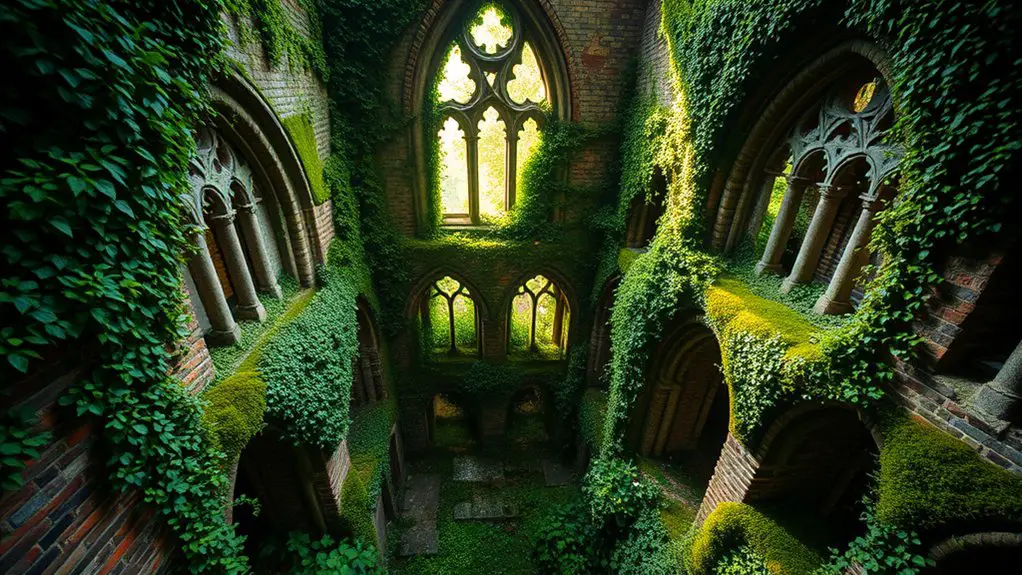
Tucked between modern buildings in the City of London, St Dunstan in the East Church Garden is one of the capital’s most striking small green spaces. The garden sits inside the roofless remains of a historic church, where plants now climb through old windows and stone arches.
The church was originally built around 1100. It suffered severe damage during the Great Fire of London in 1666 and again during the Blitz in 1941. Sir Christopher Wren’s tower and steeple survived the wartime bombing, and the City of London later transformed the remaining ruins into a public garden.
Today, greenery drapes the surviving walls while a fountain and benches create places to pause. The contrast between medieval stonework and the surrounding modern City skyline is the main reason this compact garden feels so unusual.
The appeal of St Dunstan is the contrast: a centuries-old church ruin, Wren’s surviving tower and a planted garden surrounded by the modern City.
The nearest Underground stations are Monument and Tower Hill. Casual visitors may take photographs and video in City of London gardens, although organised or commercial shoots require permission.
Pro Tip: The garden has long been popular with nearby workers at lunchtime, so an earlier visit is a better choice when you want a quieter look at the ruins.
Leighton House Museum: A Glimpse Into Victorian Artistry
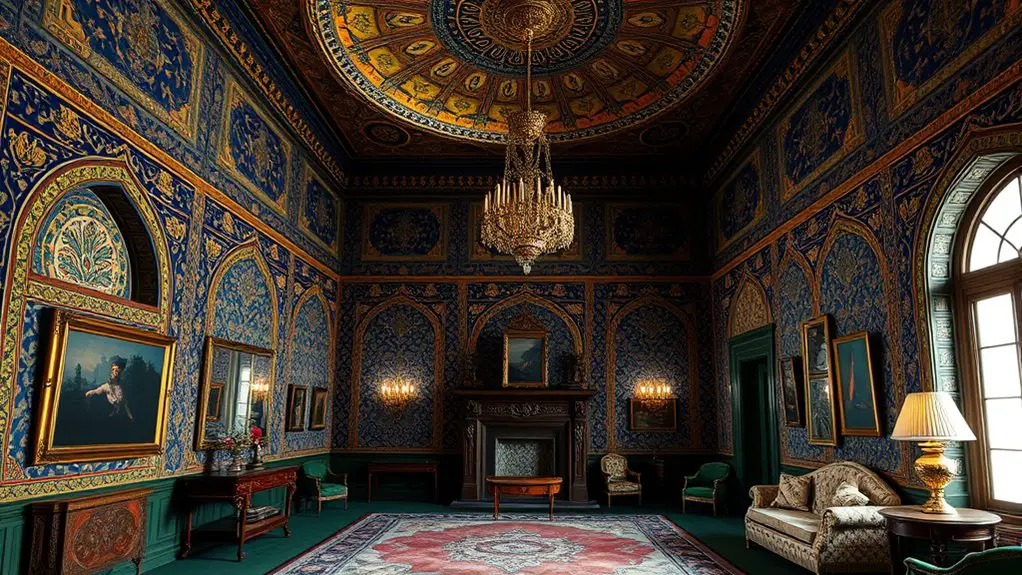
Leighton House in Kensington was the home and studio of Victorian artist Frederic, Lord Leighton. The house was designed for him by architect George Aitchison, who worked with Leighton on the property and its additions for more than 30 years.
The highlight is the Arab Hall, begun in 1877 and completed in 1881. Leighton and Aitchison drew inspiration from architecture and decorative traditions Leighton encountered during travels in North Africa, Southern Europe and the Middle East. The space brings together historic tiles, mosaics, marble, carved screens and a central fountain.
The rest of the museum reveals how Leighton combined daily life, entertaining, collecting and artistic work under one roof. His large painting studio and the Silk Room help show how the property evolved from a relatively modest studio-house into an elaborate Victorian artist’s home.
For current planning, RBKC Museums lists Leighton House as open Monday and Wednesday through Sunday from 10 a.m. to 5:30 p.m., with last entry at 4:30 p.m.; it is closed on Tuesdays. During the 2026 summer savings period from June 25 through September 1, adult admission is listed at £12.25, with concessions and other discounts available.
Personal photography with handheld cameras and phones is allowed, but flash, tripods, monopods, gimbals and additional lighting are not permitted in the historic rooms. The museum now provides step-free access to all floors by level routes and lifts.
Note: Temporary exhibitions and installations can sometimes affect what is visible inside the Arab Hall. Check the museum’s current visitor notice before travelling if seeing every decorative panel is important to you.
The Vaults Beneath Waterloo: What to Visit Now
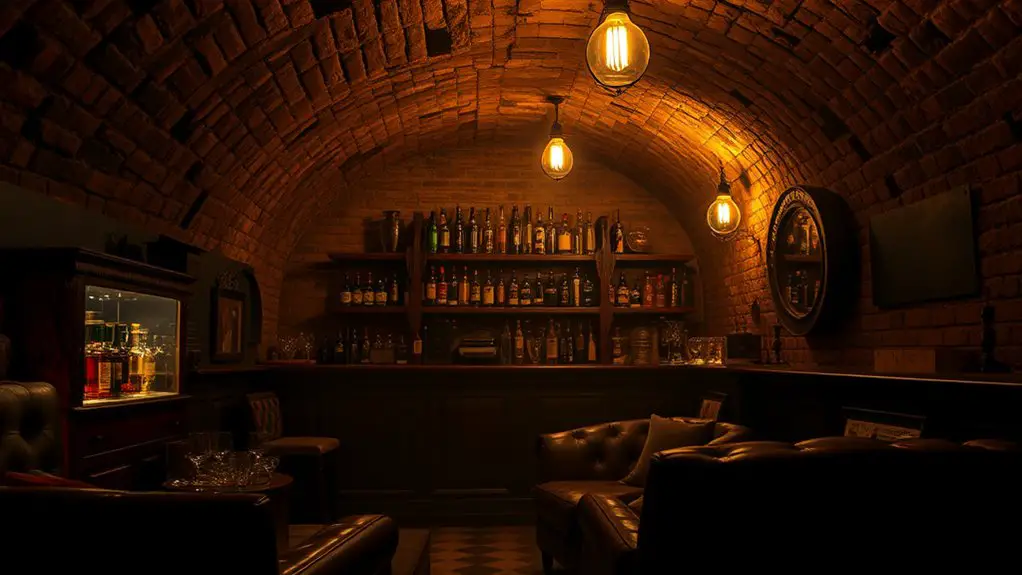
Beneath Waterloo, The Vaults occupies a maze of railway arches used for immersive theatre, alternative arts and unusual live events. Its underground location beside the constantly changing street art of Leake Street makes the setting itself worth knowing about.
Older guides may describe a permanent attraction called “The Secret Bar at The Vaults.” That name and the cocktail menu previously associated with it are not supported by the venue’s current official listings. The Vaults now promotes its changing theatre and arts programme along with sister food-and-drink venues such as Vaulty Towers and Deja Vaulty Vu.
| What it is now | An underground venue for immersive theatre, alternative arts and changing events |
| Location | Beneath Waterloo, with entrances around Leake Street, Launcelot Street and Lower Marsh depending on the event |
| Admission | Varies by production; some events are ticketed while the Leake Street graffiti tunnel itself is a public space |
| Accessibility | Most spaces and events support wheelchair or step-free access, but visitors should check the individual event listing |
The nearest major transport hub is Waterloo. Because individual productions may use different entrances, follow the directions on your specific booking rather than assuming every event enters through Leake Street.
Postman’s Park: A Tribute to Unsung Heroes
Postman’s Park is a quiet City garden with a story far larger than its size. The park first opened in 1880 and became associated with workers from the nearby General Post Office, which explains the name used today.
Its most important feature is the Watts Memorial to Heroic Self-Sacrifice, created at the initiative of Victorian artist and philanthropist George Frederic Watts. Beneath the covered memorial structure are ceramic tablets recording people who lost their own lives while trying to save others.
City of London conservation records document 54 ceramic tablets commemorating 62 individuals. Reading them changes the visit from a simple garden stop into a moving piece of social history, because the memorial focuses largely on ordinary people rather than famous public figures.
The park also contains mature planting, paths and benches, making it a useful place to rest between nearby City attractions. The closest Underground station listed by the City of London is St Paul’s.
Postman’s Park works especially well in the same itinerary as St Paul’s Cathedral. St Dunstan in the East is also in the City, so all three can be grouped more sensibly than trying to cross London repeatedly.
The Whispering Gallery at St. Paul’s Cathedral
The Whispering Gallery sits inside the famous dome of St Paul’s Cathedral. The curved geometry of the gallery produces its well-known acoustic effect, allowing quiet sounds made near the wall to travel around the circular space.
Reaching it is part of the experience: the Whispering Gallery is 257 steps above the Cathedral floor. There is no lift to the Dome Galleries, so visitors with mobility difficulties, concerns about confined spaces, or other limitations should consider the climb carefully.
Warning: The Whispering Gallery is accessible by stairs only. St Paul’s lists 257 steps to this level and advises visitors with mobility difficulties, relevant medical concerns, or concerns about heights and confined spaces not to attempt the climb.
The gallery looks inward over the Cathedral rather than out across London. For panoramic outdoor views, continue higher to the Stone Gallery or Golden Gallery, subject to access and capacity on the day.
Photography rules are also stricter here than elsewhere in the Cathedral. St Paul’s permits non-flash personal photography in many sightseeing areas, but photography is specifically prohibited in the Whispering Gallery for health and safety reasons.
In 2026, all three Dome Galleries are open, although opening hours and access can change for services and special events. Standard sightseeing is generally available Monday through Saturday, and St Paul’s has also introduced selected Sunday Dome access during part of 2026. Check the Cathedral calendar for the exact date of your visit.
How to Plan Your Hidden-Gems Route
These five places are not all next door to one another. The easiest approach is to group attractions by area rather than racing across London.
- City of London: combine St Dunstan in the East, Postman’s Park and St Paul’s Cathedral.
- Kensington: give Leighton House its own museum stop, especially if you also plan to explore Holland Park or nearby museums.
- Waterloo: visit The Vaults when a specific production interests you, then explore Leake Street and the South Bank before or after the event.
Pro Tip: Do the three City sights together and save Kensington and Waterloo for separate parts of your itinerary. You will spend more time exploring and less time crossing London.
Frequently Asked Questions
Are these hidden gems accessible by public transportation?
Yes. St Dunstan in the East is closest to Monument or Tower Hill, Postman’s Park and St Paul’s Cathedral are near St Paul’s station, Leighton House can be reached from High Street Kensington, Kensington (Olympia) or Holland Park, and The Vaults is near Waterloo. Physical accessibility varies by attraction, however.
What are the opening hours for each location?
Leighton House is currently open Monday and Wednesday through Sunday from 10 a.m. to 5:30 p.m., with last entry at 4:30 p.m. and Tuesday closure. St Paul’s normally opens for sightseeing Monday through Saturday, generally from 8:30 a.m., with last sightseeing entry usually at 4 p.m. The Vaults operates according to its event programme. City garden gate times can change, so check the current City of London listing before a late-day visit.
Is there an admission fee for these attractions?
St Dunstan in the East and Postman’s Park are public City gardens rather than ticketed museums. Leighton House and sightseeing at St Paul’s are ticketed. As of July 25, 2026, summer adult admission is £12.25 at Leighton House and £24 for standard Monday–Saturday sightseeing at St Paul’s during their respective summer discount periods. The Vaults charges according to the event.
Can I take photos inside these hidden gems?
Rules vary. Casual photography is allowed at St Dunstan and other City gardens. Leighton House permits personal handheld photography without flash. St Paul’s allows non-flash personal photography in many sightseeing areas, but photography is not permitted in the Whispering Gallery. Event photography rules at The Vaults depend on the production.
Are guided tours available for any of these sites?
Yes. Leighton House schedules free volunteer-led tours with admission on selected days, subject to capacity and volunteer availability. St Paul’s offers guided and self-guided options, including tours that may be included with sightseeing admission and additional specialist tours. The public gardens are easy to visit independently, while The Vaults experience depends on the event you book.
Which of these London hidden gems are easiest for wheelchair users?
Leighton House provides step-free access to all floors. Most spaces and events at The Vaults are described as wheelchair or step-free accessible, although individual event information should be checked. St Paul’s Cathedral has extensive accessible facilities on lower levels, but the Whispering, Stone and Golden Galleries are stairs-only.
Is the Secret Bar at The Vaults still open?
The current official Vaults website does not list a permanent attraction by that name. The Vaults now promotes immersive theatre and alternative-arts events beneath Waterloo, along with its current sister food-and-drink venues. Check the official programme rather than relying on older bar listings.
Conclusion
The most rewarding hidden gems in London are not necessarily secret; they are places that reveal a side of the city many visitors pass without noticing. St Dunstan in the East blends war-damaged architecture with greenery, Leighton House opens a window into Victorian art and design, and Postman’s Park preserves remarkably personal stories of courage.
The Vaults adds a very different underground arts experience near Waterloo, while the Whispering Gallery lets you climb inside one of London’s most famous domes. Plan the City locations together, check ticketed venues before travelling, and you can see far more than the standard landmark checklist.
Sources
- City of London — St Dunstan in the East Church Garden — history, transport and photography guidance.
- Royal Borough of Kensington and Chelsea Museums — Plan Your Visit — Leighton House opening hours, admission, photography and accessibility.
- The Vaults — current venue identity, programme and visitor information.
- City of London — Postman’s Park — location, transport and history of the Watts Memorial.
- St Paul’s Cathedral — Planning Your Visit — opening times, Dome access, ticketing and accessibility.
- St Paul’s Cathedral — Filming and Photography — current visitor photography rules, including the Whispering Gallery restriction.
