

Last Updated on July 25, 2026 by Daniel Globe
Amarillo’s hotel market is expanding, but the old claim that “approximately 10 new hotels” would open by 2025 is not supported by current public records. As of July 25, 2026, the clearest verified picture includes one major recent opening, several registered or proposed projects, and downtown redevelopment plans. This guide separates confirmed openings from projects that are still planned, under review, or awaiting completion.
Quick Answer
Amarillo has no verified public forecast showing exactly 10 new hotels opening by 2025. The newest confirmed major opening is Everhome Suites Amarillo West–Medical Center, which opened in 2025. Other documented projects include Aloft Amarillo, a dual-brand Residence Inn and SpringHill Suites, a proposed downtown Hampton Inn, and the Herring Hotel redevelopment.
Key Takeaways
- Everhome Suites Amarillo West–Medical Center is a confirmed 2025 opening with 114 rooms.
- Several additional projects appear in state records or local approvals, but a filing or approval is not the same as a completed hotel.
- Amarillo’s lodging demand comes from highway traffic, tourism, medical stays, business travel, events, and the Route 66 market.
- Public records do not support the article’s former claim that roughly 10 hotels would open by 2025.
- Travelers should confirm a hotel on the brand’s official booking site before relying on a projected opening date.
Disclosure: As an Amazon Associate I earn from qualifying purchases. Some links on this page are affiliate links, at no extra cost to you.
Current New Hotel Openings and Projects in Amarillo
The table below uses the most specific information available from hotel brands, the Texas Department of Licensing and Regulation, City of Amarillo materials, and local planning coverage. Project dates can change because financing, permits, construction, inspections, and brand approvals may delay or cancel a development.
| Hotel or Project | Location | Status as of July 25, 2026 | Verified Detail |
|---|---|---|---|
| Everhome Suites Amarillo West–Medical Center | 11 Care Circle | Open | Choice Hotels announced a June 2025 opening and identified the property as a 114-room extended-stay hotel. |
| Aloft Amarillo | 2225 S. Soncy Road | Project recorded; opening not independently confirmed | The TDLR project record lists new construction, an estimated cost of $6.7 million, and a scheduled completion date of December 31, 2025. A scheduled date is not proof that the hotel opened. |
| Residence Inn and SpringHill Suites | 1578 Airport Freeway | Registered new-construction project | The TDLR filing describes a four-story, dual-brand hotel with an estimated $14.5 million cost and a listed completion date of November 9, 2026. |
| Downtown Hampton Inn | Near S.E. 10th Avenue and Buchanan Street | Planning and incentive stage | A five-story design received local board approval in March 2026, and incentive discussions advanced in April 2026. A final opening date was not confirmed. |
| Herring Hotel redevelopment | 311 S.E. 3rd Avenue | Proposed historic redevelopment | City materials describe a proposed renovation with incentives contingent on at least $90 million in private investment, project completion, and other obligations. |
Note: TDLR records document accessibility-review projects and estimated construction schedules. They do not guarantee that financing closed, construction finished, a certificate of occupancy was issued, or the hotel began accepting reservations.
The Need for New Hotels in Amarillo
Amarillo already has a substantial lodging base. Visit Amarillo says the city offers more than 6,000 hotel rooms. That makes it inaccurate to assume that the entire city has a permanent room shortage without current occupancy, average daily rate, and demand data.
The stronger case for new development is segment-specific demand. Extended-stay properties can serve medical patients, visiting families, contractors, and traveling professionals. Hotels near the airport and Interstate 40 can serve overnight road travelers and flight crews. Downtown hotels can serve events, sports, conventions, restaurants, and entertainment venues. Lifestyle or adaptive-reuse properties can attract guests who want a more distinctive local experience.
Peak events can still tighten availability even when the city has thousands of rooms. The Tri-State Fair and Rodeo, youth sports, conventions, ranching events, and Route 66 celebrations can create short periods of high demand. Developers therefore need current market studies rather than broad claims that existing hotels are routinely full or unable to meet traveler expectations.
The Economic Impact of New Hotel Development

Hotel construction can create temporary work for contractors, trades, suppliers, engineers, and designers. Once a property opens, it may support permanent jobs in management, front-desk service, housekeeping, maintenance, food service, sales, and security. The size of that impact depends on the hotel’s room count, service level, occupancy, and operating model, so it should not be described as guaranteed to “significantly reduce” local unemployment.
Hotels also generate occupancy-tax revenue when rooms are rented. The City of Amarillo publishes a 7% city hotel occupancy tax and an additional 2% Amarillo-Potter Events Venue District tax. Texas separately imposes a 6% state hotel occupancy tax. The city’s published combined breakdown therefore totals 15% for a taxable stay.
Visit Amarillo reports that direct visitor spending exceeded $1.1 billion in 2024, showing why lodging, attractions, restaurants, retail, and transportation matter to the local economy.
More rooms do not automatically guarantee more tax revenue or stronger hotel performance. New supply can divide demand among more properties, especially during slower periods. A healthy market depends on occupancy, room rates, operating costs, financing terms, and whether new projects attract additional visitors rather than only shifting guests from existing hotels.
The Rise of Boutique, Lifestyle, and Adaptive-Reuse Hotels in Amarillo
Amarillo’s distinctive lodging opportunity is broader than the traditional definition of a boutique hotel. Lifestyle brands such as Aloft use design, social spaces, and food-and-beverage concepts to stand apart from standard limited-service properties. Historic adaptive-reuse projects can go further by preserving a landmark while creating a new guest experience.
The proposed Herring Hotel redevelopment is the clearest example of that approach. City planning materials describe an effort to convert the long-vacant historic structure at 311 S.E. 3rd Avenue into a hotel. Because the agreement is tied to major private investment and completion conditions, it should be described as a proposed redevelopment rather than an open or guaranteed hotel.
Local identity can strengthen these projects when it is used with care. Western heritage, Route 66 history, ranching culture, regional art, and Texas Panhandle materials can create a sense of place. The strongest designs avoid generic cowboy decoration and instead work with local historians, artists, craftspeople, and neighborhood groups.
Products Worth Considering

Durable Tin Sign Construction: Crafted from sturdy tin with a waterproof finish, this vintage metal signs is lightweight, fade-resistant, and suitable for both indoor and outdoor display
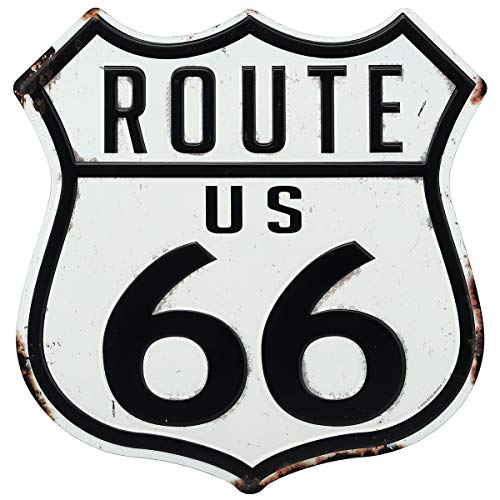
Open Road Brands licensed product: Get your kicks with this die-cut wall art! Featuring the recognizable Route 66 highway sign with a weathered and worn finish, this sign is an all-American celebration.

ANTIQUE ACCENT CLOCK: Inspired by old-fashioned Route 66 gas pumps, this Mantle Clock is a fully functional clock that reminds you of the good old days. Do you have an antique picker or collector in your life? They will love this clock!
The Role of Chain and Extended-Stay Hotels in Meeting Demand
Chain hotels remain important because travelers often value recognizable service standards, loyalty programs, digital check-in, and consistent amenities. Amarillo’s documented pipeline includes several different chain segments rather than one uniform type of property.
- Extended stay: Everhome Suites targets guests staying a week, a month, or longer and includes apartment-style features such as in-room kitchens.
- Dual brand: The planned Residence Inn and SpringHill Suites project can serve both longer-stay guests and travelers who want suite-style rooms for shorter visits.
- Lifestyle: Aloft is positioned as a design-forward Marriott brand with social common areas.
- Limited service: The proposed downtown Hampton Inn would serve families, event visitors, and loyalty-program members seeking a familiar Hilton brand.
This mix can help Amarillo serve medical, leisure, group, business, and highway demand. It also means each project should be judged against its target guest and submarket instead of being treated as interchangeable room supply.
Sustainable Practices in Hotel Development
New hotels can reduce operating costs and environmental impact through efficient heating and cooling, LED lighting, building controls, improved insulation, low-flow plumbing fixtures, leak detection, linen-reuse programs, recycling, and careful landscape design. The ENERGY STAR hospitality program provides hotel-specific energy-management resources, while EPA’s WaterSense program identifies independently certified water-efficient products.
Sustainability claims should be specific and verifiable. A hotel should not be called “green” simply because it offers optional towel reuse. Stronger evidence includes energy benchmarking, third-party certification, published water or energy targets, high-efficiency equipment, responsible waste management, and transparent performance reporting.
Accessibility is equally important. New construction and major alterations must follow applicable accessibility requirements. The U.S. Department of Justice publishes the ADA Standards for Accessible Design, which cover physical access in places of lodging and other public accommodations.
The Impact of New Hotels on Local Businesses
New hotels can send customers to nearby restaurants, coffee shops, stores, museums, entertainment venues, ride services, and tour providers. The effect is strongest when hotel staff actively recommend local businesses and when guests can safely walk, drive, or use transportation to reach them.
Partnerships can extend that impact. Hotels may work with local attractions on ticket packages, contract with nearby bakeries or coffee roasters, display regional artwork, use local event vendors, or direct group business to independent restaurants. These arrangements are more valuable than vague promises that every nearby business will automatically benefit.
There can also be tradeoffs. Added hotel supply may increase competition for hospitality workers, raise labor costs, or shift demand away from older properties. Local economic benefits depend on where the hotel buys goods and services, how many people it employs, and whether it brings new visitor spending into Amarillo.
The Importance of Location in Hotel Development
Amarillo’s hotel projects reflect several distinct location strategies:
- West Amarillo and the medical district: Everhome Suites is positioned for longer stays near hospitals, medical facilities, education, and Interstate 40.
- Soncy Road and the western I-40 corridor: The Aloft project targets a busy area with restaurants, retail, and highway access.
- East Amarillo and the airport corridor: The Residence Inn and SpringHill Suites project is listed on Airport Freeway, supporting airport, highway, industrial, and business travel.
- Downtown: The proposed Hampton Inn and Herring Hotel redevelopment could support Hodgetown, the convention center, restaurants, events, and downtown revitalization.
The best hotel site is not simply the busiest road. It is the location where guest demand, access, parking, utilities, nearby attractions, and the hotel’s target market work together.
Products Worth Considering

𝐁𝐮𝐢𝐥𝐭-𝐢𝐧 𝐏𝐡𝐨𝐭𝐨𝐜𝐞𝐥𝐥 - 𝐏𝐥𝐞𝐚𝐬𝐞 𝐧𝐨𝐭𝐞: 𝐃𝐢𝐟𝐟𝐞𝐫𝐞𝐧𝐭 𝐟𝐫𝐨𝐦 𝟑𝟎𝟎𝐖, 𝐢𝐭𝐬 𝐩𝐡𝐨𝐭𝐨𝐜𝐞𝐥𝐥 𝐢𝐬 𝐚𝐥𝐫𝐞𝐚𝐝𝐲 𝐝𝐞𝐬𝐢𝐠𝐧𝐞𝐝 𝐢𝐧𝐬𝐢𝐝𝐞, 𝐬𝐨 𝐭𝐡𝐞𝐫𝐞 𝐢𝐬 𝐧𝐨 𝐧𝐞𝐞𝐝 𝐭𝐨 𝐜𝐨𝐧𝐟𝐢𝐠𝐮𝐫𝐞 𝐚𝐧 𝐚𝐝𝐝𝐢𝐭𝐢𝐨𝐧𝐚𝐥 𝐩𝐡𝐨𝐭𝐨𝐜𝐞𝐥𝐥 𝐜𝐚𝐩.
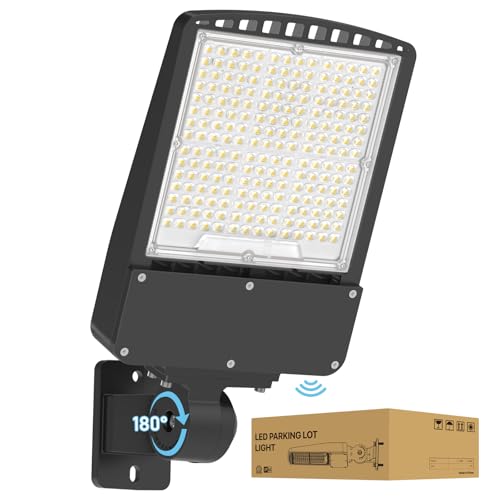
High Efficiency & Super Brightness - Powered by 𝙖𝙙𝙫𝙖𝙣𝙘𝙚𝙙 𝟐𝟎𝟐𝟓 𝙇𝙀𝘿 𝙘𝙝𝙞𝙥𝙨, Pvilub 200W parking lot lights commercial emits a bright, daylight-like glow at 5000K. With an impressive efficacy of 𝟏𝟓𝟎𝐖/𝐋𝐌, it delivers 30,000 lumens of brightness, making it a highly efficient replacement for traditional 𝟖𝟔𝟎𝐖 𝐇𝐏𝐒/𝐌𝐇 lights while 𝐫𝐞𝐝𝐮𝐜𝐢𝐧𝐠 𝐞𝐧𝐞𝐫𝐠𝐲 𝐜𝐨𝐧𝐬𝐮𝐦𝐩𝐭𝐢𝐨𝐧 𝐛𝐲 𝐨𝐯𝐞𝐫 𝟗𝟓%.

【Super Brightness】This LED parking Lot Light produces 100-277V, 42,000lm brightness of 5000k, bright as daylight. Perfect match the brightness of the illuminating for outdoor activities in a dark environment in the parking lot, roadway, street, yard, backyard, garden, farms, garage, factory, docks and so on. With its robust construction, brilliant illumination, and superior performance, the parking lot light delivers unparalleled brightness and clarity, ensuring optimal visibility and security for your whole area.
The Influence of Amarillo’s Unique Culture on Hotel Design
Amarillo’s culture gives hotel developers a strong design story. Route 66, ranching, rail history, the open landscape, Cadillac Ranch, regional art, and the nearby Palo Duro Canyon can inspire architecture, interiors, food, programming, and guest recommendations.
Authenticity matters. A locally rooted hotel might commission Amarillo artists, preserve historic materials, explain the story behind displayed objects, feature regional food, or provide accurate guides to Route 66 and Panhandle attractions. Those choices create more value than mass-produced Western decorations that could appear in any city.
Hotels should also serve residents, not only visitors. Public restaurants, lounges, meeting rooms, event spaces, and art displays can help a property become part of the community when noise, traffic, parking, and neighborhood concerns are handled responsibly.
The Future of Hospitality in Amarillo
Amarillo’s hospitality outlook is active, but it is better described as a multi-project pipeline than a guaranteed hotel boom. The 2026 Route 66 centennial, more than $1.1 billion in reported 2024 visitor spending, medical and industrial activity, and the city’s highway position all support lodging demand. At the same time, every proposed hotel still faces market, financing, construction, labor, and approval risks.
Technology will continue to shape the guest experience through mobile check-in, digital keys, messaging, smart-room controls, electric-vehicle charging, and more personalized service. These features work best when hotels also provide reliable basics: clean rooms, sound control, comfortable beds, fast maintenance, clear accessibility information, and responsive staff.
How to Verify Whether a New Hotel Is Actually Open
- Check the hotel brand’s official booking website for available dates.
- Confirm the street address and phone number on the official property page.
- Treat construction filings and projected completion dates as estimates, not opening announcements.
- Review City of Amarillo planning or council records for proposed downtown and incentive-backed projects.
- Call the property directly when planning travel around a newly announced opening.
Pro Tip: Do not book flights, events, or nonrefundable plans around a hotel’s projected completion date. Wait until the property appears on the brand’s official booking system and accepts reservations for your dates.
Conclusion: The Growth of Amarillo’s Hotel Industry
Amarillo is adding and planning new lodging options, but the evidence does not support a simple claim that approximately 10 hotels were set to open by 2025. The verified story is more useful: Everhome Suites opened in 2025, a dual-brand Residence Inn and SpringHill Suites is listed with a late-2026 construction target, Aloft appears in state project records, and downtown Hampton Inn and Herring Hotel proposals are moving through separate planning and incentive processes.
The strongest projects will match a real demand segment, choose the right location, meet accessibility requirements, control energy and water use, and connect guests with Amarillo’s businesses and culture. Because development timelines change, readers should rely on official brand booking pages and current government records rather than old projections.
Frequently Asked Questions
How many new hotels were projected to open in Amarillo by 2025?
No reliable official source reviewed for this update supports the former claim that approximately 10 hotels would open by 2025. One major opening is confirmed for 2025, while other projects have different schedules and development stages.
What is the newest confirmed hotel opening in Amarillo?
Everhome Suites Amarillo West–Medical Center is the newest major opening verified in this article. Choice Hotels announced that the 114-room extended-stay property would open in June 2025, and the hotel now has an official booking page.
Is Aloft Amarillo open?
A TDLR project record lists Aloft Amarillo at 2225 S. Soncy Road with a scheduled completion date of December 31, 2025. However, that filing alone does not confirm an opening, so travelers should check Marriott’s official booking system before making plans.
Which Amarillo hotel project has a 2026 completion target?
The TDLR filing for the four-story Residence Inn and SpringHill Suites project at 1578 Airport Freeway lists November 9, 2026, as the estimated completion date. Construction schedules can change, and a completion target is not a guaranteed opening date.
What is driving hotel development in Amarillo?
Demand comes from Interstate 40 and Interstate 27 traffic, leisure tourism, Route 66, events, medical stays, education, agriculture, industry, and business travel. Different projects target different parts of that demand.
How can new hotels affect Amarillo’s economy?
They can create construction and operating jobs, generate hotel occupancy taxes, and send visitors to restaurants, stores, attractions, and transportation providers. The size of the benefit depends on occupancy, wages, local purchasing, and whether the project attracts new spending.
Which parts of Amarillo are seeing hotel development?
Documented activity includes west Amarillo near the medical district and Soncy Road, east Amarillo near Airport Freeway, and downtown sites near events, restaurants, Hodgetown, and historic redevelopment areas.
Sources
- Visit Amarillo — 2024 direct visitor-spending figure.
- Choice Hotels International — Everhome Suites Amarillo opening timing, location, and room count.
- Texas Department of Licensing and Regulation: Aloft Amarillo — project location, scope, cost, and scheduled dates.
- Texas Department of Licensing and Regulation: Residence Inn and SpringHill Suites — dual-brand project scope, cost, and scheduled dates.
- City of Amarillo Hotel/Motel Taxes — city and venue-district hotel occupancy tax rates.
- City of Amarillo Council Agenda Planner — Herring Hotel proposal, investment condition, and incentive terms.
