

Last Updated on July 27, 2026 by Daniel Globe
European hornets can fly well beyond the immediate area around their nest, but there is no scientifically established distance that applies to every colony. Food availability, landscape, weather, colony size, and the time of year all affect how far workers travel. A repeated sighting may help reveal the direction of a nest, but one hornet alone does not prove that a colony is on the property.
Quick Answer
European hornets generally exploit food near the colony, but scientists have not established one universal Vespa crabro foraging radius. A field study documented hornet activity at an apiary 500 meters from a nest, so that distance is clearly plausible. Treat “a few hundred meters” as a practical estimate, not a hard limit; routine multi-mile travel is not verified.
Key Takeaways
- A European hornet may forage several hundred meters from its nest when useful food is not available closer.
- Researchers observed European hornets hunting at an apiary located 500 meters from a known nest, but that observation does not establish a universal maximum distance.
- A single hornet near fruit, tree sap, flowers, lights, or outdoor food does not necessarily mean the nest is nearby.
- Repeated hornets flying in the same direction can be a stronger clue, especially when they are carrying prey or nest material.
- European hornets are generally less defensive while foraging than they are near their nest, but they can sting repeatedly when threatened.
- Do not approach a suspected nest, climb a ladder to inspect it, puncture it, or block the entrance to a wall cavity.
Disclosure: As an Amazon Associate I earn from qualifying purchases. Some links on this page are affiliate links, at no extra cost to you.
How Far Do European Hornets Travel From Their Nest?
The most accurate answer is that their exact routine foraging radius has not been firmly measured across the species. Websites often repeat figures such as 300–500 meters or one kilometer, but these should not be treated as fixed biological limits.
A peer-reviewed field study of European hornets in Sardinia monitored an apiary located 500 meters from a known nest and recorded workers hunting honeybees there. This confirms that a 500-meter trip is realistic. However, the study was designed to examine hornet behavior and predation, not to establish the maximum foraging distance of every worker or colony. You can review the study in Biology.
A sighting 500 meters from a nest is documented, but a rigid 300–500-meter limit and routine flights of several miles are not established for European hornet workers.
European hornets are capable flyers, so an individual may travel farther when food is scarce or scattered. Flight capacity is not the same as normal foraging distance, however. A hornet that is physically capable of covering a long distance will usually save energy by exploiting a dependable source closer to the colony.
Typical Foraging Distance Versus Maximum Flight Ability
Four different measurements are often confused:
- Routine foraging distance: The distance a worker normally travels to collect prey, fruit, nectar, sap, water, or nest material.
- Maximum flight ability: The farthest an insect might physically fly under unusual or experimental conditions.
- Homing ability: Whether a displaced hornet can navigate back to its colony from a release point.
- Queen dispersal: Movement by a newly mated queen seeking an overwintering place or a site for a new colony. This is different from a worker’s daily food trip.
The practical answer for a homeowner is therefore not “the nest must be exactly 300 meters away.” It is that repeated workers may be coming from anywhere within the surrounding landscape, with a few hundred meters being a sensible area to consider first.
What a Hornet Sighting May Tell You
| Observation | What It May Mean | Recommended Response |
| One hornet on fallen fruit, flowers, tree sap, or outdoor food | It may be a worker visiting from a colony several hundred meters away. | Remove the food attractant and watch from a safe location. Do not assume the nest is on the property. |
| Several hornets repeatedly leaving in the same direction | A nest or another dependable resource may lie along that flight path. | Observe direction only from a distance. Do not follow them into vegetation, a tree cavity, roof space, or wall opening. |
| Regular traffic entering a hole in a tree, wall, attic, shed, or roofline | This is much stronger evidence of an active nest entrance. | Keep people and pets away and contact a pest-management professional when the location creates a sting risk. |
| Hornets appearing around porch or window lights after dusk | European hornets can remain active in low light and may be attracted to artificial lighting. | Turn off unnecessary exterior lights, close screens, and avoid swatting at the insects. |
Pro Tip: Watch the direction of departing hornets from indoors, inside a vehicle, or from another protected position. Repeated straight flights are more informative than a single insect circling food or lights.
Factors That Affect European Hornet Travel Distance
Food Availability
A productive source close to the nest reduces the need for long flights. Hornets may repeatedly visit a sap-producing tree, an orchard with ripe fruit, a compost area, a concentration of insects, or an apiary. When these resources disappear, workers may search a wider area.
Type of Food Being Collected
Workers collect both carbohydrates and protein. Adults use sugary liquids such as tree sap, fruit juice, nectar, and honeydew for energy. They capture insects and process the protein-rich tissue into small pellets for developing larvae. A worker carrying prey may choose a shorter or more direct route because the load affects its flight.
Colony Size and Season
A newly founded spring nest has few mouths to feed. By late summer and early fall, a mature colony contains many workers and developing reproductive hornets. Demand for food is higher, so more workers are visible and a larger surrounding area may be searched.
Landscape and Nest Location
Woodland edges, gardens, orchards, farms, and neighborhoods offer different mixtures of food and nesting cavities. Buildings, hills, dense vegetation, open fields, and prevailing wind may also change the route a worker follows. The distance traveled along that route can be longer than the straight-line distance between the food and nest.
Temperature, Light, and Weather
Cold, heavy rain, and strong wind can reduce activity. European hornets are unusual among many familiar social wasps because they may continue flying in twilight and low-light conditions. Research has documented activity around sunset and after dark, although activity falls at extremely low light levels. See the night-flight study published in PLoS ONE.
How to Identify a European Hornet
The European hornet’s scientific name is Vespa crabro. It is native to Europe and Asia and was introduced to North America in the nineteenth century. It is now established across much of the eastern United States.
Workers are commonly about one inch long, while queens may reach approximately 1.3–1.5 inches. They have a robust body, a reddish-brown head and thorax, brown-tinted wings, and a yellow abdomen marked with brown or black patterns. These details help separate them from yellowjackets and other large wasps. Current identification information is available from Penn State Extension and the University of Georgia Extension.
Note: Size alone is not enough for identification. Cicada killers, large yellowjackets, bald-faced hornets, yellow-legged hornets, and other wasps may be confused with European hornets. Use clear photographs and regional extension guidance when identification matters.
Nesting Behavior and Habitat
European hornets usually establish nests in protected cavities. Common sites include hollow trees, wall voids, attics, barns, sheds, abandoned containers, and other dark enclosed spaces. Underground nests are possible but are less typical.
The location must provide shelter and enough space for the colony’s combs. Natural cavities can restrict expansion, while a large building void may allow a bigger nest. This is why one fixed nest diameter or colony count cannot describe every mature colony.
European hornet nests are annual. A fertilized queen survives winter in a protected location and begins a new nest in spring. She constructs the first cells, lays eggs, and raises the first workers. Those workers then take over foraging, nest construction, brood care, cooling, and defense while the queen concentrates on laying eggs.
The colony expands through summer and produces males and future queens later in the season. The original queen, workers, and males die as the season ends. Mated new queens overwinter separately and establish new colonies the following year; the old colony does not resume normal use of the same nest.
Products Worth Considering
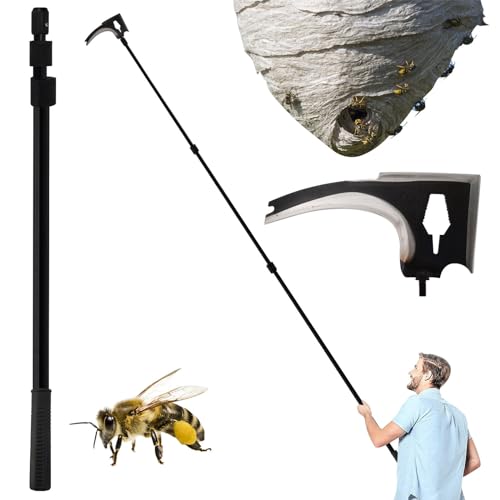
3 knife edges Design: This tool serves as a versatile solution for safely removing and cleaning Trap wasp, hornet, and yellow jacket nests, Bird Nest, ensuring a hassle-free experience for homeowners and bee Nest control professionals.

6-in-1 Wasp Nest Removal Tool Set:This tool set is a versatile solution that makes it easy to remove and clean wasp, wasp, yellow jacket, and bird nests. wasp nest removal tool includes an aluminum telescoping wand, multi-edged blade, 3-inch scraper, spray can extension wand adapter, cleaning brush and safety goggles.

【Efficient 3-Blade Scraper】This wasp nest removal tool is fitted with a sharp triple-edge blade to slice through wasp, hornet, and mud dauber nests effortlessly. (Warm Reminder: The blade is coated with anti-rust oil; slight welding marks on screws are normal and won’t impact performance. Feel free to contact us if you need help.)
Nest Construction and Size
Workers scrape or chew weathered wood and mix the fibers with saliva to produce a paper-like building material. Inside the cavity, they construct horizontal combs containing hexagonal brood cells. A protective envelope may surround the combs, but its shape is affected by the available space.
A scientific overview of the European hornet genome and biology reports nests with approximately three to eight combs and up to around 1,400 cells. Colony estimates vary. Many nests hold several hundred workers, while some university-extension descriptions report mature populations approaching 800–1,000 workers under favorable conditions. See the peer-reviewed European hornet genome and biology overview.

Foraging Range and Behavior
European hornets search for insects, tree sap, ripe fruit, nectar, honeydew, water, and nest-building fibers. They forage individually rather than using the honeybee waggle-dance system. A rich food source may attract many workers over time, but each worker travels independently between the resource and colony.
When hunting, a hornet captures an insect with its legs and mandibles. It may remove less useful parts and chew the prey into a compact pellet before returning to the nest. The protein is fed to larvae. Adult workers rely mainly on carbohydrate-rich liquids for their own energy.
Repeated traffic can make a flight path appear organized. This does not mean every worker remains inside a fixed circular boundary. Terrain, obstacles, and the locations of food sources create uneven routes around the colony.
Products Worth Considering
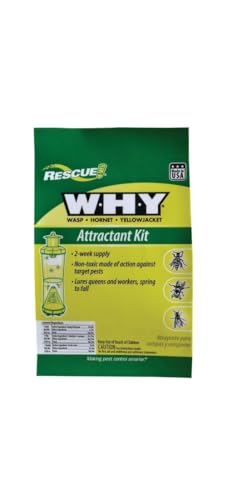
FOR RESCUE! WHY TRAP - This refill works with the RESCUE! WHY Non-Toxic Reusable Trap for Wasp, Hornet and Yellowjackets, and provides 2 weeks of attractant power.

Traps Multiple Species – Unsure if your problem is wasps, hornets, or yellowjackets? The RESCUE! WHY Trap attracts all of them, so you’ll never need to identify an insect. Simply hang outdoors and watch them pile up.

FOR RESCUE! WHY TRAP - This refill works with the RESCUE! WHY Non-Toxic Reusable Trap for Wasp, Hornet and Yellowjackets, and provides 2 weeks of attractant power.
Diet and Prey Selection
European hornets are generalist predators and scavengers. Their prey can include flies, caterpillars, grasshoppers, dragonflies, beetles, cicadas, other wasps, and honeybees. What they catch depends on which insects are abundant and easy to handle.
Protein demand is especially important while larvae are developing. Later in the season, adult workers become more noticeable around sugary foods, fallen fruit, tree wounds, outdoor drinks, and picnic items. They may also strip bark to reach sap or collect wood fibers, sometimes damaging branches and ornamental plants.
A Sardinian field study found European hornets feeding most often on ripe fruit among the verified public observations analyzed. It also recorded feeding on sugary exudates, flowers, water, and insect prey. These observations show why a hornet seen in a garden may be visiting food rather than nesting nearby.
Impact on Ecosystems and Honeybees
European hornets help regulate some insect populations by capturing many kinds of arthropods. They are also scavengers and occasional flower visitors. These roles are part of the local food web, but it is too broad to claim that the presence of a hornet colony automatically proves that an environment is healthy or that it increases biodiversity.
European hornets may hunt honeybees near hive entrances or intercept returning foragers. However, they are less specialized in mass attacks on bee colonies than some other hornet species. The Sardinian field study described Vespa crabro as a mild predator of honeybees in the observed area and found no evidence that it posed a major general threat to local beekeeping.
Weak bee colonies or hives located near a hornet nest may still experience greater pressure. Beekeepers should monitor hive strength, reduce other stressors, and seek region-specific advice rather than relying on broad claims that every European hornet colony will seriously damage bees.

Human Interaction and Nest Management
A worker feeding away from the colony is generally less defensive than hornets guarding their nest. It may still sting if trapped, grabbed, stepped on, crushed against clothing, or repeatedly swatted. Unlike a honeybee, a European hornet does not normally leave its stinger behind and can sting more than once.
If a nest is high in a tree or another low-traffic location, leaving it undisturbed until the annual colony dies may be the safest option. If it is beside a doorway, play area, path, occupied room, work site, or another place where people cannot avoid it, contact a qualified pest-management professional.
Warning: Do not climb a ladder to inspect or treat a hornet nest. Do not puncture the nest, strike the supporting tree or wall, or block the entrance to a wall void. Trapped hornets may chew toward the building interior, and disturbed workers can defend the colony in large numbers.
Professional control does not always mean that a nest can be moved alive. Cavity nests may be inaccessible, and safe treatment or physical removal depends on the structure, colony location, local regulations, and the technician’s equipment. The University of Kentucky recommends professional help for nests in or near homes and warns against ladder-based treatment.
Anyone using a pesticide must follow the complete product label and local law. A recommendation written for one state or country may not be legal elsewhere. Treatment should never contaminate food, flowering plants visited by pollinators, water, pets, or children’s areas.
Products Worth Considering

Triple Blade Carbon Steel Design: the wasp nest removal tool features three sharp carbon steel blades, which can effectively remove wasps and yellow jacket nests; The blades...
What to Do After a Sting
Move away from the nest area to prevent additional stings. Wash the site, apply a wrapped cold pack for short intervals, and monitor the reaction. Seek emergency medical help immediately for breathing difficulty, throat or facial swelling, dizziness, faintness, widespread hives, vomiting, confusion, or other signs of a severe allergic reaction. Medical assessment is also appropriate after numerous stings or a sting inside the mouth or throat.
Conservation and Regional Context
European hornets are native members of ecosystems across much of Eurasia but are introduced in North America and some other areas. That difference matters. A species may be valued or protected in one jurisdiction and managed as a nuisance or non-native organism in another.
Broad extermination is rarely necessary when a colony is isolated from people. At the same time, a dangerous nest beside an occupied building should not be preserved at the expense of human safety. The best approach is to identify the insect correctly, assess the actual exposure risk, and follow local extension, wildlife, pesticide, or pest-control guidance.
Climate, available tree cavities, development, artificial lighting, and food availability may alter where colonies become established and how often people encounter workers. Continued field research is needed to produce better species-specific measurements of European hornet foraging distance and ecological effects.
Anyone planning to photograph European hornets should use a long lens and avoid approaching a nest entrance. For general equipment considerations, the existing guide to the best travel camera backpacks explains how to carry and protect camera gear during outdoor trips.
Sources
- Penn State Extension: European Hornet — identification, North American distribution, sting information, and control guidance.
- University of Kentucky: European Hornet in Kentucky — size, annual life cycle, nesting behavior, and homeowner safety.
- University of Georgia Extension: European Hornet — identification, colony estimates, bark damage, and nest management.
- Pusceddu et al.: Bio-Ethology of Vespa crabro in Sardinia — field observations of diet, apiary activity, nest behavior, and the documented 500-meter nest-to-apiary distance.
- Crowley et al.: The Genome Sequence of the European Hornet — scientific overview of nest composition, colony biology, and life cycle.
- Kelber et al.: Hornets Can Fly at Night — European hornet activity under daylight, twilight, and low-light conditions.
Frequently Asked Questions
What is the typical travel range of a European hornet?
A few hundred meters is a reasonable practical estimate when food is available nearby, but it is not a fixed scientifically proven radius for every colony. A field study documented hornet activity at an apiary 500 meters from a known nest.
How far can European hornets travel in search of food?
They can travel at least 500 meters when using a valuable resource, and some individuals may go farther. Current evidence does not support treating one kilometer as a universal maximum or saying that workers routinely forage several miles from the nest.
Does seeing one European hornet mean a nest is nearby?
Not necessarily. A single worker may be visiting fruit, flowers, tree sap, lights, water, prey, or outdoor food from a colony elsewhere in the surrounding area. Repeated traffic entering the same cavity is much stronger evidence of a nest.
What factors influence how far European hornets forage?
Important factors include the amount and quality of nearby food, colony size, season, terrain, obstacles, weather, temperature, light, and the weight of prey or material carried back to the nest.
How can I tell which direction the nest is in?
From a protected location, watch several hornets after they leave a dependable food source. Repeated straight flights in one direction may indicate the route toward the colony. Stop observing if the route leads to a cavity, roof, wall opening, or area where approaching would place you near the nest.
Do European hornets travel or forage at night?
They can remain active in twilight and low-light conditions and may visit artificial lights after dark. Activity usually decreases when light levels become extremely low, but homeowners should not assume every worker is inside the nest at night.
Should a European hornet nest always be removed?
No. A nest in an isolated location may be left undisturbed because the colony is annual. Professional assessment is appropriate when the nest is near people, inside a building, difficult to reach, or positioned where accidental disturbance is likely.
