

Last Updated on September 11, 2026 by Daniel Globe
Engkot Keumamah, also called Eungkot Kayee, is a traditional Acehnese dish made from boiled, smoked, and dried tuna cooked with aromatic spices and a sour, spicy sauce. The preserved fish develops a firm texture and deep savory flavor, while ingredients such as chilies, garlic, onions, and asam sunti create a distinctive taste usually enjoyed with warm white rice.
Quick Answer
Engkot Keumamah is an Acehnese dried tuna dish prepared by simmering preserved tuna with spices, chilies, and asam sunti. Its smoky flavor, firm texture, and spicy-sour sauce make it one of Aceh’s best-known traditional foods.
Key Takeaways
- Engkot Keumamah uses preserved tuna that is boiled, smoked, and dried.
- The dish gets its signature flavor from chilies, garlic, onions, and asam sunti.
- Traditional preservation methods help extend the fish’s shelf life.
- It is commonly served with warm rice as part of Acehnese cuisine.

Disclosure: As an Amazon Associate I earn from qualifying purchases. Some links on this page are affiliate links, at no extra cost to you.
What Is Engkot Keumamah?
Engkot Keumamah is a traditional Acehnese preparation made from tuna that has been boiled, smoked, and dried. This preservation method gives the fish a firm texture and allows it to be stored longer than fresh fish. The name is often associated with Eungkot Kayee, another name used for this preserved tuna dish.
The dried tuna is usually cooked again with a rich mixture of spices. The result is a dish with smoky seafood flavor, gentle chewiness, and a sauce that combines heat, sourness, and aroma. It is commonly enjoyed with rice and shared during family meals or gatherings.
Key Ingredients for Engkot Keumamah
The main ingredient is dried tuna, which provides the dish’s strong seafood flavor and distinctive texture. Before cooking, the fish is often softened so it can absorb the surrounding spices.
Common ingredients include:
- Dried tuna: the foundation of the dish with a firm, savory texture.
- Cayenne pepper and green chilies: provide heat.
- Garlic and red onion: create the aromatic base.
- Asam sunti: dried starfruit that adds sourness and balance.
- Salt and water: help develop the final sauce.
- Potatoes or long beans: optional additions for extra texture.
How to Cook Engkot Keumamah at Home
At a Glance
| Time Required | About 45–60 minutes depending on preparation |
| Difficulty | Moderate |
| Tools Needed | Knife, pan, blender or mortar for spice paste |
| Cost | Depends on tuna and local ingredient prices |
To prepare Engkot Keumamah, first soften the dried tuna if needed. Make a spice paste using chilies, garlic, and red onion. Cook the paste until fragrant, then add the tuna and allow the flavors to combine.
Add water, salt, and asam sunti, then simmer until the sauce becomes concentrated and coats the fish. Potatoes or long beans can be added if you want a fuller meal. Serve the finished dish hot with white rice.
Pro Tip: Let the cooked dish rest briefly before serving. The fish absorbs more of the spice mixture as it sits.
What Does Engkot Keumamah Taste Like?
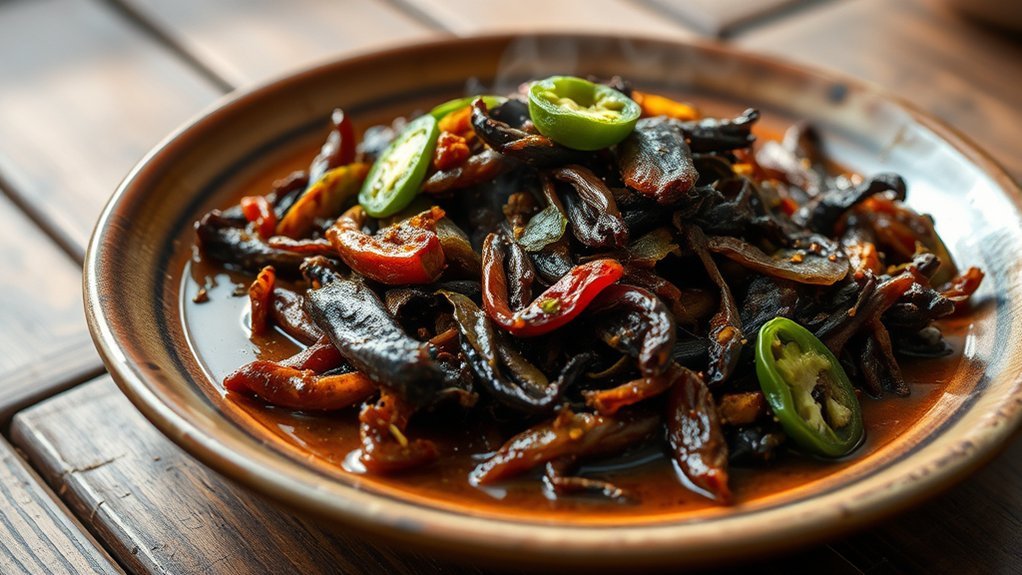
Engkot Keumamah has a strong savory taste from the dried tuna, combined with smoky notes from the preservation process. The texture is firmer than fresh fish, but cooking softens it while allowing it to absorb the spicy sauce.
The flavor balance comes from several elements: chilies add heat, garlic and onions add depth, and asam sunti provides a sour note that prevents the dish from becoming too heavy.
Why Engkot Keumamah Matters in Acehnese Culture
Engkot Keumamah reflects traditional Acehnese cooking methods that preserve seafood and transform simple ingredients into a flavorful meal. Drying and smoking fish have long been practical ways to keep food available beyond the day of the catch.
Because of its preparation method and distinctive taste, the dish remains connected with Acehnese food traditions. Served with rice, it represents a style of cooking built around preservation, spice, and careful use of local ingredients.
Note: Recipes vary between families and regions, so ingredient amounts and spice levels may differ.
Frequently Asked Questions
What fish is used in Engkot Keumamah?
Engkot Keumamah is traditionally made with tuna that has been boiled, smoked, and dried before cooking with spices.
What gives Engkot Keumamah its sour flavor?
Asam sunti, a dried starfruit ingredient commonly used in Acehnese cooking, provides the dish’s characteristic sour taste.
Can Engkot Keumamah be stored?
The preserved fish base can last longer than fresh fish, but cooked portions should be stored safely in appropriate containers and reheated properly.
Conclusion
Engkot Keumamah is more than a spicy tuna dish. Its preserved fish, aromatic spices, and sour notes show how Acehnese cuisine turns simple ingredients into memorable food. Whether you try it in Aceh or prepare a version at home, the dish offers a taste of traditional cooking methods and regional flavor.
Sources
- Indonesia Travel — general background on Indonesian culinary traditions.
