
Last Updated on July 25, 2026 by Daniel Globe
The Stratosphere Hotel—now officially known as The STRAT Hotel, Casino & Tower—is one of the most recognizable landmarks in Las Vegas. Its defining feature is not the hotel block itself but the slender observation tower rising above it. That tower reaches 1,149 feet, or about 350 meters, and remains the tallest freestanding observation tower in the United States.
Quick Answer
The Stratosphere Hotel, now The STRAT Hotel, Casino & Tower, has a 1,149-foot (about 350-meter) observation tower. The 1,149-foot figure refers to the tower rather than the hotel-room buildings at its base. The STRAT identifies it as the tallest freestanding observation tower in the United States.
Key Takeaways
- The STRAT Tower is 1,149 feet (about 350 meters) tall.
- The height describes the observation tower, not the shorter hotel and casino buildings at its base.
- The property formerly known as the Stratosphere transitioned to The STRAT branding in 2020.
- The STRAT describes its tower as the tallest freestanding observation tower in the United States.
- Its height can be compared with skyscrapers, but The STRAT is technically classified as an observation tower rather than a conventional high-rise building.
Note: Many travelers still search for “Stratosphere Hotel,” but the resort’s current name is The STRAT Hotel, Casino & Tower. The former name remains useful when discussing the property’s history.
Disclosure: As an Amazon Associate I earn from qualifying purchases. Some links on this page are affiliate links, at no extra cost to you.
How Tall Is the Stratosphere Hotel?
The landmark tower at The STRAT rises 1,149 feet (about 350 meters) above the ground. The resort’s official Tower Experience describes it as the highest freestanding observation tower in the United States and provides access to indoor and outdoor observation areas with panoramic views of the Las Vegas Valley.
The number can be confusing because people often ask for the “height of the Stratosphere Hotel.” The guest rooms, casino, restaurants, and other resort facilities occupy structures around the tower’s base. The famous 1,149-foot figure belongs to the observation tower itself.
At 1,149 feet, The STRAT Tower rises more than a fifth of a mile above its base.
The property also contains 2,427 guest rooms, along with casino, dining, entertainment, and observation facilities. The tower is what gives the resort its unmistakable place on the Las Vegas skyline.
History and Architecture of the Stratosphere Hotel
The tower grew from casino operator Bob Stupak’s plans for a major Las Vegas landmark. Ideas for a very tall tower were being developed by the end of the 1980s, while construction on the project itself began in 1992.
The Stratosphere opened to the public on April 30, 1996. A 1996 publication from the National Institute of Standards and Technology described the project as including a 350-meter tower and confirmed the April 30 opening date.
Rather than functioning like a conventional skyscraper with occupied floors extending continuously from the ground to the top, The STRAT uses a narrow tower to support observation, dining, and attraction levels high above the larger hotel-and-casino complex below. This distinction is important when comparing it with office or residential skyscrapers.
The property later underwent a major renovation and rebranding. Golden Entertainment announced the move from the Stratosphere name to The STRAT in 2019, and the transformed property officially marked its new identity in January 2020 after more than $100 million in completed renovations.
How the Height of The STRAT Tower Is Measured
Measuring a structure as tall as The STRAT requires more than stretching a measuring device from the ground to the top. Professional surveys establish controlled reference points and use angles, distances, elevations, or three-dimensional coordinates to determine the position of the structure’s highest point.
There is also a difference between structural height and elevation above a geographic datum. A building or tower’s published height normally describes the vertical distance from a defined base to a defined top. Elevation, by contrast, describes where a point sits relative to a reference surface such as a national vertical datum.
The Council on Tall Buildings and Urban Habitat height criteria illustrate why the definition of “top” matters. Tall structures may be described by architectural top, highest occupied floor, or highest physical point, depending on the purpose of the measurement.
Products Worth Considering
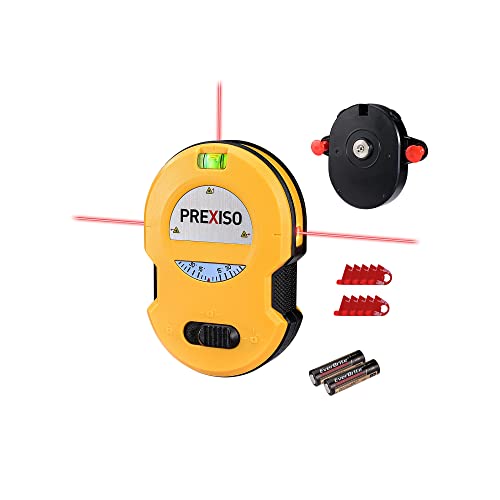
NOTE: This product is not a stud finder or a magnetic nail finder

VERSATILE DIGITAL ANGLE GAUGE AND LEVEL: Measure angles, check relative angles with zero calibration feature, or use as a digital level with ease

FOUR SIDES STRONG MAGNETIC — Digital laser level has strong magnets on four sides that firmly adsorb on the measuring object, ensuring accuracy and not easily falling off. Three easily operated buttons can activate the built-in red laser line on both sides, hold the measured value, switch the unit of the measured value and zeroing function to realize relative measurement.
Tools and Technology Used to Measure Tall Structures
| Tool or Method | How It Helps |
|---|---|
| Total station or theodolite | Measures precise horizontal and vertical angles and, with electronic distance measurement, helps calculate coordinates and height differences. |
| Laser/electronic distance measurement | Measures distances electronically and can be combined with angular observations to calculate otherwise inaccessible dimensions. |
| GNSS surveying | Establishes accurate three-dimensional coordinates for survey-control points when appropriate surveying procedures and reference systems are used. |
| Geodetic leveling | Transfers precise elevations between established reference points and helps establish vertical control. |
| LiDAR | Creates dense three-dimensional point measurements that can document complex structures and surrounding terrain. |
GPS or other GNSS equipment deserves one important qualification. Satellite positioning directly produces coordinates referenced to an ellipsoid. Converting that information into a conventional orthometric elevation requires an appropriate geoid model and vertical reference system. The National Geodetic Survey explains this distinction in its guidance on U.S. vertical datums.
Modern surveying therefore combines different instruments rather than relying on household tools such as tape measures or devices intended to measure a person’s height.
Products Worth Considering

1cm High-Precision & 70m Long-Range Scanning: Engineered for demanding terrain and architectural surveying. Equipped with dual 1-inch large-area CMOS sensors delivering 16MP resolution per lens (2.4μm pixel size). It reliably captures spatial data from 0.1 to 40 meters (@ 10% reflectivity) and up to 70 meters (@ 80% reflectivity) for highly accurate 3D mapping.

PRECISION YOU CAN TRUST: Built for professionals who need reliable results, this LiDAR scanner delivers high-accuracy capture for dependable point clouds and precise documentation. With ±20 mm accuracy at 10 m and 100K points per second, this 3D scanner brings confidence to complex spaces.

Entry-Level 3DMakerpro Fox: Designed for accessible 3D digitization. Please note: as a budget-friendly 3D scanner, achieving great results requires a learning curve, patience, and ideally, some basic CAD/3D modeling experience.
Challenges in Determining an Exact Height
Even with modern instruments, a height figure only makes sense when its measurement definition is clear. Surveyors need to know where the measurement begins, which physical feature counts as the top, and which coordinate or elevation reference system is being used.
Long optical or laser observations can also be affected by line-of-sight conditions and atmospheric refraction. Professional survey procedures reduce these effects through controlled observations, instrument calibration, repeated measurements, and appropriate corrections.
Another source of confusion is the treatment of antennas, equipment, signs, and decorative elements. Under widely used tall-building criteria, an architectural spire can count toward architectural height while a functional antenna normally does not. A separate “height to tip” measurement may include everything.
For The STRAT, the practical figure travelers need is straightforward: the resort and its official visitor information consistently identify the observation tower as 1,149 feet tall.
How The STRAT Compares With Other Famous Tall Structures
The STRAT is exceptionally tall for an observation tower, but comparisons with famous skyscrapers require some context. The Skyscraper Center classifies The STRAT as a tower, not a conventional building. Its database distinguishes observation and telecommunications towers from buildings in which at least half of the height contains usable floor area.
| Structure | Published Height | Type / Measurement Note |
|---|---|---|
| The STRAT Tower | 1,149 ft (about 350 m) | Freestanding observation tower |
| Empire State Building | 1,250 ft to its architectural top; 1,454 ft including antenna | Occupied skyscraper; published height depends on the measurement point |
| Burj Khalifa | 828 m (about 2,717 ft) | Occupied skyscraper and the world’s tallest building |
The Empire State Building illustrates why measurement definitions matter: its published figure is 1,250 feet to the architectural top and 1,454 feet when the antenna is included. Dubai’s Burj Khalifa rises 828 meters, or roughly 2,717 feet.
The STRAT is therefore not close to the world’s tallest skyscraper in absolute height. Its distinction is different: it combines a very tall freestanding observation tower with elevated dining, viewing areas, and thrill attractions above a Las Vegas resort.
Products Worth Considering
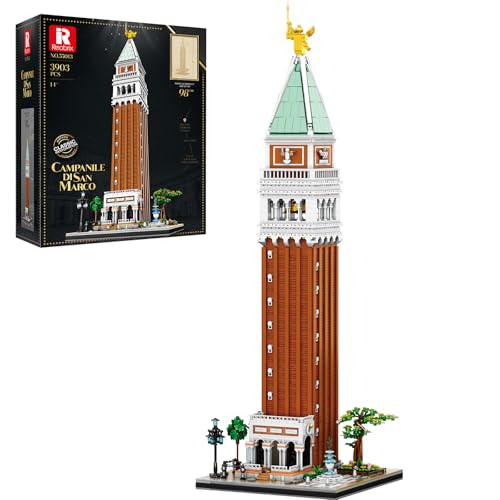
ICONIC VENICE LANDMARK MODEL – Recreate the timeless charm of Venice with this St. Mark’s Campanile architecture building set, an architectural masterpiece that rises to...
Why the Exact Height Matters
Knowing a structure’s exact dimensions has uses well beyond trivia. Engineers and surveyors need reliable geometry when evaluating structures, planning maintenance, documenting alterations, and establishing site-control information.
Height can also matter in planning and regulatory contexts. A very tall structure may affect aviation reviews, communications systems, emergency planning, lighting requirements, and surrounding development.
For visitors and tourism operators, the 1,149-foot figure has a simpler purpose: it describes the scale of the landmark and explains why its upper levels offer such a broad view over Las Vegas and the surrounding valley.
What Is at the Top of The STRAT?
The upper tower contains observation areas, dining, drinks, and high-altitude attractions. The official Tower Experience provides access to indoor and outdoor observation decks, while Top of the World restaurant occupies an elevated rotating dining room within the tower complex.
Attraction availability changes. As of July 2026, The STRAT’s official Tower Experience ticketing lists Big Shot as its selectable thrill ride and notes that X-Scream is down for maintenance. SkyJump remains separately available through its own official ticketing page. Insanity appears in older STRAT material but is not listed as an available attraction on the current Tower Experience ticket page.
Big Shot launches riders upward from a platform already hundreds of feet above Las Vegas. X-Scream, when operating, extends riders over the edge of the tower. SkyJump is a controlled open-air descent from the tower rather than a traditional amusement ride.
Pro Tip: Check The STRAT’s official attraction or ticketing page on the day of your visit. High-altitude rides can close temporarily because of weather, inspection, maintenance, or operating schedules.
Renovations and Current Development at The STRAT
The property’s most important recent transformation is already complete rather than merely proposed. Golden Entertainment began a broad renovation in 2018 and announced in January 2020 that more than $100 million in renovations had been completed.
The work included changes to the casino, hotel registration areas, exterior, guest rooms, restaurants, bars, and Observation Deck. The same period brought the transition from the Stratosphere identity to The STRAT.
The resort continues to promote remodeled accommodations and updated facilities, but future projects should be described only when the property or its owner formally announces them. Claims about unconfirmed expansions, sustainability projects, or additional tower development can quickly become outdated.
The result is a property that remains closely tied to its 1996 tower while operating under a newer brand and updated resort concept. Its most enduring feature has not changed: the 1,149-foot tower remains the element that defines the skyline and distinguishes The STRAT from other Las Vegas hotels.
If you’re planning a trip to The STRAT and are also choosing travel gear, the site’s existing guide to hardside carry-on luggage with spinner wheels covers several packing options for air travel.
Frequently Asked Questions
What is the Stratosphere Hotel called now?
The former Stratosphere Casino, Hotel & Tower is now branded as The STRAT Hotel, Casino & Tower. The rebranding process was announced in 2019, with the transformed property officially marking its new identity in January 2020.
How high is the Stratosphere Hotel?
The famous observation tower at The STRAT is 1,149 feet tall, or about 350 meters. That figure refers to the tower rather than the shorter hotel and casino structures at its base.
Is The STRAT the tallest building in Las Vegas?
The STRAT is more accurately described as an observation tower rather than a conventional high-rise building. Its 1,149-foot tower is the tallest freestanding observation tower in the United States, according to the property’s official visitor information.
When did the Stratosphere open?
The Stratosphere opened to the public on April 30, 1996. The property was later renovated and rebranded as The STRAT.
What attractions are at the top of The STRAT?
The tower includes indoor and outdoor observation areas, elevated food and drink venues, Top of the World restaurant, and high-altitude attractions. Current availability should be checked before visiting because individual rides can close for weather or maintenance.
Can visitors access the observation deck?
Yes. The STRAT sells Tower Experience admission that includes access to indoor and outdoor observation areas. Hours, prices, and attraction availability can change, so visitors should confirm current details through The STRAT before going.
Sources
- The STRAT — Tower Observation Deck Experience — current tower height, observation-deck information, and attraction availability.
- The STRAT — Stratosphere Rebrand Announcement — property rebranding and resort details.
- National Institute of Standards and Technology — historical 350-meter tower description and April 30, 1996 opening date.
- Council on Tall Buildings and Urban Habitat — Height Criteria — definitions for architectural height, occupied height, and height to tip.
- NOAA National Geodetic Survey — Vertical Datums — vertical reference systems and GNSS height concepts.
- Emaar — Burj Khalifa — official 828-meter height used in the comparison.
