Last Updated on September 10, 2026 by Daniel Globe
Hiking boots can work in snow, but they are not automatically a substitute for snow boots. The right choice depends on the boot’s insulation, waterproofing, fit, the depth and condition of the snow, and how long you will be outside. A waterproof hiking boot may be excellent for an active hike through light snow yet still be a poor choice for hours of standing in deep cold.
Quick Answer
Yes, some hiking boots can be used as snow boots for light or packed snow if they are waterproof, warm enough for the conditions, and paired with suitable traction when needed. For deep snow, prolonged cold, icy technical terrain, or low-activity use, insulated winter hiking boots or dedicated snow boots are usually the better choice.
Key Takeaways
- Standard hiking boots are built mainly for trail support and mobility; many are waterproof, but not all are insulated.
- Snow boots generally prioritize warmth, weather protection, and snow coverage more than trail efficiency.
- Ordinary boot tread may not be enough on hard-packed snow or ice; over-the-shoe traction can be necessary.
- Deep, soft snow may call for snowshoes, while technical mountain terrain may require compatible mountaineering footwear and crampons.
- Keep enough room inside your boots for warm socks and toe movement. Making a boot too tight can make winter comfort worse, not better.
Disclosure: As an Amazon Associate I earn from qualifying purchases. Some links on this page are affiliate links, at no extra cost to you.
Can Hiking Boots Be Used as Snow Boots?
They can, within limits. Waterproof hiking boots are often practical for active winter hiking in light snow, shallow snow, slush, or well-packed trails. Their trail-oriented soles, supportive construction, and relatively natural walking feel can make them more comfortable than bulky casual snow boots over longer distances.
The key limitation is that waterproof does not mean insulated. Many three-season hiking boots are built to manage moisture while you are moving, not to protect your feet during prolonged exposure to severe cold. A boot can keep liquid water out and still leave your feet too cold for the conditions.
Note: Think of winter footwear as three separate requirements: warmth, moisture protection, and traction. A boot that performs well in one area does not automatically perform well in the other two.
Key Differences Between Hiking Boots and Snow Boots
Hiking boots and snow boots overlap, but their priorities are different. Hiking boots are generally designed for walking efficiently over uneven trails. Depending on the model, they may use leather, synthetic fabric, or a waterproof membrane and can range from lightweight and flexible to stiff and supportive.
Snow boots usually place more emphasis on warmth and protection from snow. Many use insulation, taller uppers, weather-resistant materials, and designs intended to reduce snow entry around the cuff. Their bulk and stiffness vary widely, so a casual snow boot is not automatically the best choice for a long winter hike.
| Feature | Typical Difference |
| Insulation | Standard hiking boots may have little or no dedicated insulation. Winter hiking and snow boots are more likely to include insulation. |
| Water protection | Waterproof hiking boots can handle wet trails and snow, while many snow boots add taller cuffs and winter-focused construction to keep snow out. |
| Walking efficiency | Hiking boots often feel more natural over long trail distances. Some heavily insulated snow boots are bulkier. |
| Ice traction | Neither category should be assumed to grip smooth ice safely. Packed snow and ice can require an appropriate over-the-shoe traction device. |
| Deep snow | Taller winter boots and gaiters help reduce snow entry. In deep, soft snow, snowshoes may also be needed. |
Waterproof membranes such as GORE-TEX footwear technology are designed to provide waterproof, breathable protection in compatible footwear. That protection is different from insulation, and snow can still enter through the top of a low boot.
Factors to Consider When Using Hiking Boots in Snowy Conditions
1. Insulation and Temperature
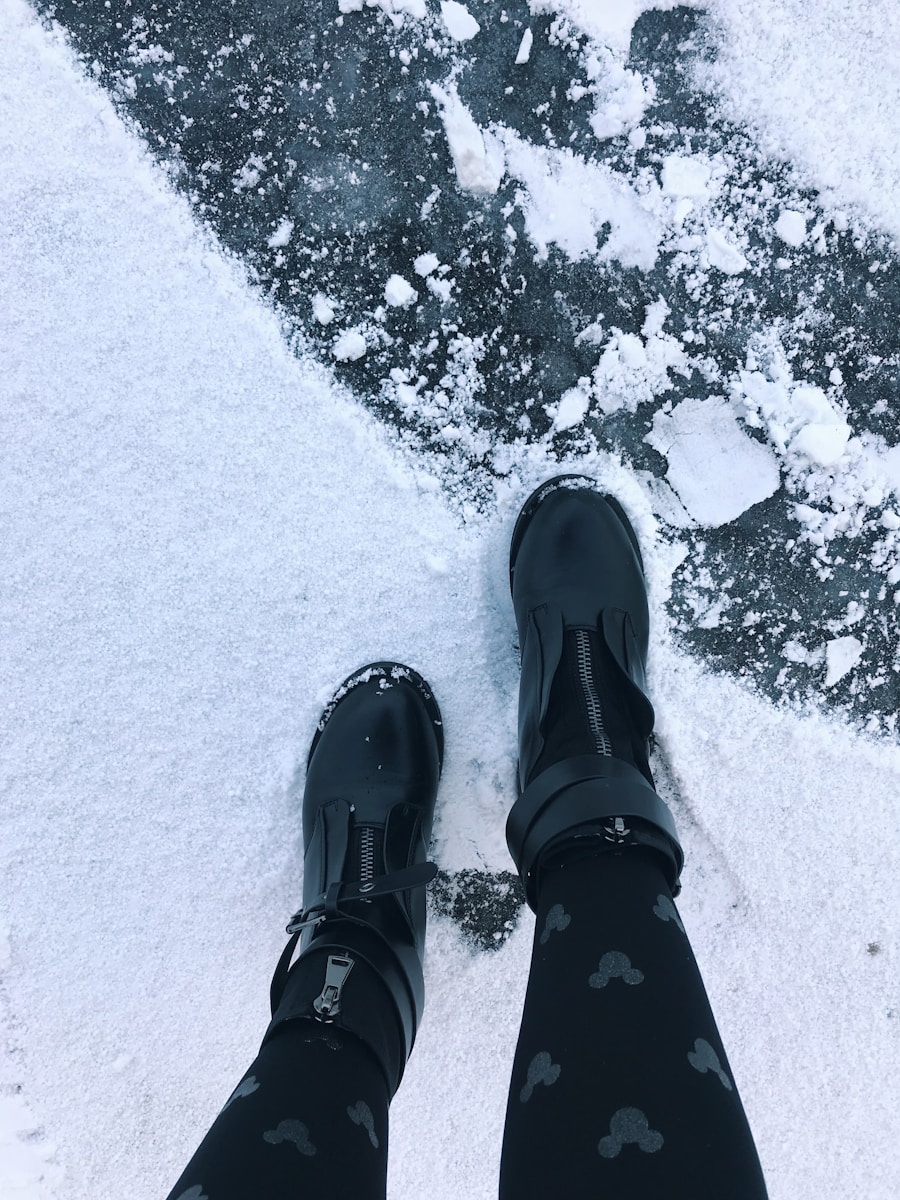
Check whether your hiking boots are actually insulated. A waterproof three-season hiking boot can block snowmelt while still providing much less warmth than an insulated winter boot.
Also consider what you will be doing. Continuous uphill hiking produces much more body heat than standing at a viewpoint, waiting at camp, ice fishing, or moving slowly. The less active you will be, the more important insulation becomes.
2. Waterproofing and Snow Entry
Wet feet lose heat quickly and become uncomfortable. For winter hiking, the National Park Service recommends waterproof boots and gaiters as part of winter hiking equipment.
A waterproof membrane helps stop outside moisture from passing through the boot, but it cannot stop snow from falling into the cuff. Gaiters are especially useful with mid-height hiking boots because they cover the gap between your pants and footwear.
3. Traction and Surface Conditions
A hiking outsole may grip loose dirt, rock, and ordinary snow well, yet struggle on hard-packed snow or ice. Rocky Mountain National Park advises hikers to carry and use traction devices when trails are covered in hard-packed snow and ice.
For packed snow and icy hiking trails, a correctly sized over-the-shoe traction system can add grip. Kahtoola, for example, specifies its MICROspikes footwear traction for hiking shoes and boots on ice and packed snow.
Technical crampons are a different category. Their compatibility depends on the boot, binding design, sole stiffness, route, and activity. Do not assume that a flexible hiking boot is suitable for technical mountaineering crampons.
4. Snow Depth
Light or well-packed snow can be manageable in waterproof hiking boots. Deep powder creates a different problem: you can sink with every step and push snow over the boot cuff.
The National Park Service notes that traction devices are useful on hard-packed snow and ice, while soft, deeper snow is better suited to snowshoes.
5. Fit and Socks
Your winter sock should fit without compressing your toes. Wool or synthetic socks are useful because they manage moisture better than cotton. Avoid automatically adding several thick pairs if doing so makes the boot tight.
Warning: Do not keep hiking through persistent numbness, unusually pale or grayish skin, or skin that feels firm or waxy. These can be signs of frostbite. Get out of the cold and seek medical care. See the CDC frostbite guidance.
Advantages of Using Hiking Boots in Snowy Conditions
| Advantage | Description |
| Warmth When Insulated | Insulated hiking boots can provide useful winter warmth without the bulk of some traditional snow boots. Standard uninsulated hiking boots should not be assumed to provide the same protection. |
| Waterproofing | Waterproof hiking models can keep external moisture from soaking through the boot during snow, slush, and snowmelt when the footwear is intact and used correctly. |
| Trail Grip | Rugged hiking soles can work well on mixed trail surfaces and ordinary snow, although hard ice may require added traction. |
| Support and Stability | Many hiking boots provide a supportive platform and protective upper that can be useful on uneven, rocky, or snow-covered trails. |
| Durability | Quality hiking boots are built for repeated trail use and can handle mixed winter terrain when their materials and construction suit the conditions. |
One of the biggest advantages of hiking boots in winter is walking efficiency. Many hikers find a familiar hiking boot easier to walk in over long distances than a bulky snow boot. Depending on the models being compared, hiking boots may also be lighter and more flexible.
Breathability can be valuable during strenuous winter hiking because sweat trapped inside footwear can leave socks damp. A breathable waterproof boot can help manage moisture, although no membrane eliminates perspiration completely.
Familiar footwear may also reduce fit problems. If your hiking boots are already broken in and have enough room for winter socks, they may be more comfortable than an unfamiliar pair of snow boots. For hikers who frequently move between bare trail, rock, mud, and shallow snow, that versatility can be useful.
Limitations of Using Hiking Boots in Snowy Conditions
The biggest limitation is warmth. Many standard hiking boots are intended for three-season use and have little dedicated insulation. In very cold weather, during long outings, or during activities with prolonged standing, an insulated winter boot can be the safer and more comfortable choice.
The next limitation is snow entry. Even a fully waterproof hiking boot can fill with snow from the top if the cuff is low. Deep snow makes this much more likely, which is why gaiters or taller winter footwear are useful.
Ice is another problem. Deep hiking lugs do not guarantee secure grip on a frozen surface. Packed snow and ice can require a purpose-made traction device, and conditions can change rapidly as snow melts and refreezes.
The question is not simply whether a boot is labeled “hiking” or “snow.” What matters is whether its warmth, water protection, fit, height, and traction match the conditions you will actually encounter.
Tips for Modifying Hiking Boots for Snowy Conditions
Wear the Right Socks
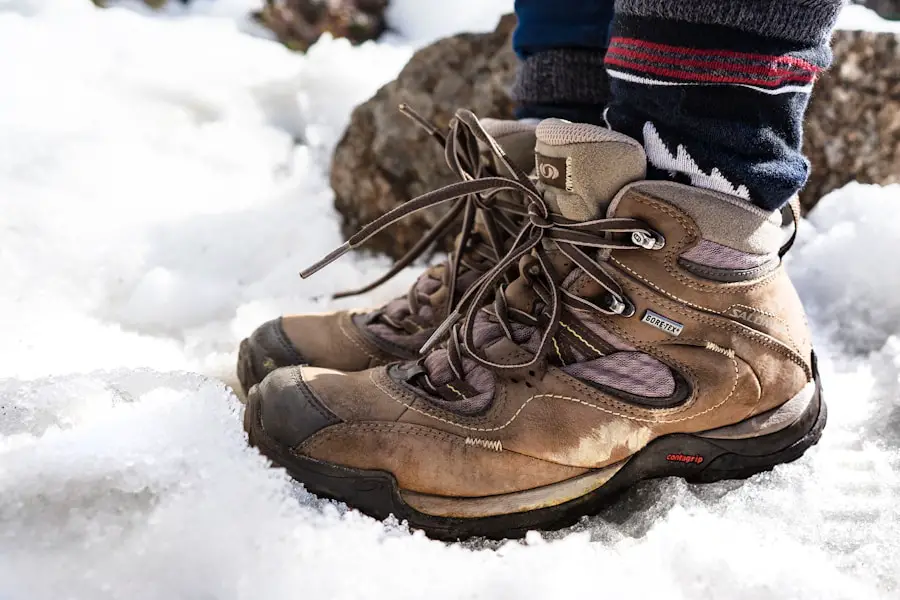
Use a properly fitting wool or synthetic sock that provides warmth while moving moisture away from your skin. A second sock is not automatically better. If extra layers compress your foot or prevent you from moving your toes comfortably, use a roomier boot or a more suitable winter boot instead.
Add Gaiters for Deeper Snow
Gaiters cover the opening between the boot and pants and help keep snow, slush, and debris from entering around the cuff. They can make a major difference when using hiking boots that are shorter than traditional winter boots.
Use the Right Traction Device
For hard-packed snow or icy hiking trails, use a traction device designed for your footwear, terrain, and activity. Check its sizing and fit before leaving home.
Do not treat lightweight trail traction and technical mountaineering crampons as the same tool. Steeper snow, glacier travel, or technical ice can require specialized boots, crampons, skills, and equipment.
Maintain Water Repellency Correctly
If your boots are designed to accept a water-repellent treatment, use only a treatment approved for their materials and follow the footwear manufacturer’s instructions. For GORE-TEX footwear, the manufacturer recommends cleaning the footwear correctly and reapplying a compatible water-based DWR treatment when needed rather than using unsuitable waxes or greases. See the official GORE-TEX footwear care instructions.
A surface treatment can help restore water repellency, but it cannot turn every non-waterproof hiking boot into a fully waterproof winter boot.
Inspect and Dry Your Boots
Before a winter trip, check the outsole, upper, seams, laces, and waterproof lining for damage. After use, remove excess dirt and snow and let the boots dry according to the manufacturer’s care instructions. Avoid damaging them with excessive direct heat.
Pro Tip: Test your complete winter setup near home before relying on it on a long hike. Wear the same socks, gaiters, and traction you plan to use and confirm that the boots remain comfortable and that the traction device stays securely fitted.
Alternative Options for Snow Boots
If ordinary hiking boots do not provide enough protection, you have several better winter options.
Insulated snow boots prioritize warmth and snow protection. Brands such as Sorel and Columbia offer models intended for winter weather, although individual models vary greatly in insulation, support, tread, fit, and intended use.
Winter hiking boots combine trail-oriented support with winter features such as insulation and waterproof construction. For hikers who want to cover several miles on snow-covered trails, this category is often more practical than a bulky casual snow boot.
Mountaineering boots are intended for more demanding mountain environments. Some are insulated and designed to work with specific crampon systems. They are not necessary for ordinary winter walking and should be selected according to the route and technical requirements.
Snowshoes are not a replacement for boots, but they can be essential when deep, soft snow makes normal walking inefficient. Your underlying footwear still needs to keep your feet warm, dry, and comfortable inside the snowshoe binding.
Making the Best Choice for Your Winter Adventures
Start with the conditions, not the label on the boot. Waterproof hiking boots can be a good choice for active travel through light or packed snow when temperatures are manageable and you have additional traction available for ice. Add gaiters when snow may reach the cuff.
Choose insulated winter hiking boots or snow boots when you expect deeper snow, prolonged cold, slower activity, or extended periods of standing. For technical snow and ice, use footwear and traction designed for that terrain rather than trying to adapt ordinary hiking boots beyond their intended use.
Whatever you wear, comfort and safety depend on the complete system: boots, socks, gaiters, traction, weather, terrain, activity level, and trip duration.
If you are planning trips in very different climates, match your footwear and clothing to the destination rather than using one setup everywhere. The same planning principle applies when researching warmer destinations, such as this guide to the best time to visit St. Lucia: local weather and terrain should shape what you pack.
Frequently Asked Questions
Can hiking boots be used as snow boots?
Yes. Waterproof hiking boots can work in light or packed snow when they provide enough warmth for the conditions. They are less suitable for deep snow, severe cold, prolonged standing, or situations where a taller and more heavily insulated boot is needed.
What are the differences between hiking boots and snow boots?
Hiking boots focus on walking efficiency, trail grip, support, and durability. Snow boots generally place more emphasis on insulation, snow protection, and warmth. Winter hiking boots combine features from both categories.
What should I consider when using hiking boots as snow boots?
Check insulation, waterproofing, snow depth, temperature, activity level, cuff height, fit, and traction. Also make sure your winter socks fit without making the boots tight.
Can I add traction to my hiking boots for snowy conditions?
Yes. Over-the-shoe traction devices designed for hiking footwear can improve grip on hard-packed snow and ice. Use a model that fits your boots and matches the terrain. Technical crampons require additional attention to boot compatibility and intended use.
Are some hiking boots better suited to snow?
Yes. Look for winter hiking boots with waterproof construction, appropriate insulation, a secure fit, and an outsole designed for winter trail use. GORE-TEX and other waterproof technologies can help with moisture protection, but waterproofing alone does not guarantee adequate warmth.
Do waterproof hiking boots keep your feet warm in snow?
Not necessarily. Waterproofing limits outside moisture, while insulation slows heat loss. A waterproof but uninsulated hiking boot may still feel cold in low temperatures or during long periods of inactivity.
Should I wear gaiters with hiking boots in snow?
Gaiters are useful when snow is deep enough to reach the top of your boots. They cover the gap between your pants and boot cuffs and help keep snow and slush from entering.
When are snowshoes better than traction spikes?
Traction devices are useful on hard-packed snow and ice. Snowshoes are designed to provide flotation in deeper, softer snow where you would otherwise sink with each step.
Sources
- U.S. National Park Service — Winter Hiking Tips — winter footwear, gaiters, traction devices, clothing, and trip preparation.
- U.S. National Park Service — Hiking with Traction Devices — packed snow and ice traction and when deeper snow calls for snowshoes.
- CDC — Preventing Frostbite — frostbite symptoms and response guidance.
- GORE-TEX — Footwear Care Instructions — cleaning, drying, and compatible water-repellent treatment guidance.
- Kahtoola — MICROspikes Footwear Traction — manufacturer specifications for hiking footwear traction on ice and packed snow.