
Last Updated on July 28, 2026 by Ethan Caldwell
Traveling from the United States to Japan is straightforward once you choose the right airport, confirm your entry documents, and plan how you will reach your first hotel. Most U.S. tourists can enter for a short stay without obtaining a visa in advance, and nonstop flights connect several major U.S. gateways with Tokyo and, on selected routes, other Japanese cities.
Quick Answer
U.S. passport holders can normally visit Japan for up to 90 days for tourism or other qualifying non-paid activities without obtaining a visa first. Book a nonstop or one-stop flight, complete the free Visit Japan Web arrival information, and choose an airport transfer based on your hotel, luggage, arrival time, and budget.
Key Takeaways
- Most U.S. tourists do not need a visa for a qualifying stay of 90 days or less, but paid work and longer stays require different permission.
- Haneda is usually the easiest Tokyo airport for reaching the city center, while Narita may offer a better schedule, fare, or international connection.
- Kansai International Airport is a practical arrival point for Osaka, Kyoto, Kobe, and the wider Kansai region.
- Cards work in many places, but carrying some yen is still useful for small businesses, rural areas, and certain transit-card reloads.
- Check medications before packing because some products that are legal in the United States are restricted or prohibited in Japan.
At a Glance
| Time Required | Most nonstop flights take roughly 10 to 14 hours, plus check-in, immigration, baggage claim, and airport-transfer time. |
| Difficulty | Easy to moderate. The main tasks are comparing flights, checking entry rules, and planning the first airport transfer. |
| Tools Needed | Valid passport, flight and lodging details, payment card, some yen, phone data plan, and Visit Japan Web arrival information. |
| Cost | Highly variable. Airfare and lodging are usually the largest expenses; also budget for airport transfers, local transit, food, data, attractions, and insurance. |
Disclosure: As an Amazon Associate I earn from qualifying purchases. Some links on this page are affiliate links, at no extra cost to you.
Do You Need a Visa to Visit Japan?
Under current Japanese rules, an ordinary U.S. passport holder can generally enter Japan without applying for a visa in advance for a short stay of up to 90 days. This applies to tourism and other qualifying activities that do not involve earning income in Japan. Paid work, certain media activities, official duties, and stays longer than the permitted period require the appropriate visa or status.
Your passport must remain valid for your entire stay. Japan does not generally impose a six-month remaining-validity rule on an ordinary U.S. passport, although travelers using temporary passports, emergency documents, refugee travel documents, or re-entry permits may face different requirements. Review the current Embassy of Japan visa guidance before booking a nonrefundable trip.
Use Visit Japan Web Before Departure
Japan Customs recommends using the free Visit Japan Web service to prepare immigration and customs information before arrival. After entering your passport, flight, and lodging details, save the generated code on your phone and take a screenshot in case airport Wi-Fi is slow. Visit Japan Web is an arrival-processing tool, not a visa and not a guarantee of admission.
Note: Use the official service reached through Japan Customs. Visit Japan Web and the required customs declaration are free, so avoid unofficial websites requesting a processing payment.
Documents to Keep Accessible
- Your passport and flight itinerary.
- Your first accommodation’s name, address, and telephone number.
- Proof of a return or onward journey.
- Travel-insurance details.
- Copies of prescriptions and documentation for permitted medications.
- Visit Japan Web information or the paper forms provided during travel.
Best Airports for Traveling to Japan
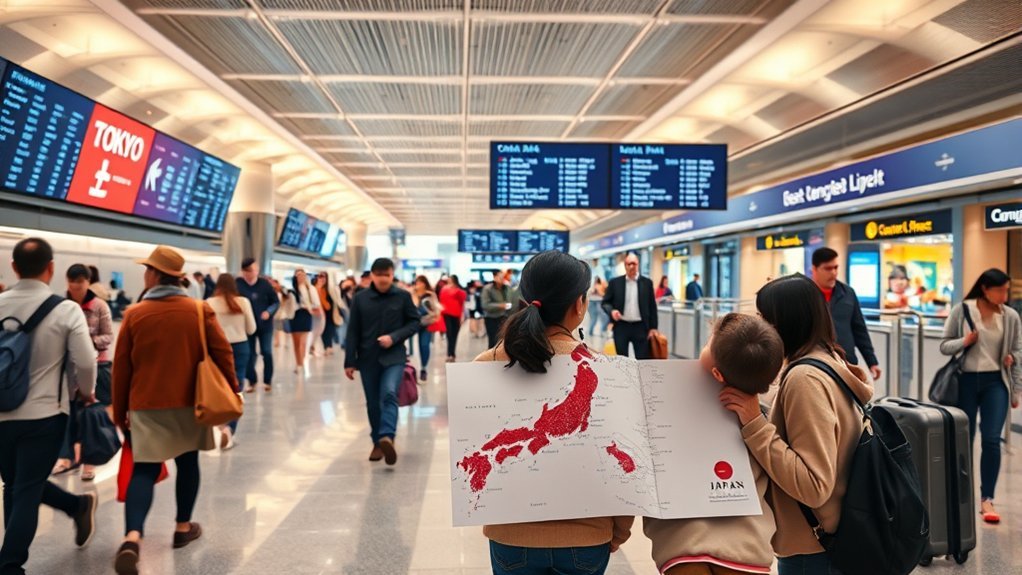
The best airport is not always the one closest to a city center. Compare the total fare, operating airline, arrival time, baggage rules, onward transportation, and distance to your first hotel before choosing.
| Airport | Best For | Main Consideration |
|---|---|---|
| Haneda (HND) | Tokyo, Yokohama, and short city transfers | Usually the most convenient Tokyo airport, but your preferred flight may cost more or arrive at Narita instead. |
| Narita (NRT) | Tokyo-area trips with favorable fares, schedules, or airline options | The city transfer is longer, but several direct train and bus choices are available. |
| Kansai (KIX) | Osaka, Kyoto, Kobe, Nara, and western Japan | Can avoid backtracking from Tokyo when the Kansai region is the main destination. |
| Other airports | Nagoya, Hokkaido, Kyushu, Okinawa, or regional itineraries | A connection in Tokyo, Osaka, Seoul, Taipei, or another hub may be required. |
Haneda Airport
Haneda is normally the simplest choice for a Tokyo stay because it is close to the central districts and connects directly to the Keikyu Line and Tokyo Monorail. Approximate travel times are about 15 minutes to Shinagawa, 20 minutes to Hamamatsucho, and 30 minutes to Tokyo Station, before allowing for transfers and waiting time.
Narita Airport
Narita is farther from central Tokyo but remains a practical choice when it offers a better nonstop route, fare, award seat, or arrival time. Rail options include the Narita Express for Tokyo, Shinagawa, Shibuya, and Shinjuku, plus Keisei services toward Nippori and Ueno. Low-cost and limousine buses serve Tokyo stations, hotels, and other districts.
Narita also has lodging options for early departures and late arrivals. Nine Hours Narita Airport is a capsule hotel connected to Terminal 2, and several nearby hotels operate airport shuttles.
Kansai International Airport
Kansai International Airport is often the better entry point when Osaka or Kyoto is the first major stop. The Haruka limited express reaches Kyoto in approximately 75 minutes and Shin-Osaka in about 50 minutes. Nankai trains connect the airport with Namba in central Osaka.
Direct Flights From Major U.S. Cities
Nonstop Japan flights are commonly available from major U.S. gateways such as Los Angeles, San Francisco, Seattle, Chicago, New York, Dallas, Houston, and Washington. Other gateways may be available depending on the airline, season, and travel date. Tokyo receives the widest selection, while nonstop service to Osaka or another Japanese city is more limited.
A nonstop journey from the mainland United States to Japan normally takes about 10 to 14 hours. West Coast departures are generally shorter than flights from the Midwest or East Coast, although the scheduled time varies with the route, winds, aircraft, and air-traffic conditions.
Check the Operating Carrier
A flight may be sold by one airline but operated by a codeshare partner. Review the words “operated by” before buying because the operating airline controls the aircraft, seat layout, check-in process, onboard service, and many baggage procedures.
When a One-Stop Flight Makes Sense
A one-stop itinerary can be worthwhile when it substantially lowers the fare, provides better timing, or lands closer to your final destination. Compare the entire door-to-door trip rather than airfare alone. A cheaper Narita flight may be less convenient after adding a long city transfer, while a connection to Osaka, Fukuoka, Sapporo, or Okinawa may save hours of ground travel.
Pro Tip: Price Haneda and Narita separately instead of searching only for “Tokyo.” Then compare the arrival time and transfer to your hotel. The most expensive-looking ticket may become the better value once transportation and lost vacation time are included.
Preparing for the Long Flight
- Confirm checked-bag and carry-on allowances with the operating airline.
- Keep medication, travel documents, valuables, and one change of clothing in your carry-on.
- Carry lithium power banks in the cabin, not in checked luggage, and follow the airline’s capacity rules.
- Set your watch to Japan time after boarding and adjust sleep gradually.
- Drink water regularly and move around when it is safe to do so.
- Save your hotel address in Japanese and English before landing.
Transportation Options Upon Arrival
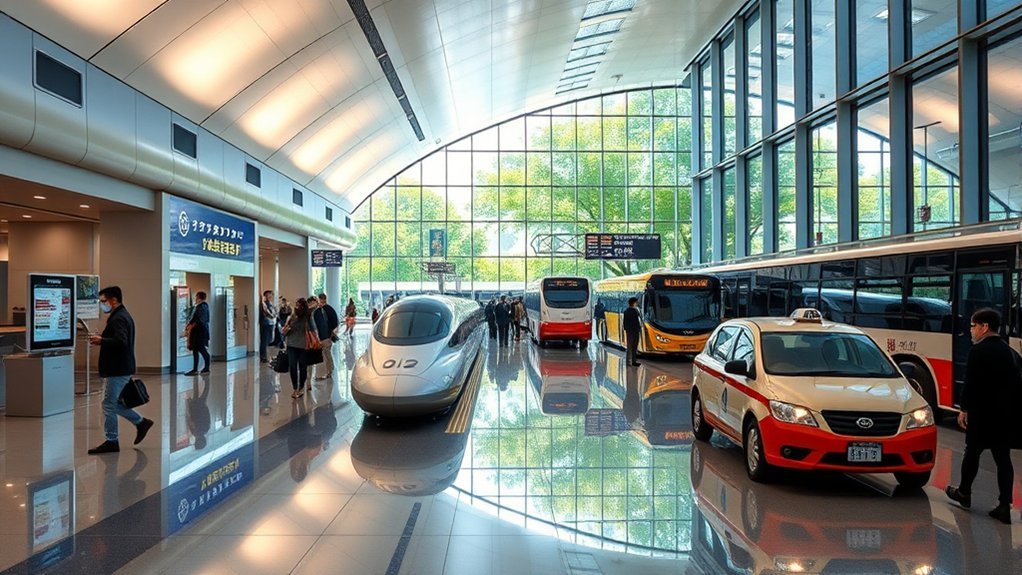
Trains are usually the fastest and most predictable way to leave a major Japanese airport. Buses are useful for direct hotel service and heavy luggage, while taxis are most practical for groups, late arrivals, accessibility needs, or destinations without a convenient rail connection.
- Tokyo Monorail: Connects Haneda with Hamamatsucho, where travelers can transfer to JR lines.
- Keikyu Line: Connects Haneda with Shinagawa and continues toward parts of Tokyo and Yokohama.
- Narita Express: Offers reserved-seat service from Narita to Tokyo and several major stations, with a trip to central Tokyo taking roughly one hour.
- Keisei trains: Serve Nippori and Ueno and can be convenient for northern or eastern Tokyo.
- Haruka limited express: Connects Kansai Airport with Tennoji, Shin-Osaka, and Kyoto.
- Airport buses: Serve major stations, hotels, and regional destinations, although road traffic can cause delays.
Choosing Between a Train, Bus, and Taxi
| Option | Best When | Watch For |
|---|---|---|
| Train | Your hotel is near a station and you want a predictable trip. | Stairs, transfers, crowded periods, and limited luggage space on commuter services. |
| Airport bus | The bus stops at or near your hotel and you have large luggage. | Traffic delays and less frequent late-night service. |
| Taxi | You are traveling as a group, arriving late, or need door-to-door service. | High cost, especially between Narita and central Tokyo, plus possible traffic delays. |
Use an IC Transit Card
Rechargeable IC cards such as Suica, PASMO, and ICOCA simplify local train, subway, and bus travel. They can also be used at many convenience stores, vending machines, and lockers. Physical tourist cards and mobile versions are available, but compatibility and sales locations can vary. Keep some cash because certain ticket machines and card-reload machines do not accept foreign credit cards.
Money, Cards, and Connectivity
Carry a Card and Some Yen
International cards are accepted by many hotels, department stores, chain restaurants, major attractions, and urban businesses. Cash remains useful at small restaurants, temples, markets, rural businesses, laundromats, and machines that do not accept foreign cards.
- Use a credit card without a foreign transaction fee when possible.
- Carry more than one payment method and store the backup separately.
- Withdraw yen from an ATM that clearly displays your card network.
- Japan Post Bank and Seven Bank ATMs are commonly used by international visitors.
- Choose to be charged in yen when a terminal offers currency conversion; your card issuer’s rate is often better than the merchant’s conversion.
See the Japan National Tourism Organization card guidance for current payment information.
Choose an eSIM, SIM Card, or Pocket Wi-Fi
- eSIM: Convenient when your unlocked phone supports it. Install it before departure and activate it according to the provider’s instructions.
- Physical SIM: Useful for compatible unlocked phones without eSIM support.
- Pocket Wi-Fi: Practical for families or groups sharing one connection, but the device must be charged and returned.
- International roaming: Easiest to activate, although it may cost more than a local data plan.
Save offline maps, hotel addresses, airline details, and important codes before the flight. Do not rely on airport Wi-Fi as your only way to retrieve immigration or lodging information.
Plugs and Voltage
Japan uses 100-volt electricity and primarily Type A two-flat-pin outlets. Many U.S. phone and laptop chargers support 100–240 volts and need no voltage converter, but check the printed input range on every device. High-powered appliances designed only for 120 volts may not work properly.
Customs, Medications, and Packing Rules
Warning: Do not assume that a U.S. prescription, cannabis product, CBD product, stimulant, decongestant, or other medicine is legal to bring into Japan. Some substances that are prescribed or sold legally in the United States are restricted or prohibited in Japan. Verify every active ingredient before traveling.
Keep legal medication in its original labeled packaging and carry a copy of the prescription or physician’s letter. Some medicines or quantities may require advance approval. The U.S. Department of State Japan guidance summarizes important medication and local-law risks.
Japan also strictly regulates firearms, ammunition, certain knives, illegal drugs, and other prohibited items. Declare accompanied and unaccompanied goods accurately. When in doubt, check the appropriate Japanese authority before packing rather than relying on social media or a travel forum.
Local Customs and Etiquette
Visitors are not expected to know every social rule, but a few habits make travel smoother:
- Speak quietly on trains and avoid voice calls in crowded rail cars.
- Line up at marked boarding positions and let passengers exit before entering.
- Remove your shoes when requested in homes, some traditional lodging, fitting rooms, and designated restaurant areas.
- Do not leave a cash tip at ordinary restaurants, taxis, or hotels unless a specific service explains otherwise.
- Carry small trash items until you find the correct bin.
- Ask before photographing people, ceremonies, or restricted areas.
- Arrive on time for trains, tours, restaurant bookings, and appointments.
Good etiquette in Japan is less about memorizing dozens of rigid rules and more about avoiding disruption: follow signs, keep noise low, respect queues, and watch what people around you are doing.
Simple U.S.-to-Japan Planning Timeline
Two to Four Months Before Travel
- Compare flights to Haneda, Narita, Kansai, and any useful regional airport.
- Check passport validity and current entry requirements.
- Book high-demand lodging, seasonal attractions, and limited train reservations.
- Buy travel insurance if it fits your needs.
One to Two Weeks Before Travel
- Verify every medication and restricted item.
- Confirm the operating airline, baggage allowance, terminals, and seat assignment.
- Choose an airport train, bus, or taxi plan.
- Install an eSIM or arrange another data option.
- Notify relevant card issuers if they request travel notices.
One to Three Days Before Travel
- Complete Visit Japan Web information.
- Save screenshots of important codes and reservations.
- Check flight status, weather, and airport-transfer schedules.
- Download offline maps and save your hotel address in Japanese.
- Place documents, medication, chargers, and valuables in your carry-on.
Top Travel Tips for a Hassle-Free Journey
| Tip | What to Do | Why It Matters |
|---|---|---|
| Entry rules | Confirm the visa exemption and keep your passport valid throughout the trip. | Requirements can change, and the exemption does not cover paid work. |
| Airport choice | Compare HND, NRT, and KIX based on your actual itinerary. | The cheapest flight may not produce the lowest total trip cost. |
| Money | Bring a no-fee card, a backup payment method, and some yen. | Card acceptance is broad but not universal. |
| Connectivity | Arrange an eSIM, SIM card, roaming plan, or pocket Wi-Fi. | Reliable data helps with navigation, translation, and schedule changes. |
| Medication | Check every active ingredient before packing. | A legal U.S. product may be restricted or illegal in Japan. |
| Etiquette | Follow queues, keep transit noise low, and remove shoes when requested. | These habits prevent common misunderstandings without requiring expert cultural knowledge. |
Frequently Asked Questions
Do U.S. citizens need a visa to visit Japan?
U.S. passport holders generally do not need to obtain a visa before a qualifying tourism or other non-paid visit of up to 90 days. Paid work, longer stays, and certain specialized activities require different permission. Check official Japanese guidance again shortly before departure.
Is $5,000 enough for two weeks in Japan?
It can be enough for one traveler, but the answer depends on whether the $5,000 includes round-trip airfare. It is more comfortable when airfare is separate or inexpensive and the traveler uses moderate hotels, ordinary restaurants, and public transportation. Premium lodging, extensive shopping, theme parks, and frequent long-distance rail trips can raise the total quickly.
What is the “5 Minute Rule” in Japan?
It is not an official nationwide etiquette rule and does not mean waiting five minutes before responding in a conversation. Travel and business articles sometimes use the phrase as informal advice to arrive about five minutes early. For visitors, the useful lesson is simply to be punctual for trains, tours, restaurant reservations, and appointments.
What is the quickest route from the U.S. to Japan?
The quickest route is usually a nonstop flight from the nearest suitable U.S. gateway to the Japanese airport closest to your first destination. For central Tokyo, Haneda often produces the shortest airport transfer. Narita may still be faster overall when its flight schedule avoids a long U.S. connection or inconvenient departure time.
Is $2,000 enough for one week in Japan?
It may be enough for one traveler when airfare is separate or was purchased at a low price. A traveler using business hotels, public transit, casual meals, and a limited number of paid attractions has more flexibility than someone booking luxury lodging, shopping heavily, or traveling long distances every day.
Is Haneda or Narita better?
Haneda is usually better for a quick transfer to central Tokyo. Narita may be better when it offers a cheaper fare, better award availability, a preferred airline, or a more convenient departure and arrival time. Compare the complete route to your hotel rather than choosing by airport name alone.
Do I need cash in Japan?
You should carry some yen, but you do not need to pay for everything in cash. International cards are accepted in many urban businesses, hotels, attractions, and chain stores. Cash remains useful for small restaurants, rural businesses, temples, markets, and certain ticket or IC-card machines.
Do I need a Japan Rail Pass?
Not necessarily. The nationwide pass is most useful when the cost of several eligible long-distance JR journeys exceeds the pass price. It is often poor value for a trip centered on one city or region. Compare your planned individual fares before buying, and use an IC card for ordinary urban travel.
Sources
- Embassy of Japan in the United States — Visa FAQ — visa-exemption conditions for short visits.
- Japan Customs — Electronic Declaration and Visit Japan Web — official arrival and customs guidance.
- Haneda Airport — Train and Monorail Access — rail connections and approximate travel times.
- Narita International Airport — Rail Access — Narita Express, Keisei, and station information.
- Kansai International Airport — Train Access — travel times to Kyoto, Osaka, Shin-Osaka, and Namba.
- U.S. Department of State — Japan Travel Guidance — medication restrictions, local laws, and traveler safety.
Conclusion
For most U.S. tourists, getting to Japan begins with a valid passport, a suitable flight, and a clear plan for leaving the arrival airport. Haneda is normally the easiest Tokyo gateway, Narita can provide better route and fare choices, and Kansai is often best for Osaka or Kyoto. Complete Visit Japan Web information, carry both a payment card and some yen, arrange phone data, and verify every medication before packing. With those details handled, the journey from the United States to Japan is manageable even for a first-time visitor.

