

Last Updated on September 10, 2026 by Daniel Globe
Choosing between a weekender bag and a duffel bag comes down to how you pack, how long you are traveling, and what you need to carry. Weekenders usually favor structure and organization for short trips, while duffels tend to offer flexible, open storage for travel, sports, gym gear, and bulkier loads. The five bags below cover both styles, from compact 2–3 day options to a roomy 65L duffel.
Quick Answer
A weekender bag is usually the better choice for a short, organized trip because it tends to be more structured and pocket-rich. A duffel is usually softer, roomier, and better for gym gear, sports, camping, or heavier packing. For flights, choose by actual dimensions—not the bag’s label—and verify your airline’s limit before departure.
Key Takeaways
- Choose a weekender when you want a more structured bag for one to three nights, easier organization, and a polished travel look.
- Choose a duffel when capacity, flexibility, gym use, sports gear, camping, or easy fold-away storage matters more.
- The words weekender and duffel overlap. Manufacturers often use both names for the same soft-sided travel bag.
- Do not assume a bag is cabin-compliant because the listing calls it a “carry-on.” Check its filled dimensions against your operating airline’s rules.
- Among these picks, the FOCDOD and ETRONIK emphasize organization, while the Lucky 65L emphasizes maximum packing space.
Affiliate disclosure: As an Amazon Associate, we earn from qualifying purchases. This does not affect the price you pay.
Weekender Bag vs Duffel Bag: What’s the Difference?
The distinction is useful, but it is not an official luggage standard. Many brands use “weekender,” “duffel,” and “travel duffel” interchangeably. In general, a weekender is marketed for short trips and tends to have a more structured shape, while a traditional duffel is softer and easier to stuff with bulky or irregular gear.
| Feature | Weekender Bag | Duffel Bag |
| Typical design | More structured, often with a flat base | Usually softer and more flexible |
| Best use | Overnight and short leisure or business trips | Travel, gym, sports, camping, and bulky gear |
| Organization | Often more pockets and dedicated compartments | Often emphasizes one roomy main compartment |
| Packing style | Good for travelers who like separation and easy access | Good for travelers who want flexible open space |
| Air travel | May work as a carry-on if its actual dimensions meet the airline limit | Compact models may work as carry-ons; large duffels often need checking |
| Women Weekender Travel Duffle Bag with Shoe Compartment | Best Multi-Use | Trip Length: Seller states about 2–3 days | Separate Shoe Compartment: Yes, ventilated | Wet/Dry Separation: PVC-lined wet pocket | VIEW LATEST PRICE | Read Our Analysis | |
| ETRONIK Gym Bag for Women with USB Charging Port | Gym Essential | Organization: Roomy main compartment plus multiple pockets | Separate Shoe Compartment: Yes, with vents | Wet/Dry Separation: Zippered waterproof pocket | VIEW LATEST PRICE | Read Our Analysis | |
| Quilted Travel Duffle Bag for Women (Khaki) | Stylish Comfort | Capacity: 31L | Separate Shoe Compartment: No | Wet/Dry Separation: No | VIEW LATEST PRICE | Read Our Analysis | |
| LOVEVOOK Convertible Travel Duffle Bag for Women Men | Business Ready | Capacity: Seller-stated 47L | Garment Function: Converts for formalwear | Airline Fit: Check carrier limits before flying | VIEW LATEST PRICE | Read Our Analysis | |
| Lucky Travel 65L Duffel Bag with Adjustable Strap | Ultimate Versatility | Capacity: 65L | Separate Shoe Compartment: No | Airline Fit: Larger than common 22 × 14 × 9 in limits | VIEW LATEST PRICE | Read Our Analysis |
More Details on Our Top Picks
-
Women Weekender Travel Duffle Bag with Shoe Compartment
The Women Weekender Travel Duffle Bag is a strong option for travelers who want separate spaces for clean clothes, shoes, and damp items. The current listing gives dimensions of 20 x 8 x 12.4 inches and describes 13 pockets, including a ventilated shoe compartment and a PVC-lined wet pocket. A removable shoulder strap, dual handles, and luggage sleeve add useful carrying options. Its listed dimensions fall within the 22 x 14 x 9-inch carry-on envelope currently used by American and Delta when the bag is not overstuffed, but you should still verify the rules for your operating airline before flying.
- Trip Length:Seller states about 2-3 days
- Separate Shoe Compartment:Yes, with ventilation holes
- Wet/Dry Separation:Waterproof PVC-lined pocket
- Adjustable Strap:Yes, removable adjustable strap
- Multiple Pockets:13 total pockets listed
- Versatile Use:Travel, gym, beach, and hospital bag
- Dimensions:20 x 8 x 12.4 inches
- Luggage Sleeve:Yes
- Carrying Options:Dual handles, shoulder, and cross-body carry
-
ETRONIK Gym Bag for Women with USB Charging Port
The ETRONIK Gym Bag for Women is especially useful when a trip includes workouts, swimming, or other activities that create wet or dirty gear. It measures about 18 x 8.7 x 13.5 inches and uses water-resistant nylon. The design includes a vented shoe compartment, a zippered wet pocket, exterior organization, padded carrying points, a detachable shoulder strap, and a luggage sleeve. It also has an external USB charging port; you supply the compatible power bank inside the bag.
Warning: If you use a lithium-ion power bank with the USB port while flying in the United States, keep the power bank in your carry-on baggage. The FAA says spare lithium batteries and power banks must not be packed in checked baggage.
- Organization:Roomy main compartment with multiple pockets
- Separate Shoe Compartment:Yes, with vents
- Wet/Dry Separation:Yes, zippered waterproof pocket
- Adjustable Strap:Yes, adjustable and detachable
- Dimensions:18 x 8.7 x 13.5 inches
- Versatile Use:Gym, travel, yoga, beach, and daily use
- Additional Feature:External USB charging port
- Material:Water-resistant nylon
- Luggage Sleeve:Yes
-
Quilted Travel Duffle Bag for Women (Khaki)
The Quilted Travel Duffle Bag is a lighter, simpler choice for travelers who prefer a soft weekender without dedicated shoe or wet compartments. Current product data lists a 31L capacity, dimensions of 21 x 9 x 10 inches, and a weight of about 1.7 pounds. Its multi-pocket layout, padded handles, adjustable strap, and hidden zipper pocket give it more organization than a basic open duffel. The listed material is cotton, and the current product data does not classify the bag as water-resistant, so it is better suited to normal indoor and fair-weather travel than wet conditions.
- Capacity:31L
- Separate Shoe Compartment:No
- Wet/Dry Separation:No
- Adjustable Strap:Yes
- Multiple Pockets:Multi-pocket design
- Versatile Use:Weekend trips, gym, and business travel
- Dimensions:21 x 9 x 10 inches
- Weight:About 1.7 pounds
- Additional Feature:Hidden zipper pocket
-
LOVEVOOK Convertible Travel Duffle Bag for Women Men
The LOVEVOOK Convertible Travel Duffle Bag is designed for travelers who want to carry formalwear without bringing a separate conventional garment bag. The seller lists a 47L capacity and markets it for roughly 3–5 days of packing. Its main advantage is the convertible garment-bag layout for suits or dresses, supported by side storage, a front compartment, detachable shoulder strap, luggage sleeve, and matching toiletry bag. Listed dimensions are approximately 20.28 x 9.65 x 14.76 inches. Because those measurements are larger in two dimensions than the 22 x 14 x 9-inch limit used by American and Delta, do not assume it will qualify as a carry-on on every flight.
- Capacity:Seller-stated 47L
- Separate Shoe Compartment:No dedicated shoe compartment stated for this model
- Wet/Dry Separation:No dedicated wet pocket stated
- Adjustable Strap:Yes, detachable shoulder strap
- Multiple Pockets:Side pockets and front compartment
- Versatile Use:Business trips and short getaways
- Additional Feature:Converts into a garment/suit bag
- Approximate Dimensions:20.28 x 9.65 x 14.76 inches
- Airline Fit:Check the operating carrier before travel
-
Lucky Travel 65L Duffel Bag with Adjustable Strap
The Lucky Travel 65L Duffel Bag is the capacity-first choice in this group. Its approximately 25 x 12 x 13-inch body provides up to 65 liters of space and folds down for easier storage between trips. Two front zipper pockets keep smaller items accessible, while handle straps and an adjustable shoulder strap provide simple carrying options. The trade-off is size: at 25 inches long and roughly 13 inches deep, it exceeds the 22 x 14 x 9-inch carry-on dimensions currently used by American and Delta, so plan around the rules for your flight rather than relying on a “carry-on” label.
- Capacity:65L
- Separate Shoe Compartment:No
- Wet/Dry Separation:No
- Adjustable Strap:Yes, adjustable shoulder strap
- Multiple Pockets:Two front zipper pockets
- Versatile Use:Travel, gym, camping, and sports
- Dimensions:Approximately 25 x 12 x 13 inches
- Additional Feature:Foldable for easier storage
- Airline Fit:May require checking on airlines with smaller cabin limits
Factors to Consider When Choosing Weekender Bag Vs Duffel Bag
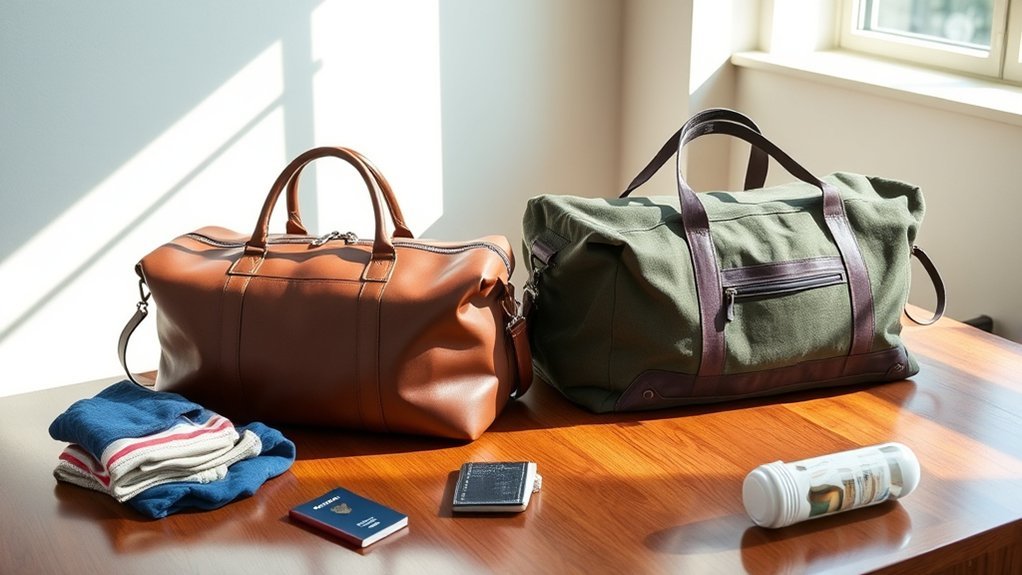
When choosing between a weekender bag and a duffel bag, focus on the actual bag rather than the name printed on the listing. Size, structure, compartments, carrying comfort, material, and airline limits have a bigger effect on your trip than whether a manufacturer calls the bag a weekender or a duffel.
Size and Capacity
A weekender is usually intended for a short trip, but there is no official capacity that makes a bag a weekender. Smaller models may hold an overnight change of clothes, while larger examples can reach 40 liters or more. Duffels span an even broader range, from compact gym bags to large checked-luggage-size models.
Instead of choosing by capacity alone, match the bag to what you actually pack. A light packer may manage a three-night trip with a compact bag, while shoes, bulky winter clothing, camera equipment, or sports gear can fill the same space much faster.
Airline Size Rules
For air travel, physical dimensions matter more than advertised capacity. As of August 2026, American Airlines and Delta Air Lines each publish a maximum carry-on size of 22 x 14 x 9 inches, including handles and wheels. Other airlines can use different limits, and small aircraft may have less overhead-bin space.
Note: Soft-sided bags are easy to overfill. A bag that technically meets a limit while empty may become too thick or tall once packed, so measure it after packing if your airline uses a baggage sizer.
Organization Features
If you dislike digging through one large compartment, prioritize organization over raw capacity. A well-designed weekender may provide separate spaces for shoes, toiletries, electronics, damp clothing, documents, and bottles. Some modern duffels provide the same features, so this is another area where the category names overlap.
For gym or beach trips, a ventilated shoe section and a lined wet pocket can be more valuable than several small general-purpose pockets. For business travel, a laptop sleeve, document pocket, toiletry organization, or garment-bag conversion may matter more.
Comfort and Carrying Options
Weekender bags and duffels commonly combine top handles with an adjustable shoulder strap. If you expect long airport walks, look for padding, a strap wide enough to distribute the load, and a luggage sleeve that can slide over a rolling suitcase handle.
Weight also matters. A large soft bag may feel comfortable while lightly packed but become tiring when filled to capacity. If you tend to carry heavy loads, test how the handles and strap sit against your hands and shoulder rather than choosing only by liters.
Material Durability
Common travel-bag materials include nylon, polyester, cotton, canvas, and leather. Nylon and polyester can offer a useful balance of low weight, abrasion resistance, and water resistance when properly constructed. Cotton or quilted fabric can feel softer and look more casual but is not automatically water-resistant. Leather can be durable and polished but is usually heavier and needs more care.
Also inspect the parts that take the most stress: zipper tracks, shoulder-strap attachment points, stitching around handles, the base, and pocket seams. These areas often matter more to long-term durability than the fabric name alone.
Versatility of Use
A weekender makes sense when you mainly want one bag for short getaways, hotel stays, train travel, or business trips. A flexible duffel can be more useful if the same bag also needs to carry workout clothing, sports gear, camping equipment, or other bulky items.
If you want one bag for both jobs, look for a rectangular soft-sided duffel with a stable base, comfortable shoulder strap, useful pockets, and dimensions that still work for your normal mode of transportation.
Design and Style
Weekenders often lean toward a cleaner or more polished appearance, while traditional gym and sports duffels tend to prioritize function. That difference is not universal. Modern travel duffels can look just as refined, and many bags are marketed under both labels.
For business travel, structure can help the bag hold its shape and keep clothing neater. For camping, gym use, or casual road trips, a flexible bag that can collapse into a closet or car compartment may be more useful.
Additional Functionalities
Extra features are worthwhile only when they solve a problem you actually have. Shoe compartments help isolate footwear. Wet pockets separate swimsuits or sweaty gym clothing. Luggage sleeves simplify airport transfers. Exterior pockets give faster access to a phone, passport, keys, or boarding documents.
USB pass-through ports can also be convenient, but the port itself does not create power; you need a compatible external battery. For U.S. air travel, follow the FAA’s PackSafe guidance for power banks and spare lithium batteries.
Price and Value
Prices for weekender and duffel bags vary constantly by brand, material, size, construction, and promotions, so a fixed category-wide price range quickly becomes outdated. A better value check is to compare the features you will actually use with the bag’s construction quality.
Pay particular attention to zipper quality, reinforced attachment points, lining, strap comfort, warranty terms, and whether specialized pockets reduce the need to buy separate packing organizers. A cheaper bag that fails after a few trips offers less value than a well-built option you can reuse for years.
Which Bag Should You Choose?
Choose a weekender bag if you mainly take one- to three-night trips, want a cleaner shape, prefer built-in organization, or need a bag that works well in hotels and business settings.
Choose a duffel bag if you want flexible open space, regularly carry gym or sports equipment, need room for bulkier clothing, go camping, or want a bag that can often fold down when not in use.
Choose a hybrid weekender-duffel if you need both. Many current travel bags combine the rectangular shape and pockets of a weekender with the flexible construction and shoulder carry of a duffel.
Pro Tip: Before buying for air travel, make a simple packing list and estimate how full the bag will be. Choosing a smaller bag that still holds your essentials can make airport handling easier and reduces the temptation to overpack a soft-sided carry-on.
How to Pack a Weekender or Duffel Efficiently
Both bag styles become easier to carry when the load is balanced and frequently used items stay accessible.
- Put dense items low and near the center. Shoes, toiletry kits, and other heavy items are less awkward when they are close to the base rather than pulling on one side.
- Use the shoe compartment if provided. This keeps soles away from clothing and preserves usable space in the main section.
- Separate wet items. Use the built-in lined pocket when available, or a sealed reusable bag if your duffel has no wet compartment.
- Roll or fold clothing consistently. Either method can work; the goal is to reduce dead space and make items easy to find.
- Keep travel documents accessible. Passports, boarding passes, keys, and charging cables belong in an exterior or top-access pocket rather than at the bottom of the bag.
- Do not pack to the zipper’s limit. Leaving a little space helps a soft bag retain its intended dimensions and reduces stress on seams and zippers.
Frequently Asked Questions
What is the main difference between a weekender bag and a duffel bag?
A weekender is generally marketed as a more structured soft bag for short trips, often with extra organization. A traditional duffel is usually softer, more flexible, and focused on open storage. The terms overlap, however, and many manufacturers use both names for the same product.
Can I use a weekender bag for gym workouts?
Yes. A weekender can work well for the gym, especially if it has enough room for clothing, shoes, a towel, and toiletries. A dedicated shoe compartment or wet pocket is particularly useful for separating sneakers and damp workout clothing from clean items.
Are duffel bags waterproof?
Not automatically. Some duffels use water-resistant fabrics or coatings, while others provide little protection from rain. Water-resistant also does not mean waterproof. Check the specific material and manufacturer rating if weather protection is important.
What’s the best material for a travel bag?
There is no single best material for every traveler. Nylon and polyester are popular when low weight and practical durability matter. Canvas and cotton can provide a softer casual look, while leather offers a more polished appearance but normally weighs more and requires additional care.
How do I clean my weekender bag?
Start with the manufacturer’s care label. For many fabric bags, gentle spot cleaning with mild soap, cool water, and a soft cloth is safer than machine washing. Empty every pocket first and allow the bag to air-dry fully before storing it. Do not machine-wash leather or bags whose care instructions prohibit it.
Are there size restrictions for carry-on duffel bags?
Yes. Airlines set their own cabin-baggage limits. American Airlines and Delta currently publish maximum carry-on dimensions of 22 x 14 x 9 inches, including handles and wheels, but other airlines can use different limits. Check the operating carrier before each trip and measure a soft duffel after packing because overfilling can increase its dimensions.
Can a duffel bag be used as a weekender?
Absolutely. A compact duffel with a comfortable strap and enough organization can be an excellent short-trip bag. The practical questions are whether it holds your packing list comfortably, carries well when full, and fits any transportation limits that apply to your trip.
Conclusion
A weekender bag is usually the better fit when you want structure, organized packing, and a manageable bag for a short trip. A duffel bag is usually better when you value flexible storage, gym or sports use, or extra capacity. Because the two categories overlap, the most reliable way to choose is to compare the actual dimensions, compartments, material, carrying comfort, and your packing list. If you are flying, check your airline’s current baggage limit before you leave home rather than relying on a product’s “carry-on” description.
Sources
- American Airlines — Carry-on Bags — current carry-on and personal-item sizing requirements.
- Delta Air Lines — Carry-On Baggage — current carry-on dimensions and cabin-storage guidance.
- Federal Aviation Administration — PackSafe Battery Guidance — rules for lithium batteries and power banks in passenger baggage.
