

Last Updated on August 24, 2026 by Daniel Globe
Aruba, a pristine gem nestled in the southern Caribbean Sea, is renowned for its idyllic weather, making it a prime destination for sun-seekers and adventure enthusiasts alike. The island enjoys a warm climate characterized by sunny skies, gentle trade winds, and minimal rainfall throughout the year. With an average annual temperature hovering around 82°F (28°C), Aruba’s weather is consistently pleasant, drawing 1,515,102 stopover visitors and 970,803 cruise passengers in 2025 alone.
Quick Answer
The overall best time to travel to Aruba is from April to August. This shoulder window offers sunny, dry weather with minimal rain, lower hotel rates, and manageable crowds compared to the high season. For perfect weather regardless of price, mid-December to mid-April provides optimal temperatures, though at peak resort rates.
Key Takeaways
- Climate Consistency: Aruba maintains warm temperatures year-round with constant cooling trade winds and low humidity compared to neighboring islands.
- Peak Season (Mid-Dec to Mid-April): Features ideal weather and vibrant nightlife, but requires booking months in advance due to high room rates and crowded beaches.
- Off-Peak & Shoulder Season (Mid-April to Mid-December): Offers significant hotel discounts, quieter attractions, and brief tropical showers that rarely disrupt plans.
- Hurricane Safety: Located south of the main hurricane belt, Aruba rarely experiences direct tropical storm strikes.
The island’s geographical location, situated roughly 18 miles (29 km) north of the Venezuelan peninsula of Paraguaná and south of the primary hurricane belt, enhances its appeal as a safe year-round retreat. Aruba’s climate is heavily influenced by strong easterly trade winds that provide a refreshing cooling effect against the equator heat. These consistent breezes create ideal conditions for world-class water sports like windsurfing and kitesurfing while keeping pest populations remarkably low.
Aruba experiences two primary climate variations: a long dry season running from January through September — driest of all between March and June — and a short wet season spanning October through December. Even during the wet months, precipitation typically falls in brief late-night or early-morning showers, allowing visitors to enjoy uninterrupted outdoor itineraries.
Disclosure: As an Amazon Associate I earn from qualifying purchases. Some links on this page are affiliate links, at no extra cost to you.
Overview: Aruba Seasonal Overview at a Glance
At a Glance
| Peak Season | Mid-December to Mid-April (Best weather, highest prices, largest crowds) |
| Shoulder Season | Mid-April to August (Great weather balance, moderate pricing, fewer tourists) |
| Low Season | September to Mid-December (Lowest room rates, warmest sea temps, brief showers) |
| Average Temperatures | Highs: 86°F–91°F (30°C–33°C) | Lows: 76°F–81°F (24°C–27°C) |
Aruba Weather Month by Month
Averages tell you more than any single “best month” verdict. The table below pairs long-term temperature, rainfall and sea-temperature records for Oranjestad with what each month actually feels like on the ground, so you can weigh heat, rain, water warmth and price against your own priorities.
| Month | Avg High / Low | Rainfall | Sea Temp | What to Expect |
|---|---|---|---|---|
| January | 86° / 77° | 1.8 in | 79°F | Peak season; the busiest and priciest weeks of the year |
| February | 87° / 77° | 0.8 in | 79°F | Peak season; Carnival builds toward the Grand Parade |
| March | 88° / 78° | 0.4 in | 79°F | Driest month of the year; peak crowds, almost no rain |
| April | 89° / 79° | 0.4 in | 80°F | Peak until mid-month, then rates fall sharply after Easter |
| May | 90° / 80° | 0.6 in | 81°F | Best all-round balance: dry, warm, cheaper, uncrowded |
| June | 91° / 80° | 0.6 in | 82°F | Strongest trade winds; prime windsurfing and kiteboarding |
| July | 90° / 80° | 1.2 in | 82°F | Family travel picks up; still dry and reliably breezy |
| August | 91° / 81° | 0.8 in | 83°F | Hottest month; good value outside school-holiday weeks |
| September | 91° / 81° | 1.8 in | 84°F | Cheapest month; warmest sea; lightest winds of the year |
| October | 90° / 80° | 3.0 in | 84°F | Wet season begins with short overnight showers |
| November | 89° / 79° | 3.3 in | 83°F | Wettest month, yet still only about 11 days with rain |
| December | 87° / 78° | 3.1 in | 81°F | Quiet until mid-month, then peak season returns |
Pro Tip: If you want one month, choose May — it pairs near-peak weather with post-Easter pricing. If price is the deciding factor, choose September. If you need guaranteed dry skies for a wedding or photo shoot, choose March, the driest month on the calendar.
Peak Tourist Season in Aruba (Mid-December to Mid-April)
The peak tourist season in Aruba coincides directly with the northern hemisphere’s winter months, spanning mid-December through mid-April. During this window, travelers escape cold North American and European weather to enjoy Aruba’s clear skies and calm waters. The island buzzes with energy as luxury resorts, beach bars, and restaurants operate at maximum capacity.
World-renowned beaches like Eagle Beach and Palm Beach see high foot traffic during peak months. Water conditions are exceptionally calm along the western coast, creating ideal swimming conditions for families and leisure travelers.
Warning: Resort pricing runs 40% to 60% higher during peak winter months. Palm Beach rooms that sell for under $300 a night in September routinely pass $600 in January and February. Accommodations along Palm Beach and Eagle Beach frequently sell out 4 to 6 months in advance for holiday weeks.
Travelers intending to visit during high season should secure hotel bookings and rental cars well ahead of time. Popular dining establishments and guided excursions in Arikok National Park also require early reservations to prevent long wait times or sold-out tours.
Off-Peak & Shoulder Season in Aruba (Mid-April to Mid-December)
For budget-conscious travelers and those seeking a serene escape, Aruba’s off-peak season (mid-April through mid-December) offers substantial advantages. Rates for flights and resort accommodations drop significantly following Easter, providing high-end resort access at fraction-of-peak pricing.
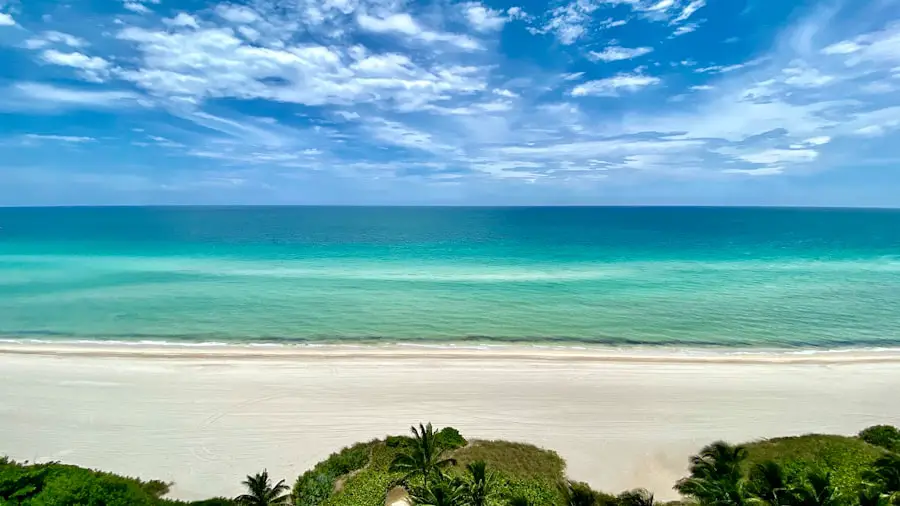
While this period overlaps with the Atlantic hurricane season (June 1 to November 30), Aruba remains exceptionally safe thanks to its southerly position at roughly 12.5°N. Rainfall does climb between October and December, peaking near 3.3 inches (85 mm) in November — still a fraction of what most Caribbean islands record in their wet season.
Pro Tip: May and June offer some of the best travel conditions of the year. Trade winds are active, crowds are low, and weather remains consistently dry before late-autumn showers begin.
Cheapest Time to Visit Aruba
Aruba is one of the more expensive Caribbean destinations, and the gap between seasons is wide enough to change what kind of trip you can afford. Peak-season travel typically costs 40% to 60% more than the same trip in low season, and the difference shows up in every line of the budget.
| Cost | Peak (Mid-Dec to Mid-Apr) | Low Season (Sep to Mid-Dec) |
|---|---|---|
| Beachfront resort, Palm Beach | $600+ per night | Under $300 per night |
| Mid-range hotel | Baseline rate | 30% to 50% lower |
| Round-trip flights from the US | Baseline fare | $150 to $300 less per person |
| How far ahead to book | 4 to 6 months | 6 to 10 weeks |
September is the single cheapest month to visit Aruba, when flights and hotel rates both hit their annual floor. It is also the month with the warmest sea temperatures and the lightest trade winds, which suits swimmers and snorkellers even as it disappoints windsurfers. The most expensive week of the year is Christmas through New Year, when many resorts impose minimum-stay requirements on top of holiday rates.
Note: Departing on a Tuesday or Wednesday is usually cheaper than a Friday-to-Sunday departure, and the saving often exceeds what you would gain by shifting your travel dates by a whole week.
Best Time for Outdoor Activities & Water Sports
Outdoor exploration in Aruba is enjoyable year-round thanks to warm ocean temperatures averaging 81°F (27°C). However, matching specific activities to the optimal time of day and season ensures a better overall experience:
| Activity | Best Time of Day | Optimal Months |
|---|---|---|
| Beach Lounging | Early morning or late afternoon | Year-Round |
| Snorkeling & Scuba Diving | Morning (Calmest water clarity) | Year-round (calmest Sept–Nov) |
| Windsurfing & Kitesurfing | Mid-morning to late afternoon | May to July (Peak winds) |
| Arikok National Park Hiking | Early morning (Before 10 AM heat) | January to April |
| Island Cycling | Early morning or early evening | January to May |
Water sports enthusiasts will find excellent conditions along Boca Grandi for kitesurfing and Fisherman’s Huts for windsurfing. Calm clear waters at Malmok Beach and the Antilla Shipwreck provide ideal settings for underwater photography and snorkeling tours.
Weather Patterns and Climate Characteristics
Aruba has a hot semi-arid climate — Köppen classification BSh, a steppe climate rather than the tropical rainforest or savanna climate found on most Caribbean islands. Unlike traditional tropical islands with lush rainforests, Aruba’s landscape features cacti, divi-divi trees, and desert terrain.
Aruba receives an average annual precipitation of only about 18.5 inches (470 mm), making it one of the driest islands in the Caribbean — and more than half of that total falls in just three months, October through December.
Daytime maximum temperatures climb from about 86°F (30°C) in January to 91°F (33°C) in August and September, while nighttime minimums rarely drop below 76°F (24°C). The constant trade winds blow from the east-northeast at an average of 15 to 18 mph (13 to 16 knots), easing slightly from September through November and providing natural climate control throughout the hotter afternoons.
Hurricane Season in Aruba: What Travelers Should Know
The Atlantic hurricane season officially runs from June 1 to November 30, with peak activity between mid-August and mid-October. Those dates cover most of Aruba’s low season, which is exactly why so many travelers hesitate to book — and why the island is one of the safest bets in the region.
Aruba sits at roughly 12.5°N on the South American continental shelf, well south of the corridor that steers most Atlantic systems through the Caribbean. According to the Atlantic hurricane database, which reaches back to 1851, Aruba has never taken a direct hurricane hit. The island has felt the outer edges of passing storms — Hurricane Hazel in 1954 and Hurricane Ivan in 2004 are the most-cited examples — and Hurricane Felix in 2007 came closer than any system in more than a century, passing about 50 miles (80 km) away.
What this means in practice
Booking Aruba between June and November carries far less weather risk than booking the eastern or northern Caribbean in the same window. Occasional cloud bands and a windy afternoon are the realistic worst case. Travel insurance is still worth buying, but mainly for flight disruption originating elsewhere rather than for conditions on the island itself.
Sargassum Seaweed on Aruba’s Beaches
Sargassum — the brown seaweed that has buried stretches of Caribbean and Mexican coastline in recent years — drifts through the region roughly from March to November, usually peaking in late spring and summer. It is a genuine trip-timing factor almost everywhere in the Caribbean, and one of the strongest arguments for choosing Aruba.
Aruba’s southern position, the prevailing currents, and its relentless easterly trade winds combine to push floating sargassum away from the leeward coast. The west-facing beaches where nearly all resorts sit — Palm Beach, Eagle Beach, Druif Beach and Baby Beach — stay virtually clear year-round. Small amounts can wash up after a storm, and hotels and municipal crews clear them quickly.
The exception is the windward east coast. Exposed shores such as Boca Grandi and Andicuri can collect seaweed during the regional season, which matters more to kitesurfers and photographers than to beach-goers, since those beaches are not safe for swimming regardless.
Pro Tip: If sargassum is your main worry, you do not need to time your trip around it in Aruba — you only need to book on the west coast, which is where the resort strip already is.
Aruba Events Calendar: Timing Your Trip Around Culture
Events can override the weather-and-price calculation entirely. Carnival in particular shifts each year because it is tied to Easter, so check the dates before assuming January and February are interchangeable.
| Event | When | Notes |
|---|---|---|
| Dia di Betico | January 25 | Public holiday honouring Aruban statesman Betico Croes |
| Aruba Carnival | January to February | 2027 season runs approx. Jan 9 to Feb 9; Carnival Monday falls Feb 8, 2027 |
| National Anthem & Flag Day | March 18 | Public holiday with folkloric performances and island-wide events |
| King’s Day | April 27 | Dutch national holiday, widely celebrated across the island |
| Soul Beach Music Festival | Late May | Four-day R&B, soul and comedy festival over US Memorial Day weekend |
| Dia di San Juan (Dera Gai) | June 24 | Traditional harvest festival with red-and-yellow costume and dance |
| Aruba Hi-Winds | Late June to July | The Caribbean’s largest windsurfing and kiteboarding competition |
| Aruba International Film Festival | Late June to July | Screenings and panels drawing regional and international filmmakers |
Warning: Aruba’s Carnival season opens on November 11 each year, but the parades that draw visitors cluster in the final weeks before Ash Wednesday. Because that date moves, Carnival ended on February 16 in 2026 and will end on February 9 in 2027 — a full three weeks earlier than in 2025. Confirm the official schedule before booking flights around it.
Tips for Traveling During Peak Season

Navigating Aruba during peak season requires smart pre-trip preparation. Consider these strategies to maximize your travel experience:
- Book Lodging Early: Reserve hotel rooms or private villas 4 to 6 months prior to arrival for peak winter dates.
- Reserve Rental Vehicles: Island rental car inventory depletes rapidly during peak months; secure transportation alongside flight arrangements.
- Pre-Book Key Dining: Popular high-end restaurants in Palm Beach and Oranjestad fill dinner slots weeks ahead.
- Beat Beach Crowds: Arrive at popular public shores like Baby Beach before 9:30 AM to secure shaded palapas.
Tips for Traveling During Off-Peak Season
Off-peak travel provides a relaxed pace and significant savings across all travel categories:
- Capitalize on Resort Promotions: Many top-tier hotels offer free night credits, complimentary breakfast, or spa vouchers between May and October.
- Enjoy Flexible Itineraries: Reduced tour volumes make booking last-minute catamaran cruises and jeep safari tours simple.
- Attend Local Cultural Events: Spring and summer host iconic cultural gatherings, including the Aruba Soul Beach Music Festival over Memorial Day weekend in May and Aruba Hi-Winds, the Caribbean’s largest windsurfing and kiteboarding competition, in late June.
Note: When packing for off-peak months, ensure you carry high-SPF reef-safe sunscreen and lightweight clothing suited for breezy, humid days.
Before You Book: Entry Rules and Airport Timing
Two practical requirements catch first-time visitors out, and both are worth building into your plans before you lock in dates.
The ED-Card. Every passenger travelling to Aruba must complete an Embarkation-Disembarkation Card, including infants and children. It is an online form, it takes a few minutes, and it can only be submitted within the seven days before departure — so it is not something you can tick off months ahead. The official application at edcardaruba.aw is free; third-party sites that appear in search results charge a fee to fill in the same form on your behalf.
US preclearance on the way home. Queen Beatrix International Airport (AUA) has US Customs and Border Protection preclearance, so US-bound travellers clear American immigration and customs in Aruba and arrive home as a domestic flight. It is a real convenience, but it means arriving three hours before departure, and the airport now operates timed entry windows for the US check-in terminal during construction of its Gateway 2030 expansion. Mobile Passport Control is free and speeds the process up.
Note: Because departure day runs long, an early-morning flight home eats most of your final day. Travellers on short trips often gain a full beach day by choosing a late-afternoon departure instead.
Finding Your Ideal Time to Travel to Aruba
Choosing when to visit Aruba comes down to balancing weather expectations, activity preferences, and travel budget. Travelers looking for guaranteed winter sun and lively energy will thrive during peak season, provided reservations are made early. Those seeking maximum value, quiet beaches, and excellent water sports conditions will find the shoulder months of April through August ideal.
Regardless of the month selected, Aruba’s consistent temperatures, gentle trade winds, and warm hospitality ensure an exceptional Caribbean vacation.
Frequently Asked Questions
What is the overall best month to travel to Aruba?
May is widely considered the overall best month to visit Aruba. It sits in the sweet spot right after peak season ends, offering clear dry skies, calm trade winds, lower resort pricing, and minimal crowd congestion.
What is the weather like in Aruba during the best time to travel?
During peak and shoulder travel periods, Aruba weather is consistently warm and sunny with daytime highs around 86°F–91°F (30°C–33°C). Constant trade winds keep humidity manageable, and rainfall remains exceptionally rare.
Are there specific cultural events or festivals in Aruba?
Yes. Aruba Carnival dominates the early year, though its dates shift with Easter — the 2027 season runs from about January 9 to February 9, with Carnival Monday on February 8. Other highlights are the Soul Beach Music Festival over US Memorial Day weekend in May, Dia di San Juan on June 24, and Aruba Hi-Winds in late June.
What outdoor activities are available in Aruba year-round?
Visitors can enjoy world-class snorkeling, scuba diving along wreck sites like the SS Antilla, windsurfing, kitesurfing, deep-sea fishing, ATV tours through Arikok National Park, and catamaran sunset cruises across all seasons.
What is the rainiest month in Aruba?
November is Aruba’s wettest month, averaging about 3.3 inches (85 mm) over roughly 11 days. Even then, rain typically arrives as short overnight or early-morning showers rather than all-day washouts, and the island’s annual total of about 18.5 inches is among the lowest in the Caribbean.
What is the cheapest month to visit Aruba?
September. Flights and hotel rates both hit their annual floor, with beachfront Palm Beach resorts falling from $600 or more per night in January to under $300. September also delivers the warmest sea temperatures of the year, around 84°F (29°C), and the lightest trade winds.
Does Aruba get hurricanes?
Aruba has never recorded a direct hurricane hit in the Atlantic hurricane database, which begins in 1851. At roughly 12.5°N, the island sits south of the main storm track. Hurricane Felix in 2007 passed about 50 miles (80 km) away, the closest approach in more than a century. The official Atlantic hurricane season still runs June 1 to November 30.
Is there seaweed on Aruba’s beaches?
Aruba’s west-coast beaches — Palm, Eagle, Druif and Baby Beach — stay virtually free of sargassum year-round, thanks to the island’s southern position, favourable currents and constant trade winds. The exposed east coast can collect seaweed during the regional March-to-November season, but those shores are not swimming beaches in any case.
Do I need an ED-Card to enter Aruba?
Yes. Every traveller, including infants and children, must complete Aruba’s online Embarkation-Disembarkation Card. It can only be submitted within the seven days before departure, and it is free on the official government site — third-party services charge a fee for the same form.
When is the worst time to visit Aruba?
There is no genuinely bad month, but October and November bring the year’s heaviest rainfall, and the Christmas-to-New-Year window combines the highest rates of the year with minimum-stay requirements and the busiest beaches. September suits budget travellers but has the lightest winds, which disappoints windsurfers.
Sources
- Aruba Tourism Authority (aruba.com) — official island facts, hurricane-season guidance, Carnival calendar and pre-travel requirements
- Government of Aruba — official public-holiday calendar and Aruba Tourism Authority arrival statistics
- Aruba Airport Authority (Queen Beatrix International) — ED-Card requirement and US preclearance departure procedures
- Climates to Travel & Weather Atlas — long-term monthly temperature, rainfall, sea-temperature and wind records for Oranjestad
- Caribbean Tourism Analytics — 2025 Aruba stopover and cruise arrival totals
